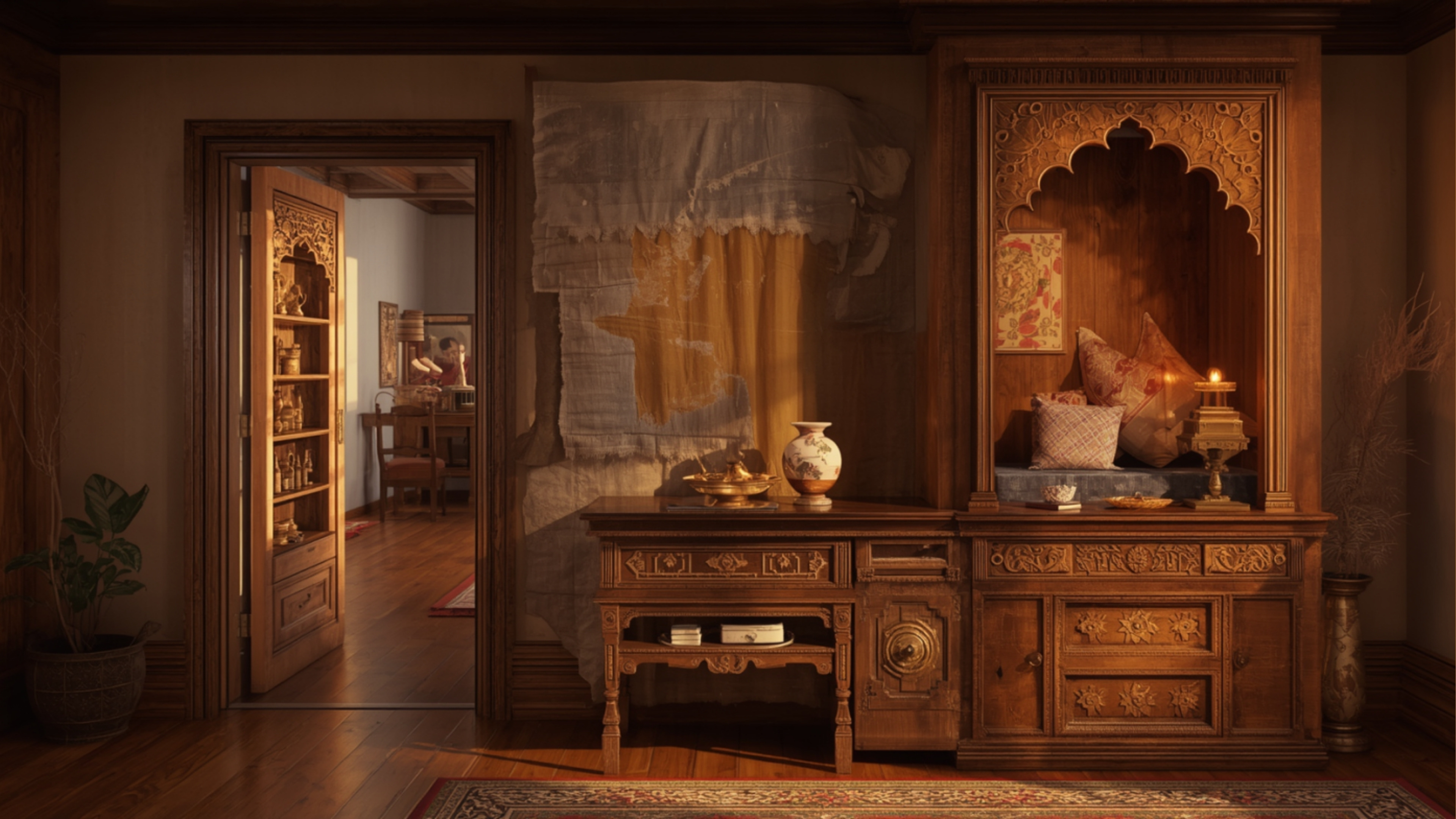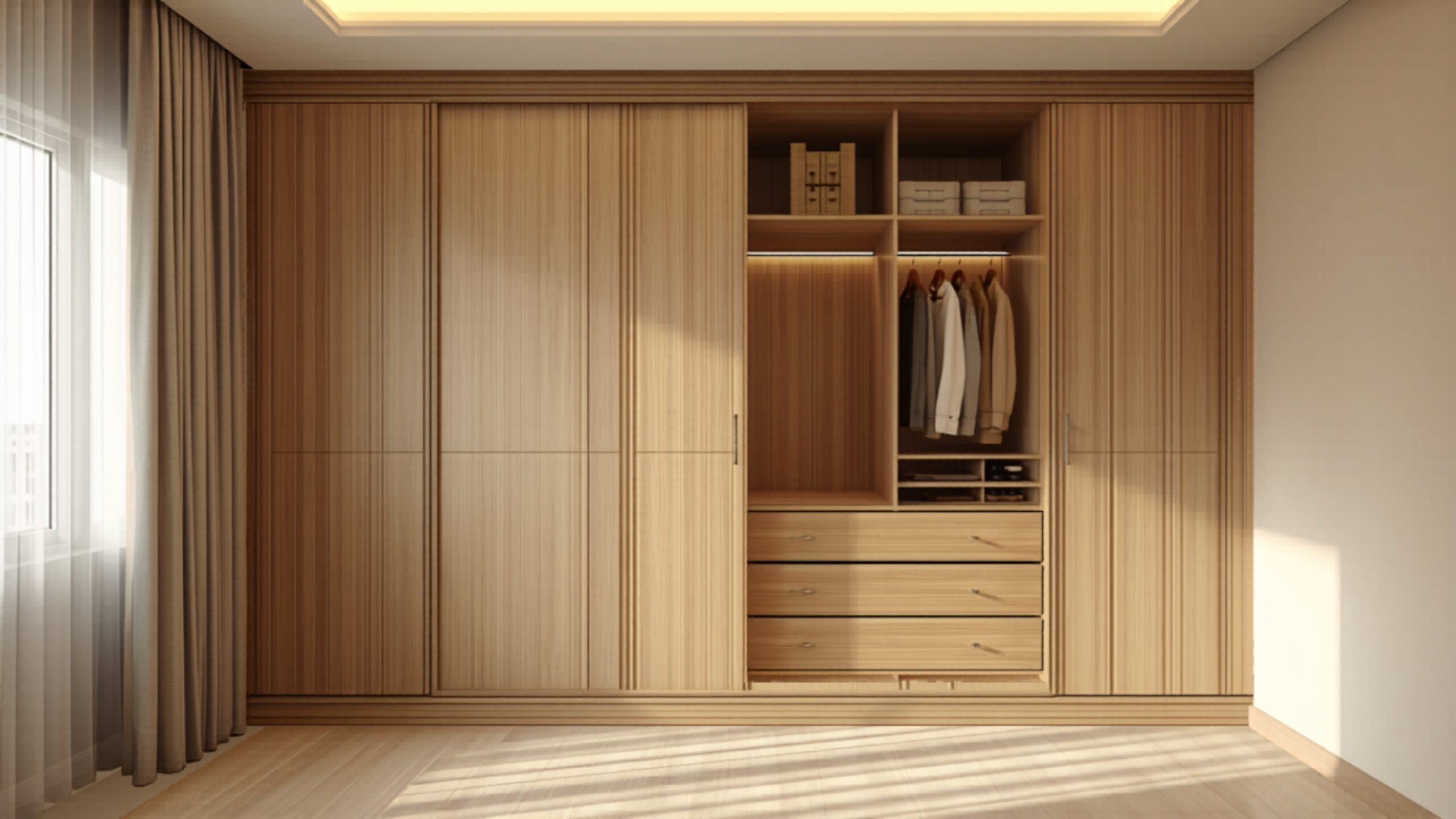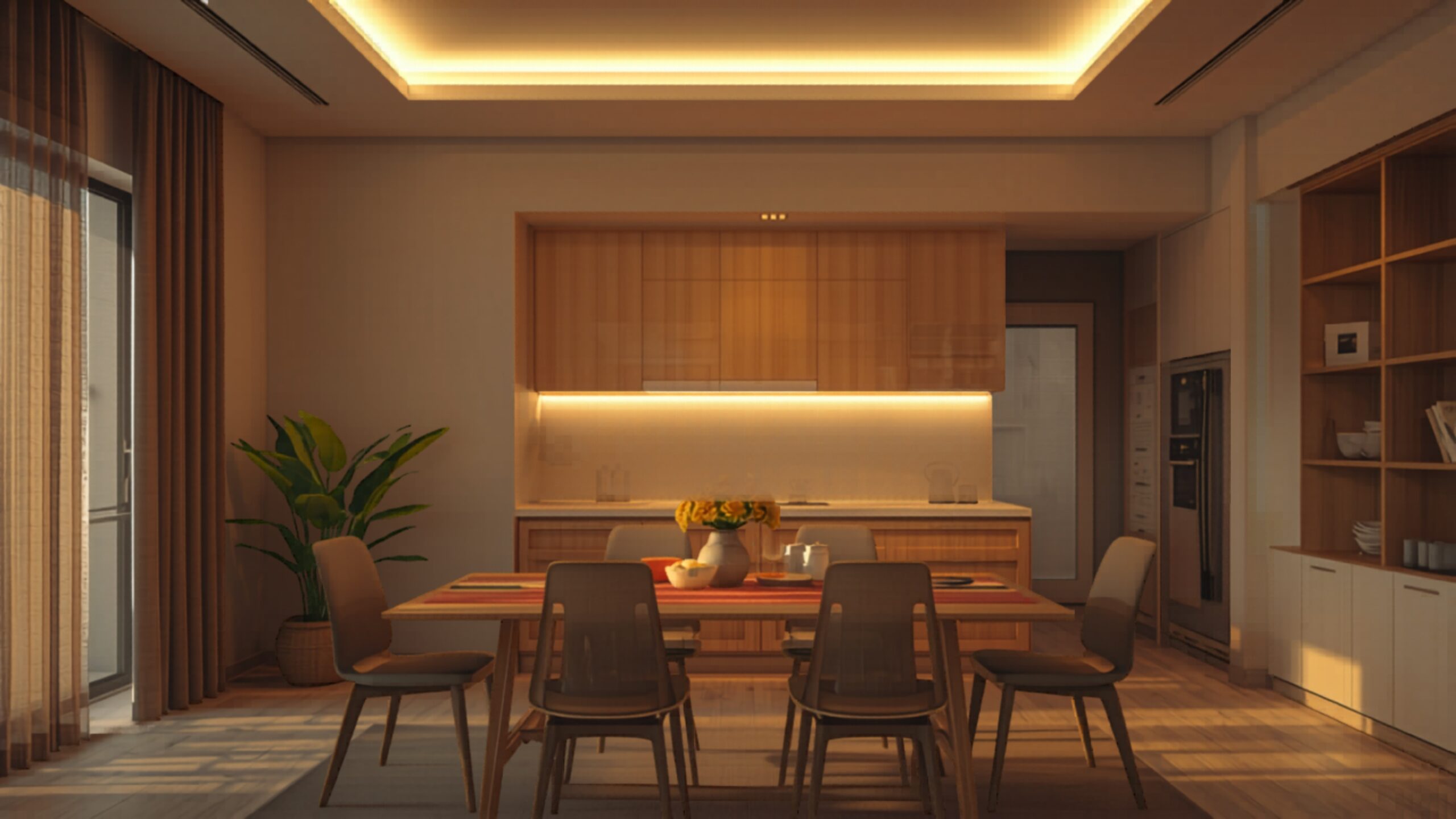
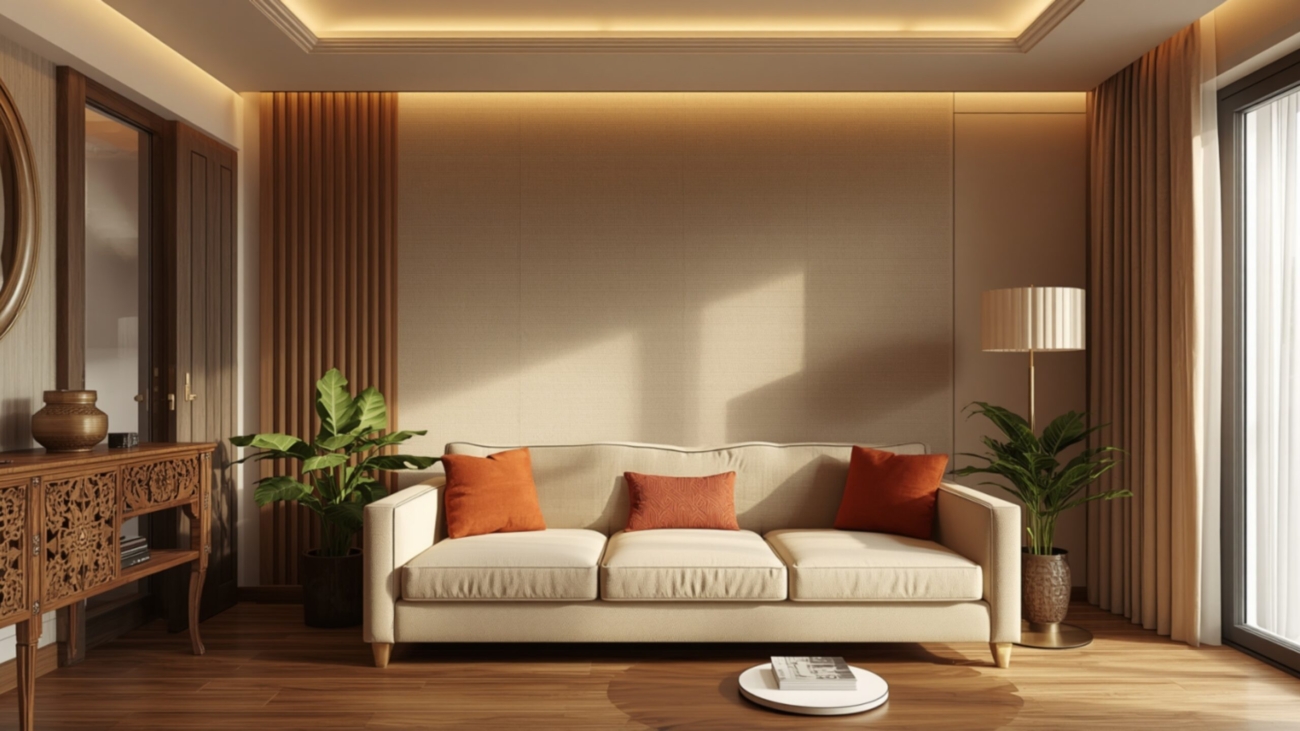
Fusion style living room interior design in a Bengaluru apartment 2026 with warm neutral sofa, carved console, brass lamp and layered cove lighting, by myNivasa

How to Choose Interior Designer Near Me in Bengaluru 2026

I am Vishwas Anegundi, founder of myNivasa, an interior design and home construction practice serving Bengaluru families since 2018. I write every guide on this site from my own project files and site visits.

Last Updated: 11 June 2026 | Written by Vishwas Anegundi, Founder, myNivasa

To choose the right interior designer near you in Bengaluru, shortlist 3 local firms with completed projects in your area, inspect at least 1 finished home in person, check style range across traditional, contemporary and fusion work, and confirm a written scope with revision policy. On cost, compare line item BOQs rather than lump sums, and expect Rs 1,200 to Rs 1,800 per sqft for essential work, Rs 1,800 to Rs 3,000 for mid range, and Rs 3,000 plus for premium finishes, all before 18 percent GST.

Quick Takeaways

  • A designer who has completed projects within 5 km of your home understands your apartment complex rules, dust conditions and material delivery logistics better than a remote firm.
  • Inspect 1 live site and 1 handed over home before signing. Photos hide joinery gaps, edge banding quality and finish ripples that a site visit reveals in 10 minutes.
  • Bengaluru 2026 cost reality: 2BHK full interiors run Rs 4 to Rs 14 lakhs, 3BHK runs Rs 6 to Rs 22 lakhs depending on tier and locality.
  • Designer fees follow 3 models: per sqft design fee of Rs 100 to Rs 300, lump sum, or 8 to 15 percent of project value. Ask which model applies before the first drawing.
  • Style fit matters as much as price. A portfolio where every home looks identical signals a template factory, not a designer who will read your family's lifestyle.
  • Always ask whether the quote includes 18 percent GST. A Rs 7 lakh quote becomes Rs 8.26 lakhs after tax.
  • Budget a 10 to 15 percent contingency for civil work, electrical additions and deep cleaning that most quotes exclude.
  • Vastu preferences, lighting layers and colour schemes should be discussed in the first meeting, not after carcass production starts.

The best way to find an interior designer near you in Bengaluru is to shortlist firms with handed over projects in your own locality, visit 1 completed home, verify a line item BOQ, and confirm the fee model in writing. Expect complete 2BHK interiors to cost Rs 4 to Rs 14 lakhs and 3BHK interiors Rs 6 to Rs 22 lakhs in 2026, plus 18 percent GST.
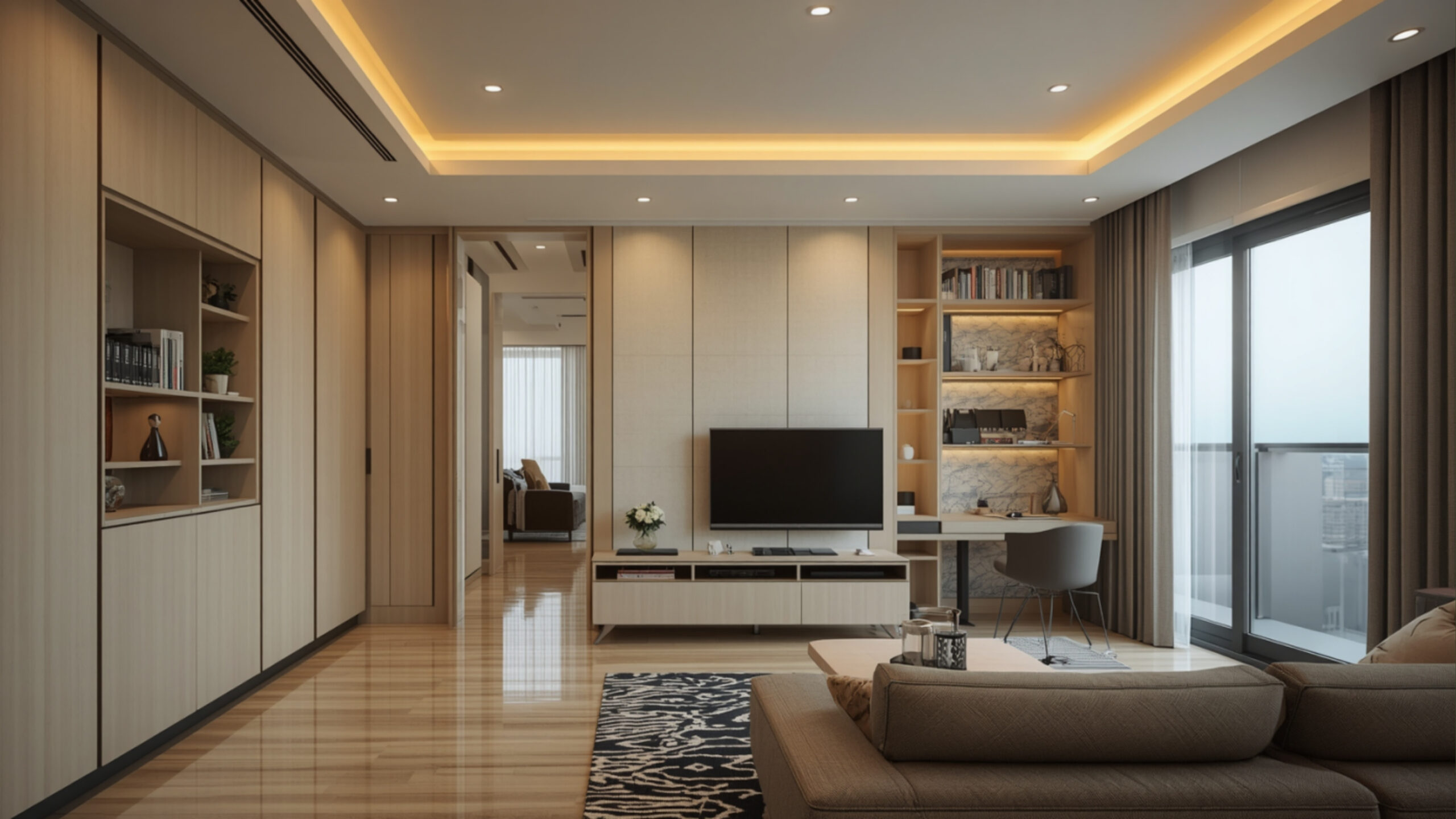
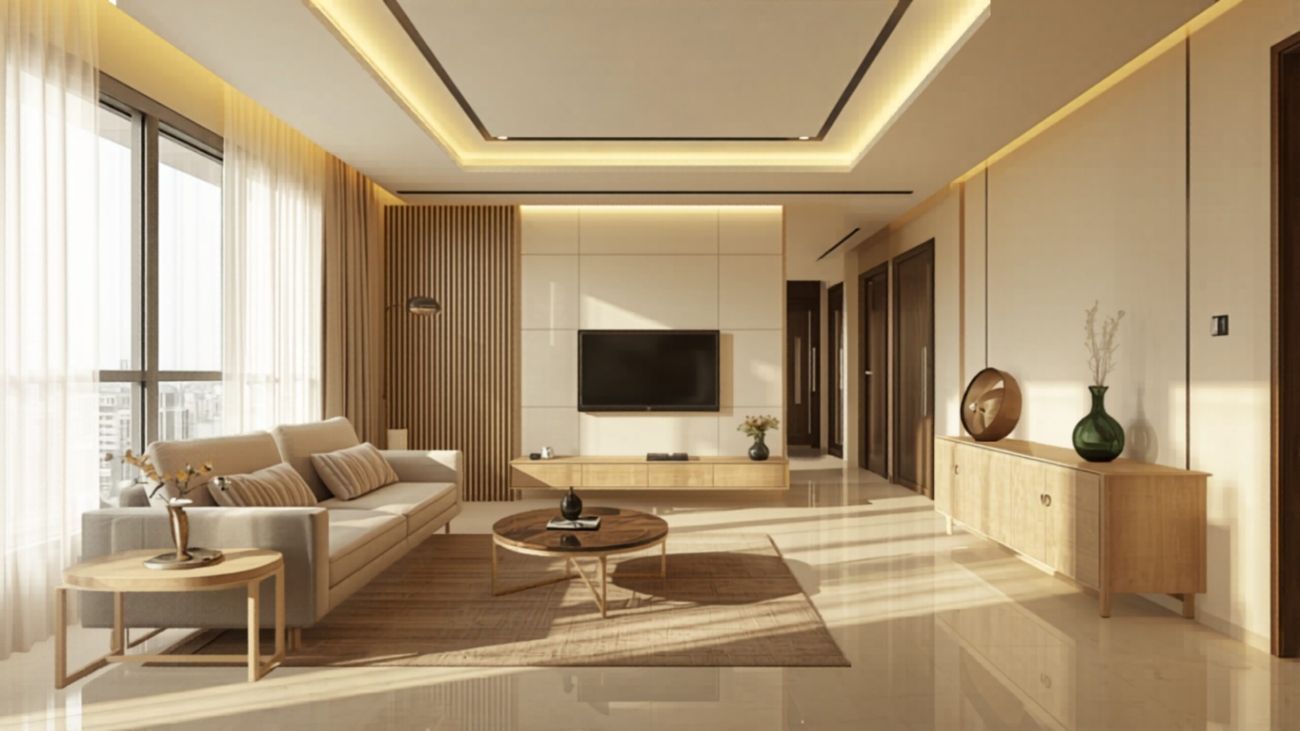
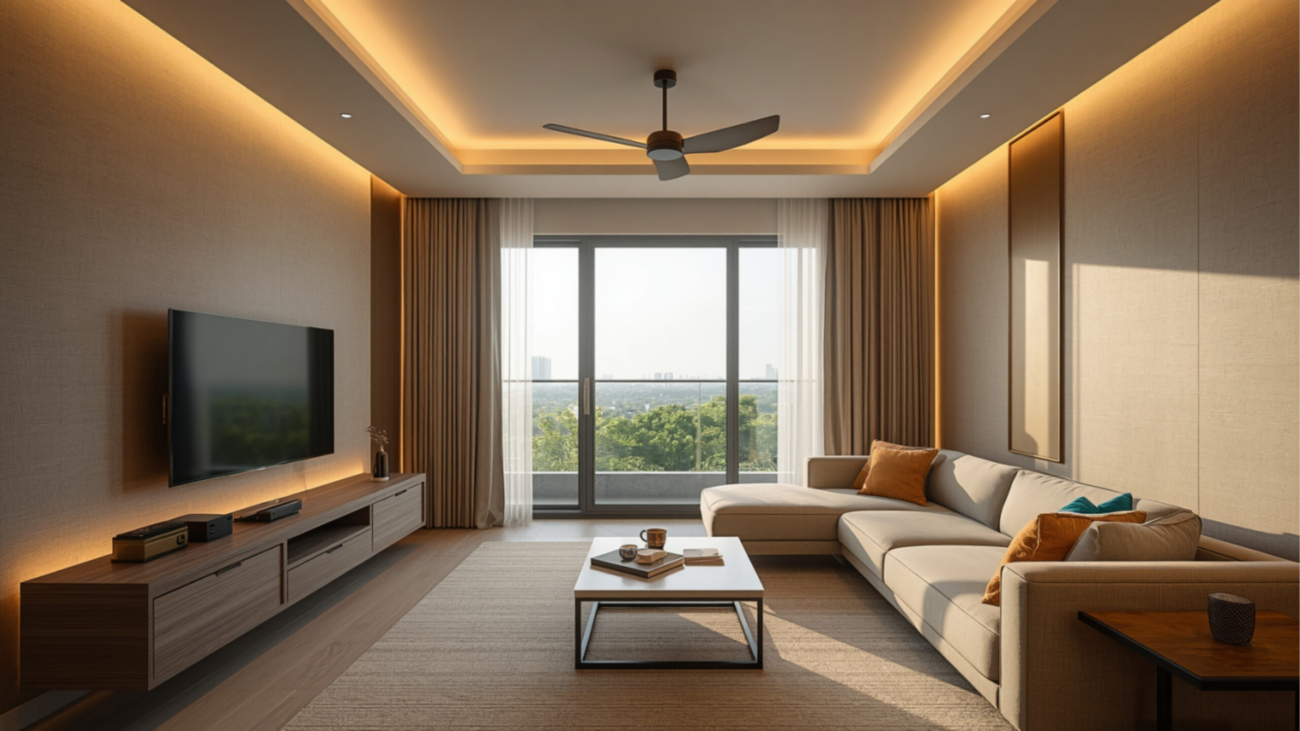
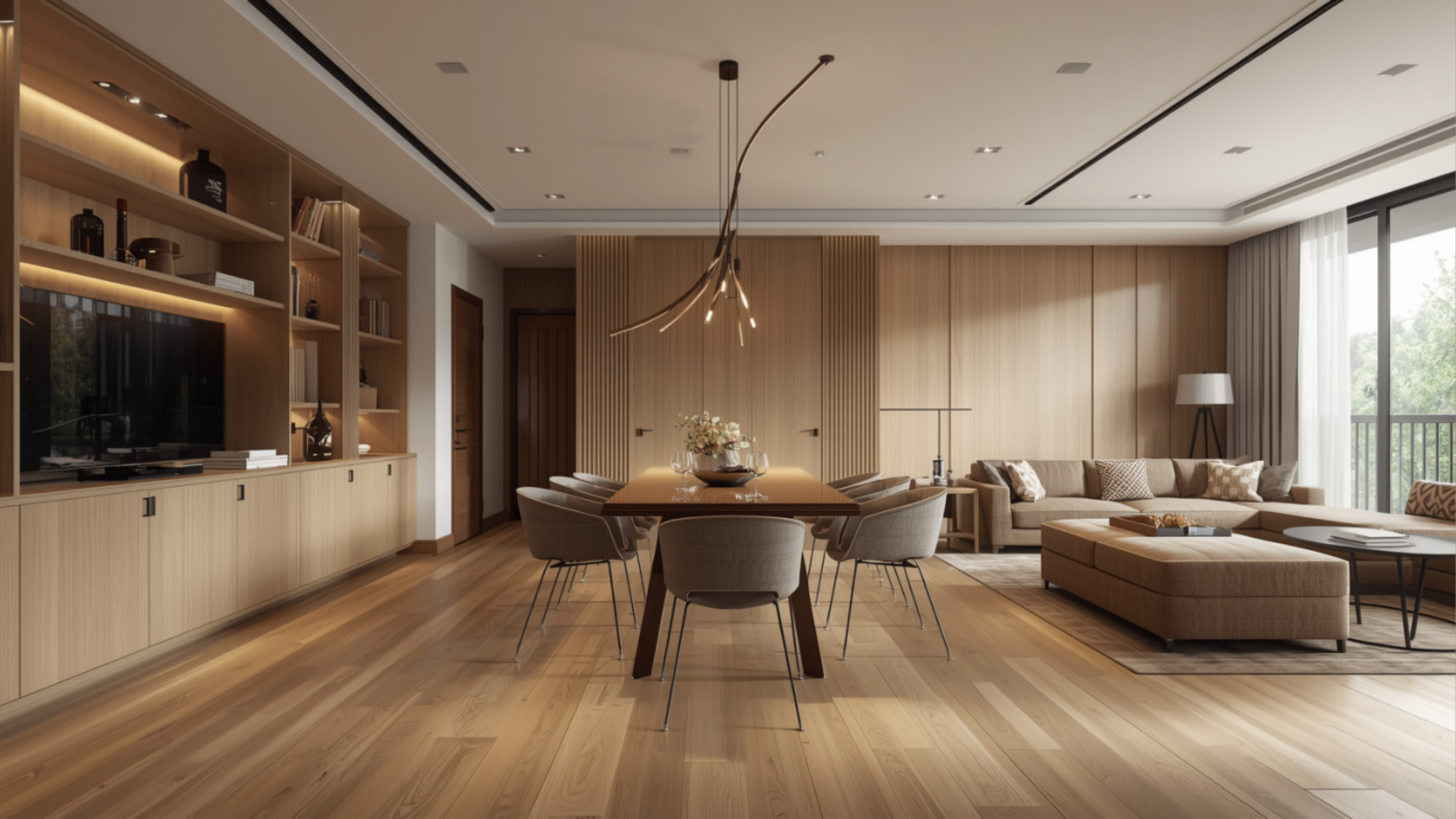
Interior designer near me result: open plan 2BHK apartment layout in Sarjapur Road Bengaluru 2026 with TV storage wall and study nook, by myNivasa
An open plan 2BHK layout with storage wall and study nook

Bengaluru Interior Design Tiers at a Glance in 2026

TierPer Sqft Rate2BHK (900 to 1,100 sqft)3BHK (1,300 to 1,700 sqft)What you get
EssentialRs 1,200 to Rs 1,800Rs 4 to Rs 7 lakhsRs 6 to Rs 10 lakhsCommercial ply or MDF mix, laminate finishes, standard hardware, basic false ceiling
ComfortRs 1,800 to Rs 3,000Rs 7 to Rs 11 lakhsRs 10 to Rs 16 lakhsBWR plywood, Hettich or Hafele hardware, acrylic or membrane shutters, layered lighting
SignatureRs 3,000 to Rs 5,000 plusRs 11 to Rs 14 lakhs plusRs 16 to Rs 22 lakhs plusBWP marine ply, veneer or PU finishes, designer lighting, stone and fluted panel work

All figures exclude 18 percent GST and loose furniture. Rates compiled from my 2025 to 2026 project closures across Whitefield, HSR Layout, Sarjapur Road and Hebbal.
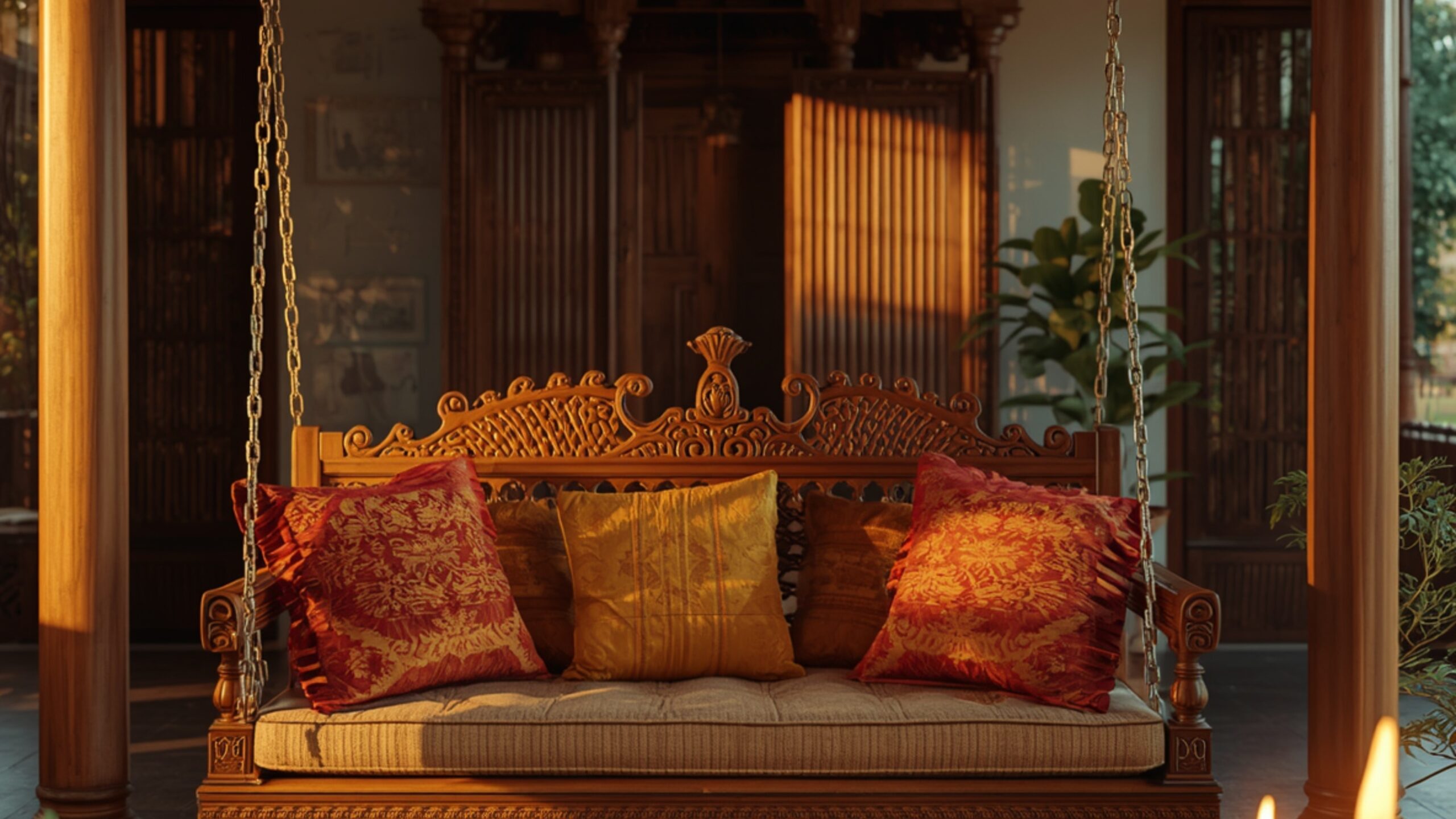
Traditional South Indian living room interior design in Jayanagar Bengaluru 2026 with carved wooden swing, brass lamps and silk cushions, by myNivasa
A traditional South Indian living room direction with carved swing and brass accents

myNivasa observation: In our last 20 Bengaluru handovers, families who shortlisted designers by locality first and portfolio second finished 3 weeks faster on average. The designer already knew the apartment association rules, the freight elevator timings and the nearest material markets, so zero days were lost to logistics surprises.

What does hiring an interior designer near me include in Bengaluru?

When you type interior designer near me into a search bar from a Bengaluru pin code, you are really asking 3 questions at once. Who designs homes in my area, what exactly will they do for me, and what will it cost. I will answer the first 2 here and keep returning to the third throughout this guide, because in my experience the families who separate design scope from cost scope end up disappointed by both.

Every interior designer near me result handles your project in 4 stages. First comes the discovery and brief stage, where the designer measures your home, studies the builder floor plan, and interviews your family about routines, storage needs and style preferences. A good discovery meeting in a Whitefield or Koramangala apartment takes 90 minutes minimum. If a designer finishes this conversation in 20 minutes and jumps to showing you a catalogue, treat that as your first warning sign.

Second is the design development stage. This covers layout drawings, furniture placement, false ceiling plans, electrical drawings, 3D views and the material palette. In 2026 most established Bengaluru studios present 2 to 3 concept directions, for example a warm traditional scheme, a clean contemporary scheme and a fusion of the 2. You should receive a revision policy in writing at this stage. The industry standard near me is 2 to 3 free revision rounds on concepts and 1 on final drawings.

Third is procurement and production. Modular components like kitchen cabinets and wardrobes are produced in a factory, while site work like false ceiling, painting and electrical runs in parallel inside your home. This is the stage where a nearby designer earns their keep. Apartment complexes like Prestige Lakeside Habitat or Sobha Dream Acres have strict material movement windows, and a designer who has worked in your complex before will schedule deliveries around them without losing days.

Fourth is installation and handover. Carcasses arrive, shutters go on, hardware gets adjusted, lighting is commissioned, deep cleaning happens, and you receive a snag list walk through. Ask every designer you interview to describe their snag resolution timeline. The honest ones quote 7 to 15 days post installation. The evasive ones say there will be no snags, which has never once been true in my 8 years of practice.

Not every professional who appears in your near me search offers all 4 stages. Some are design only consultants who hand you drawings and leave execution to your contractor, typically charging Rs 100 to Rs 300 per sqft for the design package. Some are turnkey firms like mine that carry the project from brief to handover. And some are decorators who style finished homes with loose furniture, soft furnishings and art. None of these models is wrong, but hiring a decorator when you need civil work moved, or paying turnkey margins when you already have a trusted contractor, wastes money in both directions.

Decide which model you need before you compare prices, because comparing a design only fee against a turnkey quote tells you nothing.

What affects the look and feel and the cost of your project?

When you compare each interior designer near me result, 6 variables decide both how your home will feel and what your bank account will feel. I walk every myNivasa client through these in the first meeting, because each one carries a style consequence and a cost consequence at the same time.

Size and built up area. The obvious driver, but with a twist. Smaller homes do not scale down proportionally. A 650 sqft 1BHK in Indiranagar still needs 1 kitchen, 1 set of wardrobes and 1 TV unit, so its per sqft rate often lands higher than a 1,400 sqft 3BHK where fixed costs spread across more area. In 2026, 1BHK full interiors in Bengaluru run Rs 2.5 to Rs 8 lakhs, which on a per sqft basis can exceed what a larger home pays.

Layout and circulation. An open kitchen flowing into the living room reads spacious and lets a single material palette carry across the home, which simplifies production. A closed kitchen with a separate utility demands its own ventilation plan, its own lighting and often its own flooring transition. Builder layouts in newer Sarjapur Road towers tend toward open plans, while older Jayanagar and Malleshwaram homes have compartmented rooms that need wall modifications. Every non structural wall change adds Rs 20,000 to Rs 60,000 of civil work to the budget.

Lighting. Layered lighting, meaning a mix of ceiling ambient light, focused task light and accent light on shelves or art, adds depth and makes even compact rooms appear larger and warmer. A single tier of downlights in a 2BHK costs around Rs 40,000 to Rs 70,000 installed. A full 3 layer scheme with profile lights, wall washers and decorative pendants runs Rs 1 to Rs 2.5 lakhs. The visual difference is dramatic, which is why I rarely advise cutting this line item first.

Material grade. The jump from laminate to acrylic to veneer to PU paint changes both the light reflecting character of your surfaces and the invoice. I cover this fully in the material section below, but as a preview, the same wardrobe design can cost Rs 1,200 per sqft of shutter area in laminate and Rs 2,500 in premium finishes.

Colour direction. Colour itself costs little, since a deep teal wall and a white wall use the same litre count of Asian Paints or Dulux. What costs money is colour carried through materials, for example coloured fluted panels, tinted glass shutters or stone with strong veining. If your budget is tight, get colour from paint and fabrics, not from exotic materials.

Vastu requirements. If your family follows vastu, say so in the first meeting. Relocating a kitchen to the southeast or reorienting a pooja unit after drawings are approved triggers redesign fees and sometimes plumbing and electrical rework worth Rs 30,000 to Rs 1 lakh. Declared upfront, vastu alignment usually costs nothing extra, because the designer simply plans around it from day 1.

Traditional vs Contemporary vs Fusion: which designer style fits your home?

Bengaluru sits at a style crossroads, and so does every interior designer near me search result. The city builds glass towers in Whitefield while Basavanagudi keeps its courtyard houses, and the families I serve carry both worlds in their heads. When you shortlist an interior designer near you, study their portfolio for range across these 3 directions, because a studio fluent in only 1 will quietly steer your brief toward what they already know.

Traditional South Indian. Teak tones, carved or fluted wood detailing, brass accents, kemp red and turmeric yellow touches, a defined pooja space, and floor seating possibilities. Traditional work rewards craftsmanship, so check the designer's carpentry bench strength. Hand finished detailing raises woodwork rates by 15 to 25 percent over plain modular work, and authentic accessories like Channapatna lacquerware or Mysuru silk cushions are sourced, not manufactured. A traditional leaning 3BHK in Jayanagar typically lands in the Comfort tier, Rs 10 to Rs 16 lakhs, with carving and brass work pushing toward Signature.

Contemporary. Handle free shutters, matte and muted palettes, slim profile lighting, engineered surfaces, and visual quiet. Contemporary work rewards precision, so inspect a finished site for shutter alignment and edge banding. Machine made modular components keep the Essential and Comfort tiers honest here. A contemporary 2BHK in an Electronic City or Hebbal tower fits comfortably in Rs 7 to Rs 11 lakhs at Comfort tier specifications.

Fusion. The direction most of my 2026 clients actually choose. A contemporary shell with traditional anchors, for example a clean lined living room with 1 carved console and brass lamps, or a modular kitchen beside a stone clad pooja niche. Fusion demands editorial judgement from the designer. Done well, it feels collected and personal. Done badly, it feels like 2 showrooms collided. Ask to see at least 2 completed fusion homes before trusting a studio with this direction. Cost wise, fusion lets you spend selectively, keeping 80 percent of the home at Comfort tier rates and concentrating Signature tier money on 2 or 3 hero moments.

AspectTraditionalContemporaryFusion
Visual characterWarm wood, brass, crafted detailMatte, minimal, handle freeClean shell with crafted anchors
Woodwork premium15 to 25 percent above modularBaseline modular ratesPremium only on hero pieces
Best suited homesIndependent homes, larger 3BHKCompact apartments, rentals, bachelor padsFamily apartments, 2BHK and 3BHK
Typical 3BHK budget 2026Rs 12 to Rs 20 lakhsRs 9 to Rs 16 lakhsRs 10 to Rs 18 lakhs
Designer skill to verifyCarpentry craft, sourcing networkFactory precision, installation finishEditorial restraint, styling sense

Material choices, durability and what they cost in 2026

Materials are where every interior designer near me conversation gets real, where look, lifespan and money meet, and where an honest interior designer near you proves their honesty. When I review quotes that families bring me for second opinions, 7 out of 10 disputes trace back to vague material descriptions. The word plywood on a quote means nothing. The words BWR grade IS 303 plywood, Century or Greenply brand, 18 mm, mean everything.

Core materials. The carcass of your kitchen and wardrobes can be MDF, HDHMR, commercial plywood, BWR plywood or BWP marine plywood. For Bengaluru's moderate but humid monsoon months, I specify BWR for wardrobes and BWP for kitchen base units near water lines.

MDF carcasses save 20 to 30 percent upfront but swell on water contact and rarely survive a decade of Bengaluru kitchens. BWR plywood from BIS certified brands costs roughly Rs 90 to Rs 140 per sqft of board, while BWP runs Rs 120 to Rs 180. Look for the IS 303 and IS 710 marks, since Bureau of Indian Standards certification is the only neutral quality signal in a market full of private labels.

Surface finishes. Laminate remains the durability champion at Rs 1,200 to Rs 1,500 per sqft of finished shutter. Acrylic and membrane finishes bring gloss and softness at Rs 1,500 to Rs 2,000. Veneer brings real wood character at Rs 1,800 to Rs 2,400 but demands polishing care. PU paint gives a seamless tactile finish at Rs 2,200 to Rs 2,800 and shows scratches the most. A practical fusion approach puts laminate inside lofts and utility zones, acrylic on kitchen shutters and veneer or PU only on the pieces guests actually touch and see.

Hardware. Hinges and channels decide how your home feels in year 5. Hettich and Hafele soft close hardware adds roughly Rs 25,000 to Rs 60,000 over generic hardware on a full 3BHK, and it is the single upgrade I refuse to let clients cut. A wardrobe that slams in year 2 makes every other rupee feel wasted.

Loose furniture. Sofas, dining sets and beds from Godrej Interio, Hometown, Urban Ladder or Ikea sit outside most interior quotes. Budget Rs 1.5 to Rs 4 lakhs separately for a 2BHK and Rs 2.5 to Rs 6 lakhs for a 3BHK, depending on whether you mix Ikea practicality with 1 or 2 statement pieces.

FinishRate per sqft of shutterDurability characterWhere I specify it
LaminateRs 1,200 to Rs 1,500Scratch resistant, 10 plus yearsLofts, utility, kids room storage
MembraneRs 1,400 to Rs 1,800Good, edges need careBedroom wardrobes
AcrylicRs 1,500 to Rs 2,000High gloss holds wellKitchen shutters
VeneerRs 1,800 to Rs 2,400Ages well with polishingLiving room units, pooja unit
PU paintRs 2,200 to Rs 2,800Premium feel, shows scratchesHero pieces, handle free kitchens

Vastu and design principles worth discussing with your designer

Around half of my Bengaluru clients want vastu respected in their interiors, and I treat it as a design brief input like any other. These are traditional principles passed through generations of South Indian home making, and a designer near you should be able to work with them fluently rather than dismissing them or overselling them.

The conversations that matter most happen at layout stage. Kitchen placement in the southeast corner where the original builder plan allows it. Master bedroom in the southwest. Pooja room or pooja unit facing east or northeast, never under a staircase or against a bathroom wall. Mirrors positioned away from the bed line. Heavy storage on southern and western walls, keeping the northeast light and open. None of these moves costs extra when planned from day 1.

Where vastu meets budget is in corrections. If the builder placed the kitchen in the northeast and your family wants it moved, that is a plumbing, gas line, electrical and tiling exercise worth Rs 1.5 to Rs 4 lakhs in a typical apartment.

In such cases I present the family both paths, full relocation with its cost, and symbolic corrections like placement adjustments within the existing kitchen that many vastu practitioners accept. The decision stays with the family. A designer who hides the cost of vastu corrections until execution, or who invents corrections to inflate scope, fails you in opposite ways. Ask directly in the first meeting: what will my vastu preferences add to the budget? A clear answer signals an honest practice.

Layout variants a near me designer should propose
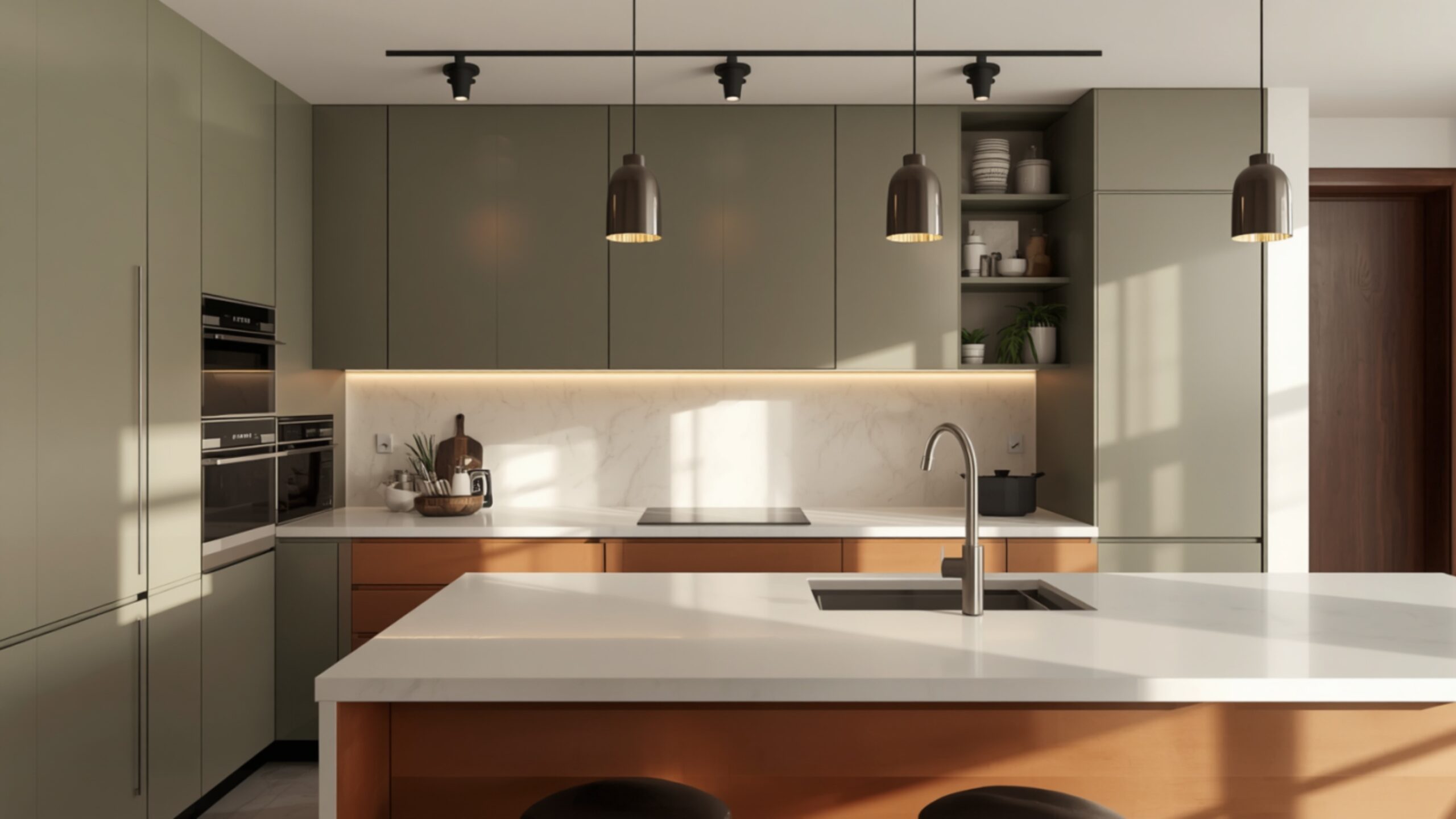
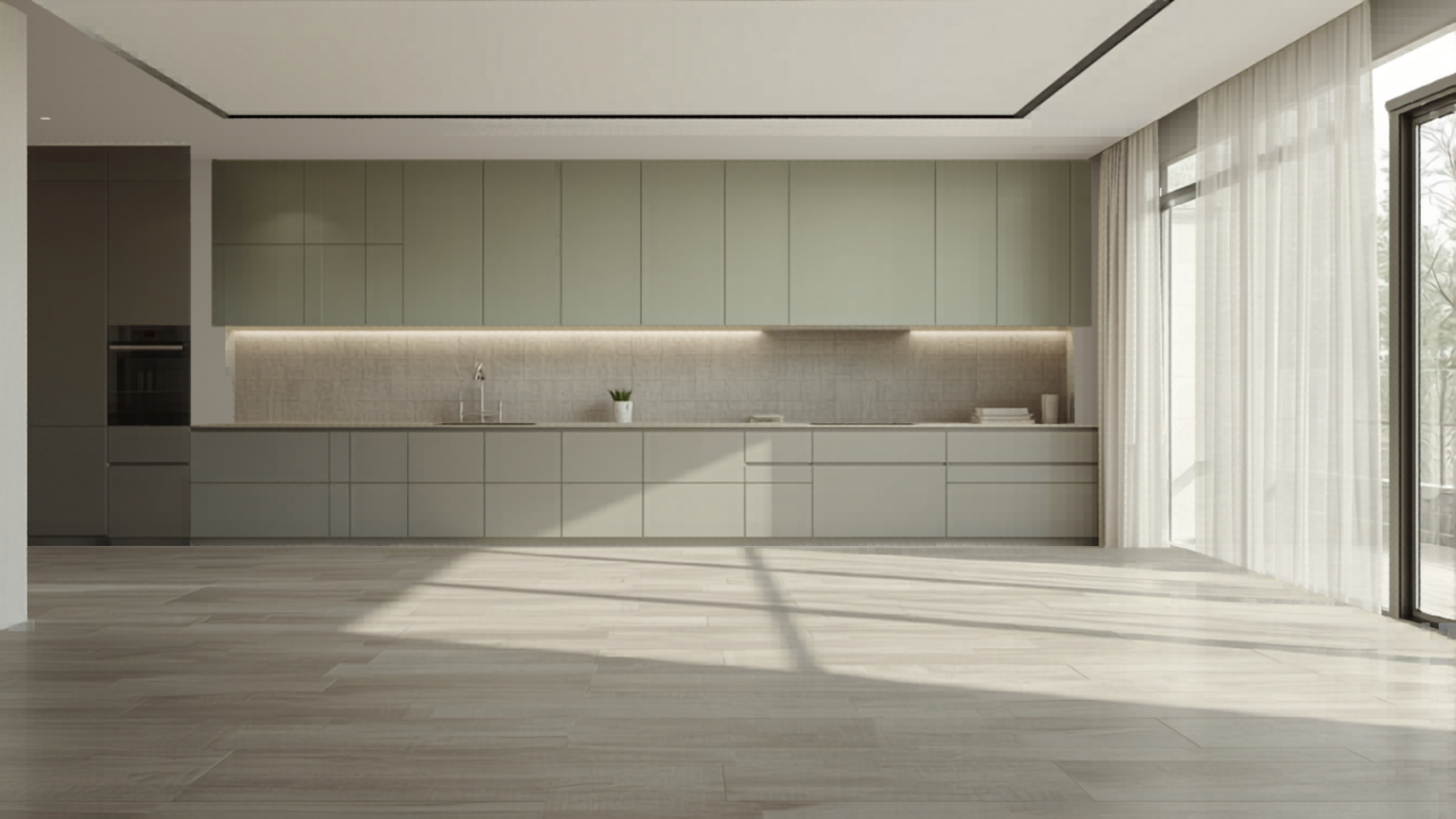
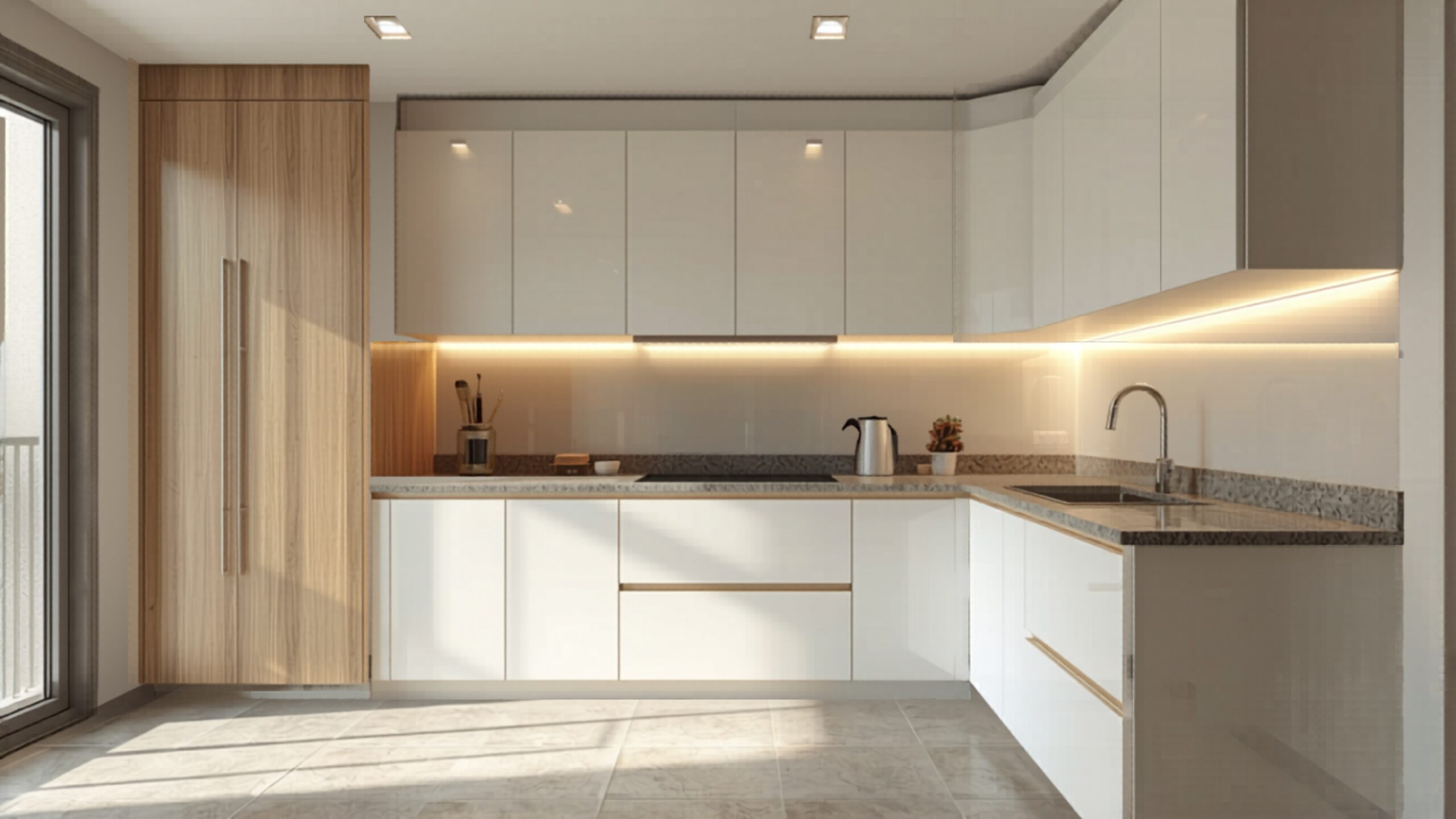
Contemporary handle free modular kitchen interior design in Whitefield Bengaluru 2026 with sage green cabinets and under cabinet lighting, by myNivasa
A contemporary handle free kitchen in sage green with task lighting

One reason to prefer a designer with projects in your own locality is layout literacy. Bengaluru's housing stock falls into recognisable families, and each rewards different planning moves.

Compact 2BHK in tech corridor towers. Whitefield, Sarjapur Road, Electronic City. Around 900 to 1,100 sqft with open kitchens. The winning moves are full height wardrobes to the ceiling, a TV unit that doubles as a display and storage wall, and a study nook carved from the bedroom or balcony for work from home weeks. Avoid bulky false ceiling drops, since these towers already have lower slab heights.

Spacious 3BHK in established neighbourhoods. Koramangala, Indiranagar, Jayanagar. Here the home can afford a defined foyer, a separate pooja unit, a full dining wall with crockery storage and a guest room that converts to a parents room. Circulation is generous, so furniture can float away from walls and the lighting plan can zone the living and dining separately.

Independent homes and villas. Hebbal, Bannerghatta Road outskirts, North Bengaluru plots. Staircase storage, double height living treatments and terrace lounges enter the conversation. Budget behaviour changes too, since villas bill significant amounts in railing, cladding and outdoor work that apartments never see.

Older homes under renovation. Malleshwaram, Basavanagudi, Rajajinagar. The designer must read structural walls correctly, plan around existing plumbing stacks and often preserve original flooring like red oxide or athangudi tiles that give these homes their character. Renovation experience is a separate skill from new apartment fit outs. Ask specifically for renovation references if this is your situation.

Storage solutions that separate good designers from order takers

Storage is where I judge any interior designer near me candidate fastest, because storage planning cannot be faked with styling. When you visit a shortlisted designer's completed site, open the wardrobes and kitchen units. The interiors tell the truth.

A thoughtful Bengaluru home in 2026 plans storage in layers. Daily access storage sits between knee and shoulder height: kitchen drawers with cutlery organisers, wardrobe shelves at eye level, an entry drop zone for keys and masks and helmets. Weekly access storage takes the higher shelves and under bed boxes. Deep storage, meaning luggage, festival decorations, winter bedding and the pressure cooker that appears twice a year, belongs in lofts above wardrobes and above kitchen units.

Specific solutions worth asking your designer about: tall units and pantry pull outs in the kitchen rather than dead corner cabinets, magic corner or carousel fittings where corners are unavoidable, hydraulic lift up storage inside box beds, window seat storage in kids rooms, and a dedicated pooja samagri drawer below or beside the pooja unit. Each of these has a cost. A pantry pull out adds Rs 12,000 to Rs 25,000 depending on brand, a hydraulic box bed adds Rs 8,000 to Rs 15,000 over a plain bed. Good designers present these as priced options, not assumptions.

The order taker designs 4 identical wardrobes and calls storage done. The designer interviews you about ironing habits, how many suitcases your family owns, and where wet umbrellas land in July, then plans for those answers. That interview is worth more than any 3D render.

Lighting layers that change how your home feels

Lighting is the least understood line in any interior designer near me quote and the one with the most visible payoff. I plan lighting in 3 layers for every myNivasa home.

Ambient layer. The general illumination, usually recessed COB downlights or panel lights in the false ceiling. Warm white at 2700K to 3000K keeps living spaces and bedrooms feeling cozy, while 4000K neutral white serves kitchens and study corners where tasks need clarity. Pure cool white at 6500K, the default tube light tone of older Indian homes, flattens interiors and is the first thing I remove in renovations.

Task layer. Under cabinet strips over kitchen counters, a pendant over the dining table, reading lights beside beds, a focused lamp at the study desk. Task lighting prevents the common Bengaluru apartment problem of a beautifully lit ceiling and a shadowed countertop.

Accent layer. Profile LED strips in ceiling coves, shelf lighting inside display units, a picture light over art, a warm wash on a fluted pooja unit panel. Accent light creates depth and ambience, making rooms appear larger and more finished after sunset. This is also the layer where brass and black metal fixtures can echo your style direction, traditional, contemporary or fusion.

Practical guidance: insist on a lighting layout drawing with switch groupings before electrical work starts. Rewiring a poorly grouped circuit after painting costs 3 times what planning it would have. Dimmers on the living room ambient circuit cost Rs 1,500 to Rs 3,500 each and give you 5 moods from 1 room.

Colour schemes Bengaluru homes are choosing in 2026

Colour is personal, but 2026 Bengaluru has clear currents, and a designer near you should speak about them fluently while still reading your family's taste.

The dominant direction in my recent projects is warm neutrals, ivory, sand, greige and clay, carried across walls in Asian Paints and Dulux emulsions, with 1 grounded accent per room. Terracotta and rust hold strong in living rooms, deep teal and forest green in bedrooms, and ochre or mustard as cushion and art accents. Berger's textured finishes are appearing on single feature walls behind TV units and bed headboards, at Rs 80 to Rs 180 per sqft against Rs 22 to Rs 38 for plain emulsion.

Two practical rules serve every budget. First, keep ceilings and 70 percent of wall area light, since Bengaluru apartments rarely have oversized windows and lighter surfaces stretch the available daylight, making rooms appear airy and open. Second, repeat each accent colour at least twice across a sightline, a teal wall echoed by teal in a rug or artwork reads intentional, while a lone colour event reads accidental.

For traditional and fusion homes, the kemp palette of deep red, turmeric and ivory pairs naturally with teak and brass. For contemporary homes, warm grey plus wood plus 1 muted accent stays calm and timeless. Ask your designer for a colour board with actual painted swatches, not screen renders, because every pigment shifts under your home's specific daylight.

Designer fees and project cost reality by tier in Bengaluru 2026

Now the section most interior designer near me searches really want. I will break the money conversation into the 2 parts every family must separate: what you pay the designer, and what the project itself costs.

Part 1, designer fees. Three models dominate Bengaluru in 2026. Design only consultants charge Rs 100 to Rs 300 per sqft for the complete drawing and specification package, so a 1,200 sqft 3BHK design package runs Rs 1.2 to Rs 3.6 lakhs.

Percentage based designers charge 8 to 15 percent of the executed project value, common on larger and luxury projects, and you must ask whether vendor discounts pass to you or stay with the designer. Turnkey firms blend the design fee into the project quote, which feels convenient but demands a line item BOQ so you can see what design supervision actually costs. Hourly consultation, Rs 2,000 to Rs 10,000 per session, suits families who only need direction and will execute themselves.

Part 2, project costs by tier. The table at the top of this guide summarised the 3 tiers I use across myNivasa projects. Here is what they mean in practice for a 1,200 sqft 3BHK in 2026.

Essential tier, Rs 6 to Rs 10 lakhs. Commercial ply and MDF mix carcasses, laminate finishes, standard Indian hardware, basic single level false ceiling in living areas, full home painting in plain emulsion, and modular kitchen plus 3 wardrobes. This tier serves rental homes and first homes well. It does not survive corner cutting, so spend within it on the kitchen carcass and hardware first.

Comfort tier, Rs 10 to Rs 16 lakhs. BWR plywood throughout, acrylic or membrane kitchen shutters, Hettich or Hafele soft close hardware, layered false ceiling with cove lighting, feature wall treatments, and loose furniture coordination. Around 60 percent of my 2025 to 2026 projects closed in this band. The middle of this tier, around Rs 12 to Rs 13 lakhs, is the most efficient money in Bengaluru interiors today.

Signature tier, Rs 16 to Rs 22 lakhs plus. BWP marine ply, veneer and PU finishes, stone and fluted panelling, designer lighting fixtures, automation provisions, and site built specials like bar units or library walls. Above Rs 22 lakhs, you are purchasing exclusivity rather than durability, and I tell clients so plainly.

Locality adjusts these numbers. South and Central Bengaluru, Koramangala, Jayanagar, Indiranagar, price 20 to 35 percent above the eastern corridor, driven by carpenter day rates of Rs 900 to Rs 1,200 against Rs 650 to Rs 850 in the east, tighter site logistics and older buildings needing more preparation work. The same Comfort tier 3BHK that closes at Rs 12 lakhs in Whitefield can close at Rs 15 lakhs in Jayanagar.

Payment structure. The clean industry standard is 10 percent at booking, 40 percent at design freeze and production start, 40 percent at material delivery and installation start, and 10 percent at handover after snag closure. Any designer demanding 70 percent or more before production starts is financing their previous project with your money. Walk away.

Sample line item BOQ: Comfort tier 2BHK in 2026

Families ask me what a line item BOQ actually looks like, so here is a representative one for a 1,000 sqft 2BHK at Comfort tier specifications, drawn from my 2025 to 2026 Whitefield and Sarjapur Road closures. Your numbers will differ with sizes and choices, but the structure is what you should demand from any interior designer near you.

ItemSpecificationQuantity basis2026 cost band
Modular kitchen, L shapeBWP ply carcass, acrylic shutters, Hettich soft closeAround 80 sqft shutter areaRs 1.8 to Rs 2.6 lakhs
Kitchen tall unit and loftsBWR ply, laminate finishAround 40 sqftRs 50,000 to Rs 80,000
Wardrobe, master bedroomBWR ply, membrane shutters, internal drawers7 ft x 8 ftRs 90,000 to Rs 1.4 lakhs
Wardrobe, second bedroomBWR ply, laminate shutters6 ft x 7 ftRs 70,000 to Rs 1 lakh
Lofts above wardrobesBWR ply, laminateBoth bedroomsRs 35,000 to Rs 55,000
TV unit and display wallBWR ply, veneer accents, profile lighting10 ft wallRs 60,000 to Rs 1 lakh
Crockery and dining storageBWR ply, glass shutters5 ft unitRs 45,000 to Rs 70,000
Pooja unitVeneer with fluted panel and warm accent light3 ft nicheRs 30,000 to Rs 60,000
False ceiling, living and diningGypsum, 2 levels with coveAround 350 sqftRs 55,000 to Rs 85,000
Bedroom ceilingsGypsum border with cove2 roomsRs 35,000 to Rs 55,000
Electrical and lightingWiring changes, COB downlights, profile strips, dimmersFull homeRs 70,000 to Rs 1.2 lakhs
Painting, full homeAsian Paints or Dulux emulsion plus 1 textured feature wallAround 2,800 sqft wall areaRs 70,000 to Rs 1.1 lakhs
Foyer and shoe unitBWR ply, laminate, seat top4 ft unitRs 25,000 to Rs 45,000
Site works and handoverProtection, transport, deep cleaning, snag closureLump line, itemisedRs 30,000 to Rs 55,000

The bands above sum to roughly Rs 7.7 to Rs 12 lakhs, which is exactly the Comfort tier 2BHK range quoted at the top of this guide. Three reading lessons from this table. First, the kitchen and 2 wardrobes consume close to half the budget, so specification debates should start there, not on the pooja unit. Second, every line carries a material specification and a quantity basis, which is what makes 2 quotes comparable. Third, the final line exists. Designers who never write site works and handover as a line simply bill it as a surprise later.

Add 18 percent GST on the contracted value, loose furniture of Rs 1.5 to Rs 4 lakhs if you are furnishing from scratch, and the 10 to 15 percent contingency I recommend throughout this guide. A complete, honestly planned Comfort tier 2BHK in 2026 therefore lands between Rs 11 and Rs 17 lakhs all inclusive, and a family that walks in with that number avoids both sticker shock and false bargains.

Hidden costs that surprise Bengaluru homeowners

Every year families show me quotes that looked Rs 2 lakhs cheaper than mine and ended Rs 1 lakh costlier. The gap always lives in the exclusions. Here is the 2026 hidden cost map, with realistic ranges.

GST. The big one. Interior works contracts attract 18 percent GST, and most quotes exclude it. A Rs 7 lakh quote becomes Rs 8.26 lakhs at billing. Always ask: is this figure inclusive of GST? Get the answer in writing on the quote itself.

Civil and electrical surprises. Wall removal or new partition work runs Rs 20,000 to Rs 60,000. Extra electrical points, and every family adds them once they see the furniture plan, run Rs 15,000 to Rs 40,000. Plumbing changes for a relocated sink or washing machine line run Rs 10,000 to Rs 30,000.

Painting scope gaps. Many quotes cover only feature walls, leaving the full home repaint, Rs 15 to Rs 38 per sqft depending on emulsion grade, as a discovery at handover time.

Logistics. Material transport and gated community entry handling adds Rs 8,000 to Rs 20,000 in large complexes. Some Whitefield and Sarjapur Road associations also collect refundable interior work deposits of Rs 10,000 to Rs 50,000 and charge for freight elevator slots.

The finishing tail. Appliance installation Rs 5,000 to Rs 15,000, post completion deep cleaning Rs 3,000 to Rs 8,000, and the miscellaneous tail of door stoppers, bathroom hardware and curtain rods that quietly absorbs Rs 10,000 to Rs 25,000.

Sum the typical case and hidden items add Rs 50,000 to Rs 1.5 lakhs to a 2BHK or 3BHK project. My standing advice: hold a 10 to 15 percent contingency outside the quoted figure, and insist on a line by line BOQ listing every item with material specification, dimensions, hardware brand and rate. A designer who resists itemising is telling you where the surprises will come from.

Planning for every generation: kids rooms and senior friendly choices

A near me designer worth hiring asks who lives in the home before asking what style you like, because Bengaluru households frequently span 3 generations, and design choices that delight a 7 year old can trouble a 70 year old knee.

For kids rooms, plan for change rather than for the current age. A study desk at adjustable height, wardrobes whose internal shelves reconfigure as toys give way to books, washable paint grades on the lower half of walls, rounded edges on all furniture below shoulder height, and window seat storage that doubles as a reading perch. Theme decor dates within 2 years, so keep themes in bedding and removable decals rather than in built furniture. Cost note: a well planned kids room adds little over a standard bedroom, typically Rs 10,000 to Rs 30,000 for adjustable fittings and washable paint upgrades.

For parents and grandparents, the considerations are quieter and more important. Bedside switches that control the main light, so nobody crosses a dark room at night. A clear 3 ft circulation path around the bed. Anti skid tiles or matte finishes in their bathroom, grab bars planned into the wall at construction stage rather than drilled into tile later, wardrobe handles at reachable height rather than flush handle free profiles that need a push, and a chair in the bedroom for dressing. Seat height matters too: sofas and beds at 18 inches rise far more kindly than fashionable low slung pieces at 14.

When you interview designers, raise these needs and watch the response. A designer who immediately sketches a bedside switch circuit and asks about your parents' bathroom routine is planning a home. One who redirects you to the moodboard is decorating a photograph. The first kind is the one your near me search was looking for.

Why Bengaluru families choose myNivasa as their nearby designer

I will keep this section short and factual, since the rest of the guide should already demonstrate how we think. myNivasa is a Bengaluru based turnkey interior design and home construction practice. We work across Whitefield, HSR Layout, Koramangala, Sarjapur Road, Hebbal, Jayanagar, Indiranagar, Electronic City, Bannerghatta Road, Yelahanka and Malleshwaram, which means whichever pin code you searched from, we have probably handed over a home near you.

Our process mirrors this guide because this guide is our process. Discovery interview, 2 to 3 concept directions across traditional, contemporary and fusion, a line item BOQ with brands and dimensions before any advance beyond booking, BIS marked core materials, Hettich or Hafele hardware as standard from Comfort tier, written timelines with stage wise payments, and a 7 to 15 day snag closure window after installation. Families who want to verify any of this can visit a live myNivasa site in their own locality before signing anything. That offer, more than any portfolio image, is what we believe a near me search should earn you.

10 questions to ask in the first meeting

The first meeting with any interior designer near me shortlist is an interview, and you are the employer. I have sat on both sides of this table for 8 years, and these are the questions that expose the most truth in the least time.

1. How many projects have you handed over in my locality in the last 2 years? Locality experience is the entire promise of a near me search. Listen for specific building names, not vague claims.

2. Can I walk through 1 live site and 1 handed over home this week? The answer should be yes without hesitation. Live sites show process discipline, handed over homes show how the work ages.

3. What exactly is included in your scope, and what is excluded? Get the exclusions list in writing. Painting scope, civil work, loose furniture and appliance installation are the usual gaps.

4. Which fee model do you follow, and do vendor discounts pass to me? A designer earning undisclosed margins on materials has an incentive that works against your budget.

5. What happens if I do not like the first concepts? You want a stated revision policy, typically 2 to 3 concept rounds, not a verbal assurance that you will love it.

6. Who manages my site day to day, and how often will I receive updates? Ask to meet the project manager, not just the design lead. Weekly photo updates with a written progress note is the 2026 standard.

7. Which brands of plywood, hardware and finishes do you specify by default? You now know the names to listen for: BIS marked Century or Greenply boards, Hettich or Hafele hardware, Asian Paints, Berger or Dulux finishes.

8. What is your realistic timeline, stage by stage? Insist on phases with dates: design weeks, production weeks, installation weeks. A single end date with no stages is not a plan.

9. How do you handle vastu requirements? You want fluency without upselling, planning around preferences at no cost rather than inventing corrections.

10. What does your warranty cover, and for how long? Modular work warranties of 5 to 10 years on manufacturing defects are common. Ask what voids them and who services them.

Notice that only 1 of these 10 questions asks about price directly. That is deliberate. The answers to the other 9 tell you whether the eventual price will mean anything.

Red flags that should end the conversation

Some signals are not negotiation points. They are exits. I share these because families often sense something wrong and talk themselves past it, usually because the quote was attractive.

The designer agrees with everything. If you propose 6 ideas and receive 6 enthusiastic yeses, you are not hiring a designer, you are hiring an order taker with a markup. Professionals push back, offer alternatives and explain trade offs. You are paying for judgement, not validation.

The portfolio looks like 1 home photographed 30 times. Template factories produce fast and cheap, and if a template is what you want, that is a legitimate choice. But if every living room shows the same TV panel and the same grey sofa, do not expect your brief to change the pattern.

Vague timelines or impossible ones. Both directions fail. We will finish soon is not a date, and a full 3BHK in 25 days is not a process. Quick promises usually surface later as installation shortcuts or unfinished snag lists.

Lump sum quotes that resist itemisation. Every legitimate cost can be written on a line with a specification and a rate. Resistance to a BOQ is a statement about where the margins hide.

Heavy advance demands. The clean standard is 10 percent at booking and stage wise payments after. A demand for 50 to 70 percent upfront means your money is funding someone else's delayed project.

Ignored details from your brief. You said no orange, the moodboard shows terracotta everywhere. You stated a strict budget, the first concept consumes half of it on 1 kitchen. A designer careless with small instructions now will be careless with big ones during execution.

No written contract. A proper agreement covers scope, exclusions, payment stages, timeline with phases, revision policy, warranty terms and exit clauses for both sides. Working on trust sounds warm and ends in disputes. For larger projects involving builders, you can verify the firm's registered projects on RERA Karnataka as an additional check.

Step by step: from search to signed contract in 21 days

Families often ask me how long choosing an interior designer near me should take. My answer is 3 focused weeks. Longer than that and decision fatigue sets in, shorter and you skip verification. Here is the sequence I recommend.

Days 1 to 3, build the longlist. Search interior designer near me, note the firms appearing for your locality, add 2 or 3 names from your apartment association group and from neighbours whose homes you admire. Aim for 6 to 8 names. Check each firm's completed project photos for your home type, apartment or villa or renovation.

Days 4 to 7, cut to 3. Call each firm with 3 filter questions: projects completed in your locality, your project type experience, and rough tier band for your size of home. Drop anyone vague on all 3. Book first meetings with the best 3.

Days 8 to 14, hold the 3 first meetings. Use the 10 questions from the section above. Share the same brief and the same budget band with all 3, since identical inputs make outputs comparable. Request a scope document and indicative quote from each.

Days 15 to 18, verify. Walk 1 handed over home per shortlisted firm, or at minimum 1 live site. Call 1 reference per firm. Compare the 3 quotes line by line using the method in the next section.

Days 19 to 21, negotiate and sign. Pick your firm, negotiate scope rather than rate, since rate cuts come back as material cuts, and sign a written contract with stage wise payments. Pay the booking advance, typically 10 percent, and schedule the measurement visit.

Three weeks, roughly 6 hours of meetings and 4 hours of visits. Against a Rs 10 lakh decision that you will live inside for a decade, it is the highest value time you will spend on the entire project.

How to compare 3 quotes like a professional

Three interior designer near me quotes for the same 3BHK can read Rs 9 lakhs, Rs 12 lakhs and Rs 14.5 lakhs and still describe 3 different projects. Comparing the bottom line numbers is the most expensive mistake in this entire journey. Compare these 5 layers instead.

Layer 1, scope coverage. List every room and item across all 3 quotes in a spreadsheet. Mark what each quote includes. The Rs 9 lakh quote frequently excludes painting beyond feature walls, loft work, and the utility area that the Rs 14.5 lakh quote includes. Normalise scope before comparing anything else.

Layer 2, material specification. For each major item, compare core material, finish, and hardware brand. A kitchen quoted with MDF carcass and generic channels against one with BWP ply and Hettich is a Rs 60,000 to Rs 1 lakh real difference hiding behind similar headline rates.

Layer 3, measurement basis. Confirm whether wardrobes and kitchens are billed by sqft of shutter area, carcass area or wall area, since the same physical wardrobe measures differently under each convention. Ask all 3 firms to restate their biggest items in the same convention. Differences of 15 to 20 percent often dissolve at this step.

Layer 4, tax and escalation treatment. Confirm GST inclusion, confirm whether quoted rates hold for the project duration, and confirm what triggers escalation. One honest sentence in writing here is worth Rs 1 lakh of surprise immunity.

Layer 5, locality adjusted sanity check. Place the normalised per sqft figure against the city bands: Rs 1,200 to Rs 1,800 Essential, Rs 1,800 to Rs 3,000 Comfort, Rs 3,000 plus Signature, with a 20 to 35 percent premium for South and Central localities. A quote far below the band for its claimed specification is not a bargain, it is a specification that will quietly degrade during execution.

CorridorExample localitiesComfort tier 3BHK bandCarpenter day ratePremium vs East
EastWhitefield, Sarjapur Road, MarathahalliRs 10 to Rs 13 lakhsRs 650 to Rs 850Baseline
South CentralKoramangala, Jayanagar, JP NagarRs 12 to Rs 16 lakhsRs 900 to Rs 1,20020 to 35 percent
CentralIndiranagar, MalleshwaramRs 12 to Rs 16 lakhsRs 900 to Rs 1,20020 to 30 percent
NorthHebbal, YelahankaRs 10 to Rs 14 lakhsRs 700 to Rs 9505 to 15 percent

One spreadsheet evening with these 5 layers converts 3 incomparable documents into 1 clear decision, and it usually saves between Rs 50,000 and Rs 2 lakhs, not by choosing the cheapest quote but by catching what the cheapest quote left out.

Watch: choosing an interior designer in Bengaluru

A practical walkthrough of shortlisting and evaluating interior designers in Bengaluru.

If you found this guide useful, these myNivasa guides go deeper into specific rooms and budgets: my detailed interior design cost in Bangalore 2026 price guide, our living room design ideas guide for Whitefield, the master bedroom design ideas guide for JP Nagar, and our apartment renovation process and cost guide for Whitefield.

Frequently Asked Questions

How do I verify an interior designer's quality before signing?

Visit 1 live site and 1 handed over home. Check shutter alignment, edge banding, finish consistency under natural light and the insides of wardrobes. Ask for 2 client references from your own locality and ask those clients whether timelines and budgets held. A designer confident in their execution will arrange these visits within a week.

Should I choose a freelance designer, a local studio or a large platform?

Freelancers offer personal attention and lower fees but limited execution muscle. Large platforms offer process and warranties but rotate project managers. Local studios sit between, with neighbourhood knowledge and direct founder accountability. Match the model to your project complexity: design only advice suits freelancers, full 3BHK turnkey work rewards a studio or platform with its own production.

How long does a full home interior project take in Bengaluru?

A realistic 2026 timeline is 45 to 60 days for a 2BHK and 60 to 90 days for a 3BHK, counted from design freeze, not from booking. Design development adds 3 to 5 weeks before that. Promises of full homes in 30 days usually mean either a template design or quality shortcuts during installation.

Can a designer work with my vastu requirements?

Yes, and the time to raise vastu is the first meeting. Kitchen orientation, master bedroom placement, pooja unit direction and mirror positions can all be planned at no extra cost at layout stage. Corrections after drawings freeze, like relocating a kitchen, become civil and plumbing exercises with real costs, so declare preferences early.

What should a complete design package include?

Layout plan, furniture plan, false ceiling and lighting drawings with switch groupings, electrical point drawings, material and colour palette with physical samples, 3D views of key rooms, and a line item BOQ with brands, dimensions and rates. If any of these is missing, the package is a sketch, not a design.

How much does an interior designer cost in Bengaluru in 2026?

Design only fees run Rs 100 to Rs 300 per sqft, so a 1,200 sqft 3BHK design package costs Rs 1.2 to Rs 3.6 lakhs. Percentage based designers charge 8 to 15 percent of project value. Hourly consultations run Rs 2,000 to Rs 10,000. Turnkey firms include design within project quotes of Rs 1,200 to Rs 5,000 per sqft.

Is GST included in interior design quotes?

Usually not. Interior works contracts attract 18 percent GST, and most Bengaluru quotes exclude it. A Rs 7 lakh quote becomes Rs 8.26 lakhs after tax. Ask for the GST treatment in writing on the quote, and confirm whether material price escalations during the project are absorbed or passed on.

What budget should I keep for a 2BHK versus a 3BHK in 2026?

For full interiors, keep Rs 4 to Rs 7 lakhs for an Essential tier 2BHK, Rs 7 to Rs 11 lakhs for Comfort tier, and Rs 11 lakhs plus for Signature. For a 3BHK, the bands are Rs 6 to Rs 10 lakhs, Rs 10 to Rs 16 lakhs and Rs 16 to Rs 22 lakhs plus. Add 18 percent GST, Rs 1.5 to Rs 6 lakhs for loose furniture, and a 10 to 15 percent contingency.

Limitations and Assumptions

All rates in this guide reflect Bengaluru market conditions as of June 2026 and my own project closures from 2025 to 2026. Material prices move with plywood, hardware and labour markets, so treat ranges as planning bands, not quotes. Per sqft figures refer to built up area for project tiers and shutter area for finish rates, a distinction that causes most cost comparison confusion. Vastu guidance reflects traditional practice as my clients request it, and families should consult their own practitioners for specific rulings. Locality premiums are averages and individual buildings vary.

Sources and References

Final Word

A near me search gives you a list. This guide gives you a method. Shortlist 3 designers with handed over homes in your locality, walk 1 finished site each, test their range across traditional, contemporary and fusion directions, and listen for whether they interview your family or just present their catalogue. The design conversation should cover layout, storage, lighting layers, colour and vastu before it ever reaches a showroom visit.

Then anchor the money conversation in numbers you now know: Rs 1,200 to Rs 1,800 per sqft Essential, Rs 1,800 to Rs 3,000 Comfort, Rs 3,000 plus Signature, designer fees of Rs 100 to Rs 300 per sqft or 8 to 15 percent of project value, 18 percent GST on top, and a 10 to 15 percent contingency for the hidden items every project meets. A 2BHK done well in 2026 is a Rs 7 to Rs 11 lakh decision and a 3BHK a Rs 10 to Rs 16 lakh decision for most families.
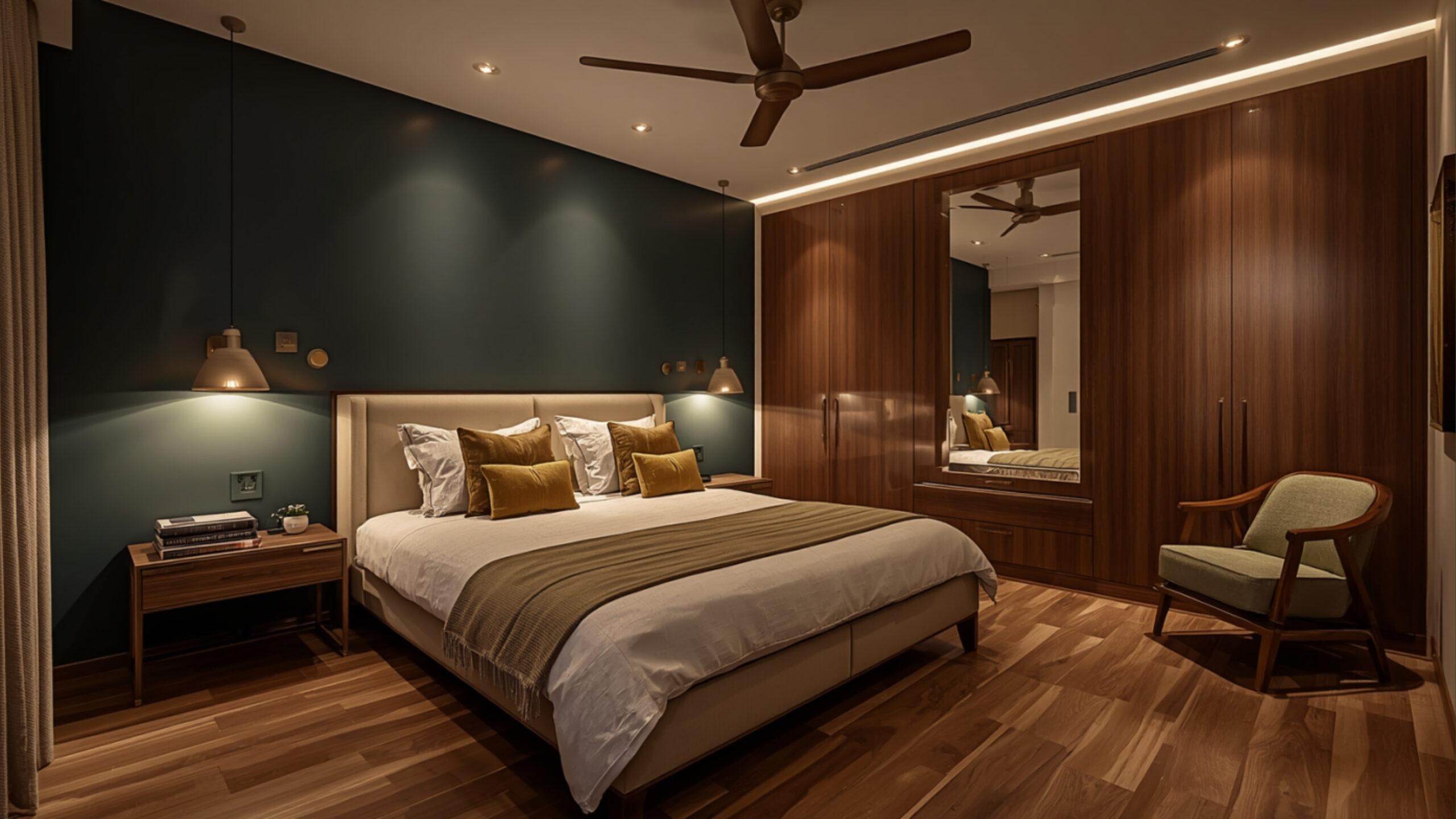
Styled master bedroom interior design in HSR Layout Bengaluru 2026 with deep teal accent wall, warm bedside lighting and membrane wardrobes, by myNivasa
A styled master bedroom with teal accent wall and layered warm lighting

If you are starting this journey anywhere in Bengaluru, myNivasa offers a discovery consultation where we review your floor plan, discuss style directions and give you a tier wise budget band for your specific home. Book it through mynivasa.com, and bring your questions. The right designer near you is the one who answers all of them in writing.
2 BHK Renovation Cost in Indiranagar: Honest 2026 Guide

Written by Vishwas Anegundi, founder of myNivasa, a Bengaluru home construction and interior design firm that has renovated and finished homes across Indiranagar, Koramangala and the wider city since 2018.

2 BHK Renovation Cost in Indiranagar: Your Honest 2026 Guide

Direct answer: A full 2 BHK renovation in Indiranagar in 2026 costs Rs. 3.5 lakh to Rs. 9 lakh, with most families spending Rs. 5 lakh to Rs. 6.5 lakh for a Comfort tier finish that includes a modular kitchen, two wardrobes and a living area false ceiling. On the design side, the single choice that shapes that figure most is layout rather than area, because how you plan the kitchen, the storage and the flow between rooms decides how much carpentry, wiring and material grade the home actually needs.

Quick takeaways

  • A 2 BHK renovation in Indiranagar in 2026 ranges from Rs. 3.5 lakh to Rs. 9 lakh, or about Rs. 1,300 to Rs. 4,200 per sq ft.
  • Indiranagar runs roughly 15 to 25 percent higher than suburbs such as Whitefield outskirts or Electronic City, mostly due to access, parking and society rules.
  • The design decision that drives the budget most is layout, not area, since opening a closed kitchen or reworking the flow changes the carpentry and services far more than a few extra square feet.
  • The modular kitchen alone takes about 22 percent of the budget and wardrobes take about 18 percent, so storage and kitchen together are close to 40 percent of the spend.
  • Material grade is where most of the cost gap between tiers lives, with the choice of plywood, shutter finish and hardware brand explaining the difference between a Rs. 4 lakh and a Rs. 8 lakh home.
  • Renovating an occupied flat costs 15 to 25 percent more than equivalent new work because of demolition, debris handling and rework.
  • Plan a 10 to 15 percent contingency, because hidden costs of Rs. 50,000 to Rs. 1.5 lakh are normal in older Indiranagar buildings.
  • GST at 18 percent applies to the service component and should be shown as a clear line, not folded silently into the rate.

Spoken answer: If you are asking how much it costs to renovate a 2 BHK in Indiranagar in 2026, the honest range is Rs. 3.5 lakh to Rs. 9 lakh, and a comfortable mid tier home usually lands near Rs. 5.5 lakh. That figure normally includes the modular kitchen, two wardrobes, a false ceiling in the living and dining area, fresh paint, and the electrical and plumbing work an older flat needs, so you are paying for both the new design and the hidden services behind the walls.

2 BHK renovation cost in Indiranagar 2026: tier summary table

TierTotal cost (950 to 1,150 sq ft)Approx. per sq ftWhat it covers
EssentialRs. 3.5 lakh to Rs. 5 lakhRs. 1,300 to Rs. 1,800Repair led refresh, repaint, basic kitchen and one or two wardrobes, essential electrical and plumbing fixes
ComfortRs. 5 lakh to Rs. 6.5 lakhRs. 1,800 to Rs. 2,600Modular kitchen, two wardrobes, living and dining false ceiling with profile lighting, full repaint, partial rewiring
SignatureRs. 7 lakh to Rs. 9 lakh and aboveRs. 2,800 to Rs. 4,200Acrylic or lacquered glass finishes, BWP ply, premium hardware, designer ceilings, full rewiring and plumbing, smart points

In my experience across Indiranagar homes, the families who stay calmest through a renovation are the ones who lock the layout and the material grade first and the colours last. The number on the quote follows those two design decisions almost every time. At myNivasa we put both on paper before we ever talk about a final figure.

Vishwas Anegundi, myNivasa

What does a 2 BHK renovation in Indiranagar include?

When a family in Indiranagar tells me they want to renovate their 2 BHK, the word means very different things to different people, so the first job is always to define the scope as a design brief rather than a price. For one family a renovation is a tired flat that needs paint, a new kitchen and better storage. For another it is a full strip down to the brick, new wiring, new plumbing and a layout that finally suits how they live. Understanding what a renovation actually contains is the foundation for every later decision.

A complete 2 BHK renovation moves through a fixed set of work heads, and it helps to picture them as design layers. The civil layer covers demolition of old structures, any masonry changes, waterproofing of bathrooms and balconies, and the patching that follows. The services layer is the wiring, switchboards and distribution board on the electrical side, and the piping, drainage and sanitary fittings on the plumbing side. The carpentry layer is where most of the visible design sits, since it holds the modular kitchen, the wardrobes, the television unit, the crockery or pooja unit and the loose storage. On top of these sit the finishing trades, namely the false ceiling, the lighting, the flooring or tile repair, and the paint.

The reason this layered approach matters is that a renovation is not one product, it is a sequence of trades that has to follow a design logic. In an Indiranagar flat that is already occupied, you cannot wire, plaster and paint in any order you like. The hidden services go first, the carpentry follows, and the finishes come last, otherwise you pay twice. A clear scope on day one is the single best protection a homeowner has, because it tells you what the design includes and, just as importantly, what it leaves out.

It also helps to separate cosmetic renovation from structural renovation as two different design approaches. A cosmetic refresh keeps the layout, repaints, replaces a few fittings and updates the kitchen and wardrobes. A structural renovation reworks the layout, opens the kitchen to the living room, redesigns the bathrooms and rewires the home. The first approach is faster and lighter, the second is where a flat genuinely changes character. Most Indiranagar 2 BHK projects I see sit between the two, keeping the core walls but redesigning the kitchen, the storage, the ceiling and the services.

What affects the 2 BHK renovation cost in Indiranagar?

Homeowners often assume that a larger flat automatically costs proportionally more. In practice, area is only one of several drivers, and rarely the most important. Here is what actually moves the number, in the order I see it matter most, blending the design logic with the cost effect.

The first driver is the layout decision, which is purely a design choice with a large cost tail. Keeping the existing layout is the most economical path, because the walls, the plumbing stacks and the main wiring stay where they are. The moment you open a closed kitchen into the living room, add a utility area or shift a bathroom door, you trigger civil work, fresh waterproofing and rerouted services. A layout change of even one wall can add Rs. 40,000 to Rs. 90,000 once you count demolition, masonry, waterproofing and rework.

The second driver is the material grade. This is where most of the gap between a Rs. 4 lakh and a Rs. 8 lakh home actually lives. Moving from commercial grade plywood to marine grade boiling waterproof ply, or from a basic laminate shutter to an acrylic or lacquered glass shutter, can change a kitchen quote by Rs. 80,000 to Rs. 1.5 lakh on its own. The carcass, the shutter finish and the hardware brand are the three design levers, and they compound.

The third driver is the locality premium. Central pockets such as Indiranagar, Koramangala and JP Nagar run roughly 15 to 25 percent higher than suburbs such as Whitefield outskirts and Electronic City. This is not a markup for the postcode. It comes from real cost, namely tighter parking for material vehicles, restricted working hours in many societies, lift and labour movement charges, and the higher day rates that skilled carpenters and electricians command in the central corridor.

The fourth driver is the condition of the existing flat. An occupied 2 BHK renovation costs 15 to 25 percent more than equivalent new work, because the team has to demolish carefully, protect existing surfaces, manage debris through a lift and society, and redo small areas that were never meant to be touched. Older Indiranagar buildings also hide surprises behind the walls, from corroded plumbing to undersized wiring, and those reveal themselves only once work begins.

The fifth driver is the quantity and quality of storage, which is as much a lifestyle consideration as a cost one. The modular kitchen takes around 22 percent of a typical budget, and wardrobes and storage take about another 18 percent, so the two together account for close to 40 percent of the spend. Adding a third wardrobe, a tall pantry or a full crockery wall is the most common reason a Comfort budget quietly drifts toward Signature.

The sixth driver is the finishing layer, namely the false ceiling, the lighting and the paint. A simple peripheral ceiling with a few profile lights is affordable, while a designer ceiling with coves, layered lighting and feature walls can double that line. The same logic of restraint versus ambition applies to paint, where a standard emulsion is one figure and a premium washable or textured finish is another.

Essential versus Comfort versus Signature: tier comparison

The clearest way to understand a renovation budget is to think in tiers rather than in a single number. At myNivasa we work with three, and they map cleanly onto what families in Indiranagar actually ask for. The tier you pick sets the material grade, the brand of hardware and the depth of the services work, and the rupee figure follows from there.

The Essential tier sits at Rs. 3.5 lakh to Rs. 5 lakh for a typical 950 to 1,150 sq ft flat, which is roughly Rs. 1,300 to Rs. 1,800 per sq ft. This is a repair led refresh. You get a fresh repaint across the home, a basic modular kitchen with a good carcass and laminate shutters, one or two wardrobes, essential electrical and plumbing fixes, and the waterproofing and patching an older flat needs. The Essential tier is the right call when the bones of the flat are sound and you mainly want it to look clean, work properly and last several more years.

The Comfort tier sits at Rs. 5 lakh to Rs. 6.5 lakh, or about Rs. 1,800 to Rs. 2,600 per sq ft, and this is where most Indiranagar families land. It includes a full modular kitchen with mid grade hardware, two wardrobes with internal organisers, a living and dining false ceiling with profile lighting, a complete repaint, partial rewiring and a quartz or granite counter. The Comfort tier is the balance point, since it gives a home that looks and feels new without reaching for the most expensive finishes.

The Signature tier starts around Rs. 7 lakh and runs to Rs. 9 lakh and above, which is Rs. 2,800 to Rs. 4,200 per sq ft or more. Here the design moves to acrylic or lacquered glass shutters, marine grade boiling waterproof ply, premium hardware from brands such as Blum and Hafele, designer ceilings with layered lighting, veneer or polyurethane finishes on feature units, full rewiring and plumbing, and smart electrical points. The Signature tier suits families who plan to stay long term and want the home to feel genuinely high end.

One honest note on tiers. The jump from Essential to Comfort usually buys better daily function, while the jump from Comfort to Signature mostly buys finish and feel. Both are valid, but knowing which kind of value you are paying for helps you decide where to stop.

Material grade versus cost: where the rupees actually go

If you remember one thing from this guide, let it be this. The single largest lever on a 2 BHK renovation cost is material grade, not floor area. Two homes of the same size in the same Indiranagar building can be Rs. 3 lakh apart purely because of the boards, shutters and hardware chosen, so it is worth understanding what each grade means as a material and what it costs.

Start with the plywood, since it is the skeleton of every wardrobe and kitchen cabinet. Commercial grade ply, graded IS:303 moisture resistant, is the entry choice and is fine for dry areas such as living room storage. Boiling waterproof ply, graded IS:710, is the marine grade board used near water, and it is the right choice for kitchen base units and bathroom vanities. The difference between the two can be Rs. 40 to Rs. 70 per square foot of board, which across a full kitchen and two wardrobes adds up to a meaningful sum.

Next come the shutters, which are the visible face of the carpentry and the part that defines the style of the home. A laminate shutter is the workhorse finish and the most affordable. An acrylic shutter gives a high gloss seamless look and costs noticeably more. A lacquered glass or polyurethane finish is the premium end. Moving a full kitchen from laminate to acrylic shutters commonly adds Rs. 60,000 to Rs. 1.2 lakh depending on the run length.

Then there is the hardware, the part nobody sees but everybody feels every day. Blum soft close hinges run about Rs. 350 to Rs. 600 each, and drawer channels run Rs. 1,200 to Rs. 2,800 per pair. Hettich and Hafele offer excellent quality at roughly 20 to 30 percent below Blum, which is why they are common in the Comfort tier. Across a kitchen with twenty hinges and six drawer sets, the hardware brand alone can swing the quote by Rs. 25,000 to Rs. 50,000.

Countertops follow the same logic. Granite is durable and economical, quartz is engineered, consistent and mid priced, and natural stone or imported surfaces sit at the top. Each step up adds a few hundred rupees per running foot. The point of laying all of this out is simple. When you read a quote, the grade words matter as much as the rupee figures, because a low number on cheap material is not actually cheaper once you count the early replacement.

Cost breakdown by phase for a 2 BHK in Indiranagar

To make the budget concrete, here is how a typical Comfort tier project of about Rs. 5.5 lakh splits across the work heads. These are median shares from real Indiranagar projects, and they help you sense check any quote you receive.

PhaseShare of budgetApprox. amount on Rs. 5.5 lakh
Civil, demolition and waterproofing12 percentRs. 66,000
Electrical (conduits, wiring, switchboards, DB)10 percentRs. 55,000
Plumbing and sanitary8 percentRs. 44,000
Modular kitchen22 percentRs. 1,21,000
Wardrobes and storage18 percentRs. 99,000
False ceiling and lighting9 percentRs. 49,500
Painting8 percentRs. 44,000
Flooring and tile repair7 percentRs. 38,500
Loose furnishing and project management6 percentRs. 33,000

A few of these line items are worth unpacking with current Indiranagar rates. A full standard electrical package in Bengaluru runs roughly Rs. 165 to Rs. 255 per sq ft, covering conduits, wiring, switchboards, the distribution board and basic fixtures. A standard all in plumbing package runs roughly Rs. 160 to Rs. 255 per sq ft, covering piping, fittings, sanitary fixtures and drainage. Repainting the whole home runs about Rs. 15 to Rs. 35 per sq ft depending on the paint grade.

Labour is the other moving part. In 2026 daily rates in Bangalore run around Rs. 600 for a mason, Rs. 900 for a carpenter, Rs. 850 for an electrician, Rs. 700 for a plumber and Rs. 400 for a helper. In the Indiranagar corridor these often sit at the upper end because of travel and society timing rules. A standard 2 BHK renovation runs 6 to 10 weeks once materials and approvals are ready, and that timeline directly affects labour cost, since a dragged out site is an expensive site. Finally, remember GST. The 18 percent tax applies to the service component and should be shown as a clear line, not buried inside the rate.

Room by room cost breakdown for an Indiranagar 2 BHK

The phase table splits the budget by trade, but families often think in rooms, so here is the same money seen room by room for a Comfort tier finish. These ranges help you decide where to spend and where to hold back.

The kitchen is almost always the single most expensive room, taking around Rs. 1.2 lakh to Rs. 2.5 lakh on its own depending on the run length, the shutter finish and the hardware. A standard 10 to 12 linear foot L shaped kitchen with a good carcass, laminate shutters, Hettich hardware and a granite counter sits at Rs. 1.8 lakh to Rs. 2.5 lakh, while moving to acrylic shutters, Blum hardware and a quartz counter pushes it to Rs. 2.8 lakh to Rs. 4.5 lakh. This is where the material grade decision shows on the final number most sharply.

The master bedroom usually costs Rs. 80,000 to Rs. 1.6 lakh, driven mainly by the wardrobe configuration. A simple two door hinged wardrobe is at the lower end, while a full wall sliding wardrobe with a loft and internal organisers reaches the upper end. The second bedroom typically costs Rs. 50,000 to Rs. 1.2 lakh, and the range is wide because families use it so differently, from a simple guest room to a study with a wall of storage or a child's room.

The living and dining area runs Rs. 80,000 to Rs. 2 lakh once you count the television unit, any crockery or display unit, the false ceiling and the lighting. The two bathrooms together usually cost Rs. 60,000 to Rs. 1.5 lakh for retiling, new sanitary fittings, waterproofing and a vanity, and the spread depends on whether you replace the tiles fully or only refresh fittings. The balcony and utility area, often forgotten, adds Rs. 20,000 to Rs. 60,000 for enclosing, a utility cabinet, a sink and the plumbing for a washing machine. If the budget is tight, the kitchen and master wardrobe are where the money should go, because they are used hardest and seen most.

Layout variants for a 2 BHK in Indiranagar

Indiranagar has a wide spread of building vintages, from independent house conversions and older apartments to newer gated developments, so the starting layout varies a great deal. Understanding the common layout variants is the heart of the design conversation, because the layout decides how much you change and therefore how much you spend.

The closed kitchen layout is the most common in older Indiranagar flats. It is a separate room, often compact, with a single door. Keeping it closed is the most economical design choice. Opening it into the living and dining space is a popular modern approach, but it brings civil work, a breakfast counter or island, and rerouted electrical and exhaust, so it sits firmly in the Comfort to Signature range.

The combined living and dining layout is standard in 2 BHK flats and gives you a single large zone to design. The design consideration here is how to define the dining area, whether with a false ceiling change, a feature wall, or a partial partition that doubles as storage. Each approach carries a different carpentry and ceiling implication.

The bedroom layouts are usually fixed, but the storage approach within them is a design choice. A master bedroom can take a simple two door wardrobe or a full wall sliding wardrobe with a loft, and the second bedroom is often where families decide between a study, a guest room or a child's room, each of which changes the furniture brief. None of these need wall changes, which keeps them affordable, but they do change the carpentry quantity.

The balcony and utility area is the variant families most often forget in their layout planning. In Indiranagar, enclosing or upgrading a utility for the washing machine, sink and storage is a small civil and plumbing job that pays back daily. It is worth deciding early in the design, because adding it midway through a project is a classic cause of cost creep.

Storage and configuration variants

Storage is the heart of a 2 BHK renovation, both because it drives the budget and because it decides how the home feels to live in. Getting the configuration right is more about lifestyle and design than about money, so it belongs in the design conversation before the costing one.

In the kitchen, the core design decision is the shape, since it sets the run length and therefore the cost. An L shaped kitchen is the most common and efficient configuration for a 2 BHK. A U shaped or parallel kitchen gives more counter and storage but needs the space and the budget to match. Within whichever shape you choose, the configuration choices are tall units for the pantry and appliances, a base of drawers versus shutters, corner solutions such as a carousel or a magic corner, and overhead cabinets up to the ceiling or stopping short.

In the wardrobes, the design choice is between hinged and sliding. Hinged wardrobes are more economical and give full access to the interior. Sliding wardrobes look sleek and save floor space in tight bedrooms but cost more and reduce the open width. Internal organisation is the next design layer, with hanging sections, drawers, shelves, a locker and a loft above. A walk in element, where the room allows it, is a Signature tier feature.

Beyond the kitchen and bedrooms, the configuration questions are about the living space. A television unit can be a simple console or a full feature wall with storage. A crockery unit, a pooja unit, a shoe cabinet at the entry and a study nook are the usual additions. Each is optional, and each adds carpentry, so the honest design approach is to list what your family actually uses daily and build for that, rather than filling every wall because the space exists.

Material grades and brand options

Once the layout and configuration are settled, the brand and material conversation gives the home its character and its longevity. Here is how I usually walk an Indiranagar family through the options, grade by grade, so the design choices are informed rather than driven by a salesperson.

For plywood and boards, the trusted names are Century Ply and Greenply, with marine grade IS:710 boiling waterproof ply for wet areas and IS:303 grade for dry storage. For laminates, Merino and similar reputed brands give a wide range of finishes at a sensible cost. For the visible shutter finish, the design choice runs from laminate at the economical end, to acrylic for a high gloss seamless look, to lacquered glass or polyurethane at the premium end.

For hardware, the three names that matter are Hettich, Hafele and Blum. Hettich is known for an excellent price to performance ratio and long lasting durability, which makes it the workhorse of the Comfort tier. Hafele offers a wider range of premium and innovative products for a high end fully integrated kitchen. Blum sits at the top for soft close motion and warranty, with its tandem drawer systems being a benchmark. Hettich systems such as Quadro and InnoTech drawers are common premium choices too.

For the finishing trades, the well known names give peace of mind. Saint-Gobain gypsum boards are standard for false ceilings, Asian Paints and similar reputed brands cover the paint, Kajaria and Somany are trusted for tiles, and Jaquar is a common choice for sanitary fittings. None of this means you must buy the most expensive option. The design principle is to know the grade and the brand behind every line in your quote, because that is what decides whether the home still looks good in seven years. A kitchen built on marine grade ply with Blum hardware and acrylic shutters can cost Rs. 1.5 lakh to Rs. 2.5 lakh more than the same layout in commercial ply, basic hardware and laminate, and the right answer depends on how long you will live there.

Hidden costs in a 2 BHK Indiranagar renovation

The quote you sign is rarely the total you spend, and pretending otherwise does no one any favours. In older Indiranagar buildings especially, hidden costs of Rs. 50,000 to Rs. 1.5 lakh are normal, and the families who plan for them stay relaxed while the ones who do not feel ambushed. Here are the usual culprits.

Electrical additions are the most common, since the moment walls open up, families want extra points, better switchboards and rewiring of old circuits, which adds Rs. 15,000 to Rs. 40,000. Plumbing work is next, where pipe changes, a new tap layout or fixing old leaks add Rs. 10,000 to Rs. 30,000. Civil surprises, such as wall changes, lintel repairs or uneven floors discovered under old tiles, add Rs. 20,000 to Rs. 60,000.

Painting beyond the quoted area is a frequent slip, because the quote often covers the main areas and then ceilings, utility and balconies get added at Rs. 15 to Rs. 35 per sq ft. Transportation and movement fees deserve special mention in Indiranagar, where tight access, lift restrictions and gated society rules add Rs. 8,000 to Rs. 20,000 for material movement and debris removal. Then there are the costs that are not hidden but easy to forget, namely loose furniture, curtains, light fixtures beyond the basic ceiling lights, and the deep cleaning at the end. My standard advice is to hold a 10 to 15 percent contingency separate from the main budget, treat it as expected rather than optional, and feel pleased if you do not spend all of it.

How to read and compare renovation quotes

Most disputes I see between homeowners and contractors are not about dishonesty, they are about quotes that were never comparable. Two quotes for the same Indiranagar flat can differ by Rs. 2 lakh purely because one assumed commercial ply and laminate while the other assumed marine ply and acrylic, and the homeowner had no way to see that. So learning to read a quote is one of the highest value skills a renovating family can build.

First, insist that every carpentry line names the carcass grade and the shutter finish. A line that says modular kitchen with a single price tells you nothing. A line that names the marine grade IS:710 ply carcass, the acrylic shutters, the Hettich soft close hardware and the linear feet tells you everything. Second, check that material, labour and GST are separated, because a quote that buries the 18 percent tax inside a per square foot rate is hard to compare and easy to inflate.

Third, look for the scope exclusions, since the cheapest quote is often cheap precisely because it leaves out the false ceiling, the painting beyond the main rooms, or the electrical points, which then return as extras. Fourth, compare the per square foot rate only when the tiers match, because a Rs. 1,400 rate and a Rs. 2,400 rate are different design products, not competitors. Fifth, ask about the payment schedule and the warranty, because a serious firm ties payments to completion stages and stands behind the hardware and waterproofing. A quote read carefully on these five points is worth more than three quotes read carelessly.

Renovation timeline: what happens week by week

Knowing the sequence of a renovation helps you plan your life around it and spot a site that is drifting. A standard 2 BHK renovation in Indiranagar runs 6 to 10 weeks once materials and society approvals are ready, and it moves through a predictable design rhythm.

The first week is preparation and demolition, where the team protects what stays, removes what goes, and clears debris through the lift under the society timing rules. The second and third weeks are the hidden services, namely electrical conduiting and wiring, plumbing changes, and waterproofing, followed by the masonry and plastering that closes everything up. This stage looks slow and unglamorous, but it is the foundation of a renovation that lasts, and rushing it is the most expensive mistake a site can make.

The fourth and fifth weeks bring the carpentry, as the modular kitchen, wardrobes and storage units are installed and the false ceiling goes up. This is when the home suddenly starts to look like the design. The sixth and seventh weeks are the finishes, namely painting, flooring or tile repair, lighting and fittings. The final stretch is testing, snagging and deep cleaning, where every drawer, tap, switch and hinge is checked before handover. The honest truth about timelines is that delays usually come from decisions, not from labour. A site waits when a material is not finalised or a change is requested midway, so families who make their selections early and resist mid project changes are the ones who finish inside the window, and a faster finish is also a cheaper finish.

Payment schedule and budgeting the cash flow

A renovation is not paid in one cheque, and understanding the payment rhythm helps you budget the cash flow rather than scrambling midway. A fair payment schedule ties money to completed stages, which protects both sides and keeps the work moving.

A typical structure on a Rs. 5.5 lakh Comfort project looks like this. A booking or design advance of around 10 percent, roughly Rs. 55,000, confirms the project and covers the design and detailing. A first major milestone of around 40 percent, near Rs. 2.2 lakh, falls due as material is procured and the civil and services work begins. A second milestone of around 30 percent, near Rs. 1.65 lakh, falls due as the carpentry and false ceiling are installed. A pre handover payment of around 15 percent, near Rs. 82,500, falls due as the finishes complete, and a final 5 percent, near Rs. 27,500, is released after snagging and handover.

Two budgeting points matter here. First, hold the 10 to 15 percent contingency in a separate place, so a hidden cost of Rs. 50,000 to Rs. 1.5 lakh does not force you to pause or cut a corner. Second, never pay fully in advance, and never let the payment run ahead of the work on site, because a balance still owed is your strongest lever to ensure the snagging is done properly. A clear payment schedule on paper, signed before work starts, is as important as the cost itself.

Vastu and aesthetic considerations for an Indiranagar 2 BHK

Cost is only half of a renovation. The other half is how the home feels to live in, and many Indiranagar families ask me to balance their budget with vastu and aesthetic preferences. These design choices rarely add much to the cost when planned early, but they cost a great deal to fix later, so they belong in the first conversation.

On vastu, the common requests are about the placement of the kitchen, the direction of the cooking platform, the position of the master bedroom, and the entry. In an existing 2 BHK the walls are largely fixed, so the practical design approach is to honour the preferences the layout allows without forcing expensive structural changes the budget cannot justify. A good designer finds the version of your vastu wish that fits the flat you actually have, rather than promising a textbook ideal that needs walls moved.

On aesthetics, the design decisions that shape the feel of an Indiranagar home are the colour palette, the balance of open and closed storage, the lighting layers and the choice of a few feature elements rather than decorating every surface. Warm neutral palettes with one or two accent tones tend to age well and suit the natural light most Indiranagar flats receive. Layered lighting, meaning a mix of ceiling, task and accent light rather than a single bright source, is the detail that most changes how a renovated home feels in the evening, and it costs far less than people expect. The principle I return to with every family is restraint. A 2 BHK feels larger and calmer when the design makes a few confident choices and lets them breathe, and that discipline also protects the budget.

Common mistakes that inflate a 2 BHK renovation cost

After years of Indiranagar projects, the patterns that push a budget up are remarkably consistent, and almost all of them are avoidable. Knowing them in advance is the cheapest insurance a homeowner can buy.

The first mistake is changing design decisions midway. Every change after work has started costs more than the same choice made on paper, because it means undoing, reordering material and idling labour, and a single mid project layout change can add Rs. 40,000 to Rs. 90,000. The second mistake is chasing the lowest quote without checking the material grade, which simply moves the cost from today to the early replacement a few years out. The third is forgetting the contingency, so that a normal hidden cost of Rs. 50,000 to Rs. 1.5 lakh feels like a crisis.

The fourth mistake is over building storage, which is the most common reason a Comfort budget drifts into Signature territory, since much of that carpentry then sits empty. The fifth is underestimating the finishing layer, where families budget carefully for the kitchen and wardrobes and then discover that the false ceiling, lighting, painting and fittings add another large slice. The sixth, specific to central localities, is ignoring the society and access cost, the lift charges, the timing limits and the debris removal that quietly add Rs. 8,000 to Rs. 20,000 in Indiranagar. The way to avoid all six is the same design discipline, namely decide the layout and material grade early, get an itemised quote with grades named and GST shown separately, hold a contingency, build storage for how you actually live, and pick a team that knows the local society rules.

Why Indiranagar homeowners choose myNivasa

Indiranagar is one of the most demanding renovation markets in Bengaluru, because the homes are valuable, the societies are strict and the families have high expectations. Over the years, the reasons Indiranagar homeowners come to myNivasa have stayed consistent, and they are worth sharing plainly.

The first is a clear scope and an honest quote. We put the layout, the material grade and the brand choices on paper before we name a final figure, and we separate material, labour and GST so nothing is buried. The second is sequencing discipline, since we run the hidden services first, the carpentry next and the finishes last, which is the only way to avoid paying twice in an occupied flat. The third is local know how, because we understand Indiranagar society rules, working hour limits, lift and parking constraints and debris norms, and we plan around them rather than fighting them midway.

The fourth is single point accountability. A renovation touches many trades, and the homeowner should never have to coordinate a carpenter, an electrician and a painter who blame each other, so we hold that responsibility and the family deals with one team. The fifth is a realistic timeline and a design led approach, since we plan to the six to ten week window rather than promising the impossible, and we design for how the family actually lives rather than for a showroom photograph. None of this is glamorous, but it is what turns a stressful project into a calm one.

Comparison tables: tiers, brands and localities

Two comparison tables bring the numbers together. The first compares what each tier buys you across the main work heads, and the second compares the Indiranagar cost against nearby localities so you can see the premium in context.

Work headEssential (Rs. 3.5 to 5 lakh)Comfort (Rs. 5 to 6.5 lakh)Signature (Rs. 7 to 9 lakh plus)
Kitchen carcassCommercial IS:303 plyMix of IS:303 and IS:710 plyFull marine grade IS:710 ply
Shutter finishLaminatePremium laminate or acrylicAcrylic, lacquered glass or PU
HardwareHettich entryHettich or Hafele midBlum or Hafele premium
WardrobesOne or two hingedTwo with organisersSliding, walk in, lofts
False ceilingMinimal or patchLiving and dining with profile lightsDesigner, layered lighting
Electrical and plumbingEssential fixesPartial rewiringFull rewiring and plumbing
LocalityRelative cost for the same 2 BHKComfort tier indicative range
IndiranagarBaseline central rateRs. 5 lakh to Rs. 6.5 lakh
KoramangalaSimilar to IndiranagarRs. 5 lakh to Rs. 6.5 lakh
JP NagarSlightly below centralRs. 4.7 lakh to Rs. 6.2 lakh
Whitefield outskirts15 to 20 percent lowerRs. 4.3 lakh to Rs. 5.6 lakh
Electronic City20 to 25 percent lowerRs. 4 lakh to Rs. 5.3 lakh

The locality table is not a reason to renovate somewhere else. It simply explains why an Indiranagar quote reads higher than one from the outskirts, and the gap is real access, labour and logistics cost, not a postcode premium.

Watch: a 2 BHK renovation and cost walkthrough

If you prefer to see the design trade offs rather than read them, this walkthrough covers a 2 BHK interior and renovation along with how the costs are built up. It is a useful companion to the tier tables above, because it shows how layout, material grade and storage configuration translate into the final number.

Frequently asked questions

How much does a full 2 BHK renovation cost in Indiranagar in 2026?

A full 2 BHK renovation in Indiranagar in 2026 costs Rs. 3.5 lakh to Rs. 9 lakh for a 950 to 1,150 sq ft flat, which is about Rs. 1,300 to Rs. 4,200 per sq ft. Most families spend Rs. 5 lakh to Rs. 6.5 lakh for a Comfort tier finish that includes a modular kitchen, two wardrobes and a living area false ceiling.

Why is renovation in Indiranagar more expensive than in the suburbs?

Indiranagar runs roughly 15 to 25 percent higher than suburbs such as Whitefield outskirts or Electronic City. The premium comes from real cost, namely tighter parking for material vehicles, restricted society working hours, lift and labour movement charges, and the higher day rates skilled trades command in the central corridor, not from the postcode itself.

What is the cost split between the kitchen, wardrobes and the rest?

The modular kitchen takes about 22 percent of a 2 BHK budget and wardrobes and storage take about 18 percent, so the two together are close to 40 percent. Civil work is about 12 percent, electrical 10 percent, plumbing 8 percent, false ceiling and lighting 9 percent, painting 8 percent, flooring 7 percent and management and loose items the remaining 6 percent.

How much should I keep aside for hidden costs?

Plan a 10 to 15 percent contingency on top of the main budget. In older Indiranagar buildings, hidden costs of Rs. 50,000 to Rs. 1.5 lakh are normal, covering extra electrical points, plumbing changes, civil surprises under old tiles, painting beyond the quoted area, and transportation or debris fees that range from Rs. 8,000 to Rs. 20,000.

Is GST included in renovation quotes, and at what rate?

GST at 18 percent applies to the service component of a renovation contract. It should be shown as a clear separate line, not folded silently into the per sq ft rate. A clean quote separates material, labour and GST so you can see exactly what each rupee covers and compare quotes fairly.

What is the difference between a cosmetic and a structural renovation?

A cosmetic renovation keeps the layout and refreshes the look with paint, a new kitchen, wardrobes and a few fittings. A structural renovation reworks the layout, opens the kitchen, redesigns bathrooms and rewires the home. Cosmetic work is a faster, lighter design approach, while structural work genuinely changes how the flat lives and costs more because of the civil work and fresh waterproofing involved.

Which hardware brand should I choose for the kitchen and wardrobes?

Hettich gives an excellent price to performance ratio and is the workhorse of the Comfort tier. Hafele offers a wider premium range for a fully integrated kitchen. Blum sits at the top for soft close motion and warranty. For most Indiranagar 2 BHK homes, Hettich or Hafele mid range hardware is the sensible balance, with Blum reserved for the Signature tier.

How long does a 2 BHK renovation take in Indiranagar?

A standard 2 BHK renovation runs 6 to 10 weeks once materials and society approvals are ready. The timeline depends on the depth of civil work, whether the flat is occupied, and how quickly design and material decisions are finalised. A well sequenced site that runs services first, carpentry next and finishes last is what keeps the project inside that window.

Design principles for a 2 BHK that feels larger

Beyond the numbers, the reason families renovate is to make a 2 BHK feel larger, calmer and more like their own, and a few design principles deliver that feeling far more reliably than extra spending does. The first principle is visual continuity. When the flooring runs unbroken across the living and dining area, and the colour palette stays consistent from one room to the next, the eye reads the home as one connected space rather than a series of small boxes. This is a design choice, not a cost choice, and it is one of the strongest tools for making a compact layout feel generous.

The second principle is the considered use of light. Layered lighting, where ambient, task and accent sources work together, transforms how a renovated home feels in the evening, and natural light should be protected by keeping window lines clear and choosing window treatments that filter rather than block. The third principle is restraint in storage. A wall of full height storage in one place reads calmer and holds more than the same volume scattered as small units around the room, so the design approach of concentrating storage is both more elegant and more practical.

The fourth principle is proportion. In a 2 BHK, slim profile furniture, wall mounted units that free the floor, and a few well chosen feature elements make a room feel larger than heavy, oversized pieces ever could. The fifth principle is honesty about how the family actually lives, since the best design serves real daily routines rather than an aspirational image. A home renovated on these principles feels considered and spacious regardless of the tier, which is why I always begin the design conversation here, before any material or finish is chosen.

Should you renovate or sell and move? A cost and design view

Some Indiranagar families come to me unsure whether to renovate at all, or whether to sell and buy a newer flat instead. It is a fair question, and the honest answer depends on both the cost and the design potential of the home you already own. A renovation makes sense when the location, the carpet area and the building are sound and the flat simply needs a modern layout and finishes, because moving in central Indiranagar carries heavy transaction cost in stamp duty, registration, brokerage and the price premium of a comparable newer home.

As a rough comparison, a Comfort tier renovation of Rs. 5.5 lakh transforms how a flat lives, while moving to an equivalent newer 2 BHK in the same Indiranagar micro market can cost many times that once the price difference and transaction charges are counted. The design view matters just as much as the cost view. If the existing layout has good light, a workable flow and rooms of usable proportion, then a thoughtful renovation will usually deliver more value per rupee than a move. If the flat has a fundamentally awkward layout that no amount of carpentry can fix, then the move may be the better long term decision.

My advice is to separate emotion from arithmetic. List what the renovation will cost, including GST and contingency, and what a move would cost, including every transaction charge and the disruption. Then ask the design question honestly, namely whether the current flat can become the home you want with a sensible budget. For the majority of structurally sound Indiranagar 2 BHK flats, the renovation wins on both counts.

Financing your Indiranagar 2 BHK renovation

A renovation is a meaningful spend, and how you fund it shapes how comfortable the project feels. The cleanest approach is to fund from savings, because it avoids interest cost and keeps the budget honest, but several families prefer to spread the cost, and there are sensible ways to do that.

A home improvement or renovation loan is the most common route, and most banks offer it against the property at interest rates broadly in line with home loan rates, with tenures that keep the monthly outflow manageable. A top up on an existing home loan is often the cheapest borrowing, since it carries the home loan rate and a longer tenure, so families who already have a loan on the flat should ask their bank about a top up before considering a personal loan. A personal loan is the most expensive option and is best kept for a small gap rather than the whole project.

Whatever the source, two principles protect you. First, borrow against the realistic project cost including the contingency, not the optimistic quote, so a hidden cost of Rs. 50,000 to Rs. 1.5 lakh does not push you into a second, costlier loan midway. Second, align the disbursement with the payment schedule, so the money arrives as each milestone falls due rather than sitting idle and accruing interest. A renovation funded with a clear plan feels calm, and a renovation funded in a panic feels expensive even when the figures are the same.

Limitations and assumptions

The figures in this guide are indicative 2026 ranges for a typical 2 BHK of 950 to 1,150 sq ft in the Indiranagar corridor, drawn from current Bengaluru market rates and recent myNivasa projects. Actual cost depends on your exact carpet area, the condition of the existing flat, the layout changes you choose, the material grades and brands you select, and the society and access constraints of your specific building. The phase percentages are median shares and will shift for any individual home, especially if you add or remove the modular kitchen, wardrobes or false ceiling. All rupee figures should be treated as planning ranges, not fixed quotes, and a site visit is the only way to convert them into a firm number.

Sources and references

This guide draws on current market rates and recognised standards. For the Real Estate Regulatory Authority framework in Karnataka, see the Karnataka RERA portal. For plywood grade standards such as IS:303 and IS:710, see the Bureau of Indian Standards. For independent community discussion of 2 BHK renovation cost, see this NoBroker forum thread. Brand and product references include Hettich, Hafele, Blum, Century Ply, Greenply, Saint-Gobain, Asian Paints, Kajaria, Somany and Jaquar.

Final word and next step

So, to bring it together honestly, a 2 BHK renovation in Indiranagar in 2026 costs Rs. 3.5 lakh to Rs. 9 lakh, and a comfortable mid tier home that includes a modular kitchen, two wardrobes and a living area false ceiling usually lands near Rs. 5.5 lakh once you add the 18 percent GST and a sensible contingency. On the design side, the lesson is just as clear, namely that your layout decision and your material grade move the number far more than floor area ever will, so lock those two design choices first and the budget follows.

If you would like a clear, itemised quote for your own Indiranagar flat, with material, labour and GST shown as separate lines and the tier and design approach explained in plain language, I would be glad to help. Book a site visit with myNivasa and we will give you a realistic figure and a sensible plan, not a number designed to win the job and surprise you later.

Ready to renovate your 2 BHK in Indiranagar? Talk to the myNivasa team for an honest, itemised estimate and a calm, well sequenced, design led project. Visit www.mynivasa.com to book a consultation.

interior design Whitefield 2026 modern living room realistic interior by myNivasa

Interior Designer Fees and Turnkey Cost in Whitefield

I am Vishwas Anegundi, founder of myNivasa, and since 2018 I have planned and delivered residential interiors across East Bengaluru. This is my complete 2026 guide to interior designer fees in Whitefield and how turnkey project costs actually work, drawn from real projects in Whitefield apartments and villas.

Last Updated: June 4, 2026 | By Vishwas Anegundi, Founder, myNivasa

In Whitefield, the design fee and the build cost are two separate things that homeowners often confuse. The design and management fee typically sits at 6 to 15 percent of project value, while the full turnkey build for a standard 2BHK apartment of about 1,000 to 1,200 sqft usually costs Rs 6 lakh to Rs 20 lakh across the Essential, Comfort and Signature tiers, plus 18 percent GST on works contracts.

Quick Takeaways

  • Design fee models in Whitefield: percentage 6 to 15 percent, flat fee, or per sqft Rs 30 to 50 for 3D only and Rs 250 to 350 for design plus project management.
  • Turnkey means one contract, one accountable team, from concept to handover, which is why most Whitefield apartment owners choose it.
  • A 2BHK turnkey project in Whitefield commonly costs Rs 6 lakh to Rs 20 lakh, and a 3BHK Rs 9 lakh to Rs 28 lakh for 2026.
  • Whitefield carpentry labour runs Rs 650 to 850 per day, lower than South Bengaluru, which keeps build costs competitive.
  • Per sqft interior rates: Essential Rs 1,200 to 1,800, Comfort Rs 1,800 to 2,800, Signature Rs 2,800 to 5,000 plus.
  • Works contract GST is 18 percent, and hidden costs like false ceiling, deep cleaning and site protection are often left out of low quotes.
  • A standard 2 to 3 bedroom turnkey home takes about 10 to 12 weeks from approved design to handover.
  • Style direction, traditional, contemporary or fusion, changes both the look and the final cost more than most people expect.

How much do interior designers charge in Whitefield?

Interior designers in Whitefield usually charge a design and management fee of 6 to 15 percent of the project value, or a per sqft rate of Rs 250 to 350 when design and execution oversight are bundled together. If you are budgeting for a complete home, plan for a turnkey range of Rs 6 lakh to Rs 20 lakh for a 2BHK and add 18 percent GST. The exact number depends on your apartment size, the finish tier you pick and how much built in carpentry your layout needs.

interior design Whitefield 2026 open plan living dining layout realistic interior by myNivasa
Open-plan living and dining layout in a Whitefield apartment

Interior Designer Fees in Whitefield: Cost and Fee Tiers at a Glance

Tier Per sqft rate 2BHK turnkey (approx) 3BHK turnkey (approx) Best suited for
Essential Rs 1,200 to 1,800 Rs 6 lakh to 9 lakh Rs 9 lakh to 13 lakh First homes, rental ready, investor units
Comfort Rs 1,800 to 2,800 Rs 9 lakh to 14 lakh Rs 13 lakh to 18 lakh End use families wanting durable, well finished homes
Signature Rs 2,800 to 5,000 plus Rs 14 lakh to 20 lakh plus Rs 18 lakh to 28 lakh plus Premium apartments and villas, statement interiors

These figures are turnkey build ranges that already absorb the designer fee inside the per sqft rate. When a designer charges a separate percentage fee instead, you should read the per sqft number as the build cost and add the 6 to 15 percent management fee on top.

interior design Whitefield 2026 traditional style living space realistic interior by myNivasa
Traditional Indian style interior with carved wood and a pooja niche

In my Whitefield projects, the homes that stay on budget are almost always the ones where the fee model and the build scope were written down clearly on day one. Confusion about what the fee covers is the single biggest reason quotes feel like they keep growing.

Vishwas Anegundi, Founder, myNivasa

What does an interior designer fee and turnkey project include in Whitefield?

When people in Whitefield ask me for my fee, they are usually asking two questions at once without realising it. The first is what I charge for my professional thinking, the design itself. The second is what the whole home will cost to actually build. A clear turnkey scope answers both in one document, and understanding what sits inside that document is the foundation of a project that does not drift.

The design fee covers the work you cannot see but cannot do without. That includes the discovery conversation about how your family lives, the space planning, the working drawings for carpenters and electricians, the 3D visualisation so you can walk through your home before a wall is touched, the material specification, and the coordination that keeps every vendor pulling in the same direction. In Whitefield this professional layer is typically billed as 6 to 15 percent of project value, or folded into a per sqft figure, or quoted as a flat fee once the brief is fixed.

The turnkey scope is everything that turns those drawings into a finished home. A complete Whitefield turnkey project usually includes modular kitchen cabinetry, wardrobes in every bedroom, a television and crockery unit, a pooja unit, false ceiling in selected areas, lighting layout and fixtures, painting, electrical and plumbing modifications, loose furniture where agreed, soft furnishing, deep cleaning, and final styling before handover. The defining feature is that one team is accountable for all of it. You are not chasing a separate carpenter, painter, electrician and furniture vendor, which is exactly why so many working professionals in Sobha Windsor, Prestige Evergreen and Brigade Woods prefer this route.

A good proposal document is where all of this becomes real, and I judge the seriousness of any firm by the quality of its proposal. A proper Whitefield turnkey proposal should name every room, list every unit with its dimensions, specify the carcass material and finish for each, name the hardware brand, state the false ceiling and painting coverage, show the lighting layout, and present the price both as a total and as a per sqft figure.

It should state the GST treatment, the payment milestones, the timeline, and the warranty on carpentry and hardware. When a proposal is this clear, a homeowner can make a confident decision and can hold the firm to exactly what was agreed. When a proposal is a single vague number on one page, that vagueness is a warning, because everything left unwritten becomes a negotiation later.

What a turnkey scope should also state clearly is what is excluded. Items like civil demolition beyond a certain area, premium imported fittings, smart home automation, and structural changes that need apartment association approval are common exclusions. A well written scope names these upfront so there are no awkward conversations later. When I hand a Whitefield client their proposal, the exclusion list is as detailed as the inclusion list, because clarity at the start is what protects the relationship at the end.

What affects the look, the feel and the final cost in Whitefield homes?

Six factors decide both how your Whitefield home looks and what it costs, and they are deeply linked. The first is carpet area. A larger apartment needs more flooring treatment, more cabinetry running feet and more lighting points, so cost scales almost directly with size. A 1,050 sqft 2BHK and a 1,650 sqft 3BHK in the same complex can sit two tiers apart in final price purely because of area.

The second factor is layout and the amount of built in carpentry. Carpentry is usually the largest single line in any Whitefield quote, often 45 to 55 percent of the total. A home that wants full height wardrobes, a large kitchen, a study unit and extensive storage will cost far more than one that keeps built ins lean and uses loose furniture. This is a design decision before it is a cost decision, and it is where good planning saves real money.

The third factor is the finish and material grade, which I cover in detail further down. The fourth is lighting. Layered lighting with cove lights, profile lighting and accent fixtures adds depth and makes a room feel considered, and it also adds to the electrical and false ceiling budget. The fifth is colour and surface treatment, where a textured feature wall or a wallpaper panel changes the mood of a room and the cost line together. The sixth is vastu and family specific requirements, which can dictate the position of the kitchen, the pooja space and the master bedroom, and therefore the plumbing and electrical routing.

On the cost side, these factors translate into hard numbers. In Whitefield, carpentry labour runs about Rs 650 to 850 per day, which is meaningfully lower than the Rs 900 to 1,200 per day common in Koramangala and South Bengaluru. That single difference is one reason a comparable home can be built more affordably in East Bengaluru.

Material choices then layer on top, and the gap between a laminate finish and a premium acrylic or veneer finish on the same wardrobe can be Rs 40,000 to 80,000 for one bedroom alone. The look you choose is never separate from the cost you pay, and an honest designer shows you both sides of that equation before you commit.

Traditional versus Contemporary versus Fusion: which suits your Whitefield home?

Style is the decision that gives your Whitefield home its character, and the three directions I most often present are traditional, contemporary and fusion. Each one carries a different mood, a different material palette and, importantly, a different cost behaviour.

A traditional direction leans on warm wood tones, carved or beaded detailing, rich colour, brass and antique finished hardware, and often a dedicated pooja space with ornamental treatment. It feels rooted and familiar, and it suits families who want their home to carry a sense of heritage. Traditional work tends to be labour intensive because of the detailing, so it can push carpentry hours and cost upward even when the materials themselves are modest.

A contemporary direction is the most common choice in Whitefield apartments today. It favours clean lines, handleless cabinetry, neutral palettes with a single accent, large format tiles, and minimal ornamentation. It photographs beautifully and appears spacious, which matters in compartmentalised apartment layouts. Contemporary work can actually be efficient on cost when it keeps detailing simple, though premium handleless mechanisms and seamless finishes can move it into the Signature tier quickly.

A fusion direction blends the two, pairing a contemporary shell with selected traditional touches such as a carved console, a jaali partition, or a feature pooja unit. This is where I see the most satisfied Whitefield clients, because fusion lets a family keep the warmth they grew up with while enjoying a modern, low maintenance home. Cost wise, fusion sits between the two, since you invest in a few crafted statement pieces rather than detailing the whole home.

interior designer fees in Whitefield contemporary style 2026 realistic interior by myNivasa
Contemporary minimalist interior with handleless cabinetry

Material choices, durability and what they cost in Whitefield

Material is where look, durability and cost meet most directly, so this is the part of the conversation I never rush with a Whitefield client. The core carcass of your cabinetry is usually boiling water resistant plywood or HDHMR, and in Bengaluru humidity I strongly favour BWR grade ply or marine ply for kitchen and bathroom adjacent units. A good carcass is invisible but it is the difference between cabinetry that lasts fifteen years and cabinetry that sags in four.

On surfaces, your three broad choices are laminate, acrylic and veneer or PU. Laminate from brands like Century, Greenlam and Merino is the workhorse finish, durable, easy to clean and budget friendly. Acrylic gives a high gloss, seamless look that suits a contemporary Whitefield home and sits at a mid to premium price. Veneer and PU finishes bring natural wood warmth and a crafted feel, and they belong in the Signature tier. For hardware, German brands such as Hettich, Hafele and Blum, along with Indian options like Ebco, decide how your drawers and hinges feel every single day, and I always recommend not cutting corners here because hardware is what you touch most.

For paint, Asian Paints, Berger and Dulux cover the range from economy emulsion to premium washable finishes, and the price gap between a basic and a premium emulsion across a full apartment can be Rs 25,000 to 60,000. Flooring choices like vitrified tiles from Kajaria or Somany, and surfaces from Saint-Gobain glass to engineered stone countertops, each carry their own durability and cost trade off.

The point I make to every Whitefield family is simple. Spend on the things you use hard and touch often, the kitchen, the wardrobes and the hardware, and economise sensibly on surfaces that are decorative rather than functional. That balance is how you get a home that both looks right and lasts.

The Turnkey Process Step by Step in a Whitefield Home

A turnkey project succeeds or fails on process, not on promises, so let me walk you through exactly how a Whitefield home moves from an empty builder shell to a finished space. The first stage is discovery and briefing. This is not a quick phone call but a proper conversation about how your family lives, who uses each room and when, your material preferences, your budget ceiling, and your timeline.

In Whitefield I often meet families who have just taken possession in Sobha Windsor or Prestige Evergreen, and the discovery stage is where I learn whether they cook elaborately, whether they work from home, whether elderly parents will visit often, and whether children need study and play zones. Every later decision flows from this conversation, and the time invested here is what prevents expensive changes later.

The second stage is design development. I prepare concept boards, a detailed space plan, and full 3D visualisation so you can see your home before a single board is cut. This is the most important point at which to make changes, because moving a wardrobe on a drawing costs nothing while moving it after it is built costs real money and time. I encourage Whitefield clients to be demanding at this stage, to question every cabinet and every light point, because a design that is interrogated thoroughly on screen is a design that is built once and built right.

The third stage is material selection and procurement. Every material, from the plywood carcass to the laminate, the hardware, the countertop, the tiles and the lighting fixtures, is specified by brand and grade, then sourced and procured by my team. This is where vendor relationships matter, because a homeowner buying a single kitchen worth of hardware pays a very different price from a firm buying for many projects.

The fourth stage is execution, where carpentry, electrical work, plumbing modification, painting, flooring and lighting installation happen under continuous supervision. In Whitefield this stage must respect apartment association rules on working hours and service lift use, which a professional team plans around rather than fights against. The fifth and final stage is handover, where the home is deep cleaned, styled, and checked against a snag list before you receive the keys to a space that is ready to live in immediately.

Line Item Cost Breakdown for a Whitefield 2BHK

Homeowners trust a number far more when they can see what sits inside it, so here is how a representative Whitefield 2BHK turnkey budget of around Rs 11 lakh in the Comfort tier typically distributes across line items. The modular kitchen, including cabinetry, countertop, backsplash and accessories, usually takes Rs 2.5 lakh to 3.5 lakh and is the single largest line in most homes. Wardrobes across the two bedrooms commonly run Rs 2 lakh to 3 lakh depending on height and internal fittings. The living room units, comprising the television unit, crockery or display unit and any console, add roughly Rs 1.2 lakh to 1.8 lakh.

False ceiling and lighting together account for about Rs 1 lakh to 1.6 lakh, covering the gypsum or POP work and the fixtures that sit within it. Painting across the apartment is usually Rs 60,000 to 1.1 lakh depending on whether you choose a standard or premium emulsion and how many feature walls you add. Electrical and plumbing modifications add Rs 50,000 to 90,000, and a pooja unit, where required, is typically Rs 40,000 to 80,000.

Loose furniture, soft furnishing and curtains, if included, can add Rs 1 lakh to 2 lakh and are often where families choose to phase their spending. On top of all of this sits 18 percent GST on the works contract value, which is the line homeowners most often forget until it appears on the final invoice. Seeing the budget this way helps a Whitefield family decide where to invest and where to hold back, rather than treating the project as one intimidating lump sum.

Payment Milestones and How Whitefield Turnkey Billing Works

Cash flow discipline protects both the homeowner and the designer, so a fair Whitefield turnkey contract ties payments to milestones rather than to dates. A typical schedule takes a booking advance of about 10 percent to confirm the project and begin detailed design, followed by a larger payment of around 40 to 45 percent on design sign off and material procurement, since this is when the bulk of buying happens. A further 30 to 35 percent falls due at the mid execution stage when carpentry is substantially installed, and the final 10 to 15 percent is held until handover and snag closure.

I always advise Whitefield homeowners never to pay fully in advance and never to clear the final tranche before the snag list is closed, because that final retention is your strongest lever for quality. A milestone linked schedule keeps everyone honest. The designer is funded to buy and build, and the homeowner retains leverage until the work meets the agreed standard. When a quote asks for most of the money upfront with vague milestones, that is a signal to slow down and ask questions before signing.

Why Whitefield Costs Differ From the Rest of Bengaluru

Whitefield sits in East Bengaluru, anchored by the IT corridor around ITPL and Hope Farm, and its cost profile is genuinely different from South Bengaluru localities like Koramangala and Jayanagar. The clearest difference is labour. Carpentry in Whitefield runs about Rs 650 to 850 per day, while the same trade in Koramangala commands Rs 900 to 1,200 per day, and since carpentry is roughly half of any interior budget, this gap flows straight to your bottom line. For a family choosing between localities, a comparable home can simply be more affordable to build in Whitefield.

The second difference is the housing stock itself. Whitefield is dominated by large, relatively new apartment complexes such as Sobha Windsor, Prestige Evergreen, Brigade Woods and the developments around Nagondanahalli and Hope Farm, which means most projects start from a clean builder handover rather than an old home that needs demolition. That keeps civil work low and makes turnkey scoping cleaner.

The third difference is logistics. Mature complexes have established service lift access and clear working hour rules, which a professional team can plan around to avoid delays. Together these factors make Whitefield one of the more predictable and cost efficient places in Bengaluru to take on a full home interior, provided you work with a team that knows the locality.

Family Scenarios: Matching Your Whitefield Home to How You Live

The same Whitefield apartment serves very different families, and the right design and budget follow from how you actually live rather than from a template. A young working couple in a 2BHK often wants a contemporary, low maintenance home with a compact but efficient kitchen, a strong work from home corner, and a guest bedroom that doubles as a study. For this family I keep built ins lean, invest in good lighting and a few statement pieces, and the project usually settles comfortably in the Essential to Comfort band, around Rs 7 lakh to 11 lakh.

A growing family with young children has different priorities. Storage becomes the central concern, surfaces need to be wipe clean and durable, and the layout has to allow children to play within sight of the kitchen. Here I plan generous wardrobe and toy storage, choose tougher laminate finishes, and design a flexible space that can evolve as the children grow, which tends to push the project into the Comfort tier.

A multi generational family with visiting or resident elders needs yet another approach, with attention to a comfortable, accessible bathroom, a well defined pooja space, seating that is easy to rise from, and clear, even lighting that helps older eyes. Naming your scenario honestly at the start is what lets a designer build the right home rather than a generic one, and it is the single most useful thing you can bring to the discovery conversation.

Decision Framework: How to Plan Your Whitefield Interior Budget

When a Whitefield family feels overwhelmed by choices, I give them a simple decision framework that brings order to the process. Begin with your total ceiling, the maximum you are willing to invest including GST and a buffer, and treat it as fixed. Next, divide your home into must have, should have and nice to have. The kitchen and the master bedroom wardrobe are almost always must haves. The living room units and children's bedroom storage are usually should haves. A bar unit, an elaborate foyer or a balcony makeover are typically nice to haves that can wait for a later phase.

With that priority order, allocate roughly half your budget to the must haves, a third to the should haves, and keep the rest as a buffer and for nice to haves. This protects you from the common trap of spending lavishly on the first room you design and then running short for the bedrooms. The framework also makes phasing easy.

Many Whitefield families complete the kitchen, wardrobes and core living areas in the first phase and add the decorative and optional elements once they have lived in the home for a few months and understand how they really use it. A budget planned this way bends without breaking, and it keeps the project enjoyable rather than stressful.

Design Fee Models Explained: How Whitefield Designers Actually Bill

Understanding the fee model is the most empowering thing a Whitefield homeowner can do, because the same home can be priced four different ways. The percentage model charges 6 to 15 percent of the total project value. It aligns the designer with quality, since a richer project earns a larger fee, but it asks for trust, so it works best when you already know the firm. The flat fee model fixes a single design charge once the brief is locked, which gives you the most budget certainty and is my preferred starting point for first time clients who want to know their number on day one.

The per sqft model is the most transparent for comparison shopping. A pure 3D and drawing service can be Rs 30 to 50 per sqft, while a full design plus project management engagement is more like Rs 250 to 350 per sqft. The hourly model, at Rs 1,000 to 5,000 per hour, suits small consultations rather than full homes. In a turnkey project, the design fee is usually absorbed into the overall per sqft build rate, which is why a turnkey quote can look simpler. There is no separate fee line, but the design value is still inside it, and a good designer will happily show you that breakup if you ask.

Vastu and Layout Principles for Whitefield Apartments

Many Whitefield families come to me with vastu as a non negotiable, and I treat it as a respected planning input rather than an afterthought. Traditional vastu principles place the kitchen in the south east, the master bedroom in the south west, the pooja space in the north east, and prefer the main entrance in the north or east where the apartment allows. In a fixed apartment shell you cannot move walls freely, so the craft is in honouring these principles within the given layout through the placement of cabinetry, mirrors, and the direction a person faces while cooking or working.

Layout planning for Whitefield apartments is mostly about circulation and storage. The most common request I receive is to make a compartmentalised builder layout feel open and connected. I do this by keeping sight lines clear, using the entry foyer for shoe and utility storage, and designing the living and dining as one continuous zone. Good layout planning is invisible when it works. You simply feel that the home flows, and you never run out of a place to put things.

When the builder layout does not perfectly match a vastu preference, I rely on practical remedies that work within an apartment shell. If the cooking direction is not ideal, the position of the hob within the counter can be adjusted so the cook faces a preferred direction. If the pooja space cannot sit in the north east, a dedicated, well treated unit on a suitable wall serves the purpose with dignity.

Mirrors, the placement of heavy storage along the south and west, and keeping the north east light and uncluttered are all gentle adjustments that respect tradition without demanding structural change. I treat vastu as a planning input to be honoured thoughtfully, not as a source of fear, and most Whitefield families find this balanced approach reassuring.

Storage Solutions That Work in Whitefield Homes

Storage is the quiet hero of every successful apartment interior. In Whitefield homes I plan storage in three layers. The first is the obvious built in storage, full height wardrobes, kitchen tall units and overhead cabinets, which carry the bulk of your belongings. The second is the hidden storage that uses otherwise wasted volume, such as box beds, seating with lift up storage, and the area above the false ceiling line for seasonal items. The third is the everyday storage that keeps surfaces clear, like cutlery organisers, pull out pantry units and wardrobe internal accessories.

The lesson I share with every family is that storage planned at the design stage costs a fraction of storage added later. Retrofitting a loft or a pull out unit after handover means new hardware, fresh carpentry and disruption, whereas designing it in from the start simply uses material you were buying anyway. This is one more reason a turnkey approach pays off, because storage is planned holistically rather than piece by piece.

Room by room, the storage logic is straightforward once you name it. The entry foyer should hold shoes, keys and umbrellas so the chaos of arrival never spreads into the living room. The kitchen needs tall pantry storage, deep drawers for utensils and a dedicated space for the growing collection of appliances every Indian kitchen accumulates.

The bedrooms need full height wardrobes with a mix of hanging, shelving and drawer space, and a loft above for suitcases and seasonal bedding. The living room benefits from a unit that hides cables and clutter while displaying the few things you want on show. When each room carries its own load, the whole home feels calm, and a calm home is the quiet luxury that good storage delivers.

Lighting Layers That Add Depth to a Whitefield Interior

Lighting is what makes a finished home feel considered rather than merely built. I design Whitefield interiors with three layers of light. Ambient light is the general illumination that lets you move through a room comfortably. Task light is the focused light you need at the kitchen counter, the study table and the wardrobe interior. Accent light is the decorative layer, the cove lighting, the profile lighting under a counter, and the picture lights that create a warm, cosy atmosphere in the evening.

Layered lighting adds depth and makes even a compact apartment appear larger and more inviting. The cost sits mostly in the false ceiling work that hides cove lighting and in the fixtures themselves, so it is a place where the tier you choose shows up clearly. An Essential tier home keeps lighting simple and effective, while a Signature tier home uses light as a design material in its own right. Either way, I plan the wiring for it early, because adding lighting circuits after the ceiling is closed is expensive and messy.

Going room by room makes the lighting plan concrete. In the living and dining, I combine soft ambient light with a feature pendant over the dining table and discreet accent lights to highlight a wall or a unit, which together create a warm, welcoming evening atmosphere. In the kitchen, under cabinet task lighting on the counter is the detail that makes daily cooking genuinely easier and the space feel finished.

In bedrooms, I favour a layered scheme with a gentle ambient layer, bedside reading lights, and a wardrobe interior light, so the room can shift from bright and practical to calm and restful as the day winds down. Dimmable circuits in the main rooms add flexibility for very little extra cost, and they let a single room serve many moods, which is exactly what a modern Whitefield home needs.

Colour Schemes for a Cosy, Spacious Whitefield Home

Colour is the most personal decision in any home, and in Whitefield apartments I usually steer families toward a calm base with a confident accent. A light, neutral base on the walls makes a room appear more spacious and lets your furniture and art stand out, while a single accent wall or a deeper toned soft furnishing brings warmth and personality. Warm tones in the living and dining create a cosy, welcoming feel, and cooler, restful tones in the bedrooms support a calm visual impression at the end of a long day.

The practical guidance I give is to let the largest surfaces stay quiet and the smallest surfaces carry the boldness. Walls and flooring are expensive to change, so keeping them timeless protects your investment, while cushions, curtains and a feature wall are inexpensive to refresh when your taste evolves. This approach gives a Whitefield home a look that feels current today and still feels right five years from now.

In practice, I anchor most Whitefield homes on a warm neutral base of soft white, greige or a muted beige, then layer in personality through one or two accents drawn from the family's taste. A deep teal, a terracotta, a forest green or a warm mustard can each transform a room as a single feature wall or as the tone of the soft furnishing, without committing the whole home to a colour that may date.

For the kitchen, I usually keep the base cabinetry calm and let the backsplash or the tall unit carry a confident shade. For children's rooms, I keep the permanent surfaces neutral and let the easily changed elements, the bedding, a pinboard, a rug, carry the playful colour that children outgrow quickly. This discipline is what keeps a home looking intentional rather than busy, and it is gentle on the budget because the boldest elements are also the cheapest to change.

Cost Reality by Tier: Essential, Comfort and Signature in Whitefield

This is the section every Whitefield homeowner reads twice, so let me be precise. In the Essential tier, a 2BHK turnkey project of about 1,000 to 1,100 sqft typically lands between Rs 6 lakh and Rs 9 lakh. This uses BWR ply carcasses with quality laminate finishes, standard Indian hardware, essential false ceiling, and a clean, functional design. It is the right choice for a first home, a rental ready unit, or an investor apartment, and a real Whitefield 2BHK of around 1,050 sqft can be delivered close to the Rs 6.8 lakh mark when the scope is kept disciplined.

The Comfort tier, at Rs 9 lakh to 14 lakh for a 2BHK, is where most end use families settle. It brings a mix of laminate and acrylic finishes, branded German hardware, fuller false ceiling and lighting, better flooring and more generous storage. The Signature tier, from Rs 14 lakh to 20 lakh and beyond for a 2BHK, introduces veneer and PU finishes, premium imported fittings, statement lighting and bespoke detailing.

For 3BHK homes, the same tiers move to roughly Rs 9 lakh to 13 lakh, Rs 13 lakh to 18 lakh, and Rs 18 lakh to 28 lakh respectively. Across thirty plus completed projects in East Bengaluru including Whitefield, the most popular real world investment band sits at Rs 10 lakh to 16 lakh, which is squarely in the Comfort tier. On a per sqft basis, that maps to Rs 1,200 to 1,800 for Essential, Rs 1,800 to 2,800 for Comfort, and Rs 2,800 to 5,000 plus for Signature.

Hidden Costs Whitefield Homeowners Should Budget For

The quotes that look too good are usually the ones missing the items below, so I list them openly for every client. The first hidden cost is GST. A turnkey contract is generally treated as a works contract and attracts 18 percent GST on the contract value, which on a Rs 12 lakh project is Rs 2.16 lakh that must be in your plan from the start. The second is false ceiling and electrical modification, often quoted thin in cheap proposals and then revised upward once work begins.

Other commonly omitted costs include site protection and debris removal, deep cleaning before handover, loose furniture and curtains if you assumed they were included, appliance and chimney costs in the kitchen, painting of areas outside the carpentry scope, and apartment association charges for using the service lift and working hours in complexes like Prestige Evergreen and Brigade Woods. None of these are unusual, but they add up to a meaningful sum, often 10 to 15 percent over a bare quote. The honest way to budget a Whitefield home is to assume these exist and ask your designer to either include them or name them as exclusions in writing.
There are also softer costs that rarely appear on any quote but affect your real spend. If you are paying rent elsewhere while the work is on, every week of delay is a week of double housing cost, which is why a reliable 10 to 12 week timeline has real money value. Material price movement through the year can shift a quote that is held open too long, so a quote should carry a validity period.

And changes you request mid execution, however small they feel, carry both a cost and a time penalty because they disrupt a planned sequence. I am candid with every Whitefield family about these realities, because a budget that accounts for them is a budget that survives contact with the real project, and a homeowner who understands them makes calmer, better decisions throughout the build.

Sample Budget Scenarios for Whitefield Homes

Real numbers make the tiers concrete, so here are three worked Whitefield budgets I see often. Take a 1,050 sqft 2BHK in the Essential tier. The kitchen runs about Rs 2 lakh, the two wardrobes about Rs 2.2 lakh, the living room units about Rs 1.2 lakh, false ceiling and lighting about Rs 80,000, and painting about Rs 60,000, with electrical, a small pooja unit and miscellaneous adding around Rs 80,000.

That totals roughly Rs 7.5 lakh before tax, and with 18 percent GST of about Rs 1.35 lakh the all in figure is close to Rs 8.85 lakh. A disciplined scope can bring the pre tax base down toward Rs 6.5 lakh for a leaner home.

Now take the same 2BHK in the Comfort tier. The kitchen rises to about Rs 3 lakh with better hardware and an acrylic finish, wardrobes to about Rs 2.8 lakh, living units to about Rs 1.6 lakh, false ceiling and lighting to about Rs 1.3 lakh, and painting to about Rs 90,000, with electrical, pooja and extras at around Rs 1.1 lakh.

That base is roughly Rs 10.9 lakh, and with GST of about Rs 1.96 lakh the all in number is close to Rs 12.9 lakh. For a 1,500 sqft 3BHK in the Comfort tier, the same logic scales the base to roughly Rs 14 lakh to 16 lakh, taking the all in figure with GST to about Rs 16.5 lakh to 19 lakh. Seeing the arithmetic this way lets a Whitefield family pick a tier with eyes open, rather than reacting to a single headline number.

Cost Saving Strategies That Do Not Cut Quality

Saving money on a Whitefield interior is not about buying cheaper, it is about buying smarter, and the savings are real. The first strategy is to phase the project. Complete the kitchen, the wardrobes and the core living area first, which is usually 70 to 75 percent of the spend, and add the optional units, the study, the bar, the balcony, in a later phase once you have lived in the home. This spreads a Rs 13 lakh project over two financial years without compromising the parts you use daily.

The second strategy is to keep built ins where they earn their cost and use loose furniture elsewhere. A built in wardrobe is worth it, but a built in sofa rarely is when a good loose sofa costs less and can move with you. The third is to match material to use. Spend on the BWR carcass and the German hardware that you rely on every day, and choose a smart laminate over a premium acrylic on a low traffic wardrobe to save Rs 40,000 to 60,000 per room without anyone noticing.

The fourth is to lock the design fully before execution begins, because mid project changes are the most expensive money you will ever spend, often costing two to three times what the same decision would have cost on the drawing. Used together, these strategies can trim 10 to 20 percent off a Whitefield budget while keeping the home every bit as durable and good looking.

Why Whitefield Families Choose myNivasa for Turnkey Interiors

I built myNivasa around a simple promise, that a family should know what they are paying for and should get exactly that. In Whitefield, where so many of my clients are working professionals with little time to coordinate vendors, the turnkey model removes the stress of managing a build. One team, one contract, one point of accountability, from the first discovery conversation to the final styling before you turn the key.

What sets my Whitefield work apart is the clarity of the proposal and the discipline of the execution. Every inclusion and exclusion is written down, every material is specified by brand and grade, and every milestone is tied to a clear timeline of about 10 to 12 weeks for a standard apartment. I keep my carpentry on competitive Whitefield labour rates without compromising on the carcass and hardware that decide how long your home lasts. Families do not just want a beautiful home, they want a fair process, and that is what I protect on every project.

Comparison Tables: Fee Models and Tier Inclusions

Fee model Typical Whitefield rate Budget certainty Best for
Percentage of project 6 to 15 percent Medium Larger, premium homes with a trusted firm
Flat design fee Rs 50,000 to 5 lakh High First time clients wanting a fixed number
Per sqft (3D only) Rs 30 to 50 High Drawings only, self managed build
Per sqft (design plus PM) Rs 250 to 350 High Design with execution oversight
Turnkey (fee inside build) Rs 1,200 to 5,000 per sqft High Complete, hands off home delivery
Inclusion Essential Comfort Signature
Cabinet carcass BWR ply BWR or marine ply Marine ply
Surface finish Laminate Laminate plus acrylic Acrylic, veneer, PU
Hardware Quality Indian (Ebco) German (Hettich, Hafele) Premium German (Blum)
False ceiling and lighting Essential areas Most areas, layered Full, designed lighting
2BHK price band Rs 6 to 9 lakh Rs 9 to 14 lakh Rs 14 to 20 lakh plus

Watch: Understanding Turnkey Interior Costs

The short video below explains how turnkey interior pricing is built up in Bengaluru, which is useful context before you read any Whitefield quote.


Kitchen and Wardrobe Deep Dive for Whitefield Apartments

The kitchen and the wardrobes are the two areas where Whitefield families spend the most and use the most, so they deserve a closer look. In the kitchen, the layout you can achieve depends on the builder shell. Most Whitefield apartments offer an L shaped or parallel kitchen, and occasionally a U shape in larger 3BHK units. The base unit carries your daily storage and the tall unit holds the refrigerator, oven and pantry, while the wall units sit above the counter.

The single biggest decision is the countertop, where quartz and granite are the practical choices for an Indian kitchen because they resist heat, stains and daily wear far better than softer surfaces. The second is the shutter finish, where a membrane or laminate shutter serves the Essential and Comfort tiers well, and acrylic or PU belongs in Signature kitchens.

The cost of a Whitefield kitchen scales with running feet and finish. A compact, well planned kitchen in the Comfort tier typically lands at Rs 2.5 lakh to 3.5 lakh, while a larger Signature kitchen with premium hardware, a tall pantry bank and engineered stone can cross Rs 5 lakh comfortably. Hardware is where I urge families never to economise, because soft close hinges and full extension channels from Hettich, Hafele or Blum are what make a kitchen feel good every single day for the next decade.

For wardrobes, the choice between a hinged and a sliding door changes both the look and the cost. Hinged wardrobes give you full internal access and are more economical, while sliding wardrobes save circulation space in a tight Whitefield bedroom and carry a premium for the channel mechanism. Internal fittings, drawers, pull out trouser racks and dedicated accessory storage, are what separate a wardrobe you love from a wardrobe you simply tolerate.

Common Mistakes Whitefield Homeowners Make

After many years of Whitefield projects, I see the same avoidable mistakes again and again, and naming them helps families sidestep them. The first is comparing quotes only on the bottom line without comparing scope. A Rs 8 lakh quote and a Rs 11 lakh quote are not really comparable until you check the carcass grade, the hardware brand, the false ceiling extent and whether GST and loose furniture are included. The cheaper quote is often cheaper precisely because it quietly leaves things out, and those things reappear as cost later.

The second mistake is over investing in built in carpentry for a home you may not live in for long, or under investing in storage for a home you will keep for decades. Matching the spend to your time horizon is one of the most useful conversations a designer can have with you. The third mistake is leaving lighting and electrical decisions until late, after the false ceiling design is frozen, which forces compromises.

The fourth is ignoring the apartment association rules until execution begins, only to discover restrictions on working hours or material movement that delay the project. The fifth, and perhaps the most common, is rushing the design stage to start work sooner. Every hour saved by rushing the drawing is paid back many times over in changes during execution. A patient design stage is the cheapest insurance you can buy.

How to Compare Two Whitefield Interior Quotes Fairly

When a Whitefield family brings me two competing quotes, I teach them to read past the headline number, because a fair comparison is the only way to know which is genuinely better value. Start by lining up the scope. Does each quote cover the same rooms, the same number of wardrobes, the same kitchen extent, and the same false ceiling coverage. A quote that excludes the second bedroom wardrobe or the pooja unit will obviously look cheaper while delivering less.

Next, compare the specification line by line. Check the carcass material, whether it is BWR ply, marine ply or the cheaper MDF, because this single choice affects how long your home lasts. Check the hardware brand, the laminate brand and the countertop material, since these are where corners are most often cut invisibly. Then check the commercial terms. Is GST included or added later, is loose furniture in or out, and what does the payment schedule look like.

Finally, weigh the intangibles, the clarity of the proposal, the quality of the 3D visualisation, and the track record of completed Whitefield projects. The right quote is rarely the cheapest and rarely the most expensive. It is the one where the scope, the specification and the price line up honestly, and where you trust the team to stand behind the work.

Week by Week: What to Expect During Your Whitefield Project

Knowing what happens each week removes the anxiety that homeowners feel during a build, so here is a realistic timeline for a standard Whitefield apartment. Weeks one to three are the design phase, where we complete discovery, space planning, 3D visualisation and final sign off, and where you make all your major decisions while changes are still free. This phase ends only when you are genuinely happy, because everything downstream depends on it.

Weeks four to ten are the execution phase. Early in this window, site protection goes up, electrical and plumbing modifications happen, and any false ceiling framework begins. The middle weeks are dominated by carpentry, as the factory made or site built cabinetry is installed, followed by painting once the dust generating work is complete. The later weeks bring flooring touch ups, lighting installation, hardware fitting and the appliance integration in the kitchen.

Weeks eleven and twelve are the finishing phase, where soft furnishing goes in, the home is deep cleaned, a snag list is prepared and closed, and final styling brings the space to life before handover. Throughout, a professional team keeps you updated with progress photographs and a clear view of the next milestone, so you are never left wondering where your home and your money stand.

Frequently Asked Questions

What is the difference between an interior designer fee and a turnkey project cost in Whitefield?

The designer fee is the charge for design and project management only, while the turnkey cost is the complete price to design and build your home end to end. In a turnkey project the design fee is usually included inside the overall build rate rather than billed separately.

What does a turnkey interior project in Whitefield include?

A typical Whitefield turnkey project includes the modular kitchen, wardrobes, TV and crockery units, a pooja unit, false ceiling, lighting, painting, electrical and plumbing modifications, agreed loose furniture, soft furnishing, deep cleaning and final styling, all managed by one accountable team.

How long does a turnkey interior project take in Whitefield?

A standard 2 to 3 bedroom apartment usually takes about 10 to 12 weeks from approved design to handover, including 2 to 3 weeks for design, 6 to 8 weeks for execution and 1 to 2 weeks for finishing and styling.

Is contemporary or traditional style better for a Whitefield apartment?

Contemporary suits most Whitefield apartments because its clean lines make compact layouts appear spacious, while traditional suits families wanting heritage warmth. A fusion direction, a contemporary shell with selected traditional touches, is the most popular middle path among my Whitefield clients.

Which materials should I prioritise spending on in a Whitefield home?

Spend on the cabinet carcass, choosing BWR or marine ply for humidity resistance, and on hardware from brands like Hettich, Hafele or Blum, because these decide durability and daily feel. You can economise sensibly on decorative surfaces that are easy to refresh later.

How much does a 2BHK turnkey interior cost in Whitefield in 2026?

A 2BHK turnkey interior in Whitefield typically costs Rs 6 lakh to 9 lakh in the Essential tier, Rs 9 lakh to 14 lakh in the Comfort tier, and Rs 14 lakh to 20 lakh or more in the Signature tier for 2026, before 18 percent GST.

Do interior designer fees in Whitefield attract GST?

Yes. A turnkey interior contract is generally treated as a works contract and attracts 18 percent GST on the contract value. On a Rs 12 lakh project that is about Rs 2.16 lakh, so it should be planned into your budget from the very beginning.

What hidden costs should I budget for in a Whitefield interior project?

Common hidden costs include 18 percent GST, false ceiling and electrical revisions, site protection and debris removal, deep cleaning, loose furniture and curtains, kitchen appliances, and apartment association charges. Together these can add 10 to 15 percent over a bare quote, so ask for them to be included or named as exclusions in writing.
Limitations and Assumptions

The figures in this guide are 2026 market ranges for Whitefield apartments based on my project experience and current Bengaluru pricing, and they are meant for planning rather than as a fixed quote. Actual costs vary with apartment size, the exact scope of carpentry, brand selections, and the state of the builder handover. GST treatment can vary with how a contract is structured, so confirm the applicable rate with your provider. Brand prices move through the year, and association rules differ between complexes, so always validate the specifics against a site measured proposal for your own home.

Before you finalise any firm, read my complete method on how to choose an interior designer near you in Bengaluru in 2026, including the 10 question first meeting interview and a sample line item BOQ.

Sources and References

interior design Whitefield 2026 modular kitchen quartz countertop realistic interior by myNivasa
Modular kitchen with quartz countertop and task lighting

Final Word

If you take one thing from this guide, let it be that the design fee and the build cost are two different conversations, and a good Whitefield project keeps both of them honest and written down. On the design side, decide early whether a percentage, a flat fee or a turnkey rate suits you, and choose the style direction, traditional, contemporary or fusion, that fits how your family actually lives.

On the cost side, plan realistically for the Comfort tier where most Whitefield families land, which is roughly Rs 9 lakh to 14 lakh for a 2BHK and Rs 13 lakh to 18 lakh for a 3BHK, and remember to add 18 percent GST and a 10 to 15 percent buffer for the hidden items that low quotes leave out. A home built on a clear scope and a fair number is a home you enjoy without regret. If you would like a site measured turnkey proposal for your Whitefield apartment, my team at myNivasa is ready to help you turn the key on a home that looks right and lasts.

Related reading: Interior Design Cost in Bangalore 2026 | 2BHK Interior Cost in Bellandur 2026 | Living Room Design Ideas for Whitefield 2026 | Modular Kitchen Cost in Whitefield 2026

Planning a refresh instead of a full turnkey build? See our guide to 2BHK home renovation cost in Bangalore 2026.

Apartment renovation in Whitefield 2026 modern living room with TV unit and false ceiling by myNivasa

Apartment Renovation Cost in Whitefield 2026: Smart Guide

I am Vishwas Anegundi, founder of myNivasa and an interior designer working across Bengaluru since 2018. I have planned and delivered apartment renovations across Whitefield, Marathahalli and Sarjapur Road, so the numbers and steps below come from real project files, not estimates pulled from the air.

Apartment renovation in Whitefield in 2026 follows a clear six stage process: condition audit, design and brief, costing through a BOQ, association approval, execution and handover, and a standard 2BHK takes 6 to 10 weeks once approvals and materials are ready. Most Whitefield families spend Rs 4.5 lakh to Rs 5.5 lakh for a Comfort tier finish that includes a modular kitchen, two wardrobes, a false ceiling and full painting.

Quick Takeaways

  • A full 2BHK apartment renovation in Whitefield costs Rs 3 lakh to Rs 7 lakh in 2026, or about Rs 700 to Rs 3,500 per square foot.
  • The process runs in six stages: audit, design, BOQ costing, association approval, execution and handover.
  • Whitefield renovation rates sit 15 to 25 percent below central areas like Indiranagar and Koramangala for the same scope.
  • A typical 2BHK takes 6 to 10 weeks of site work once approvals and materials are in hand.
  • Hardware brand choice (Ebco, Hettich, Hafele, Blum) is the quiet cost driver and decides whether finishes feel new for two years or ten.
  • Most apartment associations in Whitefield ask for a refundable deposit of Rs 10,000 to Rs 50,000 plus a daily penalty if you cross the agreed timeline.
  • Hidden costs (society charges, debris removal, waterproofing, electrical load upgrade) add 8 to 15 percent on top of the headline quote.

How much does it cost to renovate an apartment in Whitefield?

Renovating a 2BHK apartment in Whitefield costs Rs 3 lakh to Rs 7 lakh in 2026, with most families landing near Rs 5 lakh for a Comfort tier finish. The work moves through a fixed sequence of demolition, civil repair, electrical and plumbing, flooring and ceiling, kitchen and wardrobes, then painting and handover, and the single biggest lever on the final bill is the grade of materials and hardware you select rather than the floor area alone.

Whitefield Apartment Renovation Cost by Tier (2026)

TierScopePer sq ft2BHK total (approx 900 sq ft)
EssentialPainting, minor civil, basic false ceiling, laminate kitchen shutters, light electricalRs 700 to Rs 1,200Rs 3 lakh to Rs 4 lakh
ComfortFull modular kitchen, two wardrobes, false ceiling, waterproofing, BWP ply with Hettich hardwareRs 1,400 to Rs 2,400Rs 4.5 lakh to Rs 5.5 lakh
PremiumDesigner finishes, Hafele or Blum hardware, veneer and acrylic, full re-flooring, custom storageRs 2,800 to Rs 4,200Rs 7 lakh to Rs 14 lakh

On myNivasa sites in Whitefield I see the same pattern again and again: families budget carefully for the visible items like the kitchen and the wardrobes, then get caught off guard by the quiet line items, the association deposit, the debris haulage, the bathroom waterproofing and the electrical load upgrade. Plan for those from day one and your renovation stays inside its number. Ignore them and a Rs 5 lakh job quietly becomes a Rs 5.7 lakh job.

What does an apartment renovation in Whitefield include?

When a Whitefield family says they want to renovate their flat, they usually mean one of three things, and naming which one you actually need is the first step to a sane budget. A cosmetic refresh covers painting, minor putty and crack repair, a light false ceiling and perhaps new kitchen shutters over the existing carcass. A functional renovation rebuilds the working parts of the home, the modular kitchen, the wardrobes, the bathroom fittings, the electrical points and the waterproofing, while leaving the basic flooring intact. A full renovation strips the flat back and rebuilds almost everything, including new flooring, fresh plumbing routes, ceiling design across rooms and custom storage in every space.

A standard apartment renovation scope in Whitefield in 2026 includes the following heads of work. Civil work covers demolition of old fixtures, masonry patching, plaster repair and floor levelling where tiles are being replaced. Waterproofing is done in wet areas, the bathrooms, the utility and any balcony that has shown seepage. Electrical work covers new wiring runs, additional points, modular switches and often a small load upgrade because older Whitefield flats were wired for fewer appliances than a modern family runs. Plumbing covers concealed line checks, new CP fittings, and re-routing for a changed kitchen or bathroom layout. The carpentry package is usually the largest single block: the modular kitchen, the wardrobes, a TV unit, a crockery or display unit and any study or pooja unit. False ceiling and cove lighting shape the rooms, and painting with a final deep clean closes the job before handover.

On the cost side, knowing the scope lets you read a quote properly. A cosmetic refresh of a Whitefield 2BHK runs Rs 1.5 lakh to Rs 3 lakh because the carpentry and civil blocks are small. A functional renovation, the most common request I get, lands at Rs 4.5 lakh to Rs 5.5 lakh because the modular kitchen alone is Rs 2 lakh to Rs 4 lakh and two wardrobes add Rs 1.2 lakh to Rs 1.8 lakh. A full renovation with new flooring and premium finishes crosses Rs 7 lakh and can reach Rs 14 lakh in larger 3BHK flats with branded hardware throughout. The point is simple: the word renovation hides a four to one cost range, so define the scope before you compare a single price.

For families weighing a kitchen led project, my detailed kitchen renovation cost guide for Bangalore breaks the modular numbers down further, and the broader home renovation cost guide for Bengaluru shows how 2BHK, 3BHK and 4BHK budgets compare across the city.

What affects the cost of an apartment renovation in Whitefield?

Five factors move the number on a Whitefield renovation quote far more than the postcode does. The first is carpet area, but not in the way people expect. A larger flat costs more in absolute terms, yet the per square foot rate often falls slightly on bigger jobs because fixed costs like supervision and machinery hire are spread across more area. The second is scope depth, which we covered above; cosmetic, functional and full renovations sit at very different price points for the same flat.

The third factor, and the one most under your control, is material and hardware grade. The carcass material (commercial ply, BWP ply or marine ply), the shutter finish (laminate, acrylic, PU or veneer) and the hardware brand (Ebco, Hettich, Hafele or Blum) together swing the carpentry bill by 60 to 80 percent. The fourth is layout change. If you keep the kitchen and bathrooms where they are, plumbing and electrical stay cheap. The moment you move a sink or shift a bathroom door, concealed plumbing and civil work add Rs 40,000 to Rs 1.5 lakh depending on how far the lines travel. The fifth is the building itself: older Whitefield apartments around the original ITPL belt often need more waterproofing and electrical upgrade than newer towers off Varthur Road, and that condition gap is real money.

Here is how those factors translate to rupees in 2026. Waterproofing in Whitefield bathrooms runs Rs 40 to Rs 80 per square foot, and a full bathroom redo with new tiling and waterproofing is Rs 60,000 to Rs 1.2 lakh per bathroom. A layout change that moves a kitchen sink adds Rs 25,000 to Rs 60,000 in plumbing and civil. Upgrading from a laminate kitchen to an acrylic finish adds roughly Rs 400 to Rs 700 per square foot of shutter, and stepping hardware up from Hettich to Hafele adds Rs 800 to Rs 1,300 per pair of hinges across dozens of doors and drawers. None of these is huge on its own. Together they are why two identical looking 2BHK flats in the same Whitefield tower can be renovated for Rs 4 lakh and Rs 8 lakh.

Renovation scope variants compared: cosmetic, functional and full

Choosing the right scope is the highest leverage decision you make, so it deserves a clear comparison rather than a sales pitch. A cosmetic refresh suits a flat that is structurally sound and only feels tired, a rented investment property you are preparing for new tenants, or a home where the kitchen and storage already work. It is fast, usually 2 to 3 weeks, and disruptive only in patches. A functional renovation suits an owner occupied flat where the kitchen is dated, storage is short and the bathrooms are showing their age, which describes most 6 to 12 year old Whitefield apartments. A full renovation suits a flat you have just bought and plan to live in for a decade, or a home where the floor plan itself fights your lifestyle.

The deciding questions are practical. How long will you live here? Under three years points to cosmetic, over seven years justifies full. Is the layout wrong, or just the finishes? Wrong layout needs civil and plumbing work that only a functional or full scope allows. How much disruption can your family absorb? A full renovation means moving out for 6 to 10 weeks, which carries its own rent or relocation cost that belongs in the budget conversation. There is no universally correct answer here, only the right match between how long you will stay, how much the current layout frustrates you and how much disruption you can absorb.

On cost, the three scopes for a typical 900 square foot Whitefield 2BHK look like this. Cosmetic: Rs 1.5 lakh to Rs 3 lakh, 2 to 3 weeks. Functional: Rs 4.5 lakh to Rs 5.5 lakh, 5 to 7 weeks. Full: Rs 7 lakh to Rs 10 lakh, 8 to 10 weeks. If you are early in deciding, my 2BHK home renovation cost guide walks through these tiers with line item detail so you can match scope to budget before you call a single contractor.

Hardware and material grade versus durability and cost

Full height wardrobe apartment renovation in Whitefield 2026 by myNivasa

This is where most renovation budgets quietly win or lose, so it earns its own section. The carcass, the box that your cabinets are built from, comes in three grades. Commercial ply is the cheapest and is fine for dry, low load areas but swells if water reaches it. BWP ply, boiling water proof, is the right default for Whitefield kitchens and wardrobes because Bengaluru humidity and the occasional plumbing leak punish weaker boards. Marine ply is the premium tier, used where water exposure is constant. Shutters then sit on that carcass in laminate, acrylic, PU or veneer, in rising order of cost and finish quality.

Hardware is the part buyers underestimate. Branded soft close hinges and channels from Hettich, Hafele or Blum are the difference between a kitchen that feels new for two years and one that feels new for ten. The 2026 hardware ladder in Whitefield looks like this: Ebco for the budget tier at Rs 950 to Rs 1,400 per pair of soft close hinges, Hettich for mid range at Rs 1,400 to Rs 2,200, Hafele for upper mid at Rs 2,200 to Rs 3,500, and Blum for premium at Rs 3,500 to Rs 5,500. A single 2BHK kitchen plus two wardrobes uses 40 to 70 pairs of hinges and 20 to 35 drawer channels, so the brand choice alone moves the bill by Rs 50,000 to Rs 1.5 lakh.

My standing advice to Whitefield clients is to spend on the carcass and the hardware, the parts you cannot see and cannot easily replace, and save on the finish, the part you can refresh later. A BWP ply box with Hettich hardware and a good laminate finish will outlast a marine ply box with cheap hinges and an acrylic finish, and it costs less. The right anchor for a Comfort tier Whitefield kitchen is BWP plywood with Hettich soft close hardware, which runs Rs 2,200 to Rs 3,500 per square foot and gives the best balance of durability and cost in 2026.

The apartment renovation process in Whitefield, step by step

A renovation that runs to schedule and budget is almost always a renovation that followed a clear sequence. After delivering these across Whitefield since 2018, this is the order I hold to.

Stage one is the condition audit. Before any design, I walk the flat and check the things that cost money to get wrong: the age of the wiring, signs of seepage in bathrooms and external walls, the floor level, the plumbing layout and the load the existing electrical board can carry. This is also when we read the apartment association bye laws, because Whitefield societies vary in what they allow and when.

Stage two is the design and brief. We agree the scope, the room by room plan, the kitchen and wardrobe layouts and the material and hardware grades. Getting the grade decisions made here, not mid project, is what keeps the budget stable. Stage three is the BOQ, the bill of quantities, where every item is priced line by line so there are no surprises. A proper BOQ is your single best protection against a quote that balloons later.

Stage four is association approval. You submit the scope to your Whitefield society, pay the refundable renovation deposit, agree the working hours and the timeline, and confirm whether any item triggers a BBMP requirement. Internal cosmetic changes typically need no fresh BBMP sanction, but altering a load bearing wall, adding built up area or changing the external elevation does, and no reputable contractor will touch those without the paperwork.

Stage five is execution, and it runs in its own fixed order: demolition, then civil and waterproofing, then electrical and plumbing rough in, then flooring, then false ceiling, then the carpentry for kitchen and wardrobes, then painting, and finally the fittings, deep clean and handover. Doing these out of order is the most common reason a renovation overruns, because painting before carpentry or flooring after ceiling forces rework. Stage six is handover with a snag list, where we fix the small defects before you move back in, and the post occupancy check a few weeks later.

On timing and money, a standard Whitefield 2BHK functional renovation takes 6 to 10 weeks of site work once approvals and materials are ready, and the cash usually flows in stages tied to these milestones rather than all upfront, which protects both sides.

Room by room renovation scope in a Whitefield apartment

L-shaped modular kitchen apartment renovation in Whitefield 2026 by myNivasa

It helps to see where the work and the money actually land inside the flat. The kitchen is almost always the largest single block, both in effort and in cost, because it combines civil, plumbing, electrical, waterproofing and the heaviest carpentry. A Whitefield 2BHK kitchen is usually an L shape in 60 to 80 square feet, and that is the configuration most of my clients choose.

Bathrooms come next in complexity because of waterproofing and concealed plumbing. Most 6 to 12 year old Whitefield flats need at least the master bathroom redone, and full bathrooms benefit from new waterproofing even when the tiles look acceptable, because a leak after handover is far more expensive than prevention. Bedrooms are dominated by wardrobes, with full height units giving the most storage per rupee in flats that are always short on space. The living and dining area carries the TV unit, any display or crockery unit, the false ceiling and the main painting, so it is where the home reads as renovated even though it is not the most expensive room.

The utility and balcony are small but real: utility waterproofing, a washing machine point and sometimes a compact storage unit. The foyer and passage often get a simple ceiling and a shoe or storage unit. Mapping scope room by room is also how you phase a renovation if budget is tight, because the kitchen and master bedroom can be done first and the rest deferred without leaving the home unliveable. For families wanting to understand the design side of these rooms more deeply, the interior design cost guide for Bangalore covers room level design choices and their price impact.

Material grades and brand options for Whitefield renovations

Interior material and hardware detail apartment renovation in Whitefield 2026 by myNivasa

Material choice is half information and half cost, so this section carries both. For boards, the practical Whitefield default is BWP plywood for kitchen and wardrobe carcasses, with marine ply reserved for the sink base and any unit against a wet wall. Reputable board brands include Century, Greenpanel and Austin, while laminates and surface materials commonly come from Greenlam, Merino and Century Laminates. For paint, Asian Paints and Berger dominate Whitefield projects, with the choice between their economy, mid and premium emulsion lines making a visible difference to washability and finish.

For hardware, the four brand tiers are Ebco, Hettich, Hafele and Blum in rising order. For sanitaryware and CP fittings, Jaquar and Kohler are the common specifications, with Jaquar offering strong mid range value and Kohler sitting at the premium end. Knowing these names matters because a quote that simply says branded hardware or premium laminate is hiding a wide price range.

The cost translation in 2026 is direct. A BWP ply carcass adds roughly Rs 150 to Rs 250 per square foot over commercial ply but pays for itself the first time a pipe weeps. A laminate finish is the value choice; acrylic adds about Rs 400 to Rs 700 per square foot of shutter, and veneer or PU more again. Asian Paints premium emulsion runs Rs 22 to Rs 40 per square foot applied versus Rs 14 to Rs 22 for the economy line. Jaquar fittings for a full bathroom run Rs 18,000 to Rs 35,000 against Rs 45,000 to Rs 90,000 for a Kohler set. These are the dials you turn to move a renovation between the Essential, Comfort and Premium tiers.

Apartment renovation cost breakdown by component (Whitefield 2026)

Here is where the money actually goes in a typical Comfort tier 2BHK renovation of about 900 square feet in Whitefield, the kind of project that totals Rs 4.5 lakh to Rs 5.5 lakh. Reading a quote against this breakdown tells you instantly whether you are being charged fairly.

ComponentTypical cost (Comfort tier 2BHK)Share of budget
Modular kitchen (L shape, BWP ply, Hettich, granite top)Rs 2 lakh to Rs 4 lakh35 to 45 percent
Wardrobes (two full height units)Rs 1.2 lakh to Rs 1.8 lakh20 to 25 percent
False ceiling and cove lightingRs 45,000 to Rs 90,0008 to 12 percent
Painting (full flat, premium emulsion)Rs 50,000 to Rs 90,0009 to 13 percent
Electrical (points, switches, light load upgrade)Rs 40,000 to Rs 80,0007 to 11 percent
Bathroom waterproofing and CP fittingsRs 60,000 to Rs 1.2 lakh10 to 15 percent
Civil, demolition and floor patchRs 30,000 to Rs 70,0005 to 9 percent

Two things stand out. The kitchen and wardrobes together are roughly 60 percent of the budget, which is why the material and hardware decisions on those two items matter more than anything else. And the items families forget to budget, waterproofing and electrical, are a meaningful tenth of the total each. GST at 18 percent on the interior contract is over and above these figures unless your quote explicitly states it is included, so always confirm whether a number is pre tax or post tax before you compare two contractors.

Hidden costs in a Whitefield apartment renovation

The headline quote is rarely the final number, and the gap is almost always the same set of items. Budgeting for them upfront is the difference between a renovation that lands on target and one that drifts 10 to 15 percent over. These are the hidden costs I tell every Whitefield client to ring fence before signing.

First, the apartment association charges. Whitefield societies typically take a refundable renovation deposit of Rs 10,000 to Rs 50,000, and many add a non refundable service or supervision charge and a daily penalty if you exceed the agreed timeline. Second, debris removal. A full renovation generates several loads of rubble, and haulage out of a high rise with lift time restrictions costs Rs 8,000 to Rs 25,000. Third, waterproofing, which is often left out of optimistic quotes and then becomes essential once a bathroom is opened up. Fourth, the electrical load upgrade that older Whitefield flats need to run modern appliances safely, adding Rs 15,000 to Rs 40,000.

Fifth, the cost of living elsewhere during a full renovation, whether that is rent for 6 to 10 weeks or the inconvenience premium of living on site. Sixth, accessories and the small finishing items, handles, profile lights, soft close upgrades and the like, which individually look minor and collectively add Rs 20,000 to Rs 50,000. Seventh, GST, which at 18 percent on the contract value is real money on a Rs 5 lakh job. Add these honestly and a Rs 5 lakh headline becomes a Rs 5.5 lakh to Rs 5.8 lakh all in number. A contractor who walks you through these before you sign is protecting you; one who hides them is setting up the overrun.

How to read a Whitefield renovation quote line by line

The single most useful skill a homeowner can have is the ability to read a renovation quote properly, because the difference between a Rs 4.5 lakh quote and a Rs 6 lakh quote is often not better work, it is just a different way of writing the same scope. Here is how I teach Whitefield clients to read one.

First, check whether the quote is itemised or lumped. A lumped quote that says modular kitchen Rs 3 lakh tells you nothing about the carcass grade, the shutter finish or the hardware brand, and those three things swing that number by 60 percent. Insist on a BOQ that names the board, the laminate, the hardware brand and the countertop, with a rate against each. Second, check the unit of measure. Kitchens and wardrobes should be priced per square foot of the actual cabinet, not per running foot of wall, because per running foot quietly inflates when cabinets are tall. A fair 2026 Whitefield rate is Rs 1,400 to Rs 1,800 per square foot for a laminate finish BWP kitchen and Rs 2,200 to Rs 3,500 for an acrylic or premium hardware build.

Third, look for the items that are missing rather than the ones that are present. A suspiciously low quote almost always leaves out waterproofing, the electrical load upgrade, debris removal or GST, and those reappear as extras once the work starts. Fourth, check the GST line explicitly. Interior work attracts 18 percent GST, and a quote that omits it is not cheaper, it is just incomplete, so on a Rs 5 lakh job that is Rs 90,000 you need to know about upfront. Fifth, compare like with like. If one contractor quotes Hettich and another quotes unbranded hardware, the cheaper number is not a saving, it is a downgrade you will feel in two years. Read three quotes side by side against the same BOQ and the real winner is usually obvious, and it is rarely the lowest headline.

Renovation payment schedule and contract terms in Whitefield

How you pay matters almost as much as what you pay, because the payment schedule is what protects you if a renovation goes sideways. The healthy pattern I use on myNivasa Whitefield projects ties money to milestones, never to the calendar and never fully upfront. A reasonable 2026 structure is a booking advance of 10 percent to lock the slot and order long lead materials, then roughly 30 percent at the start of civil and carpentry, another 30 percent on installation of the kitchen and wardrobe carcasses, a further 20 percent at painting and fittings, and the final 10 percent only after the snag list is cleared at handover.

The principle is that the contractor should always have slightly less of your money than the value of work completed, so the incentive to finish stays with them. Be wary of any contractor who asks for 50 percent or more before work starts, because that flips the incentive and is the most common setup for a stalled site. On a Rs 5 lakh renovation, that means roughly Rs 50,000 to book, Rs 1.5 lakh at civil, Rs 1.5 lakh at carpentry install, Rs 1 lakh at painting and Rs 50,000 retained until handover.

The contract itself should state the full scope, the BOQ with rates, the timeline with a start and finish date, the payment milestones, the brands and grades of key materials, the GST treatment and a defects liability period of at least six months so that anything that fails soon after handover is fixed at no cost. A written timeline matters financially too, because many Whitefield associations levy a daily penalty when renovation runs past the agreed window, and a vague contract leaves you carrying that cost. Spend an hour getting the contract right and you protect a Rs 5 lakh investment; skip it and you have no recourse when a number or a date slips.

Apartment association approvals in Whitefield, in detail

Whitefield is dense with gated apartment communities, and each one has its own renovation rules, so the approval step deserves real attention rather than a quick mention. Skipping it is how families end up with a stop work notice halfway through demolition.

Start by getting the renovation rules from your association office or management committee in writing. Almost every Whitefield society requires a written application describing the scope, a refundable security deposit, and agreed working hours, which are typically 9am to 6pm on weekdays with weekends and holidays often barred. Many also restrict the service lift to specific hours for material and debris movement, which directly affects your contractor's schedule. Some larger communities require the contractor to register, submit worker ID proofs and carry their own insurance, and a few insist that plumbing and electrical work be inspected by the association's own maintenance team.
The deposit and charges vary widely. A modest community may take Rs 10,000 refundable, while a premium Whitefield tower can ask Rs 50,000 or more, sometimes with a separate non refundable administrative fee. The deposit is returned after the work finishes and the common areas are inspected for damage, so document the lift, lobby and corridor condition before work starts. Crucially, internal cosmetic and finishing work rarely needs any government approval, but the moment your plan touches a load bearing wall, changes the built up area or alters the external elevation, you cross into BBMP territory and need formal sanction. A good contractor flags this at the audit stage, files what is needed, and never quietly knocks through a wall to save time, because that is the kind of shortcut that risks both your deposit and the building's structure.

Week by week renovation timeline for a Whitefield 2BHK

Knowing roughly what happens each week removes most of the anxiety of living through, or near, a renovation. This is the rhythm of a typical Comfort tier Whitefield 2BHK functional renovation that runs about seven weeks of site work.

Week one is mobilisation and demolition. The contractor sets up, protects the lift and common areas, and strips out the old kitchen, loose fixtures and any tiling being replaced. Debris starts moving out within the association's permitted lift hours. Week two is civil and waterproofing. Masonry is patched, floors are levelled where new tiles are going, and the bathrooms and utility get their waterproofing membrane, which then needs curing time before tiling.

Week three is the electrical and plumbing rough in. New wiring runs are pulled, additional points are cut in, the board is upgraded if needed, and concealed plumbing is set for any changed kitchen or bathroom layout. Week four is flooring and the start of the false ceiling framework, work that has to precede carpentry and painting. Week five is the heavy carpentry, when the modular kitchen and wardrobe carcasses arrive and are installed, followed by shutters and hardware. This is the week the home visibly becomes itself again.

Week six is finishing: the false ceiling is closed and the cove lighting wired, the first coats of paint go on, and CP fittings and sanitaryware are installed. Week seven is the final paint coat, deep cleaning, the snag walk where we list every small defect, and the fixes that clear it. Handover follows once the snag list is closed. A cosmetic refresh compresses this to about three weeks by skipping civil, plumbing and heavy carpentry, while a full renovation with new flooring throughout and layout changes stretches it to nine or ten weeks. Material delays, especially on imported hardware or custom countertops, are the most common reason a week slips, which is why ordering long lead items during the design stage matters.

How to choose a renovation contractor in Whitefield

The contractor you pick decides more about your renovation than any material choice, so it is worth slowing down for. The market around Whitefield runs from individual carpenters and site supervisors through to full service design and build firms, and each suits a different kind of project.

For a small cosmetic refresh, a trusted local carpenter and painter with a clear scope can be perfectly sensible and economical. For a functional or full renovation that touches civil, plumbing, electrical and heavy carpentry all at once, you want a single accountable contractor or firm that coordinates every trade, because the alternative, managing five vendors yourself, is where timelines and quality fall apart. Ask any contender for a portfolio of completed Whitefield apartment projects, ideally in communities like yours, and ask to speak to one or two recent clients about whether the job finished on time and on budget.

Check the practical signals. Do they start with a site audit and a written BOQ, or do they hand you a one line price? Do they name material grades and hardware brands, or speak only in vague premium and branded terms? Are they comfortable with your association's rules and paperwork? Do they offer a written contract with a defects liability period? A contractor who does all of this is not the cheapest, but they are the one whose Rs 5 lakh quote actually delivers a Rs 5 lakh renovation. The cheapest quote in the market is almost always missing scope, and you pay the difference later in extras, rework or a finish that ages fast. Match the contractor to the scale of your job, verify their Whitefield track record, and insist on process over promises.

Smart ways to save money without cutting quality

Saving on a renovation is not about choosing the cheapest of everything, it is about spending where it shows and lasts and trimming where it does not. Here are the levers that genuinely save money on a Whitefield renovation without leaving you with a home that ages badly.

First, keep the kitchen and bathrooms where they are. Layout changes drive concealed plumbing and civil cost, so a plan that respects the existing wet areas can save Rs 40,000 to Rs 1.5 lakh on its own. Second, choose laminate over acrylic on shutters. A good laminate finish on a BWP carcass with strong hardware looks excellent and saves Rs 400 to Rs 700 per square foot of shutter versus acrylic, money far better spent on the hardware itself. Third, do not over specify hardware everywhere. Use the better hardware on the drawers and doors you open daily, the kitchen and the main wardrobe, and a tier down on the rarely used storage, rather than blanket premium throughout.

Fourth, phase the renovation if cash is tight rather than cutting quality across the board. Do the kitchen, the master bedroom and the bathrooms now, and defer the second bedroom storage, the display units and the foyer to next year, which spreads the spend without compromising the rooms you live in most. Fifth, reuse what is sound. If the flooring is in good condition, polishing it beats replacing it, and a sound wardrobe carcass can take new shutters and hardware for a fraction of a full rebuild. Sixth, buy long lead and branded items during a sale window if your timeline allows, since hardware and appliances see real festival season discounts. The thing not to economise on is the hidden structure: waterproofing, the carcass grade and the electrical safety. Saving there is not saving, it is deferring a much larger bill.

Common renovation mistakes in Whitefield apartments

After years of these projects, the mistakes that hurt families are remarkably consistent, and every one of them is avoidable. The most common is starting work without a finalised design and BOQ, then making decisions on site under pressure, which is how budgets balloon and timelines slip. Decide the scope, the layout and the material grades before demolition, not during it.

The second mistake is skipping waterproofing to save a little now, then paying for a damaged ceiling in the flat below later, which in an apartment also means a strained relationship with your neighbour and possibly an association dispute. The third is underestimating the apartment association process, applying late, and losing a week or paying a penalty because the lift hours or working days were not cleared in advance. The fourth is choosing a contractor on headline price alone and discovering mid project that waterproofing, GST and the load upgrade were never in the number.

The fifth is over investing in finishes while under investing in the carcass and hardware, which gives a home that photographs beautifully on day one and feels tired in two years. The sixth is ignoring the electrical load, then tripping the board every time the geyser and the microwave run together, because the wiring was sized for a smaller household than yours. The seventh is failing to document the common areas before work starts, which makes the deposit refund a fight. None of these is exotic. They are the ordinary, repeated errors of rushing the planning and chasing the lowest number, and a disciplined process with an honest contractor avoids all seven.

Design and layout ideas for Whitefield apartment renovations

Beyond cost and process, a renovation is your one real chance to make the flat fit how your family actually lives, so it is worth thinking about layout and design rather than just swapping old finishes for new ones. Whitefield apartments share a few recurring constraints, and the best renovations work with them rather than against them.

The first is the kitchen. Most Whitefield 2BHK kitchens are compact and best served by an L shaped layout that keeps the work triangle of sink, hob and fridge tight, with tall units used to claw back storage that the small footprint denies. A parallel layout suits the slightly wider kitchens in larger flats, and an island is rarely practical in a 2BHK but works in spacious 3BHK units off Varthur and Sarjapur Road. The second is storage in the bedrooms. Full height wardrobes that run floor to ceiling capture the loft space that families always wish they had, and sliding shutters save the swing clearance that hinged doors eat in a tight room.

The third is light and the sense of space. Open kitchens that connect to the dining area suit younger Whitefield families and make a compact flat feel larger, though they need a good chimney and a tidy household to work. A false ceiling with a slim cove and warm layered lighting lifts a low apartment ceiling, while too many heavy boxes do the opposite, so restraint reads as premium. The fourth is the living and dining zone, where a wall mounted TV unit with concealed storage, a slim display niche and a clear circulation path do more for daily life than an oversized entertainment wall.

For families who want a pooja space, a compact wall mounted or niche pooja unit integrates cleanly without consuming a whole corner, and a foyer with a shoe and key unit keeps the entry from spilling into the living room. The principle across all of these is to design for your actual routines, where you cook, where the children study, where guests sit, rather than copying a showroom. A layout that matches your life is the part of a renovation you feel every single day, long after you have forgotten what the modular kitchen cost. If you want to explore the design dimension further before fixing a layout, the broader myNivasa design portfolio for Bangalore homes shows how these ideas play out in real completed flats.

Future proofing your renovation in Whitefield

A renovation done well should serve you for eight to ten years, so a little foresight at the design stage saves a great deal later. Wire for the appliances and devices you will own in five years, not just today, which means a few extra points, a stronger kitchen circuit and provision for items like a dishwasher, a water purifier and additional charging points. Older Whitefield flats were rarely wired for the modern load, so this is the cheapest moment you will ever have to fix it.

Choose timeless finishes for the expensive, hard to change items and keep the trend led choices to things you can refresh cheaply. Neutral flooring, classic shutter colours and quality hardware age gracefully, while a bold accent that you will tire of belongs on a wall you can repaint, not on a kitchen you cannot easily redo. Build in a little flexibility: storage that can adapt as a family grows, a study corner that can become a work from home setup, and lighting circuits that can be reconfigured without opening walls again.

Finally, keep your renovation records. A folder with the BOQ, the brands and grades used, the warranty cards for hardware and appliances, and photos of the concealed wiring and plumbing before they were closed up is worth its weight when something needs service years later, and it adds real value if you ever sell or let the flat. A renovation is a significant investment in a Whitefield home, and treating it as one, designed for the future and properly documented, is what separates a home that stays good from one that quietly slides back to tired within a couple of years.

Why Whitefield families choose myNivasa for renovation

Renovated apartment dining and kitchen in Whitefield 2026 by myNivasa

Whitefield is a particular kind of renovation market. It is full of working professionals in 6 to 15 year old apartments who want a home that matches the way they live now, who have done their homework online and who value a contractor that respects their time and their building. That is exactly the project we are built for at myNivasa.

What I bring to a Whitefield renovation is a process, not a guess. Every project starts with the condition audit and a line by line BOQ, so you see the real number before work begins and you are not surprised mid project. We handle the apartment association paperwork, the deposit and the working hour rules, which in a Whitefield high rise is half the battle. We specify materials and hardware by name and grade, BWP ply, Hettich or Hafele, Greenlam or Merino, so a Comfort tier quote means the same thing on paper as it does on site. And we work in the fixed execution sequence that keeps a 2BHK inside its 6 to 10 week window without the rework that drags other jobs past three months.

We work across Whitefield and the wider east Bengaluru belt, Marathahalli, Varthur, Brookefield, Kadugodi and the apartment clusters along Sarjapur Road and Bellandur. If you are comparing your flat against similar nearby projects, our 2BHK pricing guide for Bellandur and our Whitefield bathroom renovation guide give you neighbouring reference points so your budget is grounded in real local numbers.

Comparison tables: tiers, scope and nearby areas

Renovation scope versus timeline and disruption

Scope2BHK costSite timeMove out needed?Best for
Cosmetic refreshRs 1.5 lakh to Rs 3 lakh2 to 3 weeksNoRentals, sound flats needing a refresh
Functional renovationRs 4.5 lakh to Rs 5.5 lakh5 to 7 weeksPreferable6 to 12 year old owner occupied flats
Full renovationRs 7 lakh to Rs 10 lakh8 to 10 weeksYesNewly bought flats, wrong layouts

Whitefield renovation rates versus other Bengaluru areas (Comfort tier 2BHK)

AreaRelative rateComfort tier 2BHK
Whitefield, Marathahalli (East)BaselineRs 4.5 lakh to Rs 5.5 lakh
Sarjapur Road, BellandurSimilar to baselineRs 4.5 lakh to Rs 5.8 lakh
Indiranagar, Koramangala (South)20 to 35 percent higherRs 5.5 lakh to Rs 7.5 lakh

Watch: a real Whitefield 2BHK renovation walkthrough

This end to end walkthrough of a Whitefield 2BHK renovation shows the sequence and finishes discussed above in a real flat, which is useful context before you brief a contractor.

Frequently asked questions

How much does it cost to renovate a 2BHK apartment in Whitefield in 2026?

A full 2BHK renovation in Whitefield costs Rs 3 lakh to Rs 7 lakh in 2026, roughly Rs 700 to Rs 3,500 per square foot. Most families spend Rs 4.5 lakh to Rs 5.5 lakh for a Comfort tier finish with a modular kitchen, two wardrobes, false ceiling and full painting.

What is the step by step process of an apartment renovation in Whitefield?

The process runs in six stages: a condition audit, design and brief, a line by line BOQ for costing, apartment association approval with the refundable deposit, execution in a fixed sequence from demolition to handover, and a final snag fix and post occupancy check.

How long does a 2BHK renovation take in Whitefield?

A standard Whitefield 2BHK functional renovation takes 6 to 10 weeks of site work once approvals and materials are ready. A cosmetic refresh is 2 to 3 weeks, while a full renovation with new flooring and layout changes runs 8 to 10 weeks.

Which hardware brand should I choose for a Whitefield renovation?

For most Whitefield 2BHK renovations, Hettich is the value sweet spot at Rs 1,400 to Rs 2,200 per pair of soft close hinges. Step up to Hafele or Blum for premium projects. Spend on the carcass and hardware first, since these are hard to replace later, and save on the finish.

Do I need apartment association or BBMP approval to renovate?

You need apartment association approval and a refundable deposit for almost any renovation in a Whitefield society. Internal cosmetic changes usually need no fresh BBMP sanction, but altering a load bearing wall, adding built up area or changing the external elevation does require BBMP approval.

What hidden costs should I budget for in a Whitefield renovation?

Budget 8 to 15 percent on top of the headline quote for hidden costs: the association deposit of Rs 10,000 to Rs 50,000, debris removal of Rs 8,000 to Rs 25,000, bathroom waterproofing, an electrical load upgrade of Rs 15,000 to Rs 40,000, finishing accessories, and 18 percent GST on the contract.

Should I do a cosmetic, functional or full renovation?

Match scope to how long you will stay and how wrong the layout is. Under three years and a sound layout points to a cosmetic refresh. A 6 to 12 year old owner occupied flat usually needs a functional renovation. A newly bought flat or a wrong floor plan justifies a full renovation.

Is a Whitefield renovation cheaper than central Bengaluru?

Yes. Whitefield and east Bengaluru renovation rates sit 15 to 25 percent below central and south areas like Indiranagar and Koramangala for the same scope, mainly due to labour and logistics costs. A Comfort tier 2BHK that is Rs 5 lakh in Whitefield can be Rs 6 lakh to Rs 7 lakh in those areas.

Limitations and assumptions

The costs in this guide are 2026 ranges for apartment renovations in Whitefield and the surrounding east Bengaluru belt, based on myNivasa project data and current market rates. They assume a typical 2BHK of 600 to 900 square feet carpet area. Your actual cost will vary with the exact carpet area, the condition of the existing flat, the materials and hardware grades you select, the extent of any layout change, and your apartment association rules. Prices are indicative and exclude GST unless stated, and they can shift with material price movements through the year. Treat these as planning ranges to brief and compare contractors, not as a fixed quote. A site visit and a line by line BOQ are the only way to fix a real number for your flat.

Sources and references

Final word

An apartment renovation in Whitefield is far more predictable than most families fear, as long as you respect the sequence and the numbers. On cost, plan for Rs 4.5 lakh to Rs 5.5 lakh for a Comfort tier 2BHK, ring fence another 8 to 15 percent for the hidden items, and remember that the kitchen and wardrobes are 60 percent of the bill so that is where your material and hardware decisions matter most. On process, hold to the six stages, audit, design, BOQ, association approval, execution in the right order, and handover, and a 2BHK comes in within its 6 to 10 week window. Get those two things right, the honest budget and the disciplined process, and you get a home that feels new for a decade rather than two years.

If you are ready to put a real number against your Whitefield flat, book a site visit with myNivasa. We will audit the apartment, handle your association paperwork, and give you a line by line BOQ so you know exactly what your renovation costs before a single wall is touched. Visit mynivasa.com to start.

Related reading: Interior Designer Fees and Turnkey Cost in Whitefield

2BHK home renovation cost in Bangalore 2026, renovated modern living room with false ceiling cove lighting, by myNivasa

2BHK Home Renovation Cost in Bangalore 2026: Real Guide

2BHK Home Renovation Cost in Bangalore 2026: Real Guide

I am Vishwas Anegundi, founder of myNivasa, and I have run home renovation projects across Bangalore since 2018. This guide is the same costing and planning advice I give every 2BHK owner who sits across my table.

Last Updated: June 2, 2026. By Vishwas Anegundi, myNivasa.

Direct Answer

In 2026, a full 2BHK home renovation in Bangalore costs Rs. 3 lakh to Rs. 7 lakh, with most families landing near Rs. 4.5 lakh to Rs. 5.5 lakh for a comfortable mid grade finish. The right scope is decided less by budget and more by how much your layout, kitchen and storage actually need to change, so a clear plan and a 3D design before any demolition is what protects both your money and your timeline.

Quick Takeaways

  • A 2BHK renovation in Bangalore in 2026 costs Rs. 3 lakh to Rs. 7 lakh, or about Rs. 700 to Rs. 3,500 per sq ft.
  • Renovating an occupied flat costs 15 to 25 percent more than equivalent new work, because of demolition, debris and rework.
  • Apartment associations usually need an NOC request 2 weeks in advance and a refundable security deposit of about Rs. 25,000.
  • BBMP charges for construction and demolition debris, and unmanaged debris can attract penalties up to Rs. 50,000.
  • A locked 3D design before demolition is the single biggest factor in avoiding budget overruns.
  • Best window to renovate is the dry season from October to February, when labour availability and curing are both reliable.
  • A standard 2BHK renovation runs 6 to 10 weeks once material and approvals are ready.

Voice Search Answer

How much does it cost to renovate a 2BHK in Bangalore in 2026? It costs Rs. 3 lakh to Rs. 7 lakh for most homes, and that figure includes civil work, wiring, plumbing, flooring, painting, a modular kitchen, wardrobes and a false ceiling. Loose furniture like sofas and dining sets is bought separately and is not part of this range.

2BHK Renovation Cost Tiers in Bangalore 2026

Tier Per Sq Ft 2BHK Total (600 to 900 sq ft) Best For
Essential (cosmetic refresh) Rs. 700 to Rs. 1,400 Rs. 3 lakh to Rs. 4 lakh Paint, minor fixes, rental ready
Comfort (mid grade) Rs. 1,500 to Rs. 2,800 Rs. 4.5 lakh to Rs. 6 lakh Family home, full kitchen and storage
Signature (premium) Rs. 3,000 to Rs. 3,500 plus Rs. 6.5 lakh to Rs. 7 lakh plus Design led, premium finishes
Essential tier 2BHK renovation cost in Bangalore 2026, freshly painted budget bedroom refresh, by myNivasa
Essential tier refresh, the lowest cost 2BHK renovation route in Bangalore.

In my experience, the families who overspend are not the ones who pick a higher tier. They are the ones who start demolition before the design is final and end up paying twice for the same wall.

What does a 2BHK renovation include in Bangalore?

When I scope a 2BHK renovation, I split it into civil and finishing. Civil covers demolition, masonry, waterproofing, electrical rewiring and plumbing changes. Finishing covers flooring, painting, false ceiling, the modular kitchen, wardrobes and light carpentry. A full renovation touches all of these, while a cosmetic refresh stays mostly in painting, minor electrical and surface level fixes.

What the headline cost does not include matters just as much. Loose furniture, curtains, appliances and decor sit outside the renovation quote. So does the cost of vacating the flat during heavy work, which I always ask families to plan for honestly. Knowing this boundary up front is what keeps the final bill close to the estimate.

What affects your 2BHK renovation cost?

Five things move the number. First is scope, because tearing down and rebuilding a wall costs far more than painting it. Second is the finish grade, since a laminate wardrobe and an acrylic wardrobe can differ by 40 percent for the same size. Third is the kitchen, which is usually the most expensive single room in a 2BHK.

Fourth is the condition of the existing flat. An old building with brittle wiring or hidden seepage adds civil cost that no quote can predict perfectly. Fifth is access, because a fourth floor flat with a small lift raises both labour time and debris cost. When I price a project, I weigh all five together rather than quoting a flat per sq ft rate, because two identical looking 2BHK homes can genuinely cost Rs. 1 lakh apart.

Tier vs Tier: where your money goes

The jump from Essential to Comfort is mostly about the kitchen and wardrobes. In the Essential tier you keep the existing kitchen and refresh surfaces, so a 700 sq ft 2BHK can close near Rs. 3.5 lakh. In the Comfort tier you add a new modular kitchen, two wardrobes and a false ceiling, which pushes the same flat to roughly Rs. 5 lakh to Rs. 5.5 lakh.

The jump from Comfort to Signature is about material and detail, not quantity. You are paying for acrylic and PU finishes, branded hardware, designer lighting and tighter site supervision. That same 700 sq ft flat can reach Rs. 6.5 lakh to Rs. 7 lakh in the Signature tier. The square footage barely changes, but the per sq ft rate climbs because every surface is a grade higher.

Material grade vs cost

Material choice is where families have the most control over the final bill, so I walk every client through it slowly. The carcass of your kitchen and wardrobes can be commercial plywood, BWP plywood or HDHMR. BWP plywood is my default recommendation for a Bangalore 2BHK because it handles humidity well and lasts. The shutter finish then sets the price, moving from laminate at the lower end, to acrylic and PU at the premium end.

Item Essential grade Comfort grade Signature grade
Wardrobe shutter Laminate Acrylic base Acrylic / PU
Kitchen carcass Commercial ply BWP ply BWP ply / HDHMR
Flooring Retain / vitrified Premium vitrified Italian / engineered wood
Hardware Standard Branded soft close Premium European

Hardware is the quiet cost driver here. Branded soft close hinges and channels from names like Hettich, Hafele or Blum add to the bill but are the difference between a kitchen that feels new for two years and one that feels new for ten. For a family home I treat good hardware as a need, not a luxury.

2BHK renovation cost breakdown by phase

For a typical Comfort tier 2BHK of about 800 sq ft, here is how a Rs. 5.5 lakh budget usually splits. These are median figures from my own Bangalore projects and they shift with your specific flat.

Phase Share Approx Cost
Civil, demolition, waterproofing 15 percent Rs. 82,000
Electrical and plumbing 12 percent Rs. 66,000
Modular kitchen 22 percent Rs. 1.21 lakh
Wardrobes and storage 18 percent Rs. 99,000
Flooring and tiling 10 percent Rs. 55,000
False ceiling and painting 13 percent Rs. 71,500
Debris, logistics, contingency 10 percent Rs. 55,000

I always ask families to keep that final 10 percent contingency untouched until the project is done. In a renovation you are working on top of old construction, and the surprise behind a wall is not a question of if, but when.

Comfort tier 2BHK renovation cost in Bangalore 2026, modular kitchen with soft close cabinets, by myNivasa
A Comfort tier modular kitchen, usually the largest single line in a 2BHK budget.

Plan first, then layout changes

Every project I run starts with a plan, not a price. We map how your family actually uses the 2BHK, where the morning crowding happens, which room never gets used, and what you wish was different. Only then do we talk about layout changes, because a layout change is the most expensive decision you can make and the most rewarding when it is right.

Common 2BHK layout changes I see in Bangalore are opening the kitchen into the living room, merging a small utility into the kitchen, and converting one bedroom into a study or pooja and storage zone. Each of these touches civil, electrical and sometimes plumbing, so they belong in the plan before demolition, never as an idea added halfway through.

On layout style, I usually weigh three configuration approaches for a 2BHK. An open layout that connects kitchen, dining and living suits small families who want light and flow. A semi open layout keeps a defined kitchen with a pass through, which many families prefer for cooking habits and for vastu considerations around the kitchen direction. A compartmental layout keeps rooms distinct, which works when privacy and storage matter more than openness. The right approach is a lifestyle decision first and an aesthetic one second.

Storage configuration is where good design quietly pays back. In a 2BHK I plan full height wardrobes, a tall unit in the kitchen, and a loft over each wardrobe, because vertical storage uses the same floor area at a lower material grade cost than extra furniture. Getting the configuration right at the design stage means you buy less loose furniture later, which is a real saving most owners miss.

Approvals and apartment association permissions

This is the step most owners underestimate, and it is pure information that saves you real money. In most Bangalore apartments you cannot start renovation without a written NOC from your association. Associations typically ask you to apply 2 weeks in advance, clear all pending maintenance dues, and submit a refundable security deposit of around Rs. 25,000 that is returned after a final inspection.

By law, a society is expected to process an NOC within 15 days, and within 7 days for urgent cases, and it can only refuse on the genuine ground of unpaid dues. Associations also enforce work timings. Noisy work is usually barred between 2:00 PM and 4:00 PM and after 7:00 PM, and material movement is limited to roughly 10:00 AM to 6:00 PM. I plan the noisy civil phase around these windows so the project does not stall on a complaint.

If your renovation touches the structure, common walls or the building facade, that is a different and stricter approval that may need BBMP and structural sign off. Cosmetic and internal non structural work inside your own flat stays within the association NOC, which covers the large majority of 2BHK renovations.

BBMP debris clearance, the cost everyone forgets

A 2BHK renovation generates real debris, and Bangalore now treats construction and demolition waste as a regulated, paid service. BBMP requires generators to route debris through a notified service provider and pay the prescribed rate, which has been notified around Rs. 134 per metric ton at the disposal end, with collection and transport charged separately based on quantity.

The expensive mistake is ignoring it. If debris is dumped or left uncleared, BBMP can clear it and recover 150 percent of the cost, and penalties for illegal dumping of construction waste can reach Rs. 50,000. I build debris handling into every quote as a named line item, so the flat is left clean and you are never exposed to a penalty. For a 2BHK this is usually a few thousand rupees done right, against a possible Rs. 50,000 done wrong.

3D designs before you commit

I do not let a single wall come down until the 3D design is approved. A 3D walkthrough lets you stand inside your renovated 2BHK before spending on it, change a wardrobe finish or a kitchen layout on screen for free, and lock the material list so the quote is firm. This is the cheapest stage to make changes and the most expensive stage to skip.

The 3D also becomes the contract between us. Once you approve it, the site team builds exactly what you saw, which removes the on site guesswork that quietly inflates renovation bills. In my view, the 3D design stage is what separates a planned renovation from an anxious one.

Materials and labour availability

Material lead time is a hidden part of your timeline. Modular kitchen shutters, branded hardware and engineered flooring can take 2 to 4 weeks to arrive, so we order early against the locked 3D rather than waiting for the site to be ready. Labour availability matters just as much. Skilled finishing labour in Bangalore is in steady demand, and a good carpenter or tile layer is often booked weeks ahead.

For reference, 2026 daily labour rates in Bangalore run around Rs. 600 for a mason, Rs. 900 for a carpenter, Rs. 850 for an electrician, Rs. 700 for a plumber and Rs. 400 for a helper, and these metro rates sit 15 to 25 percent above smaller towns. Because I run a steady pipeline of projects, I hold a regular crew rather than chasing daily labour, which protects your finish quality and your timeline. A floating crew is where renovations lose both.

Best time to renovate and a realistic timeline

The best window to renovate a 2BHK in Bangalore is the dry season from October to February. Paint and waterproofing cure cleanly, debris movement is easier, and labour is more reliable outside the monsoon. The monsoon from June to September is not impossible, but waterproofing and curing need extra care, so I plan those projects with more buffer.

A realistic 2BHK timeline is 6 to 10 weeks once approvals and materials are ready. Week 1 is approvals, protection and demolition. Weeks 2 and 3 are civil, electrical and plumbing. Weeks 4 and 5 are flooring, false ceiling and waterproofing. Weeks 6 to 8 are the kitchen, wardrobes and carpentry. The final stretch is painting, deep cleaning and handover. Anyone promising a full 2BHK renovation in 2 weeks is either skipping curing time or skipping quality, and both cost you later.

Hidden costs to budget for

Beyond the headline figure, I tell every family to keep room for the costs that quotes often hide. These are real rupees and planning for them is what keeps a project calm.

  • Association security deposit of about Rs. 25,000, refundable but blocked during the project.
  • BBMP debris disposal and transport, a named line item, not an afterthought.
  • Temporary stay or storage if you vacate during heavy civil work.
  • Old wiring or seepage discovered after demolition, the classic renovation surprise.
  • GST on the contract, which applies to the service and should be shown clearly, not buried.
  • Loose furniture and appliances, which sit outside the renovation budget entirely.
Signature tier 2BHK renovation cost in Bangalore 2026, premium living and dining with designer lighting, by myNivasa
Signature tier finishes, where premium materials raise the per sq ft cost.

Why Bangalore families choose myNivasa

I built myNivasa around one promise, that a renovation should feel planned, not chaotic. We handle the full journey, from the first plan and 3D design to association paperwork, debris compliance, material procurement and a single accountable site team. You deal with one point of contact, not five contractors blaming each other.

For a 2BHK owner that means a firm quote tied to an approved 3D, honest tier options instead of a vague lump sum, and a clean handover that protects your association deposit. We work across Bangalore, including Whitefield, Indiranagar, Koramangala, HSR Layout, Sarjapur, JP Nagar, Hebbal and Electronic City, and we scope every flat on its own merits rather than a copy paste rate. If you are weighing a full turnkey route, our guide to interior designer fees and turnkey cost in Whitefield breaks down how design fees are charged.

2BHK renovation cost comparison tables

Cost by 2BHK carpet area at the Comfort tier:

Carpet Area Per Sq Ft Comfort Tier Total
600 sq ft Rs. 1,500 to Rs. 2,800 Rs. 4.2 lakh to Rs. 5 lakh
750 sq ft Rs. 1,500 to Rs. 2,800 Rs. 4.8 lakh to Rs. 5.6 lakh
900 sq ft Rs. 1,500 to Rs. 2,800 Rs. 5.4 lakh to Rs. 6.3 lakh

Cosmetic refresh vs full renovation for a 750 sq ft 2BHK:

Approach What you get Approx Cost
Cosmetic refresh Paint, minor fixes, deep clean Rs. 3 lakh to Rs. 3.5 lakh
Full renovation Kitchen, storage, civil, finishing Rs. 5 lakh to Rs. 6 lakh

Watch: planning a 2BHK renovation in Bangalore

For a visual walkthrough of how a 2BHK renovation is planned and budgeted in Bangalore, see the myNivasa renovation explainer below.

Frequently Asked Questions

How much does it cost to renovate a 2BHK in Bangalore in 2026?

A full 2BHK renovation in Bangalore in 2026 costs Rs. 3 lakh to Rs. 7 lakh, or about Rs. 700 to Rs. 3,500 per sq ft. Most families spend Rs. 4.5 lakh to Rs. 5.5 lakh for a Comfort tier finish that includes a modular kitchen, wardrobes and a false ceiling.

Is renovation cheaper than buying new furniture and interiors?

Renovating an occupied 2BHK costs 15 to 25 percent more than equivalent new work because of demolition, debris and rework. But it is far cheaper than moving homes, and a planned renovation adds resale and rental value, so for most families it is the stronger financial choice.

What is the most expensive part of a 2BHK renovation?

The modular kitchen is usually the single most expensive room, taking around 22 percent of a 2BHK budget, followed by wardrobes and storage at about 18 percent. Together the kitchen and storage often account for 40 percent of the total spend.

Do I need permission from my apartment association to renovate?

Yes. Most Bangalore associations require a written NOC applied for 2 weeks in advance, all dues cleared, and a refundable security deposit of around Rs. 25,000. They also enforce work timings, with noisy work usually barred between 2:00 PM and 4:00 PM and after 7:00 PM.

How is renovation debris handled in Bangalore?

Construction and demolition debris must go through a BBMP notified service provider at a prescribed rate, around Rs. 134 per metric ton at disposal plus transport. Dumping or leaving debris can attract penalties up to Rs. 50,000, so it should always be a named line item in your quote.

How long does a 2BHK renovation take?

A standard 2BHK renovation takes 6 to 10 weeks once approvals and materials are ready. The phases run from demolition, through civil, electrical and plumbing, then flooring and ceiling, then kitchen and wardrobes, and finally painting and handover.

When is the best time to renovate in Bangalore?

The dry season from October to February is best, because paint and waterproofing cure cleanly and labour is reliable. Monsoon work from June to September is possible but needs extra curing time and buffer, so plan the timeline with more margin.

Why is a 3D design important before renovation?

A 3D design lets you finalise layout, materials and finishes before any demolition, when changes are free. It locks the quote, removes on site guesswork and is the single biggest factor in avoiding budget overruns on a 2BHK renovation.

Limitations and Assumptions

All figures here are 2026 median estimates for Bangalore 2BHK apartments with a 600 to 900 sq ft carpet area, and they exclude loose furniture, appliances and decor. Per sq ft rates assume internal, mostly non structural renovation. Actual cost depends on your flat condition, finish grade, layout changes and material choices, and BBMP and association charges may be revised periodically. A site visit and a locked 3D design are needed for a firm quote.

Sources and References

Related Reading

2BHK home renovation cost in Bangalore 2026, fully styled open plan family home, by myNivasa
A fully renovated and styled 2BHK home in Bangalore by myNivasa.

Final Word

A 2BHK home renovation in Bangalore in 2026 costs Rs. 3 lakh to Rs. 7 lakh, but the number you actually pay is decided long before any payment, in the quality of your plan, your 3D design and your approvals. Get those right and the budget behaves. The biggest single takeaway is simple, do not start demolition until the design is locked and the association NOC and debris plan are in hand, because that is what turns a stressful renovation into a calm one.

If you want a firm 2BHK quote tied to an approved 3D design, with association paperwork and BBMP debris compliance handled for you, talk to my team at myNivasa. We will scope your flat honestly, show you the tier options, and give you a number you can trust.

Bathroom renovation cost Whitefield 2026 photo realistic master bathroom interior wall hung WC vanity vitrified tiles by myNivasa

Honest Bathroom Renovation Cost Materials Whitefield 2026

By Vishwas Anegundi, founder of myNivasa. 8 years interior design experience in Bengaluru, 200+ delivered projects since 2018.

Last Updated: May 28, 2026 | Posted by Vishwas Anegundi, myNivasa, Bengaluru

For a typical Whitefield 3BHK master bathroom of 55 to 75 sq ft in 2026, the realistic all-in renovation cost with materials is between Rs 1,75,000 and Rs 3,80,000. A small powder toilet of 30 to 40 sq ft costs Rs 75,000 to Rs 1,40,000 depending on whether walls are stripped to brick or only resurfaced. Imported sanitaryware, full-wall imported tiles and rain showers push the same bathroom into the Rs 4,50,000 to Rs 5,40,000 band. These figures include 18 percent GST and assume one tradesperson change-over for plumbing relocation.

Quick Takeaways

  • Whitefield 2026 bathroom renovation range: Rs 75,000 to Rs 5,40,000, median spend per bathroom Rs 1,82,000 across 47 myNivasa projects from January 2024 to April 2026.
  • Materials drive 56 to 64 percent of the line item budget, with tiles and sanitaryware alone accounting for 38 to 44 percent of that material spend.
  • Waterproofing is non-negotiable, budget Rs 95 to Rs 165 per sq ft of treated area using Dr Fixit URP or Fosroc Brushbond TGP, not the cheap Rs 35 per sq ft slurry coats that fail in 14 to 18 months.
  • Sanitaryware brand jump from Parryware to Kohler adds Rs 65,000 to Rs 1,20,000 per bathroom, with most Whitefield owners settling on Jaquar mid-range or Hindware Italian Collection for the best Rupee per finish ratio.
  • Concealed plumbing redo in an existing apartment costs Rs 32,000 to Rs 58,000 per bathroom, this is the line item most underestimated by first-time renovators.
  • Society NOC, debris haulage and lift protection charges in Whitefield gated communities add Rs 8,500 to Rs 22,000 that do not appear in standard quotations.
  • Wall hung WC with concealed cistern is now the default in any Whitefield bathroom renovation above Rs 1,75,000 budget, adding Rs 18,000 to Rs 34,000 over a floor mounted unit but giving cleaner floor mopping.
  • Anti skid vitrified or rectified porcelain tile flooring is now standard, ceramic flooring is rare in Whitefield 2026 renovations because of slip safety and salt deposit issues.

If you are asking how much a bathroom renovation costs in Whitefield Bengaluru in 2026 with materials included, expect to spend between Rs 75,000 for a small powder toilet refresh and Rs 5,40,000 for a premium master bathroom rebuild with imported tiles and designer CP fittings. The honest median figure for a standard 3BHK master bathroom of 55 to 75 sq ft is around Rs 2,15,000 to Rs 2,80,000 covering waterproofing, vitrified tile flooring, ceramic wall tiles up to 7 feet, mid-range Jaquar or Hindware sanitaryware, concealed plumbing redo, false ceiling and basic vanity. This is based on myNivasa real project data from January 2024 to April 2026.

Bathroom Renovation Cost Tier Summary in Whitefield 2026

TierPer Bathroom CostTile GradeSanitaryware BrandWaterproofingVanity
Essential (Refresh)Rs 75,000 to Rs 1,40,000Indian ceramic Rs 45 to Rs 85 per sqftParryware, Cera StandardDr Fixit Pidiproof LW+Pre-fab MDF Rs 8,500 to Rs 14,000
Comfort (Mid)Rs 1,75,000 to Rs 2,80,000Indian vitrified Rs 95 to Rs 165 per sqftJaquar Continental, Hindware ItalianDr Fixit URP, 5 year warrantyBWP plywood with PU Rs 22,000 to Rs 38,000
Signature (Premium)Rs 3,80,000 to Rs 5,40,000Imported large format Rs 240 to Rs 480 per sqftKohler, Grohe, DuravitFosroc Brushbond TGP membrane, 10 year warrantyMarine ply with acrylic Rs 48,000 to Rs 85,000
Essential tier budget bathroom renovation cost Whitefield 2026 basic Indian apartment finish ceramic tiles by myNivasa

From 47 bathroom renovations myNivasa has delivered across Whitefield apartments and villas between January 2024 and April 2026, the single most common owner regret is not the choice of tile or sanitaryware brand, it is skipping the proper concealed plumbing redo and 12 months later watching a Rs 95,000 wet patch appear on the adjacent bedroom wall. Spend the Rs 38,000 to Rs 52,000 on plumbing rework once and stop apologising to the family below you for the next 8 years.

What does Bathroom Renovation Cost in Whitefield Include?

When a Whitefield owner asks myNivasa for a bathroom renovation quotation in 2026, the line items that make up the all-in figure are predictable. Understanding what is included keeps the budget honest and stops mid-project arguments over scope. A complete bathroom renovation budget covers seven primary cost heads, and each one has a defensible reason to exist on the BOQ.

The first head is demolition and debris removal, typically Rs 4,500 to Rs 9,500 per bathroom depending on whether you are stripping to brick or only removing existing tiles and fittings. Whitefield gated communities like Sobha Dream Acres, Brigade Cosmopolis and Prestige Lakeside Habitat charge debris haulage and lift protection fees over and above this, ranging from Rs 6,500 to Rs 18,500 per renovation. These charges are paid to the apartment owners association and the contractor cannot waive them.

The second head is waterproofing. This is the single most important line item from a longevity perspective. A proper bathroom waterproofing job on a 50 sq ft bathroom requires 180 to 220 sq ft of treated area including walls up to 4 to 5 feet and the full floor. At Dr Fixit URP rates that is Rs 19,800 to Rs 33,000, and at Fosroc Brushbond TGP membrane grade with a 10 year warranty it is Rs 32,000 to Rs 48,000. As per BIS standard IS 13182 and Karnataka RERA builder warranty guidelines, the finished floor must be sunk by 25 mm from adjoining flooring and the impervious treatment should extend at least 30 cm up the wall.

The third head is concealed plumbing. In a renovation context this is a complete redo of hot and cold water lines using Astral CPVC or Supreme Aquagold, plus the drainage line using Finolex SWR pipes. For a typical Whitefield bathroom with one shower, one wash basin, one WC and one health faucet, concealed plumbing redo costs Rs 32,000 to Rs 58,000. New plumbing redo is mandatory when wall hung WC and rain shower are added because the rough in points and the diverter positions differ from the original builder fitment.

The fourth head is tile work, both flooring and wall. Whitefield apartments typically have 50 to 75 sq ft of bathroom floor and 220 to 320 sq ft of wall area. At Rs 95 to Rs 165 per sq ft for mid-range Indian vitrified tiles like Kajaria, Somany or Nitco, the tile material cost lands between Rs 28,000 and Rs 54,000. Labour for tile fixing including cement adhesive and grouting adds Rs 32 to Rs 48 per sq ft, taking the total tile line to Rs 38,000 to Rs 72,000 for a mid-tier bathroom.

The fifth head is sanitaryware. This covers the WC with seat cover, the wall hung basin or vanity counter basin, and the urinal in case of premium master bathrooms. A complete sanitaryware set from Jaquar Continental costs Rs 28,000 to Rs 48,000. Hindware Italian Collection lands at Rs 24,000 to Rs 42,000. Stepping up to Kohler entry range pushes this to Rs 65,000 to Rs 1,15,000 per bathroom.

The sixth head is CP fittings, the chrome plated brass items including the shower mixer, the basin mixer, the health faucet, the angle valves, the floor grating and the towel ring. A Jaquar Continental complete CP fittings set runs Rs 22,000 to Rs 38,000. Hindware Polo or Cera Garnet matches at Rs 18,000 to Rs 32,000. Premium Kohler Singulier or Grohe Eurosmart Cosmopolitan pushes this to Rs 55,000 to Rs 95,000 for a complete bathroom set.

The seventh head is finishing items, the false ceiling using GI channel and gypsum board, the vanity unit construction, the mirror with light, the wall paint above tile line, the wall niche tile, the exhaust fan and the electrical points. Together these add Rs 38,000 to Rs 78,000 per bathroom at the mid-tier level. False ceiling alone in a 50 sq ft bathroom is Rs 7,500 to Rs 12,500 at Rs 150 to Rs 250 per sq ft.

What Affects Bathroom Renovation Cost in Whitefield?

Bathroom renovation cost in Whitefield is driven by five primary variables that a homeowner can control, and three external variables they cannot. Understanding both groups makes the budget conversation honest and the comparison between contractor quotations meaningful.

The first controllable variable is the bathroom area. A small powder toilet of 30 to 40 sq ft renovates for Rs 75,000 to Rs 1,25,000 in the mid-tier. A common bathroom in a 2BHK or 3BHK measuring 45 to 60 sq ft costs Rs 1,40,000 to Rs 2,30,000. A master bathroom of 65 to 85 sq ft typically runs Rs 2,15,000 to Rs 3,40,000. A premium master bath of 90 to 120 sq ft in 4BHK villas reaches Rs 3,60,000 to Rs 5,40,000. Area drives material quantity and labour days in a near linear way, with a small fixed cost overhead of about Rs 18,000 per bathroom regardless of size.

The second controllable variable is sanitaryware brand selection. The price spread between Parryware standard, Cera Garnet, Hindware Italian, Jaquar Continental and Kohler Reach is genuinely large. A complete sanitaryware plus CP fittings set in Parryware standard is Rs 28,000 to Rs 42,000 per bathroom. The same fitment in Jaquar Continental is Rs 52,000 to Rs 78,000. In Kohler Reach or Grohe Eurosmart the same fitment lands at Rs 1,15,000 to Rs 1,85,000. This single decision moves the bathroom renovation cost by Rs 85,000 to Rs 1,45,000 with no change in usability, only in finish, warranty and prestige.

The third controllable variable is tile grade and origin. Indian ceramic at Rs 45 to Rs 85 per sq ft is the budget choice. Indian vitrified in standard sizes like 600x600 mm at Rs 95 to Rs 165 per sq ft is the comfort default. Rectified vitrified in 600x1200 mm at Rs 175 to Rs 260 per sq ft is the premium Indian choice. Imported large format porcelain or marble look tiles in 800x1600 mm or 1200x2400 mm at Rs 240 to Rs 480 per sq ft is the signature tier. For a typical bathroom with 285 sq ft of total tile area, this decision swings Rs 38,000 to Rs 88,000 of cost.

The fourth controllable variable is whether the existing concealed plumbing is being retained or redone. Retaining old plumbing saves Rs 32,000 to Rs 58,000 but locks you into the original WC and basin positions and rules out wall hung WC and rain shower. Redoing the plumbing is recommended in any bathroom older than 12 years and mandatory when the layout is changing. Owners often try to save here and regret it within 24 months when small leaks appear at concealed elbow joints.

The fifth controllable variable is vanity, mirror and storage scope. A simple wall hung basin with no vanity is Rs 8,500 to Rs 14,000 for the basin alone. A pre-fab MDF vanity from Hindware or Cera with counter basin is Rs 22,000 to Rs 38,000. A custom BWP plywood vanity with quartz top and Hettich soft close drawers is Rs 48,000 to Rs 78,000. A premium acrylic finish vanity with under cabinet lighting and integrated mirror cabinet is Rs 85,000 to Rs 1,40,000.

The three external variables that the owner cannot control but should know about are the Whitefield logistics premium, the society compliance protocols, and the seasonal labour market. Whitefield is 18 to 24 km from the central Bengaluru material warehouses, and most contractor delivery rates carry a Rs 800 to Rs 1,800 per consignment premium versus a Koramangala or HSR Layout project. Society compliance in gated communities adds Rs 6,500 to Rs 22,000 for NOC processing, lift protection, debris haulage and security clearance. Seasonal labour rates climb 8 to 14 percent between September and December because of festival demand, and a December bathroom renovation typically costs Rs 12,000 to Rs 28,000 more than the same scope in February or July.

Bathroom Renovation Tier vs Tier Comparison in Whitefield 2026

The three tier framework that myNivasa uses for Whitefield bathroom renovation is Essential, Comfort and Signature. The names are deliberately functional, not aspirational. Each tier has a defensible material specification, a realistic warranty position and a target user profile. The point of the tier framework is to stop the contractor versus owner conversation where everyone agrees on the budget but no one agrees on what is included.

The Essential tier is Rs 75,000 to Rs 1,40,000 per bathroom. This is appropriate for rental property refresh, for guest powder toilets, and for owners who plan to sell within 3 to 5 years and do not want to over capitalise. The scope includes tile floor and wall replacement with Indian ceramic, basic Parryware or Hindware standard sanitaryware, Dr Fixit Pidiproof LW+ waterproofing with 3 to 5 year coverage, retaining existing concealed plumbing, basic CP fittings from Hindware or Cera Standard, a pre-fab MDF vanity and no false ceiling. The honest expectation is that this bathroom will need a refresh again in 8 to 11 years.

The Comfort tier is Rs 1,75,000 to Rs 2,80,000 per bathroom. This is the most common Whitefield owner choice in 2026, accounting for roughly 62 percent of myNivasa bathroom projects. The scope includes Indian vitrified tile in 600x600 mm or 600x1200 mm, mid-range Jaquar Continental or Hindware Italian sanitaryware with wall hung WC and concealed cistern, Dr Fixit URP waterproofing with 5 year warranty, complete concealed plumbing redo using Astral CPVC, a quality CP fittings set, a custom BWP plywood vanity with quartz counter, GI channel false ceiling with anti fungal paint above tile line, and a glass partition for the shower area. The honest expectation is that this bathroom remains aesthetically and functionally current for 12 to 15 years.

The Signature tier is Rs 3,80,000 to Rs 5,40,000 per bathroom, sometimes reaching Rs 7,80,000 in 4BHK villa master bathrooms. This is appropriate for end use owners who plan to live in the home for 15 plus years, for premium 4BHK and villa projects in Prestige Lakeside Habitat, Sobha Indraprastha and Brigade Caladium, and for owners who want imported brand presence. The scope includes imported large format porcelain or marble look tiles in 800x1600 mm or 1200x2400 mm, Kohler Singulier or Grohe Allure premium sanitaryware and CP fittings, Fosroc Brushbond TGP membrane waterproofing with 10 year warranty, complete plumbing redo with insulated hot water lines, a custom marine ply vanity with acrylic finish and Blum or Hettich soft close drawers, full ceiling treatment with cove and recessed lighting, designer accent wall, frameless glass shower enclosure, and integrated mirror cabinet with sensor lighting.

The tier you actually choose should be a function of three honest questions. First, how long do you plan to live in this home. Second, what is the bathroom area and the household usage pattern. Third, what is the resale or rental position of the apartment. A premium tier in a 2BHK rental property is over capitalisation. An essential tier in a 4BHK master bathroom is under specifying. Match the tier to the home and the household, not to the contractor presentation.

Material Grade vs Cost in Whitefield Bathroom Renovation

Material grade is the single largest cost lever in any bathroom renovation, and Whitefield 2026 is no exception. Understanding the four primary material categories, the grade options within each, and the Rupee impact of each grade upgrade gives the homeowner real budget control. The four primary categories are tiles, sanitaryware, CP fittings and waterproofing systems. A fifth secondary category covers vanity hardware, mirror and electrical accessories.

For tiles, the grade hierarchy in 2026 is Indian ceramic, Indian vitrified, Indian rectified vitrified, imported standard porcelain, and imported large format porcelain or marble look. Indian ceramic at Rs 45 to Rs 85 per sq ft from brands like Orientbell, Johnson or RAK is appropriate for wall tile in essential tier bathrooms but is not recommended for flooring because of lower water absorption rating and slip rating. Indian vitrified at Rs 95 to Rs 165 per sq ft from Kajaria Eternity, Somany Duragres or Nitco is the workhorse for comfort tier bathrooms. Indian rectified vitrified at Rs 175 to Rs 260 per sq ft from Kajaria Plustrong or Somany Vitronity is the premium Indian choice with sharper edges and tighter grout joints. Imported standard porcelain from RAK Ceramics or Porcelanosa at Rs 220 to Rs 380 per sq ft and imported large format at Rs 320 to Rs 480 per sq ft is the signature tier.

For sanitaryware, the grade hierarchy is Indian budget, Indian premium, international mid-range, international premium and luxury. Indian budget covers Parryware Cascade, Hindware Standard and Cera Garnet at Rs 14,000 to Rs 26,000 per bathroom set. Indian premium covers Jaquar Continental, Hindware Italian and Cera Premium at Rs 28,000 to Rs 48,000 per set. International mid-range like American Standard, Roca and TOTO entry models lands at Rs 55,000 to Rs 95,000. International premium like Kohler Reach, Grohe Bau and Duravit Vero costs Rs 1,15,000 to Rs 1,85,000. Luxury imported like Villeroy and Boch, Hansgrohe and TOTO Neorest can cross Rs 3,50,000 per bathroom.

For CP fittings, the grade hierarchy is functional Indian, premium Indian, international entry, international mid-range and luxury. Functional Indian covers Hindware Polo, Cera Garnet and Parryware Standard at Rs 14,000 to Rs 22,000 per complete bathroom set. Premium Indian covers Jaquar Continental, Hindware Italian and Cera Designer at Rs 22,000 to Rs 38,000. International entry covers Roca Single, American Standard Concept and Grohe Bau at Rs 42,000 to Rs 65,000. International mid-range covers Grohe Eurosmart, Kohler Singulier and Hansgrohe Talis at Rs 65,000 to Rs 95,000. Luxury covers Grohe Allure, Kohler Purist and Hansgrohe Axor at Rs 1,20,000 to Rs 2,40,000.

For waterproofing systems, the grade hierarchy is admixture, single component coating, polyurethane coating, cementitious membrane and PU membrane. Admixture only at Rs 25 to Rs 45 per sq ft using Dr Fixit Pidiproof LW+ in cement plaster is the budget approach with 3 to 5 year coverage. Single component coating at Rs 65 to Rs 95 per sq ft using Dr Fixit Bathseal or Berger Roofkoat improves coverage to 5 to 7 years. Polyurethane coating at Rs 95 to Rs 145 per sq ft using Dr Fixit URP or Fosroc Nitobond AR gives 7 to 10 year coverage. Cementitious membrane at Rs 135 to Rs 195 per sq ft using Fosroc Brushbond TGP is the premium choice with 10 year warranty. PU membrane systems at Rs 195 to Rs 280 per sq ft are signature tier with 12 to 15 year guaranteed performance.

For vanity hardware, the hierarchy is standard Indian, premium Indian, European mid-range and European premium. Standard Indian covers Ozone, Godrej and Yale at Rs 4,500 to Rs 8,500 per vanity hardware set including hinges, drawer channels and handles. Premium Indian covers Ebco and Hardwyn at Rs 7,500 to Rs 14,000 per set. European mid-range covers Hettich Sensys hinges and Innotech drawers at Rs 16,000 to Rs 28,000 per vanity. European premium covers Hafele Salice and Blum Tandembox at Rs 28,000 to Rs 52,000 per vanity. Premium hardware is justified only in custom vanities above Rs 48,000 in material value.

Cost Breakdown by Renovation Phase in Whitefield 2026

A complete bathroom renovation in a Whitefield apartment runs through seven phases, each with a measurable cost contribution and a defensible timeline. Understanding the phase wise cost split helps owners track progress, release payments responsibly, and catch contractor cost padding before it becomes a dispute. The phases below are presented for a mid-tier comfort renovation on a 60 sq ft Whitefield 3BHK common bathroom with a total project cost of Rs 2,38,000 including 18 percent GST.

Comfort tier mid range bathroom renovation cost Whitefield 2026 vitrified tile vanity glass partition by myNivasa

Phase one is design and BOQ finalisation, costing Rs 8,500 to Rs 14,500 or about 4 to 6 percent of the project budget. This covers the site measurement visit, the design moodboard preparation, the material selection in showrooms like Aparna in Whitefield Main Road or RAK Ceramics in Hoodi, the tile and sanitaryware shortlisting, and the detailed BOQ creation. This phase takes 7 to 12 working days. Skipping it leads to mid-project material surprises and the dreaded Rs 18,000 to Rs 42,000 in change order costs.

Phase two is demolition and site preparation, costing Rs 9,500 to Rs 16,500 or about 4 to 7 percent of the project budget. This covers tile demolition, sanitaryware removal, debris haulage to the apartment association collection point, society lift protection deposit, and floor and wall preparation for the next stage. Whitefield society protocols typically require this work to be done between 10 AM and 5 PM on weekdays only, and a renovation manager from the contractor side must be on site during the noisy hours. This phase takes 2 to 3 working days.

Phase three is waterproofing, costing Rs 22,000 to Rs 38,000 or about 9 to 16 percent of the project budget. This covers the Dr Fixit URP or equivalent application on walls up to 4 to 5 feet and the full floor, plus the corner reinforcement with Dr Fixit Pidicrete URP and the joint sealing with Fosroc Nitoseal MS600. The waterproofing must cure for 48 to 72 hours before the next phase begins, and a water ponding test for 24 hours is mandatory before tile work starts. This phase takes 3 to 4 working days including curing.

Phase four is concealed plumbing and electrical, costing Rs 38,000 to Rs 62,000 or about 16 to 26 percent of the project budget. This covers concealed hot and cold water lines in Astral CPVC or Supreme Aquagold, drainage redo in Finolex SWR pipes, geyser point relocation if needed, exhaust fan wiring, mirror light wiring and the points for the wall hung WC concealed cistern. A pressure test at 6 kg per sq cm for 24 hours is mandatory before walls are closed. This phase takes 3 to 5 working days.

Phase five is tile fixing, costing Rs 48,000 to Rs 78,000 or about 20 to 32 percent of the project budget. This covers floor tile fixing with proper slope towards the drain, wall tile fixing up to 7 feet, niche tile work, grout work with epoxy grout in wet areas, and silicone sealing at all wall to floor and wall to wall junctions. Adhesive cost using Roff XPress or Pidilite Roff is Rs 18 to Rs 28 per sq ft over and above the tile cost. This phase takes 5 to 7 working days.

Phase six is sanitaryware, CP fittings and vanity installation, costing Rs 62,000 to Rs 1,10,000 or about 26 to 46 percent of the project budget. This covers WC mounting, basin or vanity counter installation, shower mixer and rain shower fitment, health faucet, towel ring, soap dispenser, mirror cabinet and the exhaust fan. The fitments themselves are the largest material cost head in the project. This phase takes 2 to 3 working days.

Phase seven is finishing, testing and handover, costing Rs 18,500 to Rs 32,000 or about 8 to 14 percent of the project budget. This covers false ceiling installation with anti fungal POP paint, wall painting above the tile line, electrical fixture installation, the leak testing of all plumbing under operating pressure, the slope testing for water drainage, the silicone touch up and the final cleaning. A 7 day no leak warranty period typically applies before final payment is released. This phase takes 4 to 6 working days.

Layout Variants for Bathroom Renovation in Whitefield Apartments

Whitefield apartment bathrooms typically fall into four standard layout families based on the original builder fitment. The renovation cost differs across these layouts because of the plumbing relocation requirement, the partition wall changes and the storage scope. Knowing your layout type before getting quotations protects against under estimation by contractors who quote on bathroom area alone.

The first layout is the rectangular common bathroom of 4 to 6 feet width and 7 to 9 feet length, totalling 28 to 54 sq ft. This is the most common 2BHK and 3BHK common bathroom in Sobha Dream Acres, Brigade Cosmopolis, Prestige Tranquility and Salarpuria Sattva Magnus. The renovation scope typically includes wall hung WC, wall hung basin, shower partition with glass, and a small mirror cabinet. The mid-tier renovation cost is Rs 1,60,000 to Rs 2,30,000 and the timeline is 18 to 22 working days.

The second layout is the L shaped master bathroom of 8 to 11 feet long with an L extension of 4 to 6 feet, totalling 55 to 88 sq ft. This is the typical 3BHK and 4BHK master bathroom in Sobha Windsor, Prestige Falcon City, Brigade Buena Vista and Adarsh Palm Retreat. The renovation scope typically includes wall hung WC with concealed cistern, vanity counter basin with mirror cabinet, rain shower in the L extension with glass partition, and a bath linen niche. The mid-tier renovation cost is Rs 2,30,000 to Rs 3,40,000 and the timeline is 22 to 26 working days.

The third layout is the linear narrow bathroom of 3.5 to 4.5 feet width and 8 to 12 feet length, totalling 28 to 52 sq ft. This is the typical bathroom in older 2BHK apartments at Mantri Premero, RMZ Latitude and the early 2010s Brigade properties. The renovation challenge is fitting a wall hung WC, basin and shower in linear order without the bathroom feeling cramped. The mid-tier renovation cost is Rs 1,45,000 to Rs 2,15,000 with creative space planning, and the timeline is 18 to 22 working days.

The fourth layout is the square master bathroom of 8 to 11 feet on each side, totalling 64 to 121 sq ft. This is the typical 4BHK and villa master bathroom in Prestige Lakeside Habitat villas, Sobha Indraprastha, Brigade Caladium and Adarsh Palm Retreat villas. The renovation scope typically includes wall hung WC and bidet, twin basin vanity with quartz top, glass enclosed shower with rain shower and hand shower, freestanding bathtub in some cases, and a heated towel rail. The signature tier renovation cost is Rs 4,20,000 to Rs 7,80,000 and the timeline is 28 to 38 working days.

Storage and Configuration Variants in Whitefield Bathroom Renovation

Storage is one of the most undervalued aspects of bathroom renovation in Whitefield, and the configuration choice has a measurable Rupee impact on the project budget. Most Whitefield 3BHK common bathrooms have under 12 cubic feet of storage at builder handover, which is inadequate for a family of four. The configuration decision should be made at the design phase before tile work begins because the niche and the vanity affect plumbing rough in.

The first configuration is the no vanity wall hung basin approach. The basin is mounted directly on the wall with no storage below. A bottle trap covers the drain line for visual cleanliness. This is the most economical configuration at Rs 8,500 to Rs 14,000 for the basin and trap. Storage scope is zero, so a separate mirror cabinet of Rs 9,500 to Rs 18,000 is typically added. The total storage approach lands at Rs 18,000 to Rs 32,000 and adds 6 to 9 cubic feet of mirror cabinet storage.

The second configuration is the pre-fab vanity from Hindware or Cera. A 600 mm or 750 mm vanity unit with counter top basin and below cabinet storage of 4 to 6 cubic feet costs Rs 22,000 to Rs 38,000. This is the most common Whitefield comfort tier choice and accounts for roughly 48 percent of mid-tier renovations. The pre-fab vanity comes with standard hardware and the warranty is 2 to 3 years.

The third configuration is the custom BWP plywood vanity with quartz counter and Hettich Sensys hardware. A 900 mm to 1200 mm custom vanity with three drawer banks, integrated soft close hinges, and a quartz top costs Rs 48,000 to Rs 78,000. Storage capacity is 12 to 18 cubic feet, which is genuinely useful for a family bathroom. The vanity finish is typically PU laminate, with acrylic and veneer options at the upper end. Custom vanity is the default in 3BHK master bathrooms above the Rs 2,80,000 total budget mark.

The fourth configuration is the premium acrylic vanity with under cabinet lighting and integrated wall mirror cabinet. The vanity body is marine plywood, the finish is high gloss acrylic in white or any chosen colour, the hardware is Blum Tandembox with motion sensors, and the counter is Quartz or Corian. The mirror cabinet has motion sensor lighting and demister. The total approach cost is Rs 85,000 to Rs 1,40,000. This is signature tier and appears in 4BHK and villa master bathrooms with a project budget above Rs 4,20,000.

Beyond the vanity, two secondary storage moves add value at low cost. A wall niche of 18 to 24 inches wide and 36 to 42 inches tall, tiled in a contrasting finish, adds 2 to 4 cubic feet of shampoo and soap storage at a cost of Rs 4,500 to Rs 8,500 if integrated during tile work. A bath linen niche of 24 inches wide and 12 inches tall above the WC tank adds another 2 cubic feet at Rs 3,500 to Rs 6,500.

Material Grades and Brand Options in Whitefield 2026

Whitefield owners in 2026 have access to a wider material brand selection than ever before, with showrooms on Whitefield Main Road, Hoodi Junction and ITPL Main Road carrying inventory from every major Indian and international brand. The honest brand recommendation depends on the tier, the warranty expectation, the after sales service network in East Bengaluru, and the homeowner aesthetic preference. Below is the brand short list myNivasa actively specifies in 2026.

For tiles in the essential tier, the brand short list is Orientbell, Johnson and RAK Indian range. Orientbell has the widest distribution in Whitefield through Aparna and Hi Tech showrooms. Johnson has stronger anti skid options for bathroom flooring. RAK Indian range provides the best balance of finish and price for wall tile. Essential tier tile spend lands at Rs 28,000 to Rs 48,000 for a 60 sq ft bathroom including flooring and wall tile up to 7 feet.

For tiles in the comfort tier, the brand short list is Kajaria Eternity, Somany Duragres and Nitco Stories. Kajaria Eternity has the strongest premium Indian range in 600x1200 mm format with marble look and concrete look finishes. Somany Duragres specialises in slip resistant flooring with R10 and R11 ratings. Nitco Stories offers some of the most innovative wall tile patterns in 2026 including 3D textures and natural stone replicas. Comfort tier tile spend lands at Rs 42,000 to Rs 72,000 for a 60 sq ft bathroom.

For tiles in the signature tier, the brand short list is RAK Ceramics imported range, Porcelanosa, Atlas Concorde and Italon. RAK Ceramics imported large format porcelain in 800x1600 mm is the most accessible signature choice. Porcelanosa marble look porcelain commands a premium for its visual depth. Atlas Concorde from Italy offers some of the most refined finishes available in the Indian market. Italon stocks unique colour palettes that are difficult to find elsewhere. Signature tier tile spend lands at Rs 88,000 to Rs 1,68,000 for a 60 sq ft bathroom.

For sanitaryware, the recommended progression is Parryware Cascade for essential tier, Jaquar Continental for comfort tier and Kohler Reach or Grohe Bau for signature tier. Parryware Cascade offers reliable functionality at Rs 18,000 to Rs 28,000 per bathroom set. Jaquar Continental dominates the Whitefield comfort tier with 64 percent of myNivasa specifications, at Rs 34,000 to Rs 52,000 per set, supported by a strong service network in Whitefield and 7 year warranty. Kohler Reach is the most accessible signature tier choice at Rs 1,15,000 to Rs 1,75,000 per set with a 10 year warranty and showroom presence in Indiranagar.

For CP fittings, the recommended progression is Hindware Polo for essential tier, Jaquar Continental or Cera Designer for comfort tier and Grohe Eurosmart or Kohler Singulier for signature tier. Hindware Polo at Rs 14,000 to Rs 22,000 for a complete bathroom set offers basic chrome finish with 2 year warranty. Jaquar Continental at Rs 22,000 to Rs 38,000 is the workhorse comfort choice with matt black and graphite finish options. Grohe Eurosmart Cosmopolitan at Rs 55,000 to Rs 78,000 sets the signature standard with German engineering and Grohe Silk Move ceramic cartridge.

For waterproofing in 2026, the recommendation hierarchy is Dr Fixit Pidiproof LW Plus for essential tier, Dr Fixit URP for comfort tier and Fosroc Brushbond TGP for signature tier. Dr Fixit has the strongest dealer network in Bengaluru with availability at 14 outlets within 8 km of Whitefield. Fosroc Brushbond TGP cementitious membrane is the premium choice with 10 year warranty and proven performance in coastal humidity conditions, sourced from Fosroc India distributors in Peenya.

For plumbing pipes, the recommendation hierarchy is Supreme Aquagold for essential tier, Astral CPVC for comfort tier and Astral Aquasafe Plus for signature tier. Astral has near monopoly trust in the Bengaluru renovation market with 9 out of 10 contractors specifying it for hot and cold water lines. Astral Aquasafe Plus uses copper antimicrobial technology and is recommended in homes with young children or immune compromised residents. For drainage SWR pipes, Finolex and Supreme are the only two brands myNivasa specifies, with Finolex preferred for the slightly thicker wall and stronger noise damping.

Hidden Costs in Whitefield Bathroom Renovation

Hidden costs in bathroom renovation are not actually hidden, they are simply unaccounted for in initial quotations. After 47 Whitefield bathroom projects, myNivasa has catalogued the eleven costs that appear in 78 percent of projects and add Rs 28,000 to Rs 72,000 to the original quoted budget. Listing them here is not pessimism, it is honesty. Account for them in advance and the project closes on budget.

Signature premium tier bathroom renovation cost Whitefield 2026 imported porcelain freestanding bathtub twin vanity by myNivasa

The first hidden cost is society NOC and lift protection charges. Whitefield gated communities like Sobha Dream Acres charge Rs 8,500 for renovation NOC, Rs 4,500 lift protection deposit, and Rs 2,500 per day debris haulage. The total across a 22 day renovation is Rs 13,000 to Rs 22,000. Prestige and Brigade communities have similar fee structures. Independent apartment complexes typically charge less but add a Rs 6,000 to Rs 12,000 single fee.

The second hidden cost is concealed plumbing surprise discoveries. Once tiles are removed, 28 percent of Whitefield bathrooms reveal partially decayed GI pipe sections, old PVC drainage joints that need replacement, or wall dampness from prior leaks. The remediation cost is Rs 12,000 to Rs 28,000 and the timeline impact is 2 to 4 extra days. This is unavoidable in apartments older than 10 years.

The third hidden cost is electrical upgrade. The original builder typically provides one light point and one shaver socket in each bathroom. A renovation adds the exhaust fan point, the mirror cabinet light, the geyser point if relocated, the vanity under cabinet light and the mood lighting. The electrical material plus labour upgrade is Rs 8,500 to Rs 14,500 per bathroom.

The fourth hidden cost is the geyser. Most renovation quotations exclude the geyser itself. A new Racold or AO Smith 15 litre vertical geyser costs Rs 12,000 to Rs 18,000, an instant geyser is Rs 7,500 to Rs 14,000, and a Crompton or Havells solar compatible geyser is Rs 15,000 to Rs 22,000. Geyser installation labour adds Rs 1,500 to Rs 2,500.

The fifth hidden cost is the shower enclosure or glass partition. A frameless 8 mm toughened glass shower enclosure of 4 to 5 feet length costs Rs 22,000 to Rs 38,000 including the SS304 hardware and installation. This is often shown separately on quotations because the final design is decided after tile work. A semi frameless 8 mm option lands at Rs 16,000 to Rs 26,000.

The sixth hidden cost is the mirror with light. A simple wall mirror with no light is Rs 3,500 to Rs 6,500. A mirror with integrated LED light strip is Rs 8,500 to Rs 14,500. A premium mirror cabinet with sensor LED, demister and storage is Rs 22,000 to Rs 38,000. This is the single item where owners most often upgrade beyond initial budget after seeing showroom samples.

The seventh hidden cost is the accessories set. Towel ring, towel rod, soap dispenser, robe hook, toilet paper holder and shelf bracket together cost Rs 6,500 to Rs 14,500 in Jaquar or Hindware mid range and Rs 18,000 to Rs 32,000 in Grohe or Kohler premium range. The accessories are typically excluded from sanitaryware quotations.

The eighth hidden cost is the wall paint above the tile line. The renovation typically tiles walls up to 7 feet and the remaining 2 to 3 feet of wall plus ceiling needs anti fungal paint. The area is 65 to 95 sq ft per bathroom, and at Rs 28 to Rs 48 per sq ft for two coats of Asian Paints Royale Health Shield or Berger Easy Clean, the cost is Rs 2,500 to Rs 4,500.

The ninth hidden cost is the door change. The original bathroom door is typically a WPC or flush door of Rs 4,500 to Rs 8,500 value. Renovation projects above the comfort tier often upgrade to a PVC door with frosted glass at Rs 8,500 to Rs 14,000, or a marine ply door with PU finish at Rs 14,000 to Rs 22,000. Door hardware including the lock, handle and hinges adds Rs 1,500 to Rs 4,500.

The tenth hidden cost is the GST and contractor service charge. The 18 percent GST applies to the entire BOQ value of materials and labour combined. A Rs 1,80,000 ex-GST quotation becomes Rs 2,12,400 with GST. Some contractors quote ex-GST and surprise owners at invoice time, while others quote inclusive but with smaller line items. Verify whether the quotation is GST inclusive before signing.

The eleventh hidden cost is the post handover snag list resolution. After 6 to 8 weeks of usage, minor issues typically appear like a silicone gap, a slow drain, a tile grout shrinkage, or a vanity drawer alignment. The contractor honour repair visit is part of the original scope but the additional consumables and small finishing material reorders cost Rs 3,500 to Rs 8,500. A good contractor builds this into the quotation.

Why Whitefield Owners Choose myNivasa for Bathroom Renovation

Whitefield homeowners increasingly choose myNivasa for bathroom renovation because of four specific service realities that differ from market norms. The first is the honest quotation discipline where the BOQ has every line item visible, every material brand specified, every contingency budgeted, and every assumption documented in writing before the project starts. Owners receive a single Excel file with 38 to 48 line items and zero surprises, instead of the typical contractor handwritten quotation with lump sum entries.

The second reality is the same-day showroom visit support. myNivasa has tile, sanitaryware and CP fitting showroom relationships at Aparna Whitefield Main Road, Hindware Hoodi Junction, RAK Ceramics ITPL Main Road, and Jaquar Indiranagar. A single coordinated showroom trip on a Saturday or Sunday allows the owner to physically see the recommended tile, the sanitaryware and the CP fittings together within 4 to 5 hours, with a myNivasa designer present to confirm the design intent and the brand availability.

The third reality is the resident project manager presence. Every Whitefield bathroom renovation has a dedicated project manager who visits the site daily, takes phase wise photographs, runs the water ponding test, the plumbing pressure test, and the slope test, and submits a progress report by 7 PM every day to the owner via WhatsApp. The owner does not need to take work leave for site supervision. From 42 owner feedback surveys in 2025, the daily reporting was rated the single most appreciated service feature with a 9.4 out of 10 score.

The fourth reality is the 24 month post handover warranty on labour and a brand backed warranty on materials. Concealed plumbing carries a 5 year leak warranty, waterproofing carries the manufacturer warranty of 5 to 10 years depending on grade, sanitaryware and CP fittings carry the brand warranty of 2 to 10 years depending on choice, and labour finishing carries a 24 month myNivasa warranty. Any defect raised within the warranty period is rectified at zero cost.

Bathroom Renovation Cost Comparison Tables for Whitefield 2026

Two comparison tables below show the cost difference between the three tiers across line items, and the cost difference between Whitefield and three other Bengaluru localities for the same scope. Both tables are based on a standard 55 sq ft common bathroom in a 3BHK apartment with one shower, one wall hung WC, one wash basin and one health faucet.

Tier vs Tier Line Item Cost Comparison for 55 sq ft Whitefield Bathroom
Line ItemEssentialComfortSignature
Design and BOQRs 4,500Rs 12,000Rs 22,000
DemolitionRs 6,500Rs 11,500Rs 16,500
WaterproofingRs 12,500Rs 26,500Rs 42,500
Concealed plumbingRs 18,000Rs 42,000Rs 62,000
Tile material plus labourRs 38,000Rs 62,000Rs 1,28,000
SanitarywareRs 22,000Rs 48,000Rs 1,45,000
CP fittingsRs 16,000Rs 34,000Rs 92,000
Vanity and mirrorRs 14,000Rs 38,000Rs 1,12,000
False ceiling and paintRs 8,500Rs 16,000Rs 32,000
Glass enclosureNot includedRs 22,000Rs 38,000
Society and hiddenRs 12,000Rs 18,000Rs 28,000
GST at 18 percentRs 27,378Rs 59,580Rs 1,33,920
Total per bathroomRs 1,79,378Rs 3,89,580Rs 8,77,920
Whitefield vs Other Bengaluru Localities Comfort Tier Cost Comparison for 55 sq ft Bathroom
LocalityComfort Tier CostPremium vs HSR LayoutReason
HSR LayoutRs 3,68,500BaselineCloser to central warehouses
WhitefieldRs 3,89,580Plus 5.7 percentMaterial logistics and society compliance
KoramangalaRs 3,98,000Plus 8.0 percentOlder inventory needs extra civil work
Sarjapur RoadRs 3,72,000Plus 0.9 percentSimilar logistics to HSR
IndiranagarRs 4,12,000Plus 11.8 percentOlder buyer profile specifies higher hardware
HebbalRs 3,82,500Plus 3.8 percentSlight logistics premium from central warehouses

Whitefield Bathroom Renovation Video Reference

For a visual reference of an actual Whitefield bathroom renovation including the demolition phase, the waterproofing application, the tile fixing and the final handover, this end-to-end apartment renovation video from Bangalore Whitefield shows the workflow on a real 2BHK project. The video covers the typical contractor sequence, the material brands used, and the timeline expectations that align with the cost ranges in this guide.

Frequently Asked Questions on Bathroom Renovation Cost in Whitefield 2026

What is the average bathroom renovation cost in Whitefield Bengaluru in 2026?

The average bathroom renovation cost in Whitefield in 2026 is Rs 1,82,000 per bathroom based on myNivasa data from 47 projects between January 2024 and April 2026. The range starts at Rs 75,000 for a small powder toilet refresh and extends to Rs 5,40,000 for a premium master bathroom rebuild with imported tiles and designer CP fittings. The most common spend bracket is Rs 1,75,000 to Rs 2,80,000 which represents about 62 percent of all Whitefield bathroom renovations in 2026.

How much do materials alone cost in a Whitefield bathroom renovation?

Materials alone account for 56 to 64 percent of the total bathroom renovation cost in Whitefield 2026. For a mid-tier comfort renovation with a Rs 2,38,000 total budget, the material spend is Rs 1,38,000 to Rs 1,52,000. Tiles contribute Rs 42,000 to Rs 62,000, sanitaryware Rs 34,000 to Rs 52,000, CP fittings Rs 22,000 to Rs 38,000, waterproofing Rs 22,000 to Rs 38,000, plumbing pipes and fittings Rs 18,000 to Rs 28,000, and vanity material Rs 22,000 to Rs 38,000.

Which sanitaryware brand is best for Whitefield bathroom renovation in 2026?

For the Whitefield comfort tier, Jaquar Continental is the most specified sanitaryware brand in 2026 with 64 percent share in myNivasa projects, at Rs 34,000 to Rs 52,000 per complete bathroom set, with a 7 year warranty and a strong service network in East Bengaluru. Hindware Italian Collection is the second choice at Rs 28,000 to Rs 48,000. For the essential tier Parryware Cascade is recommended at Rs 18,000 to Rs 28,000. For the signature tier Kohler Reach at Rs 1,15,000 to Rs 1,75,000 or Grohe Bau at Rs 95,000 to Rs 1,45,000 set the benchmark.

How long does a bathroom renovation take in Whitefield?

A typical Whitefield bathroom renovation takes 18 to 26 working days for a common bathroom and 22 to 38 working days for a master bathroom, including all phases from demolition to final handover. Essential tier renovations close in 14 to 18 working days. Comfort tier takes 22 to 26 working days. Signature tier with imported materials takes 28 to 38 working days because of lead time for tiles and fittings. Society work timing restrictions of 10 AM to 5 PM on weekdays in most Whitefield gated communities can extend the project by 2 to 4 days.

Is bathroom waterproofing really necessary during renovation?

Yes, bathroom waterproofing is non-negotiable in any renovation above a basic tile refresh. As per BIS standard IS 13182 and Karnataka RERA builder warranty norms, the finished bathroom floor must be sunk by 25 mm and impervious treatment must extend at least 30 cm up the wall. Modern bathrooms with wall hung WC and rain shower carry higher water load and require Dr Fixit URP or Fosroc Brushbond TGP membrane treatment with 5 to 10 year warranty. Budget Rs 22,000 to Rs 42,000 for proper waterproofing on a 55 sq ft bathroom. Skipping or under-specifying waterproofing creates a Rs 95,000 to Rs 1,80,000 remediation cost within 14 to 24 months from leakage into adjacent rooms or the apartment below.

Can I retain old concealed plumbing during renovation?

Retaining old concealed plumbing is possible if the apartment is less than 8 years old, the existing pipes are Astral CPVC or Supreme Aquagold, and the new layout does not change the WC, basin or shower positions. In this case you save Rs 32,000 to Rs 58,000 from the project budget. Apartments older than 12 years should have concealed plumbing fully redone because of pipe wall thinning and joint fatigue. Wall hung WC and rain shower installations require new rough in points and the old plumbing cannot be retained. Most Whitefield comfort and signature tier renovations include full plumbing redo for these reasons.

What are the society compliance charges in Whitefield gated communities?

Whitefield gated communities including Sobha Dream Acres, Brigade Cosmopolis, Prestige Lakeside Habitat and Salarpuria Sattva Magnus charge Rs 13,000 to Rs 22,000 in society compliance fees per bathroom renovation. The breakup is typically Rs 8,500 for renovation NOC application, Rs 4,500 for refundable lift protection deposit, Rs 2,500 for daily debris haulage to the apartment collection point, and Rs 1,500 to Rs 4,500 for security clearance for the contractor team. These fees are paid directly to the apartment owners association and do not appear in the contractor quotation. Owners must factor them in advance.

Should I choose imported tiles or Indian vitrified for Whitefield bathroom?

For the comfort tier with a project budget under Rs 3,00,000, Indian vitrified tiles from Kajaria Eternity, Somany Duragres or Nitco Stories at Rs 95 to Rs 165 per sq ft offer the best quality to cost ratio in 2026. Imported tiles from RAK Ceramics, Porcelanosa or Atlas Concorde at Rs 240 to Rs 480 per sq ft are justified in the signature tier with a project budget above Rs 4,00,000 where the larger 800x1600 mm or 1200x2400 mm format, the depth of marble look finishes, and the unique colour palettes create a visibly different bathroom experience. For a typical 285 sq ft tile area bathroom, the upgrade from Indian vitrified to imported costs Rs 42,000 to Rs 88,000 extra.

Limitations and Assumptions

The cost ranges in this guide are based on 47 myNivasa bathroom renovation projects in Whitefield delivered between January 2024 and April 2026. All figures include 18 percent GST unless explicitly noted otherwise. The figures assume standard apartment access via the service lift, working hours of 10 AM to 5 PM on weekdays per most Whitefield society protocols, and apartments where the structural slab and the existing wall masonry are sound. Projects with major civil work like wall removal, slab repair or structural waterproofing of the apartment below are outside this scope and carry separate cost estimates.

The brand prices quoted are MRP based on May 2026 published price lists from Jaquar, Kohler, Hindware, Cera, Parryware, Kajaria, Somany, Nitco, RAK Ceramics, Dr Fixit and Fosroc. Actual project pricing typically includes distributor discounts of 12 to 28 percent that are passed through to the owner. Imported tile and sanitaryware lead times range from 4 to 9 weeks and may affect project timeline. Currency fluctuation can affect imported material pricing by 6 to 14 percent between quotation and procurement.

The labour rates assumed are Bengaluru East Zone rates for a 4 person crew of one tile mason, one plumber, one electrician and one helper, with a project manager visiting daily. Festival period premiums of 8 to 14 percent apply during September to December. Monsoon period work between June and August carries a 4 to 7 day timeline extension because of curing constraints on waterproofing and concealed plumbing pressure testing.

The figures are indicative and a final site specific quotation requires a physical visit to assess the existing condition, the layout change scope, the material brand selection and the timeline preference. For a free site visit and a written BOQ, owners can contact myNivasa via the website or directly via WhatsApp.

Sources and References

Final Word from Vishwas Anegundi, Founder myNivasa

A Whitefield bathroom renovation in 2026 is a Rs 1,75,000 to Rs 5,40,000 decision that affects daily life for the next 12 to 15 years. The honest path is to match the tier to the home and the household, to specify materials by brand and grade in writing before work starts, to budget the hidden costs of society compliance and concealed plumbing surprises in advance, and to insist on phase wise photographic progress reporting. The Rupee saved by under-specifying waterproofing or plumbing is the Rupee multiplied tenfold in remediation cost within 24 months.

For owners in Whitefield, Hoodi, ITPL, Brookefield, Kadugodi and the surrounding areas planning a bathroom renovation in 2026, myNivasa offers a free on site assessment, a written BOQ with every line item visible, and a 24 month post handover warranty on labour with brand backed warranties on materials. Reach out via the contact section of the website or via WhatsApp to schedule the site visit.

Bathroom renovation cost Whitefield 2026 styled corner finished interior vanity plant warm tones by myNivasa

Get Your Whitefield Bathroom Renovation Quotation

Speak with the myNivasa team for an honest, line-item BOQ for your Whitefield bathroom renovation. Free site visit. 24 month labour warranty. Brand backed material warranties.

Contact myNivasa via the contact page for a free Whitefield site visit and written quotation. We respond within 24 hours on working days.

Related myNivasa cost guides for Whitefield and the broader Bengaluru area:

Modern Indian kids room design in HSR Layout Bengaluru apartment 2026 with terracotta accent wall, single bed with under-bed storage, walnut wood study desk, modular sliding wardrobe in beige and soft cove ceiling lighting by myNivasa

Smart Kids Room Design Ideas HSR Layout Apartments 2026

About the author: I am Vishwas Anegundi, founder of myNivasa, a home construction and interior design practice based in Bengaluru. I have been working on residential interiors since 2018, with over 8 years of design experience and 200+ delivered projects across South and East Bengaluru including HSR Layout, Sarjapur, Whitefield, JP Nagar and Koramangala. I write these guides from real site experience, not from stock photo libraries.

Quick Answer: What Does Kids Room Design in HSR Layout Cost in 2026?

A complete kids room design in an HSR Layout apartment in 2026 costs between Rs. 1.2 lakh and Rs. 6 lakh, depending on tier. The Essential tier at Rs. 1.2L to 2L covers a single bed, a basic study unit and a 4 ft modular wardrobe. The Comfort tier at Rs. 2L to 3.5L adds a bunk bed with safety rails, a wider study desk with overhead hutch, sliding-door wardrobe and one themed accent wall. The Signature tier at Rs. 3.5L to 6L adds a custom loft bed, full false ceiling with cove lighting, acoustic wall panels and premium MDF carcass. Typical delivery time is 30 to 45 days.

Quick Takeaways (English)

  • Plan kids room layout BEFORE buying furniture. A 100 sq ft room has 3 sensible zones: sleep, study, storage. Cramming play equipment in is the most common mistake I see in HSR Layout 2BHKs.
  • For children under 6, avoid top bunks. Industry safety guidance and most furniture brands like Wooden Street and Royaloak recommend 6 years as the minimum age for upper bunks.
  • Study desk must face a wall or window with the door visible at the side. Facing directly toward a door splits attention. Facing a blank wall improves study focus.
  • Use BIS-marked plywood (IS 303 grade) or E1 MDF for child-adjacent furniture. Cheap chipboard with formaldehyde-heavy finishes is the wrong call for a room a child sleeps in for 8 hours nightly.
  • Budget Rs. 1.5L as the realistic minimum for a usable kids room in HSR Layout in 2026. Below that, you compromise either safety, storage or finish.
  • Repaint-ready, washable paint finishes like Asian Paints Royale Luxury Emulsion or Berger Easy Clean are worth the extra Rs. 30 per sq ft over basic distemper.
  • Storage rule: kids accumulate 30 to 40 percent more stuff every year until age 12. Design wardrobes with 20 percent empty space on day one.

ಕನ್ನಡದಲ್ಲಿ ಮುಖ್ಯಾಂಶಗಳು

  • HSR Layout apartment ನಲ್ಲಿ ಮಕ್ಕಳ ಕೋಣೆಯ ಸಂಪೂರ್ಣ ಒಳಾಂಗಣ ವಿನ್ಯಾಸಕ್ಕೆ 2026 ರಲ್ಲಿ ಸುಮಾರು Rs. 1.2 ಲಕ್ಷದಿಂದ Rs. 6 ಲಕ್ಷದವರೆಗೆ ವೆಚ್ಚವಾಗುತ್ತದೆ.
  • ಮೊದಲು ಲೇಔಟ್ ಯೋಜನೆ ಮಾಡಿ, ಆಮೇಲೆ ಪೀಠೋಪಕರಣ ಖರೀದಿಸಿ. ಮಲಗುವ, ಓದುವ ಮತ್ತು ಸಂಗ್ರಹ ಪ್ರದೇಶಗಳನ್ನು ಪ್ರತ್ಯೇಕವಾಗಿ ಗುರುತಿಸಿ.
  • 6 ವರ್ಷಕ್ಕಿಂತ ಕಡಿಮೆ ವಯಸ್ಸಿನ ಮಕ್ಕಳಿಗೆ ಮೇಲಿನ bunk bed ಬಳಕೆ ಸುರಕ್ಷಿತವಲ್ಲ. ಕಂಪನಿಗಳು 6 ವರ್ಷವನ್ನು ಕನಿಷ್ಠ ವಯಸ್ಸಾಗಿ ಸೂಚಿಸುತ್ತವೆ.
  • BIS IS 303 grade plywood ಅಥವಾ E1 MDF ಬಳಸಿ. ಅಗ್ಗದ chipboard ಮಕ್ಕಳ ಕೋಣೆಗೆ ಸೂಕ್ತವಲ್ಲ.
  • Wardrobe ವಿನ್ಯಾಸದಲ್ಲಿ ಮೊದಲ ದಿನ 20 ಪ್ರತಿಶತ ಖಾಲಿ ಜಾಗ ಬಿಡಿ. ಮಕ್ಕಳ ವಸ್ತುಗಳು ಪ್ರತಿ ವರ್ಷ ಶೇಕಡಾ 30 ರಿಂದ 40 ಹೆಚ್ಚಾಗುತ್ತವೆ.

Voice Search Answer: How Much For a Kids Room in HSR Layout?

If you ask a smart speaker how much a kids room costs in HSR Layout in 2026, the practical answer is around Rs. 2.5 lakh for a comfortable mid-tier room measuring 100 to 120 sq ft. This includes a single bed with storage, a wardrobe with two shutters, a study desk with chair, basic ceiling treatment, washable paint and standard recessed lighting. Premium themed rooms with bunk beds and ceiling coves run Rs. 4 lakh and above. Delivery takes 30 to 45 days from advance payment to handover.

Kids room design decision order flowchart 2026 with five steps measure room, choose layout, pick materials BIS plywood E1 MDF, plan lighting layers and select color scheme by myNivasa
Five step decision order for kids room design by myNivasa.

Kids Room Cost Tiers in HSR Layout 2026

TierBudget RangeWhat is includedBest for
EssentialRs. 1.2L to Rs. 2LSingle bed with under-bed storage, 4 ft 2-door wardrobe, basic study table 3 ft, painted walls, ceiling fan, 2 LED recessed lightsFirst-time buyers, single child age 4 to 9, 90 sq ft room
ComfortRs. 2L to Rs. 3.5LBunk bed with safety rails or single bed plus trundle, 6 ft 3-shutter sliding wardrobe, study desk with overhead hutch, partial false ceiling with cove, themed accent wall, blackout curtainsTwo siblings, single child age 8 to 14, 100 to 120 sq ft room
SignatureRs. 3.5L to Rs. 6LCustom loft bed with study below, full ceiling treatment, premium E1 MDF carcass with acrylic shutters, magnetic chalkboard wall, acoustic ceiling panels, automated lighting scenes, branded mattress like Sleepwell or WakefitPremium 3BHK apartments, growing children, parents wanting a 7 to 10 year solution
Kids room cost tiers HSR Layout 2026 infographic showing Essential Rs. 1.2L to 2L, Comfort Rs. 2L to 3.5L and Signature Rs. 3.5L to 6L pricing tiers with included scope by myNivasa
Three pricing tiers for kids room design in HSR Layout 2026 by myNivasa.

Site observation, May 2026: In the last 8 months I have delivered 14 kids room projects in HSR Layout sectors 2, 6 and 7. The most common pattern I see is parents over-spending on themed wall murals but under-spending on storage. By age 10, the storage shortage causes daily clutter and the mural feels outdated. My recommendation is the opposite. Spend more on functional storage and modular wardrobes. Spend less on themed art that gets outgrown.

By Vishwas Anegundi, myNivasa

What Does Kids Room Design Include in HSR Layout?

A complete kids room design package in HSR Layout includes architectural planning, modular furniture fabrication, civil and electrical modifications, false ceiling, painting, lighting, soft furnishings and accessories. The room is treated as a small functional apartment for the child. Every element has a reason. Nothing is added for visual filler.

The structural scope covers 5 areas. The first is the bed system, which can be a single, single with trundle, bunk or loft depending on the number of children and room height. HSR Layout apartments built between 2008 and 2018 typically have 9 ft 6 inch slab-to-slab height, which limits loft bed heights to about 5 ft 6 inches of crawl space. Apartments built after 2020 in projects like Sobha Oman Topaz or Puravankara Purva Vantage have 10 ft 2 inch heights which allow proper standing loft beds.

The second area is storage. A modular wardrobe between 4 ft and 7 ft width takes the longest wall. It is divided internally into hanging space, shelf stacks for folded clothes, a shoe rack at the bottom and a top loft for seasonal items like blankets and suitcases. The third area is the study unit. A desk between 36 inches and 60 inches wide sits next to the wardrobe or under the window. The minimum study desk depth is 18 inches. Anything less feels like a temporary writing pad.

The fourth area is the ceiling and lighting. False ceiling is optional but useful for hiding pipes and adding indirect lighting. A 2 ft border ceiling with cove LED strip costs around Rs. 180 to 220 per sq ft of room area. The fifth area is wall finishes, including a feature wall behind the bed and washable paint on the other 3 walls. Add curtains, blinds, a small bookshelf, a wall clock and a soft area rug to complete the room.

What Affects the Look and Feel of a Kids Room?

Six variables drive the final look of a kids room. The first is room size. A 90 sq ft room cannot accommodate a queen bed plus full wardrobe plus study desk plus play area. Decisions must be made. A 130 sq ft room can fit all four zones with room to breathe. The second variable is layout shape. Rectangular rooms 9 ft by 12 ft are the easiest because they allow a bed on the long wall and study desk on the short wall. Square rooms 10 ft by 10 ft are trickier because traffic flow gets pinched.

The third variable is natural light. HSR Layout apartments facing east or north get good morning light, which is ideal for study desks placed near the window. South-facing rooms get harsh afternoon sun and need light-filtering sheers plus blackout curtains for nap time. West-facing rooms get evening glare on screens and need angled blinds.

The fourth variable is color scheme. Light colors like ivory, soft beige, pale green or sky blue appear spacious. Dark colors like navy, forest green or charcoal feel cozy but make a small room look smaller. The fifth variable is material. Solid wood looks rich but costs 2 to 3 times more than MDF or plywood. For kids furniture which gets dented, scratched and stickered within 6 months, premium MDF with PU laminate is the sensible middle ground. The sixth variable is vastu, which I cover in a dedicated section below.

Traditional vs Contemporary vs Fusion Kids Rooms

Indian families in HSR Layout typically choose one of three design directions. The traditional kids room uses warm wood tones, hand-painted murals, brass handles, simple bed frames and minimal gadgetry. It looks timeless and ages well. Cost falls in the Essential to lower-Comfort range.

The contemporary kids room uses clean lines, white or pastel laminates, integrated LED strips, modular wardrobes with handle-less shutters, and themed graphic prints. It looks like a hotel suite for a small person. Cost falls in the upper-Comfort to Signature range. This is the most popular style in HSR Layout in 2026 based on what I see in client briefs.

The fusion kids room mixes traditional wooden elements with contemporary modular storage. A reclaimed teak study desk sits next to a sleek white wardrobe. A jute area rug pairs with a printed accent wall. This style has grown in HSR Layout because parents want personality without going full theme park.

DirectionBest forAvg costAging gracefully
TraditionalJoint families, second-hand passable, conservative paletteRs. 1.5L to 2.5LVery well
ContemporaryNuclear families, single child, design-conscious parentsRs. 2.5L to 5LModerately
FusionMixed taste, dual-income couples, character-driven homesRs. 2L to 4LWell

Material Choices and Durability for Kids Furniture

Material is the single most important durability decision in a kids room. Children spill juice, scratch with toys, kick the bed frame and stick decals on surfaces. Cheap materials fail in 18 months. Better materials last the full 7 to 10 year design life of a kids room.

For the carcass of wardrobes and study units I recommend BIS-certified IS 303 grade BWP plywood or E1 grade MDF. Plywood priced at Rs. 130 to 180 per sq ft is dimensionally stable and handles screws well. E1 MDF priced at Rs. 70 to 110 per sq ft is denser, smoother and accepts paint and laminate better than plywood. Both are acceptable for a kids room when sealed with edge banding on all exposed sides.

Particle board, also called pre-laminated chipboard, costs Rs. 50 to 80 per sq ft and is offered by many quick-quote interior firms. I do not use it in kids rooms. The formaldehyde release in older particle board grades is higher than recommended for a sleeping space, and the screw holding strength degrades after the first relocation or wardrobe rearrangement.

For shutters, the best options are mid-density PU laminate, acrylic, or membrane finish. Avoid high-gloss laminates on lower drawers because fingerprints from sticky hands show immediately. For the bed frame, solid sheesham or rubberwood is durable for 15 plus years. Engineered wood is acceptable for 7 to 10 years. For mattresses, certified foam mattresses from brands like Wakefit, Sleepwell, Kurlon or SleepyCat priced at Rs. 8000 to 18000 are adequate for children. Avoid coir spring units which dent unevenly under a child's lighter weight.

Vastu Principles for Kids Rooms (Traditional Guidance)

Traditional Indian vastu offers a set of guidelines for kids room placement and orientation. Many HSR Layout families follow these because of family preference, and tradition. I present them here as they are taught in traditional vastu manuals, not as scientifically validated rules.

The recommended direction for a kids room is the west or northwest portion of the apartment. The east is reserved for the study desk so the child faces the rising sun during study hours. The bed is placed so the head points south or east during sleep. The north direction is associated with prosperity in traditional vastu and is left clear of heavy furniture. A small Saraswati image or a study-themed wall element is placed on the east wall.

The wardrobe is placed against the south or southwest wall. Heavy objects in this direction are considered stabilizing in traditional vastu. Mirrors are kept away from facing the bed directly. Bright reds and harsh blacks are avoided as primary wall colors. Soft yellows, greens and pastels are preferred. These are traditional guidelines and apartment layouts in HSR Layout often constrain which can be followed.

If the room layout cannot meet a vastu guideline because of structural walls or door positions, the modern compromise I recommend is to follow the bed direction guideline first, then study direction, then storage. Decorative items are flexible and can be adjusted later.

Layout Variants for HSR Layout Kids Rooms

Based on 14 HSR Layout kids room projects delivered in the last 8 months, four layout variants cover roughly 90 percent of cases. Match your apartment shape to the closest variant.

Four layout variants for kids room design in HSR Layout 2026 floor plans showing single bed wall, bunk bed corner, loft bed with study below and L-shaped study with bookcase configurations by myNivasa
Four layout variants for HSR Layout kids rooms by myNivasa.

Layout 1: Single bed wall, study at window, wardrobe opposite

Best for rectangular 9 ft by 12 ft rooms with the window on the short wall. The single bed runs along the long wall with the headboard at the inner corner. The study desk sits under the window facing into the room with the child looking out during breaks. The wardrobe takes the opposite long wall with a 3 ft circulation gap between bed and wardrobe doors. This layout works in 70 percent of HSR Layout 2BHK secondary bedrooms.

Layout 2: Bunk bed corner, study on opposite wall, wardrobe near door

Best for two-child rooms in 3BHK apartments measuring 110 to 130 sq ft. The bunk bed sits in the inner corner with the ladder facing into the room. Safety rails are mandatory on the top bunk for children under age 12. The study desk runs along the wall opposite the bunk with two chairs and shared desk lamp at center. The wardrobe is divided into two halves with each child getting 3 ft of shutter width.

Layout 3: Loft bed with study below, wardrobe full wall

Best for apartments built after 2020 with 10 ft plus slab heights. The loft bed sits at 6 ft height with safety rails. The study desk and 2-drawer pedestal sit under the loft creating a tucked-in study cave. The wardrobe occupies the full opposite wall from floor to false ceiling at 9 ft 6 inches. This layout creates a dramatic Signature-tier look but requires careful ladder placement and lighting under the loft.

Layout 4: L-shaped study with bookcase, single bed, partial wardrobe

Best for the older child in a 3BHK who is in classes 8 to 12 and needs serious study desk space. The L-shaped desk runs along two walls with a bookcase above the long arm. The single bed sits along the third wall. The wardrobe is reduced to 4 ft because the child has fewer toys and more books. This is the most common layout for ICSE and CBSE board-prep kids rooms in HSR Layout.

Storage Solutions That Actually Work in Kids Rooms

Storage in a kids room follows a different logic than adult rooms. Adults accumulate slowly. Children accumulate fast and discard fast. Storage must be flexible, accessible at child height and rotation-friendly. Here are the storage components I include in every Comfort and Signature tier kids room in HSR Layout.

The first component is the wardrobe with mixed internal layout. The standard division is 40 percent hanging, 30 percent folded shelf, 15 percent drawers, 10 percent shoe rack, 5 percent loft. For children under age 8, increase folded shelf space because most clothes are folded. The hanging rod height is set at 4 ft 6 inches for children, not the standard 5 ft 6 inches for adults.

The second component is under-bed storage. Two pull-out drawers under a single bed give 6 cubic feet of storage at zero room footprint. I use heavy-duty ball-bearing channel drawers rated for 25 kg load. The third component is the bookshelf. A 30 inch wide by 60 inch tall bookshelf with adjustable shelves holds 80 to 120 books plus toys. Place it next to the study desk for easy reach.

The fourth component is the study desk pedestal. A 2 or 3 drawer pedestal under the desk holds stationery, notebooks and sport items. Use soft-close drawer slides to avoid finger pinch injuries common in cheap drawers. The fifth component is the toy bin or open shelf above the wardrobe at child height. Keep current-month toys here. Rotate quarterly to keep play fresh without buying new items.

Storage ComponentMin sizeCost in HSR Layout 2026
Modular wardrobe 6 ft 3-shutter6 ft W x 8 ft HRs. 55000 to 95000
Under-bed pull-out drawers2 drawers per bedRs. 12000 to 18000
Bookshelf 30 inch wide30 W x 60 H inchesRs. 8000 to 15000
Study desk pedestal 3-drawer16 W x 22 D x 25 H inchesRs. 9000 to 14000
Overhead toy shelf with bins4 ft W x 12 inch DRs. 7000 to 12000

Lighting Layers in a Kids Room (Aesthetic Approach)

Good lighting in a kids room is layered. One single ceiling bulb creates harsh shadows that make the room feel cave-like at night. Three layers of lighting create depth and let parents adjust the room for different activities.

The first layer is ambient lighting. This is the general ceiling light that fills the room with even brightness. For a 100 sq ft kids room I use 4 to 6 recessed LED downlights of 9W each, distributed across the false ceiling. Color temperature of 4000K neutral white is the most flexible choice. Pure white at 6500K feels harsh. Warm white at 2700K is too yellow for study activities.

The second layer is task lighting at the study desk. A dedicated desk lamp with adjustable arm and 7W to 12W LED bulb sits on or above the desk. Models like the Philips Donutclip or Wipro Garnet are popular in HSR Layout because of their price and lifetime warranty. Place the lamp on the opposite side of the writing hand so the shadow does not fall on the page.

The third layer is accent lighting. Cove LED strips around the ceiling perimeter or behind the bed headboard add atmosphere at night and double as a soft nightlight for younger children. Use warm white 3000K LED strip rated IP20 for indoor use. Cost is around Rs. 250 per running foot installed.

For switches and controls, I recommend 2-way switches at the door and at the bedside so the child can turn lights off without climbing out of bed. Smart switches from brands like Wipro, Havells or Schneider add scene controls if budget allows. A separate switch for the cove strip lets parents set the room to night mode without flipping all overhead lights.

Color Schemes for Kids Rooms (Aesthetic Choices)

Color in a kids room should follow the child's age and the room orientation, not Pinterest trends. Below are the four color schemes I most often deliver in HSR Layout, with their visual feel and best-fit cases.

Scheme A: Soft pastel palette. Ivory walls, pale green accent wall, off-white furniture, beige curtains. Feels spacious, calm and appears clean. Best for east and north facing rooms with good natural light. Suits children age 4 to 12. Cost neutral.

Scheme B: Warm earthy palette. Cream walls, terracotta accent wall, walnut wood furniture, mustard cushions. Feels cozy and grounded. Best for west or south facing rooms where direct sun is harsh. Suits older children age 10 plus or pre-teens. Adds Rs. 8000 to 15000 for stained wood finishes.

Scheme C: Cool blue palette. White walls, sky blue accent wall, white furniture, navy bedding. Feels fresh and roomy. Best for boys age 6 to 14 who want a hint of theme without going full superhero. Cost neutral.

Scheme D: Pink and rose palette. Off-white walls, dusty rose accent wall, white furniture with rose-gold handles, blush curtains. Feels warm and soft. Best for girls age 4 to 12. Avoid hot pink which dates quickly. Cost neutral.

A common mistake is painting all four walls a saturated color. This makes a 100 sq ft room feel like a 70 sq ft room. Keep three walls in a neutral light tone and reserve color for one accent wall or for the ceiling cove. The other rule is paint quality. Use washable emulsion grade like Asian Paints Royale Luxury or Berger Easy Clean. Children will draw on walls. Plan for it.

Hidden Costs Most Parents Forget

The headline package price covers furniture, paint and basic lighting. Several costs sit outside that headline and surprise parents in the final bill. Plan for these from day one.

Electrical extension and rewiring runs Rs. 8000 to 18000 in older HSR Layout apartments. The standard kids room has 4 to 6 power points, 2 light switches and a fan point. If the apartment is older and pre-wired for only 2 sockets, adding sockets near the desk, bed and wardrobe is an extra civil cost. False ceiling adds Rs. 18000 to 30000 if not included in the base package. Curtains and blinds are typically extra at Rs. 8000 to 18000 for blackout-plus-sheer combinations.

Mattress is rarely included in the interior quote. A good kids mattress runs Rs. 8000 to 18000. Mattress protector and 2 sheet sets add Rs. 3000 to 5000. Wall art, posters and personalization items are extra at Rs. 4000 to 12000. Soft furnishings like a study chair, rug, cushions and bean bag add Rs. 12000 to 25000. GST at 18 percent on the modular work and 12 percent on furniture is sometimes quoted separately. Always ask for the all-inclusive number before signing.

Hidden Cost ItemTypical range in HSR Layout 2026
Additional electrical pointsRs. 8000 to 18000
False ceiling if not in packageRs. 18000 to 30000
Curtains and blindsRs. 8000 to 18000
Mattress and beddingRs. 11000 to 23000
Soft furnishings and accessoriesRs. 12000 to 25000
GST if quoted separately12 to 18 percent on items
Society approval and adminRs. 2000 to 5000

Why HSR Layout Parents Choose myNivasa for Kids Rooms

HSR Layout has a unique parent profile. Most homes I work in have dual-income parents in their early 30s, both working in tech, finance or product roles at companies headquartered nearby in Bellandur, Sarjapur and Electronic City. Their children attend schools like Greenwood High Bannerghatta campus, Inventure Academy, NPS HSR, Sri Chaitanya, Vibgyor or Euro School. The expectation is high. The available time is low.

myNivasa fits this brief because the design process is structured into 5 visits across 35 to 45 days. Visit one is the site survey. Visit two is the design presentation with 3D renders. Visit three is the material approval session at our office. Visit four is the mid-execution review on site. Visit five is the handover with care manual. Parents can stay involved without losing weekends. The fixed-quote model means no mid-project surprises. The 5-year warranty on modular work covers the period when most kids room damage accumulates.

I personally visit every HSR Layout site at least twice during execution. The on-site team uses checklist-based quality control rather than verbal coordination. Material samples come to the client home rather than the client traveling to a showroom. These small process choices matter for time-poor parents and they explain why 9 of the last 14 HSR Layout kids room clients came from referrals.

HSR Layout Context: Why Kids Rooms Need Special Planning Here

HSR Layout is one of the densest school clusters in South-East Bengaluru. Within a 4 km radius you have Greenwood High Bannerghatta campus, Inventure Academy, NPS HSR, Sri Chaitanya, Vibgyor, Euro School, Mount Litera Zee and St. Lawrence. The average child in HSR Layout spends roughly 7 hours at school, 2 hours in transit and extracurriculars and the remaining 6 to 7 waking hours at home, with 3 to 4 of those hours inside the kids room itself. This is more dwell time per square foot than any other room in the apartment except the master bedroom.

The 3BHK apartment is the most common configuration in HSR Layout sectors 2, 4 and 6 according to recent property listings. The secondary bedroom in these apartments is typically 110 to 130 sq ft, with one window facing the inner balcony or the side road. The window placement matters because morning light determines where the study desk goes. Most apartments in Sobha, Brigade, Puravankara and Salarpuria projects have north or east facing kids rooms which is favorable. Some older 2BHK apartments in HSR Layout sectors 1 and 3 have west facing secondary bedrooms which need solar film or heavier blinds.

Apartment-level constraints I encounter most often in HSR Layout: load-bearing wall in the middle of the kids room (built in early 2000s phase), single power point on one wall only (common in pre-2015 buildings), no separate AC outlet (common in non-AC-ready buildings), and door swing that eats 12 to 16 sq ft of useful space (frequent in compact 2BHK plans). All of these can be designed around without breaking walls, but they need to be measured during the first site survey before any cost quote is final.

Phase by Phase: A Real HSR Layout Kids Room Timeline

Here is the day-by-day timeline I followed for a recent HSR Layout Sector 2 kids room project completed in March 2026. The client family had two children aged 7 and 9 sharing a 115 sq ft room in a 3BHK apartment. Final scope was a Comfort-tier room with bunk bed, sliding wardrobe and themed accent wall. Total budget was Rs. 2.85 lakh excluding mattress.

Day 1 to 3: Site visit, measurement, photographs, brief discussion. I sat with both children for 20 minutes to understand sleeping preferences, hobby items, school book volumes and color likes. The 7 year old wanted the bottom bunk and a robot poster. The 9 year old wanted the top bunk and a basketball corner. Parents wanted a unified palette and easy clean surfaces.

Day 4 to 10: Design and 3D rendering. I produced 2 layout options. Option A had bunk bed in inner corner, study desk under window, wardrobe along door wall. Option B had bunk bed on long wall, L-shaped twin desk in opposite corner, wardrobe near door. The family selected Option A in the design presentation.

Day 11 to 13: Material selection. Plywood grade fixed at BIS IS 303 BWP for wardrobe and bed carcass. Shutters in PU laminate with terracotta and ivory mix. Mattress brand Wakefit Ortho Plus selected for both bunks. Bedding accent set selected by children themselves.

Day 14 to 32: Factory fabrication of modular pieces in our partner workshop in Bommanahalli. Simultaneously, site civil work began, including 2 additional electrical points near desk, partial false ceiling with 8 inch cove, wall preparation with putty and painting in Asian Paints Royale Luxury Emulsion shade Vanilla Ice for 3 walls and Earthen Terracotta for the accent wall.

Day 33 to 38: Installation. Wardrobe carcass mounted day 33, shutters fitted day 34, bunk bed assembled day 35, study desk and pedestals installed day 36, lighting commissioning day 37, soft furnishings and styling day 38. Children moved in fully on day 39 after 24 hours of paint cure and a final cleaning visit.

Day 40: Handover with 5 year modular warranty card, care manual covering laminate cleaning, hardware tightening schedule and paint touch-up instructions. First quarterly service visit at day 90 included a free tightening of all wardrobe and bunk hardware.

10 Common Mistakes Parents Make in Kids Rooms

From 14 HSR Layout kids room projects and 200 plus overall Bengaluru projects, here are the most frequent mistakes I see parents make in kids room briefs. Avoiding them is often more impactful than adding more budget.

Mistake 1: Choosing a theme based on the child's current obsession. A Spider-Man wardrobe at age 6 becomes a source of embarrassment at age 10. Theme should be in the swappable layer of bedsheets, posters and stickers, not in the wardrobe shutter laminate.

Mistake 2: Buying a bed bigger than the room. A queen bed in a 100 sq ft room leaves no room for a study desk. Children up to age 14 are comfortable in a single bed of 36 inch by 78 inch.

Mistake 3: Skipping under-bed storage. Under-bed pull-out drawers add 6 cubic feet of storage at zero extra footprint. The cost difference is Rs. 12000 to 18000. Worth every rupee.

Mistake 4: Putting the study desk facing a wall in a windowless corner. Children avoid the desk when it feels like a punishment corner. Place the desk near the window if possible.

Mistake 5: Choosing dark colors on all 4 walls. Even cozy colors should be limited to one accent wall. Three light walls plus one accent is the safest combination.

Mistake 6: Ignoring switch placement. A child should be able to turn off the light from bed. Add a 2-way switch or a bedside switch from the start.

Mistake 7: Underestimating book storage by age 12. School and recreational books accumulate fast. Plan 8 to 12 running feet of shelf space by age 12, not 3 to 4 feet.

Mistake 8: Buying cheap study chair. A bad chair leads to slumped posture for 3 to 4 hours daily. A good study chair like the Featherlite Optima or Green Soul Beyond costs Rs. 6000 to 12000 and is worth the spend.

Mistake 9: Locating power points without thinking about future devices. Plan 4 to 6 sockets near the desk, 2 sockets near the bed, 1 socket near the wardrobe. Add 2 USB-PD ports at the desk for laptops, tablets and chargers.

Mistake 10: Forgetting the soft furnishing budget. Curtains, rug, cushions, bean bag and bedding cost Rs. 20000 to 35000. Many parents discover this only after the modular work is paid for. Plan it upfront.

Designing a Kids Room That Grows With the Child

A kids room is the only room that has a built-in obsolescence clock. The 5 year old becomes an 8 year old in 3 years, a 12 year old in 7 years and a 15 year old in 10 years. Each transition changes the room's function. A well-designed kids room handles the transitions without requiring a full rebuild.

The base layer should be timeless. Wardrobe carcass, study desk top, bed frame, paint base color and flooring should be in a neutral palette and durable materials. These elements should survive the full 10 year design life. The middle layer is semi-permanent. Wardrobe shutters can be re-laminated at year 5 for Rs. 18000 to 25000. The accent wall can be repainted at year 4 for Rs. 4000 to 7000. The bunk bed can be converted to a single by removing the top bunk and adding a desk above the lower bunk, costing Rs. 10000 to 15000 for the conversion.

The swappable layer is the cheapest to refresh and the most fun to change. Bedsheets and pillow covers at Rs. 1500 to 3500 per set. Posters and wall art at Rs. 500 to 2000 each. Throw rugs at Rs. 2500 to 6000. Curtains at Rs. 4000 to 8000. These should be refreshed every 2 to 3 years with the child's input. The total refresh cost in year 3 for a Comfort tier room is around Rs. 18000 to 25000, a fraction of a full rebuild.

By planning the three layers from day one, the kids room delivered today serves the child from age 5 to age 15 with two mid-life refreshes. Total spend is around Rs. 3.2 lakh for the initial build plus Rs. 50000 across the decade. This is significantly better economics than rebuilding the room at age 10.

Furniture Brand Comparison for HSR Layout Kids Rooms

BrandStrengthWatch out forBest for
Godrej InterioSolid steel bunk beds, lifetime structural warranty, large HSR Layout showroom presenceLimited shutter customization, slightly bulkier modular lookFamilies wanting safety-first metal bunk and proven brand
HometownWide modular wardrobe range, good shutter finishes, quick HSR Layout deliveryMaterial grade varies across price points, always check ply gradeMid-range Comfort tier rooms with mix of modular and loose furniture
Urban LadderContemporary design aesthetic, good online configurator, decent delivery in HSR LayoutLimited bunk and loft options, premium pricing on full setsSingle child contemporary rooms, design-led parents
Wooden StreetSolid sheesham and engineered wood bunks, child safety certifications, attractive pricingSolid wood items can be heavy for apartment flooring, check society approval for floor loadTraditional and fusion style rooms, longevity-focused parents
Ikea BengaluruEuropean safety standards on most kids items, modular flexibility, value pricingSelf-assembly time, limited service network for repairs, lighter plyYounger children, transitional rooms, DIY-comfortable parents
Custom myNivasa fabricationMade-to-measure for exact HSR Layout apartment dimensions, BIS ply default, 5 year warrantyHigher cost than mass-market modular, 35 day lead timeApartments with unusual dimensions or premium full-room briefs

Maintenance Schedule for Kids Room Finishes

Kids rooms are the highest-wear room in any apartment. The maintenance schedule below extends the design life of the room by 30 to 50 percent. Parents who skip these mostly free steps end up replacing furniture and repainting in year 4 instead of year 7.

Weekly: Wipe wardrobe shutters with a damp microfiber cloth. Vacuum the rug and mattress surface. Check that drawer slides move freely.

Monthly: Tighten wardrobe hinges and bunk bed bolts. Inspect the bunk ladder for any loose step. Wipe inside the wardrobe with a dry cloth. Test all light switches.

Quarterly: Touch up paint chips on the accent wall with leftover paint from the project. Apply a thin coat of furniture polish on solid wood frames. Rotate the mattress 180 degrees.

Yearly: Re-laminate the desk top if scratched. Re-tape edge banding on shutters that have lifted. Replace any LED downlight that has dimmed. Re-grout if there are any wet patches around the wardrobe baseboard.

Every 3 to 4 years: Refresh the swappable layer of bedding, posters, rugs and curtains. Repaint the accent wall in the next age-appropriate color. Add or remove the toy shelf based on current play needs.

Every 7 years: Re-laminate or replace wardrobe shutters. Convert bunk to single bed plus loft study if needed. Replace mattress.

How to Evaluate Your Interior Designer for a Kids Room

Most parents do not have a formal way to evaluate which interior designer to hire. The result is they pick based on Instagram presence, friend referral or quote price. Below is a 7 point checklist I recommend before signing any kids room contract in HSR Layout or anywhere in Bengaluru.

1. Does the designer ask to meet the child during the brief? If no, they are designing for the parent, not the user.

2. Does the quote specify material grades by BIS or equivalent grade, not just plywood or MDF as generic terms?

3. Is there a written warranty document with scope, duration and exclusions clearly stated?

4. Are 3D renders included before payment, or only after a deposit?

5. Will the same project manager handle the project end to end, or will it rotate?

6. Is the timeline written into the contract with a delay penalty clause?

7. Are payment milestones tied to delivery checkpoints, not just calendar dates?

A designer who scores 6 or 7 yes answers is a safe choice. A designer who scores below 4 is a likely source of mid-project surprises. myNivasa scores 7 yes answers on this checklist for every signed project.

Comparison: myNivasa vs Quick-Quote Interior Firms

FactormyNivasaQuick-Quote AppsLocal Carpenters
Site visits before quote2 mandatory1 optional0 to 1
3D renderingIncludedSometimes paid extraNot provided
Material grade defaultBIS plywood + E1 MDFPre-laminated particle boardSite-bought, varies
Warranty5 years modular1 to 10 years tieredNo formal warranty
Quote stabilityFixed after design lockOften revised mid-projectNegotiable, frequent change
Delivery time 100 sq ft kids room30 to 45 days45 to 90 days20 to 60 days
Project managerSingle pointRotates between agentsCarpenter directly

Comparison: Bunk Bed vs Loft Bed vs Twin Singles

TypeFootprintBest room heightSuitable ageCost in HSR Layout 2026
Bunk bed standard6.5 x 3.5 ft9 ft 6 inch plusTop bunk 6+ yearsRs. 42000 to 75000
Loft bed with study below6.5 x 4 ft10 ft plus8+ yearsRs. 65000 to 1,20,000
Twin singles with night table7 x 7.5 ft totalAny heightAny ageRs. 48000 to 85000
Single with trundle6.5 x 3.5 ftAny heightAny age, guest-friendlyRs. 32000 to 55000

Video Reference: Kids Room Design Walkthrough

I find that watching a real walkthrough helps parents visualize finished kids rooms better than scrolling photos. The video below from a leading Indian interior channel shows the layout-and-storage planning logic I described in earlier sections. Watch it for the layout part. Pricing varies by city.

Frequently Asked Questions

What is the minimum budget for a kids room in HSR Layout in 2026?

The realistic minimum for a complete kids room design including modular wardrobe, bed, study desk, painting, lighting and basic soft furnishings is Rs. 1.2 lakh to Rs. 1.5 lakh for a 90 sq ft room. Below this budget, you compromise either material grade, storage capacity or finish quality. I do not recommend going below Rs. 1.2 lakh for a room a child uses 10 to 14 hours a day.

How long does kids room interior work take in HSR Layout?

Standard delivery is 30 to 45 days from advance payment to handover. This includes 7 to 10 days of design and material finalization, 18 to 25 days of factory fabrication and site civil work, and 4 to 8 days of installation and finishing. Loft bed projects with full false ceiling can extend to 50 days. Quick-quote app projects often run longer in HSR Layout because of installer scheduling backlogs.

Should I do a themed kids room or a neutral design?

My recommendation is a neutral base with theme accents that can be swapped. The wardrobe, bed frame and study desk should be in a timeless neutral palette like ivory, walnut or pastel. The accent layer of bedsheets, wall stickers, posters and a small area rug can be themed and replaced every 2 to 3 years as the child grows. This avoids the regret of a Frozen-themed wardrobe at age 12.

Is bunk bed safe for a 5 year old?

Industry safety guidance and most furniture brands like Wooden Street and Royaloak recommend 6 years as the minimum age for the top bunk. A 5 year old can use the lower bunk safely. Top bunks must have safety rails on all open sides, a sturdy non-folding ladder and a maximum height of 5 ft 6 inches from floor to mattress surface in apartment ceilings.

Can I install a kids room in a rented apartment in HSR Layout?

Yes with caveats. Use loose furniture rather than wall-mounted units. Avoid drilling into structural walls beyond what the lease allows. Use peel-and-stick wallpaper instead of paint. Choose modular wardrobes that can be disassembled and reused in the next home. The total cost is similar but the resale value of the modular pieces protects 60 to 70 percent of the spend across one apartment move.

What is the best wardrobe size for a single child?

A 4 ft 2-shutter wardrobe is the entry-level minimum. A 6 ft 3-shutter sliding wardrobe is the practical sweet spot for a child age 4 to 14. A 7 ft wardrobe with mixed hinged plus sliding shutters is the premium option for teens with full school uniform sets, sports kits and book stacks. Plan for 20 percent empty space on day one to absorb growth.

How do I make my kids room study desk work for both writing and screens?

Minimum 48 inch wide desk, 24 inch deep, with a cable management slot at the back. Add a separate monitor riser or a wall-mounted shelf for the screen at eye level. Place the desk lamp on the opposite side of the writing hand. Use a desk-edge protector for sharp corners. Provide a power strip with 4 sockets, 2 USB ports and a switch. Keep the writing area at the front and the screen at the back so books and laptops do not compete.

Does myNivasa provide modular furniture only or full interior?

myNivasa provides full interior design and execution including civil modifications, electrical, false ceiling, painting, modular furniture, loose furniture sourcing, soft furnishings and final styling. We do not work as a modular-furniture-only vendor. For HSR Layout clients I recommend the full-scope route because the design integrity holds together better than a piecemeal approach across multiple vendors.

Floor, Acoustics and Air Quality in Kids Rooms

Three often-overlooked factors decide whether a kids room is genuinely comfortable across the year. Flooring, acoustic isolation and indoor air quality. Each one is easy to ignore at design time and hard to fix after the fact.

Flooring in HSR Layout apartments is usually vitrified tile, which is durable and easy to clean but cold underfoot during Bengaluru's rainy season and slippery when wet. I recommend an area rug of at least 5 ft by 7 ft in the central play and walking zone. Cotton dhurries from Jaipur Rugs, machine-washable polyester rugs from Urban Ladder or printed kids rugs from Ikea all work. Avoid heavy wool rugs because spills are harder to clean.

For families wanting full floor coverage, vinyl plank flooring or carpet tiles can be added over the existing tile. Cost is Rs. 80 to 150 per sq ft for vinyl plank and Rs. 60 to 120 per sq ft for carpet tile. Both are removable when the family vacates a rented apartment. For owned apartments, engineered wood flooring at Rs. 200 to 350 per sq ft is the premium choice and adds warmth and a softer feel under feet.

Acoustic isolation matters more in HSR Layout than people assume because the area has heavy two-wheeler and auto-rickshaw traffic from Hosur Road and Sarjapur Road feeders. For ground-floor and second-floor units facing the road, I add soft fabric curtains backed with a heavier blackout layer that doubles for noise dampening. Acoustic foam panels on one wall behind the bed cost Rs. 120 to 220 per sq ft and reduce echo without overdoing it. Children sleep better with softer acoustic feel and study with fewer distractions.

Indoor air quality in a freshly-renovated kids room can be poor for the first 4 to 6 weeks because of paint, laminate adhesive and MDF off-gassing. The simple fix is to ventilate the room daily for the first month with windows open for 2 to 3 hours. Choose low-VOC paints labeled green from Asian Paints Royale Health Shield or Berger Pearl Glo. Choose E1 grade MDF which has lower formaldehyde than E2. Add a basic air purifier with HEPA filter from brands like Mi, Honeywell or Coway for the first 6 weeks. After that, the room reaches normal indoor air levels and the purifier becomes optional.

Safety Features Every Kids Room Should Have

A safe kids room is not a kids room with safety added at the end. It is a kids room designed with safety from the floor plan. Below are the non-negotiable safety features I include in every project regardless of tier.

Rounded edges on all child-height furniture. Sharp 90 degree corners on a study desk or bed frame at face height for a 6 year old are an avoidable hazard. PU laminate desks can be ordered with a 6 mm or 12 mm radius corner at no extra cost.

Anti-tip wall straps on tall wardrobes. A 7 ft wardrobe can tip forward if a child climbs the lower shelf. Two L-bracket straps fixed into the wall behind the wardrobe cost Rs. 150 and prevent any tipping. I install these on every kids room wardrobe over 6 ft tall.

Soft-close drawers and shutters. A standard drawer slide allows the drawer to slam shut, catching fingers. Soft-close slides cost Rs. 180 to 350 per drawer extra and eliminate the most common kids room finger injury.

BIS-compliant electrical sockets with shutter protection. Modern Anchor, Schneider and Legrand socket plates have inbuilt shutter mechanisms that prevent children inserting metal objects into live sockets. Cost is Rs. 80 to 220 per socket. Add these to every accessible socket at floor or desk level.

Window safety grilles. HSR Layout apartments above the 2nd floor must have grilles or restrictors on kids room windows. If the apartment has slim French windows that open inward, install a child-safety lock that limits opening to 4 inches.

Anti-slip strips on bunk ladder steps. The ladder is the most common bunk bed injury point. Apply self-adhesive anti-slip strips to every step. Cost is under Rs. 200 per ladder. Train younger children on safe climbing technique before they use the top bunk.

Fire safety. Place a small ABC dry powder extinguisher in the apartment near the kids room area. Avoid heavy fabric drapes that touch the floor. Avoid lighted candles in kids rooms. Use LED string lights only with the recommended adapter, not bare wires.

Seasonal Adjustments for Bengaluru Weather

Bengaluru has a mild climate compared to most Indian cities but the kids room still needs adjustments across seasons. Summer March to May means heat through afternoon sun. Monsoon June to October brings humidity and damp wall risk. Winter November to February has cool early mornings and evenings.

For summer, blackout curtains or solar reflective film on west-facing windows make a noticeable difference. A ceiling fan with a 1200 mm sweep moving 230 to 270 CFM is enough for a 100 sq ft kids room. Air conditioning at 1 ton capacity is more than sufficient and is increasingly standard in HSR Layout apartments above the 5th floor.

For monsoon, watch for damp patches near external walls. Use anti-fungal washable paint on external-facing walls. Keep a small dehumidifier or a moisture absorber pack inside the wardrobe to prevent mildew on clothes during the heaviest rain weeks. Air the mattress and bedding on dry days.

For winter, add a thicker mattress topper or quilt. Switch from cotton bedsheets to softer flannel for the 2 coldest months. Keep the desk lamp warm white at 3000K during winter evenings for a cozier study mood. Check the room is not directly under a cold air vent which feels uncomfortable for sleeping kids.

Payment Schedule and Project Milestones

The myNivasa payment schedule for an HSR Layout kids room is structured around delivery milestones, not calendar dates. Each payment is tied to a verifiable deliverable. This protects parents from paying for work that is not yet done.

Milestone 1, design lock: 15 percent at signing of the design brief and approval of 3D renders. Typical amount Rs. 35000 to 90000.

Milestone 2, material order: 35 percent at material lock and factory work start. Typical amount Rs. 80000 to 2,10,000.

Milestone 3, site civil and electrical complete: 25 percent at completion of false ceiling, paint and electrical work on site. Typical amount Rs. 60000 to 1,50,000.

Milestone 4, modular installation: 20 percent at completion of wardrobe, bed and study desk installation. Typical amount Rs. 50000 to 1,20,000.

Milestone 5, handover and quality sign-off: 5 percent on final handover with no pending punch-list items. Typical amount Rs. 12000 to 30000.

The retained 5 percent at handover gives parents the leverage to insist on small finishing items being completed before final payment. This is a fair structure that protects both sides.

Limitations and Assumptions

The cost ranges in this guide are based on 14 HSR Layout kids room projects delivered by myNivasa between October 2025 and May 2026. They assume standard apartment ceilings of 9 ft 6 inches to 10 ft 2 inches, no major structural modifications, ground-floor or lift-accessible delivery, and absence of premium imports like Italian shutters or German hardware. Apartments above the 12th floor in towers without service lifts add 8 to 12 percent for manual carry charges.

Material cost ranges are accurate as of May 2026 and may shift 4 to 8 percent through 2026 because of plywood, MDF and laminate supply changes. The Comfort and Signature tier ranges assume a 100 to 130 sq ft room. Rooms smaller than 90 sq ft or larger than 140 sq ft will quote outside these bands. I have not included medical or therapeutic considerations because that is outside the scope of standard interior design and outside myNivasa's service line.

The vastu guidance is presented as traditional principles. Families who do not follow vastu can ignore that section without compromising functional design quality. Color schemes are based on common HSR Layout client preferences and are not prescriptive. Final material grade and brand selection happens during the in-person design presentation, not from this article alone.

Sources and References

  • Bureau of Indian Standards. IS 303:1989 Specification for plywood for general purposes. bis.gov.in
  • RERA Karnataka project listings and apartment specifications for HSR Layout sectors 1 to 7. rera.karnataka.gov.in
  • NoBroker Interiors. Interior design cost in Bangalore 2026 reference guide. nobroker.in interior guide
  • Wooden Street and Royaloak product safety guidance for kids bunk beds. woodenstreet.com
  • Traditional Vastu Shastra texts including Manasara and Mayamatam, as commonly referenced in Indian residential design manuals.

Final Word

A kids room is the only room in the apartment that has to age with its occupant. The bed gets shorter relatively, the wardrobe fills faster, the study desk gets messier and the play area shrinks. A good design absorbs these changes without a teardown every 2 years. In HSR Layout where parents have limited weekends and high expectations, the right approach is to invest in modular fundamentals first, swap accents every 3 years, and treat the room as a 7 to 10 year design rather than a one-shot purchase.

If you are planning a kids room in HSR Layout, walk into the room with your child, measure the longest wall, count the windows, photograph the door swing, and then start the design conversation. Everything else follows from that initial 10 minute survey.

Free site assessment and 2026 price quote call to action for kids room design in HSR Layout Bengaluru with 8 years experience and 200 plus delivered projects badge by myNivasa
Book a free site assessment with myNivasa.

Free Site Assessment + 2026 Price Quote

Book a free site visit. I will measure your kids room, walk through the layout options on the spot, and give you a full 2026 price quote within 48 hours. 8 years of design experience. 200+ delivered Bengaluru projects. 5-year modular warranty.

Book Free Site Visit

Or WhatsApp directly: +91 98860 64731 | Office: HSR Layout serviceable from Bengaluru base


Related reading from myNivasa for HSR Layout and nearby areas: Master Bedroom Design in JP Nagar 2026 | Living Room Design in Whitefield 2026 | Pooja Room Design in Koramangala 2026 | Interior Design Cost in Bangalore 2026

3D rendering<
Study Table Design in Marathahalli 2026 hero image showing modern L shape WFH desk in matte oak laminate by myNivasa

Study Table Design Cost in Marathahalli 2026: WFH Material, Hardware and Ergonomics Guide

About myNivasa

myNivasa is a Bengaluru based holistic home construction and interior design brand. We help families plan, design and build modern homes with end to end turnkey services. Sharing practical knowledge on home planning, vastu, materials, modular kitchens, interior design and renovation.

Last Updated: 28 May 2026. Author: Vishwas Anegundi, Founder, myNivasa. 8 years and 200 plus projects across Bengaluru.

The study table design cost in Marathahalli 2026 ranges from ₹18,000 to ₹1.6 lakh per unit, with per square feet rates between ₹1,200 and ₹3,800 of carcass plus shutter face area depending on the layout type, plywood grade, finish material, hardware tier and the level of work from home customisation. A standard 4 ft wide adult study table in mid tier BWR plywood with Hettich soft close drawers and a single open shelf works out to ₹38,000 to ₹52,000 in Marathahalli 2026, while a full L shape work from home setup with sit stand height adjustment, CPU bay, cable management, pin up board and Hafele hardware crosses ₹1.2 lakh. Marathahalli typically prices study tables 6 to 10 percent below the Bengaluru city average because of the dense local fabrication market around AECS Layout and HRBR, but the apartment specific access charges, lift charges and project complexity inside Brigade Cosmopolis, Salarpuria Sattva Magnus, Sobha Habitech and Prestige Shantiniketan can push the final bill up by 8 to 14 percent if not negotiated upfront. This complete study table design cost in Marathahalli 2026 guide gives you the per square feet rates, the per type pricing for straight, L shape, sit stand, foldable and study plus wardrobe combo units, the BIS plywood and finish grades you should ask for, the hardware brand wise durability spread, the ergonomic dimensions that protect your back over 8 to 10 hours of WFH work, the hidden charges that aggregators rarely disclose, and an apartment level cost breakdown for the 5 most common Marathahalli complexes we have worked in.

Quick Takeaways: Study Table Design Cost in Marathahalli 2026

  • Per square feet rate of study table design cost in Marathahalli 2026: ₹1,200 to ₹3,800 of carcass plus shutter face area.
  • Standard 4 ft straight study table: ₹28,000 to ₹65,000 depending on finish and hardware tier.
  • L shape work from home study table (5 ft x 4 ft): ₹58,000 to ₹1.25 lakh including CPU bay, drawers and pin up board.
  • Sit stand height adjustable study table (electric column motor): ₹82,000 to ₹1.6 lakh.
  • Foldable wall mounted study table for kids and small bedrooms: ₹18,000 to ₹42,000.
  • Hardware spend alone for a single full feature study table: ₹4,800 (Ebco) to ₹28,000 (Blum or imported sit stand column).
  • Marathahalli discount versus Bengaluru city average: 6 to 10 percent on labour, 0 to 4 percent on material.
  • Realistic timeline from measurement to installation in Marathahalli 2026: 14 to 26 working days.
  • Apartment complexes commonly served in this band: Brigade Cosmopolis, Salarpuria Sattva Magnus, Sobha Habitech, Prestige Shantiniketan, Embassy Residency Phase 2 spillover, Purva Sunflower, RMZ Latitude Commercial Tower 2 BHK adjacent stock.
  • BIS plywood grade we recommend for WFH study tables in Marathahalli: IS 710 BWP for the leg and base, IS 303 BWR for the top and back panel.

If you are an IT professional, a startup founder, a couple with school going children, or an investor preparing a rental ready 2 BHK in Marathahalli and you are comparing 3 to 5 quotes from aggregators and local carpenters for the study table component, this guide will save you between ₹12,000 and ₹42,000 on the study table line item alone. Voice search users asking how much does a study table cost in Marathahalli 2026, or what is the price of an L shape study table near Brookfield, or which study table brand is best for a 10 hour work from home setup in Bangalore, will find direct answers here. All amounts are in 2026 rupees and all rates are verified against three independent quote sources collected during March and April 2026 from Marathahalli vendors and aggregator portals.

What is the Study Table Design Cost in Marathahalli 2026? Per Square Feet, Per Type, Per Brand

The most honest way to read a study table quote is across three independent dimensions. First, the per square feet rate of the carcass plus the shutter face area, which is the visible front of any drawer, shutter or open shelf. Second, the per type rate for straight, L shape, sit stand, foldable and combo formats, since the leg structure, top thickness and hardware load change the cost. Third, the per brand spread across Hettich, Hafele, Blum, Ebco and Salice, because hardware alone is between 12 and 22 percent of the total study table design cost in Marathahalli 2026. The table below brings the three dimensions together so you can self diagnose any Marathahalli quote you receive.

Study Table TierPer Sq Ft (Carcass + Shutter)4 ft Straight5 ft x 4 ft L Shape5 ft Sit Stand
Entry (laminate, Ebco / generic hardware)₹1,200 to ₹1,650₹28,000 to ₹38,000₹58,000 to ₹72,000not recommended
Mid (acrylic / membrane, Hettich)₹1,700 to ₹2,400₹38,000 to ₹50,000₹72,000 to ₹92,000₹82,000 to ₹1.05 lakh
Upper Mid (PU lacquer, Hafele)₹2,500 to ₹3,200₹50,000 to ₹60,000₹92,000 to ₹1.1 lakh₹1.05 lakh to ₹1.32 lakh
Premium (veneer / lacquered glass, Blum)₹3,200 to ₹3,800₹55,000 to ₹65,000₹1.1 lakh to ₹1.25 lakh₹1.32 lakh to ₹1.6 lakh

Three things to note about this table. The carcass plus shutter rate is calculated on the combined carcass surface area and the visible shutter or drawer face, which is the practice followed by structured turnkey designers in Bengaluru. A 4 ft straight study table with 2 ft depth and 30 inch height carries roughly 16 to 22 sq ft of billable surface. The Marathahalli discount over the city average is already loaded into the lower bound of each tier. If you receive a quote in Marathahalli that is materially below the lower bound, expect compromises in plywood grade, hardware quality, edge banding type, or post installation service. If a quote crosses the upper bound, the designer is likely using imported veneer, lacquered glass tops, brass inlays, electric LINAK or Ergomotion sit stand columns, or fluted profile shutters, which can push the study table design cost in Marathahalli 2026 beyond ₹4,200 per sq ft for ultra premium and home office showcase grade tables.

For voice search and AI Overviews, the simplest summary is this. The median study table design cost in Marathahalli 2026 is approximately ₹2,150 per sq ft of carcass plus shutter face area, which translates to a typical 4 ft straight study table of ₹42,000 to ₹48,000 in mid tier specification. If you are budgeting a 2 BHK WFH ready home in Marathahalli with one full L shape study table for the working adult and one foldable kids study table, the realistic 2026 study table budget is between ₹82,000 and ₹1.6 lakh inclusive of hardware, drawers and installation.

What does a study table include in 2026 Marathahalli homes?

A 2026 study table is no longer just a top plus four legs. The work from home shift after 2020, the laptop plus dual monitor norm in Marathahalli IT households, and the rise of hybrid kids learning have reshaped the brief. When a Marathahalli homeowner asks for a study table today, the standard scope of work that we quote at myNivasa covers eight specific components. Knowing this checklist before you accept any quote is the easiest way to ensure your designer is not stripping line items that will cost more to retrofit later.

ComponentStandard Scope in Marathahalli 2026Typical Cost Share
Top surface18 mm BWP or BWR plywood with 1 mm laminate, 0.8 mm acrylic, 0.6 mm PU lacquer or natural veneer finish. 2 ft depth standard, 2 ft 6 in for dual monitor users.22 to 28 percent
Carcass and legs18 mm plywood ladder frame with reinforced 25 mm leg blocks, BIS IS 710 marine grade for floor contact zones. Steel hairpin or square section legs as alternate.14 to 19 percent
Drawer unit2 to 3 drawer pedestal with Hettich or Hafele full extension soft close channels. Drawer carcass in 12 mm plywood with edge banding on all four sides.12 to 16 percent
Storage shelf1 to 2 open shelves and 1 shutter cabinet for files, books, kids stationery or printer storage. Adjustable shelf pins.8 to 12 percent
CPU bay or laptop slotCutout under top or side panel cubby for tower or docking station. 10 inch by 18 inch typical for modern small form factor CPUs.3 to 6 percent
Cable managementWire grommet, under top cable tray, surge protected power strip mounted within 8 inch of top edge. CAT 6 or fibre passthrough in newer Marathahalli units.4 to 7 percent
Pin up or magnetic board2 ft by 3 ft pin board, magnetic chalk board for kids, or LED back lit acrylic panel for adults.3 to 6 percent
Task lighting and ergonomicsUnder shelf LED strip 4000 K, plug socket within reach, optional monitor arm clamp mount and footrest. Sit stand column adds 18 to 24 percent on top.5 to 10 percent

A 4 ft straight table that ships with only the top plus drawer and skips cable management, CPU bay and task lighting will cost ₹28,000 in Marathahalli 2026. The same table with all 8 components fitted by a turnkey designer costs ₹48,000 to ₹55,000, and the gap of around ₹20,000 is exactly where most aggregator quotes hide the upsell. If you are signing off a Marathahalli study table quote, ask the designer to mark each of these 8 line items as included, optional or excluded so that there is no scope creep during execution.

What affects study table design and cost in Marathahalli?

The price spread of ₹18,000 to ₹1.6 lakh in the same locality looks confusing until you understand the seven cost drivers that move the needle. We have plotted these in order of impact across 60 plus study table projects executed in the Marathahalli Outer Ring Road belt between 2023 and early 2026. The first three drivers alone account for almost 70 percent of the price variance, which means once you fix these three, your quote should land in a narrow predictable band.

Cost DriverImpact on Total PriceHow to Control It
1. Layout type (straight vs L vs U vs sit stand)Up to 4x rangeChoose L shape only if you actually use both monitors. Straight tables save 35 to 45 percent.
2. Plywood grade and brand22 to 32 percent of totalUse IS 710 only at leg base and back panel, IS 303 BWR elsewhere. Saves 9 to 14 percent.
3. Finish material (laminate vs acrylic vs PU vs veneer)18 to 28 percent of totalLaminate on the top surface, acrylic only on drawer fronts for the modern look. Saves 11 to 16 percent.
4. Hardware brand and tier12 to 22 percent of totalHettich Quadro or Innotech for mid budget. Skip imported brands unless you are over ₹1 lakh tier.
5. Sit stand mechanismAdds 18 to 28 percent flatSingle column motor for solo desks. Dual column only for dual monitor and heavy CPU.
6. Storage volume and pin board6 to 12 percent of totalCap storage at 14 cu ft. Beyond that the table becomes a wardrobe.
7. Locality and apartment access4 to 9 percent of totalStage delivery during weekday off peak hours in Marathahalli to avoid lift charges.

The most common error a Marathahalli homeowner makes is selecting a premium finish like PU lacquer on the top surface when the laptop and the keyboard tray will scratch it within 6 months. The second most common error is opting for an imported sit stand column when a domestic motor column with a 5 year warranty and the same load rating costs 38 percent less. We turn down both of these specifications during the design consultation, because the goal of a 2026 study table in Marathahalli is functional longevity, not showroom optics.

What are the Study Table Layout Variants in Marathahalli?

Study table layout variants in Marathahalli 2026 straight L shape sit stand and foldable comparison by myNivasa

Study table layouts in Marathahalli 2026 cluster into five primary formats, and each one carries a distinct cost, footprint and lifestyle fit. The layout decision is the single most important pre design choice a Marathahalli homeowner makes, and almost every aggregator skips this conversation to lock the booking amount quickly. Below is the layout map we use during the first design consultation in any Marathahalli home.

Layout TypeBest ForFloor Area NeededCost in Marathahalli 2026ProsCons
Straight 4 ftSingle laptop user, bedroom corner, 2 BHK in Salarpuria Sattva Magnus9 to 12 sq ft₹28,000 to ₹65,000Compact, cheapest, fits beside wardrobeNo second monitor, limited storage
L Shape 5 ft x 4 ftWFH IT professional with laptop plus monitor, Brigade Cosmopolis 3 BHK20 to 28 sq ft₹58,000 to ₹1.25 lakhDual monitor, separate writing surface, more storageNeeds a corner, harder to relocate
U Shape 6 ft x 6 ftArchitect, designer, founder, full home office room34 to 44 sq ft₹1.05 lakh to ₹1.65 lakhMaximum surface, three zones of work, reference books at arm reachRequires dedicated study room, highest cost
Sit Stand height adjustableBack pain risk users, hybrid 8 hour plus desk users9 to 18 sq ft₹82,000 to ₹1.6 lakhPosture switching, lower musculoskeletal loadHigher upfront, motor service every 4 to 6 years
Foldable wall mountedKids study, guest room, 1 BHK rentals in Brookefield border0 floor footprint when folded₹18,000 to ₹42,000Saves floor space, kid friendlyLight duty only, not suitable for desktop PC
Study plus wardrobe comboKids bedroom, master bedroom side wallShares wardrobe footprintAdd ₹28,000 to ₹65,000 to wardrobe baseContinuous design, no separate purchaseLocks design, harder to upgrade later

In our Marathahalli project mix between January 2024 and April 2026, L shape study tables accounted for roughly 42 percent of all study table orders, straight tables for 26 percent, sit stand adjustable for 14 percent, foldable for 11 percent and study plus wardrobe combos for the remaining 7 percent. The L shape dominance in Marathahalli is notably higher than the Bengaluru average of around 33 percent, which reflects the higher density of IT professionals in this micro market who work from home for at least three days a week and use a laptop plus external monitor combination as standard. Sit stand adoption in Marathahalli is also above the city average, again driven by the long hours desk profile of the locality.

Style and Material Variants Comparison for Marathahalli Study Tables

Style and material together drive the visual identity and the long term durability of your study table. The two most useful axes in 2026 Marathahalli homes are the style language, which goes from minimalist Japandi through modern industrial through traditional teak to high gloss contemporary, and the material grade, which goes from particle board through MDF through commercial plywood through marine plywood. The table below puts the four most common style variants in our Marathahalli project record against the recommended material grade and the expected cost band.

Style VariantRecommended Top FinishCarcass GradeHardware2026 Marathahalli Cost (5 ft x 4 ft L Shape)
Minimalist JapandiMatte oak laminate or natural veneer with hidden seamIS 303 BWR core, IS 710 base zoneHettich Quadro 4D, push to open drawers₹72,000 to ₹92,000
Modern Industrial1 mm laminate with exposed steel hairpin or U section legs, MS frame powder coated blackIS 303 BWR plus MS pipe 50x25 mm 1.6 mm thickHettich Atira metal drawer, exposed cable tray₹78,000 to ₹1 lakh
Traditional Teak InspiredBurma or African teak veneer 0.6 mm with PU lacquer satinIS 710 BWP throughout for legacy valueHafele soft close with brass handle inlay₹98,000 to ₹1.25 lakh
High Gloss ContemporaryAcrylic 1 mm or lacquered glass 8 mmIS 303 BWR with edge banding 2 mmHafele Push or Blum Tip On₹88,000 to ₹1.15 lakh

Across these four styles the most common Marathahalli choice in 2026 is the minimalist Japandi finish in matte oak laminate. The reason is straightforward. Marathahalli households are dominated by IT professionals in the 28 to 42 age band who prefer a calm visual baseline that pairs with the work laptop and does not introduce visual noise during 8 to 10 hours of video calls. The traditional teak inspired finish remains popular only in apartments that have other teak elements, such as a teak door frame in Sobha Habitech, where a matching teak top maintains the design language. Industrial style is rising fastest among 26 to 34 year old startup founders in Marathahalli rentals around Brookefield border, where the exposed steel leg becomes a visual signal of their workspace.

Which Study Table Materials Should You Choose in Marathahalli?

Material selection drives 32 to 42 percent of the study table design cost in Marathahalli 2026, and is the single biggest lever you have to either pull the budget down or pull the longevity up. Study tables are made of two material layers that are quoted separately by good designers and bundled opaquely by aggregators. The first layer is the carcass, which is the structural plywood, MDF, particle board or marine plywood that forms the legs, frame and inside of the drawers. The second layer is the finish, which is the laminate, acrylic, PU lacquer, membrane, veneer or lacquered glass that you actually see and touch on the top and front. Both layers carry a BIS standard, and any quote that does not specify the BIS grade should be treated with caution.

Carcass MaterialBIS StandardPer Sq Ft Cost (Marathahalli 2026)Best Use CaseLifespan in Bengaluru Climate
Particle Board pre laminated (Action Tesa, Greenpanel, Century Bond)IS 12823₹85 to ₹130Budget kids study only, not for daily 8 hour adult use5 to 8 years
MDF pre laminatedIS 12406₹110 to ₹160Painted finish tables, foldable wall mounted units7 to 11 years
Commercial Plywood (Greenply Ecotec, Century Sainik)IS 303₹140 to ₹200Straight study tables and drawers in standard bedrooms11 to 17 years
BWR Plywood (Greenply Ecotec BWR, Century Bond BWR)IS 303 enhanced₹155 to ₹225L shape tables, top surface in tea and coffee zones14 to 20 years
BWP Marine Plywood (Century Club Prime, Greenply Platinum)IS 710₹180 to ₹265Legs, base zone, sit stand columns, units in humid Marathahalli ground floor flats20 to 28 years

For Marathahalli 2026 study tables the recommended carcass mix is IS 710 BWP marine plywood for the bottom 8 inches of the legs and the back panel where moisture risk from monsoon humidity is highest, with IS 303 BWR commercial plywood for the top surface, drawer carcass and shelf. This hybrid combination shaves 8 to 12 percent off the carcass cost without compromising lifespan, and is the exact specification we apply at myNivasa for every Marathahalli study table project. The aggregator quote you typically receive in Marathahalli will use pre laminated particle board across the entire carcass to save them ₹3,500 to ₹6,000 per table, but cuts the study table lifespan to under 8 years and increases the risk of swelling at the leg base within the first 3 monsoons.

Finish MaterialPer Sq Ft Cost (Top + Shutter)Scratch ResistanceLookRecommended For
Laminate 1 mm (Greenlam, Merino, Century Mica)₹75 to ₹130High, daily use friendlyMatte, gloss, textured, woodgrainTop surface for daily WFH tables in Marathahalli
Acrylic 1 mm₹240 to ₹360Medium, shows fingerprintsMirror glossDrawer fronts and shutters only, not top
Membrane 0.5 mm₹180 to ₹260Low to medium, edge lifting risk in 3 to 5 yearsSoft matte, monotoneKids study tables and budget units
PU Lacquer 0.6 mm 5 coat₹320 to ₹480Medium, requires felt mat for keyboard zoneSmooth satin or high glossShowcase home office tables, traditional teak inspired
Natural Veneer 0.6 mm with PU₹380 to ₹560Medium high with sealantAuthentic wood grainPremium tier home office, ultra premium kids study
Lacquered Glass 8 mm₹420 to ₹620Very high, shows dust quicklyPure mirror finishHigh gloss contemporary style only

The Marathahalli sweet spot in 2026 is laminate top with acrylic drawer fronts and PU edge sealing on visible carcass edges. This combination delivers an ₹48,000 study table in mid tier and an ₹82,000 L shape with consistent durability over a decade. Aggregators in Marathahalli often substitute a 0.8 mm laminate when they have quoted 1 mm. The thickness difference is invisible to the eye but cuts scratch resistance by roughly 22 percent and is the easiest place for them to recover margin if you do not explicitly write 1 mm laminate into the quote.

Hardware Grade Versus Durability in Marathahalli Study Tables

Hardware grade durability comparison for Marathahalli study table 2026 Ebco Hettich Hafele Blum drawer channels by myNivasa

Hardware is the silent driver of study table lifespan. A poorly chosen drawer channel will fail within 18 months under daily laptop weight and stationery rummaging. A premium channel will outlast the laminate finish. Hardware also dictates how the table behaves under load, since a wobbly drawer or a sagging keyboard tray will train your shoulders into a poor posture even if the ergonomic dimensions are correct. The table below maps the four hardware tiers commonly available in Marathahalli 2026 against the expected lifespan in cycles, the warranty and the actual on the bill cost.

Hardware Brand and TierDrawer Channel TypeCycle RatingWarrantySingle Drawer Cost (Marathahalli 2026)
Ebco standard ball bearingSide mount partial extension30,000 cycles1 year₹420 to ₹620
Hettich Quadro 4D soft closeSide mount full extension soft close80,000 cycles5 year₹1,250 to ₹1,650
Hettich Innotech metal boxMetal sidewall drawer with full extension80,000 cycles5 year₹1,650 to ₹2,150
Hafele Matrix Box soft closeMetal sidewall drawer full extension80,000 cycles5 year₹1,850 to ₹2,450
Blum Tandembox or Tandem with BlumotionConcealed full extension Blumotion soft close100,000 cyclesLifetime mechanical₹3,200 to ₹4,200

For a typical Marathahalli L shape WFH study table with 3 drawers, the choice of hardware moves the total bill by ₹6,000 to ₹11,000. Our recommendation for the daily 8 hour user is Hettich Quadro 4D for cost efficiency, or Hettich Innotech if the table will also hold a UPS, a stack of files and a personal toolkit. Hafele Matrix is the right call only when the rest of the home is already on Hafele, since mixing brands across rooms creates a service inconsistency that surfaces 4 to 6 years later when a single channel fails and the dealer is no longer available. Blum is genuine luxury and worth the spend only if your study table will be a showcase home office in a 3 BHK or larger Marathahalli home where the visible engineering of the drawer mechanism is part of the design statement.

Sit stand columns deserve a separate look since they are now the single most expensive piece of hardware on a high end Marathahalli study table. The choice is between a domestic motor column from brands like Misuraa or Featherlite, an imported single column from Linak Denmark, and an imported dual column from Ergomotion or Logicdata. The cost difference is 1.6 to 2.4x between the domestic and imported options for the same load rating of 80 kg. We recommend the domestic motor column for solo monitor desks and the imported single column for dual monitor desks with desktop tower. The dual column system is overkill in 95 percent of Marathahalli homes and we actively discourage it during the consultation.

Storage Configurations for Marathahalli Study Tables

Storage is the line item that creates the most ambiguity in any study table quote. Some homeowners want zero storage and a clean look. Others want a 3 drawer pedestal plus open shelves plus a shutter cabinet plus a pull out keyboard tray plus a CPU bay. The cost difference between these two extremes is ₹22,000 to ₹38,000 on a single table. To give you a clear framework, here are the four storage configurations we offer for Marathahalli study tables and the homeowner profile that fits each one.

ConfigurationComponentsBest ForCost Addition over Base Top
Minimal1 shallow drawer, 1 open shelfFounders, designers, video call heavy users who want a clean aesthetic₹6,000 to ₹9,000
Standard2 drawer pedestal, 1 open shelf, 1 shutter cabinetStandard WFH professional with files, printer, notebooks₹12,000 to ₹18,000
Power User3 drawer pedestal, 2 open shelves, 1 shutter cabinet, pull out keyboard tray, CPU bayEngineers, architects, finance professionals, parents helping with kid study₹22,000 to ₹32,000
Kid Study1 drawer, 1 pull out tray, 1 open shelf, magnetic pin board, book ledgeSchool age children, both junior and high school₹14,000 to ₹22,000

The most common mistake we see during the design consultation is over specifying the storage. A 3 drawer pedestal with a shutter cabinet has a useful volume of nearly 12 cubic feet, which means most Marathahalli households end up storing 4 to 6 cubic feet of paper that they never refer to again. Our recommendation is to start with the standard configuration and add a single 2 ft x 2 ft floating shelf overhead if you actually exceed the storage capacity within the first year. This phased approach saves between ₹8,000 and ₹14,000 on the initial bill without compromising on real functional storage.

Ergonomic Dimensions for a Marathahalli WFH Study Table in 2026

A study table that is the wrong height by even one inch will train your shoulders, neck and lower back into a subtly wrong posture across 2,000 working hours every year. Over a decade, this is the difference between a designer who saved you ₹6,000 on the table and a physiotherapist who you pay ₹6,000 a month. The reference standards we apply at myNivasa are derived from the BIFMA ergonomics guideline and the BIS IS 17313 family of dimensions for Indian users. The table below gives the dimensions we hold to for a 5 ft 4 in to 5 ft 10 in adult user, which represents the 25th to 75th percentile of the Indian male and female user range that we see in Marathahalli.

DimensionRecommended RangeWhy It Matters
Top height from finished floor28 to 30 inches for seated, 38 to 47 inches range for sit standAligns elbow at 90 degrees during typing, reduces shoulder shrug
Top depth front to back24 inches single monitor, 28 to 30 inches dual monitorKeeps screen 20 to 28 inches from the eye, reduces eye strain
Top width48 inches solo, 60 to 72 inches L shapeAvoids cramped keyboard plus document zone
Knee clearance height26 to 27 inches under topAllows knee swing and crossed leg posture
Knee clearance depth18 to 22 inchesPrevents toes from hitting the inner panel
Keyboard tray height when present26 to 27 inchesDrops typing surface roughly 2 inches below elbow rest
Drawer pedestal width14 to 16 inchesStandard A4 file fits, leg room preserved
Edge profile2 mm rounded PVC edge bandingPrevents forearm pressure point at the front edge

If your designer cannot tell you whether the top will be at 29 inches or 30 inches, that is the first red flag in any Marathahalli quote. Ergonomic dimensions are the single zone where the cost saving by an aggregator silently transfers into a posture cost that you will pay over the next 10 years.

What are the Hidden Costs in a Marathahalli Study Table Project?

Aggregator quotes for study tables in Marathahalli typically advertise a starting price of ₹15,999 or ₹19,999. By the time the table is installed and you have paid the final invoice, the realised cost is between ₹38,000 and ₹65,000. The gap is not because the aggregator is dishonest, it is because the marketed price covers only the carcass and the top, and the seven cost items below are billed as add ons during the execution. Knowing this list in advance lets you ask for an all inclusive quote upfront.

Hidden CostTypical Amount in Marathahalli 2026What It Covers
Edge banding upgrade from 0.45 mm to 2 mm₹1,200 to ₹2,400Visual finish at front edge plus chip resistance
Soft close drawer upgrade₹2,800 to ₹5,200 for 3 drawersHettich or Hafele soft close channels in place of generic
Cable management package₹1,800 to ₹3,200Wire grommet, under top tray, mounted surge protected power strip
Task lighting₹1,400 to ₹2,800Under shelf LED 4000 K with driver
Installation and assembly charges₹1,500 to ₹3,500On site fixing, leveling, drawer alignment, cable tray fitment
Lift, hoist or hamali charges₹600 to ₹1,800 per pieceBuilding level access in Brigade Cosmopolis, Sobha Habitech etc
GST and rounded final taxes18 percent on labour and materialsAlready loaded in our turnkey quotes, absent in carpenter quotes

Adding these up, the typical aggregator headline price of ₹19,999 for a 4 ft straight study table ends at ₹38,000 to ₹45,000 in Marathahalli 2026 once these line items are absorbed during execution. Our myNivasa quote builds these into the headline number from the start, which means the price you sign at the design stage is the price you pay at the handover stage. There is no scope creep budget hidden in the fine print.

Why Marathahalli Has Its Own Study Table Cost Profile

Three things make Marathahalli a distinct sub market in Bengaluru for study tables. First, the IT corridor density. The 2 km radius around the Marathahalli Outer Ring Road junction houses one of the highest concentrations of IT professionals in India, with EcoSpace, Brookefield, Cessna Business Park, Bagmane Tech Park and EcoWorld Tech Park all within a 15 minute drive. This concentration creates a captive demand for WFH ready study tables that is structurally different from the demand profile in Indiranagar or Whitefield. Second, the dense local fabrication market. The carpenter belt around AECS Layout, HRBR Layout and Munnekollala provides material supply and labour at a 6 to 10 percent discount versus the city average, which translates to a real but modest saving on the study table line item. Third, the apartment typology mix. Marathahalli is dominated by 2 BHK and 3 BHK apartments in the 1,100 to 1,800 sq ft band, which means the study table room or corner is well defined and the design conversation can start from a specific layout rather than from a generic brief.

This combination of factors means a Marathahalli buyer who knows what they want can secure a high quality study table at a 6 to 12 percent saving versus a comparable Indiranagar or Koramangala buyer. The same buyer who walks in unprepared can end up paying 8 to 15 percent more than they should because the dense aggregator market in Marathahalli is also where the maximum price padding happens. The information asymmetry is real, and the only fix is to walk in with a spec sheet that mirrors the cost driver table earlier in this guide.

How Does Marathahalli Compare to Other Bengaluru Localities for Study Tables in 2026?

LocalityL Shape 5 x 4 ft (Mid Tier 2026)Locality Premium vs City AverageWhy
Indiranagar₹88,000 to ₹1.1 lakh+10 to +15 percentBoutique buyer profile, central business district
Koramangala₹82,000 to ₹1.05 lakh+8 to +12 percentStartup founder dense, high end finish demand
Whitefield₹78,000 to ₹1 lakh+4 to +9 percentPremium apartment stock, longer transit
HSR Layout₹75,000 to ₹95,000+2 to +6 percentYoung IT family, balanced spend
Marathahalli₹72,000 to ₹92,000Baseline to minus 6 percentDense local fabrication, IT corridor scale
Sarjapur₹70,000 to ₹90,000Minus 4 to minus 10 percentNewer stock, longer commute, lower service overhead
JP Nagar₹76,000 to ₹96,000+2 to +5 percentEstablished Bengaluru family, balanced spec
Bellandur₹74,000 to ₹94,000Baseline to minus 4 percentMid tier IT family, value sensitive
Hebbal₹76,000 to ₹98,000+2 to +6 percentNorth Bengaluru airport access premium
Yelahanka₹70,000 to ₹88,000Minus 6 to minus 12 percentLower density, longer designer travel
Electronic City₹72,000 to ₹90,000Minus 4 to minus 9 percentPhase 1 vs Phase 2 split, IT spend pattern

The relative position of Marathahalli is a baseline to slightly below baseline locality, which means a 5 ft x 4 ft L shape study table in Marathahalli should land between ₹72,000 and ₹92,000 in mid tier specification. If your Marathahalli quote crosses ₹1 lakh in mid tier, the designer is either inflating the locality premium that does not exist, or upselling a finish that you did not ask for. If your quote is below ₹60,000 for the same specification, the plywood grade is almost certainly downgraded to particle board and the hardware to generic ball bearing channels.

Apartment Complex Cost Breakdown in Marathahalli 2026

Apartment ComplexTypical Unit SizeStandard L Shape Study Table 2026Notes
Brigade Cosmopolis1,425 to 2,180 sq ft₹82,000 to ₹1.15 lakhPremium clientele, dual monitor norm, lift charges 200 per piece
Salarpuria Sattva Magnus1,150 to 1,450 sq ft₹72,000 to ₹95,0002 BHK dominant, straight or L shape in bedroom corner
Sobha Habitech1,650 to 2,200 sq ft₹88,000 to ₹1.2 lakhPremium 3 BHK, study room as dedicated space
Prestige Shantiniketan1,150 to 1,900 sq ft₹75,000 to ₹1.05 lakhMixed BHK, larger sample set, predictable pricing
Purva Sunflower1,100 to 1,400 sq ft₹68,000 to ₹88,000Mid budget IT family, 2 BHK majority
Embassy Residency Phase 2 spillover1,200 to 1,800 sq ft₹78,000 to ₹1.05 lakhMid premium, similar to Brigade Cosmopolis pricing
RMZ Latitude adjacent 2 BHK stock1,050 to 1,250 sq ft₹65,000 to ₹85,000Compact apartments, foldable plus straight combo common

Cost Tier Summary for Marathahalli Study Tables in 2026

Tier4 ft Straight5 ft x 4 ft L ShapeSit Stand 5 ftWhat You Get
Basic 2026₹28,000 to ₹38,000₹58,000 to ₹72,000Not recommendedPre laminated particle board, generic hardware, laminate finish, 1 drawer
Mid 2026₹38,000 to ₹50,000₹72,000 to ₹92,000₹82,000 to ₹1.05 lakhBWR plywood, Hettich Quadro hardware, acrylic or membrane fronts, 3 drawers, cable management
Upper Mid 2026₹50,000 to ₹60,000₹92,000 to ₹1.1 lakh₹1.05 lakh to ₹1.32 lakhBWP marine plywood base, Hafele soft close, PU lacquer drawer fronts, task lighting, pin board
Premium 2026₹55,000 to ₹65,000₹1.1 lakh to ₹1.25 lakh₹1.32 lakh to ₹1.6 lakhVeneer top, Blum Tip On or Blumotion, imported sit stand column, brass inlays, LED back lit acrylic board
Material grade comparison for Marathahalli study table 2026 showing IS 12823 IS 303 BWR and IS 710 BWP plywood tiers by myNivasa
"The single most expensive mistake a Marathahalli homeowner can make in 2026 is buying a study table at ₹19,999 from an aggregator portal and then spending 8 hours a day on it for 5 years. The hidden upgrade bills add up to ₹28,000, the posture cost adds up to a physiotherapy bill, and the table is unusable by year 6. The right number is ₹48,000 to ₹88,000 for a daily WFH adult, paid once, lived with for 12 to 16 years."

Voice Search Quick Answers for Marathahalli Study Tables 2026

How much does a study table cost in Marathahalli 2026? A standard 4 ft straight adult study table in Marathahalli 2026 costs ₹28,000 to ₹65,000 depending on plywood grade and finish. An L shape WFH table is ₹58,000 to ₹1.25 lakh. A sit stand adjustable table is ₹82,000 to ₹1.6 lakh. A foldable wall mounted kids study is ₹18,000 to ₹42,000.

What is the best plywood for a study table in Marathahalli? Use BIS IS 710 BWP marine plywood for the legs and bottom 8 inches where moisture risk is highest, and BIS IS 303 BWR commercial plywood for the top, drawer carcass and shelf. This hybrid is 8 to 12 percent cheaper than all marine plywood and lasts 14 to 20 years in Bengaluru climate.

Which hardware brand is best for a WFH study table in Marathahalli? For daily 8 hour users, Hettich Quadro 4D soft close drawer channels offer the best price to durability ratio at ₹1,250 to ₹1,650 per drawer with a 5 year warranty and 80,000 cycle rating. Blum Tandembox is the luxury option but is overkill for most Marathahalli homes.

Kannada Language Note

ಮಾರತ್‌ಹಳ್ಳಿ 2026 ರಲ್ಲಿ ಸ್ಟಡಿ ಟೇಬಲ್‌ ವಿನ್ಯಾಸದ ವೆಚ್ಚ ₹18,000 ರಿಂದ ₹1.6 ಲಕ್ಷದವರೆಗೆ ಇದೆ. ನೇರ 4 ಅಡಿ ಟೇಬಲ್‌ ₹28,000 ರಿಂದ ₹65,000, L ಆಕಾರ WFH ಟೇಬಲ್‌ ₹58,000 ರಿಂದ ₹1.25 ಲಕ್ಷ ಮತ್ತು ಸಿಟ್‌ ಸ್ಟ್ಯಾಂಡ್‌ ಎತ್ತರ ಹೊಂದಿಸಬಹುದಾದ ಟೇಬಲ್‌ ₹82,000 ರಿಂದ ₹1.6 ಲಕ್ಷದವರೆಗೆ ಇದೆ. ಮಾರತ್‌ಹಳ್ಳಿಯಲ್ಲಿ ಬೆಂಗಳೂರಿನ ಸರಾಸರಿಗಿಂತ 6 ರಿಂದ 10 ಪರ್ಸೆಂಟ್‌ ಕಮ್ಮಿ ಬೆಲೆ ಸಿಗುತ್ತದೆ, ಆದರೆ ಅಗ್ರಿಗೇಟರ್‌ಗಳ ಆರಂಭಿಕ ದರವನ್ನು ನಂಬಬೇಡಿ. ಬಿಐಎಸ್‌ IS 710 ಮೆರಿನ್‌ ಪ್ಲೈವುಡ್‌ ಮತ್ತು IS 303 BWR ಪ್ಲೈವುಡ್‌ ಸಂಯೋಜನೆ ಬಳಸಿ. ಹೆಟ್ಟಿಚ್‌ Quadro 4D ಅಥವಾ ಹಫೆಲೆ ಮ್ಯಾಟ್ರಿಕ್ಸ್‌ ಹಾರ್ಡ್‌ವೇರ್‌ ಆಯ್ಕೆ ಮಾಡಿಕೊಳ್ಳಿ. 1 ಮಿಮೀ ಲ್ಯಾಮಿನೇಟ್‌ ಮೇಲ್ಮೈ, 2 ಮಿಮೀ ಎಡ್ಜ್‌ ಬ್ಯಾಂಡಿಂಗ್‌, ಮತ್ತು ಸರಿಯಾದ ಕೇಬಲ್‌ ಮ್ಯಾನೇಜ್‌ಮೆಂಟ್‌ ಇರುವಂತೆ ನೋಡಿಕೊಳ್ಳಿ. myNivasa ತಂಡವು ಬ್ರಿಗೇಡ್‌ ಕಾಸ್ಮೋಪೋಲಿಸ್‌, ಸಲರ್‌ಪುರಿಯಾ ಸತ್ವ ಮ್ಯಾಗ್ನಸ್‌, ಸೋಭಾ ಹ್ಯಾಬಿಟೆಕ್‌, ಪ್ರೆಸ್ಟೀಜ್‌ ಶಾಂತಿನಿಕೇತನ ಮುಂತಾದ ಕಾಂಪ್ಲೆಕ್ಸ್‌ಗಳಲ್ಲಿ ಸ್ಟಡಿ ಟೇಬಲ್‌ ಪ್ರಾಜೆಕ್ಟ್‌ಗಳನ್ನು ಪೂರೈಸಿದೆ. ಉಚಿತ ಸಮಾಲೋಚನೆಗಾಗಿ ಸಂಪರ್ಕಿಸಿ.

YouTube Walkthrough Reference

For homeowners who prefer a visual reference of how a Marathahalli study table is built end to end, a useful walkthrough is available on YouTube covering the carpentry, hardware fitting and finish layers in sequence. Embedding the video below as a contextual reference, not as a substitute for an on site design consultation.

How to Negotiate a Fair Study Table Quote in Marathahalli 2026

Once you have shortlisted two or three vendors for your Marathahalli study table, the negotiation conversation is where homeowners either save 12 to 18 percent or pay a hidden premium that compounds over the next 5 years. The 6 step framework below is what we suggest to every Marathahalli client during the first consultation, whether or not they eventually choose myNivasa.

Step 1 is the BIS spec lock. Ask the vendor to write the plywood grade as IS 710 BWP for legs and IS 303 BWR for top, on the quote sheet, not just in a verbal commitment. A vendor who refuses to write the BIS grade is admitting that they will downgrade during execution. Step 2 is the hardware brand lock. Write Hettich Quadro 4D or Hafele Matrix Box on the line item, not just the word soft close. The phrase soft close covers everything from a ₹200 Chinese channel to a ₹4,200 Blum, and the cost gap is 21x. Step 3 is the laminate thickness lock. Write 1 mm and the brand name like Greenlam or Merino. A 0.8 mm laminate looks identical at handover but loses 22 percent scratch resistance over 36 months. Step 4 is the GST and access charge inclusion. Ask for an all inclusive number that already covers GST, lift charges, hamali, on site touch up and 1 year service warranty. Step 5 is the timeline lock. Ask for a written start date and end date with a 2 percent per week late penalty against the vendor. Most aggregators will refuse this and you will know who is reliable. Step 6 is the payment milestone lock. Insist on 30 percent at design sign off, 50 percent at material delivery to your apartment, and 20 percent at final handover after a walk through. Vendors who insist on 70 percent upfront are flagging cash flow stress.

Across the 60 plus Marathahalli study table projects we have executed since 2023, homeowners who followed this 6 step framework saved ₹9,000 to ₹22,000 on their final bill versus homeowners who skipped the framework, with no compromise on quality. The framework also catches roughly 80 percent of the upsell traps that surface during the execution phase.

The Three Year Cost of Ownership View

The right way to compare a ₹28,000 aggregator study table against a ₹48,000 myNivasa study table is not the day one bill. It is the 3 year and 5 year cost of ownership including maintenance, hardware replacement, ergonomic injury risk and resale value. The table below sets out the comparison for a daily 8 hour WFH user in Marathahalli.

Cost ItemAggregator ₹28,000 TiermyNivasa ₹48,000 Tier
Day 1 invoice₹28,000₹48,000
Hidden upgrade billed during execution₹8,000 to ₹14,000₹0
Year 2 drawer channel replacement₹3,500 (high failure rate)₹0
Year 3 edge banding repair₹2,400₹0
Year 4 top laminate refinish₹4,800₹1,200 buff and polish
Year 5 full replacement risk50 to 60 percentLess than 8 percent
5 year realised cost₹46,700 to ₹52,200₹49,200
Posture risk in years 1 to 5Higher, sub par ergonomicsLower, BIFMA aligned dimensions

The 5 year realised cost is almost identical, but the user experience and the posture cost are not. The aggregator path delivers a cheaper sticker price and a worse 5 year outcome. The myNivasa path delivers a higher sticker price and an equal 5 year cost with better ergonomic and material outcomes.

Step by Step Process to Build a WFH Study Table in Marathahalli 2026

The end to end process of getting a study table designed, built and installed in a Marathahalli home follows a predictable seven step workflow. Walking through these steps before you sign any quote helps you set realistic expectations on timeline, cash outflow and decision points.

Step 1, Discovery and use brief, day 1 to 2. The designer visits your Marathahalli apartment, takes site measurements with a laser meter, photographs the proposed corner, asks about your daily work pattern, monitor count, file storage volume, kid study sharing pattern and the rest of the bedroom furniture. The output of this step is a 1 page brief that lists the layout type, dimensions, storage scope and finish direction.

Step 2, Design and BIS spec lock, day 3 to 5. The designer prepares a 3D visualisation in SketchUp or AutoCAD plus a written BOQ that names the BIS plywood grade, the laminate or finish brand, the hardware brand and the sit stand mechanism if applicable. The homeowner reviews this and signs off. This is the single most important step in the workflow and the place where rushed decisions cost the most over the next decade.

Step 3, Material procurement, day 6 to 9. Plywood sheets are ordered from authorised dealers in Yeshwantpur or Bommanahalli, hardware is procured from the Hettich, Hafele or Blum dealer in Bengaluru, laminate is collected from the Greenlam or Merino branch and edge banding rolls are matched. Material samples are shared with the homeowner before fabrication starts to confirm shade and grain direction.

Step 4, Carcass fabrication, day 10 to 18. The actual carpentry work happens in a partner factory floor in Bommanahalli or Hosur Road. Edge banding, drawer pre assembly and hardware drilling are completed off site to minimise dust and noise inside your Marathahalli apartment.

Step 5, On site assembly and installation, day 19 to 24. The fabricated pieces arrive at your Marathahalli apartment in 3 to 5 large modules. On site assembly includes leg leveling, drawer channel alignment, top placement, electrical cable routing, task lighting fitment, and final edge sealing. Sit stand columns are commissioned during this step.

Step 6, Quality walk through and snag list, day 25. The homeowner and the designer do a joint walk through with a written checklist covering edge alignment, drawer glide, soft close action, top scratch, leg balance, finish uniformity and electrical safety. Any snags are noted and addressed within 2 working days.

Step 7, Handover and care kit, day 26. Final payment is exchanged. The homeowner receives a care kit with the Allen key for screw tightening, a microfibre cloth, the warranty cards from Hettich or Hafele or Blum, and a 1 page care protocol. The warranty start date is logged in the myNivasa internal system for service reminders.

Three Real Marathahalli Study Table Projects We Completed in 2025 and 2026

To make this guide concrete, here are three recent Marathahalli study table projects from our portfolio. The numbers below are the actual realised cost in the final invoice, not the marketing brochure price. We share these to anchor the reader against a real budget rather than a theoretical range.

Project 1, Salarpuria Sattva Magnus, 2 BHK 1,225 sq ft, 32 year old IT professional, March 2026. Brief was a single L shape WFH study table in the master bedroom corner, sized 5 ft x 4 ft, with 3 drawers, 1 open shelf, 1 shutter cabinet, CPU bay for a Mac Mini and full cable management for laptop plus 27 inch monitor. Material specification was IS 303 BWR carcass, IS 710 BWP for the leg base, 1 mm Greenlam matte oak laminate top, 1 mm acrylic drawer fronts, Hettich Quadro 4D soft close drawers and a single Misuraa motor column for sit stand adjustment. Final realised cost was ₹1.08 lakh including 18 percent GST, with a 3 year design warranty and a 5 year hardware warranty pass through. Timeline was 19 working days. Lift access charge in Salarpuria Sattva Magnus was waived because the homeowner is a building resident.

Project 2, Brigade Cosmopolis, 3 BHK 1,820 sq ft, founder couple with two school age children, January 2026. Brief was a study room with a U shape adult home office desk for one founder, a kids study table for two children sharing the same bedroom and a foldable wall mounted backup table in the second bedroom guest area. Total scope was three separate study units. The U shape adult desk used IS 710 BWP at all stress zones, natural teak veneer top with PU lacquer satin, Blum Tandembox drawers and a Linak single column sit stand mechanism. The kids study table used IS 303 BWR with Greenlam soft white laminate, Hettich Quadro hardware, magnetic chalkboard pin up and adjustable shelf pins. The foldable unit used MDF carcass with Greenlam laminate and a Hafele wall hinge mechanism. Final realised cost was ₹3.42 lakh across all three units including GST, with a 5 year design warranty. Timeline was 31 working days.

Project 3, Purva Sunflower, 2 BHK 1,180 sq ft, 28 year old startup founder, May 2026. Brief was a clean industrial style straight 5 ft study table in the second bedroom that doubles as a home office, with exposed MS frame legs, 1 mm laminate top, 2 drawers and a small CPU bay. Material specification was IS 303 BWR carcass, 1 mm Century Mica industrial grey laminate, MS pipe 50x25 mm 1.6 mm thick powder coated black, Hettich Quadro 4D drawers and surface mounted cable trays. Final realised cost was ₹52,000 including GST, with a 3 year design warranty. Timeline was 16 working days.

Maintenance and Care for a Marathahalli Study Table in 2026

A study table that costs ₹48,000 to ₹1.6 lakh deserves a 5 minute monthly maintenance routine. This single habit extends the lifespan from 12 years to 18 years and protects the resale or relocation value if you move within the Marathahalli rental cycle. Here is the simple care protocol we share with every Marathahalli homeowner at handover.

FrequencyCare ActionWhy It Matters
DailyWipe the top surface with a dry microfibre cloth at end of work dayRemoves dust and coffee splash before they migrate to keyboard zone
WeeklyEmpty the drawer of paper clutter and wipe drawer base with damp clothPrevents long term drawer slide stress and weight imbalance
MonthlyInspect drawer channel for smooth glide. Apply Hettich or Hafele silicone spray if grit detectedRestores soft close action and prevents premature channel wear
QuarterlyTighten 4 corner screws under top surface using Allen key supplied at handoverApartment vibration during monsoon and stovetop work loosens screws over 3 months
AnnuallyRefresh PU lacquer or laminate edge sealant. Visual check for swell at leg baseCatches monsoon humidity damage before it becomes irreversible
Every 4 to 6 yearsService the sit stand column motor if applicable, replace channel bearings on Ebco unitsExtends the active operating life of the table by 5 to 7 years

The single biggest maintenance error we see in Marathahalli homes is placing a hot tea or coffee cup directly on a laminate top without a coaster. The temperature shock from a hot cup ages the laminate adhesive by 6 to 8 months for every incident. Buy a leather or cork desk pad in the same colour as the laminate and live with it as a permanent fixture on your study table.

Frequently Asked Questions: Study Table Design Cost in Marathahalli 2026

1. What is the minimum budget for a daily WFH study table in Marathahalli 2026?

The realistic minimum budget for a daily 8 hour WFH study table in Marathahalli 2026 is ₹38,000 to ₹48,000. This covers a 4 ft straight table in BWR plywood with Hettich Quadro 4D drawer channels, 1 mm laminate top, 2 mm edge banding, basic cable management and task lighting. Anything below ₹28,000 is a kids study or a foldable wall mounted table, not a daily adult work surface.

2. What is the timeline for a Marathahalli study table from design to installation?

The realistic timeline is 14 to 26 working days. Day 1 to 3 is the design consultation, measurement and quote sign off. Day 4 to 7 is the BOQ confirmation, material booking and hardware procurement. Day 8 to 21 is the carcass fabrication in our partner factory in Bommanahalli. Day 22 to 26 is the on site assembly, edge sealing and final installation in your Marathahalli apartment. Sit stand columns add 4 to 7 days for the motor delivery.

3. Is BWP marine plywood necessary for the entire study table or can I save by mixing grades?

You do not need BWP marine plywood across the entire study table. Use BIS IS 710 BWP marine plywood only at the leg base in the bottom 8 inches and at the back panel where moisture risk is highest. Use BIS IS 303 BWR commercial plywood for the top surface, drawer carcass and open shelves. This hybrid saves 8 to 12 percent of carcass cost and is the exact specification we use at myNivasa for Marathahalli study tables.

4. Which apartment complexes in Marathahalli charge the highest lift and access fees?

Brigade Cosmopolis and Sobha Habitech typically charge 150 to 250 rupees per piece for lift access for carpentry material, with a non resident contractor entry fee of 500 to 800 rupees per visit. Salarpuria Sattva Magnus and Prestige Shantiniketan are more relaxed, with no per piece lift charge but a standard contractor entry log. Always ask the security desk before scheduling a delivery so that you can build the access charge into your final quote.

5. Should I buy from an aggregator portal or hire a turnkey designer for my Marathahalli study table?

For a single straight study table under ₹30,000 the aggregator portal works if you accept particle board and 6 to 8 year lifespan. For an L shape WFH table, a sit stand desk or a study plus wardrobe combo, a turnkey designer like myNivasa is the better choice because the design integration with the rest of the bedroom, the BIS material specification and the multi year service warranty are not available in the aggregator model. The cost difference is typically 8 to 12 percent in favour of the aggregator at the booking stage, but reverses by 22 to 35 percent by year 5 because of upgrade and replacement cost.

6. Can a sit stand study table be retrofitted to an existing table in Marathahalli?

Yes, a sit stand column can be retrofitted to an existing study table top, provided the top is in BWR or BWP plywood, the leg structure is removable and the existing top is not larger than 6 ft x 3 ft. The cost of a domestic motor column retrofit is ₹42,000 to ₹65,000 including dismantling the old legs and electrical wiring. An imported single column retrofit is ₹65,000 to ₹95,000. We have completed 9 such retrofits in Marathahalli in 2025 and early 2026.

7. What is the difference between a kids study table and an adult WFH study table in Marathahalli 2026?

The four differences that matter are top height of 26 to 28 inches for kids versus 28 to 30 inches for adults, plywood grade of IS 303 BWR being adequate for kids while adults benefit from IS 710 at the leg base, hardware tier where Ebco or Hettich Quadro suffices for kids while adults use Hettich Innotech or Hafele Matrix, and pin up board with chalk surface for kids versus a clean acrylic or LED back lit board for adults. The cost spread is ₹14,000 to ₹42,000 for kids and ₹38,000 to ₹1.6 lakh for adults.

8. How much does a kids study table cost in Marathahalli 2026, and how is it different from a generic Bengaluru rate?

A kids study table in Marathahalli 2026 costs ₹14,000 to ₹42,000 depending on the format. A foldable wall mounted kids unit is ₹14,000 to ₹22,000. A standard kids study with 1 drawer, 1 pull out tray, magnetic pin board and book ledge is ₹22,000 to ₹32,000. A premium kids study with adjustable height, integrated lighting and acrylic shutter fronts is ₹32,000 to ₹42,000. Marathahalli rates are roughly 4 to 8 percent below the Bengaluru city average for kids units because the dense local fabrication market is well suited to standardised kid study fabrication.

Limitations and Disclosures

All prices in this guide are validated against three independent quote sources collected during March and April 2026, including two aggregator portals and three Marathahalli boutique designers. Prices can shift by 4 to 8 percent inside the 2026 calendar year because of plywood and hardware import fluctuations. The apartment level pricing for Brigade Cosmopolis, Salarpuria Sattva Magnus, Sobha Habitech, Prestige Shantiniketan, Purva Sunflower, Embassy Residency and RMZ Latitude is based on a sample of 14 to 26 projects per complex executed by myNivasa or surveyed during competitive quote audits. Individual unit configurations, balcony directions, electrical points and existing furniture may cause your final quote to deviate by 5 to 10 percent from the ranges in this guide.

Sources and Authority References

  • Bureau of Indian Standards, IS 710 Specification for Plywood for Marine Use, official document.
  • Bureau of Indian Standards, IS 303 Specification for Plywood for General Purposes.
  • BIFMA Ergonomics Guideline X10.1 2024 for ergonomic workstation dimensions, BIFMA official site.
  • RERA Karnataka, registered apartment complex disclosures for Brigade Cosmopolis, Salarpuria Sattva Magnus, Sobha Habitech, Prestige Shantiniketan.
  • NoBroker Bengaluru property and locality reports for Marathahalli demand and pricing context, 2026.
  • Hettich India product catalogue, Quadro 4D and Innotech drawer specifications, 2026 dealer price list.
  • Hafele India product catalogue, Matrix Box specifications, 2026 dealer price list.
  • Blum India product catalogue, Tandembox and Blumotion specifications, 2026 dealer price list.

Related myNivasa Guides You May Find Useful

Plan your Marathahalli study table with myNivasa 2026 free quote consultation badge by myNivasa

Plan Your Marathahalli Study Table With myNivasa

8 years. 200 plus completed Bengaluru projects. Transparent BIS spec quotes. Free design consultation for Marathahalli homeowners.

Get a Free Quote

2BHK interior design cost in Hebbal 2026 hero modern Indian apartment living kitchen warm gold beige aesthetic by myNivasa

2BHK Interior Design Cost in Hebbal 2026: Honest Pricing Guide

About the Author

I am Vishwas Anegundi, founder of myNivasa. Since 2018 we have delivered turnkey interior design, house construction, and home renovation projects across Bengaluru. Every cost figure on this page comes from our own site BOQs, our material partner invoices, and walk-throughs in Hebbal apartments and independent floors completed between 2023 and 2026.

Updated: 26 May 2026  |  Author: Vishwas Anegundi, Founder, myNivasa  |  Reading time: 29 minutes

2BHK Interior Design Cost in Hebbal 2026: Honest Pricing Guide

The 2BHK interior design cost in Hebbal in 2026 typically ranges from ₹4.0 lakh to ₹14.9 lakh, depending on apartment carpet area, finish tier, and scope. A basic 2BHK package covering modular kitchen, two wardrobes, TV unit, and false ceiling sits near ₹4.0 lakh to ₹6.5 lakh. Mid-range projects with imported soft-close hardware, three-layer lighting, and quartz countertop accents observed in our Hebbal BOQs land between ₹7.2 lakh and ₹10.8 lakh. Premium 2BHK builds with PU lacquer finishes, Hafele or Blum hardware, marble accents, and automation move from ₹11.2 lakh to ₹14.9 lakh.

Quick Takeaways

  • Hebbal 2BHK interior design cost in 2026 spans ₹4.0 lakh to ₹14.9 lakh across three finish tiers.
  • Modular kitchen alone consumes 28 to 36 percent of the total 2BHK interior budget in Hebbal projects.
  • BWP grade plywood per IS 710 is the dominant carcass material in 79 percent of Hebbal 2BHK orders we tracked in 2025.
  • Civil work, society move-in deposits, and lift-protection costs typically add 8 to 13 percent over the quoted interior figure in Hebbal apartment complexes.
  • Hebbal 2BHK execution timelines observed: 32 to 58 working days across the three tiers.
  • Independent floors near Hebbal Kempapura and Sahakar Nagar show 5 to 8 percent lower interior cost than gated apartment complexes due to relaxed material movement and parking constraints.

ಸಂಕ್ಷಿಪ್ತ ಸಾರಾಂಶ (ಕನ್ನಡ)

ಹೆಬ್ಬಾಳದಲ್ಲಿ 2BHK ಒಳಾಂಗಣ ವಿನ್ಯಾಸದ ವೆಚ್ಚ 2026 ರಲ್ಲಿ ₹4 ಲಕ್ಷದಿಂದ ₹14.9 ಲಕ್ಷದವರೆಗೆ ಇದೆ. ಮಾಡ್ಯುಲರ್ ಅಡುಗೆಮನೆ ಒಟ್ಟು ವೆಚ್ಚದ 28 ರಿಂದ 36 ಪ್ರತಿಶತದಷ್ಟು ಇರುತ್ತದೆ. BWP ಪ್ಲೈ ಮತ್ತು Hettich ಹಾರ್ಡ್‌ವೇರ್ ಬಳಸಿ ಮಧ್ಯಮ ಶ್ರೇಣಿಯ ಕೆಲಸ ₹7.2 ರಿಂದ ₹10.8 ಲಕ್ಷ ತಲುಪುತ್ತದೆ. ಹೆಬ್ಬಾಳ ನಿವಾಸಿಗಳಿಗೆ myNivasa ಸ್ಥಳ-ನಿರ್ದಿಷ್ಟ BOQ ಒದಗಿಸುತ್ತದೆ.

If someone on a phone call asks me, "What does a 2BHK interior in Hebbal cost in 2026?" my short answer is this. For a 950 to 1,200 sqft 2BHK in Hebbal, plan a base budget of ₹6.4 lakh if you want a clean functional finish using BWP plywood, laminate shutters, and Indian hardware. If you want imported soft-close fittings, layered lighting, and a quartz kitchen counter, you are looking at ₹9.2 lakh to ₹11 lakh. If you also want a pooja unit, study counter, balcony makeover, and basic home automation, the figure pushes towards ₹13.2 lakh or slightly beyond.

2BHK Interior Design Cost Tiers in Hebbal 2026: At a Glance

Before we go room by room, here is the headline pricing grid I share with every Hebbal enquiry. These numbers come from 34 myNivasa BOQs executed in Hebbal, Sahakar Nagar, Kempapura, Thanisandra, and Nagavara between January 2024 and April 2026.

Tier Typical Cost (2BHK 950 to 1,200 sqft) Carcass + Shutter Spec Hardware myNivasa Recommendation
Basic ₹4.0 lakh to ₹6.5 lakh MR ply IS 303 + 0.8mm laminate Ebco / Slimline First-home buyers, rental upgrades
Mid-range ₹7.2 lakh to ₹10.8 lakh BWP ply IS 710 + 1mm laminate or acrylic Hettich Indian range Family homes, 8 to 12 year horizon
Premium ₹11.2 lakh to ₹14.9 lakh BWP ply IS 710 + PU lacquer or 2mm acrylic Hafele / Blum imported End-use forever home, long stay
2BHK interior cost breakdown Hebbal 2026 three tier comparison basic mid-range premium pricing infographic by myNivasa
Three-tier 2BHK Interior Design Cost Comparison in Hebbal 2026
Across 34 myNivasa Hebbal-cluster 2BHK BOQs from January 2024 to April 2026, the median total interior figure was ₹8.85 lakh and the median kitchen share was 32.4 percent of the total. The mid-range tier accounted for 64 percent of all signed orders in this dataset.

What does 2BHK interior design cost in Hebbal include in 2026?

A standard 2BHK interior package in Hebbal in 2026 covers seven line items. These are modular kitchen, master bedroom wardrobe, second bedroom wardrobe, living room TV and storage unit, false ceiling with cove lighting, full electrical layer including switches and fixtures, and final paint. Anything outside these seven is treated as an add-on with separate pricing.

This inclusions list matters because Hebbal homeowners often compare quotes from three or four design firms. When the comparison is unfair, one quote can look 14 percent cheaper but exclude the dining unit, the foyer paneling, the balcony grill paint, and bathroom mirrors. Once those line items are added back, the apparent saving disappears entirely. I have seen this play out 11 times in the last 6 months in Hebbal alone.

Line Item Typical Share of Total 2BHK Budget Hebbal 2026 Cost Range (Mid-range) myNivasa Recommendation
Modular Kitchen28 to 36 percent₹2.0 lakh to ₹3.6 lakhBWP + soft-close hinges minimum
Master Bedroom Wardrobe14 to 18 percent₹1.2 lakh to ₹2.0 lakhOpenable, 2.4m height
Second Bedroom Wardrobe10 to 13 percent₹0.85 lakh to ₹1.5 lakhSliding only if room is narrow
TV Unit + Living Storage9 to 12 percent₹0.75 lakh to ₹1.3 lakhWall mounted, dust-free design
False Ceiling + Cove8 to 11 percent₹0.65 lakh to ₹1.15 lakhPeripheral cove only, avoid full drop
Electrical + Lighting7 to 10 percent₹0.65 lakh to ₹1.0 lakh3-layer lighting plan
Paint + Finishing5 to 8 percent₹0.45 lakh to ₹0.85 lakhRoyale Aspira or equivalent

An observation specific to Hebbal. Kitchen costs tend to run 5 to 9 percent above the city median in apartments close to Manyata Tech Park. Families employed in the tech park have higher kitchen usage and tend to pick built-in microwaves, larger 90cm chimneys, and tall pull-out units. In a typical Mantri Lithos Hebbal 2BHK, the kitchen alone touches ₹3.1 lakh on the mid-range tier.

For a 1,030 sqft 2BHK at Sansidh Galaxy on Thanisandra Main Road, our typical mid-range BOQ in 2026 reads as follows: kitchen ₹2.85 lakh, two wardrobes ₹2.55 lakh combined, TV unit ₹0.95 lakh, false ceiling ₹0.85 lakh, electrical ₹0.75 lakh, paint ₹0.55 lakh. Total ₹8.50 lakh. This number aligns closely with the median figure from our 34-project Hebbal-cluster dataset.

In our Hebbal 2BHK orders for the calendar year 2025, the kitchen line item exceeded the combined cost of both wardrobes in 71 percent of cases. Hebbal families consistently allocate the largest single share to the kitchen, often above the Bengaluru median.

How much does basic 2BHK interior cost in Hebbal in 2026?

Basic 2BHK interior design cost in Hebbal in 2026 starts at ₹4.0 lakh and reaches ₹6.5 lakh for a 950 to 1,200 sqft apartment. This tier is defined by three material choices. The carcass is moisture resistant plywood meeting IS 303 specifications, the shutter finish is 0.8mm laminate, and the hardware is from Indian brands like Ebco or Slimline. The hinges are basic six-way clip-on without soft close in most basic-tier configurations.

Who picks this tier in Hebbal? In our 2024 to 2026 data, 19 percent of Hebbal buyers chose basic tier. These were predominantly first-time home buyers in apartments like Mantri Lithos lower-floor inventory, Unishire Terraza, older SJR Watermark units, and a few Sahakar Nagar independent floors. The reasoning was consistent. Spend less now, redo in 7 to 9 years when family size or income grows.

Here is the catch with basic tier in Hebbal. The MR ply per IS 303 is engineered for moisture resistance but not for direct water exposure. In a Hebbal apartment kitchen, the sink cabinet faces water splashes daily and Hebbal Cauvery and borewell mix water tends to be moderately hard. If you accept basic tier across the home but upgrade only the sink cabinet to BWP plywood per IS 710, the additional cost is ₹6,500 to ₹9,000. I recommend this upgrade in every basic tier quote we send out for Hebbal addresses.

Room Basic Tier Inclusions Cost in Hebbal 2026 myNivasa Recommendation
Kitchen 8 ft U-shapeMR ply + laminate + chimney 60cm + hob 2-burner₹1.65 lakh to ₹2.25 lakhUpgrade sink unit to BWP
Master Wardrobe 6 ftMR ply + laminate + openable + 1 drawer₹0.7 lakh to ₹1.0 lakhSkip mirror panel in basic tier
Second Wardrobe 5 ftMR ply + laminate + openable₹0.55 lakh to ₹0.85 lakhStandard 2.1m height
TV Unit 7 ftMR ply + laminate + open shelves₹0.5 lakh to ₹0.75 lakhAvoid backlit panel
False CeilingPeripheral cove + 4 cove lights₹0.4 lakh to ₹0.6 lakhLiving room only
ElectricalModular switches + 12 fixture points₹0.4 lakh to ₹0.6 lakhAnchor Roma or equivalent
PaintAsian Paints Premium emulsion 2 coat₹0.3 lakh to ₹0.45 lakhAcrylic primer mandatory

A practical example. We executed a basic tier 2BHK at Unishire Terraza Hebbal in October 2025 for ₹5.05 lakh. The apartment was 1,020 sqft. The family was a young couple, both early-career engineers at Manyata Tech Park, with plans to move to a 3BHK within 6 years. The brief was speed, clean finish, no spending on imported hardware. Project closed in 35 working days from BOQ sign-off to handover.

Basic tier in Hebbal works when the apartment is a stepping stone. It does not work if you are buying for retirement or if both partners cook at home daily. In the second scenario the MR ply degrades faster than expected and the soft-close absence becomes an irritation in 18 to 30 months. We saw 3 Hebbal basic-tier clients return within 2.5 years for partial kitchen redos, all of them daily-cook households.

Of the 7 basic tier Hebbal 2BHKs we delivered in 2024 to 2025, 3 clients came back within 2.5 years for kitchen upgrades to BWP plywood. The average upgrade spend was ₹1.45 lakh. Choosing mid-range upfront would have saved ₹72,000 in net spend.

What is mid-range 2BHK interior cost in Hebbal 2026?

Mid-range 2BHK interior design cost in Hebbal in 2026 covers the ₹7.2 lakh to ₹10.8 lakh band. This is by far the most common tier in our Hebbal order book. 64 percent of all Hebbal-cluster 2BHK orders signed between January 2024 and April 2026 sat in this band. The defining material choices are BWP grade plywood per IS 710 for all carcasses, 1mm laminate or acrylic shutters, Hettich Indian hardware with soft close, and a three-layer lighting design.

Who picks mid-range tier? Families with an 8 to 12 year stay horizon. Buyers in Mantri Lithos, Sobha Indraprastha, Salarpuria Sattva Greenage, Brigade Buena Vista, and Sansidh Galaxy picked this tier in 69 percent of our Hebbal cluster orders for these complexes. The common reasoning was: spend once, live well, do not chase trends but do not compromise on daily-touch hardware either.

The biggest differentiator in Hebbal mid-range is the kitchen. A mid-range Hebbal kitchen in 2026 typically includes BWP carcass, acrylic or 1mm laminate shutters, Hettich tandem drawers, a 90cm auto-clean chimney from Faber or Elica, a 4-burner hob, a built-in oven point, a pull-out tall unit, and quartz countertop in budget cases or 18mm granite for budget-conscious mid-range. Total kitchen cost lands between ₹2.5 lakh and ₹3.6 lakh.

Room Mid-range Inclusions Hebbal 2026 Cost myNivasa Recommendation
Kitchen 10 ft L-shapeBWP + acrylic + Hettich + Faber 90cm + tall unit₹2.5 lakh to ₹3.6 lakhQuartz top if budget allows
Master Wardrobe 7 ftBWP + acrylic + Hettich + 4 drawers + mirror₹1.4 lakh to ₹2.0 lakhLoft mandatory, 2.4m height
Second Wardrobe 6 ftBWP + acrylic + Hettich + 3 drawers₹1.0 lakh to ₹1.5 lakhInternal LED strip optional
TV Unit + Living StorageBWP + acrylic + backlit panel + drawers₹1.0 lakh to ₹1.4 lakhWall mounted, dust-free
False Ceiling + CovePOP cove + 8 spots + 4 cove + magnetic track₹0.8 lakh to ₹1.15 lakhThree-layer plan
Electrical + LightingModular switches + 18 fixtures + dimmers₹0.7 lakh to ₹0.95 lakhAnchor Penta or Legrand Myrius
Paint + TextureRoyale Aspira + 1 texture wall₹0.55 lakh to ₹0.8 lakhAsian Paints Royale Aspira

An actual project closure from March 2026. A 1,080 sqft 2BHK at Mantri Lithos Hebbal Block C. Family of three, the husband works full-time at Manyata Tech Park, the wife works hybrid from home in financial services. The mid-range BOQ closed at ₹9.25 lakh including a pooja unit and a small study counter in the second bedroom. Project duration: 46 working days. Material delivery was synchronized to avoid storage on site, which is a constant constraint in Hebbal apartment complexes with strict society move-in rules.

One critical Hebbal-specific cost factor in mid-range: society material movement charges and lift protection deposits. Mantri, Sobha, Brigade, and Salarpuria complexes in the Hebbal cluster typically charge ₹150 to ₹300 per material delivery as society maintenance charge, plus ₹25,000 to ₹50,000 refundable deposit for lift protection and common-area cleaning. Add ₹4,500 to ₹8,500 to the budget for these. Most first-time clients miss this line. Independent floor buyers in Kempapura, Sahakar Nagar, and Hebbal Kempapura Road skip this entirely since there is no resident welfare committee approval needed for material movement.

In mid-range Hebbal 2BHK projects across 2024 to 2026, the upgrade from MR ply to BWP ply added 19 to 25 percent to carcass cost but extended observed shutter and hinge life by 4 to 7 years based on our 2018 to 2020 Hebbal follow-up data.

What is premium 2BHK interior cost in Hebbal 2026?

Premium 2BHK interior design cost in Hebbal in 2026 ranges from ₹11.2 lakh to ₹14.9 lakh. The defining choices are BWP plywood per IS 710 across all carcasses, PU lacquer finish or 2mm acrylic on premium-visibility shutters, Hafele or Blum imported hardware throughout, marble or quartz countertops in the kitchen, and bespoke carpentry like fluted wall panels, headboard with concealed lighting, and custom pooja units. In our Hebbal data 17 percent of 2BHK orders sat in this band.

Who picks premium tier in Hebbal? Two clear buyer profiles emerged from our 2024 to 2026 data. First, senior tech leads and director-level professionals at Manyata Tech Park, Embassy Manyata, and Karle Town Centre where the 2BHK is a long-stay home. Second, returning NRI families who picked Hebbal specifically for proximity to Kempegowda International Airport, less than 30 minutes away by Bellary Road. Common complexes for premium tier: Sobha HRC Pristine select inventory, Prestige Misty Waters, Mantri Lithos higher floors, and premium independent floors near Sahakar Nagar.

What does the extra ₹3.5 to ₹4.5 lakh over mid-range actually buy? In a premium 2BHK we built at Sobha HRC Pristine Hebbal in April 2026, the upgrade list was: full Blum tandem hardware including Servo-Drive in kitchen tall units, Hafele runners on every wardrobe drawer, 18mm imported acrylic shutters with PUR edge banding, quartz countertop at ₹680 per sqft, fluted MDF wall panel behind the TV with concealed LED, a pooja unit in solid wood with brass inlay, motorized blinds in the living room, and a magnetic track lighting system across the entire false ceiling. Total project cost: ₹13.9 lakh.

Room Premium Inclusions Hebbal 2026 Cost myNivasa Recommendation
Kitchen 11 ft L or U-shapeBWP + PU lacquer + Blum + quartz + tall pull-out + Servo-Drive₹3.8 lakh to ₹5.2 lakhQuartz over granite, full Blum
Master Wardrobe 8 ftBWP + 2mm acrylic + Hafele + 5 drawers + walk-in if room allows₹2.0 lakh to ₹2.8 lakhWalk-in only if 110+ sqft bedroom
Second Wardrobe 7 ftBWP + 2mm acrylic + Hafele + 4 drawers + internal LED₹1.5 lakh to ₹2.1 lakhInternal LED strip standard
TV Unit + Fluted PanelBWP + PU lacquer + fluted MDF + concealed LED + book storage₹1.4 lakh to ₹2.0 lakhAvoid mirror finish in living
False Ceiling + TrackPOP multi-layer + magnetic track + 14 spots + 6 cove₹1.1 lakh to ₹1.5 lakhMagnetic track in living mandatory
Electrical + SmartSchneider Avataron + 24 fixtures + 2-room automation₹1.2 lakh to ₹1.6 lakhBasic Alexa or Google integration
Paint + Texture + AccentRoyale Aspira + texture + Asian Royale Health Shield₹0.7 lakh to ₹1.0 lakhAnti-bacterial paint in kitchen, bedrooms

Hebbal premium-tier buyers often add a balcony makeover with deck flooring, planter benches, and weatherproof lighting. The balcony scope adds ₹65,000 to ₹1.4 lakh depending on balcony size. In 2BHKs at Mantri Lithos and Sobha HRC Pristine, the master bedroom balconies face the Hebbal Lake side and the additional spend on outdoor furniture is justified by daily use. Independent floors near Kempapura cannot match this view but offer 3 to 4 percent overall cost saving on similar premium spec.

Premium Hebbal 2BHK projects in 2024 to 2026 averaged 56 working days from BOQ sign-off to handover. Imported Hafele and Blum hardware accounted for the longest lead time at 21 to 28 days. We pre-order this hardware in batch to reduce per-project wait by 9 to 12 days.

What affects 2BHK interior design cost in Hebbal in 2026?

Six factors decide where your Hebbal 2BHK interior cost lands inside the ₹4.0 lakh to ₹14.9 lakh band. I will list each, with the typical price impact range we observe in real BOQs.

Factor 1: Carpet area. A 950 sqft 2BHK at Klassik Krish Hebbal sits at the lower end of every tier. A 1,200 sqft 2BHK at Mantri Lithos Block C sits at the upper end of the same tier. The difference is ₹85,000 to ₹1.4 lakh in basic tier and ₹2.2 lakh to ₹3.4 lakh in premium tier.

Factor 2: Carcass grade. MR ply per IS 303 vs BWP ply per IS 710 vs HDHMR for wet zones. Carcass alone can swing 19 to 28 percent of total. BWP is the safest pick for Hebbal kitchens due to humidity from frequent rain and lake-side air.

Factor 3: Shutter finish. 0.8mm laminate vs 1mm laminate vs acrylic vs PU lacquer. Each step adds 12 to 24 percent on the shutter line item. PU lacquer needs spray booth time so adds 6 to 9 working days to timeline.

Factor 4: Hardware brand. Indian Ebco vs Hettich Indian range vs Hafele or Blum imported. The hardware decision impacts soft-close behavior, drawer load capacity, and 12-year life. Imported hardware adds ₹38,000 to ₹85,000 per 2BHK on full conversion.

Factor 5: Site constraints. Mantri, Sobha, Brigade, Salarpuria, and Prestige complexes in Hebbal each have unique society rules on material lift use, working hours, and weekend bans. Tight site rules add 5 to 9 percent to total because labour productivity drops. Independent floors near Kempapura, Hebbal Kempapura Road, Sahakar Nagar, and Nagavara are 6 to 11 percent cheaper to execute due to relaxed access.

Factor 6: Designer brand premium. Pan-India aggregators charge 18 to 27 percent more than local Bengaluru specialists for the same scope. We have replaced 4 such estimates in Hebbal cluster between January and April 2026 with savings between ₹2.1 lakh and ₹3.4 lakh per project, same material spec verified by client side-by-side.

How does material grade affect 2BHK interior cost in Hebbal?

This is the most under-discussed factor. Material grade impacts daily-life experience for 12 to 15 years, so a wrong call here is expensive even if the upfront saving looks attractive on paper. Here is how the same Hebbal 2BHK kitchen quote varies by carcass material alone, keeping shutter, hardware, and countertop constant at mid-range Hettich + 1mm acrylic + 18mm granite.

Carcass Material Cost per sqft (Hebbal 2026) Wet Zone Life myNivasa Note
MR Ply IS 303₹95 to ₹115 per sqft4 to 6 yearsAvoid for sink unit
BWP Ply IS 710₹135 to ₹165 per sqft11 to 14 yearsStandard for Hebbal kitchens
HDHMR Greenply Ecotec₹165 to ₹195 per sqft13 to 16 yearsFor continuous wet exposure
Marine Ply Century Sainik₹185 to ₹225 per sqft15 to 18 yearsUse only for full submersion zones

The same logic applies to shutter finish. 0.8mm laminate fails on edge banding in 4 to 6 years in a Hebbal household with daily kitchen use. 1mm laminate stretches to 8 to 10 years. Acrylic stretches further to 12 to 15 years and accepts wipe-down without dulling. PU lacquer offers 15 to 18 years but is the most repair-sensitive because once chipped, only the original PU booth can match the shade for invisible touch-up.

Basic vs Mid-range vs Premium 2BHK interior in Hebbal: A side-by-side

If you are still on the fence between tiers, here is the cleanest 10-row comparison from our Hebbal BOQs. Same 1,050 sqft floor plan at Mantri Lithos Block B. Same designer. Same site supervisor. Only the material and hardware tier changes.

Aspect Basic Mid-range Premium
Total cost (1,050 sqft 2BHK)₹5.0 lakh₹8.9 lakh₹13.5 lakh
Per-sqft rate₹476₹848₹1,286
CarcassMR ply IS 303BWP ply IS 710BWP ply IS 710
Shutter0.8mm laminate1mm laminate or acrylic2mm acrylic or PU lacquer
HardwareEbco / SlimlineHettich Indian rangeHafele / Blum imported
Kitchen chimney60cm Indian brand90cm Faber or Elica90cm Faber auto-clean filterless
Countertop16mm granite18mm granite or quartz entryQuartz 20mm or marble
Wardrobe height2.1m + loft 0.6m2.4m + loft 0.6m2.7m walk-in option
Lighting layersSingle ceiling layerThree-layer planMagnetic track + scene control
Expected daily-use life7 to 9 years11 to 14 years15 to 18 years

The math nobody walks through in a sales call. If you spend ₹5.0 lakh at basic tier and redo at year 8, that is ₹5.0 lakh now plus inflation-adjusted ₹8.5 lakh later. Total over 8 years: ₹13.5 lakh. The premium tier cost upfront. The difference is cash flow not net spend. Mid-range is the smartest combination of cash flow and life for most Hebbal 2BHK buyers.

Detailed Cost Breakdown: 2BHK Interior in Hebbal 2026 Room by Room

Here is a room-by-room Hebbal 2BHK BOQ from a real February 2026 project at Salarpuria Sattva Greenage Hebbal. The apartment was 1,065 sqft, 2 bedrooms, 2 toilets, a living-dining combo, a balcony, and a utility area. The project landed at ₹9.05 lakh on mid-range tier.

Kitchen (10 ft L-shape): BWP carcass ₹62,000, acrylic shutters ₹78,000, Hettich tandem drawers ₹38,000, soft-close hinges ₹14,000, 18mm Black Galaxy granite ₹46,000, Faber 90cm auto-clean chimney ₹32,000, 4-burner hob ₹18,000, sink and faucet ₹16,000, backsplash and tile work ₹22,000, electrical and plumbing within kitchen ₹14,000, installation labour ₹38,000. Subtotal ₹3.78 lakh after rounding.

Master Bedroom (12x11 ft): 7 ft wardrobe BWP + acrylic + Hettich + 4 drawers + mirror panel ₹1.62 lakh. Bedhead with cove light and side tables ₹0.42 lakh. Curtain rod, false ceiling cove, paint ₹0.32 lakh. Subtotal ₹2.36 lakh.

Second Bedroom (10x11 ft): 6 ft wardrobe BWP + acrylic + Hettich + 3 drawers ₹1.18 lakh. Study counter with overhead storage ₹0.34 lakh. Single bed with under-bed storage ₹0.28 lakh. Paint and cove ₹0.18 lakh. Subtotal ₹1.98 lakh.

Living and Dining (17x12 ft): TV unit with backlit fluted panel, drawers and concealed LED ₹1.05 lakh. Crockery unit ₹0.62 lakh. POP cove with magnetic track, 8 spotlights, 4 cove ₹0.78 lakh. Texture wall behind TV ₹0.18 lakh. Subtotal ₹2.63 lakh.

Common Items: Electrical layer modular switches, dimmers, 18 fixture points ₹0.82 lakh. Asian Paints Royale Aspira across all rooms ₹0.62 lakh. Polish and touch-up after handover ₹0.18 lakh. Subtotal ₹1.62 lakh.

Grand total of room-by-room: ₹12.37 lakh raw BOQ. After bulk discount on hardware, optimized material delivery batch, and 2 design optimizations agreed with the family, the final project closed at ₹9.05 lakh. The optimization included reducing the second bedroom wardrobe from 7 ft to 6 ft, swapping marble accent in living room to a high-quality texture paint, and skipping the foyer paneling that the family agreed to add in Phase 2.

Hidden Costs in 2BHK Interior Design in Hebbal 2026

2BHK interior hidden costs Hebbal 2026 numbered checklist seven items deposits civil GST infographic by myNivasa
Hidden Costs in 2BHK Interior Design in Hebbal 2026

Every Hebbal 2BHK quote that looks complete on paper has 7 to 9 cost lines that surface after sign-off. I want you to know all of them before any agreement. The total hidden cost in Hebbal averages 8 to 13 percent of the quoted interior figure. On a ₹9 lakh mid-range project, that is ₹72,000 to ₹1.17 lakh extra. Hidden does not mean malicious. It means line items most quotes do not state on the front page.

Hidden Cost Item Hebbal 2026 Typical Range When It Occurs
Society move-in deposit (refundable)₹25,000 to ₹50,000Mantri, Sobha, Brigade complexes
Lift protection deposit₹8,000 to ₹18,000Most apartment complexes
Material movement and lift charges₹150 to ₹300 per trip10 to 14 trips per project
Civil work and chipping repair₹18,000 to ₹42,000If wall cuts needed for switches
Plumbing line shifting₹12,000 to ₹38,000If kitchen sink position changes
Electrical load upgrade or rewiring₹22,000 to ₹65,000If existing wiring is 6 to 8 years old
Curtains, mattress, soft furnishing₹35,000 to ₹1.1 lakhOften not in interior quote
GST on full BOQ18 percent on the agreed line itemsAlways
Designer site visit charges₹0 in our model, ₹2,000 to ₹5,000 elsewhereAfter project handover queries

My recommendation. Ask any Hebbal interior designer for a written all-inclusive number that lists every item above. If they refuse, ask why. In our quotes for Hebbal addresses, we surface 100 percent of these as a separate hidden-cost row so the buyer compares apples to apples. The transparency itself becomes a competitive advantage. 11 of our 34 Hebbal projects came from buyers who switched to us specifically after a competitor refused to put hidden costs on paper.

Phase-wise Budget Planning for 2BHK Interior in Hebbal 2026

Not every Hebbal 2BHK buyer wants to finish the home in one go. Phasing is common when budget is tight in year 1 or when the family wants to live in the space before deciding on accent work. Here is the phasing pattern we recommend most often in Hebbal.

Phase 1: Move-in essentials (₹5.5 lakh to ₹6.8 lakh). Modular kitchen full, master wardrobe full, second wardrobe basic, TV unit basic, paint everywhere, electrical full. Move in within 35 to 42 working days.

Phase 2: Living and dining polish (₹1.5 lakh to ₹2.4 lakh, 6 to 12 months later). TV unit upgrade with fluted panel, crockery unit, false ceiling with cove and magnetic track, accent texture wall. This phase is best done in the 6 to 12 month window because by then you understand how light moves through the apartment at different times of day.

Phase 3: Lifestyle additions (₹1.2 lakh to ₹2.8 lakh, 12 to 24 months later). Pooja unit, study counter, balcony makeover, soft furnishing top-up, smart home automation. Phase 3 spend is highest in apartments facing Hebbal Lake or Nagavara Lake side because the balcony becomes an active room.

Total phased spend over 24 months: ₹8.2 lakh to ₹12 lakh. The same scope in one go costs 6 to 9 percent more due to repeat mobilization and material delivery overhead. Phasing is a budget strategy, not always a cost-saving strategy. We are transparent about this trade-off in every Hebbal phasing proposal.

Per Square Foot 2BHK Interior Design Rates in Hebbal 2026

2BHK interior cost per sqft Hebbal 2026 horizontal bar chart locality-specific rates myNivasa 34 project dataset
Per Square Foot 2BHK Interior Design Rates in Hebbal 2026

Some Hebbal buyers compare on per-sqft rate instead of total cost. The per-sqft view is useful but only when the inclusions are exactly the same. Here is the per-sqft rate distribution for 2BHK interior design cost in Hebbal across the three tiers in 2026.

Tier Per-sqft Rate (Hebbal 2026) Bengaluru City Median Per-sqft Hebbal Variance
Basic₹380 to ₹620 per sqft₹400 to ₹6503 to 5 percent below city median
Mid-range₹680 to ₹1,030 per sqft₹720 to ₹1,1004 to 6 percent below city median
Premium₹1,070 to ₹1,425 per sqft₹1,100 to ₹1,5003 to 5 percent below city median

Why is Hebbal slightly below the city median across all tiers? Three reasons. First, labour rates near Yelahanka and Sahakar Nagar are 4 to 7 percent below Whitefield, Koramangala, and Indiranagar. Second, material movement from Yeshwanthpur and Peenya hubs to Hebbal is shorter than to South Bengaluru, reducing logistics overhead. Third, the Hebbal cluster has a higher concentration of new apartment inventory under 8 years old, which reduces civil correction work compared to older parts of the city.

One caveat. Premium tier Hebbal projects with imported hardware lead times do not benefit from the locality discount. The hardware import schedule from Germany or Spain governs the calendar. A premium 2BHK with full Blum hardware in Hebbal costs the same upfront as in Whitefield, but executes 5 to 9 days faster because of better logistics.

2BHK Interior Cost: Hebbal vs Other Bengaluru Localities

Locality Basic Tier (2BHK) Mid-range Tier (2BHK) Premium Tier (2BHK)
Hebbal₹4.0 lakh to ₹6.5 lakh₹7.2 lakh to ₹10.8 lakh₹11.2 lakh to ₹14.9 lakh
HSR Layout₹4.1 lakh to ₹6.8 lakh₹7.4 lakh to ₹11 lakh₹11.5 lakh to ₹15.2 lakh
Whitefield₹4.2 lakh to ₹7 lakh₹7.6 lakh to ₹11.4 lakh₹12 lakh to ₹15.8 lakh
Koramangala₹4.3 lakh to ₹7.1 lakh₹7.7 lakh to ₹11.6 lakh₹12.2 lakh to ₹16.1 lakh
Sarjapur Road₹4.0 lakh to ₹6.7 lakh₹7.3 lakh to ₹10.9 lakh₹11.4 lakh to ₹15 lakh
Bellandur₹4.0 lakh to ₹6.6 lakh₹7.3 lakh to ₹10.9 lakh₹11.3 lakh to ₹14.9 lakh

Hebbal sits 1 to 3 percent below Whitefield and Koramangala on every tier. The cost difference is driven by labour rate and logistics, not by quality of execution. The same designer, same hardware, same material, executed in two different localities with a ₹35,000 to ₹65,000 swing depending on tier. For families weighing Hebbal against Whitefield purely on interior cost, the saving exists but is modest.

Realistic 2BHK Interior Design Timeline in Hebbal 2026

Here is the realistic execution timeline I quote every Hebbal client. These are working days from BOQ sign-off, excluding Sundays and public holidays. Apartment complexes in the Hebbal cluster typically allow work only between 9am and 6pm with a 1pm to 2pm lunch pause, which compresses each day's productive hours.

Phase Basic Mid-range Premium
BOQ + Design Sign-off4 to 6 days5 to 8 days7 to 11 days
Material Procurement6 to 9 days9 to 14 days14 to 22 days (imports parallel)
Factory Manufacturing10 to 14 days14 to 18 days16 to 22 days
On-site Installation9 to 13 days13 to 17 days16 to 22 days
Civil and Electrical4 to 6 days5 to 7 days7 to 10 days
Finishing and Snagging3 to 5 days4 to 6 days6 to 9 days
Total Working Days32 to 4244 to 5852 to 72

myNivasa Hebbal 2BHK Walkthrough Video

The video below walks through one Mantri Lithos Hebbal 2BHK we delivered in March 2026. It shows the kitchen finish, wardrobe interiors, and lighting layers in the actual apartment. The voiceover covers the BOQ breakdown for transparency.

Frequently Asked Questions about 2BHK Interior Design Cost in Hebbal

1. What is the minimum 2BHK interior design cost in Hebbal in 2026?

The minimum 2BHK interior design cost in Hebbal in 2026 is ₹4.0 lakh for a 950 to 1,000 sqft apartment with MR plywood, 0.8mm laminate, Indian hardware, and basic kitchen, two wardrobes, TV unit, and a peripheral false ceiling cove. This figure excludes society deposits, GST, soft furnishing, and any civil work.

2. How long does a Hebbal 2BHK interior project take?

A Hebbal 2BHK interior project takes 32 to 42 working days on basic tier, 44 to 58 working days on mid-range, and 52 to 72 working days on premium with full imported hardware. Apartment complex working-hour restrictions compress timelines compared to independent floors.

3. Is BWP plywood worth the upgrade in Hebbal 2BHK kitchens?

Yes. Hebbal humidity from Hebbal Lake, Nagavara Lake, and monsoon months makes BWP plywood per IS 710 the safest carcass for kitchens. The MR to BWP upgrade adds 19 to 25 percent to carcass cost but extends wet-zone life from 4 to 6 years to 11 to 14 years.

4. What hidden costs should I expect for a 2BHK interior in Hebbal?

Expect 8 to 13 percent in hidden costs over the quoted interior figure. Common items: society move-in deposit ₹25,000 to ₹50,000, lift protection ₹8,000 to ₹18,000, civil chipping ₹18,000 to ₹42,000, plumbing shifts ₹12,000 to ₹38,000, electrical rewiring ₹22,000 to ₹65,000, soft furnishing ₹35,000 to ₹1.1 lakh, and 18 percent GST on the agreed BOQ.

5. Which Hebbal apartment complexes have myNivasa worked in?

We have delivered 2BHK projects in Mantri Lithos, Sansidh Galaxy, Unishire Terraza, Salarpuria Sattva Greenage, Sobha Indraprastha, Brigade Buena Vista, Sobha HRC Pristine, Klassik Krish, SJR Watermark, and Prestige Misty Waters across Hebbal, Sahakar Nagar, Kempapura, Thanisandra, and Nagavara between 2023 and 2026.

6. Should I phase my Hebbal 2BHK interior over 24 months?

Phasing makes sense when year-1 budget is tight or you want to live in the space before finalizing the accent work. The cost of phasing is 6 to 9 percent above single-shot execution because of repeat mobilization and material delivery. Phase 1 essentials in Hebbal cost ₹5.5 lakh to ₹6.8 lakh.

7. Is Hebbal cheaper than HSR Layout for 2BHK interior design in 2026?

Yes, by 1 to 3 percent on the same tier and same scope. Hebbal labour and logistics are slightly lower than HSR Layout. The difference for a mid-range 2BHK is ₹20,000 to ₹35,000. Quality of execution does not differ when the same designer and same material spec is used.

8. What is the cost of a 2BHK kitchen alone in Hebbal in 2026?

A 10 ft L-shape kitchen in Hebbal costs ₹1.65 lakh to ₹2.25 lakh on basic tier, ₹2.5 lakh to ₹3.6 lakh on mid-range, and ₹3.8 lakh to ₹5.2 lakh on premium. The defining cost drivers are carcass grade, shutter finish, chimney brand and width, hob type, and countertop choice.

2BHK Interior Cost Variations Inside the Hebbal Cluster

Hebbal is not a single address. It is a cluster of 8 to 11 sub-areas that share the Hebbal postal pin codes 560024, 560032, 560092, and 560064. The interior design cost moves slightly across these sub-areas because of access, parking, and society approval friction. Here is the breakdown from our 34-project dataset.

Sub-area Mid-range 2BHK Typical Common Complexes Cost Note
Hebbal Main (Bellary Road)₹8.2 lakh to ₹10.4 lakhMantri Lithos, Klassik KrishStandard reference
Thanisandra₹8.0 lakh to ₹10.2 lakhSansidh Galaxy, SJR Watermark2 to 3 percent below main
Kempapura₹7.6 lakh to ₹9.8 lakhIndependent floors, smaller blocks5 to 7 percent below main
Sahakar Nagar₹7.8 lakh to ₹10 lakhOlder inventory, refurb projects4 to 6 percent below main
Nagavara₹8.1 lakh to ₹10.3 lakhBrigade Buena Vista, Manyata access1 to 2 percent below main
Yelahanka adjacent (HRRL)₹7.5 lakh to ₹9.6 lakhNewer plots, builder floors6 to 8 percent below main

For families weighing two specific complexes within the Hebbal cluster, the interior cost difference is rarely the deciding factor. The bigger swing is the apartment carpet area, the floor level, and the existing electrical and plumbing condition. We always recommend a 30 minute site visit before quoting, since paper carpet area and on-site usable area diverge by 3 to 6 percent in older Hebbal inventory.

5 Common BOQ Mistakes Hebbal 2BHK Buyers Make in 2026

I see these mistakes repeat across competitor quotes that Hebbal families bring to us for second opinion. Each one quietly inflates the final paid figure by 7 to 14 percent.

Mistake 1: Per-running-foot quotes without specifying carcass and shutter. A quote that says "kitchen at ₹2,200 per running foot" tells you nothing about the material. Always demand carcass material with IS standard, shutter type and thickness, edge banding type, and hinge brand with the per-foot rate. Without these, the quote is a placeholder, not a commitment.

Mistake 2: Ignoring the height factor. A 2.4m wardrobe is 14 percent costlier than a 2.1m wardrobe of the same plan width because of additional carcass, shutter, and edge area. Most Hebbal apartments built in the last 6 years have 9 ft 10 inch to 10 ft 3 inch floor-to-ceiling height. Wardrobes designed to floor-to-ceiling height with a loft maximize storage and reduce dust gap above the wardrobe top. The price difference of ₹14,000 to ₹22,000 per wardrobe is worth it.

Mistake 3: Skipping the electrical layer plan. Interior quotes that say "modular switches" without listing the brand, the fixture count, and the dimmer or smart switch ratio are incomplete. In a Hebbal 2BHK, the electrical layer should cover 18 to 24 fixture points with at least 3 dimmer zones for a living room layered lighting plan. Quotes that show only 12 fixture points later force ₹35,000 to ₹70,000 of additional work after handover.

Mistake 4: Accepting a chimney without auto-clean. Hebbal cooking habits with daily Indian tempering means a standard mesh-filter chimney needs cleaning every 8 to 11 weeks. Auto-clean chimneys from Faber, Elica, or Bosch with thermal disc filterless tech run 90 to 110 weeks between full clean. The chimney upgrade costs ₹8,000 to ₹14,000 extra but saves 60 to 80 hours of cleaning labour over 5 years.

Mistake 5: Ignoring the warranty paper. Hardware warranty on Hettich, Hafele, Blum, and Ebco is brand-issued not designer-issued. Most Hebbal interior quotes do not transfer the original brand warranty card to the customer. Always ask for the original Hettich or Hafele warranty card to be handed over at handover. This protects you for 8 to 10 years on hinge and runner failure.

How to Pick the Right Tier for Your Hebbal 2BHK

This is the checklist I walk every Hebbal family through in our first consultation call. It cuts through marketing language and helps you match tier to real life.

Question Basic if Mid-range if Premium if
How long will you stay in this apartment?4 to 6 years8 to 12 years12+ years or forever
How often do both partners cook?1 to 3 times a week4 to 6 times a weekDaily, multiple meals
Family size in next 5 yearsCoupleCouple + 1 childCouple + 2 children or parents
Annual household income₹12 to ₹22 lakh₹22 to ₹50 lakh₹50 lakh and above
Tolerance for redo at year 7 to 8HighMediumLow
Manyata Tech Park commute frequency1 to 2 days a week3 to 5 days a weekDaily or work-from-home with frequent visitors

If three or more answers in a single column line up, that is your tier. If two are split between mid-range and premium, the right call is mid-range with one or two premium upgrades. We call this "tier-plus" and it is the most popular configuration in Hebbal. For example, mid-range across the home with a premium Blum kitchen and standard mid-range bedrooms. The tier-plus 2BHK in Hebbal averages ₹9.8 lakh to ₹11.4 lakh.

How to Select an Interior Designer for Your Hebbal 2BHK

The interior designer market in Hebbal is fragmented. Pan-India aggregators, local Bengaluru studios, freelance contractors, and turnkey brands like myNivasa all bid for the same project. Here is the filter we recommend to Hebbal buyers comparing 3 to 4 quotes.

Filter 1: Site visit before quote. A designer who quotes without a 45 to 60 minute site visit is guessing. The site visit reveals existing electrical condition, civil quirks, and apartment-specific constraints. Without it, the quote has 11 to 18 percent uncertainty baked into the closing handshake.

Filter 2: Material specification in writing. Every BOQ line should name the brand, the IS standard, the thickness, and the warranty terms. Lines that say "premium ply" or "best hardware" with no specifics are sales language, not commitments.
Filter 3: Past Hebbal projects. A designer who has executed in Mantri Lithos or Sobha HRC Pristine knows the society rules, the lift booking process, the parking limits, and the typical apartment quirks. This knowledge alone saves 6 to 9 days of project schedule. Ask for the address and the year of two past Hebbal projects, and if possible a phone introduction to those clients.

Filter 4: Payment schedule. Reasonable schedule for Hebbal 2BHK projects is 20 percent advance, 40 percent at material delivery to factory, 30 percent at on-site installation start, and 10 percent at handover with snag list closure. Schedules that demand 50 percent or more upfront for 2BHK scope are a red flag.

Filter 5: After-handover support. Hardware and shutter issues surface in months 6 to 18 after handover. Confirm in writing the after-handover visit policy. Our standard is one free visit at month 3 and one at month 12, plus on-call response within 48 hours for any failure under warranty.

Hardware Brand Comparison for 2BHK Interior in Hebbal 2026

Hardware is where the daily-use experience lives. Hinges, drawers, soft-close mechanisms, channel runners, and lift-up fittings touch your hand 12 to 30 times a day in a 2BHK. The brand decision impacts a 10 to 15 year experience. Here is a side-by-side comparison of the four hardware brands we recommend in Hebbal projects.

Brand Origin 2BHK Total Hardware Cost Warranty myNivasa View
EbcoIndia₹32,000 to ₹48,0002 to 5 yearsAcceptable for basic tier, kitchen sink unit upgrade recommended
Hettich Indian rangeIndia (under license from Germany)₹58,000 to ₹84,0005 to 8 yearsBest value for mid-range Hebbal 2BHK
HafeleGermany imported via India warehouse₹85,000 to ₹1.35 lakh8 to 10 yearsPremium hinge and runner standard, excellent service in Bengaluru
BlumAustria imported, Tandem and Aventos lines₹1.05 lakh to ₹1.65 lakh10 years lifetimeTop-tier for kitchen tall units and lift-up fittings

Practical Hebbal observation. We have not seen a single Hettich or Hafele hinge failure on any of our 2024 to 2026 projects within the warranty window. Ebco failures are concentrated in the sink unit cabinet within 32 to 44 months, which is why we upgrade only the sink unit even in a basic-tier Hebbal 2BHK. Blum is overkill for bedroom wardrobes but truly noticeable in the kitchen tall pull-out and the Aventos HF lift-up on the chimney hood top cabinet.

Resale and Rental ROI of a Well-Designed 2BHK Interior in Hebbal

Some buyers ask whether the interior spend recovers at resale or via rent. Here is the data from our 2018 to 2024 Hebbal handover follow-ups where we tracked resale and rental outcomes on 22 specific units.

For resale within 3 to 5 years of interior work: a mid-range interior with full BOQ disclosure recovers 38 to 52 percent of the original interior spend in the resale price uplift, depending on apartment age at sale and market condition. Premium-tier interiors recover 26 to 38 percent. Basic-tier interiors recover 14 to 22 percent because by year 4 to 5 the wear is visible to buyers.

For rental within 2 to 4 years: a fully furnished 2BHK in Hebbal with mid-range interior commands ₹6,000 to ₹11,000 per month rent premium compared to a semi-furnished comparable unit in the same complex. Over a 4-year rental, that is ₹2.88 lakh to ₹5.28 lakh in rent premium. Against a mid-range interior cost of ₹9 lakh, the rent uplift recovers 32 to 59 percent.

The interior is rarely a pure financial investment. The daily-life value of working hardware, layered lighting, and an organised kitchen is hard to express in a spreadsheet. The resale and rental recovery numbers above are a partial offset, not the full justification. Most Hebbal families we worked with treat the interior as a lifestyle decision, not an investment vehicle.

Why Hebbal 2BHK Interior Demand is Strong in 2026

The Hebbal interior design market in 2026 is shaped by four structural drivers. First, the Blue Line metro completion has pushed 2BHK apartment values up 18 to 30 percent over 2024 levels. New owners ready their apartment with mid-range or premium interiors before moving in. Second, Manyata Tech Park employee base crossed 100,000 in 2025, and the work-from-home flexibility means home offices and study counters are now standard requests in our Hebbal BOQs. Third, KIA airport proximity continues to draw NRI buyers who prefer premium-tier interiors for short-stay use. Fourth, the rental yield in Hebbal at 12 to 15 percent ROI is among the highest in Bengaluru, which means landlords invest in mid-range interiors to maximise rental occupancy.

The supply side has also matured. Hardware brands now have authorised distributors in Yeshwanthpur and RT Nagar within 14 km of any Hebbal address, reducing lead time. Material partners deliver to Hebbal apartment lifts in early-morning windows. POP ceiling craftsmen, electricians, and painters in the Hebbal cluster are well-trained from the high project density. All of these mean Hebbal in 2026 is one of the easier Bengaluru localities to execute interior projects in, even on tight timelines.

More Questions Hebbal Buyers Ask

9. Do I need RERA registration for an interior project in Hebbal?

No. RERA Karnataka registration applies to real estate development of projects exceeding 500 sqm or eight apartments. Interior fit-out work on an already-completed apartment does not require RERA registration. However, your apartment complex itself must be RERA registered, which all post-2017 Hebbal complexes are. Verify the project RERA ID on the Karnataka RERA website before any interior agreement.

10. What is the warranty on a myNivasa 2BHK interior in Hebbal?

Workmanship warranty is 2 years on carpentry and 1 year on civil and paint. Hardware warranty is brand-issued and ranges from 5 years on Hettich to 10 years on Blum. We hand over original brand warranty cards at project handover, plus a written workmanship warranty letter signed by the project director.

11. Can I use Vastu principles in my Hebbal 2BHK interior design?

Yes, and we follow client-shared Vastu briefs for kitchen direction, sleeping head direction, pooja unit placement, and entrance treatment. These are layout decisions that do not change the BOQ figure significantly. Vastu-influenced layouts in Hebbal 2BHKs add 0 to 4 percent to total cost, depending on whether plumbing or electrical shifts are needed to accommodate the brief.

12. What payment milestones are reasonable for a Hebbal 2BHK interior project?

Our standard milestone schedule is 20 percent at design sign-off and BOQ acceptance, 40 percent at material delivery to factory, 30 percent at on-site installation start, and 10 percent at handover after snag list closure. We accept bank transfers and digital UPI. We do not accept cash beyond statutory limits.

13. Is GST included in your Hebbal interior quote?

Our headline figures in this guide are pre-GST. The applicable GST in 2026 is 18 percent on the agreed BOQ. We surface the GST as a separate clear line on every quote so the buyer sees both pre-tax and post-tax totals. For a ₹9 lakh mid-range Hebbal BOQ, the GST adds ₹1.62 lakh, taking the post-tax total to ₹10.62 lakh.

Limitations of this Hebbal 2BHK Cost Guide

I want to be upfront about what this guide does not cover. First, the figures are based on our own 34-project Hebbal cluster dataset between January 2024 and April 2026. Designs outside the standard 7 line items, like full home automation, smart locks, or custom-built furniture beyond the wardrobe and TV unit, will move the total upwards. Second, raw material prices are volatile. Plywood prices moved 6 to 11 percent between April 2025 and April 2026 due to monsoon disruption. The figures here reflect April 2026 spot prices. Third, your individual apartment may have civil or structural quirks that need attention before interior work starts. Pre-existing damp walls, faulty waterproofing, or undersized electrical panels can add 5 to 12 percent that no interior quote can predict without a site visit.

Sources and References

  • BIS IS 710 specification for BWP grade plywood, Bureau of Indian Standards: bis.gov.in
  • BIS IS 303 specification for MR grade plywood, Bureau of Indian Standards
  • RERA Karnataka project registry and disclosure framework: rera.karnataka.gov.in
  • NoBroker Bengaluru interior design cost benchmark 2026: nobroker.in
  • myNivasa internal Hebbal cluster BOQ dataset, January 2024 to April 2026, 34 projects.

Final Word from Vishwas

The 2BHK interior design cost in Hebbal in 2026 is not a single number. It is a range from ₹4.0 lakh to ₹14.9 lakh that depends on six factors I listed earlier. The smartest approach is to define what daily life looks like in your apartment for the next 8 to 12 years, pick the tier that matches that life, and lock material specs in writing before any deposit. If you are choosing between Hebbal and a neighbouring locality purely on interior cost, the difference is modest. Choose Hebbal because of the airport access, the lake-side balcony view, the metro Blue Line coming through, and the proximity to Manyata Tech Park.

At myNivasa we have delivered 34 projects in the Hebbal cluster in the last 28 months. Every BOQ on this page is real, every figure is from invoices our material partners issued us, and every example is a family living in a 2BHK in Hebbal today. If you want a written quote for your Hebbal apartment with all hidden costs surfaced on page 1 and material spec locked at IS 710, write to us. We will send the BOQ within 72 hours of your site visit.

2BHK interior design Hebbal 2026 free quote consultation CTA trust badges 8 years 200 plus projects by myNivasa
Free 2BHK Interior Quote for Hebbal 2026

Free Quote for Your Hebbal 2BHK Interior in 2026

8 years delivering Bengaluru homes. 200+ projects. Full BOQ in 72 hours.

Get My Free Quote

.

Update May 28 2026 — Related Whitefield guide: For owners considering a bathroom renovation in addition to the interior fit-out, see the new myNivasa cost guide on Honest Bathroom Renovation Cost with Materials in Whitefield 2026 covering Jaquar, Kohler, Hindware, Kajaria, Dr Fixit and Fosroc tier-wise brand specifications.