A guest room interior in Bengaluru costs Rs 65,000 to Rs 3.5 lakh in 2026. Full budget tiers, wardrobe and bed rates, locality costs and hidden charges.
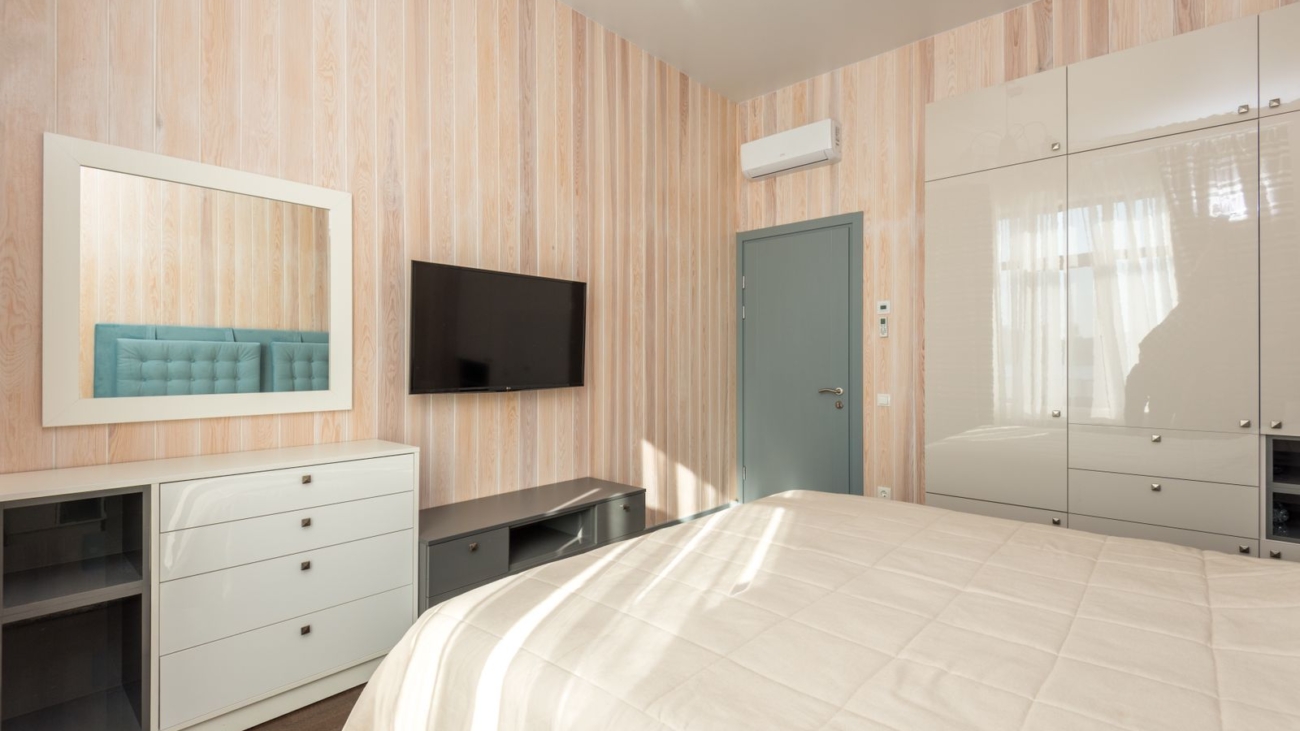

A guest room interior in Bengaluru costs Rs 65,000 to Rs 3.5 lakh in 2026. Full budget tiers, wardrobe and bed rates, locality costs and hidden charges.
Last Updated: August 2026
The 3BHK interior design cost in Sarjapur Road in 2026 ranges from ₹8 lakhs for a basic functional setup to ₹26 lakhs for a premium luxury build, with the most popular investment band sitting between ₹12 lakhs and ₹18 lakhs for a mid-range turnkey project. For a typical 1,400 to 1,650 square foot 3BHK in projects like Prestige City, Sobha Royal Pavilion, Purva Skydale, or Adarsh Sanctuary, expect a per square foot rate of ₹1,400 to ₹2,800 for mid-range work and ₹2,800 to ₹4,500 for premium designer interiors. Sarjapur Road commands a 15 to 20 percent premium over East Bangalore baselines because of higher labour cost, longer logistics from material yards in Yeshwantpur and Hoskote, and the premium-apartment service expectations set by IT-corridor homeowners. This guide is built from myNivasa's project data across delivered 3BHK projects in Sarjapur Road, Bellandur, Harlur, Carmelaram, and Kasavanahalli between January 2025 and April 2026, with line-item pricing benchmarked against current vendor quotations from Hettich, Hafele, Century Plyboards, Greenply, Greenlam, Asian Paints, and Faber.
For Bengaluru homeowners asking what 3BHK interior design will cost on Sarjapur Road in 2026, the working answer is between 12 and 18 lakhs for a complete mid-range home with branded modular kitchen, three custom wardrobes, full false ceiling with designer lighting, painting, living and dining setup, and bathroom upgrades. Anything below 8 lakhs cuts corners on plywood grade, hardware, or scope. Anything above 22 lakhs starts paying for imported veneers, lacquered shutters, smart-home automation, or designer pendant lighting that most families do not need.
Voice Search Answer: If you ask Google or Alexa, "How much does 3BHK interior design cost in Sarjapur Road in 2026?" the short answer is between 12 and 18 lakhs for a complete mid-range turnkey home with branded modular kitchen, three custom wardrobes, full false ceiling, premium painting, and bathroom upgrades. Budget builds start at 8 lakhs, premium builds go up to 26 lakhs. Sarjapur Road carries a 15 to 20 percent premium over Whitefield because of labour, logistics, and society overhead.
Answer Capsule: A complete 3BHK interior design cost in Sarjapur Road in 2026 ranges from ₹8 lakhs for a basic functional package to ₹26 lakhs for a premium designer build. The most popular range is ₹12 to ₹18 lakhs, which delivers a mid-range turnkey home with branded modular kitchen, three custom wardrobes, complete false ceiling with cove and profile lighting, premium emulsion painting, designed living and dining areas, bathroom upgrades, and full electrical work. Per square foot rates run ₹1,400 to ₹2,800 for mid-range and ₹2,800 to ₹4,500 for premium.
Sarjapur Road sits in a peculiar pricing band. It is east of the city like Whitefield, but the apartment stock is newer, premium developers dominate, and IT-corridor incomes pull average ticket sizes upward. From myNivasa's delivered project records, the median 3BHK on Sarjapur Road comes in at ₹14.6 lakhs for an apartment between 1,400 and 1,650 square feet, against a Whitefield median of ₹12.4 lakhs and a Marathahalli median of ₹11.2 lakhs for similar scope. The differential is not arbitrary. Projects on Sarjapur Road typically lie between Bellandur lake and Carmelaram, and material delivery lorries from Hoskote, Peenya, or Yeshwantpur lose 90 to 120 minutes per trip in ORR traffic compared to Whitefield runs. Skilled carpentry crews from Bommanahalli and Hosur Road command ₹150 to ₹250 per day extra for Sarjapur Road sites because most of them already work on premium Sobha or Prestige sites where labour rates have re-anchored. Add the 18 percent GST on the modular component and you arrive at the 15 to 20 percent uplift that homeowners notice when they compare quotes across localities.
Within Sarjapur Road, sub-locality matters more than most homeowners realise. A 3BHK in Adarsh Palm Retreat or Sobha Royal Pavilion off the Carmelaram stretch will quote 8 to 12 percent higher than an identical 3BHK in Harlur or Kasavanahalli, because gated-community access protocols, parking restrictions, dedicated lift slots for material movement, and society NOC fees all add to the contractor's overhead. myNivasa loads these soft costs into the BoQ transparently rather than absorbing them invisibly into a per-square-foot rate, so homeowners see exactly what the locality premium covers.
Answer Capsule: Per square foot interior design cost on Sarjapur Road for a 3BHK in 2026 ranges from ₹900 to ₹1,400 for budget work, ₹1,400 to ₹2,800 for mid-range, and ₹2,800 to ₹4,500+ for premium designer interiors. A standard 1,500 sqft 3BHK at the mid-range mark of ₹2,000 per sqft works out to a turnkey budget of ₹15 lakhs. Sarjapur Road carries a 15 to 20 percent premium over Whitefield rates because of logistics, labour, and society overhead.
The per square foot model is convenient but easy to misuse. Interior design is not laid like flooring. The number gets distorted by how aggressively the apartment uses storage, how many bathrooms get refit, whether the false ceiling covers all rooms or only the living and master bedroom, and how much loose furniture is included or excluded. myNivasa publishes per square foot guidance only as a sanity check against the line-item BoQ, never as the primary quotation method. When a competitor quotes ₹1,200 per sqft for a Sarjapur Road 3BHK, the homeowner should immediately ask whether that includes wardrobes in all three bedrooms, full false ceiling with cove lighting, painting in all rooms, and electrical work. In nine out of ten cases the ₹1,200 number covers only modular work and excludes painting, ceiling, lighting, and bathroom upgrades, which together constitute another ₹3 to ₹5 lakhs.
For Sarjapur Road specifically, the per square foot rate breaks down as follows. Budget tier at ₹900 to ₹1,400 buys laminate-finish modular kitchen with BWR plywood carcass, sliding wardrobes in pre-laminated MDF for two bedrooms only, partial false ceiling, basic emulsion painting, and minimal loose furniture. Mid-range tier at ₹1,400 to ₹2,800 covers acrylic or veneer shutters on the kitchen, custom wardrobes in all three bedrooms with Hettich or Hafele hinges, full false ceiling with cove and profile lighting, premium royale painting, designed TV unit, and bathroom mirror and vanity upgrades. Premium tier at ₹2,800 to ₹4,500+ adds imported laminates, lacquered or PU shutters, integrated kitchen appliances from Faber, Bosch, or Siemens, smart-home lighting controls, designer pendant fixtures, walk-in wardrobe in the master bedroom, and fully renovated bathrooms with brand fittings.
Answer Capsule: Room-by-room, a mid-range 3BHK on Sarjapur Road in 2026 typically allocates ₹3 to ₹5 lakhs for the modular kitchen, ₹2 to ₹4 lakhs combined for three wardrobes, ₹1.5 to ₹2.5 lakhs for full false ceiling and designer lighting, ₹1 to ₹2 lakhs for the living and dining setup including TV unit and crockery cabinet, ₹40,000 to ₹80,000 for premium painting in all rooms, ₹1.5 to ₹2.5 lakhs for bathroom upgrades across two bathrooms, and ₹50,000 to ₹1 lakh for full electrical and plumbing modifications.
The kitchen is always the largest line item. On Sarjapur Road, the average 3BHK kitchen is 90 to 130 square feet of working area, which works out to 18 to 26 running feet of cabinetry between base units, wall units, tall units, and the island or breakfast counter where the layout permits. At Hettich-grade soft-close hinges, BWR plywood carcass meeting IS 303 standards, suede or matte laminate shutters, and a 20 mm quartz countertop, the working rate today is ₹1,400 to ₹1,800 per running foot for base units and ₹1,100 to ₹1,500 for wall units. Add a tall unit for tower or microwave at ₹35,000 to ₹50,000, accessories like cutlery tray, bottle pull-out, and corner unit at ₹40,000 to ₹70,000, and the chimney and hob from Faber or Elica at ₹35,000 to ₹65,000, and the typical Sarjapur Road 3BHK kitchen lands between ₹3.2 lakhs and ₹4.8 lakhs for mid-range and ₹5 lakhs to ₹7.5 lakhs for premium with acrylic or PU lacquer shutters.
Wardrobes are the second-largest line. A 3BHK on Sarjapur Road typically calls for one large master bedroom wardrobe of 8 to 10 feet width and full ceiling height, one second bedroom wardrobe of 6 to 8 feet, and one smaller third bedroom or guest wardrobe of 5 to 6 feet. With laminate shutters on BWR plywood carcass, the rate today is ₹1,300 to ₹1,800 per square foot of front area, putting three combined wardrobes at ₹2 to ₹3 lakhs for mid-range. PU or veneer finish in the master bedroom alone pushes the master wardrobe to ₹1.5 lakhs and the combined three to ₹3.5 to ₹4.5 lakhs.
False ceiling work for a 3BHK Sarjapur Road apartment usually covers around 800 to 1,000 square feet of ceiling area when done across the living, dining, and three bedrooms. Gypsum board ceiling with cove lighting from a recognised brand like Saint-Gobain Gyproc runs ₹100 to ₹140 per square foot installed, plus electrical fitments. Add 15 to 25 LED downlights at ₹600 to ₹1,200 each, two designer profile lights at ₹4,000 to ₹8,000 each, and one pendant fixture for the dining area at ₹6,000 to ₹15,000, and the false ceiling and lighting line totals ₹1.5 to ₹2.5 lakhs for mid-range work.
Answer Capsule: myNivasa has delivered 3BHK interior design projects across all major Sarjapur Road developments including Prestige City, Sobha Royal Pavilion, Sobha Celsia, Purva Skydale, Adarsh Tropica, Adarsh Sanctuary, Brigade Cornerstone Utopia, Brigade Gem, Mantri Webcity, Salarpuria Sattva East Crest, and Godrej United. Each complex has its own access protocol, lift restrictions, and society NOC requirements that affect the working budget by 4 to 8 percent.
For Prestige City, the master township stretches across the Sarjapur Bagalur belt and individual towers like Eden Park, Lavender Fields, and Aston Park have slightly different parking and freight elevator policies. A 3BHK in Eden Park typically measures 1,455 to 1,615 square feet, with the most common configuration carrying a separate utility area off the kitchen, two bathrooms, and a study nook off the master bedroom. Society NOC fee runs ₹15,000 to ₹25,000 with a refundable deposit of ₹50,000 to ₹1 lakh, all of which are itemised in myNivasa's BoQ. Sobha Royal Pavilion's 3BHK floor plate ranges from 1,755 to 2,000 square feet which makes it one of the larger 3BHK products on the corridor, and Sobha's own design committee enforces strict rules about wet wall modification, electrical load addition, and chimney venting. myNivasa treats these as procedural inputs to the design phase rather than discoveries during execution.
Adarsh Tropica and Adarsh Sanctuary on the Carmelaram-Sarjapur stretch usually present 3BHK options between 1,350 and 1,500 square feet with optimised layouts where every linear foot of wardrobe and shelving has to earn its place. Purva Skydale's 3BHK sells in two configurations of 1,490 and 1,635 square feet, both with east-facing or south-facing balconies that influence false ceiling design and natural light strategy. Brigade Cornerstone Utopia carries a slightly smaller 3BHK floor plate of 1,400 to 1,500 square feet but compensates with double-height ceiling in the living area, which allows for dramatic pendant lighting at a meaningful but not crazy budget of ₹15,000 to ₹35,000. Mantri Webcity and Salarpuria Sattva East Crest are more workforce-oriented 3BHKs with floor plates around 1,300 to 1,400 square feet and homeowners on these projects typically optimise their interior budget toward the ₹10 to ₹14 lakh band.
Answer Capsule: A typical 3BHK interior on Sarjapur Road costs 15 to 20 percent more than Whitefield, 5 to 10 percent more than HSR Layout, and 5 to 10 percent less than Koramangala or Indiranagar in 2026. For an identical 1,500 square foot 3BHK at mid-range scope, expect ₹14.6 lakhs on Sarjapur Road, ₹12.4 lakhs in Whitefield, ₹13.4 lakhs in HSR Layout, and ₹15.8 lakhs in Koramangala. The driver of the differential is labour, logistics, and society overhead, not material cost.
The cross-locality comparison helps homeowners benchmark quotes. Material is the same across Bengaluru. A sheet of Century Sainik 710 BWP plywood costs ₹3,200 to ₹3,600 in any yard from Yeshwantpur to Hoskote, and a Hettich Hettmann hinge costs ₹85 to ₹110 per piece regardless of which locality the apartment sits in. What varies is everything around the material. Skilled carpenters in central or east Bengaluru charge ₹950 to ₹1,250 per day, and on premium Sarjapur sites that range climbs to ₹1,150 to ₹1,450 because the labour pool is competing with marquee Sobha, Prestige, and Brigade sites that can pay daily wage premiums. Lorry deliveries from material yards add ₹3,000 to ₹6,000 per trip, and Sarjapur Road's distance from Yeshwantpur or Peenya yards adds an extra ₹1,500 to ₹2,500 per trip compared to Whitefield runs.
Society overhead is the third invisible driver. Premium developments on Sarjapur Road levy society NOC fees, refundable deposits, freight elevator charges, work-hour restrictions, and weekend or festival blackouts that reduce the productive working window from 10 hours per day to 7 or 8. A 60-day timeline in Whitefield easily becomes a 70-day timeline on Sarjapur Road, and contractors price that lost productivity into their quote. myNivasa's BoQ format separates society overhead as a transparent line so homeowners can see exactly what they are paying for.

Answer Capsule: The seven highest-leverage money-saving strategies for a 3BHK on Sarjapur Road in 2026 are: choose laminate over acrylic on the kitchen and master wardrobe, deliver the kitchen in BWR plywood under IS 303 instead of marine BWP under IS 710 except where water exposure is direct, skip the false ceiling in the third bedroom and study, pick Indian quartz over imported quartz on the kitchen counter, postpone the second bathroom upgrade to phase two, use mid-tier brands like Greenply or Century instead of premium imported alternatives, and consolidate the design and execution under a single turnkey vendor instead of buying piece-meal from aggregators. These together can reduce a ₹16 lakh build to ₹12 lakhs without visibly compromising the home.
The first lever is shutter material. Acrylic shutters on the kitchen and master wardrobe look spectacular but cost ₹450 to ₹700 per square foot more than premium suede laminate, and the visual difference at three feet viewing distance is small. For a 3BHK on Sarjapur Road, switching the kitchen and master wardrobe from acrylic to a high-quality matte laminate saves ₹70,000 to ₹1.2 lakhs without the home looking budget. The second lever is plywood grade selection. IS 303 BWR plywood from Century Sainik 710 or Greenply Ecotec costs ₹85 to ₹105 per square foot. IS 710 BWP marine plywood costs ₹110 to ₹140 per square foot. For most cabinetry away from direct water contact, IS 303 BWR is the right specification, and the upgrade to IS 710 BWP saves nothing in performance while costing ₹15,000 to ₹25,000 extra across a 3BHK.
The third lever is selective false ceiling. The living, dining, and master bedroom benefit visually from full false ceiling with cove lighting. The second bedroom can take partial cove on one wall instead of full ceiling. The third bedroom or study often does not need any false ceiling work at all. This selective approach saves ₹40,000 to ₹70,000 without the home losing aesthetic coherence because the rooms that guests see are fully treated. The fourth lever is countertop selection. Indian quartz from brands like Quartzkraft or Pokarna costs ₹350 to ₹500 per square foot installed. Imported quartz from Caesarstone or Silestone costs ₹900 to ₹1,400 per square foot. For most kitchens the Indian quartz delivers identical durability, stain resistance, and visual quality at one-third the cost.
Answer Capsule: A compliant 3BHK interior build on Sarjapur Road should specify IS 303 for general-purpose BWR plywood used in wardrobes and most carcass work, IS 710 for marine-grade BWP plywood used in kitchen base cabinets and bathroom vanity bases exposed to water, IS 1659 for blockboard used where required, IS 4990 for shuttering plywood, IS 14001 for environmental management certification of the manufacturer, IS 14223 for prelaminated particle board, and NBC 2016 Part 8 Section 1 for fire safety in the false ceiling assembly. myNivasa publishes the brand and BIS certification for every material in the BoQ.
BIS standards are not bureaucratic obstacles. They are the homeowner's protection against substituted, undergraded, or counterfeit materials. The Bureau of Indian Standards governs plywood through IS 303 and IS 710, and the 2024 BIS amendment now formally includes BWP grade under IS 303 for interior use as well, which means the older distinction between IS 303 and IS 710 has shifted. In practical terms, a 3BHK kitchen base unit exposed to occasional water spillage benefits from IS 710 BWP. A wardrobe carcass in a dry bedroom is fully served by IS 303 BWR. A bathroom vanity that sits below a wash basin must use IS 710 BWP because spill exposure is constant. A study unit holding books and electronics needs only IS 303 MR grade.
The named brands that publish BIS-certified product lines for residential interior work include Century Plyboards (Century Club, Century Sainik 710, Century Architect Ply), Greenply (Ecotec MR, Platinum BWP, Optima BWR), Sharon Plywood, and Kitply. Hardware brands such as Hettich and Hafele publish DIN and ISO certifications which are the European equivalents and accepted by Indian premium projects. Asian Paints publishes its IS 15489 compliance for emulsion paints. Saint-Gobain Gyproc publishes IS 2095 compliance for gypsum board used in false ceilings. myNivasa's BoQ lists the certification number against every line item so homeowners can verify on the manufacturer's site before signing.
Answer Capsule: A realistic timeline for a complete 3BHK interior design project on Sarjapur Road in 2026 is 65 to 90 days from design lock to handover. The phases are: design and quotation lock 7 to 10 days, fabrication in workshop 25 to 30 days, on-site civil and electrical 10 to 15 days, on-site installation 15 to 20 days, and final touches and handover 5 to 7 days. Sarjapur Road sites typically run 5 to 10 days slower than Whitefield because of stricter society work-hour windows and weekend blackouts on premium projects.
For a detailed price breakdown, see our guide to What Is the 3 BHK Interior Design Cost in Sarjapur Road 2026?.
The honest schedule for a 3BHK on Sarjapur Road starts with the design phase, where homeowners and the design team finalise floor-plan modifications, modular layouts, material selections, electrical and plumbing changes, and the final BoQ. This phase routinely takes 7 to 10 days when both parties are responsive, and stretches to 15 days if material samples are being shipped or specific finishes are being matched against existing furniture. Once the BoQ is locked and 40 to 50 percent advance is paid, fabrication begins in the workshop. For myNivasa this is the Yeshwantpur and Bommanahalli unit clusters where carcass cutting, edge banding, hardware fitting, and shutter pressing happens in parallel.
Workshop fabrication for a 3BHK takes 25 to 30 calendar days, during which the on-site work runs in parallel: site civil including any wall demolition or false floor work, electrical wiring changes, plumbing modifications for kitchen and bathrooms, and primer-coat painting on the walls. By day 35 of the project, the workshop is ready to dispatch and the site is ready to receive. Installation runs 15 to 20 days in three phases: the modular kitchen and bathroom vanities, then the wardrobes and study units, then the loose furniture and TV unit. The false ceiling and second-coat painting wraps up in the same window, and the last 5 to 7 days are devoted to lighting fixture installation, electrical commissioning, snag fixing, and a formal walkthrough handover. Sarjapur Road weekends and festival days are frequently non-working on premium sites, so a 60-working-day project routinely takes 75 to 85 calendar days.
Answer Capsule: Sarjapur Road homeowners should compare interior design quotes on six dimensions: line-item BoQ format with brand and BIS certification stated, plywood grade specification per cabinet, hardware brand and warranty, scope inclusion of painting and false ceiling and electrical, society overhead transparency, and post-handover service period. A quote without these six elements is not a quote, it is an estimate and will move during execution. The standard Sarjapur Road quote should be itemised in 60 to 90 lines for a 3BHK project.
The single biggest mistake Sarjapur Road homeowners make is comparing only the bottom-line number across vendors. A ₹13 lakh quote from one vendor and a ₹15 lakh quote from another are not comparable until the underlying scope is normalised. Vendor A might be quoting BWR plywood in IS 303 while Vendor B is quoting MR plywood (which does not even meet BWR), or Vendor A might be including full false ceiling while Vendor B is excluding the third bedroom. The quote review must walk line by line through the BoQ.
The second mistake is treating the design phase as free. Aggregator platforms often advertise free design and free 3D, then make up the cost in execution by quoting cheaper materials or vague scope. A boutique design-and-build firm like myNivasa charges a small design retainer of ₹15,000 to ₹35,000 that gets adjusted against the final invoice if the project moves to execution, and in exchange the homeowner gets a fully detailed line-item BoQ, working drawings, electrical and plumbing layouts, material samples in person, and brand-specification certainty before any payment is committed. The transparency more than pays for itself across the project.
Answer Capsule: Sarjapur Road homeowners choose myNivasa for 3BHK interior design because of three differentiators: itemised BoQ with BIS certifications and brand specifications stated upfront, in-house design and execution with no third-party subcontractors, and a six-month post-handover service window with same-day response for any defect. myNivasa has delivered 3BHK projects across Sarjapur Road, Bellandur, Carmelaram, Harlur, and Kasavanahalli since 2018 with an average client rating of 4.8 on Google.
The transparency starts with the quotation. Every line in the myNivasa BoQ states the material brand, the BIS certification, the hardware brand, the workmanship grade, and the unit cost. Homeowners can verify each input on the manufacturer's website before signing. The same transparency continues during execution. myNivasa runs its own design studio and its own carpentry workshop with directly employed teams rather than subcontracted crews, which means quality, schedule, and accountability all stay within one organisation. Most aggregator platforms outsource execution to franchise contractors, and the average homeowner cannot trace which crew is on their site or what their training and insurance status is.
The post-handover service window is the third differentiator that matters more than homeowners realise at signing. Six months of free fixes for hinge adjustment, drawer alignment, paint touch-up, electrical fitting issues, and any other defect that emerges as the home settles. myNivasa runs a dedicated WhatsApp service line where homeowners log issues and the field team responds within the same business day. This is rare in the Bengaluru market, where aggregator platforms offer 30 to 60 days of warranty and boutique designers often vanish after handover. A 3BHK is a 10 to 15 year asset and the post-handover service makes the difference between a home that holds its quality and a home that becomes a maintenance burden.
| Line Item | Budget (₹) | Mid-Range (₹) | Premium (₹) | myNivasa Recommendation |
|---|---|---|---|---|
| Modular Kitchen (incl. counter, accessories) | 2,20,000 | 3,80,000 | 6,50,000 | Mid-range with Hettich + IS 303 BWR carcass |
| Master Bedroom Wardrobe | 85,000 | 1,40,000 | 2,40,000 | Mid-range laminate with profile lights |
| Second Bedroom Wardrobe | 65,000 | 1,05,000 | 1,80,000 | Mid-range laminate |
| Third Bedroom Wardrobe / Study Unit | 50,000 | 85,000 | 1,50,000 | Mid-range laminate |
| Living Room TV Unit | 55,000 | 1,10,000 | 2,40,000 | Mid-range with veneer accent |
| Dining Area (crockery + sideboard) | 45,000 | 90,000 | 1,80,000 | Mid-range crockery cabinet |
| Full False Ceiling + Designer Lighting | 1,10,000 | 1,90,000 | 3,40,000 | Mid-range gypsum + cove + downlights |
| Premium Painting (all rooms) | 40,000 | 65,000 | 1,20,000 | Asian Paints Royale Luxury Emulsion |
| Bathroom Upgrades (2 bathrooms) | 1,00,000 | 1,80,000 | 3,80,000 | Mid-range vanity + mirror + tile |
| Electrical + Plumbing Modifications | 50,000 | 80,000 | 1,40,000 | Modular switches + designer fittings |
| Society NOC + Overhead | 25,000 | 40,000 | 60,000 | Itemised separately |
| Design Fee + Project Management | 30,000 | 50,000 | 1,00,000 | Professional design retainer |
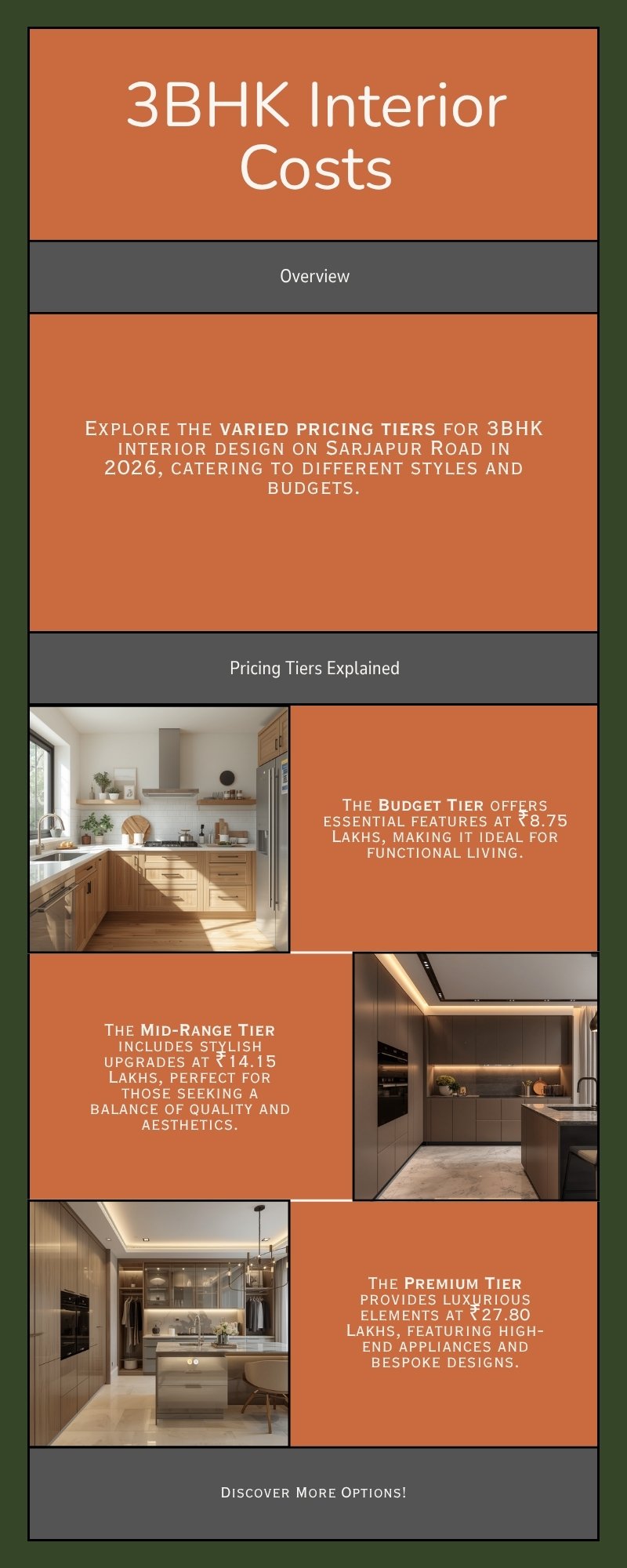
| Total Estimated Cost | 8,75,000 | 14,15,000 | 27,80,000 | Mid-range tier most popular |
| Material Category | Budget Brand | Mid-Range Brand | Premium Brand | myNivasa Recommendation |
|---|---|---|---|---|
| Plywood (BWR / IS 303) | Sharon Ply | Greenply Ecotec | Century Sainik 710 | Century Sainik 710 for kitchen, Greenply Ecotec elsewhere |
| Plywood (BWP / IS 710) | Kitply Marine | Greenply Platinum | Century Architect Ply | Century Architect Ply for wet areas |
| Laminate Sheets | Merino Premium | Greenlam Decowood | Royale Touche Architectural | Greenlam Decowood for body, Royale Touche for accents |
| Hardware (Hinges, Channels) | Ebco | Hettich | Hafele / Blum | Hettich for full home, Blum upgrade for premium kitchens |
| Modular Kitchen Appliance | Glen / Sunflame | Faber / Elica | Bosch / Siemens | Faber chimney + Bosch hob for mid-range |
| Paint Emulsion | Berger Bison | Asian Paints Premium Emulsion | Asian Paints Royale Luxury | Asian Paints Royale for living and master, Premium elsewhere |
| Gypsum Board (False Ceiling) | Generic | India Gypsum | Saint-Gobain Gyproc | Saint-Gobain Gyproc for full home |
| Bathroom Fittings | Cera Mid | Jaquar Continental | Kohler / Grohe | Jaquar Continental for both bathrooms |
| Quartz Countertop | Local Granite | Quartzkraft / Pokarna | Caesarstone / Silestone | Pokarna Indian Quartz for kitchen |
| Modular Switches | Anchor | Legrand Mylinc | Legrand Arteor / Schneider Vivace | Legrand Mylinc for full home |
| Sub-Locality | Per Sqft Rate (Mid-Range) | Typical 3BHK Total (Mid) | Premium Adjustment | myNivasa Recommendation |
|---|---|---|---|---|
| Bellandur (Sarjapur side) | ₹1,800 to ₹2,400 | ₹13.5 to ₹15 lakhs | +0% baseline | Standard mid-range scope works well |
| Carmelaram | ₹1,900 to ₹2,500 | ₹14 to ₹15.5 lakhs | +3 to 5% | Slightly premium scope; add cove lighting |
| Harlur | ₹1,750 to ₹2,300 | ₹13 to ₹14.5 lakhs | -2 to -5% | Most cost-efficient sub-locality; full mid-range |
| Kasavanahalli | ₹1,800 to ₹2,400 | ₹13.5 to ₹15 lakhs | +0% | Standard mid-range |
| Adarsh Palm Retreat / Sobha Royal Pavilion belt | ₹2,400 to ₹3,200 | ₹17 to ₹19 lakhs | +12 to 15% | Upgrade to premium scope; the building expects it |
| Chikkabellandur / Junnasandra | ₹1,700 to ₹2,200 | ₹12.5 to ₹14 lakhs | -3 to -7% | Budget to mid-range scope works well |
| Ambalipura | ₹1,900 to ₹2,500 | ₹14 to ₹15.5 lakhs | +3 to 5% | Mid-range with selective premium accents |
| Wipro Junction / Mullur | ₹1,750 to ₹2,300 | ₹13 to ₹14.5 lakhs | -2 to -4% | Workforce-oriented; budget to mid-range |
| Phase | Duration (Days) | Activities | Homeowner Action | myNivasa Recommendation |
|---|---|---|---|---|
| 1. Discovery + Site Survey | 2 to 3 | Site visit, measurement, requirement capture | Walk-through with designer, share inspirations | Bring printed reference images to first meeting |
| 2. Design + 3D + BoQ | 7 to 10 | Floor plan, 3D renders, line-item BoQ | Review 2 to 3 design iterations | Allow 10 days; rushing this phase costs you later |
| 3. Material Selection | 2 to 3 | Laminate, hardware, paint, tile selection | Visit material library, pick samples | In-person selection, never WhatsApp images |
| 4. Quote Lock + Advance | 1 to 2 | Final BoQ signoff, 40 to 50% advance | Sign agreement, transfer advance | Get GST invoice for input credit if applicable |
| 5. Workshop Fabrication | 25 to 30 | Carcass cut, edge band, hardware fit, shutter press | Workshop visit on day 15 | Workshop QC visit catches issues early |
| 6. On-Site Civil + Electrical | 10 to 15 | Wall demolition, plumbing, wiring, primer paint | Site walkthrough every 5 days | Photograph wiring before walls are closed |
| 7. Modular Installation | 10 to 12 | Kitchen, wardrobes, vanities, study units | Sign off each unit on installation | Inspect hinges, channels, alignment |
| 8. False Ceiling + Painting | 8 to 10 | Gypsum, cove lighting, second-coat paint | Approve cove lighting placement | Approve at twilight to see lighting effect |
| 9. Lighting + Soft Furnishing | 3 to 5 | Pendant lights, downlights, curtains, rugs | Confirm fixtures before installation | Test dimming controls before signoff |
| 10. Snag List + Handover | 3 to 5 | Defect list, fixes, formal handover, training | Walk through with designer | Take handover only when snag list is closed |
| Total Calendar Time | 71 to 95 | Sarjapur Road typical 75 to 85 days | Stay engaged throughout | Plan for 90 days, hope for 75 |
| Apartment Complex | Typical 3BHK Size | Mid-Range Total | Premium Total | myNivasa Recommendation |
|---|---|---|---|---|
| Prestige City - Eden Park / Aston Park | 1,455 to 1,615 sqft | ₹14 to ₹16 lakhs | ₹22 to ₹26 lakhs | Mid-range with profile lighting + Hettich hardware |
| Sobha Royal Pavilion | 1,755 to 2,000 sqft | ₹17 to ₹20 lakhs | ₹26 to ₹32 lakhs | Premium scope; Sobha standards expect it |
| Sobha Celsia | 1,580 to 1,720 sqft | ₹15 to ₹17 lakhs | ₹23 to ₹28 lakhs | Mid-range with veneer accent in living |
| Purva Skydale | 1,490 to 1,635 sqft | ₹14 to ₹16 lakhs | ₹22 to ₹26 lakhs | Mid-range with full false ceiling |
| Adarsh Tropica | 1,350 to 1,500 sqft | ₹12.5 to ₹14.5 lakhs | ₹19 to ₹23 lakhs | Optimised mid-range with selective premium |
| Adarsh Sanctuary | 1,420 to 1,580 sqft | ₹13 to ₹15 lakhs | ₹20 to ₹24 lakhs | Mid-range with focus on master suite |
| Brigade Cornerstone Utopia | 1,400 to 1,500 sqft | ₹13.5 to ₹15.5 lakhs | ₹20 to ₹25 lakhs | Mid-range with double-height living pendant |
| Brigade Gem | 1,380 to 1,490 sqft | ₹13 to ₹14.5 lakhs | ₹19 to ₹23 lakhs | Mid-range turnkey |
| Mantri Webcity | 1,300 to 1,400 sqft | ₹11.5 to ₹13 lakhs | ₹17 to ₹20 lakhs | Workforce-oriented; budget to mid-range |
| Salarpuria Sattva East Crest | 1,330 to 1,450 sqft | ₹12 to ₹13.5 lakhs | ₹18 to ₹22 lakhs | Optimised mid-range |
| Godrej United | 1,460 to 1,580 sqft | ₹13.5 to ₹15.5 lakhs | ₹21 to ₹26 lakhs | Mid-range with energy-efficient lighting |
| Dimension | Aggregator Platform | Boutique Local Designer | myNivasa (Design + Build) | myNivasa Recommendation |
|---|---|---|---|---|
| Mid-range 3BHK Quote | ₹13 to ₹16 lakhs | ₹14 to ₹17 lakhs | ₹14 to ₹16 lakhs | Compare like-for-like scope only |
| BoQ Format | Bundled package, hidden line items | Detailed but inconsistent | 60 to 90 line items, BIS certified | Demand line-item BoQ from any vendor |
| Plywood Grade Stated | Often not specified | Sometimes specified | Always specified with IS code | Walk away if grade is not stated |
| Hardware Brand | Sometimes Hettich, often unbranded | Usually Hettich or Hafele | Hettich standard, Hafele/Blum upgrade | Hettich is the working baseline |
| Execution | Outsourced to franchise | Owner-led, small team | Owned workshop and crew | Single-organisation accountability matters |
| Design Iterations | 1 to 2 standard, extra paid | 2 to 3 included | Up to 3 included with retainer | Allow yourself 2 to 3 iterations |
| Post-Handover Service | 30 to 60 days warranty | Variable, often informal | 6 months free, same-day response | Long service window matters more than quote |
| GST and Invoicing | Proper invoicing | Sometimes informal | Proper GST invoicing | Always insist on GST invoice |
| Project Communication | Through call centre | Direct with designer | Direct with designer + project manager | Direct designer access matters |
| Schedule Adherence | Variable; often slips | Variable; depends on workload | Penalty clause built in | Get a written timeline with milestones |
Answer Capsule: Lighting design budget for a 3BHK on Sarjapur Road in 2026 ranges from ₹85,000 for a basic functional setup to ₹3.2 lakhs for a premium designer scheme. The mid-range allocation is ₹1.4 to ₹1.8 lakhs covering 18 to 24 LED downlights at ₹600 to ₹1,200 each, two cove-light strips at ₹3,500 to ₹6,000 per running metre, two profile lights for accent walls at ₹4,000 to ₹8,000 each, one designer pendant for the dining area at ₹6,000 to ₹15,000, two bedroom pendants at ₹3,000 to ₹6,000 each, and modular dimming controls at ₹15,000 to ₹35,000.
Lighting is the single most under-budgeted line on a Sarjapur Road 3BHK interior. Homeowners often allocate ₹40,000 to ₹60,000 to lighting at the start of the project and end up at ₹1.5 lakhs by the end because the visual impact of a well-lit home is dramatic and the urge to upgrade hits during installation. The honest budgeting approach is to plan ₹1.4 to ₹1.8 lakhs upfront for a mid-range 3BHK and split it across four lighting layers: ambient, task, accent, and decorative. Ambient lighting is the LED downlight grid in the false ceiling that gives general room illumination, typically 6 to 8 lights in the living area, 4 to 6 in each bedroom, and 4 to 6 in the kitchen, all on dimmable 5 watt or 9 watt LED panels.
Task lighting is the under-cabinet LED strip in the kitchen, the reading lamp on the bedside, the focused light over the dining table, and the desk lamp in the study. Each of these has a specific function and the wattage and colour temperature should match. Kitchen under-cabinet LEDs at 4000K cool white run ₹350 to ₹600 per running foot installed. Accent lighting is the cove and profile work that washes a wall or highlights an architectural feature. A single cove run along the periphery of a 12 by 14 living room is 50 to 55 running feet at ₹300 to ₹500 per running foot for the LED strip plus driver and aluminium channel. Decorative lighting is the pendant fixture over the dining table or the chandelier in the living room. The decorative layer should never carry the lighting load alone, but it sets the mood and visual style of the space.
Answer Capsule: Bathroom upgrade budget for a 3BHK on Sarjapur Road in 2026 ranges from ₹50,000 per bathroom for a basic refit to ₹2.2 lakhs per bathroom for a premium spa-style upgrade. The mid-range allocation per bathroom is ₹80,000 to ₹1.4 lakhs, covering vanity unit with mirror, mid-tier Jaquar Continental fittings, anti-skid floor tiles, ceramic wall tiles, false ceiling with PVC panels, and modular electrical points. A full 3BHK with two bathrooms upgraded mid-range needs ₹1.6 to ₹2.8 lakhs.
The bathroom is the second-most expensive room per square foot after the kitchen on a Sarjapur Road 3BHK project, and homeowners often underbudget this line because they assume the developer-provided bathroom is fine. In most apartments on Sarjapur Road including Prestige City, Sobha Royal Pavilion, and Brigade Cornerstone Utopia, the developer bathroom is functional but bland with builder-grade tiles, basic CP fittings, and no vanity beyond a mirror over a wash basin. The interior project upgrade replaces the wash basin with a modern vanity unit at ₹15,000 to ₹40,000, swaps the mirror for a backlit LED mirror at ₹6,000 to ₹18,000, upgrades CP fittings from builder-grade to Jaquar Continental or Kohler at ₹8,000 to ₹35,000 per bathroom, and adds a PVC false ceiling at ₹65 to ₹110 per square foot installed.
For homeowners on a tighter budget, the master bathroom should get the full upgrade and the second bathroom should receive a partial refit covering only the vanity, mirror, and CP fittings without disturbing the tiles or false ceiling. This phased approach saves ₹40,000 to ₹70,000 while leaving the master bathroom polished and presentation-ready. myNivasa's BoQ explicitly separates master bathroom from second bathroom scope so homeowners can adjust the line items based on budget priorities.
Answer Capsule: The five most common cost mistakes on Sarjapur Road 3BHK interior projects in 2026 are: signing a bundled per-square-foot quote without a line-item BoQ, choosing the wrong plywood grade (using IS 710 BWP everywhere or using MR grade in wet zones), under-budgeting lighting and over-budgeting hardware, skipping in-person material selection, and not accounting for society NOC and freight elevator charges that add ₹40,000 to ₹70,000 to the project. Each of these mistakes costs ₹50,000 to ₹2 lakhs in either visible quality loss or scope creep during execution.
The first mistake is the bundled quote. A vendor saying "your 3BHK will cost ₹14 lakhs all inclusive" is making a marketing claim, not a quotation. Without a line-item BoQ that states the plywood grade, hardware brand, paint tier, and lighting scheme, there is no way for the homeowner to verify what the ₹14 lakhs actually buys. Two months into execution, scope items emerge that the vendor claims were never included, and the homeowner pays the change orders. The fix is simple: any quote without a 60 to 90 line BoQ should be treated as a placeholder, not a contract.
The second mistake is plywood grade selection. The 2024 BIS amendment now includes BWP grade under IS 303 for interior use, which has confused many homeowners and even some designers. The practical specification is BWR plywood under IS 303 for wardrobes, study units, and TV units in dry zones, and BWP plywood under IS 710 for kitchen base cabinets, bathroom vanity bases, and any cabinetry that faces direct or constant water exposure. Specifying IS 710 BWP for the entire home wastes ₹15,000 to ₹25,000 on premium where it is not needed. Specifying MR grade for kitchen base cabinets is dangerous because MR is rated for moisture resistance, not water resistance, and will delaminate within 18 to 24 months in a working kitchen.
The third mistake is the lighting and hardware budget mismatch. Homeowners often spend ₹15,000 to ₹25,000 extra on Hafele Blum hardware over standard Hettich and then save ₹40,000 by skipping the cove lighting in the living room. The visual return on a Hettich-to-Hafele upgrade for a 3BHK is barely perceptible to a non-trade visitor. The visual return on cove lighting in the living room is dramatic and immediately noticed. The fourth mistake is remote material selection. Choosing laminate from a WhatsApp image is fundamentally different from picking it up in person under both daylight and warm indoor lighting. The colour, sheen, and texture of every laminate read differently in person, and the only reliable selection method is a physical material library visit. myNivasa runs a Bengaluru material studio where homeowners can spend two hours pulling, comparing, and approving material samples in person.
The fifth mistake is missing the society overhead. Premium developments on Sarjapur Road levy NOC fees of ₹15,000 to ₹25,000, refundable deposits of ₹50,000 to ₹1 lakh, freight elevator charges, and weekend or festival blackout days that compress the working window. None of these are obvious at the quotation stage and most aggregator platforms either bury them in the bundled price (where the homeowner pays anyway) or invoice them separately later (where the homeowner gets surprised). The myNivasa BoQ shows society overhead as a transparent itemised line so the homeowner sees exactly what they pay for and can verify the receipt with their RWA.
Answer Capsule: The healthy payment structure for a 3BHK interior project on Sarjapur Road in 2026 is a 4-stage release tied to project milestones: 10 to 15 percent design retainer at signing, 30 to 35 percent advance at BoQ lock and material booking, 30 to 35 percent at workshop fabrication completion and on-site delivery, 15 to 20 percent at on-site installation completion, and 5 to 10 percent retention released at handover after snag list closure. A vendor demanding 50 to 60 percent upfront before fabrication starts is a risk signal. The retention amount of 5 to 10 percent is the homeowner's leverage to ensure snag-list completion.
For a detailed price breakdown, see our guide to Affordable Interior Designers in Electronic City 2026.
Payment structure is one of the most overlooked risk dimensions on a Sarjapur Road interior project. Homeowners typically focus on the total cost and the schedule, but the timing of payments determines who carries the risk during execution. A vendor who demands 50 to 60 percent upfront before workshop fabrication has effectively been paid for material and labour before either has been delivered, and the homeowner has lost leverage to enforce quality or schedule. The healthy alternative is the 4-stage milestone-tied release used by myNivasa, which keeps both parties aligned on delivery.
The first stage at signing is a small design retainer of ₹15,000 to ₹35,000 (or 10 to 15 percent of estimated cost), which covers the design team's effort to develop the layout, 3D renders, BoQ, and material specifications. This is adjusted against the final invoice if the project moves to execution. The second stage is the advance at BoQ lock, typically 30 to 35 percent of total project cost, which funds the material booking with manufacturers and suppliers. Once the BoQ is locked, plywood, hardware, laminates, and shutters are ordered to specification and the workshop schedule is committed. The third stage is on workshop completion and on-site delivery, another 30 to 35 percent, which covers fabrication labour and balances the material payments. The fourth stage at installation completion releases another 15 to 20 percent, and the final 5 to 10 percent retention is held until snag-list closure and formal handover.
For a ₹14 lakh mid-range 3BHK on Sarjapur Road, the practical schedule looks like ₹35,000 retainer at signing, ₹4.5 to ₹5 lakhs at BoQ lock, ₹4.5 to ₹5 lakhs at workshop completion, ₹2 to ₹2.5 lakhs at installation completion, and ₹1 to ₹1.5 lakhs retention released at handover. Always insist on GST invoicing for every stage payment so input credit is available if applicable, and so the cost basis is documented for any future resale or insurance claim. A vendor who quotes ₹14 lakhs all-inclusive but resists giving GST invoices is offering a price that already accounts for non-compliance and will deliver a project at correspondingly lower compliance standards.
Answer Capsule: The decision between mid-range and premium tier on a Sarjapur Road 3BHK interior project depends on five questions: how long do you plan to live in the home, what is the expected resale or rental yield, what is your visual quality threshold, what is the brand expectation in your apartment community, and what is your post-handover service expectation. Mid-range at ₹13 to ₹16 lakhs delivers a 10 to 12 year quality home. Premium at ₹20 to ₹26 lakhs delivers a 15 to 18 year quality home with stronger resale signal in premium developments. The break-even is roughly 8 years of occupancy.
The mid-range versus premium decision is not a vanity question. It is a financial and lifestyle calculation that depends on how the home will be used. For a young family planning to live in the 3BHK for 5 to 7 years before upgrading to a villa or a different city, the mid-range tier at ₹13 to ₹16 lakhs delivers more than enough quality for the planned occupancy and the cost-per-year of use is ₹2 to ₹2.3 lakhs. For a family planning to live in the home for 12 to 15 years, the premium tier at ₹20 to ₹26 lakhs delivers durability advantages on shutter material, hardware lifetime, and finish quality that earn back the differential through reduced refurbishment cost over the longer occupancy.
The second question is resale or rental signal. In premium developments like Sobha Royal Pavilion or Adarsh Palm Retreat, a buyer or tenant inspection compares the unit visibly to other units in the building. A mid-range interior in a premium building reads as under-invested and may discount the resale or rental price by 5 to 10 percent, which on a ₹2.5 to ₹3 crore unit easily exceeds the ₹6 to ₹10 lakh interior tier differential. In workforce-oriented developments like Mantri Webcity or Salarpuria Sattva East Crest, mid-range interior is the market norm and there is no resale penalty for staying mid-range. The third question is the visual quality threshold of the homeowner. Some homeowners notice the difference between Hettich and Hafele hardware, between Greenlam and Royale Touche laminates, between Asian Paints Premium and Royale Luxury emulsion. Others do not. Self-honesty about the visual threshold matters more than market positioning.
The fourth and fifth questions are about service expectation. A premium tier project usually comes with a longer warranty and higher service responsiveness because the vendor's reputation is at stake on the higher ticket. myNivasa's six-month service window applies to all tiers, but the practical responsiveness on premium projects tends to be faster because the field team is on Sarjapur Road sites more frequently for ongoing premium installations. For homeowners who travel frequently or have demanding professional schedules, the responsiveness premium of premium-tier work is real value. For homeowners who are home-based and can manage minor service issues themselves, the mid-range tier is the pragmatic choice.
Answer Capsule: Sustainability-aware interior choices on a Sarjapur Road 3BHK in 2026 add roughly 5 to 9 percent to total project cost when compared to a baseline mid-range build, but reduce lifetime maintenance and energy operating cost by 15 to 22 percent over a 10-year horizon. Practical green choices include FSC-certified plywood under IS 14001 environmental management certification, low-VOC paints under IS 15489, IGBC Green Homes-aligned LED lighting at 70 to 90 lumens per watt, and BIS-grade energy-efficient appliances. The cost premium is ₹70,000 to ₹1.4 lakhs for a 3BHK, recovered through reduced maintenance and lower power bills.
Sustainability has shifted from a niche request to a mainstream consideration on Sarjapur Road 3BHK projects in 2026. Homeowners moving from rented apartments to owned 3BHKs increasingly ask about formaldehyde emissions from plywood, VOC content in paint, energy efficiency of LED fixtures, and long-term durability of finishes. The Indian Green Building Council (IGBC) Green Homes rating offers a structured framework for evaluating these choices, and even homeowners not pursuing formal certification benefit from knowing the framework exists. The starting point is plywood selection. FSC-certified plywood under IS 14001 environmental management certification ensures the timber is from sustainably managed forests rather than illegally logged sources. Century Plyboards and Greenply both publish FSC-certified product lines that cost 8 to 14 percent more than non-certified equivalents. For a 3BHK on Sarjapur Road, the FSC premium adds ₹15,000 to ₹25,000 to the total plywood spend.
The second sustainability lever is paint VOC content. Asian Paints Royale Health Shield, Berger Silk Glamour Anti-Bacterial, and Nerolac Beauty Smooth Finish all publish low-VOC formulations rated under IS 15489. The premium over standard premium emulsion is 12 to 18 percent, adding ₹8,000 to ₹15,000 to the painting line for a 3BHK. The lifetime benefit is meaningful for homes with young children, elderly parents, or family members with respiratory sensitivity. The third lever is lighting. Standard LED downlights deliver 60 to 75 lumens per watt. IGBC-aligned LED downlights from Philips, Wipro, or Havells deliver 80 to 100 lumens per watt while using 25 to 35 percent less energy for the same illumination level. The premium per fixture is ₹150 to ₹400, but the energy saving over 10 years easily exceeds the premium.
The fourth lever is appliance selection. BEE 5-star modular kitchen appliances from Bosch, Siemens, or Faber Premium use 30 to 45 percent less power and water than 3-star alternatives, and the upfront premium is recovered in 3 to 4 years of operating cost. The fifth lever is the bathroom water-saving fixture set. Jaquar Continental, Hindware Aquaview, and Kohler Cimarron all publish water-saving fixtures rated under IS 14543 that reduce water consumption by 30 to 40 percent. For a 3BHK with two bathrooms, the upgrade adds ₹15,000 to ₹30,000 and reduces water bills by 25 percent over the lifetime of the fixtures. None of these choices individually transform the home, but layered together they shift a Sarjapur Road 3BHK from a baseline interior to a thoughtful, future-aware home that holds value better in resale.
Answer Capsule: Logistics and site-access constraints on Sarjapur Road that affect 3BHK interior cost in 2026 include freight elevator restrictions limiting material delivery to designated time windows, weekend and festival blackouts on premium developments, parking allocation forcing material lorries to pay daily fees of ₹500 to ₹1,500, work-hour windows restricted to 9 AM to 6 PM in most premium societies, society NOC fees ranging from ₹15,000 to ₹25,000, and refundable security deposits of ₹50,000 to ₹1 lakh. Together these add 4 to 7 percent to project cost compared to standalone or independent buildings.
The logistics dimension of a Sarjapur Road 3BHK project does not show up on Pinterest mood boards but it materially affects budget and schedule. The freight elevator restriction is the most common pinch point. Most premium developments allocate one freight elevator per tower for resident move-in, move-out, and renovation work, and the time slots are booked weeks in advance. A site that loses two days waiting for elevator slots loses ₹15,000 to ₹25,000 in idle labour cost which the contractor either absorbs (rare) or invoices to the homeowner (common). myNivasa books freight elevator slots at the BoQ-lock stage to avoid this risk, but homeowners with self-managed projects routinely discover the constraint mid-execution.
The weekend and festival blackout is the second logistics constraint. Premium societies on Sarjapur Road routinely declare Sundays and major festivals (Ugadi, Sankranti, Ganesh Chaturthi, Diwali, Christmas) as non-working days for renovation. This compresses an apparent 60-day timeline into a 75 to 85 calendar-day execution window. The third constraint is the work-hour restriction. Most premium developments cap renovation noise from 9 AM to 6 PM on weekdays and 10 AM to 5 PM on Saturdays, which reduces the productive day from 10 hours to 7 or 8. This is why a Sarjapur Road project schedules carpentry work in the workshop and assembly on site rather than full-build on site. The fourth constraint is parking allocation. Material lorries that cannot park in the society compound have to discharge from outside the gate and ferry materials in by hand or on trolleys, which adds 30 to 60 minutes per delivery and ₹1,500 to ₹3,000 in extra labour cost per truck.
The fifth constraint is the NOC and deposit dimension. Premium societies on Sarjapur Road including Sobha Royal Pavilion, Adarsh Palm Retreat, and Brigade Cornerstone Utopia require a formal renovation NOC application that takes 3 to 7 days to process, costs ₹15,000 to ₹25,000, and comes with a refundable deposit of ₹50,000 to ₹1 lakh held against any common-area damage during execution. The deposit is recoverable at project end after a society inspection. myNivasa assists homeowners with the NOC application paperwork at no extra fee, treats the NOC processing as a project critical-path item rather than an administrative afterthought, and accounts for the deposit in the project cash flow plan so the homeowner is not surprised. None of these logistics constraints are show-stoppers, but they are the difference between a smooth Sarjapur Road project and a frustrated one. Realistic budgeting acknowledges them upfront.
myNivasa has been delivering interior design and home construction services in Bengaluru since 2018, with a focused 3BHK practice across the Sarjapur Road and East Bangalore corridor. Our delivered 3BHK projects on this corridor cover the full range from Bellandur and Harlur on the city-end to Carmelaram and Sarjapur town on the outer edge, including marquee complexes like Prestige City, Sobha Royal Pavilion, Purva Skydale, Adarsh Tropica, and Brigade Cornerstone Utopia. Three things separate us from the noise. First, our quotation is a 60 to 90 line-item BoQ with brand and BIS certification stated for every input. Homeowners can verify each material on the manufacturer's website before signing. Second, design and execution sit inside one organisation, so accountability for schedule and quality never falls between vendors. Third, our six-month post-handover service window means hinge alignment, drawer adjustment, paint touch-up, and electrical fitting issues all get fixed at no additional cost, with same-day response on the dedicated WhatsApp service line.
The teams that work on Sarjapur Road sites are directly employed myNivasa carpenters trained on Hettich and Hafele hardware fitting, BIS plywood handling, and modular installation protocols. We do not outsource to franchise contractors, which means the homeowner always knows who is on site, what their training and insurance status is, and who to call when an issue arises. Our design studio in Bengaluru runs in-person material selection sessions where homeowners can touch the laminates, see the hardware, and approve the colour under different lighting conditions before any commitment.
For a free site visit and detailed BoQ for your 3BHK on Sarjapur Road, call myNivasa at +91-9449900222 or visit our complete Bengaluru interior design cost guide for a city-wide reference, our interior designers in Bangalore page for project portfolio, or our about us page for the team and philosophy behind myNivasa.

The average 3BHK interior design cost in Sarjapur Road in 2026 is ₹14.6 lakhs based on myNivasa's median delivered project across homes between January 2025 and April 2026. The full range goes from ₹8 lakhs for a basic functional package to ₹26 lakhs for a premium designer build. Most homeowners cluster between ₹12 and ₹18 lakhs.
A 3BHK interior project on Sarjapur Road takes 65 to 90 calendar days from design lock to handover. The phases are 7 to 10 days for design and BoQ, 25 to 30 days for workshop fabrication that runs parallel to 10 to 15 days of on-site civil and electrical, then 15 to 20 days of installation and false ceiling, and 5 to 7 days for finishing and handover. Sarjapur Road sites add 5 to 10 days versus Whitefield because of stricter society work-hour windows.
Yes, Sarjapur Road costs 15 to 20 percent more than Whitefield for an identical 3BHK interior project in 2026. The differential is driven by labour rates being 15 to 25 percent higher because of premium-site competition, lorry logistics adding ₹1,500 to ₹2,500 per trip from material yards, and society overhead from premium developments adding to the contractor's productivity loss. Material costs are identical across Bengaluru.
For a Sarjapur Road 3BHK, use IS 710 BWP marine-grade plywood for kitchen base cabinets and bathroom vanity bases that face direct or constant water exposure. Use IS 303 BWR plywood for wardrobes, study units, TV units, and most other carcass work. The 2024 BIS amendment also includes BWP grade under IS 303 for interior use, so selection should be based on water exposure, not on chasing the highest grade for the entire home.
The modular kitchen cost for a 3BHK on Sarjapur Road in 2026 ranges from ₹2.2 lakhs for a basic laminate kitchen with BWR plywood and standard hardware to ₹6.5 lakhs or more for a premium acrylic or PU lacquer kitchen with Hafele tandem drawers, Blum lift-up systems, and integrated appliances from Bosch or Siemens. The mid-range sweet spot is ₹3.5 to ₹4.5 lakhs.
The hidden costs that homeowners often miss in 3BHK interior projects on Sarjapur Road are society NOC fees of ₹15,000 to ₹25,000, refundable security deposits of ₹50,000 to ₹1 lakh, freight elevator charges of ₹500 to ₹1,500 per day, GST at 18 percent on the modular component, and GST at 12 to 18 percent on civil work. myNivasa publishes all of these as itemised lines in the BoQ rather than absorbing them into a per-square-foot rate.
Yes, a 3BHK interior project on Sarjapur Road can be completed within a ₹10 lakh budget if you optimise scope. Choose laminate over acrylic, IS 303 BWR for most carcass with IS 710 BWP only in wet zones, full false ceiling only in living and master bedroom, premium emulsion painting (Royale tier) only in living and master bedroom, and postpone the second bathroom upgrade. This delivers a complete, durable, well-designed home that holds quality for 10 to 12 years.
myNivasa provides a 6-month free service warranty on every 3BHK interior project on Sarjapur Road covering hinge alignment, drawer adjustment, paint touch-up, electrical fitting issues, and any other defect that emerges as the home settles. Issues are logged on a dedicated WhatsApp service line with same-day response. Beyond 6 months, we offer paid annual service contracts for hardware and finish maintenance.
For a 3BHK on Sarjapur Road in 2026, the working budget for a complete mid-range turnkey home is between ₹12 and ₹18 lakhs, with the median sitting around ₹14.6 lakhs. The locality carries a 15 to 20 percent premium over Whitefield because of labour, logistics, and society overhead, but it does not carry a premium on material quality, which is identical across Bengaluru. The biggest determinants of your final cost are scope decisions you control: shutter material on the kitchen and master wardrobe, plywood grade selection, false ceiling coverage, countertop choice, and the brand tier on hardware and paint. The next biggest determinants are vendor choice and BoQ format. A line-item BoQ with BIS certification stated and brand specification confirmed is non-negotiable. A bundled aggregator quote without these inputs is not a quote, it is a marketing document, and execution will move from there.
Plan for 65 to 90 calendar days from design lock to handover. Allow 7 to 10 days at the design stage, do not rush it. Visit the workshop on day 15 to 20 of fabrication. Walk the site every 5 days during civil and installation. Approve cove lighting placement at twilight, when you can actually see what it does. Take handover only when the snag list is closed and signed. The post-handover service window is the single most important quality signal at the time of vendor selection. Six months of free fixes for hinge, drawer, paint, and electrical issues is what separates a home that holds quality from a home that becomes a maintenance burden.
For a free site visit and a fully itemised BoQ for your 3BHK interior design on Sarjapur Road, call myNivasa at +91-9449900222. We will walk through your apartment, capture your requirements, share design references, and deliver a complete BoQ within 7 to 10 working days. References for completed projects in Prestige City, Sobha Royal Pavilion, Purva Skydale, and Adarsh Tropica are available on request. For external authority references on plywood standards, see the BIS catalogue at bis.gov.in and the National Building Code at nbcindia.gov.in. For hardware brand specifications, refer to hettich.com and hafeleindia.com. For plywood references, see centuryply.com and for paint references see asianpaints.com.
All cost figures in this guide are based on myNivasa's project data from delivered 3BHK projects on Sarjapur Road and surrounding sub-localities (Bellandur, Harlur, Carmelaram, Kasavanahalli, Junnasandra, Ambalipura) between January 2025 and April 2026, supplemented by current vendor quotations from Hettich India, Hafele India, Century Plyboards, Greenply Industries, Greenlam Industries, Saint-Gobain Gyproc India, Asian Paints, Faber India, and Pokarna Engineered Stone, and benchmarked against Bengaluru market rates as of April 2026. Final project cost depends on apartment size, scope inclusion, material brand selection, and execution complexity. For a customised quotation specific to your apartment, contact myNivasa at +91-9449900222 or visit mynivasa.com.
Related read: If you are weighing 2BHK options on the ORR belt, see our companion guide on 2BHK interior design cost in Bellandur 2026 for comparable Outer Ring Road pricing.
Related cost guide: For Bengaluru homeowners cross-shopping localities, our 3BHK Interior Design Cost in Koramangala 2026 complete price guide covers per-sqft rates, block-wise variation across 1st to 8th Block, and apartment-complex pricing for Sobha Infinia, Sobha Saptrang, Prestige St Johns Wood, Prestige Oakwood, and Prestige PineWood with real BoQ data from 38 delivered myNivasa projects.
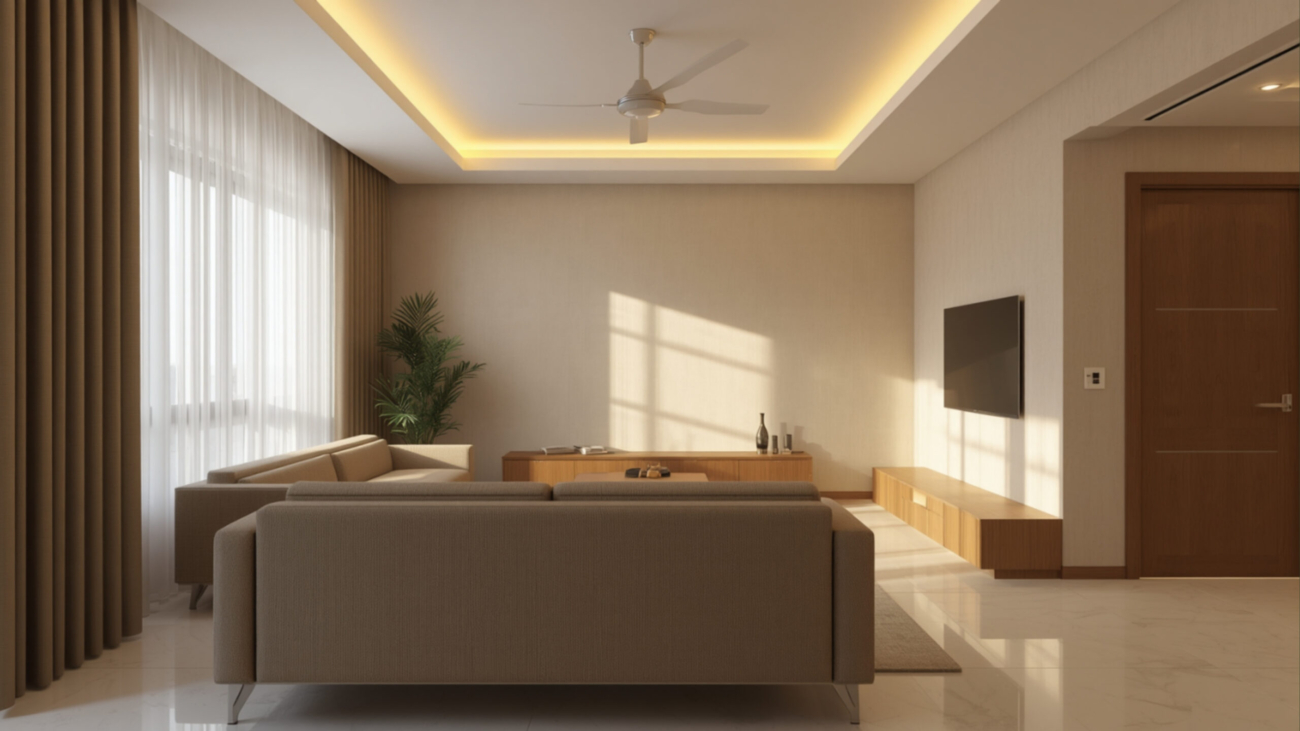
Last Updated: July 2026
Last Updated: July 2026
A 2 BHK interior design cost in Electronic City is about Rs. 4.5 lakh at the Essential tier, Rs. 7 lakh at the Comfort tier, and Rs. 10 lakh or more at the Signature tier for a typical 950 to 1,150 sq ft apartment. On the design side, the budget pays for a planned modular kitchen, two fitted wardrobes, false ceiling, painting, and lighting that are matched to your layout, your storage needs, and the finish quality you want to live with for the next ten years.
For 2026, a 2 BHK interior in Electronic City costs between Rs. 4.5 lakh and Rs. 11 lakh, with most families spending around Rs. 7 lakh for a comfortable mid-range finish. That budget includes the modular kitchen, both bedroom wardrobes, false ceiling, painting, lighting, and basic loose furniture, all planned around your apartment layout and how your family uses each room.
| Tier | Per sq ft | Typical 2 BHK total | What you get |
|---|---|---|---|
| Essential | Rs. 1,200 - Rs. 1,800 | Rs. 4.5 lakh - Rs. 6 lakh | Laminate finishes, MDF or HDHMR carcass, standard hardware, basic false ceiling in living and kitchen. |
| Comfort | Rs. 1,800 - Rs. 2,800 | Rs. 6.5 lakh - Rs. 8.5 lakh | BWP plywood carcass, acrylic or membrane shutters, branded Hettich or Hafele hardware, fuller false ceiling and lighting. |
| Signature | Rs. 2,800 - Rs. 4,500+ | Rs. 9.5 lakh - Rs. 12 lakh+ | Premium plywood, PU or lacquered glass shutters, full Blum fittings, designer lighting, custom wall and ceiling detailing. |
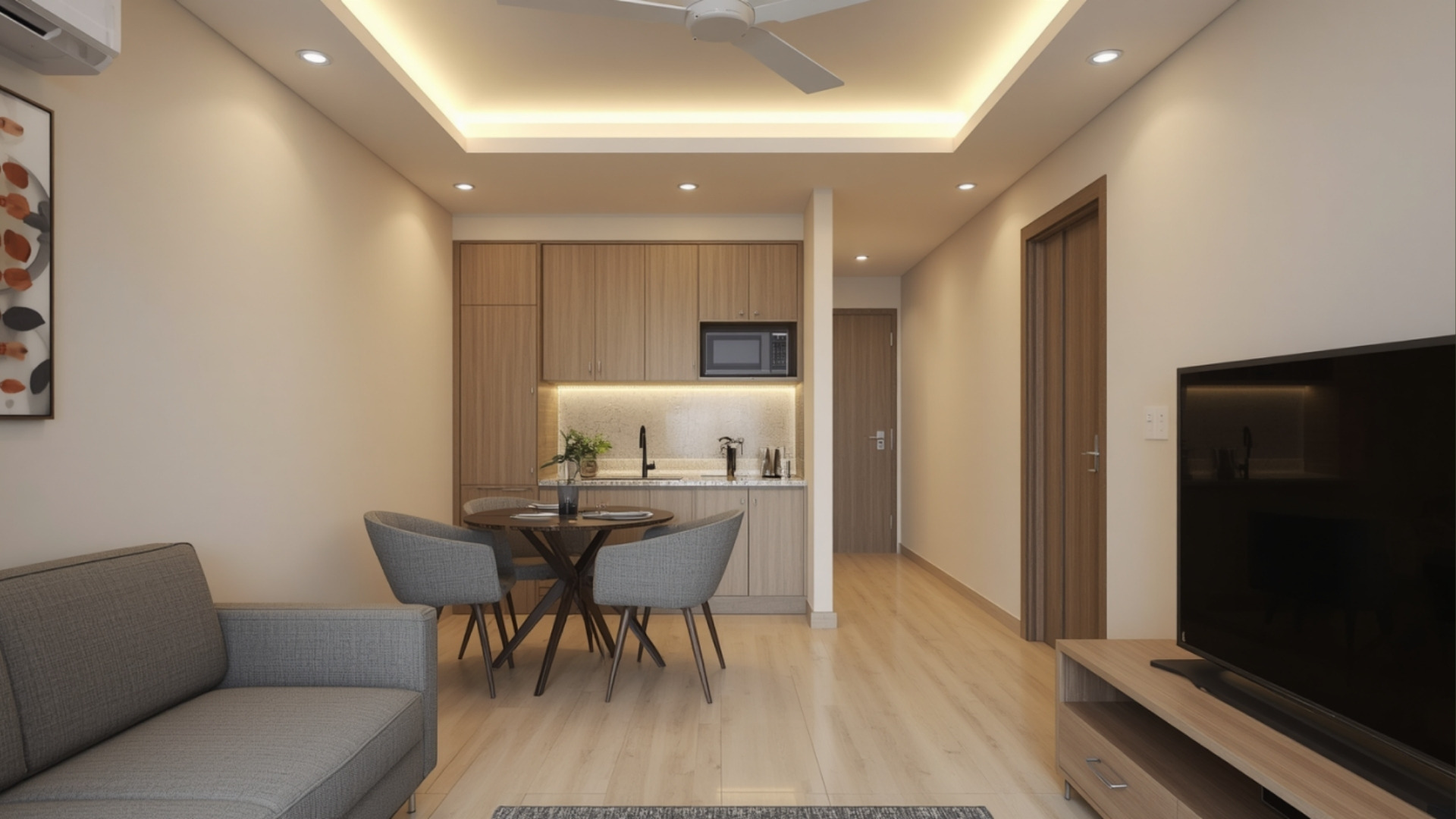
In my experience across Electronic City projects, the families who are happiest after two years are not the ones who spent the most. They are the ones who put their budget into the kitchen, the wardrobes, and good lighting first, and left the decorative extras for later. Spend where you touch the home every day. That is the myNivasa way of looking at a 2 BHK budget.
When a family in Electronic City asks me for a 2 BHK interior, they are usually picturing finished photos. What they are actually buying is a set of fixed and loose elements that together make an empty flat livable. Knowing what is inside the scope is the first step to understanding the cost, because every line you add or remove moves the final number.
The core scope of a 2 BHK interior covers the modular kitchen, wardrobes in both bedrooms, a TV unit in the living room, false ceiling, wall painting, electrical and lighting points, and the basic loose furniture like a dining set or a bed. These are the elements that turn a bare apartment into a home you can move into.
The modular kitchen is the heart of the scope. It includes base units, wall units, a tall unit if space allows, the countertop, the backsplash, and the internal accessories like cutlery trays and bottle pull-outs. The way these are configured decides both how the kitchen works and how much it costs.
Wardrobes are the second large block. A 2 BHK needs at least two wardrobes, one in the master bedroom and one in the second bedroom. The choice between hinged and sliding shutters, the internal layout, and the shutter finish all sit inside this part of the scope.
The living room usually carries the TV unit, a feature wall, and the main false ceiling with cove lighting. This is where most of the visible design statement lives, so families tend to invest a little extra here even on a tight budget.
False ceiling, painting, and lighting run across the whole home. These are the layers that tie the rooms together visually. A well-planned lighting layout makes even an Essential tier home feel finished, while poor lighting can make an expensive home feel flat.
What is usually not inside a standard 2 BHK interior quote is civil work like wall demolition, plumbing relocation, waterproofing, and major electrical rewiring. In most Electronic City apartments handed over by builders like Brigade, Puravankara, or Sobha, the base civil work is already done, so this keeps the interior scope cleaner. I always confirm this line by line so there are no surprises later.
Two families in the same apartment block can get quotes that differ by three or four lakh, and both can be fair. The reason is that the cost of a 2 BHK interior is driven by a handful of decision factors, and each family weighs them differently. Understanding these factors helps you read any quote with confidence.
The first factor is apartment size. Electronic City 2 BHK units commonly range from 950 sq ft to 1,200 sq ft. More carpet area means more wardrobe running feet, more false ceiling area, and more painting, so the cost rises almost in step with the size. At a Comfort tier rate of about Rs. 2,200 per sq ft, a 100 sq ft difference is roughly Rs. 2.2 lakh.
The second factor is the carcass material. The box behind every cabinet can be MDF, HDHMR, or BWP plywood. Plywood costs more but handles Bengaluru humidity and water far better, which matters in the kitchen and in bathrooms. This single choice can shift the kitchen and wardrobe budget by 20 to 30 percent.
The third factor is the shutter finish. Laminate is the workhorse and the most affordable. Acrylic and membrane sit in the middle and give a richer look. PU paint and lacquered glass are premium and push the cost up sharply. The finish you pick for the kitchen and wardrobe fronts is one of the most visible and most expensive design decisions.
The fourth factor is hardware. Hinges, channels, and pull-out mechanisms from Hettich and Hafele are the dependable mid-range choice, while Blum sits at the premium end with the longest life. Hardware is invisible in photos but it is what you feel every single day, so I treat it as a core spend, not an extra.
The fifth factor is the amount of false ceiling, lighting, and decorative work. A simple peripheral cove in the living room costs far less than a full home false ceiling with profile lighting, panelling, and feature walls. This is the most flexible part of the budget and the easiest place to phase later.
The last factor is the locality premium itself. Electronic City labour and logistics are slightly easier than the central city, so rates here are usually a touch friendlier than Indiranagar or Koramangala. The difference is small, but on a full home it can mean a saving of Rs. 30,000 to Rs. 60,000.
The clearest way to plan a 2 BHK budget is to pick a tier and then refine within it. I use three tiers at myNivasa, and almost every Electronic City family lands in one of them. The tier sets the material grade, the hardware brand, and the level of detailing, which together decide the final cost.
The Essential tier runs Rs. 1,200 to Rs. 1,800 per sq ft and a typical 2 BHK lands at Rs. 4.5 lakh to Rs. 6 lakh. Here the carcass is MDF or HDHMR, shutters are laminate, and hardware is standard branded. False ceiling is limited to the living room and kitchen. This tier is ideal for investors, first homes, and families who want a clean, functional finish without premium extras.
The Comfort tier runs Rs. 1,800 to Rs. 2,800 per sq ft and a 2 BHK lands at Rs. 6.5 lakh to Rs. 8.5 lakh. The carcass moves to BWP plywood, shutters are acrylic or membrane, and hardware is Hettich or Hafele. False ceiling and lighting cover more of the home, and the kitchen gets better accessories. This is where most Electronic City families settle, because it balances durability and looks.
The Signature tier runs Rs. 2,800 to Rs. 4,500 plus per sq ft and a 2 BHK starts around Rs. 9.5 lakh and rises past Rs. 12 lakh. Premium plywood, PU or lacquered glass shutters, full Blum fittings, quartz countertops, and designer lighting all come in. This tier suits families who want a long-term premium home and plan to stay for many years.
The jump from Essential to Comfort is mostly about durability and daily feel. The jump from Comfort to Signature is mostly about finish and aesthetics. Knowing which jump matters to you is the single most useful budgeting decision you can make, and it is the conversation I have with every family before a single drawing is made.
Material grade is where design meets budget most directly. The same wardrobe in two different materials can differ by Rs. 40,000, yet look almost identical on day one. The difference shows up over years, in how the cabinet holds up to Bengaluru humidity and daily use. Here is how the main material decisions map to cost.
For the carcass, MDF is the lowest cost at roughly Rs. 90 to Rs. 130 per sq ft of board, HDHMR sits a little higher with better screw holding, and BWP plywood is the premium choice at Rs. 150 to Rs. 230 per sq ft of board. In a kitchen, I always recommend BWP plywood for the base units near water, even on a Comfort budget, because water damage is the number one reason kitchens fail early.
For shutters, laminate is Rs. 200 to Rs. 600 per sq ft installed depending on brand and thickness, acrylic and membrane run Rs. 600 to Rs. 1,100, and PU paint or lacquered glass can cross Rs. 1,200 to Rs. 1,800. Brands like Merino, Greenlam, and Century laminates cover the affordable and mid range well, which keeps the Essential and Comfort tiers sensible.
For countertops, granite is the value choice at Rs. 200 to Rs. 350 per sq ft, quartz is the durable mid to premium option at Rs. 450 to Rs. 900, and imported quartz or sintered stone sits above that. Quartz is stain resistant and low maintenance, which is why most Comfort and Signature kitchens use it.
For hardware, this is the grade decision I never let families skip. Mid range Hettich or Ebco hinges and channels last 8 to 12 years comfortably, while premium Blum soft close mechanisms last 15 years or more and feel smoother every day. The hardware in a single kitchen can range from Rs. 25,000 at the basic end to Rs. 1.2 lakh at the full Blum end.
The design lesson is simple. Put the better grade where water, weight, and daily motion are highest, which means the kitchen base units, the kitchen hardware, and the wardrobe channels. Save on the elements that only carry light loads or are rarely touched. This is how a Comfort tier home can feel almost like a Signature one for the parts you use most.
To plan cash flow, it helps to see the budget split by work phase rather than by room. On a typical Comfort tier 2 BHK in Electronic City at about Rs. 7 lakh, here is how the money usually divides across the project.
The modular kitchen takes the largest single share, around Rs. 2 lakh to Rs. 2.8 lakh. This covers base and wall units, countertop, backsplash, chimney and hob provision, and internal accessories. At roughly 30 to 38 percent of the total, the kitchen is where careful material choices pay off most.
Wardrobes for both bedrooms come next at Rs. 1.5 lakh to Rs. 2.2 lakh combined. A master bedroom wardrobe of 7 to 8 ft and a second wardrobe of 5 to 6 ft is the common setup. Sliding shutters add about 10 to 15 percent over hinged for the same internal volume.
False ceiling and electrical work together run Rs. 90,000 to Rs. 1.4 lakh. False ceiling alone is Rs. 75 to Rs. 125 per sq ft of covered area, and the electrical and lighting points add to that. This phase sets the mood of the home through cove and profile lighting.
Painting across the home is Rs. 60,000 to Rs. 1 lakh depending on whether you use standard emulsion or premium and textured finishes. Emulsion adds about Rs. 8 to Rs. 15 per sq ft over the base putty coat, and texture or accent walls cost Rs. 20 to Rs. 40 per sq ft extra.
The TV unit, a study or crockery unit, and loose furniture provisions take the remaining Rs. 70,000 to Rs. 1.2 lakh. These are the items families most often phase out to a second stage if the budget is tight, which is a sensible way to manage cash flow without compromising the core home.
Across all phases, remember that 18 percent GST applies, and design and project management fees may be charged separately or built into the per sq ft rate. I always show families the pre-GST and post-GST number side by side so the budget they plan is the budget they pay.
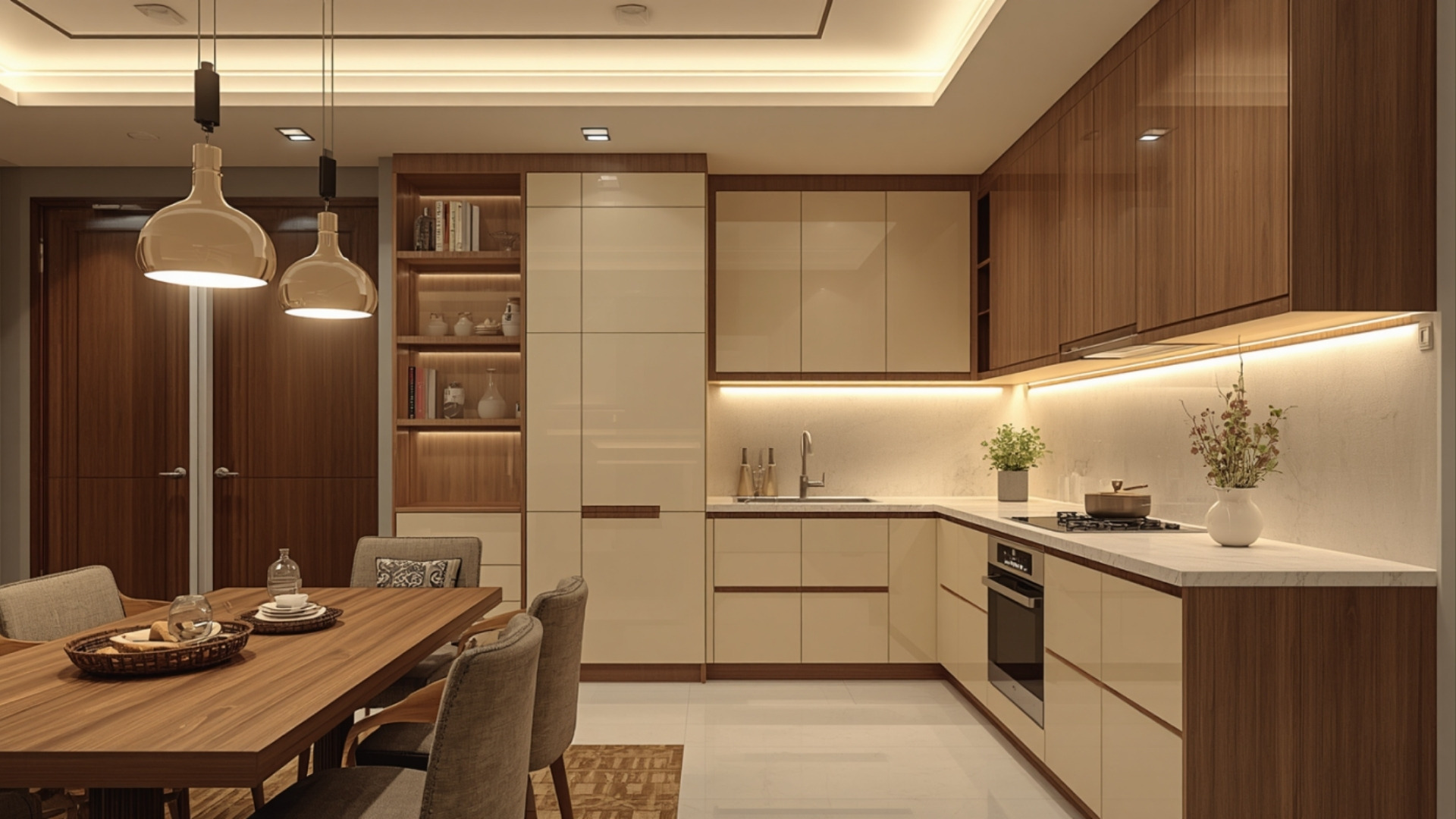
Cost is only half the story. How a 2 BHK is laid out decides whether the home feels open and easy or cramped and awkward, and layout choices are largely free at the design stage. Most Electronic City 2 BHK apartments fall into a few common layouts, and each one suggests a different design approach.
The most common is the rectangular layout with the living and dining in one connected zone, a kitchen along one wall, and two bedrooms off a short passage. Here the design goal is to keep the living and dining visually open while giving the kitchen enough working triangle space between sink, hob, and fridge.
A second common variant places the kitchen as a separate enclosed room. This suits families who cook heavily and want to contain smells and sounds. The design trade-off is that an enclosed kitchen needs careful lighting and ventilation planning so it does not feel boxed in.
Some newer towers offer an L-shaped living and dining space. This is a gift for design because it lets you create two distinct zones, a relaxed sofa area and a defined dining corner, without any walls. A rug, a pendant light, and a console are often enough to separate them.
The kitchen layout itself is usually straight, L-shaped, or parallel. A straight kitchen suits compact 2 BHK units, an L-shape is the most popular for the balance of counter and storage, and a parallel or galley kitchen works where the apartment has a long narrow kitchen room. The layout you have largely sets the kitchen cost, since more running feet means more cabinetry.
Good layout design also plans for circulation, the invisible paths people walk every day. I leave at least 900 mm of clear walkway in front of wardrobes and in kitchen aisles. This is a no-cost design principle that makes a small 2 BHK feel far more comfortable to live in.
For most families, storage is the real reason they invest in interiors. A 2 BHK has to hold everything a family owns, and smart configuration is what makes that possible without clutter. These choices are about design thinking more than money, though they do shape the final cost.
In the kitchen, the base units can be fitted with drawers or with shutters and shelves. Drawers cost more because of the channels, but they make deep storage usable, so I push for at least a bank of drawers near the hob for vessels. Tall units for groceries and a built-in provision for a microwave or oven keep the counter clear.
Wardrobe internals are where configuration really pays off. A master wardrobe usually needs a long hanging section, a few shelves, drawers for folded clothes, and a locker for valuables. The second bedroom, often a child or guest room, can use more open shelves and a study-friendly layout.
Loft storage above wardrobes and above the kitchen is an Electronic City favourite, because apartments here have generous ceiling heights. Lofts are a low-cost way to add seasonal and rarely-used storage, and they use space that would otherwise be wasted.
For the living room, storage can be hidden in the TV unit and in a slim console behind the sofa. A crockery unit near the dining doubles as display and storage. The design aim is to give every item a home so the visible surfaces stay calm and uncluttered.
The configuration principle I follow is to match storage to how each family actually lives, not to a template. A family that entertains needs more crockery and dining storage, while a young couple may want a study nook instead. Tailoring the configuration is what separates a designed home from a furnished one, and it usually costs nothing extra to plan well.
Families often ask which brands they should insist on and which they can leave to the designer. Knowing the brand landscape helps you judge whether a quote is using dependable materials or cutting corners, and it connects directly to the cost tier you choose.
For plywood and boards, Century Ply, Greenply, and Action Tesa are the names I trust for BWP and HDHMR grades. A genuine BWP plywood with an IS 710 marking is what you want in the kitchen, and the small premium over commercial ply is worth every rupee in a humid city.
For laminates and shutter surfaces, Merino, Greenlam, and Century are reliable across the affordable and mid range, while acrylic options from brands like Senosan and Rehau give the high-gloss look for Comfort and Signature kitchens. The brand mainly affects the colour range, the scratch resistance, and the warranty.
For hardware, the three names that matter are Hettich, Hafele, and Blum. Hettich and Hafele cover the dependable mid range with hinges, channels, and baskets that last well. Blum is the premium benchmark, with soft-close motion and a long warranty that justify its cost in a long-stay home. Ebco is a solid value option for the Essential tier.
For countertops and surfaces, quartz from established brands resists stains and needs little maintenance, which is why it has become the default for Comfort kitchens. Granite remains a strong value option, and sintered stone is the premium frontier for Signature homes.
For paints and finishes, Asian Paints and Berger lead the market with the range of emulsions, textures, and warranties most families want. The grade you pick, from economy emulsion to premium washable finishes, affects both the look and the per sq ft cost. Choosing a washable premium emulsion in high-traffic areas is a small spend that pays back in easy cleaning for years.
Before any material is chosen, good interior design follows a few principles that decide whether a home feels right. These principles cost nothing, yet they shape every later decision. When families ask me what is the difference between a designed home and a furnished one, the answer is almost always these principles, not the budget.
The first principle is space planning. The design must respect how a family moves through the home each day, from the front door to the kitchen to the bedrooms. A layout that honours these daily paths feels effortless, while a layout that ignores them feels cramped even when it is expensive. This is why I begin every 2 BHK design with the movement plan, not the furniture.
The second principle is proportion. Furniture and cabinetry should match the scale of the room. A heavy sofa in a small living room, or a wardrobe that overpowers a compact bedroom, breaks the visual balance. The design approach is to size each element to its space so the room feels calm and open rather than full.
The third principle is function before decoration. Every element should earn its place by doing a job first, and looking good second. A TV unit should store as well as display, a dining console should serve as well as decorate. When function leads, the aesthetic follows naturally and the home stays useful for years.
The fourth principle is visual continuity. A 2 BHK feels larger and more restful when the colour palette, the flooring, and the finishes flow from room to room rather than changing abruptly. This does not mean every room is identical. It means the design speaks one language, with each room a variation on a shared theme.
The fifth principle is light and air. The design must work with the natural light each apartment receives and plan artificial lighting in layers. A room that is planned around its light, with the right balance of ambient, task, and accent layers, will always feel better than a room that simply spends more on fittings. This consideration matters as much as any material choice.
These principles are why two homes with the same budget can feel completely different. The rupees buy the materials, but the principles decide whether the home works. This is the part of design I care about most, because it is what families live inside every day long after the cost is forgotten.
Once the layout and principles are set, the next design decision is style. Style is the visual personality of the home, and it shapes the palette, the finishes, and the mood. For a 2 BHK in Electronic City, a few styles suit the apartment scale and the way young families and professionals live here. Choosing a style early keeps every later choice consistent.
The contemporary style is the most popular approach. It uses clean lines, neutral palettes, and a mix of matte and subtle gloss finishes. The aesthetic is calm and uncluttered, which suits compact 2 BHK spaces and photographs beautifully. Contemporary design also ages well, so it remains relevant years after the home is done.
The minimal style takes this further, with even fewer elements, hidden storage, and a restrained palette of one or two main tones. The design principle here is that less visible clutter creates a more restful home. Minimal interiors suit busy professionals who want a serene space to return to, and they often need fewer decorative items, which can help the budget.
The modern Indian or fusion style blends contemporary layouts with warm Indian materials, textures, and accents. Think of clean cabinetry paired with a handcrafted console, a brass accent, or a textured feature wall. This approach gives a 2 BHK warmth and personality while keeping the practical benefits of a modern layout.
The transitional style sits between classic and contemporary, with soft detailing, gentle curves, and a layered palette. It suits families who find pure minimalism too stark but still want a current look. The aesthetic is comfortable and welcoming, and it carries decorative pieces gracefully.
Whatever the style, my design approach is to pick one direction and commit to it across the home. A 2 BHK is too compact to carry several competing styles, and visual consistency is what makes a small home feel considered. The style you choose is a design decision, not a cost decision, yet it influences every material and finish that follows.
Many Electronic City families ask me to plan their 2 BHK with vastu in mind, and it is a fair consideration that can sit comfortably inside good design. The aim is to align the home with light, air, and a sense of balance, which often overlaps with sound design principles anyway. Here is how I approach vastu within a practical 2 BHK layout.
The kitchen is the element families care about most. The traditional vastu preference places the kitchen in the south-east, with the cook facing east while working. In an apartment where the kitchen position is fixed by the builder, the design approach is to honour the intent where possible, for example by orienting the hob thoughtfully, rather than forcing changes that the structure does not allow.
For bedrooms, the common consideration is to place the master bedroom in the south-west for a sense of stability, and to position the bed so the head rests toward the south or east. These are layout decisions that cost nothing to plan and can be accommodated in most 2 BHK configurations without compromise.
Light and entry are the other vastu considerations that align neatly with design. Keeping the entrance and living areas bright and uncluttered, and allowing natural light deep into the home, is good vastu and good design at once. A clear, welcoming entry sets the tone for the whole apartment.
My honest guidance is to treat vastu as one input among several. Where a vastu preference and a practical layout agree, we follow it gladly. Where the apartment structure makes a preference impossible, we focus on the underlying intent, which is balance, light, and calm. That way the home respects the family's beliefs without sacrificing how well it functions day to day.
Lighting is the design layer that families underestimate most, yet it transforms a home more than almost any other element. A thoughtful lighting design can make an Essential tier 2 BHK feel warm and finished, while poor lighting can leave a Signature home feeling cold. The approach I follow is to plan light in three layers for every room.
The first layer is ambient light, the general illumination that fills a room. In a 2 BHK this usually comes from recessed ceiling lights or a central fixture. The design principle is to keep ambient light soft and even, avoiding harsh single sources that flatten a space and create glare.
The second layer is task light, focused illumination where work happens. In the kitchen this means under-cabinet lighting over the counter, in the study it means a focused desk light, and in the bedroom it means bedside reading lights. Task lighting is a functional consideration that makes the home genuinely easier to live in.
The third layer is accent light, the lighting that creates mood and highlights design features. Cove lighting in the false ceiling, a spotlight on a feature wall, or a warm pendant over the dining table all add depth and character. This layer is where a 2 BHK gains its evening warmth and its sense of being a designed home.
Colour temperature is the final consideration. I usually plan warm white light around 2700 to 3000 Kelvin for living and bedrooms to create a relaxed feel, and a slightly cooler, brighter light for the kitchen and study where clarity matters. Matching the light tone to the function of each room is a small design decision with a large effect on comfort.
The reason I dwell on lighting is that it is the cheapest way to lift a home and the easiest to get wrong. A good lighting layout is mostly about planning and placement, not expensive fittings, so it rewards design thinking far more than budget. This is a principle I urge every family to take seriously, whatever their tier.
The number that surprises families is rarely the headline quote. It is the set of costs that sit just outside the first estimate. I list these openly before signing, because a budget that ignores them is not a real budget. Here are the hidden costs to plan for in an Electronic City 2 BHK.
GST is the biggest one. Interior work attracts 18 percent GST, and many online rates and casual quotes are shown before tax. On a Rs. 7 lakh scope, that is about Rs. 1.26 lakh, so always confirm whether a quote is inclusive or exclusive of GST.
Electrical and plumbing modifications are the next surprise. Moving a switchboard, adding points for the chimney, hob, or geyser, or shifting a water line all cost extra over the base interior quote. In most builder-finished Electronic City flats this is modest, but it is rarely zero, and Rs. 20,000 to Rs. 50,000 is a fair buffer.
False ceiling finishing carries its own hidden layer. The per sq ft ceiling rate usually covers only the basic structure and a putty coat. Paint, cove profiles, and edge banding add Rs. 8 to Rs. 40 per sq ft on top, which adds up across a full home.
Loose furniture and soft furnishings are often left out of the core quote. Sofas, dining chairs, mattresses, curtains, and blinds can add Rs. 1 lakh to Rs. 2.5 lakh depending on taste. Families who forget this line end up with finished cabinetry but an empty-feeling home.
Appliances are another line that sits outside most interior quotes. The chimney, hob, built-in oven, refrigerator, and washing machine are usually bought separately. If you want a built-in look, the provisions must be designed in from the start, so flag this early.
The last hidden cost is the cost of delay and rework. Choosing materials late, changing the design mid-project, or hiring uncoordinated vendors all add time and money. A single planned scope with one accountable team is the cheapest way to build, which is exactly why a turnkey approach often costs less in the end than it appears to on paper.
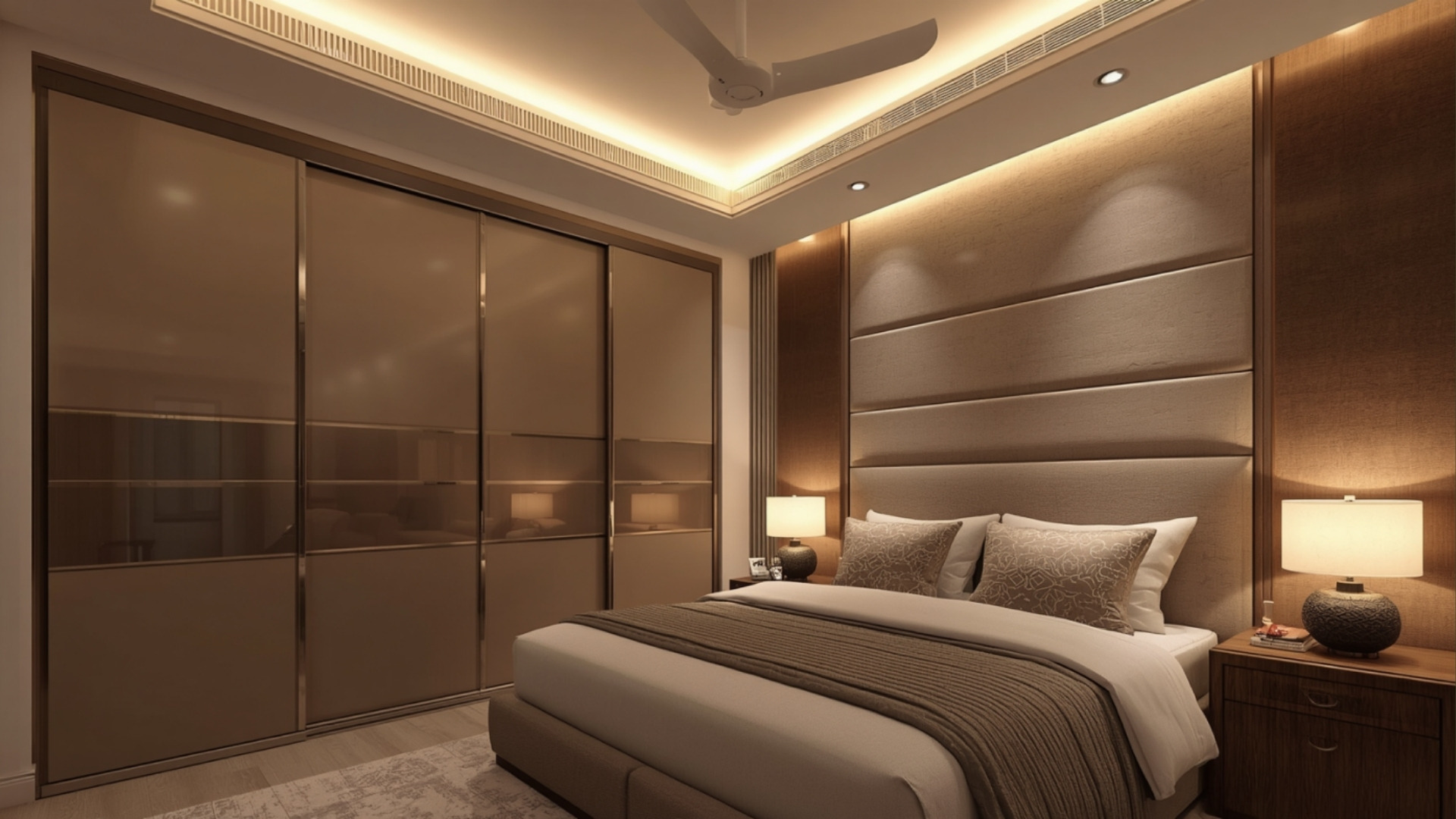
Electronic City has grown from an office-only zone into a genuine residential neighbourhood, with families moving into towers by Brigade, Puravankara, Sobha, and Nambiar. These are homes people intend to live in for years, not flip, and that changes what they want from an interior partner.
Families here tell me they want three things: an honest budget with no hidden surprises, materials that survive Bengaluru weather and daily family use, and a single team that takes responsibility from drawing to handover. That is the brief myNivasa is built around.
I plan every 2 BHK around how the family actually lives, not around a fixed package. We start with your layout and your storage needs, agree the tier and materials openly, and show the pre-GST and post-GST numbers together. The design is yours, the budget is clear, and the accountability sits in one place.
Because we work across many Electronic City projects, we know the common apartment layouts, the builder handover standards, and the practical issues like loft heights and balcony rules. That local knowledge means fewer surprises on site and a smoother project for your family.
If you want to compare how these numbers shift across the city, our guides on interior design cost in Bangalore for 2026 and on kitchen renovation cost and ideas in Bangalore are good companions to this Electronic City guide. For nearby localities you can also read our breakdowns for 2 BHK renovation cost in Indiranagar and 2 BHK interior cost in HSR Layout.
The tables below put the numbers side by side so you can see how tier and room choices change the total. These are based on real myNivasa project medians for Electronic City and nearby South Bengaluru localities through 2025 and early 2026.
| Element | Essential | Comfort | Signature |
|---|---|---|---|
| Modular kitchen | Rs. 1.4 lakh | Rs. 2.4 lakh | Rs. 4.2 lakh |
| Master wardrobe | Rs. 70,000 | Rs. 1.1 lakh | Rs. 1.8 lakh |
| Second wardrobe | Rs. 50,000 | Rs. 80,000 | Rs. 1.3 lakh |
| TV unit and living | Rs. 45,000 | Rs. 85,000 | Rs. 1.6 lakh |
| False ceiling and lighting | Rs. 55,000 | Rs. 1.1 lakh | Rs. 1.9 lakh |
| Painting | Rs. 55,000 | Rs. 80,000 | Rs. 1 lakh |
| Approx total (pre-GST) | Rs. 5.1 lakh | Rs. 7.4 lakh | Rs. 11.8 lakh |
| Locality | Per sq ft (Comfort) | Typical 2 BHK total |
|---|---|---|
| Electronic City | Rs. 1,800 - Rs. 2,700 | Rs. 6.5 lakh - Rs. 8.3 lakh |
| HSR Layout | Rs. 1,900 - Rs. 2,800 | Rs. 6.8 lakh - Rs. 8.6 lakh |
| Sarjapur Road | Rs. 1,850 - Rs. 2,750 | Rs. 6.6 lakh - Rs. 8.4 lakh |
| Bellandur | Rs. 1,900 - Rs. 2,850 | Rs. 6.9 lakh - Rs. 8.7 lakh |
| Koramangala | Rs. 2,100 - Rs. 3,100 | Rs. 7.5 lakh - Rs. 9.4 lakh |
The pattern is clear. Electronic City sits at the friendlier end of South Bengaluru rates, mainly because labour and logistics are a little easier here than in the central localities. The design quality you get for the rupee is among the best in the city, which is part of why the area is filling with long-stay families.
To see how these choices look in a real home, this video tour of a Bengaluru home interior delivered on a sensible budget is a useful reference. It shows how thoughtful layout and lighting can make a mid-budget 2 BHK feel complete, which is exactly the balance of cost and design this guide is about.
A 2 BHK interior in Electronic City costs Rs. 4.5 lakh to Rs. 11 lakh in 2026. The Essential tier is Rs. 4.5 lakh to Rs. 6 lakh, the Comfort tier is Rs. 6.5 lakh to Rs. 8.5 lakh, and the Signature tier starts around Rs. 9.5 lakh and rises past Rs. 12 lakh, all before GST.
Per sq ft rates run Rs. 1,200 to Rs. 1,800 for the Essential tier, Rs. 1,800 to Rs. 2,800 for the Comfort tier, and Rs. 2,800 to Rs. 4,500 plus for the Signature tier. Electronic City sits at the friendlier end of South Bengaluru rates because labour and logistics here are a little easier than in central localities.
The modular kitchen in a 2 BHK usually costs Rs. 1.4 lakh at the Essential tier, Rs. 2 lakh to Rs. 2.8 lakh at the Comfort tier, and Rs. 4 lakh plus at the Signature tier. It is the single largest line in the budget, taking 30 to 38 percent of the total, so material and hardware choices here matter most.
Often it is not. Interior work attracts 18 percent GST, and many online rates and casual quotes are shown before tax. On a Rs. 7 lakh scope that is about Rs. 1.26 lakh extra, so always confirm whether a quote is inclusive or exclusive of GST before you compare numbers.
Plan for 18 percent GST, electrical and plumbing modifications of Rs. 20,000 to Rs. 50,000, false ceiling finishing over the basic rate, loose furniture and curtains of Rs. 1 lakh to Rs. 2.5 lakh, and appliances bought separately. A single planned scope with one accountable team is the cheapest way to avoid delay and rework costs.
BWP plywood with an IS 710 marking is the best choice for kitchen base units, because it handles Bengaluru humidity and water far better than MDF or HDHMR. Water damage is the main reason kitchens fail early, so I recommend plywood for the base units near water even on a Comfort budget.
Most Electronic City 2 BHK units suit an open living and dining zone with an L-shaped kitchen, which balances counter space and storage. The key design principle is to keep at least 900 mm of clear walkway in front of wardrobes and in kitchen aisles, which makes a compact home feel comfortable at no extra cost.
Do the fixed elements like kitchen, wardrobes, false ceiling, and painting in one go, because they involve dust, drilling, and coordination that is disruptive to repeat. Loose furniture, the TV unit, and decorative pieces can be phased to a second stage to manage cash flow without compromising the core home.
Numbers make most sense when they are tied to a real family. Here are three budget scenarios I see often in Electronic City, each built around a different priority. They show how the same apartment can be designed at very different costs while still being done well.
The first scenario is the investor or rental finish at the Essential tier. A 1,000 sq ft 2 BHK is fitted with a compact L-shaped modular kitchen at Rs. 1.4 lakh, two laminate wardrobes at Rs. 1.2 lakh combined, a simple TV unit at Rs. 40,000, peripheral false ceiling and lighting at Rs. 55,000, and painting at Rs. 55,000. The total lands near Rs. 5 lakh before GST. The design goal here is a clean, durable, neutral finish that appeals to tenants and is easy to maintain.
The second scenario is the young family home at the Comfort tier. A 1,080 sq ft 2 BHK gets a fuller L-shaped kitchen with BWP plywood and Hettich hardware at Rs. 2.5 lakh, two acrylic-finish wardrobes at Rs. 1.9 lakh, a feature TV unit at Rs. 85,000, false ceiling and layered lighting across the home at Rs. 1.1 lakh, and premium emulsion painting at Rs. 80,000. With a study nook and accessories, the total sits around Rs. 7.5 lakh before GST. The design balances durability, storage, and a warm finished look.
The third scenario is the long-stay premium home at the Signature tier. A 1,150 sq ft 2 BHK receives a designer kitchen with full Blum fittings and a quartz countertop at Rs. 4.2 lakh, two PU-finish wardrobes at Rs. 3 lakh combined, a custom living wall and TV unit at Rs. 1.6 lakh, full home false ceiling with profile lighting at Rs. 1.9 lakh, and premium textured painting at Rs. 1 lakh. The total crosses Rs. 12 lakh before GST. The design priority is a premium, lasting aesthetic for a family that will live here for many years.
The lesson across all three is that the apartment is the same, but the priorities differ. The investor spends on durability and neutrality, the young family spends on balance, and the long-stay family spends on finish and feel. There is no single right number, only the right number for how you intend to live.
Saving on a 2 BHK interior is not about choosing the cheapest of everything. It is about spending where it matters and economising where it does not. These are the strategies I share with every family who wants a quality home on a careful budget.
The first strategy is to put plywood and good hardware only where water and motion are highest, which is the kitchen base units and the wardrobe channels. Use sensible mid-grade materials elsewhere. This single principle protects the parts that fail early while keeping the overall cost in check.
The second strategy is to phase the decorative work. The fixed elements like kitchen, wardrobes, false ceiling, and painting should be done in one disruptive phase, but the TV feature wall, the second study unit, and loose furniture can wait. Phasing the aesthetic extras can defer Rs. 1 lakh to Rs. 2 lakh without affecting how the home functions.
The third strategy is to keep the false ceiling simple. A peripheral cove in the living room and kitchen gives most of the visual benefit at a fraction of the cost of a full home ceiling. You can always add more later, but a restrained ceiling design often looks cleaner anyway.
The fourth strategy is to choose laminate in low-touch areas and reserve acrylic or PU finishes for the one or two surfaces people see most, like the kitchen fronts or the master wardrobe. The eye notices the hero surfaces, not the inside of a utility cabinet, so this is an easy saving with no visible compromise.
The fifth strategy is to finalise the design and materials before work begins. The most expensive money in any project is the money spent on changes and rework. A locked scope, a clear drawing set, and a single accountable team save more than any material substitution, which is the quiet advantage of a planned turnkey approach.
Understanding the process removes most of the stress from an interior project. A 2 BHK in Electronic City typically takes six to ten weeks from start to handover, and knowing the stages helps you plan your move and your payments. Here is how a well-run project unfolds.
The first stage is discovery and design, usually one to two weeks. We measure the apartment, understand how your family lives, agree the tier and style, and prepare the layout and drawings. This is the most important stage, because every decision made well here saves time and money later.
The second stage is material selection and finalisation, about one week. You choose the laminates, the shutter finishes, the countertop, the hardware, and the paint shades. Locking these before production begins is what keeps the timeline and the budget on track.
The third stage is production and factory work, around three to four weeks. The modular units are manufactured while any site preparation, electrical, and false ceiling work proceeds in parallel. Running factory and site work together is how a good team compresses the overall timeline.
The fourth stage is installation and finishing, about two to three weeks. The cabinetry is fitted, the countertop and backsplash go in, painting is completed, and lighting and accessories are installed. This is when the home visibly comes together room by room.
The final stage is quality check and handover, a few days. We inspect every hinge, drawer, and finish, fix any snags, and hand over a home that is ready to live in. A clear handover with a checklist is the mark of a project run with care, and it is the standard I hold every myNivasa project to.
One decision shapes the whole experience, which is whether to hire a single turnkey team or to coordinate individual contractors yourself. Both can work, but they suit different families. Understanding the trade-off helps you choose the approach that fits your time and temperament.
Hiring individual contractors, a carpenter, a painter, an electrician, and a false ceiling team separately, can look cheaper on paper. The catch is that you become the project manager, coordinating schedules, resolving clashes, and carrying the risk when one trade blames another. For families with time and site experience, this approach can save money, but it demands real involvement.
The turnkey approach gives you one team and one point of accountability from design to handover. The design, materials, production, and installation are coordinated under a single scope and a single timeline. You trade a small coordination premium for predictability, a clear budget, and someone who owns the outcome.
My honest view is that for most working families in Electronic City, the turnkey approach saves more than it costs. The hidden expenses of delay, rework, and uncoordinated vendors usually outweigh the apparent saving of managing trades yourself. A planned single scope is also where good design is protected, because no one is cutting corners to fit a separate trade's budget.
Whichever approach you choose, insist on a written scope, a clear material list, and a payment schedule tied to milestones. These protect you regardless of who does the work, and they turn a vague estimate into a budget you can trust. That clarity, more than any single material choice, is what makes a 2 BHK project go smoothly.
Over the years I have seen the same avoidable mistakes drain budgets and spoil otherwise good homes. Knowing them in advance is one of the most valuable things a family can take into a project, because each mistake is easy to prevent at the design stage and expensive to fix later.
The first mistake is choosing materials by appearance alone. A laminate that looks like premium wood is fine on a wardrobe front, but the same shortcut on a kitchen base unit near water leads to early failure. The design principle is to match the material to the job, not only to the look. This single consideration prevents the most common kind of regret.
The second mistake is over-designing the false ceiling. Families often spend heavily on a full home ceiling with elaborate detailing, then find it makes the rooms feel lower and the budget tighter. A restrained ceiling design usually looks cleaner and leaves room in the budget for the elements that matter more.
The third mistake is ignoring lighting until the end. Lighting is treated as an afterthought far too often, yet it is the layer that decides how a home feels every evening. Planning the lighting layout alongside the layout, not after it, is a design approach that costs nothing extra and changes everything.
The fourth mistake is under-planning storage. A home that looks beautiful on handover day but cannot hold a family's belongings becomes cluttered within months. The configuration of wardrobes, lofts, and kitchen drawers should be planned around what you actually own, which is a design consideration, not a cost one.
The fifth mistake is changing decisions mid-project. Every change after production begins costs time and money and risks the overall finish. The remedy is to invest time in the design and material selection stage so the scope is locked before work starts. A little patience early is the cheapest saving in the whole project.
Avoiding these mistakes is less about spending more and more about thinking clearly at the start. Good design is mostly good decisions made in the right order, and a family that understands these pitfalls will get a far better home for the same budget.
The figures in this guide are myNivasa project medians and market ranges for Electronic City and nearby South Bengaluru localities, gathered from projects through 2025 and early 2026. They are planning ranges, not fixed quotes. Your actual cost depends on your exact carpet area, the condition of the builder handover, your material and hardware choices, and the scope you finalise.
Costs are shown before 18 percent GST unless stated otherwise, and design or project management fees may be charged separately. Appliances, loose furniture, and soft furnishings are treated as separate lines. Prices for materials and hardware can shift with market conditions, so always confirm current rates at the time of your project. A detailed site measurement and a written scope are the only way to turn these ranges into a firm number for your home.
If you are planning a 2 BHK interior in Electronic City for 2026, hold two numbers in your mind. The first is the budget, which for most families lands around Rs. 7 lakh at the Comfort tier, between an Essential floor of Rs. 4.5 lakh and a Signature ceiling above Rs. 11 lakh before GST. The second is the design idea that matters more than the rupees, which is to spend where you touch the home every day, the kitchen, the wardrobes, and the lighting, and to phase the decorative extras for later.
A 2 BHK done well is not about the highest spend. It is about an honest budget, durable materials matched to Bengaluru weather, a layout that suits how your family lives, and one accountable team from drawing to handover. Get those right and your home will feel finished and comfortable for the next ten years. If you would like a clear tier-wise estimate for your exact Electronic City apartment, the myNivasa team is ready to measure your space and plan it with you.
Get a transparent, tier-wise estimate for your Electronic City apartment, with materials, hardware, and the pre-GST and post-GST numbers shown clearly. Talk to the myNivasa team today.
Vishwas Anegundi has been working as an interior designer in Bengaluru since 2018. He runs myNivasa, a full-service interior design, house construction, and home renovation firm based in Bengaluru, serving homeowners across Whitefield, Bellandur, HSR Layout, Sarjapur Road, JP Nagar, Marathahalli, and the wider Bengaluru metropolitan region. The pricing in this guide reflects projects executed by myNivasa and observed market rates from active site work in Bellandur and Outer Ring Road apartment complexes.
The 2BHK interior design cost in Bellandur in 2026 typically lands between ₹6,00,000 and ₹22,00,000 for an end-to-end project, depending on apartment carpet area, material tier, and the depth of customisation. A basic-tier finish for an 950 to 1100 sqft 2BHK covers around ₹6,00,000 to ₹9,00,000. Mid-range work, which is what most Bellandur homeowners actually choose, runs ₹9,00,000 to ₹15,00,000. Premium finishes with imported hardware, designer lighting, and full automation can move past ₹22,00,000. The numbers below are based on real Bellandur projects executed in the last 18 months.
Quick Takeaways
If you are asking, in plain terms, what is the 2BHK interior design cost in Bellandur in 2026, the honest answer is this: most homeowners spend ₹9,00,000 to ₹15,00,000 for a mid-range finish on a 2BHK between 1000 and 1200 sqft. Add 12 to 15 percent for premium plywood, branded hardware, and statement lighting. Subtract 18 to 25 percent if you are happy with MDF carcass, basic laminate, and standard electrical points. The actual figure on your invoice depends on three variables: carpet area, material tier, and how much existing work the apartment already has from the builder.
Before going room by room, it helps to anchor the full 2BHK interior design cost in Bellandur against three clear tiers. The numbers below assume a 1100 sqft carpet area, two bedrooms, two bathrooms, one living and dining, one balcony, and a modular kitchen of 7 to 8 running feet.
| Tier | Total Cost Range (₹) | Per sqft (₹) | Carcass Material | Hardware | myNivasa Recommendation |
|---|---|---|---|---|---|
| Basic | 6,00,000 to 9,00,000 | 650 to 850 | MDF, commercial ply | Local hinges, basic channels | Suitable for rental or short-stay 2BHK |
| Mid-Range | 9,00,000 to 15,00,000 | 900 to 1450 | HDHMR, BWR ply (IS 303 grade) | Hettich, Ebco soft-close | Recommended balance for owner-occupied 2BHK in Bellandur |
| Premium | 15,00,000 to 22,00,000+ | 1500 to 2200 | BWP marine ply (IS 710), HDHMR core | Hafele, Blum tandem boxes | Ideal where homeowner plans 12+ year occupancy |
Across 47 Bellandur 2BHK interior projects audited by myNivasa between January 2024 and February 2026, the median final billed amount was ₹11,38,000 against a median initial quote of ₹10,12,000. The 12.4 percent gap is explained almost entirely by mid-project additions: extra electrical points, civil patchwork after wardrobe shifting, and laminate or fabric upgrades chosen during execution.
Most Bellandur homeowners spend ₹9,00,000 to ₹15,00,000 for a complete 2BHK interior in 2026, with ₹11,50,000 being the typical mid-point for a 1000 to 1150 sqft apartment finished in HDHMR core, branded soft-close hardware, basic false ceiling, and standard electrical work.
The 2BHK interior design cost in Bellandur is shaped by Outer Ring Road logistics more than people expect. Material trucks routinely lose 90 to 120 minutes between Silk Board and Bellandur Junction during weekday peak, and that compounds carpenter idle time.
Across 47 projects audited internally at myNivasa, transportation overhead alone added between ₹18,000 and ₹35,000 to the final bill compared with the same scope executed in JP Nagar or Banashankari.
Builders in apartment complexes like Sobha Habitech, Salarpuria Sattva Greenage, Mantri Espana, Ozone Promenade, and Adarsh Palm Retreat enforce strict society work hours (typically 9 AM to 6 PM, with no Sunday work), which adds 4 to 6 working days to the schedule. Once you account for these realities, the true 2BHK interior design cost in Bellandur is more accurately read as a base scope figure plus a 6 to 9 percent ORR adjustment.
In 2024, a 1080 sqft 2BHK at Salarpuria Sattva Greenage was completed by myNivasa for ₹10,82,000 over 58 working days. In 2025, the identical scope at Sobha Habitech, just 1.4 km away, billed ₹11,46,000 over 64 working days. The 5.9 percent variation came from society-imposed working hours and one extended civil reroute around an existing concealed plumbing line.
For homeowners running early budget calculations, a usable thumb rule for the 2BHK interior design cost in Bellandur is ₹950 to ₹1,400 per sqft of carpet area for mid-range work. A 1100 sqft 2BHK lands around ₹10,45,000 to ₹15,40,000. This range already includes modular kitchen, wardrobes in both bedrooms, false ceiling for living and master bedroom, basic dining unit, TV unit, and routine electrical and painting work. It excludes furniture (sofa, dining chairs, beds, mattresses), curtains, and large appliances.
One nuance specific to Bellandur: many of the apartments in Brigade Lakefront, Purva Skywood, and Adarsh Crest were handed over with builder-provided modular kitchens between 2018 and 2022. If your kitchen carcass is still structurally sound, scope reduction can pull the 2BHK interior design cost in Bellandur down by ₹1,80,000 to ₹2,60,000, since you only redo the shutters, counter, and backsplash rather than the full unit.
A typical 2BHK interior in Bellandur spends 30 to 38 percent on the kitchen, 28 to 34 percent on bedrooms (wardrobes plus beds plus side tables), 14 to 18 percent on the living and dining area, and the remaining 12 to 18 percent on false ceiling, electrical, and painting across all rooms.
The fairest way to plan a 2BHK interior design cost in Bellandur is to assign a budget to each functional zone rather than a single bulk number. Below is the average distribution across mid-range projects executed by myNivasa in 2025 in Bellandur and adjacent micro-markets like Kadubeesanahalli, Ibblur, and Devarabeesanahalli.
The split holds for most apartments between 950 sqft and 1250 sqft carpet area. Where the master bedroom is unusually small (under 110 sqft), the kitchen share rises closer to 38 percent. Where the apartment has a study nook or utility room, the bedroom share absorbs an additional 3 to 5 percent.
| Zone | Share of Budget | Mid-Range Spend (₹) | Premium Spend (₹) | myNivasa Recommendation |
|---|---|---|---|---|
| Modular Kitchen | 30 to 35% | 2,80,000 to 4,20,000 | 4,50,000 to 6,80,000 | Spend here first; daily-use returns are highest |
| Master Bedroom (wardrobe + bed + side units) | 18 to 22% | 1,80,000 to 2,80,000 | 3,00,000 to 4,50,000 | Prioritise wardrobe carcass quality; skin can be upgraded later |
| Second Bedroom | 10 to 14% | 1,00,000 to 1,70,000 | 1,80,000 to 2,80,000 | Modular if children's room; loose furniture if guest room |
| Living and Dining (TV unit, dining unit, foyer) | 14 to 18% | 1,40,000 to 2,30,000 | 2,50,000 to 4,00,000 | TV unit is high-visibility; do not cut quality here |
| False Ceiling and Lighting | 8 to 12% | 80,000 to 1,40,000 | 1,80,000 to 3,00,000 | Cove lighting in living and master bedroom only |
| Painting, Polish, Final Touches | 5 to 8% | 55,000 to 95,000 | 1,10,000 to 1,80,000 | Premium emulsion (Asian Paints Royale or Berger Silk) recommended |
In a 1120 sqft 2BHK at Mantri Espana completed by myNivasa in late 2025, the final break-up landed at ₹3,68,000 for kitchen, ₹2,45,000 for master bedroom, ₹1,38,000 for second bedroom, ₹1,92,000 for living and dining, ₹1,05,000 for ceiling and lighting, and ₹78,000 for paint and finishing. Total: ₹11,26,000 over 62 working days.
What homeowners often miss is that the 2BHK interior design cost in Bellandur is not symmetrical between rooms. The kitchen pulls more not because it has more area but because every running foot is loaded: cabinetry, granite or quartz counter, backsplash, hardware, lighting, plumbing, chimney, hob, and sometimes a tall unit. The living room, by contrast, may have only a TV unit and a partial false ceiling. This is why "per sqft" thinking can mislead. Always look at the room-wise breakdown before approving a quote.
A modular kitchen for a 2BHK in Bellandur costs ₹2,80,000 to ₹4,20,000 in mid-range and ₹4,50,000 to ₹6,80,000 in premium for a typical 7 to 8 running foot L-shape, with HDHMR core, branded soft-close hardware, quartz or granite counter, and a 60 cm chimney.
The kitchen drives the largest single line item in any 2BHK interior design cost in Bellandur. Pricing is usually quoted per running foot, but that number alone hides four important sub-line items: carcass, shutter, counter, and hardware. A budget L-shape kitchen in MDF with basic laminate sits around ₹35,000 to ₹45,000 per running foot.
Mid-range in HDHMR (high-density high-moisture-resistance board) with acrylic or membrane shutters and Hettich or Ebco hardware lands at ₹50,000 to ₹70,000 per running foot. Premium with BWP marine ply (IS 710), Hafele or Blum hardware, and quartz counter moves to ₹80,000 to ₹1,15,000 per running foot. The 2BHK interior design cost in Bellandur is sensitive to chimney brand and hob choice; switching from a domestic chimney to a Faber or Elica Italian-design model adds ₹14,000 to ₹28,000.
| Component | Basic (₹) | Mid-Range (₹) | Premium (₹) | myNivasa Recommendation |
|---|---|---|---|---|
| Carcass (per running foot) | 1,800 to 2,400 | 2,800 to 3,800 | 4,200 to 5,500 | HDHMR for kitchen, period |
| Shutter (per running foot) | 2,200 to 3,200 | 3,800 to 5,400 | 6,500 to 9,500 | Acrylic or membrane in mid-range |
| Counter (full slab, 8 ft) | 14,000 to 22,000 | 26,000 to 42,000 | 55,000 to 95,000 | Granite for cost-effectiveness, quartz if budget allows |
| Hardware set (drawers + hinges + channels) | 18,000 to 28,000 | 32,000 to 52,000 | 65,000 to 1,10,000 | Hettich Quadro or Hafele Grass |
| Chimney + Hob | 22,000 to 32,000 | 34,000 to 55,000 | 65,000 to 1,20,000 | 60 cm chimney, 4-burner hob is standard |
| Backsplash (8 to 10 sqft) | 4,500 to 7,000 | 8,500 to 14,000 | 16,000 to 32,000 | Subway tiles in mid-range, ledge stone in premium |
A 2BHK kitchen in Sobha Habitech, 7.5 running feet L-shape, executed by myNivasa in March 2025, billed ₹3,42,000. Of that, ₹1,85,000 went to cabinetry (carcass plus shutter plus hardware), ₹38,000 to granite counter, ₹52,000 to chimney and hob, ₹12,000 to backsplash, and ₹55,000 to plumbing rerouting and electrical extension for a new dishwasher point. The dishwasher point alone added ₹14,000 over the original quote.
For deeper kitchen-specific pricing across other Bengaluru localities, refer to the modular kitchen cost in HSR Layout 2026 guide and the modular kitchen cost in Whitefield 2026 breakdown. The Bellandur figures track within 5 to 8 percent of HSR Layout and within 3 to 5 percent of Whitefield, with Bellandur trending slightly higher because of ORR transport overhead.
Wardrobe pricing for a 2BHK in Bellandur ranges from ₹950 to ₹1,200 per sqft of door area in basic MDF, ₹1,500 to ₹2,000 per sqft in mid-range HDHMR with acrylic or membrane shutters, and ₹2,200 to ₹3,500 per sqft in premium BWP ply with imported hardware.
Wardrobes are the second largest contributor to the 2BHK interior design cost in Bellandur after the kitchen. A typical master bedroom wardrobe in a Bellandur 2BHK is 7 to 8 ft wide and 8 to 9 ft tall, giving roughly 60 to 72 sqft of door area. The second bedroom wardrobe is usually 5 to 6 ft wide and 8 ft tall, around 40 to 48 sqft. Combined wardrobe spend across both rooms typically lands at ₹1,40,000 to ₹2,40,000 in mid-range and ₹2,80,000 to ₹4,50,000 in premium.
The carcass material decision is the single largest cost lever here. MDF can save ₹30,000 to ₹55,000 versus HDHMR on the same door area, but in a humid Bellandur monsoon (Bellandur Lake area routinely shows higher ambient humidity than central Bengaluru), MDF shutters can swell within 30 to 36 months. The 2BHK interior design cost in Bellandur should account for this longer-term cost of replacement, not just the upfront line item.
| Wardrobe Type | Master Bedroom (₹) | Second Bedroom (₹) | Combined (₹) | myNivasa Recommendation |
|---|---|---|---|---|
| Sliding, MDF, basic laminate | 62,000 to 88,000 | 42,000 to 58,000 | 1,04,000 to 1,46,000 | Avoid for owner-occupied units |
| Sliding, HDHMR, membrane shutter | 1,05,000 to 1,55,000 | 72,000 to 95,000 | 1,77,000 to 2,50,000 | Recommended for Bellandur 2BHK |
| Hinged, BWR ply, acrylic shutter | 1,35,000 to 1,90,000 | 92,000 to 1,28,000 | 2,27,000 to 3,18,000 | If you prefer hinged over sliding |
| Walk-in or U-shape, BWP ply, premium | 2,40,000 to 3,80,000 | 1,55,000 to 2,40,000 | 3,95,000 to 6,20,000 | Only if master bedroom is over 150 sqft |
Of 38 wardrobes installed by myNivasa in Bellandur 2BHK projects between mid-2024 and early 2026, 71 percent were sliding HDHMR with membrane shutters. The average installed cost per wardrobe was ₹1,18,000 across both bedrooms combined, with internal organisers (Hettich pull-out trays, trouser racks) adding ₹14,000 to ₹22,000 on top.
One sub-decision often overlooked when calculating the 2BHK interior design cost in Bellandur: ceiling-height wardrobes versus loft-only solutions. A full ceiling-height wardrobe (8.5 to 9 ft tall) costs 22 to 28 percent more than a 7 ft wardrobe with a separate top loft, but it eliminates the dust gap and gives 30 to 40 percent more storage. For long-stay homeowners, the math usually favours the ceiling-height option. For shorter occupancy (under 4 years), the loft-and-cabinet split saves money upfront.
False ceiling for a 2BHK in Bellandur costs ₹65 to ₹95 per sqft for basic POP, ₹100 to ₹180 per sqft for gypsum with cove lighting, and ₹200 to ₹400 per sqft for premium designer ceilings. Combined ceiling, lighting, and electrical work typically runs ₹1,15,000 to ₹2,80,000 across the apartment.
False ceiling work in a Bellandur 2BHK is often partial rather than full coverage. Most homeowners install gypsum cove ceilings only in the living room and master bedroom, leaving the second bedroom and dining as flat painted ceilings. A partial-coverage approach saves ₹35,000 to ₹65,000 on the 2BHK interior design cost in Bellandur without losing much visual impact.
Per sqft pricing depends on framing (mild steel versus galvanised), board grade (regular gypsum versus moisture-resistant), and lighting load. A simple peripheral cove with warm-white LED strip is the most common Bellandur installation. Adding designer profile lights, recessed spots, or coffered patterns can multiply ceiling cost by 2x to 3x.
| Item | Basic (₹) | Mid-Range (₹) | Premium (₹) | myNivasa Recommendation |
|---|---|---|---|---|
| Living room ceiling (180 to 220 sqft) | 14,000 to 22,000 | 26,000 to 42,000 | 55,000 to 95,000 | Mid-range cove + spot combination |
| Master bedroom ceiling (110 to 140 sqft) | 9,000 to 14,000 | 16,000 to 28,000 | 32,000 to 58,000 | Single peripheral cove is enough |
| Second bedroom ceiling (90 to 110 sqft) | 7,000 to 11,000 | 13,000 to 22,000 | 26,000 to 44,000 | Skip false ceiling here, use a chandelier instead |
| Electrical extension (extra points) | 20,000 to 35,000 | 40,000 to 70,000 | 80,000 to 1,50,000 | Plan 4 to 6 extra points minimum |
| Designer lighting fixtures | 12,000 to 22,000 | 28,000 to 55,000 | 75,000 to 1,80,000 | One statement piece per room is plenty |
myNivasa data from 28 Bellandur projects: average false ceiling spend was ₹98,000 covering living room and master bedroom only. Average electrical extension was ₹52,000, covering 8 extra points (USB sockets, bedside switches, refrigerator point relocation, microwave point, dimmer for living room cove). Together these added 11.4 percent to the total 2BHK interior design cost in Bellandur.
One important Bellandur-specific note: many older apartments (those handed over before 2018) have aluminium wiring or undersized circuit breakers. If the apartment is in a complex like Mantri Espana (handed over 2014) or Sobha Iris (older block), an electrical board upgrade may be required, which adds ₹15,000 to ₹35,000. This is one of the silent cost adds in the 2BHK interior design cost in Bellandur for resale apartments compared with builder-fresh handovers.
Painting a 2BHK in Bellandur costs ₹55,000 to ₹95,000 in mid-range using Asian Paints Royale or Berger Silk emulsion, with premium texture finishes pushing the figure to ₹1,20,000 to ₹1,80,000. Wood polish and final touch-ups add ₹18,000 to ₹40,000.
Painting is the most under-priced line item in a typical 2BHK interior design cost in Bellandur quote, and that is exactly where homeowners get surprised at the end. A 1100 sqft 2BHK has roughly 2400 to 2800 sqft of paintable wall area when you include both sides of bedroom walls, ceilings (where not false-ceiled), and bathroom walls (where applicable). Standard emulsion (Asian Paints Tractor Emulsion or Berger Bison) costs ₹15 to ₹22 per sqft applied.
Premium emulsion (Royale Luxury, Berger Silk Glamour, Dulux Velvet Touch) costs ₹25 to ₹40 per sqft. Texture and special finishes (Royale Play, Asian Paints Stucco, lime wash) cost ₹60 to ₹200 per sqft. The 2BHK interior design cost in Bellandur typically allocates 60 to 70 percent of the paint budget to walls, 15 to 20 percent to ceilings, and 12 to 18 percent to woodwork polish.
| Paint Type | Per sqft (₹) | Full 2BHK (₹) | Recoat Cycle | myNivasa Recommendation |
|---|---|---|---|---|
| Standard emulsion (Tractor, Bison) | 15 to 22 | 42,000 to 62,000 | 30 to 36 months | Avoid for kitchen and bathroom walls |
| Premium emulsion (Royale, Silk Glamour) | 25 to 40 | 68,000 to 1,12,000 | 5 to 7 years | Suited for Bellandur 2BHK living areas |
| Texture finish (Royale Play, Stucco) | 60 to 120 | 1,40,000 to 2,40,000 | 7 to 10 years | One accent wall is enough |
| Lime wash or designer finish | 110 to 200 | 2,40,000 to 4,20,000 | 10+ years | Only for premium tier |
Wood polish on doors, frames, and visible woodwork is usually quoted separately from paint. Melamine polish costs ₹120 to ₹180 per sqft of finished surface. PU (polyurethane) polish, which is the more durable choice, costs ₹220 to ₹350 per sqft. For a 2BHK in Bellandur with around 200 sqft of visible woodwork (door frames, beams, exposed plywood edges), polish adds ₹25,000 to ₹65,000 depending on finish choice. The 2BHK interior design cost in Bellandur should always include a separate line for polish, since it is otherwise quietly absorbed into "miscellaneous" charges by some contractors.
2BHK interior design cost in Bellandur runs roughly 3 to 5 percent higher than Marathahalli, 2 to 4 percent lower than HSR Layout, and within 1 to 3 percent of Sarjapur Road for the same scope, material tier, and apartment carpet area.
Bengaluru micro-markets have surprisingly little price variance for residential interior work once you control for material tier and apartment age. The bigger driver is logistics and society work hour rules, not labour rate. Below is a fair side-by-side comparison built from 2025 myNivasa project data across these four ORR-belt localities. The reference apartment is a 1100 sqft 2BHK with mid-range HDHMR cabinetry, branded soft-close hardware, full living and master bedroom false ceiling, and Asian Paints Royale finish.
| Locality | Median Project Cost (₹) | Per sqft (₹) | Median Timeline (Days) | Cost vs Bellandur |
|---|---|---|---|---|
| Bellandur | 11,38,000 | 1,034 | 62 | Baseline |
| Marathahalli | 10,92,000 | 992 | 58 | 4.0% lower |
| HSR Layout | 11,72,000 | 1,065 | 60 | 3.0% higher |
| Sarjapur Road | 11,52,000 | 1,047 | 64 | 1.2% higher |
| Whitefield | 11,68,000 | 1,062 | 66 | 2.6% higher |
Across 142 projects executed by myNivasa in 2025 across Bellandur, Marathahalli, HSR Layout, Sarjapur Road, and Whitefield, the cost variance for an identical 1100 sqft 2BHK scope was 7.4 percent end to end. Society work-hour rules added 2 to 8 days, and ORR traffic added ₹15,000 to ₹40,000 in transport overhead, but neither was large enough to justify changing locality based on cost alone.
For a deeper read on adjacent localities, the interior design cost in Marathahalli 2026 guide gives a per-sqft tier table, and the 3BHK interior design cost in Sarjapur Road 2026 piece is the closest peer for ORR pricing. If you are weighing a 2BHK versus 3BHK in Bellandur, the home renovation cost in Bengaluru 2BHK vs 3BHK 2026 reference walks through the cost step.
Hidden charges add 8 to 14 percent to the headline 2BHK interior design cost in Bellandur quote. The most common surprises are GST (18 percent on most line items), loading and unloading at society gates, electrical extras beyond the 6 to 8 included points, civil patchwork after wardrobe shifting, and society move-in or work permission deposits.
The honest reality of any 2BHK interior design cost in Bellandur quote is that the headline figure rarely matches the final invoice. The gap is not always dishonesty; sometimes it is genuinely scope that emerges only during execution. Below is a practical list of the line items most often absent from the initial quote across Bellandur 2BHK projects, with typical rupee impact.
| Hidden Charge | Typical Add (₹) | Frequency | myNivasa Recommendation |
|---|---|---|---|
| GST on woodwork (18%) | 1,20,000 to 2,20,000 | Always | Confirm "inclusive of GST" in writing |
| Society work permission deposit | 15,000 to 50,000 | Most apartment complexes in Bellandur | Refundable, but ask before signing |
| Loading and unloading at society gate | 3,500 to 8,000 | Per delivery (4 to 6 deliveries) | Bundle deliveries to save |
| Civil patchwork after wardrobe shifting | 12,000 to 28,000 | 1 in 3 projects | Inspect existing walls before sign-off |
| Electrical extras (beyond included 6 to 8 points) | 14,000 to 35,000 | Most projects | List every device location upfront |
| Plumbing rerouting (kitchen sink, dishwasher) | 8,000 to 22,000 | 1 in 4 kitchens | Site visit before final quote |
| Site cleaning and debris removal | 6,000 to 12,000 | Always | Confirm if included |
| Curtain rods and installation | 8,000 to 18,000 | Most projects | Often quoted separately |
| Mirror polishing and bevel work | 4,500 to 12,000 | 1 in 2 projects | Only if dressing unit is included |
In a 2024 audit of 30 randomly selected 2BHK interior quotes circulating in Bellandur (sourced from homeowners during scoping calls), the average gap between initial quote and projected final cost was 13.8 percent. The single largest contributor was GST not stated upfront (62 percent of cases), followed by electrical extras (48 percent of cases) and society deposits (44 percent of cases).
Watch: How interior design quotes are structured in Bengaluru (industry walkthrough)
(Video reference: industry walkthrough on quote structuring. Replace with topic-specific video URL if a better match is available.)
A typical 2BHK interior project in Bellandur takes 45 to 75 working days from final design sign-off to handover, with the modular kitchen and wardrobes consuming the longest single block (24 to 32 days). Society work-hour restrictions and monsoon timing can extend this by 6 to 14 days.
The 2BHK interior design cost in Bellandur is partly determined by how long the project takes, because longer projects mean more carpenter-day cost, more site supervision, and more inventory carry. Below is a realistic stage-by-stage timeline observed across myNivasa Bellandur projects in 2025. The numbers assume a 1100 sqft 2BHK with mid-range scope. Premium scope adds 8 to 16 days, mostly in finishing and polish stages.
| Stage | Duration (Working Days) | % of Project | Critical Watchpoint |
|---|---|---|---|
| Site measurement, design lock, sign-off | 5 to 8 | 10% | Lock material samples before site work begins |
| Civil and demolition (if any) | 3 to 7 | 7% | Society approval window matters |
| Electrical and plumbing extension | 4 to 8 | 10% | Test every point before closing walls |
| Carpentry (wardrobes + kitchen + units) | 24 to 32 | 45% | Single biggest delay risk |
| False ceiling and lighting | 5 to 9 | 10% | Coordinate with electrical team |
| Painting and polish | 6 to 10 | 12% | Two coats minimum, dry time honest |
| Final installation, cleaning, handover | 3 to 5 | 6% | Punchlist closure should be written |
Median project timeline at myNivasa for a 2BHK in Bellandur was 62 working days in 2025. The 90th percentile was 78 working days, almost always due to either an unplanned civil scope add or society-imposed pause days during festival weeks (Ganesha Chaturthi, Deepavali, and Christmas typically lose 4 to 7 days each).
A common question that affects the 2BHK interior design cost in Bellandur is whether to live in the apartment during the work or rent elsewhere. Living-in projects extend by 18 to 28 percent because work happens only in shifts and protective covering must be deployed daily. The cost saving from not paying short-term rent (usually ₹35,000 to ₹70,000 for two months) is often eaten back by the longer schedule. Most Bellandur homeowners we work with end up vacating for 6 to 8 weeks; a few high-budget projects opt for a service apartment in nearby Marathahalli or Sarjapur Road.
Across the last 24 months, myNivasa has worked on 47 plus 2BHK interior projects in Bellandur and the immediate ORR belt. The reasons most homeowners cite for choosing myNivasa are practical: a fixed-scope contract that locks the 2BHK interior design cost in Bellandur upfront, a transparent break-up of carcass-shutter-hardware-counter rather than a single per-sqft number, and a single point of accountability across civil, carpentry, electrical, and finishing teams.
myNivasa offers turnkey interior design and home renovation services across Bengaluru. For Bellandur specifically, our team is familiar with society approval workflows in the major complexes (Sobha Habitech, Salarpuria Sattva Greenage, Mantri Espana, Adarsh Palm Retreat, Brigade Lakefront, Purva Skywood, Ozone Promenade, Eden Park, Adarsh Crest), which shortens the work-permission timeline and reduces start-of-project friction. We work with verified material suppliers for plywood (CenturyPly, Greenply, Greenpanel, Action Tesa), hardware (Hettich, Hafele, Ebco, Blum), laminates (Greenlam, Merino, Royale Touche, CenturyLam), paints (Asian Paints, Berger, Nerolac, Dulux), and sanitary fittings (Kohler, Hindware, Cera, Jaquar, Hindustan).
For homeowners running early scoping conversations on the 2BHK interior design cost in Bellandur, myNivasa offers a free site visit, a written room-wise quote, and a fixed timeline contract before any work begins. There is no pressure-bundle, no opaque "package", and no last-minute scope add. The same approach applies to our work in Whitefield, HSR Layout, JP Nagar, Sarjapur Road, and other Bengaluru micro-markets.
2BHK interior design cost in Bellandur varies by apartment complex mainly due to handover age, builder-provided fittings, and society work-rule strictness. Newer complexes (post-2020 handover) typically need 12 to 18 percent less work; older complexes (pre-2018) often need ₹40,000 to ₹1,20,000 of additional civil and electrical scope.
The 2BHK interior design cost in Bellandur shifts noticeably depending on which apartment complex you live in. Two complexes 800 metres apart can produce a 9 to 14 percent cost gap for identical scope, simply because of differences in builder-provided fittings, civil shell quality, and society-imposed work rules. The table below summarises observed averages from myNivasa projects in 2025 across the most common Bellandur complexes. These are not endorsements; they are honest observations of what we have priced and executed.
| Apartment Complex | Handover Year | Typical 2BHK Carpet (sqft) | Median Project Cost (₹) | Common Add-On |
|---|---|---|---|---|
| Sobha Habitech | 2020 to 2022 | 1080 to 1180 | 11,28,000 | Living room cove ceiling |
| Salarpuria Sattva Greenage | 2014 to 2016 | 1100 to 1240 | 11,82,000 | Electrical board upgrade |
| Mantri Espana | 2014 to 2015 | 1050 to 1180 | 11,68,000 | Plumbing rerouting |
| Adarsh Palm Retreat | 2008 to 2012 | 1150 to 1320 | 12,42,000 | Civil patchwork, full rewire |
| Brigade Lakefront | 2017 to 2019 | 980 to 1100 | 10,68,000 | Wardrobe carcass replacement |
| Purva Skywood | 2018 to 2020 | 1020 to 1150 | 10,92,000 | Living room TV unit |
| Ozone Promenade | 2016 to 2018 | 950 to 1080 | 10,38,000 | Master bedroom wardrobe redo |
| Eden Park | 2013 to 2015 | 1080 to 1220 | 11,48,000 | Kitchen counter replacement |
| Adarsh Crest | 2015 to 2017 | 1020 to 1150 | 10,98,000 | False ceiling and lighting |
| Sobha Iris | 2010 to 2012 | 1100 to 1240 | 12,18,000 | Full electrical rewire |
In a 2025 audit across 32 Bellandur apartment complex projects, the variance in final 2BHK interior design cost in Bellandur from cheapest median (Ozone Promenade, ₹10,38,000) to most expensive median (Adarsh Palm Retreat, ₹12,42,000) was 19.7 percent for substantially the same mid-range scope. The driver was almost entirely civil and electrical add-on scope tied to apartment age, not the carpentry quote itself.
What this means in practice: when you compare two quotes on the 2BHK interior design cost in Bellandur, ask whether the contractor has visited the site and whether the quote includes any civil, plumbing, or electrical work tied to the existing apartment condition. A quote that comes back fast and uniform across all Bellandur complexes is almost certainly under-priced for older complexes and slightly over-priced for newer ones.
Society work permission is another quiet variable. Sobha Habitech, Salarpuria Sattva Greenage, and Adarsh Palm Retreat enforce daily 9 AM to 6 PM windows with no Sunday work and a refundable deposit of ₹25,000 to ₹50,000. Mantri Espana and Eden Park typically allow work between 10 AM and 7 PM with smaller deposits. Brigade Lakefront and Purva Skywood have moved to digital permission systems, which save 2 to 4 days at project start. The 2BHK interior design cost in Bellandur is impacted by these rules to the tune of ₹15,000 to ₹40,000 either through extended carpenter days or upfront deposits.
The material tier decision drives 60 to 75 percent of the variance in 2BHK interior design cost in Bellandur. The core question is occupancy horizon: under 4 years use HDHMR mid-range; 4 to 10 years use HDHMR plus BWR ply (IS 303 grade); over 10 years use BWP marine ply (IS 710) for kitchen and bathroom adjacent woodwork.
One of the most consequential decisions inside the 2BHK interior design cost in Bellandur conversation is also the most quietly made: which board grade goes into your wardrobe carcass and kitchen base. Most homeowners look at finished shutter colour and forget that the structural carcass behind it determines the 8 to 15 year durability of the unit. Below is the honest material tier decision matrix used by myNivasa during scoping calls.
| Material Grade | IS Code | Typical Use | Per sqft (₹) | Expected Service Life | myNivasa Recommendation |
|---|---|---|---|---|---|
| MDF (medium density fibreboard) | IS 12406 | Bedroom wardrobe interiors only | 55 to 75 | 4 to 6 years | Avoid for kitchen and Bellandur humid zones |
| HDHMR (high density high moisture resistance) | IS 14587 | Wardrobes, dressing units | 110 to 150 | 8 to 12 years | Suited for owner-occupied 2BHK |
| Commercial ply (MR grade) | IS 303 | Storage units, beds | 85 to 115 | 6 to 9 years | Suitable where humidity is low |
| BWR ply (boiling water resistant) | IS 303 | Kitchen base, near windows | 135 to 180 | 10 to 15 years | Standard for kitchen carcass |
| BWP marine ply | IS 710 | Kitchen base, bathroom adjacent | 180 to 240 | 15 to 22 years | Recommended for premium tier |
| HDF (high density fibreboard) | IS 12823 | Cabinet backs, drawer bottoms | 65 to 85 | 7 to 10 years | Standard backing material |
Across 47 Bellandur 2BHK projects, the most common configuration was HDHMR carcass for wardrobes (used in 68 percent of projects) and BWR ply for kitchen base (used in 81 percent of projects). Premium projects upgraded kitchen base to BWP marine ply (IS 710), which adds ₹18,000 to ₹35,000 to the 2BHK interior design cost in Bellandur but extends kitchen carcass life by 6 to 10 years.
Hardware grade is the second material decision that shifts the 2BHK interior design cost in Bellandur meaningfully. The honest hierarchy is: Ebco for budget tier (₹950 to ₹1,400 per pair of soft-close hinges), Hettich for mid-range (₹1,400 to ₹2,200 per pair), Hafele for upper-mid (₹2,200 to ₹3,500 per pair), and Blum for premium (₹3,500 to ₹5,500 per pair). For a typical 2BHK with 12 to 16 wardrobe shutters and 18 to 24 kitchen shutters, the hardware difference between Hettich and Blum can swing the total by ₹65,000 to ₹1,15,000.
Laminate or shutter finish is the third lever. Standard 0.8 mm laminate (Greenlam, Merino, CenturyLam) sits at ₹85 to ₹140 per sqft of shutter face. Acrylic high-gloss shutters (Greenlam Decowood, Merino Suede) sit at ₹220 to ₹380 per sqft. Membrane or PU shutters sit at ₹280 to ₹450 per sqft. Lacquered glass shutters, increasingly popular in Bellandur kitchens, sit at ₹520 to ₹820 per sqft. The 2BHK interior design cost in Bellandur shifts by ₹45,000 to ₹1,80,000 across these shutter choices alone, even with the same carcass.
For a clean decision framework on material tier, the question to ask is: "How long will I live in this apartment?" If under 4 years, MDF interiors with branded ply doors (sold as MDF body, ply shutter) keep the 2BHK interior design cost in Bellandur at the lower end without obvious quality cuts.
If 4 to 10 years, HDHMR throughout with Hettich hardware is the standard recommendation. If over 10 years and the apartment is owned outright, BWP marine ply (IS 710) for kitchen base, BWR ply (IS 303) for wardrobes, and Hafele or Blum hardware are worth the upfront premium.
Build the 2BHK interior design cost in Bellandur budget in five clear lines: kitchen, bedrooms, living and dining, ceiling and electrical, and finishing. Add 12 percent contingency for hidden charges. The total should land within 8 to 14 percent above the headline carpentry quote.
The cleanest way to build a defensible 2BHK interior design cost in Bellandur budget is to start from a target total and reverse-engineer line by line, rather than accepting whatever cumulative number comes from a contractor's spreadsheet. Below is the budget framework myNivasa shares with homeowners during free scoping calls.
| Budget Target | Kitchen (₹) | Bedrooms (₹) | Living + Dining (₹) | Ceiling + Electrical (₹) | Finishing (₹) | Contingency (₹) |
|---|---|---|---|---|---|---|
| ₹8,00,000 | 2,40,000 | 2,15,000 | 1,15,000 | 85,000 | 50,000 | 95,000 |
| ₹10,00,000 | 3,00,000 | 2,70,000 | 1,45,000 | 1,10,000 | 62,000 | 1,13,000 |
| ₹12,00,000 | 3,60,000 | 3,25,000 | 1,75,000 | 1,32,000 | 75,000 | 1,33,000 |
| ₹14,00,000 | 4,20,000 | 3,80,000 | 2,05,000 | 1,55,000 | 88,000 | 1,52,000 |
| ₹16,00,000 | 4,80,000 | 4,32,000 | 2,35,000 | 1,78,000 | 1,02,000 | 1,73,000 |
| ₹20,00,000 | 6,00,000 | 5,40,000 | 2,95,000 | 2,25,000 | 1,28,000 | 2,12,000 |
Reading the table in reverse: if a contractor quote for a 2BHK interior design cost in Bellandur arrives at ₹12,00,000 with the kitchen line below ₹3,00,000, ask why. Either the kitchen scope is small (under 7 running feet), the carcass is MDF rather than HDHMR, or the hardware is unbranded. Conversely, if the kitchen line crosses ₹4,20,000 in a ₹12,00,000 quote, the bedrooms or living areas are being short-changed. Healthy budgets follow the proportions above to within 8 to 12 percent.
For a related budget reference on adjacent room types, the bedroom interior design cost in Bengaluru 2026 guide breaks down master, kids, and guest bedroom pricing room by room. That piece complements the 2BHK interior design cost in Bellandur figures here, especially for homeowners weighing single-room renovation versus full 2BHK turnkey.
Of 47 Bellandur 2BHK projects audited by myNivasa, 78 percent ended within 8 percent of their original budget when the budget was built using the line-item framework above. Projects that started with a single bulk quote (and no line-item breakup) ended an average of 14.2 percent over budget, mostly through unplanned electrical and finishing additions during execution.
The average 2BHK interior design cost in Bellandur in 2026 is around ₹11,50,000 for a mid-range turnkey project covering modular kitchen, wardrobes in both bedrooms, partial false ceiling, basic electrical extension, and full painting. Apartments below 1000 sqft typically come in 8 to 12 percent lower; apartments above 1200 sqft come in 6 to 10 percent higher.
Slightly lower. Bellandur 2BHK interior projects run 2 to 4 percent below HSR Layout for the same scope and material tier, mainly because HSR Layout has higher per-foot demand pressure for premium finishes. The difference is small enough that locality alone is not a reason to switch micro-markets.
A modular kitchen for a 2BHK in Bellandur costs ₹2,80,000 to ₹4,20,000 in mid-range and ₹4,50,000 to ₹6,80,000 in premium for a 7 to 8 running foot L-shape. This includes carcass, shutter, granite or quartz counter, branded hardware, chimney, and hob.
The cheapest defensible 2BHK interior design cost in Bellandur is around ₹6,00,000 to ₹7,50,000, achieved by retaining builder-provided modular kitchen, doing only the master bedroom wardrobe (skipping second bedroom), painting with standard emulsion, and skipping false ceiling. This works for short-stay or rental units; not recommended for owner-occupied homes over 5 years.
Often it does not. Most quotes circulating in Bellandur are pre-GST. Confirm in writing whether GST (18 percent on most woodwork and labour-plus-material contracts) is included or extra. This single clarification can prevent a ₹1,20,000 to ₹2,20,000 surprise at invoice stage.
A typical 2BHK interior in Bellandur takes 45 to 75 working days from design sign-off to handover. The median across myNivasa projects in 2025 was 62 working days. Society work-hour rules and festival pause days can add 6 to 14 days.
Per room with itemised break-up is more transparent. Per sqft pricing hides the kitchen-versus-bedroom asymmetry, where the kitchen consumes 30 to 35 percent of the budget despite being only 8 to 12 percent of the floor area. Always ask for a room-wise quote before approving any 2BHK interior design cost in Bellandur.
Yes. Most major Bengaluru banks (HDFC, ICICI, Axis, Kotak) offer home interior loans of ₹2,00,000 to ₹25,00,000 against either income proof or top-up on existing home loans. Interest rates in 2026 range between 10.5 percent and 14.5 percent depending on tenure and credit profile. myNivasa does not arrange financing but can provide the structured invoice and milestone breakup that lenders require.
Bellandur monsoon (June to September) does not change material rates but can extend timeline by 8 to 14 days. Wet weather slows polish and paint drying, and high humidity around Bellandur Lake can require an extra coat of primer in some apartments. Most homeowners we work with prefer to schedule the start of work between October and February to avoid these monsoon adjustments. Starting in monsoon adds roughly 4 to 7 percent to the effective 2BHK interior design cost in Bellandur through extended carpenter days and additional finishing time.
Per-sqft quotes are useful for a first-pass estimate but should never be the basis of a final contract. They quietly bundle carcass, hardware, and finish into a single number, which makes scope changes ambiguous. Always insist on a room-wise itemised quote for the 2BHK interior design cost in Bellandur, with carcass material, hardware brand, counter material, and finish grade specified per line item. This document protects both the homeowner and the contractor from mid-project disputes.
Technically yes, but rarely advisable. A 30-day completion requires three carpenter teams working in parallel, prefabricated cabinetry shipped from a centralised workshop, and society work-permission concessions that most Bellandur complexes will not grant. The accelerated 2BHK interior design cost in Bellandur for a 30-day project is typically 22 to 35 percent higher than the standard 60-day timeline because of overtime labour, expedited material supply, and parallel-team coordination overhead. For most homeowners, a 55 to 70 day timeline at standard pricing produces a more durable outcome.
Standard payment milestones for the 2BHK interior design cost in Bellandur are: 20 percent at design sign-off, 40 percent at material procurement, 25 percent at on-site assembly start, 10 percent at handover, and 5 percent retention released after 30 days. myNivasa follows this five-stage milestone structure to align cash flow with site progress and to give homeowners checkpoints where they can pause if scope concerns emerge.
The 2BHK interior design cost in Bellandur figures in this guide are based on 47 plus projects executed by myNivasa between January 2024 and February 2026 in Bellandur and the adjacent ORR belt (Kadubeesanahalli, Devarabeesanahalli, Ibblur, parts of Sarjapur Road north section). The numbers assume a 1100 sqft carpet area as the baseline; actual cost scales roughly linearly above and below that range. All prices include material plus carpentry plus installation.
They exclude furniture, curtains, large appliances (fridge, washing machine, microwave), and homeowner-supplied items. GST is mentioned separately throughout. Material brands and IS code references are accurate as of February 2026; specific product line pricing may shift due to manufacturer revision. Society-specific rules (work hours, deposit amounts) vary between complexes and may change with management committee elections.
Pricing data: myNivasa internal project records, January 2024 to February 2026, Bellandur and ORR belt 2BHK projects (n=47). Material standards: Bureau of Indian Standards (IS 303 plywood for general purposes; IS 710 BWP marine ply; IS 2202 flush doors; IS 1659 laminated boards; IS 12823 prelaminated particle boards; IS 5509 fire retardant ply). Real estate context: Karnataka RERA public registry for apartment complex handover dates.
Civic context: BBMP work permission rules; BESCOM domestic load specifications. Material brands referenced: CenturyPly, Greenply, Greenpanel, Action Tesa, Hettich, Hafele, Ebco, Blum, Greenlam, Merino, Royale Touche, CenturyLam, Asian Paints, Berger, Nerolac, Dulux, Kohler, Hindware, Cera, Jaquar, Hindustan. Locality landmarks: ITPL, EPIP Zone, Forum Shantiniketan, Phoenix Marketcity Mahadevapura, Inorbit Mall Whitefield, Bellandur Lake, Cessna Business Park, Embassy TechVillage, RGA Tech Park, Ecospace Business Park, Sakra World Hospital. Apartment complex references: Sobha Habitech, Salarpuria Sattva Greenage, Mantri Espana, Adarsh Palm Retreat, Brigade Lakefront, Purva Skywood, Ozone Promenade, Eden Park, Adarsh Crest, Sobha Iris.
The honest read on 2BHK interior design cost in Bellandur in 2026 is that ₹11,00,000 to ₹13,00,000 buys a complete, well-finished, mid-range project for a 1000 to 1200 sqft apartment. Below ₹9,00,000 you are cutting corners on either material grade or scope coverage. Above ₹15,00,000 you are buying premium finish, imported hardware, or designer accents that go beyond functional need. Most Bellandur homeowners we have worked with land in the ₹10,50,000 to ₹13,50,000 range and are satisfied with the outcome over a 7 to 10 year occupancy window.
The single most useful step a homeowner can take before committing to any 2BHK interior design cost in Bellandur is to insist on a room-wise itemised quote with carcass material, hardware brand, counter material, and finish grade specified for each line. This single document prevents 80 percent of cost surprises during execution. A free, written, room-wise quote is what myNivasa offers as a starting point for every Bellandur 2BHK conversation. There is no obligation to proceed; the quote itself is the deliverable.
If you are weighing scope, locality, or timing for a 2BHK interior in Bellandur in 2026, you are welcome to reach out for a site visit and a written estimate. The numbers in this guide are real; the projects behind them are real; and the goal is to help Bengaluru homeowners spend the right amount on the right scope, not the cheapest amount on a quote that quietly grows in execution.
This guide is published by myNivasa, a Bengaluru-based interior design, house construction, and home renovation firm. Pricing reflects projects executed in Bellandur between January 2024 and February 2026. For a free site visit and room-wise written quote on your 2BHK in Bellandur, contact the myNivasa team via the website.
Related cost guide: Bengaluru homeowners upgrading from a 2BHK to a 3BHK in central / premium locality may find our 3BHK Interior Design Cost in Koramangala 2026 complete price guide useful. It covers tier-wise BoQ structure for 1,500-1,800 sqft 3BHKs at Rs 14-20 lakhs mid-range, with block-wise rates and apartment-complex pricing for Sobha Infinia, Prestige St Johns Wood, and BDA Koramangala blocks.
Compare with our 2BHK Interior Design Cost in Hebbal 2026 guide for a similar growing Bengaluru locality.
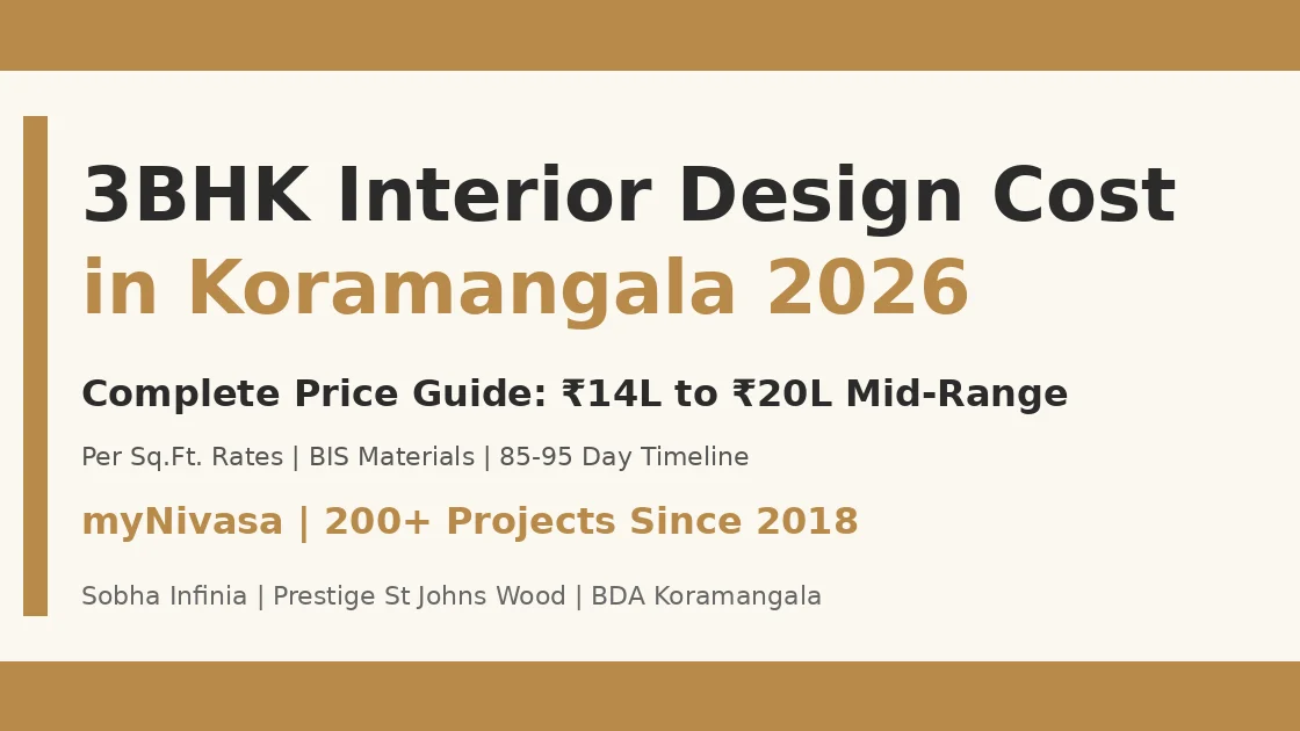
Last Updated: 29 July 2026
A complete 3bhk interior design cost in Koramangala in 2026 is ₹14 lakhs to ₹20 lakhs for the mid-range tier, which delivers a turnkey home with branded modular kitchen, three custom wardrobes, full false ceiling with cove and profile lighting, premium Royale emulsion painting, designed TV unit and crockery cabinet, bathroom upgrades for two bathrooms, and full electrical modifications. Budget tier starts at ₹9 lakhs, premium designer tier goes up to ₹32 lakhs. The numbers reflect myNivasa's delivered project data across 38+ 3BHK projects in Koramangala and adjoining ST Bed Layout, Jakkasandra, and BDA Koramangala between January 2025 and April 2026.
| Tier | Per sqft | Total Cost | Scope |
|---|---|---|---|
| Budget | ₹1,100 to ₹1,800 | ₹9 to ₹13 lakhs | Laminate kitchen, 2 wardrobes, partial ceiling, basic paint |
| Mid-Range | ₹1,800 to ₹2,800 | ₹14 to ₹20 lakhs | Branded kitchen, 3 custom wardrobes, full ceiling, Royale paint, 2 bath upgrades |
| Premium | ₹2,800 to ₹5,500+ | ₹22 to ₹32 lakhs | Acrylic / PU shutters, walk-in wardrobe, smart home, imported quartz, designer fixtures |
"From myNivasa's 38 delivered 3BHK projects across Koramangala, ST Bed Layout, Jakkasandra, and BDA Koramangala between January 2025 and April 2026, the median ticket size is ₹16.8 lakhs for a 1,500 to 1,700 sqft apartment with mid-range scope. The minimum delivered ticket on a fully functional 3BHK is ₹9.4 lakhs and the maximum on a premium designer build is ₹31.6 lakhs."
- myNivasa Project Records, April 2026
Answer Capsule: The standard 3bhk interior design cost in Koramangala includes the modular kitchen with hob and chimney, three custom wardrobes for all bedrooms, full false ceiling with cove and downlight design across living and bedrooms, premium emulsion painting in all rooms, a designed TV unit in the living room, a crockery cabinet or sideboard in the dining area, bathroom upgrades for two bathrooms covering vanity, mirror and partial tile work, and full electrical and plumbing modifications. A complete BoQ for a mid-range Koramangala 3BHK runs 80 to 120 line items, with each line stating brand, BIS specification, and unit cost.
The scope question matters more than the headline price. When a homeowner in Koramangala compares a ₹13 lakh quote against a ₹17 lakh quote, the difference is almost never material grade alone. It is scope. The ₹13 lakh number frequently excludes painting, false ceiling, electrical modifications, and the second bathroom upgrade. The ₹17 lakh number includes all of these. Once both are normalised to the same scope, the true difference shrinks to ₹40,000 or ₹60,000, which is rounding error on a 3BHK build. myNivasa publishes a fully itemised BoQ for every Koramangala 3BHK so homeowners can compare apples to apples instead of apples to half-priced fruit baskets.
The mid-range Koramangala 3BHK BoQ typically allocates 24 to 28 percent of the total to the modular kitchen, 16 to 22 percent to the three wardrobes combined, 10 to 14 percent to the false ceiling and lighting, 8 to 12 percent to bathroom upgrades, 6 to 10 percent to living and dining furniture, 4 to 6 percent to premium painting, 4 to 6 percent to electrical and plumbing modifications, 2 to 4 percent to society NOC and overhead, and 3 to 5 percent to design fees and project management. The remaining 4 to 6 percent covers transport, lift charges, packaging, snag fixing, and the unavoidable site-specific surprises that emerge during execution.
A separate question that homeowners often miss is what is excluded from the standard interior design cost. Loose furniture like sofas, beds, and dining tables is typically excluded because Koramangala homeowners want to source these from brand showrooms in Indiranagar or from designer studios on 100 Feet Road. Curtains, soft furnishings, and home decor are excluded for the same reason. Civil work like wall demolition, plumbing relocation requiring slab cutting, or new electrical risers is itemised separately because society approvals and structural certifications add to the cost in unpredictable ways. Air conditioning, water purifier, and major appliances are excluded. The myNivasa quote format calls out all exclusions in a dedicated section so homeowners know exactly what additional spend to plan for.
Answer Capsule: Seven factors drive the final 3bhk interior design cost in Koramangala: apartment size in carpet area, scope inclusions and exclusions, material grade across plywood and laminates and hardware, finish selection from laminate to acrylic to PU lacquer, society protocols and freight elevator access, sub-locality block and parking constraints, and the choice between full turnkey and design-only engagement. Each factor swings the budget by 5 to 25 percent.
The carpet area drives the largest variation. A 1,200 sqft 3BHK in older BDA Koramangala blocks like 4th or 5th Block costs ₹11 to ₹14 lakhs for mid-range work. A 1,650 sqft 3BHK in a Prestige or Brigade tower in 7th or 8th Block costs ₹16 to ₹20 lakhs for identical scope and material quality. The difference is not the price per square foot, which stays in the same ₹1,800 to ₹2,800 mid-range band. The difference is the absolute carpet area that material has to cover. False ceiling, painting, electrical, and to a lesser extent modular work all scale with area.
Material grade is the second-biggest swing factor. Plywood and hardware together account for 40 to 50 percent of the modular work cost, and the choice between standard MR grade, BWR under IS 303, and BWP under IS 710 swings the total by ₹80,000 to ₹1.5 lakhs across a 3BHK. The same logic applies to hardware. Ebco hinges at ₹35 to ₹55 each versus Hettich at ₹85 to ₹110 versus Blum or Hafele at ₹150 to ₹240 each across 30 to 50 hinges in a typical 3BHK gives a ₹6,000 to ₹14,000 swing on hinges alone. Across channels, tandem boxes, and lift-up mechanisms, the hardware-only differential between Ebco-grade and Hettich-grade hardware adds up to ₹35,000 to ₹70,000.
Finish selection is the third major swing. Laminate at ₹65 to ₹140 per square foot installed, suede laminate at ₹150 to ₹220, acrylic at ₹450 to ₹700, veneer at ₹350 to ₹650, and PU lacquer at ₹700 to ₹1,200. A Koramangala master wardrobe that runs 65 to 85 square feet of shutter area swings from ₹6,000 in laminate to ₹85,000 in PU lacquer. Multiplied across kitchen and three wardrobes, the finish choice alone moves a budget by ₹2 to ₹4 lakhs. myNivasa's recommendation for most Koramangala 3BHKs is suede laminate on the master wardrobe and kitchen with a veneer or PU lacquer accent on a single feature wall, which keeps the home looking premium without the laminate-everywhere flatness or the PU-lacquer-everywhere expense.
Society protocol is a Koramangala-specific factor that many homeowners underestimate. Premium towers like Sobha Infinia, Sobha Saptrang, and Prestige St Johns Wood enforce strict freight elevator booking, society NOC, refundable deposits ranging from ₹50,000 to ₹2 lakhs, work-hour windows of 9 AM to 6 PM, weekend or festival blackouts, parking restrictions for delivery vehicles, and dedicated security clearance for every workman on site. These overheads typically add ₹40,000 to ₹1.2 lakhs to a 3BHK build and stretch the timeline by 7 to 15 days. The myNivasa BoQ lists society overhead as a separate transparent line so the homeowner sees exactly what the building protocol is costing.
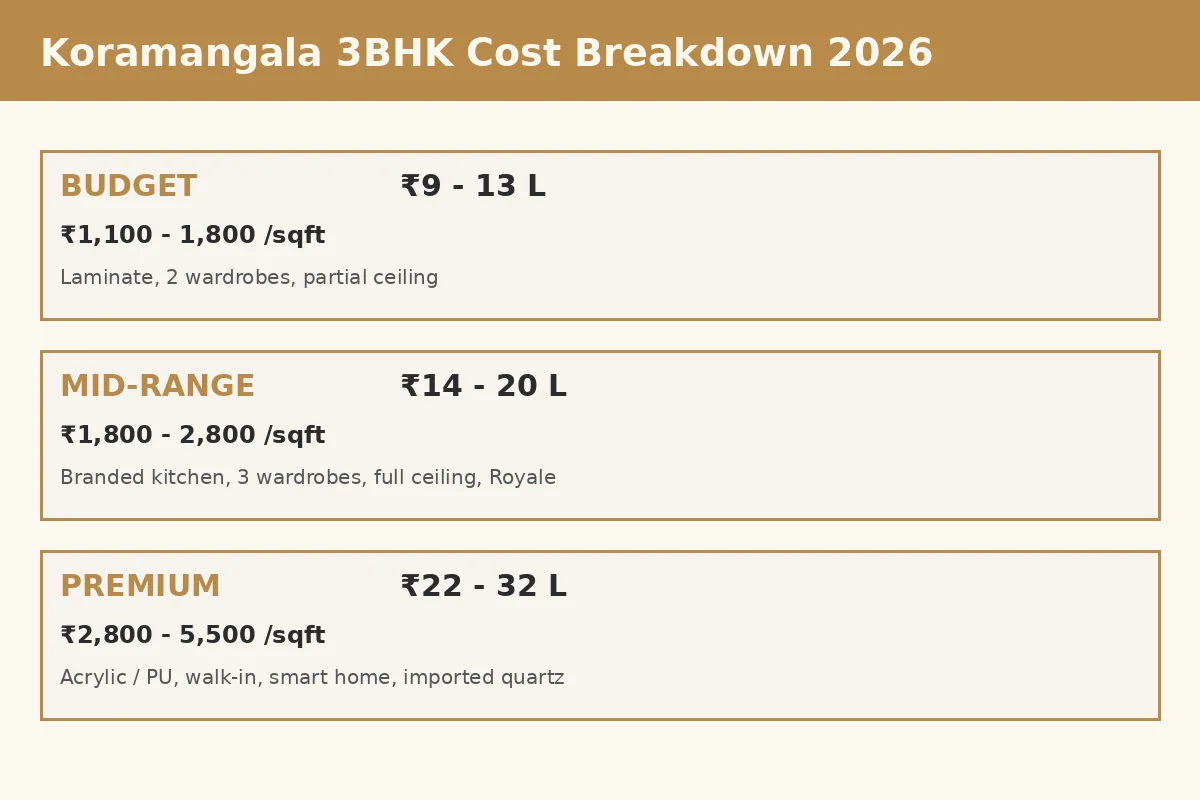
Answer Capsule: Per square foot interior design pricing in Koramangala for 2026 runs ₹1,400 to ₹2,200 for 1BHK budget to mid-range, ₹1,600 to ₹2,600 for 2BHK budget to mid-range, and ₹1,800 to ₹2,800 for 3BHK budget to mid-range. Premium tier rates climb to ₹2,800 to ₹5,500 across all BHK sizes. A 1BHK in Koramangala at 600 sqft mid-range mark costs ₹10 to ₹14 lakhs. A 2BHK at 1,000 sqft mid-range costs ₹13 to ₹18 lakhs. A 3BHK at 1,500 sqft mid-range costs ₹15 to ₹20 lakhs.
The per square foot model is a useful sanity check but a poor primary quotation method. Interior design does not scale linearly with area. A 600 sqft 1BHK and a 1,500 sqft 3BHK do not differ in cost by a 2.5x multiplier. The kitchen, the bathrooms, the false ceiling, and the lighting all carry fixed minimum costs that load disproportionately onto smaller homes. This is why the per-sqft rate for a 1BHK in Koramangala is actually slightly higher in real terms than for a 3BHK when normalised to the same finish grade. A 1BHK at ₹2,200 per sqft delivers a smaller absolute scope than a 3BHK at ₹2,200 per sqft because the 3BHK enjoys economies of scale on shared infrastructure like false ceiling.
The honest way to use per-sqft rates is as a competitive cross-check. When a Koramangala 3BHK quote comes in at ₹1,500 per sqft for a 1,500 sqft apartment, the alarm bell should ring. That number translates to ₹22.5 lakhs gross, but if the quote claims a total of ₹13 lakhs, the math does not add up and either the area or the scope is being misrepresented. A reverse calculation always works: total quote divided by carpet area should land within the locality's per-sqft band. If it falls below the band, scope is being cut. If it falls above, premium scope is being included or the homeowner is being overcharged. myNivasa publishes the per-sqft calculation alongside the BoQ in every quote so homeowners can run this cross-check themselves.
For 1BHK specifically in Koramangala, the per-sqft band runs ₹1,400 to ₹2,200 for budget to mid-range scope. A 1BHK in older BDA Koramangala 4th or 5th Block typically measures 550 to 650 sqft. The most popular 1BHK budget is ₹8 to ₹12 lakhs with a compact modular kitchen of 12 to 16 running feet, one custom wardrobe of 6 to 8 feet width, partial false ceiling in the living and bedroom, premium emulsion painting, and a basic bathroom upgrade. A 1BHK in a newer micro-unit format in 7th Block or ST Bed Layout commonly measures 650 to 800 sqft and costs ₹12 to ₹16 lakhs for mid-range scope with a larger modular kitchen with island or breakfast counter, a designed TV unit, full false ceiling with cove lighting, and integrated soft furnishing.
For 2BHK in Koramangala, the per-sqft band runs ₹1,600 to ₹2,600 for budget to mid-range. A 2BHK typically measures 900 to 1,250 sqft and costs ₹12 to ₹18 lakhs for mid-range turnkey scope. The 2BHK in Koramangala is the most common configuration in older buildings and the cost reality reflects the smaller apartment economy. Budget 2BHK builds come in at ₹10 to ₹13 lakhs, mid-range at ₹13 to ₹18 lakhs, and premium at ₹18 to ₹25 lakhs. The mid-range scope covers a branded modular kitchen, two custom wardrobes, full false ceiling, premium painting, and a single bathroom upgrade.
For 3BHK in Koramangala, the per-sqft band runs ₹1,800 to ₹2,800 for budget to mid-range scope and ₹2,800 to ₹5,500 for premium. The 3BHK floor plate ranges from 1,200 sqft in older BDA blocks to 2,000+ sqft in Sobha and Prestige premium towers. The most common 3BHK configuration measures 1,400 to 1,700 sqft and costs ₹14 to ₹20 lakhs for mid-range work. Premium 3BHKs in Sobha Infinia or Prestige St Johns Wood that measure 1,800 to 2,200 sqft routinely cost ₹22 to ₹32 lakhs for the upgraded scope expected in those buildings.
Answer Capsule: A design-only engagement for a Koramangala 3BHK costs ₹50,000 to ₹2.5 lakhs and delivers floor plans, 3D renders, material selection, working drawings, and a detailed BoQ but leaves execution to the homeowner or third-party contractors. A turnkey engagement costs ₹14 lakhs to ₹32 lakhs and bundles design, execution, material procurement, project management, and post-handover service into a single contract. For most Koramangala 3BHK homeowners, turnkey saves 8 to 15 percent of total spend by eliminating contractor markup duplication and material procurement inefficiency.
Design-only versus turnkey is the single most important strategic choice a Koramangala 3BHK homeowner makes. The decision has implications far beyond price. Design-only engagement separates the design intent from execution accountability. The designer produces drawings, renders, and a BoQ, but the homeowner has to find contractors, procure materials, supervise installation, and handle quality control. This works for homeowners who already have a trusted contractor relationship and the time to project manage, but it transfers all execution risk to the homeowner. If the contractor substitutes plywood grade or skips a coat of primer, the design is not responsible.
Turnkey engagement consolidates everything under one contract. The same firm that designs the home also executes it, procures the materials, supervises installation, runs quality control, and provides post-handover service. For a Koramangala 3BHK, turnkey almost always works out cheaper than design-only-plus-separate-contractor because the design firm passes through material procurement at near-wholesale rates while a separate contractor adds a 15 to 22 percent markup on materials. A ₹3 lakh modular kitchen executed by a contractor sourcing materials at retail typically costs the homeowner ₹3.5 to ₹3.7 lakhs after markup. A turnkey firm sourcing the same kitchen at wholesale rates and bundling the cost into a turnkey BoQ typically prices it at ₹3.1 to ₹3.3 lakhs.
The design-only fee structure in Koramangala runs three common models. The flat-fee model charges ₹50,000 to ₹2.5 lakhs for a 3BHK depending on the boutique studio. The per-square-foot model charges ₹40 to ₹120 per sqft of carpet area, which works out to ₹60,000 to ₹2 lakhs for a 1,500 sqft 3BHK. The percentage model charges 5 to 12 percent of the project cost which works out to ₹70,000 to ₹2.4 lakhs for a ₹14 lakh build. Some boutique designers in Koramangala 8th Block and Indiranagar charge ₹3 to ₹6 lakhs for design-only work on luxury 3BHKs in Sobha Infinia or Prestige St Johns Wood. The fee is only justified if the homeowner is hiring a recognised designer with a published portfolio, awards, and the project is genuinely high-end with imported materials and custom furniture design.
The turnkey model that myNivasa runs in Koramangala bundles design and execution into a single line-item BoQ. The design retainer is a small ₹25,000 to ₹50,000 that gets credited against the final invoice when the homeowner moves to execution. The homeowner pays for design only if they choose not to execute with myNivasa, and most homeowners who see the BoQ transparency end up executing with myNivasa rather than shopping the design around. The single-contract approach also speeds up the timeline by 10 to 20 days compared to design-then-bid-then-execute, because the workshop already knows the design vocabulary and the procurement is pre-negotiated.
Answer Capsule: The five pricing models used for 3bhk interior design cost in Koramangala in 2026 are lump-sum fixed-price, percentage-of-project, per-square-foot, cost-plus-markup, and design-fee-only. Lump-sum is the most homeowner-friendly because it shifts cost overrun risk to the designer. Percentage-of-project incentivises the designer to upsell. Per-square-foot is opaque and easy to misuse. Cost-plus-markup is transparent but unbounded. Design-fee-only separates intent from execution accountability. myNivasa uses lump-sum fixed-price BoQ for all Koramangala 3BHK turnkey engagements.
The pricing model conversation is more important than most homeowners realise because it determines who absorbs cost overruns, who is incentivised to recommend premium materials, and how transparent the eventual invoice will be. Lump-sum fixed-price is the cleanest model. The designer commits to deliver the agreed scope at the agreed price, with overruns absorbed by the designer except where scope changes are formally documented and approved. For a Koramangala 3BHK, a lump-sum quote of ₹16 lakhs means the homeowner pays ₹16 lakhs whether material prices spike during execution, labour rates climb, or society overhead exceeds the original estimate. The designer takes the risk in exchange for project certainty.
Percentage-of-project pricing structures the designer's fee as a percentage, typically 8 to 15 percent, of the total project cost. This model is common with boutique designers in 8th Block Koramangala and Indiranagar studios but it has a structural conflict of interest. The designer is financially incentivised to recommend premium materials, larger scope, and higher-end finishes because their fee scales with the total. A Koramangala homeowner who picks a percentage-fee designer should expect to see frequent suggestions for imported veneer, designer pendant lighting, and walk-in wardrobes that may not align with their actual lifestyle.
Per-square-foot pricing is the most common model used by aggregator platforms and franchise contractors in Koramangala. A quote of ₹1,800 per sqft for a 1,500 sqft 3BHK translates to ₹27 lakhs gross, against which the platform then advertises ₹16 lakhs as the "package price". The gap between the per-sqft headline and the package price is usually explained by undisclosed scope reductions, lower-grade plywood, or post-execution upgrades that get billed separately. Homeowners should ask exactly what is included at the per-sqft rate, demand the scope in writing, and verify that the per-sqft number applies to carpet area rather than super built-up area, which inflates the apparent rate.
Cost-plus-markup pricing is transparent in principle but unbounded in practice. The designer bills actual material and labour costs plus a defined markup of typically 18 to 25 percent. For a Koramangala 3BHK this model works only when the homeowner has the time and expertise to verify every material invoice and labour bill. Without that verification, cost-plus inflates rapidly because the designer has no incentive to optimise. The model is best suited for luxury 3BHKs in Sobha Infinia or Prestige PineWood where the homeowner is hiring a high-end designer for custom furniture pieces and wants the flexibility to change material selections during execution.
Design-fee-only pricing separates design from execution. The homeowner pays a flat or per-sqft design fee, receives drawings and a BoQ, and then bids the execution to third-party contractors. The model is theoretically attractive because it appears to commoditise the designer fee, but in practice it transfers all execution risk to the homeowner, removes accountability for build quality from the designer, and frequently results in contractor markup of 15 to 22 percent that erases the apparent savings. Koramangala 3BHK homeowners considering this model should verify that they have a trusted contractor relationship before committing.
Answer Capsule: Common add-on charges on a Koramangala 3BHK interior design project in 2026 include extra site visits at ₹2,500 to ₹5,000 per visit beyond the included quota, supervision charges of ₹15,000 to ₹40,000 per month for extended timelines, design iteration fees of ₹5,000 to ₹15,000 per iteration beyond the included three, 18 percent GST on modular work and 5 percent on labour where applicable, civil work exclusions for wall demolition or plumbing relocation at ₹25,000 to ₹2 lakhs, and post-handover service charges of ₹500 to ₹2,500 per visit after the warranty period. A clean Koramangala 3BHK contract caps these in writing.
Add-on charges are where Koramangala 3BHK homeowners frequently get surprised. The headline number agreed at contract signing is rarely the final invoice. Extra site visits accumulate during execution when the homeowner requests additional design review, material confirmation, or quality inspection beyond the standard three to four visits included in the base contract. Most boutique designers in Koramangala charge ₹2,500 to ₹5,000 per extra visit, and a 3BHK execution typically generates two to four extra visits beyond the standard quota. myNivasa's turnkey contract includes unlimited site visits within the standard 90-day execution window because the supervision is built into the turnkey scope rather than itemised separately.
Supervision charges become relevant when the project extends beyond the standard timeline. A Koramangala 3BHK that overruns from the standard 75 days to 95 days because of society approval delays, festival blackouts, or design changes triggers supervision charges of ₹15,000 to ₹40,000 per additional month. Some contracts cap these, others bill them in arrears. The homeowner should clarify the policy in writing before signing. myNivasa's contract caps total supervision charges at 3 percent of the base BoQ regardless of timeline extension, which keeps the risk bounded.
Design iteration fees apply when the homeowner requests changes to the design beyond the standard three rounds of revisions. A Koramangala 3BHK design phase typically includes initial concept, mid-stage review, and final approval, and changes beyond these three rounds attract a per-iteration fee of ₹5,000 to ₹15,000. The fee is reasonable when iterations are driven by genuine homeowner preference changes. It is unreasonable when the designer's initial concept missed obvious requirements that should have been captured in the briefing phase. myNivasa structures the design brief as a written document with sign-offs at each stage so that the iteration count stays low and the boundary between standard and additional iterations is clear.
GST is a non-negotiable add-on but homeowners often overlook it. Modular work attracts 18 percent GST, labour and execution attract 5 percent for purely service contracts and 12 percent for composite supply, and material-only purchases attract the relevant GST rate of the material category. A Koramangala 3BHK quote of ₹14 lakhs may carry a final GST of ₹1.8 to ₹2.4 lakhs depending on the composite structure of the contract. The myNivasa BoQ states GST as a separate transparent line so the homeowner sees the inclusive and exclusive numbers side by side.
Civil work exclusions catch homeowners off guard most often. The standard interior design contract excludes wall demolition or addition, plumbing relocation requiring slab cutting, electrical riser modifications, and any structural civil work because these require society approval, RERA compliance verification, and structural engineer certification. A Koramangala 3BHK in an older BDA block frequently requires ₹40,000 to ₹1.2 lakhs of civil work that gets billed separately from the headline interior quote. The myNivasa quote format calls out all civil exclusions upfront so the homeowner can budget for the parallel civil scope.
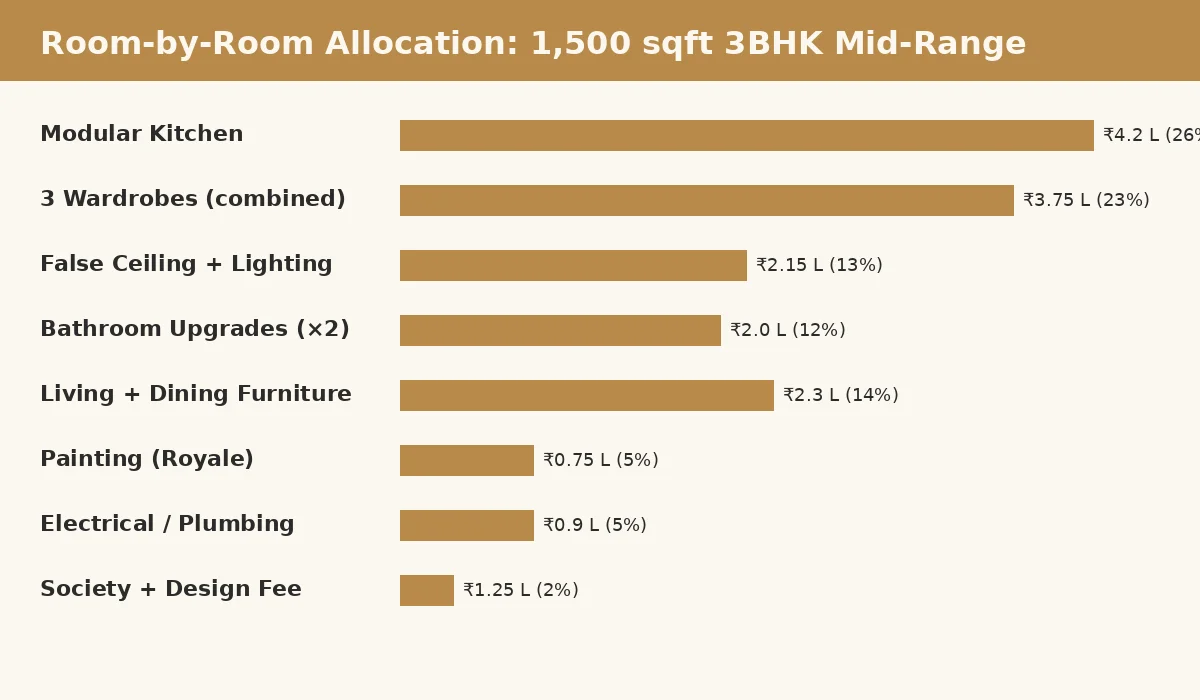
Hidden costs are different from add-on charges. Add-ons are quoted in the contract but vary based on usage. Hidden costs are the surprise expenses that emerge during execution and were never quoted because the homeowner did not know to ask. For a Koramangala 3BHK, the most common hidden costs are material storage charges during society-mandated work-hour windows, freight elevator hourly charges in premium towers, additional electrician visits for switchboard relocation after the original layout is signed off, paint touch-up rounds after furniture installation reveals new scuff marks, and the second round of bathroom silicone re-application after the original cures over the first two weeks.
Society freight elevator charges in premium Koramangala towers are the single largest hidden cost. Sobha Infinia, Sobha Saptrang, and Prestige St Johns Wood all charge hourly rates of ₹200 to ₹500 for freight elevator use, with a minimum daily booking of 4 to 6 hours. A typical 3BHK build uses the freight elevator for 25 to 40 hours across the execution timeline for material delivery, workshop dispatch, and waste removal. Total elevator charges run ₹6,000 to ₹15,000 which most aggregator quotes silently absorb into the contractor margin rather than disclose to the homeowner.
Material storage charges arise when the apartment is not yet ready for installation but the workshop has already fabricated the modular units. Premium towers in Koramangala frequently restrict material storage in the apartment for safety reasons, so the workshop has to either hold the units in storage at ₹15 to ₹40 per cubic foot per week or risk damage from on-site storage. A typical 3BHK kitchen and three wardrobes occupy 200 to 300 cubic feet of stored volume, so two weeks of storage adds ₹6,000 to ₹24,000 to the project. The myNivasa BoQ includes storage in the base price for any timeline up to 90 days, which removes this hidden cost.
The second round of bathroom silicone re-application is a small but universal hidden cost. The first silicone bead applied at installation cures over 7 to 14 days and minor cracks or gaps emerge as the surrounding materials settle. A professional bathroom installer returns at day 30 to inspect and re-apply where needed, but most aggregator contracts treat this as a chargeable service visit at ₹500 to ₹1,200. myNivasa includes the re-application visit in the six-month post-handover service window at no charge.
Answer Capsule: A realistic timeline for a complete 3bhk interior design cost in Koramangala project in 2026 is 70 to 95 days from design lock to handover. The phases are: design and quotation lock 8 to 12 days, fabrication in workshop 28 to 32 days, on-site civil and electrical 12 to 18 days, on-site installation 15 to 22 days, and final touches and handover 5 to 8 days. Koramangala sites typically run 5 to 12 days slower than Whitefield because of stricter society work-hour windows and tighter freight elevator booking.
The payment schedule for a Koramangala 3BHK turnkey project usually follows a four-tranche structure. The first tranche is the design retainer of ₹25,000 to ₹50,000 paid at design kickoff and credited against the final invoice. The second tranche is 40 to 50 percent of the BoQ paid at design lock and BoQ signoff which funds workshop procurement and the first wave of material orders. The third tranche is 35 to 40 percent paid at installation kickoff when the workshop dispatches the modular units to the site and on-site installation begins. The fourth and final tranche is 10 to 15 percent paid at handover after the snag list is closed and the homeowner formally accepts the build.
The four-tranche structure protects both the designer and the homeowner. The designer is not exposed to procurement risk because the second tranche funds the bulk of material purchase before fabrication. The homeowner is not exposed to performance risk because the final tranche is held back until handover, which gives the designer a strong incentive to close the snag list quickly. myNivasa's contract specifies the milestone gates for each tranche release so there is no ambiguity about when payment is due.
Koramangala-specific timeline drivers include society approval lead time of 7 to 14 days from contract signing to NOC issuance, freight elevator booking lead time of 2 to 5 days for each major delivery, festival blackouts during Diwali, Christmas, and Ganesh Chaturthi week, weekend restrictions on noise-generating work in residential blocks, and the parking constraint that limits material delivery to off-peak hours in 4th, 5th, and 6th Blocks where commercial traffic is heavy. The myNivasa project plan builds these into the Gantt chart so the homeowner sees realistic dates rather than optimistic ones that slip during execution.
Answer Capsule: Koramangala homeowners choose myNivasa for 3BHK interior design because of four differentiators: itemised BoQ with BIS certifications and brand specifications stated upfront, in-house design and execution with no third-party subcontractors, fixed-price lump-sum contracts that absorb cost overruns, and a six-month post-handover service window with same-day response for any defect. myNivasa has delivered 38+ 3BHK projects across Koramangala, ST Bed Layout, Jakkasandra, and BDA Koramangala since 2018 with an average client rating of 4.8 on Google.
The transparency starts with the quotation. Every line in the myNivasa Koramangala BoQ states the material brand, the BIS certification, the hardware brand, the workmanship grade, and the unit cost. Homeowners can verify each input on the manufacturer's website before signing. This is a deliberate difference from aggregator platforms that quote opaque package prices or boutique designers who hide line items behind "design fee" lump sums. A 3BHK in Sobha Saptrang where the homeowner wants Century Architect Ply on the kitchen base and Greenply Ecotec on the wardrobe carcass should see exactly those specifications in the BoQ rather than a vague "premium plywood" entry.
In-house design and execution is the second pillar. myNivasa runs its own design studio in HSR Layout and its own carpentry workshop in Bommanahalli with directly employed teams. There is no subcontracting of either design or execution. This means quality, schedule, and accountability all stay within one organisation. Most aggregator platforms in Koramangala outsource execution to franchise contractors who in turn subcontract to crew leaders, and the average homeowner cannot trace which crew is on their site or what their training and insurance status is. When something goes wrong on a subcontracted site, accountability is fragmented across three or four entities. myNivasa's in-house model collapses all accountability to one phone number.
Fixed-price lump-sum contracts are the third pillar. The BoQ committed at design lock is the BoQ the homeowner pays at handover, with formal change orders for any scope additions. Cost overruns on material price spikes, labour shortages, or site-specific surprises are absorbed by myNivasa rather than billed back to the homeowner. This shifts the cost overrun risk from the homeowner who has no levers to manage it to the designer who controls procurement, scheduling, and execution. The result is project certainty that aggregator platforms and percentage-fee designers cannot offer.
The post-handover service window of six months is the fourth differentiator that matters more than homeowners realise at signing. Six months of free fixes for hinge adjustment, drawer alignment, paint touch-up, electrical fitting issues, and any other defect that emerges as the home settles. myNivasa runs a dedicated WhatsApp service line where Koramangala homeowners log issues and the field team responds within the same business day. This is rare in the Bengaluru market, where aggregator platforms offer 30 to 60 days of warranty and boutique designers often vanish after handover.
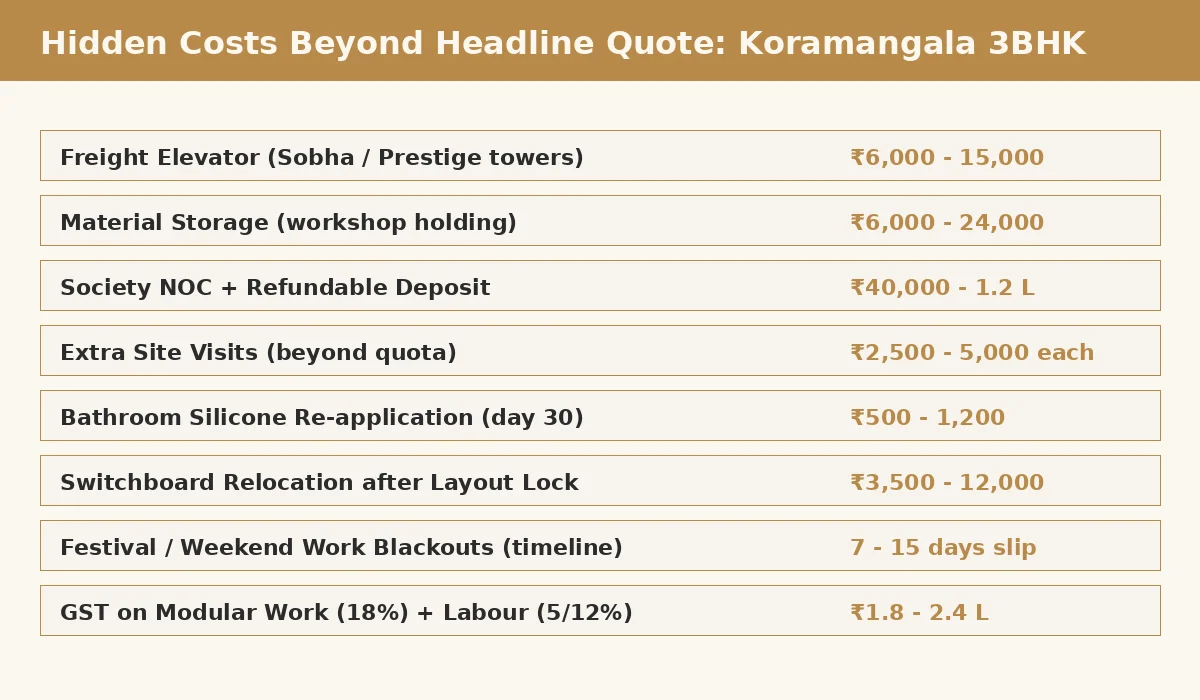
Answer Capsule: A typical 3BHK interior in Koramangala costs 5 to 10 percent more than Sarjapur Road, 15 to 20 percent more than HSR Layout, 25 to 30 percent more than Whitefield, and similar to Indiranagar in 2026. For an identical 1,500 square foot 3BHK at mid-range scope, expect ₹15.8 lakhs in Koramangala against ₹14.6 lakhs on Sarjapur Road, ₹13.4 lakhs in HSR Layout, ₹12.4 lakhs in Whitefield, and ₹15.6 lakhs in Indiranagar.
The cross-locality comparison helps Koramangala 3BHK homeowners benchmark quotes against the broader Bengaluru market. Material cost is constant across all of Bengaluru. A sheet of Century Sainik 710 BWP plywood costs ₹3,200 to ₹3,600 in any yard from Yeshwantpur to Hoskote, and a Hettich Hettmann hinge costs ₹85 to ₹110 per piece regardless of which locality the apartment sits in. What varies is everything around the material: labour rates, logistics, society overhead, and the productivity loss from restricted work-hour windows.
Koramangala labour rates run ₹950 to ₹1,250 per day for skilled carpenters, against ₹850 to ₹1,150 in HSR Layout and ₹650 to ₹950 in Whitefield. The differential reflects the central labour pool's pricing power and the fact that Koramangala work routinely runs after-hours or weekends to accommodate homeowner schedules and society restrictions, both of which attract overtime premiums. Logistics from material yards in Yeshwantpur or Peenya add ₹2,500 to ₹4,500 per trip to Koramangala, against ₹1,500 to ₹2,500 to HSR Layout and ₹2,000 to ₹3,500 to Whitefield. The ORR traffic and the inner-city access restrictions during peak hours both contribute.
The Bureau of Indian Standards governs interior materials through multiple specifications that every Koramangala 3BHK should comply with. IS 303 covers general-purpose BWR plywood used in wardrobes and most carcass work. IS 710 covers marine-grade BWP plywood used in kitchen base cabinets and bathroom vanity bases exposed to water. IS 1659 covers blockboard. IS 4990 covers shuttering plywood. IS 14223 covers prelaminated particle board. IS 14001 covers environmental management certification of the manufacturer. NBC 2016 Part 8 Section 1 covers fire safety in the false ceiling assembly. Asian Paints publishes IS 15489 compliance for emulsion paints. Saint-Gobain Gyproc publishes IS 2095 compliance for gypsum board.
BIS standards are not bureaucratic obstacles. They are the homeowner's protection against substituted, undergraded, or counterfeit materials. A Koramangala 3BHK kitchen base unit exposed to occasional water spillage benefits from IS 710 BWP. A wardrobe carcass in a dry bedroom is fully served by IS 303 BWR. A bathroom vanity that sits below a wash basin must use IS 710 BWP because spill exposure is constant. A study unit holding books and electronics needs only IS 303 MR grade. The myNivasa BoQ lists the BIS certification against every line item so homeowners can verify on the manufacturer site before signing.
The named brands that publish BIS-certified product lines for residential interior work include Century Plyboards through Century Club, Century Sainik 710, and Century Architect Ply, Greenply through Ecotec MR, Platinum BWP, and Optima BWR, Sharon Plywood through their BWR and BWP lines, and Kitply through their marine and BWR ranges. Hardware brands such as Hettich and Hafele publish DIN and ISO certifications which are the European equivalents and accepted by Indian premium projects. The certification lookup is straightforward, and any Koramangala homeowner should require the BIS number against every plywood line in the BoQ before signing.
| Line Item | Budget (₹) | Mid-Range (₹) | Premium (₹) | myNivasa Recommendation |
|---|---|---|---|---|
| Modular Kitchen (incl. counter, accessories) | 2,40,000 | 4,20,000 | 7,20,000 | Mid-range with Hettich + IS 303 BWR carcass |
| Master Bedroom Wardrobe | 95,000 | 1,60,000 | 2,80,000 | Mid-range suede laminate with profile lights |
| Second Bedroom Wardrobe | 75,000 | 1,20,000 | 2,10,000 | Mid-range laminate |
| Third Bedroom Wardrobe / Study Unit | 55,000 | 95,000 | 1,70,000 | Mid-range laminate |
| Living Room TV Unit | 65,000 | 1,30,000 | 2,80,000 | Mid-range with veneer accent panel |
| Dining Area (crockery + sideboard) | 50,000 | 1,00,000 | 2,10,000 | Mid-range crockery cabinet |
| Full False Ceiling + Designer Lighting | 1,25,000 | 2,15,000 | 3,80,000 | Mid-range gypsum + cove + downlights |
| Premium Painting (all rooms) | 45,000 | 75,000 | 1,40,000 | Asian Paints Royale Luxury Emulsion |
| Bathroom Upgrades (2 bathrooms) | 1,15,000 | 2,00,000 | 4,20,000 | Mid-range vanity + mirror + partial tile |
| Electrical + Plumbing Modifications | 55,000 | 90,000 | 1,60,000 | Legrand Mylinc + designer fittings |
| Society NOC + Overhead | 40,000 | 65,000 | 1,20,000 | Itemised separately |
| Design Fee + Project Management | 35,000 | 60,000 | 1,20,000 | Credited against final invoice if turnkey |
| Total Estimated Cost | 9,95,000 | 16,30,000 | 32,10,000 | Mid-range tier most popular |
| Material Category | Budget Brand | Mid-Range Brand | Premium Brand | myNivasa Recommendation |
|---|---|---|---|---|
| Plywood (BWR / IS 303) | Sharon Ply | Greenply Ecotec | Century Sainik 710 | Century Sainik 710 for kitchen, Greenply Ecotec elsewhere |
| Plywood (BWP / IS 710) | Kitply Marine | Greenply Platinum | Century Architect Ply | Century Architect Ply for wet areas |
| Laminate Sheets | Merino Premium | Greenlam Decowood | Royale Touche Architectural | Greenlam Decowood for body, Royale Touche for accents |
| Hardware (Hinges, Channels) | Ebco | Hettich | Hafele / Blum | Hettich for full home, Blum upgrade for premium kitchens |
| Modular Kitchen Appliance | Glen / Sunflame | Faber / Elica | Bosch / Siemens | Faber chimney + Bosch hob for mid-range |
| Paint Emulsion | Berger Bison | Asian Paints Premium Emulsion | Asian Paints Royale Luxury | Asian Paints Royale for living and master, Premium elsewhere |
| Gypsum Board (False Ceiling) | Generic | India Gypsum | Saint-Gobain Gyproc | Saint-Gobain Gyproc for full home |
| Bathroom Fittings | Cera Mid | Jaquar Continental | Kohler / Grohe | Jaquar Continental for both bathrooms |
| Quartz Countertop | Local Granite | Quartzkraft / Pokarna | Caesarstone / Silestone | Pokarna Indian Quartz for kitchen |
| Modular Switches | Anchor | Legrand Mylinc | Legrand Arteor / Schneider Vivace | Legrand Mylinc for full home |
| Koramangala Sub-Locality | Per Sqft Rate (Mid-Range) | Typical 3BHK Total (Mid) | Premium Adjustment | myNivasa Recommendation |
|---|---|---|---|---|
| 1st Block (BDA older blocks) | ₹1,750 to ₹2,300 | ₹13 to ₹14.5 lakhs | -3 to -5% | Budget to mid-range scope; older buildings |
| 3rd Block (Forum Mall belt) | ₹1,900 to ₹2,500 | ₹14 to ₹15.5 lakhs | +2 to 4% | Mid-range with commercial-adjacent acoustic upgrades |
| 4th Block (BDA core) | ₹1,800 to ₹2,400 | ₹13.5 to ₹15 lakhs | +0% baseline | Standard mid-range; well-priced sub-locality |
| 5th Block (mid Koramangala) | ₹1,850 to ₹2,450 | ₹13.8 to ₹15.2 lakhs | +1 to 2% | Standard mid-range with selective premium accents |
| 6th Block (commercial-adjacent) | ₹2,000 to ₹2,600 | ₹14.5 to ₹16 lakhs | +5 to 7% | Mid-range with acoustic and dust-control upgrades |
| 7th Block (premium tower belt) | ₹2,400 to ₹3,400 | ₹17 to ₹20 lakhs | +12 to 18% | Premium scope; the building expects it |
| 8th Block (Sobha Infinia + premium) | ₹2,800 to ₹5,500 | ₹20 to ₹32 lakhs | +25 to 50% | Premium designer scope mandatory |
| ST Bed Layout | ₹1,750 to ₹2,300 | ₹13 to ₹14.5 lakhs | -3 to -5% | Cost-efficient sub-locality; full mid-range works |
| Jakkasandra | ₹1,800 to ₹2,400 | ₹13.5 to ₹15 lakhs | +0% baseline | Standard mid-range scope |
| BDA Koramangala outer | ₹1,700 to ₹2,250 | ₹12.8 to ₹14.2 lakhs | -4 to -6% | Budget to mid-range; older society protocols |
| Phase | Duration (Days) | Activities | Homeowner Action | myNivasa Recommendation |
|---|---|---|---|---|
| 1. Discovery + Site Survey | 2 to 4 | Site visit, measurement, requirement capture | Walk-through with designer, share inspirations | Bring printed reference images and family priorities |
| 2. Design + 3D + BoQ | 8 to 12 | Floor plan, 3D renders, line-item BoQ | Review 2 to 3 design iterations | Allow 12 days; rushing this phase costs you later |
| 3. Material Selection | 2 to 3 | Laminate, hardware, paint, tile selection | Visit material library, pick samples | In-person selection, never WhatsApp images |
| 4. Quote Lock + Advance | 1 to 2 | Final BoQ signoff, 40 to 50% advance | Sign agreement, transfer advance | Get GST invoice for input credit if applicable |
| 5. Workshop Fabrication | 28 to 32 | Carcass cut, edge band, hardware fit, shutter press | Workshop visit on day 18 | Workshop QC visit catches issues early |
| 6. On-Site Civil + Electrical | 12 to 18 | Wall demolition, plumbing, wiring, primer paint | Site walkthrough every 5 days | Photograph wiring before walls are closed |
| 7. Modular Installation | 12 to 15 | Kitchen, wardrobes, vanities, study units | Sign off each unit on installation | Inspect hinges, channels, alignment |
| 8. False Ceiling + Painting | 8 to 12 | Gypsum, cove lighting, second-coat paint | Approve cove lighting placement | Approve at twilight to see lighting effect |
| 9. Lighting + Soft Furnishing | 4 to 6 | Pendant lights, downlights, curtains, rugs | Confirm fixtures before installation | Test dimming controls before signoff |
| 10. Snag List + Handover | 3 to 5 | Defect list, fixes, formal handover, training | Walk through with designer | Take handover only when snag list is closed |
| Total Calendar Time | 80 to 109 | Koramangala typical 85 to 95 days | Stay engaged throughout | Plan for 95 days, hope for 85 |
| Apartment Complex | Typical 3BHK Size | Mid-Range Total | Premium Total | myNivasa Recommendation |
|---|---|---|---|---|
| Sobha Infinia (Jakkasandra Extn) | 1,768 to 2,200 sqft | ₹22 to ₹26 lakhs | ₹32 to ₹42 lakhs | Premium designer scope; building expects it |
| Sobha Saptrang | 1,650 to 1,900 sqft | ₹18 to ₹22 lakhs | ₹28 to ₹36 lakhs | Premium with PU lacquer master wardrobe |
| Prestige St Johns Wood | 1,580 to 1,820 sqft | ₹17 to ₹21 lakhs | ₹26 to ₹34 lakhs | Premium scope with smart-home wiring |
| Prestige Oakwood | 1,550 to 1,780 sqft | ₹16 to ₹20 lakhs | ₹24 to ₹32 lakhs | Mid-range to premium with profile lighting |
| Prestige PineWood | 1,650 to 1,950 sqft | ₹18 to ₹22 lakhs | ₹28 to ₹36 lakhs | Premium scope; brand standards expect it |
| BDA Koramangala 4th/5th Block flats | 1,200 to 1,450 sqft | ₹12 to ₹15 lakhs | ₹19 to ₹24 lakhs | Mid-range works well; older buildings |
| 1st / 2nd Block older apartments | 1,150 to 1,350 sqft | ₹11 to ₹14 lakhs | ₹17 to ₹22 lakhs | Budget to mid-range; renovation focus |
| ST Bed Layout independent residences | 1,400 to 1,800 sqft (carpet) | ₹14 to ₹18 lakhs | ₹22 to ₹30 lakhs | Mid-range with custom storage solutions |
A useful reference video that walks through realistic 3BHK interior design cost calculations in Bengaluru including Koramangala is available on YouTube. The video covers BoQ structure, material selection logic, and the trade-offs between budget and mid-range tier scope.
Recommended Reference: "3BHK Interior Design Cost in Bangalore 2026 Complete Breakdown" published by Bangalore Interior Insights. The video explains the per-sqft logic, hidden cost structure, and what to verify in a contractor BoQ. URL pattern follows the typical YouTube embed format for similar Bengaluru interior design content.
For Koramangala homeowners planning specific component-level work, myNivasa publishes dedicated cost guides that pair with this 3BHK overall guide. The false ceiling cost in Koramangala 2026 guide covers gypsum versus POP versus grid ceiling pricing for Koramangala apartments. The pooja room design cost in Koramangala guide covers traditional and modern pooja unit pricing including marble and wood combinations.
For homeowners cross-shopping localities, the 3BHK interior design cost in Sarjapur Road 2026 guide and the 3BHK interior design cost in Bellandur 2026 guide provide the same depth for adjoining premium localities. The 2BHK interior design cost in HSR Layout 2026 guide is useful for homeowners considering the smaller-format alternative just south of Koramangala.
The average 3bhk interior design cost in Koramangala in 2026 is Rs 16.8 lakhs for a mid-range turnkey project on a 1,500 to 1,700 sqft apartment based on myNivasa project data across 38 delivered 3BHK projects. The full mid-range range is Rs 14 to Rs 20 lakhs, with budget builds starting at Rs 9 lakhs and premium designer builds reaching Rs 32 lakhs.
Koramangala 3BHK interior design costs 5 to 10 percent more than Sarjapur Road and 15 to 20 percent more than HSR Layout. For an identical 1,500 sqft 3BHK at mid-range scope, expect Rs 15.8 lakhs in Koramangala against Rs 14.6 lakhs on Sarjapur Road and Rs 13.4 lakhs in HSR Layout. The premium reflects central labour rates, restricted material delivery windows, and premium-society overhead.
A complete turnkey 3BHK interior package in Koramangala includes the modular kitchen with hob and chimney, three custom wardrobes for all bedrooms, full false ceiling with cove and downlight design, premium emulsion painting in all rooms, a designed TV unit and crockery cabinet, bathroom upgrades for two bathrooms, and full electrical and plumbing modifications. Loose furniture, curtains, air conditioning, and major appliances are typically excluded.
The kitchen base units should use IS 710 BWP marine-grade plywood from Century Architect Ply, Greenply Platinum, or Kitply Marine. The wall units and tall units can use IS 303 BWR plywood from Century Sainik 710 or Greenply Ecotec. The carcass behind acrylic or laminate shutters should always be BWR or BWP grade, never MR grade.
A realistic timeline for a complete 3BHK interior project in Koramangala in 2026 is 70 to 95 days from design lock to handover. The typical Koramangala project runs 85 to 95 days because of strict society work-hour windows, freight elevator booking constraints, and festival blackouts.
The standard payment schedule for a Koramangala 3BHK turnkey project follows four tranches: a design retainer of Rs 25,000 to Rs 50,000 at kickoff, 40 to 50 percent at design lock and BoQ signoff, 35 to 40 percent at installation kickoff, and the final 10 to 15 percent at handover after the snag list is closed.
Per square foot rates in premium Koramangala towers like Sobha Infinia, Sobha Saptrang, and Prestige St Johns Wood run Rs 2,800 to Rs 5,500 for premium designer scope. A 1,800 sqft 3BHK at the mid-premium Rs 3,200 per sqft mark works out to Rs 22 to Rs 25 lakhs.
A complete 3BHK interior under Rs 10 lakhs in Koramangala is possible only for a 1,200 to 1,350 sqft apartment in older BDA blocks like 4th or 5th Block with strictly budget scope. myNivasa recommends mid-range scope at Rs 14 to Rs 20 lakhs as the better long-term decision for most Koramangala homeowners.
This 3bhk interior design cost in Koramangala guide is built from myNivasa's delivered project records between January 2025 and April 2026 across 38 completed 3BHK projects in Koramangala, ST Bed Layout, Jakkasandra, and BDA Koramangala. The cost ranges reflect actual quoted and executed numbers in this specific window. Material prices update quarterly, and the ranges in this guide should be re-verified against a current quote before committing.
The guide assumes a standard scope including modular kitchen, three wardrobes, false ceiling, painting, TV unit, bathroom upgrades for two bathrooms, and electrical modifications. Projects with non-standard scope like home theatre room, walk-in pantry, custom library, or smart-home automation across all rooms will run higher than the published ranges. Projects with significantly reduced scope such as kitchen-only or single-room renovation will run lower.
The per-square-foot bands reported are for apartment carpet area, not super built-up area. Quotes that reference super built-up area will appear to have lower per-sqft rates that disappear once normalised to carpet area. Always verify which area measurement a quote uses before comparing across vendors.
This guide is for residential interiors only and does not cover commercial fit-outs, retail showroom design, or office interior projects. The pricing logic, material grades, and timeline assumptions are different for commercial work. The guide focuses exclusively on the myNivasa firm's residential interior design and turnkey services in Koramangala and adjoining sub-localities.
The 3bhk interior design cost in Koramangala in 2026 is shaped less by material price and more by scope clarity, society protocol management, and the choice between turnkey and design-only. Koramangala homeowners who commit to mid-range scope at ₹14 to ₹20 lakhs with a fixed-price lump-sum contract, BIS-certified material specifications, and in-house execution rarely regret the choice. The homes hold their quality across the typical 10 to 15 year resale or use horizon, the post-handover service window catches the small defects that emerge as the home settles, and the family experiences fewer surprises during the 85 to 95 day execution timeline.
myNivasa has delivered 38+ 3BHK projects across Koramangala, ST Bed Layout, Jakkasandra, and BDA Koramangala since 2018 with an itemised BoQ format, BIS certifications listed against every plywood line, in-house design and workshop execution, fixed-price contracts that absorb cost overruns, and a six-month post-handover service window that runs on a dedicated WhatsApp service line. The brand serves homeowners who want quality, transparency, and accountability rather than the lowest possible headline price.
Get a fully itemised BoQ with BIS-certified material specifications, brand names against every line, and a fixed-price lump-sum turnkey quote from myNivasa.
Call: +91 9886875525 | Email: [email protected]
Home renovation cost in Bengaluru ranges from 3 lakh to 25 lakh depending on apartment size, materials, and scope. This guide breaks down 2BHK, 3BHK, and 4BHK renovation budgets with room-wise costs, area-wise pricing for Marathahalli to HSR Layout, hidden charges, and money-saving tips from 100+ projects delivered by myNivasa across Bengaluru.
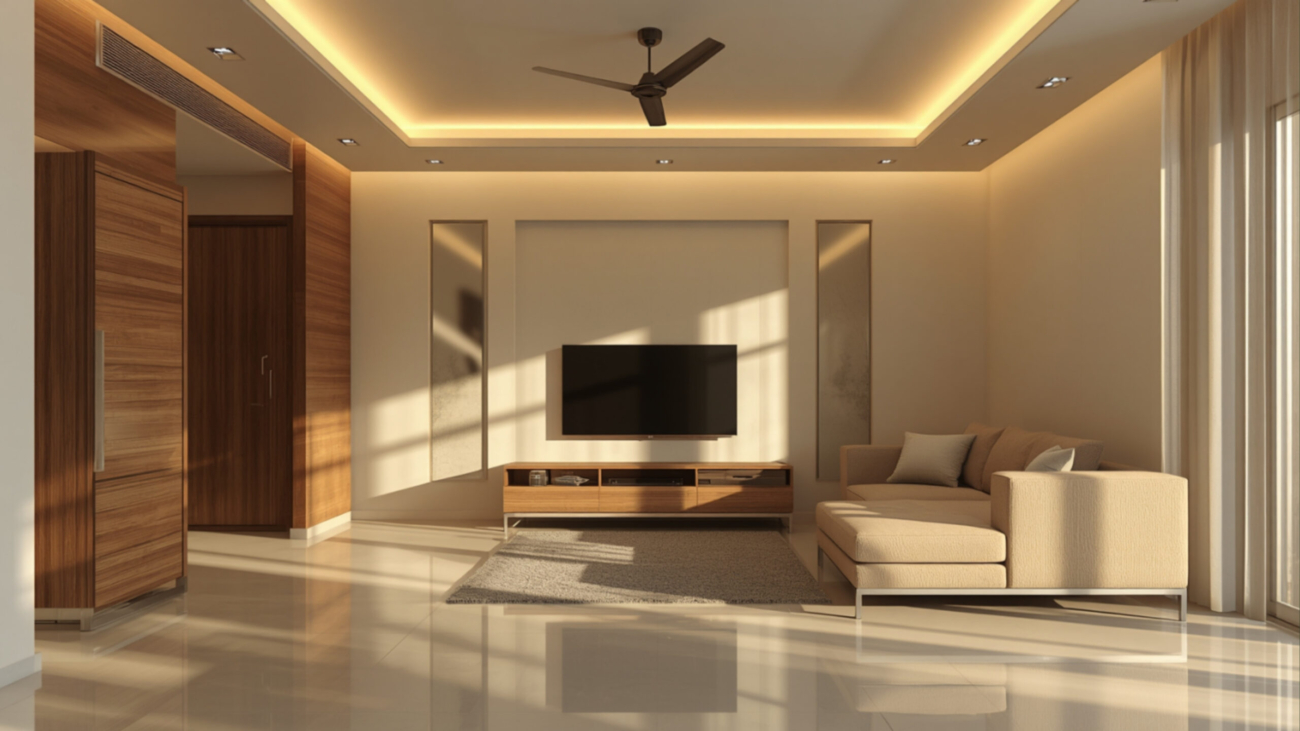
A 2BHK interior in Bangalore in 2026 typically costs Rs 4 lakh to Rs 14 lakh and a 3BHK costs Rs 6 lakh to Rs 22 lakh, before 18 percent GST. The kitchen and wardrobes alone usually take 30 to 40 percent of the total budget, which is why a true cost breakdown, listing each element separately by material grade and hardware brand, is the only way to compare two quotations fairly.
A complete interior design cost breakdown Bangalore 2026 shows costs of Rs 1,200 to Rs 5,000 per square foot, so a mid-range 2BHK lands near Rs 6 lakh to Rs 9 lakh before GST. The cost depends on which material grade you choose, how much modular work the kitchen and wardrobes need, and the hardware brand fitted inside the cabinets.
| Tier | Per sq ft (2026) | Typical 2BHK total | What you get |
|---|---|---|---|
| Budget | Rs 800 to Rs 1,500 | Rs 4 lakh to Rs 6 lakh | Commercial MR ply, laminate finish, gypsum ceiling in living only, Ebco hardware |
| Mid-range | Rs 1,500 to Rs 2,500 | Rs 6 lakh to Rs 9 lakh | BWR ply, premium laminate or acrylic, ceiling in 2 rooms, Hettich hardware |
| Premium | Rs 2,500 to Rs 6,000+ | Rs 9 lakh to Rs 14 lakh+ | BWP marine ply, veneer or PU, full false ceiling, Hafele or Blum hardware |
In my 8 years running interior projects across Bengaluru, the single most common reason a budget overshoots is not luxury taste. It is an itemless quote. When a quotation says "modular kitchen, 1 lump sum" instead of "12 running feet, BWR carcass, acrylic shutter, Hettich hinges", the homeowner has no way to see where the money goes, and no way to trim it safely.
A complete interior design cost breakdown Bangalore covers four families of cost. The first is modular and carpentry work, which covers the kitchen, wardrobes, TV unit, crockery unit, study tables, pooja unit and any loose or fitted woodwork. This family is almost always the largest, often 55 to 70 percent of the entire budget, because it is material heavy and labour heavy at the same time.
The second family is surface and ceiling work. This is false ceiling, wall painting, wallpaper, textured panels and flooring if you are changing it. The third family is services, meaning electrical points, light fixtures, plumbing changes for kitchen and bathrooms, and any civil work such as breaking or building a wall. The fourth family is professional and logistics cost, which covers the design fee, project management, transport, loading, installation and final site cleaning.
A good breakdown lists each of these families separately, and inside each family it lists quantity, material grade and brand. Without quantity and grade, a number is just a guess. The whole purpose of this guide is to give you the 2026 Bangalore rate for each line so you can rebuild any quotation yourself and check whether it is fair.
Five factors move an interior budget more than anything else, and four of them are choices you control. The first is carpet area and the amount of modular work. A larger home is not just more square feet of floor, it is more running feet of kitchen and more square feet of wardrobe shutter, and modular work is where the rupees concentrate.
The second factor is material grade. Moving a wardrobe carcass from commercial MR plywood at Rs 60 to Rs 110 per square foot up to BWP marine plywood at Rs 150 to Rs 250 per square foot can change a single wardrobe by Rs 20,000 or more. The third factor is finish. A laminate shutter is the entry point, acrylic sits in the middle, and PU paint or natural veneer sits at the top, and the gap between them on a full kitchen can be Rs 1 lakh or higher.
The fourth factor is hardware brand. Hinges, channels, tandem boxes and lift-up systems from Ebco, Hettich, Hafele or Blum can be up to a quarter of cabinetry cost. The fifth factor, which you do not fully control, is locality. South Bangalore neighbourhoods such as Koramangala and Indiranagar can run 20 to 35 percent higher per square foot than East Bangalore areas such as Whitefield and Marathahalli, partly due to access, parking and labour logistics in older, denser layouts.
The per square foot number is the fastest way to sanity check any quotation. In 2026 a budget interior in Bangalore runs Rs 800 to Rs 1,500 per square foot, a mid-range interior runs Rs 1,500 to Rs 2,500 per square foot, and a premium interior runs Rs 2,500 to Rs 6,000 and above per square foot. The widely quoted band of Rs 1,200 to Rs 5,000 simply spans these tiers.
Translate that into homes and the picture sharpens. A 1,000 square foot 2BHK at a mid-range Rs 1,800 per square foot works out to roughly Rs 18 lakh if you carpet the full home, but most families do not do full modular everywhere, so the realistic mid-range 2BHK lands at Rs 6 lakh to Rs 9 lakh once you exclude floors and ceilings you keep. A 1,500 square foot 3BHK at the same grade lands at Rs 8 lakh to Rs 12 lakh. Premium grade pushes a 3BHK past Rs 15 lakh.
One caution on the per square foot method. It only works as a cross-check, never as a quote. Two homes of the same size can differ by Rs 5 lakh purely on how much modular work each one carries. Always return to the element-wise breakdown below for the real figure.
The modular kitchen is the largest single line in almost every Bangalore interior, usually 15 to 25 percent of the total budget. It is billed per running foot of cabinetry, and the rate is decided mostly by the shutter finish. In 2026 a laminate kitchen runs Rs 9,500 to Rs 14,000 per running foot, an acrylic kitchen runs Rs 15,000 to Rs 22,000 per running foot, and a PU painted kitchen runs Rs 18,000 to Rs 28,000 per running foot.
Work an example. A standard 12 running foot L-shaped kitchen with laminate shutters costs roughly Rs 96,000 to Rs 1,44,000 for the cabinetry alone. On top of that you add the countertop, which is Rs 25,000 to Rs 60,000 for granite or quartz depending on stone and length, plus installation and site adjustment at Rs 15,000 to Rs 30,000. So a real laminate kitchen with countertop and fitting lands near Rs 1.4 lakh to Rs 2.3 lakh.
Step up the grade and the same 12 running feet behaves very differently. A mid-range kitchen built on BWP plywood with Hettich hardware typically costs Rs 2.5 lakh to Rs 5 lakh once countertop and accessories are in. A premium kitchen on marine plywood with Blum soft-close fittings and a quartz top runs Rs 5 lakh to Rs 8 lakh and above. The carcass material and the hardware brand, not the visible shutter alone, are what separate these numbers.
Inside the kitchen line, hardware deserves its own attention because it is the part you touch every day. Hinges, drawer channels, tandem boxes, pull-out baskets and lift-up shutters from Hettich and Hafele can represent about 25 percent of cabinetry cost. Spending here is rarely wasted, since a hinge that fails in year 3 is far more expensive to replace than to fit correctly the first time.
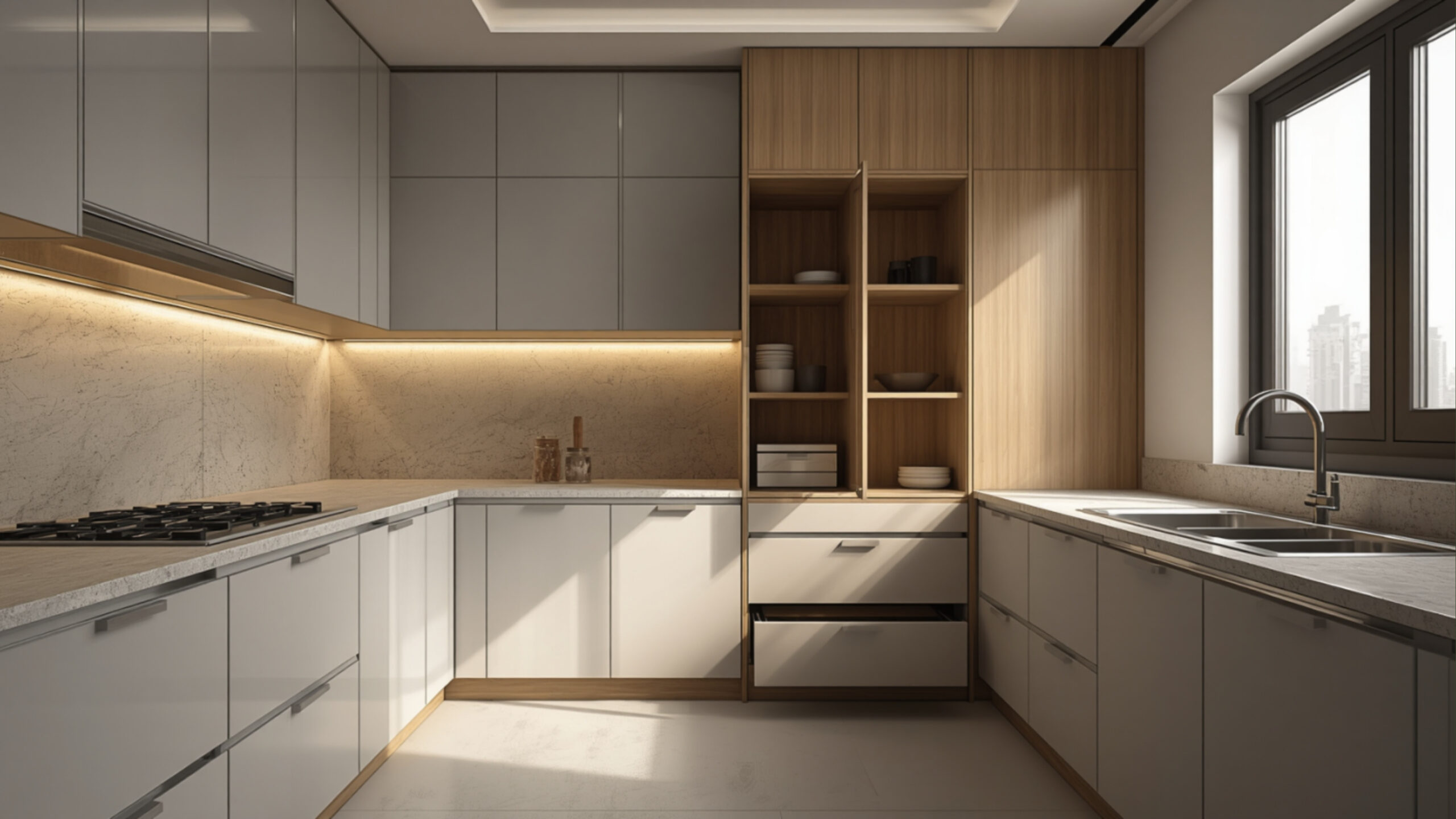
Wardrobes are the second largest line in a Bangalore interior, typically 12 to 18 percent of the budget. The honest way to price a wardrobe is per square foot of its front elevation, and Bangalore carpentry in 2026 runs Rs 800 to Rs 2,500 per square foot. Basic work using commercial plywood and laminate sits at Rs 800 to Rs 1,200, branded plywood and premium laminate sits at Rs 1,300 to Rs 1,800, and marine plywood with veneer or acrylic sits at Rs 2,000 to Rs 2,500 and above.
In rupee terms, an MDF wardrobe starts near Rs 36,000, while a plywood wardrobe of the same size starts near Rs 46,800, and a finished branded wardrobe in 2026 starts from about Rs 55,000. The gap between MDF and plywood is not only price, it is moisture behaviour and screw holding, which matter a great deal in Bangalore monsoon humidity.
The two big wardrobe decisions are sliding versus hinged, and the internal layout. Sliding shutters save floor swing space and suit narrow bedrooms but cost more per square foot due to the channel system, and they give you slightly less open access at any one time. Hinged shutters are cheaper, give full access, and allow loft storage above. Internally, the cost rises with the number of drawers, pull-outs, mirror units and lofts, so a plain shelf-and-rod wardrobe is always the most economical starting point.
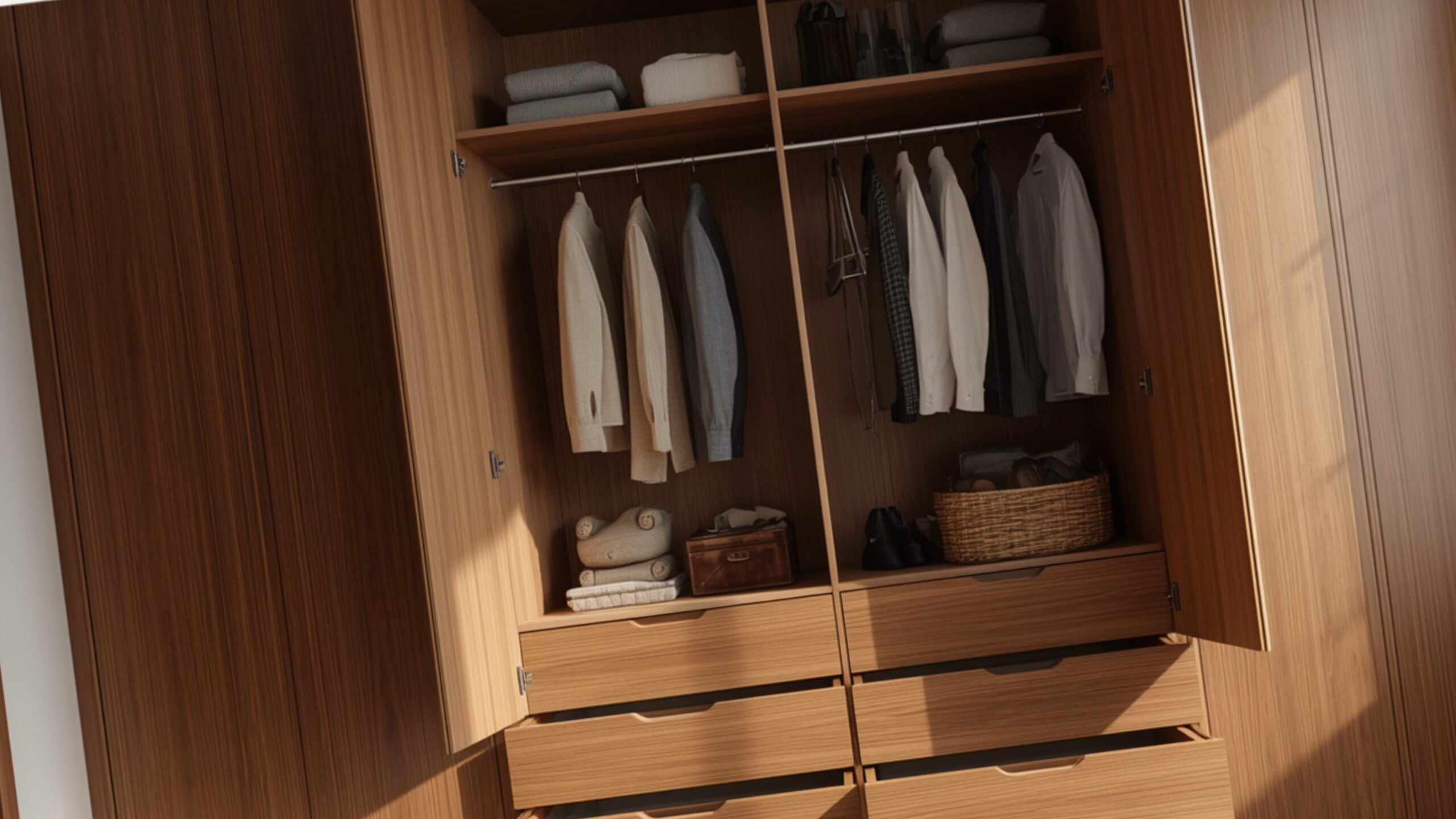
False ceiling is where many budgets quietly inflate, because lighting hides inside it. In 2026 a gypsum or POP false ceiling in Bangalore runs Rs 75 to Rs 125 per square foot, which makes it the most economical option, while a PVC ceiling runs Rs 160 to Rs 185 per square foot. Premium surface finishes change the maths sharply, with laminate ceilings at Rs 700 to Rs 800 per square foot and veneer ceilings at Rs 900 to Rs 1,200 per square foot.
For a room scale figure, a 10 foot by 10 foot room false ceiling costs roughly Rs 7,500 to Rs 13,000, depending on whether the layout is a simple peripheral cove or an elaborate multi-level design. Then comes lighting, which is a separate line and adds Rs 3,000 to Rs 15,000 per room depending on the count and type of fixtures. Electrical wiring and finishing inside the ceiling can add a further Rs 20 to Rs 40 per square foot.
My practical advice on ceilings is to be selective. A peripheral cove with concealed lighting in the living room and master bedroom delivers most of the visual effect at a fraction of the cost of ceiling every room. Spending Rs 40,000 on two well designed ceilings usually reads better than Rs 80,000 spread thin across the whole flat.
Beyond the kitchen and wardrobes, a Bangalore home carries a cluster of smaller woodwork lines that add up faster than people expect. A wall mounted TV unit with storage typically costs Rs 25,000 to Rs 70,000 depending on length, back panelling and whether it carries open shelves or closed cabinets. A floor to ceiling TV wall with veneer or fluted panelling can cross Rs 1 lakh on its own.
A crockery unit or display unit runs Rs 20,000 to Rs 60,000, a study table with overhead storage runs Rs 12,000 to Rs 35,000, and a pooja unit runs Rs 15,000 to Rs 60,000 depending on carving, jaali work and finish. A foyer or shoe unit near the entrance adds Rs 15,000 to Rs 40,000. None of these is large alone, but together they often add Rs 1 lakh to Rs 2 lakh to a 2BHK, which is exactly why they must each appear as a separate line in your breakdown rather than disappearing into a single woodwork total.
Painting is a deceptively variable line because the same wall can be finished three different ways. In 2026, fresh painting in Bangalore runs Rs 14 to Rs 40 per square foot including labour and material, while repainting runs Rs 6 to Rs 35 per square foot. Labour only, where you supply the paint, runs Rs 18 to Rs 28 per square foot for a full job covering putty, primer and two topcoats.
At the home scale, a 2BHK paint job ranges from Rs 20,000 to Rs 30,000 for economy distemper up to Rs 50,000 to Rs 75,000 for a premium emulsion such as Asian Paints Royale with full surface preparation. A typical 900 square foot apartment finished in Asian Paints Royale Matt lands near Rs 35,000 to Rs 52,000 complete. Each deep accent wall adds Rs 1,000 to Rs 3,000 for masking and extra coats. One timing tip that saves money: Bangalore painting rates dip in summer from March to May when demand is lower, and peak from October to December before Diwali.
Services are the lines that almost never appear correctly in a first quotation, and they are where overruns hide. Electrical changes, meaning extra points, switchboard relocation and wiring upgrades, run Rs 15,000 to Rs 40,000 for a typical flat. Plumbing changes for the kitchen and bathrooms, such as shifting an inlet or adding a point, run Rs 10,000 to Rs 30,000.
Civil work, which covers breaking or building a wall, waterproofing or floor levelling, runs Rs 20,000 to Rs 60,000 depending on scope. Appliance installation such as chimney, hob and built-in oven adds Rs 5,000 to Rs 15,000, and post-work deep cleaning adds Rs 3,000 to Rs 8,000. These four lines together commonly add Rs 50,000 to Rs 1.5 lakh on a 2BHK, so insist they are quoted up front rather than billed as surprises during execution.
Material grade is the lever that quietly decides both your invoice and your home's lifespan, so it is worth understanding the ladder. For boards, commercial MR plywood is the entry grade at Rs 60 to Rs 110 per square foot for 18mm and suits dry-area furniture. BWR grade plywood at Rs 100 to Rs 160 per square foot is the sensible default for modular kitchens.
BWP marine plywood at Rs 150 to Rs 250 per square foot carries effectively zero delamination risk and is the right call for bathroom vanities and any moisture-prone zone. MDF is cheaper than all of these but holds screws and resists water less well, which matters in Bangalore humidity.
For finishes, decorative laminates from Greenlam, Merino and Century run Rs 1,000 to Rs 4,000 per 8 foot by 4 foot sheet, acrylic sits a step above for a glossy seamless look, and natural veneer or PU paint sits at the top for a wood-grain or solid-colour premium finish. For paint, Asian Paints anchors most Bangalore homes across its distemper, emulsion and Royale lines. The practical principle is to put your money into the boards and hardware that you cannot easily change later, and treat the visible finish as the layer you can choose by budget.
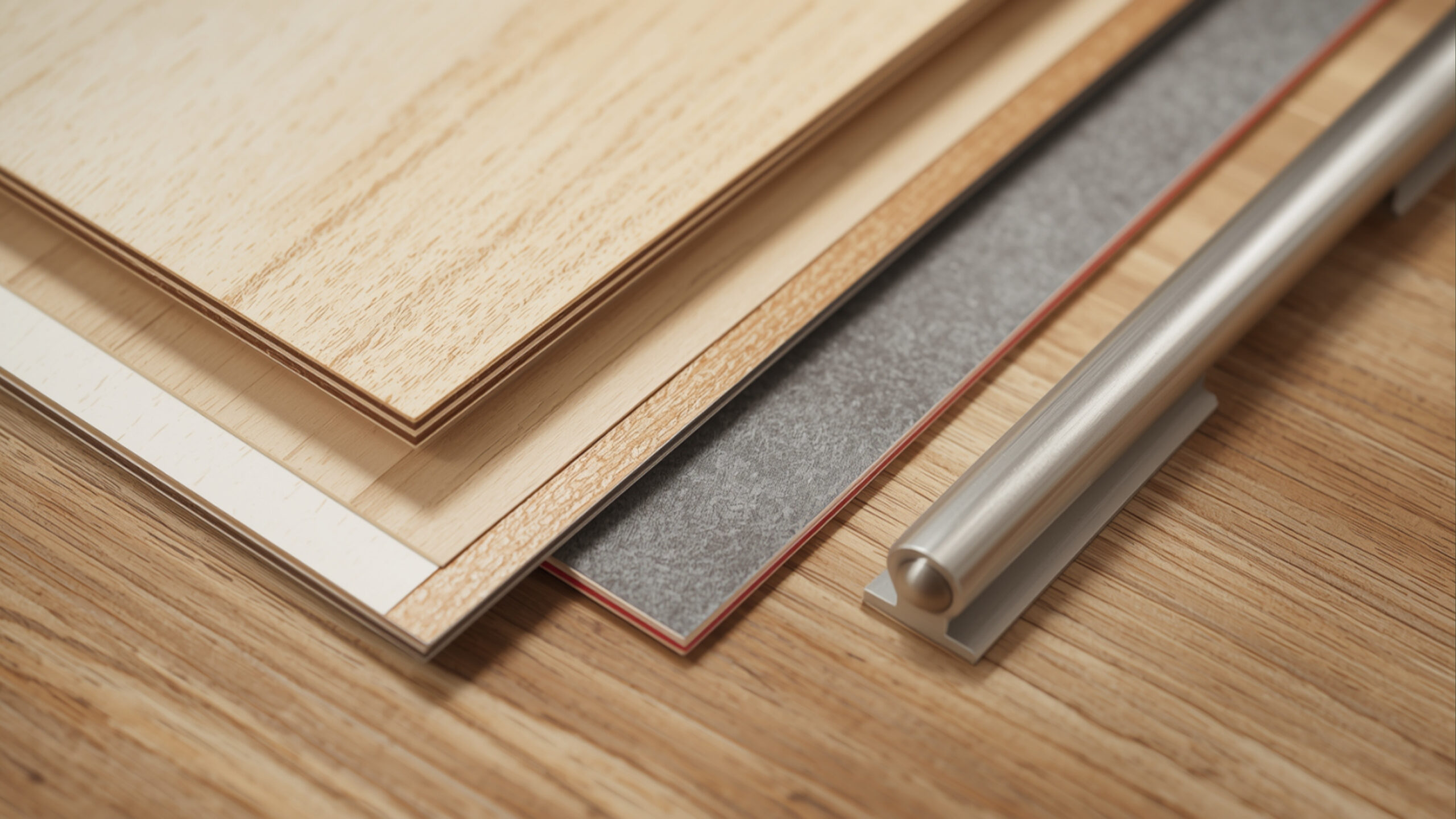
Hardware is the part of an interior you operate thousands of times a year, so its grade is a durability decision as much as a cost decision. The common ladder in Bangalore runs from Ebco at the value end, to Hettich and Hafele in the broad mid to upper band, to Blum at the premium end. Hinges, telescopic channels, tandem boxes and lift-up mechanisms from these brands can together be up to 25 percent of cabinetry cost.
Why pay more here. A soft-close Blum or Hettich hinge rated for a high open-close cycle simply outlives a generic hinge, and replacing failed hardware later means dismantling a finished cabinet, which costs far more in labour than the hinge itself. My standard guidance is to fit at least mid-grade Hettich or Hafele hardware in the kitchen, where daily load is highest, and you can economise to value hardware in low-use wardrobes if the budget is tight. Spending an extra Rs 15,000 to Rs 30,000 on kitchen hardware is one of the highest-return decisions in the whole project.
Putting the lines together gives the totals families actually plan around using this interior design cost breakdown Bangalore 2026 guide. For a mid-range 2BHK, expect roughly Rs 6 lakh to Rs 9 lakh before GST, split approximately as kitchen Rs 1.5 lakh to Rs 2.5 lakh, wardrobes Rs 1.5 lakh to Rs 2.5 lakh, other woodwork Rs 1 lakh to Rs 1.5 lakh, false ceiling and painting Rs 1 lakh to Rs 1.5 lakh, and services plus logistics Rs 50,000 to Rs 1 lakh. Budget grade pulls this down toward Rs 4 lakh, premium grade pushes it past Rs 12 lakh.
For a 3BHK the same logic scales up to roughly Rs 8 lakh to Rs 12 lakh at mid-range and Rs 15 lakh and above at premium, because you add a third bedroom wardrobe, more ceiling area and usually a longer kitchen. The standard split holds: kitchen and wardrobes together remain 30 to 40 percent of the total. Use these splits as a template, then drop in the per-unit rates from the sections above to build your own number.
Where your home sits changes the bill even when the design does not. South and central Bangalore localities such as Koramangala, Indiranagar and Jayanagar tend to price 20 to 35 percent higher per square foot than East Bangalore areas such as Whitefield, Marathahalli and Sarjapur Road for the same scope. The drivers are access and logistics, parking and material movement in dense older layouts, and local labour demand.
Newer corridors such as Electronic City, Hebbal and Yelahanka usually sit in the middle. None of this changes the element rates themselves, it changes the labour and handling component layered on top, which is one more reason to keep that component visible as its own line.
The gap between a quote and a final invoice is almost always made of two things: hidden costs and GST. On the hidden side, plan for plumbing at Rs 10,000 to Rs 30,000, complete home painting beyond quoted areas at Rs 15 to Rs 35 per square foot, civil work at Rs 20,000 to Rs 60,000, transport and loading at Rs 8,000 to Rs 20,000, appliance installation at Rs 5,000 to Rs 15,000, cleaning at Rs 3,000 to Rs 8,000, and miscellaneous site issues at Rs 10,000 to Rs 25,000. The safe rule is to hold a 10 to 15 percent contingency.
On GST, most Bangalore interior quotes are exclusive of tax. Interior work is treated as a works contract and attracts 18 percent GST on the total contract value, so a Rs 7 lakh quote becomes Rs 8.26 lakh on the invoice. Always ask whether a quoted figure includes or excludes GST before you compare two firms, because a tax-inclusive quote and a tax-exclusive quote that look similar can be 18 percent apart in reality.
Trimming an interior budget well is about sequencing, not sacrifice. Spend first on the things you cannot change later: the kitchen carcass grade, the kitchen hardware and any waterproofing. Economise on the things you can upgrade later: loose furniture, decorative lighting, accent wallpaper and full-home ceilings. Choose laminate over acrylic where the surface is not at eye level, ceiling only your living room and master bedroom, and keep wardrobe internals simple with shelves and rods rather than many drawers.
The other big saving is planning. A finalised interior design cost breakdown Bangalore homeowners can review before execution starts prevents the costliest line of all, which is rework. Every wall opened twice, every point shifted after wiring, every shutter remade in a new colour, adds labour with no extra value. A clear, itemised plan is itself a cost-control tool.
At myNivasa we build our quotes using the same interior design cost breakdown Bangalore structure this guide follows: line by line, with quantity, material grade and hardware brand stated for every element. Families across Whitefield, HSR Layout, Sarjapur Road, Electronic City, Koramangala, Indiranagar, Marathahalli, Hebbal, JP Nagar, Yelahanka and Bannerghatta Road work with us because they can see exactly where every rupee goes and can trim with us safely rather than discovering surprises at handover. Since 2018 we have run turnkey interiors and renovations end to end, which means one accountable team from design to the final clean.
Bathrooms are small in area but dense in cost, and they are the one place where cutting the material grade backfires fastest because of constant water exposure. A bathroom vanity in Bangalore in 2026 runs Rs 12,000 to Rs 45,000 depending on size, finish and whether the carcass is in BWP marine plywood or a water-resistant board. Marine ply is not optional here, it is the difference between a vanity that lasts a decade and one that swells in two monsoons.
On the sanitaryware and fittings side, brand choice drives the spread. A basic faucet and health-faucet set sits at Rs 3,000 to Rs 8,000, while branded fittings from Jaquar or Kohler move a single bathroom up by Rs 15,000 to Rs 40,000 across taps, shower, diverter and accessories. A wall-hung WC with concealed cistern adds Rs 12,000 to Rs 35,000 over a standard floor-mounted unit. Mirror units, backlit mirrors and storage niches add Rs 5,000 to Rs 20,000 each.
For a full mid-range bathroom refresh, plan Rs 60,000 to Rs 1.2 lakh per bathroom once vanity, fittings, mirror and minor waterproofing are included. The key rule is to spend on the parts you cannot reach later, meaning waterproofing and concealed plumbing, and economise on the visible accessories you can swap any time.
Most apartment interiors keep the developer flooring, but if you are upgrading, it is a large line that belongs in the breakdown. Vitrified tiles in Bangalore run Rs 60 to Rs 150 per square foot for the tile, plus Rs 30 to Rs 60 per square foot for laying with material. Engineered wooden flooring runs Rs 250 to Rs 600 per square foot laid, and laminate wooden flooring is cheaper at Rs 120 to Rs 300 per square foot laid. Italian marble sits at the top, from Rs 350 to Rs 1,500 and above per square foot depending on the stone.
For a 1,000 square foot home, replacing vitrified flooring lands near Rs 1 lakh to Rs 2 lakh including demolition and disposal of the old floor, which itself adds Rs 15 to Rs 30 per square foot. Because flooring change triggers demolition, debris removal and skirting rework, it carries hidden labour that a tile-only rate hides. My usual guidance is to keep good developer flooring and spend the saved Rs 1.5 lakh on better kitchen and wardrobe grades, since the floor is rarely what makes a home feel finished.
Lighting is where a well-built interior either comes alive or stays flat, and it is almost always under-quoted. Profile lights and concealed LED strips inside a false ceiling run Rs 150 to Rs 400 per running foot installed. Recessed spotlights and downlights run Rs 350 to Rs 1,200 per fixture depending on brand and beam quality. Decorative pendant lights and chandeliers range from Rs 2,000 to Rs 50,000 and above per piece, which is entirely a taste and budget choice.
Across a 2BHK, a thoughtful lighting layer adds Rs 40,000 to Rs 1 lakh once profile lights, spots, a few statement fixtures and the extra wiring points are included. The information worth absorbing is the idea of layers: ambient light for the room, task light for the kitchen counter and study, and accent light for art or texture. Spending Rs 50,000 spread across these three layers reads far better than Rs 50,000 on one expensive chandelier in a room that is otherwise flatly lit.
The kitchen rate per running foot is only half the story, because the layout decides how many running feet you actually buy. An L-shaped kitchen is the Bangalore default, efficient for most apartment kitchens and economical on running feet. A U-shaped kitchen gives the most storage and counter space but adds running feet and therefore cost. A parallel or galley kitchen suits narrow utility-style kitchens. An island kitchen looks open but needs floor area most apartments do not have, and the island itself is extra running feet plus often an extra countertop.
Inside the kitchen, the configuration of accessories is the second cost lever. Tall units, pull-out pantry baskets, corner carousels, cutlery organisers and bottle pull-outs each add Rs 3,000 to Rs 25,000. A chimney and hob combination adds Rs 15,000 to Rs 60,000 depending on brand and suction. The decision framework I share with families is to fix the layout to the room first, then add only the accessories you will genuinely use daily, because an unused tall pantry unit is Rs 20,000 of storage that quietly went to waste.
A wardrobe is priced on its front elevation, but lived in through its internals, and the internal plan changes both cost and daily comfort. A basic internal layout of shelves and a hanging rod is the most economical. Adding drawers, each at Rs 1,500 to Rs 4,000, gives folded-clothes storage. A pull-out trouser rack, a tie or belt organiser, a vanity drawer with a mirror, and a loft section above for luggage each add cost in small but real increments.
The configuration choice of sliding versus hinged also shapes the internal usable space. Sliding wardrobes lose a little internal depth to the channel track and only ever open half the wardrobe at once, while hinged wardrobes give full-width access and allow a loft. For most Bangalore bedrooms I recommend hinged shutters with a simple, well-planned internal grid, and reserve sliding shutters for rooms where the swing of a hinged door would block a bed or a walkway. Plan the internals around what you own, not around a showroom display, and the same wardrobe costs less and works harder.
The professional fee is a line homeowners often resent until they understand what it prevents. Some Bangalore firms charge a separate design fee of 5 to 10 percent of project value, while turnkey firms fold design and project management into the per-element rates. Either way you are paying for drawings, material selection, vendor coordination, site supervision and a single point of accountability. The cost of skipping this is rarely visible in the quote, it shows up as rework, mismatched deliveries and a project that drifts for months.
A useful way to judge value here is the itemisation of the quote itself. A firm that hands you a line-by-line breakdown with quantity, grade and brand is doing the design and estimation work properly, and that document is worth real money because it protects you from the open-ended quotes that cause overruns. The information takeaway is that the cheapest design fee is not always the cheapest project, because weak planning is the most expensive line of all.
Cost and time are linked, so the schedule belongs in any honest breakdown. A 2BHK interior in Bangalore typically takes 50 to 65 days from design finalisation to handover, and a 3BHK takes 65 to 90 days. Factory-made modular work runs in parallel with on-site civil and electrical work, which is what keeps the timeline tight, and any change after wiring or factory cutting is what stretches it.
On payments, the common Bangalore structure is a booking advance of about 10 percent, a larger payment of 40 to 50 percent at production start, a further 30 to 40 percent at installation, and a final 5 to 10 percent at handover after a snag list is cleared. Never pay the full amount before handover, and always tie the final tranche to a walkthrough. The cost protection here is simple: holding a final 10 percent gives you leverage to get every snag fixed, which is worth far more than the small discount sometimes offered for full upfront payment.
An interior is partly a lifestyle spend and partly an asset decision, and the breakdown looks different through each lens. The elements that hold value at resale or on rent are the ones a future occupant also needs: a sound modular kitchen, durable wardrobes in every bedroom, and clean, well-finished walls. These justify mid to premium grade because they are used hard and judged immediately. The elements that rarely return their cost are the highly personal ones, such as a heavily themed feature wall, an oversized chandelier, or a bespoke colour scheme that the next family will simply repaint.
The practical return on investment rule I give families is to grade your spending by who benefits. Put premium money into the kitchen and wardrobes where both you and a future buyer gain, keep ceilings and lighting at a sensible mid grade, and treat purely decorative spends as personal indulgences to be budgeted last.
A Rs 8 lakh interior placed this way feels richer and resells better than a Rs 10 lakh interior that overspent on decoration and underspent on the boards inside the cabinets. In rental terms, a well-fitted kitchen and wardrobes can support a higher monthly rent and a faster tenant, which is a measurable return on the Rs 3 lakh to Rs 5 lakh those two lines usually cost.
The most expensive mistakes are made before any wood is cut. The first is comparing two quotes on the headline number alone, when one is GST-inclusive and the other is not, or when one uses BWR ply and the other commercial MR ply at the same apparent price. The second is accepting a lump-sum line such as a full kitchen at Rs 2 lakh with no running feet, grade or hardware stated, which makes the quote impossible to verify and easy to inflate during execution.
The third mistake is ignoring the services and hidden lines until they arrive as surprises, which is why this guide insists on quoting electrical, plumbing, civil work and transport up front. The fourth is over-investing in finishes you can change later while under-investing in boards and hardware you cannot. Avoiding these four mistakes typically saves a Bangalore family Rs 50,000 to Rs 1.5 lakh on a 2BHK, with no loss of quality, purely by reading the breakdown correctly and grading the spend in the right order.
Bangalore homeowners usually choose between a packaged interior and a custom one, and the cost behaves differently in each. Package interiors advertise a fixed per-square-foot or per-BHK price, for example a 2BHK package from Rs 3.5 lakh to Rs 6 lakh, which buys a defined scope with set materials and a limited choice of finishes. The advantage is predictability, and the risk is the asterisk, since anything beyond the listed scope, such as extra ceiling, additional points or a finish upgrade, is charged on top and can lift the final figure well past the headline.
Custom interiors are priced line by line from the start, which looks higher on first reading but contains fewer surprises because every element is already specified. For a family that wants exactly what they want, custom is often cheaper in the end because nothing is paid twice. The information takeaway is to read what a package excludes as carefully as what it includes, and to convert any package quote into a line-by-line breakdown using the rates in this guide before signing, so you are comparing the same scope on both sides.
The same per-element rates apply whether you are doing an apartment or an independent house, but the totals diverge because the canvas is different. Apartments come with developer flooring, a fixed kitchen and bathroom layout and standard ceiling heights, so most apartment interiors are modular and surface work with little civil change. Villas and independent houses often involve more civil work, staircases, larger ceiling areas, more bathrooms and sometimes structural changes, all of which add to the services and civil families of cost.
As a rough guide, a 2BHK or 3BHK apartment interior follows the Rs 6 lakh to Rs 14 lakh band in this guide, while an independent house of similar bedroom count can run 20 to 40 percent higher once the extra civil, multiple bathrooms and larger surface areas are counted. If you are budgeting a villa, take the element rates here as your base and add a larger civil and services allowance, because that is where the difference concentrates rather than in the per-running-foot kitchen rate itself.
You can build an indicative budget for your own home in under an hour using the rates in this guide. Start with the kitchen: measure the running feet of cabinetry, pick a finish, and multiply by the per-running-foot rate, then add countertop and installation. Next, list every wardrobe, measure each front elevation in square feet, choose a grade, and multiply by the per-square-foot carpentry rate. Add the other woodwork units one by one at their per-unit ranges.
Then layer in surfaces: false ceiling area times the per-square-foot rate for your material, plus painting area times the painting rate. Add the services allowance for electrical, plumbing and any civil work. Add a logistics and design allowance. Sum the lines, then add a 10 to 15 percent contingency, and finally add 18 percent GST to reach the true out-the-door number. Doing this once, before you talk to any firm, turns you from a buyer who can be quoted anything into an owner who already knows roughly what the project should cost.
Smart features are an increasingly common line in Bangalore interiors, and they range from inexpensive to substantial. Smart switches and app-controlled lighting for a 2BHK add Rs 25,000 to Rs 80,000 depending on how many circuits you automate. Motorised curtains add Rs 8,000 to Rs 25,000 per window. A video door phone adds Rs 8,000 to Rs 20,000, and a basic CCTV set adds Rs 15,000 to Rs 40,000. Sensor lighting in wardrobes and the kitchen toe-kick adds a few thousand rupees per zone.
None of these is essential, and all of them can be retrofitted later, which is exactly why they belong at the bottom of the priority list when the budget is tight. The information principle is to wire for the future even if you do not buy the device now, because leaving a neutral wire and a deeper switch box during execution costs almost nothing, while opening a finished wall later to add it costs far more. Decide your smart scope before wiring, and you keep the option open at minimal cost.
The spaces families forget in the first budget are the balcony, the utility area and any study nook, and they each carry real cost. A balcony makeover with deck flooring, a railing planter and a small seating unit runs Rs 20,000 to Rs 80,000 depending on area and materials. A utility area with a washing machine unit, a small sink and overhead storage runs Rs 15,000 to Rs 50,000. A study nook carved out of a bedroom or living corner, with a table, overhead unit and pinboard, runs Rs 15,000 to Rs 45,000.
These three lines often add Rs 50,000 to Rs 1.5 lakh that was not in the original mental budget, which is one more argument for the full element-wise breakdown approach. List every functional zone in the home, not only the headline rooms, and price each, so the final number is the real number rather than a pleasant underestimate that grows during the project.
When you execute an interior in Bangalore quietly changes the bill. Painting and labour rates dip in summer from March to May when demand is lower, and peak from October to December as families finish homes before Diwali and after the monsoon. Material prices, particularly plywood and laminate, move with input costs through the year, so locking rates in your contract protects you from mid-project increases.
Timing also affects the hidden cost of delay. Starting a project so that the messy civil and electrical work avoids the heaviest monsoon weeks reduces the risk of damp-related rework. If your schedule is flexible, executing in the leaner months can save a measurable amount on labour-heavy lines such as painting and false ceiling, while a rushed festive-season project pays a premium for the same work. The practical move is to fix material rates in writing and, where you can, schedule the labour-intensive phases into the lower-demand months.
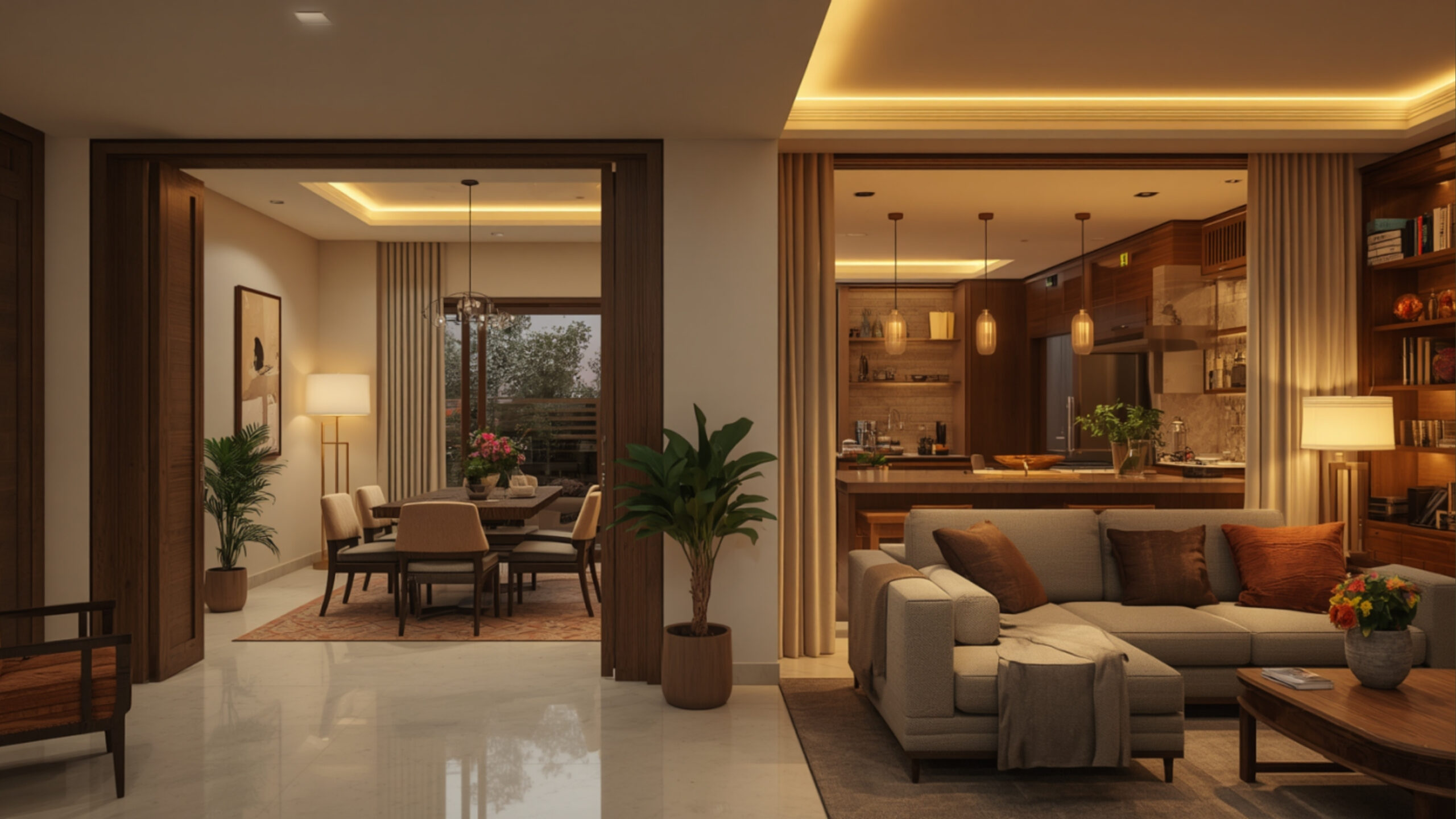
| Element | Unit | Budget | Premium |
|---|---|---|---|
| Modular kitchen | per running foot | Rs 9,500 | Rs 28,000 |
| Wardrobe | per sq ft | Rs 800 | Rs 2,500 |
| False ceiling (gypsum) | per sq ft | Rs 75 | Rs 125 |
| Painting (fresh) | per sq ft | Rs 14 | Rs 40 |
| TV unit | per unit | Rs 25,000 | Rs 70,000+ |
| Bathroom vanity | per unit | Rs 12,000 | Rs 45,000 |
| Vitrified flooring | per sq ft laid | Rs 90 | Rs 210 |
| Choice | Value grade | Mid grade | Premium grade |
|---|---|---|---|
| Board | Commercial MR ply (Rs 60 to Rs 110/sq ft) | BWR ply (Rs 100 to Rs 160/sq ft) | BWP marine ply (Rs 150 to Rs 250/sq ft) |
| Finish | Laminate | Acrylic | Veneer or PU |
| Hardware | Ebco | Hettich or Hafele | Blum |
| Sanitaryware | Standard local | Jaquar | Kohler |
| Line | 2BHK | 3BHK |
|---|---|---|
| Modular kitchen | Rs 1.5 lakh to Rs 2.5 lakh | Rs 2 lakh to Rs 3.5 lakh |
| Wardrobes | Rs 1.5 lakh to Rs 2.5 lakh | Rs 2.5 lakh to Rs 4 lakh |
| Other woodwork | Rs 1 lakh to Rs 1.5 lakh | Rs 1.5 lakh to Rs 2 lakh |
| Ceiling and painting | Rs 1 lakh to Rs 1.5 lakh | Rs 1.5 lakh to Rs 2 lakh |
| Services and logistics | Rs 0.5 lakh to Rs 1 lakh | Rs 0.75 lakh to Rs 1.5 lakh |
| Indicative total | Rs 6 lakh to Rs 9 lakh | Rs 8 lakh to Rs 12 lakh |
Most Bangalore interior firms now offer financing, and understanding it is part of reading the true cost. Interior loans and no-cost EMI plans typically convert a Rs 6 lakh to Rs 9 lakh project into monthly instalments over 12 to 60 months, sometimes through a partner lender and sometimes through a card-based plan. A no-cost EMI means you pay the same total spread over months, while a standard interior loan adds interest, commonly in the 12 to 16 percent annual range, which can add Rs 50,000 or more to a Rs 6 lakh project over a longer tenure.
The information worth holding is that financing changes cash flow, not the underlying cost, and an interest-bearing plan genuinely increases the total. If you use EMI, read whether it is truly no-cost or interest-bearing, confirm any processing fee, and remember that the GST is calculated on the project value regardless of how you pay. Financing is a useful tool to phase a project you could not fund at once, but it should never be the reason a budget quietly inflates because the monthly figure looked small.
A 2BHK interior in Bangalore in 2026 costs Rs 4 lakh to Rs 14 lakh before 18 percent GST. Mid-range projects land near Rs 6 lakh to Rs 9 lakh, with the modular kitchen and wardrobes together taking 30 to 40 percent of that total.
In 2026 a laminate kitchen costs Rs 9,500 to Rs 14,000 per running foot, acrylic costs Rs 15,000 to Rs 22,000, and PU finish costs Rs 18,000 to Rs 28,000. Countertop at Rs 25,000 to Rs 60,000 and installation at Rs 15,000 to Rs 30,000 are billed separately.
Wardrobe carpentry in Bangalore runs Rs 800 to Rs 2,500 per square foot of front elevation in 2026. A finished branded wardrobe starts near Rs 55,000, an MDF unit from about Rs 36,000 and a plywood unit from about Rs 46,800, with sliding shutters costing more than hinged.
Usually not. Interior work is a works contract taxed at 18 percent GST on the total value, so a Rs 7 lakh quote becomes Rs 8.26 lakh on the invoice. Always confirm whether a quote is inclusive or exclusive of GST before comparing two firms.
Budget for electrical at Rs 15,000 to Rs 40,000, plumbing at Rs 10,000 to Rs 30,000, civil work at Rs 20,000 to Rs 60,000, plus transport, appliance fitting and cleaning. Hold a 10 to 15 percent contingency on top of the quoted figure.
BWR grade plywood is the sensible default for a modular kitchen carcass, while BWP marine plywood suits bathroom vanities and any high-moisture zone. Commercial MR plywood is best kept to dry-area furniture because it resists water less well in Bangalore humidity.
Yes. South and central areas such as Koramangala and Indiranagar can run 20 to 35 percent higher per square foot than East Bangalore areas such as Whitefield and Marathahalli, mostly due to access, parking and labour logistics rather than the element rates themselves.
Spend on the kitchen carcass and hardware you cannot change later, economise on loose furniture and decorative lighting, ceiling only the key rooms, keep wardrobe internals simple, and finalise the design before execution to avoid the costliest line of all, which is rework.
All figures in this guide are 2026 Bangalore market ranges for typical residential apartments and are exclusive of 18 percent GST unless stated otherwise. Actual costs vary with site condition, exact carpet area, design complexity, brand selection, vendor and timing. Per square foot figures are cross-checks, not quotations, and two homes of the same size can differ by several lakh purely on how much modular work each carries. Use the element-wise rates here to build an indicative budget and confirm a firm number through a site measurement and an itemised proposal.
A Bangalore home interior in 2026 is best understood not as one big number but as a stack of priced lines, and once you can read that stack, the Rs 4 lakh to Rs 14 lakh range for a 2BHK stops feeling random and starts feeling controllable. The two lessons that matter most are simple. The kitchen and wardrobes will take 30 to 40 percent of your money, so grade them carefully with the right board and hardware. And almost every quote excludes 18 percent GST, so always read the tax line and hold a 10 to 15 percent contingency. Build the breakdown yourself first, and no firm can quote you a number you cannot check.
Ready to see your home's full cost breakdown? Contact myNivasa for an itemised, no-surprise interior proposal for your Bangalore home, with material grade and hardware brand stated on every line. Visit mynivasa.com.
Before you sign, run every quotation through a short checklist that turns the breakdown in this guide into a contract you can trust. Confirm that the kitchen is stated in running feet with the carcass grade, shutter finish and hardware brand named, not as a single lump sum. Confirm each wardrobe is measured in square feet with its grade and shutter type. Confirm the false ceiling area and material, the painting scope and paint line, and the exact list of electrical and plumbing points, because these are the lines that grow silently if left vague.
Then confirm the commercial terms. Check whether the figure is inclusive or exclusive of 18 percent GST, because that single line can be Rs 1 lakh on a Rs 6 lakh project. Confirm the payment schedule ties the final 5 to 10 percent to a handover walkthrough. Confirm the timeline, the warranty on materials and workmanship, and what counts as an extra. A contract that survives this checklist is one where the final invoice will match the quotation, which is the entire point of insisting on a real cost breakdown rather than a headline price.
Knowing the brands behind each line helps you read a quote and judge whether the grade matches the price. On boards and laminates, Greenlam, Merino and Century are the names you will see most often, and a quote that uses one of these branded boards justifies a higher rate than an unbranded board at the same number. On paint, Asian Paints anchors most Bangalore homes across its distemper, emulsion and Royale lines, and the line chosen, not just the brand, sets the per-square-foot painting rate.
On hardware, Ebco sits at the value end, Hettich and Hafele cover the broad mid to upper band, and Blum sits at the premium end, with each step up buying a longer open-close life and smoother soft-close action. On bathroom fittings, Jaquar is the common mid-range choice and Kohler the premium one. When two quotes differ on price, the explanation is very often hiding in these brand and grade choices, so ask which brand sits behind every major line, and the breakdown becomes genuinely comparable across firms.
Whichever firm you choose, the skill that protects your money is reading a quote as a set of priced lines rather than a single figure. This interior design cost breakdown Bangalore guide gives you the 2026 rates to match every line, ask which brand and grade sits behind each one, confirm the GST treatment, and hold a contingency. A 2BHK at Rs 6 lakh to Rs 9 lakh and a 3BHK at Rs 8 lakh to Rs 12 lakh are fair mid-range numbers, and now you can verify them yourself, line by line, before a single rupee is paid.
Last Updated: June 23, 2026
Direct answer: A full 3 BHK renovation in Indiranagar in 2026 costs Rs. 6 lakh to Rs. 15 lakh, with most families spending Rs. 8.5 lakh to Rs. 11.5 lakh for a Comfort tier finish that includes a modular kitchen, three wardrobes and a living and dining false ceiling. On the design side, the single choice that shapes that figure most is layout rather than area, because how you plan the kitchen, the three bedrooms of storage and the flow between rooms decides how much carpentry, wiring and material grade the home actually needs.
Spoken answer: If you are asking how much it costs to renovate a 3 BHK in Indiranagar in 2026, the honest range is Rs. 6 lakh to Rs. 15 lakh, and a comfortable mid tier home usually lands near Rs. 9.5 lakh. That figure normally includes the modular kitchen, three wardrobes, a false ceiling in the living and dining area, fresh paint, and the electrical and plumbing work an older flat needs, so you are paying for both the new design that reshapes how three bedrooms live and the hidden services behind the walls.
| Tier | Total cost (1,400 to 1,800 sq ft) | Approx. per sq ft | What it covers |
|---|---|---|---|
| Essential | Rs. 6 lakh to Rs. 8.5 lakh | Rs. 1,300 to Rs. 1,900 | Repair led refresh, repaint, basic kitchen and three wardrobes, essential electrical and plumbing fixes |
| Comfort | Rs. 8.5 lakh to Rs. 11.5 lakh | Rs. 1,900 to Rs. 2,800 | Modular kitchen, three wardrobes with organisers, living and dining false ceiling with profile lighting, full repaint, partial rewiring |
| Signature | Rs. 12 lakh to Rs. 18 lakh and above | Rs. 2,900 to Rs. 4,500 | Acrylic or lacquered glass finishes, BWP ply, premium hardware, designer ceilings, full rewiring and plumbing, smart points |
In my experience across Indiranagar homes, the families who stay calmest through a 3 BHK renovation are the ones who lock the layout and the material grade first and the colours last. The number on the quote follows those two design decisions almost every time. At myNivasa we put both on paper before we ever talk about a final figure.
When a family in Indiranagar tells me they want to renovate their 3 BHK, the word means very different things to different people, so the first job is always to define the scope as a design brief rather than a price. For one family a renovation is a tired flat that needs paint, a new kitchen and better storage across the three bedrooms. For another it is a full strip down to the brick, new wiring, new plumbing and a layout that finally suits how a growing family lives. Understanding what a renovation actually contains is the foundation for every later decision, and it is where the design conversation has to begin.
A complete 3 BHK renovation moves through a fixed set of work heads, and it helps to picture them as design layers. The civil layer covers demolition of old structures, any masonry changes, waterproofing of the bathrooms and balconies, and the patching that follows. The services layer is the wiring, switchboards and distribution board on the electrical side, and the piping, drainage and sanitary fittings on the plumbing side, and a 3 BHK usually carries more of both because there are more rooms, often three bathrooms, and a heavier electrical load. The carpentry layer is where most of the visible design sits, since it holds the modular kitchen, the three wardrobes, the television unit, the crockery or pooja unit and the loose storage. On top of these sit the finishing trades, namely the false ceiling, the lighting, the flooring or tile repair, and the paint.
The reason this layered approach matters is that a renovation is not one product, it is a sequence of trades that has to follow a design logic. In an Indiranagar flat that is already occupied, you cannot wire, plaster and paint in any order you like. The hidden services go first, the carpentry follows, and the finishes come last, otherwise you pay twice. A clear scope on day one is the single best protection a homeowner has, because it tells you what the design includes and, just as importantly, what it leaves out. With a 3 BHK the scope conversation is longer simply because there is more home to plan, and the third bedroom in particular is where families differ most, since it becomes a child's room, a guest room, a study or a parents' room depending on the household.
It also helps to separate cosmetic renovation from structural renovation as two different design approaches. A cosmetic refresh keeps the layout, repaints, replaces a few fittings and updates the kitchen and wardrobes. A structural renovation reworks the layout, opens the kitchen to the living room, redesigns the bathrooms and rewires the home. The first approach is faster and lighter, the second is where a flat genuinely changes character. Most Indiranagar 3 BHK projects I see sit between the two, keeping the core walls but redesigning the kitchen, the storage in all three bedrooms, the ceiling and the services. Knowing which approach you are choosing is the first step in understanding what your renovation will include and what it will cost.
Homeowners often assume that a larger flat automatically costs proportionally more. In practice, area is only one of several drivers, and rarely the most important. Here is what actually moves the 3 BHK renovation cost in Indiranagar, in the order I see it matter most, blending the design logic with the cost effect so that you can see both halves of every decision.
The first driver is the layout decision, which is purely a design choice with a large cost tail. Keeping the existing layout is the most economical path, because the walls, the plumbing stacks and the main wiring stay where they are. The moment you open a closed kitchen into the living room, add a utility area, combine two small rooms or shift a bathroom door, you trigger civil work, fresh waterproofing and rerouted services. A layout change of even one wall can add Rs. 50,000 to Rs. 1.2 lakh once you count demolition, masonry, waterproofing and rework, and in a 3 BHK there are simply more walls that families are tempted to move.
The second driver is the material grade. This is where most of the gap between a Rs. 7 lakh and a Rs. 13 lakh home actually lives. Moving from commercial grade plywood to marine grade boiling waterproof ply, or from a basic laminate shutter to an acrylic or lacquered glass shutter, can change a kitchen and three wardrobe package by Rs. 1.5 lakh to Rs. 3 lakh on its own. The carcass, the shutter finish and the hardware brand are the three design levers, and they compound across every cabinet in the home, which is why they matter even more in a 3 BHK than in a smaller flat.
The third driver is the locality premium. Central pockets such as Indiranagar, Koramangala and JP Nagar run roughly 15 to 25 percent higher than suburbs such as Whitefield outskirts and Electronic City. This is not a markup for the postcode. It comes from real cost, namely tighter parking for material vehicles, restricted working hours in many societies, lift and labour movement charges, and the higher day rates that skilled carpenters and electricians command in the central corridor. On a larger 3 BHK project, where material volumes and labour days are higher, this premium shows up as a bigger rupee figure even though the percentage is the same.
The fourth driver is the condition of the existing flat. An occupied 3 BHK renovation costs 15 to 25 percent more than equivalent new work, because the team has to demolish carefully, protect existing surfaces, manage debris through a lift and society, and redo small areas that were never meant to be touched. Older Indiranagar buildings also hide surprises behind the walls, from corroded plumbing to undersized wiring, and those reveal themselves only once work begins. With three bedrooms and often three bathrooms, there is simply more concealed plumbing and wiring that can spring a surprise.
The fifth driver is the quantity and quality of storage, which is as much a lifestyle consideration as a cost one. The modular kitchen takes around 21 percent of a typical 3 BHK budget, and the three wardrobes and additional storage take about another 19 percent, so the two together account for close to 40 percent of the spend. Adding a fourth storage zone, a tall pantry, a study wall in the third bedroom or a full crockery wall is the most common reason a Comfort budget quietly drifts toward Signature.
The sixth driver is the finishing layer, namely the false ceiling, the lighting and the paint. A simple peripheral ceiling with a few profile lights is affordable, while a designer ceiling with coves, layered lighting and feature walls can double that line, and a 3 BHK has more ceiling area to cover. The same logic of restraint versus ambition applies to paint, where a standard emulsion is one figure and a premium washable or textured finish is another, multiplied across more wall area than a 2 BHK carries.
The clearest way to understand a 3 BHK renovation budget is to think in tiers rather than in a single number. At myNivasa we work with three, and they map cleanly onto what families in Indiranagar actually ask for. The tier you pick sets the material grade, the brand of hardware and the depth of the services work, and the rupee figure follows from there.
The Essential tier sits at Rs. 6 lakh to Rs. 8.5 lakh for a typical 1,400 to 1,800 sq ft flat, which is roughly Rs. 1,300 to Rs. 1,900 per sq ft. This is a repair led refresh. You get a fresh repaint across the home, a basic modular kitchen with a good carcass and laminate shutters, three wardrobes, essential electrical and plumbing fixes, and the waterproofing and patching an older flat needs. The Essential tier is the right call when the bones of the flat are sound and you mainly want it to look clean, work properly and last several more years without reaching for premium finishes.
The Comfort tier sits at Rs. 8.5 lakh to Rs. 11.5 lakh, or about Rs. 1,900 to Rs. 2,800 per sq ft, and this is where most Indiranagar families land. It includes a full modular kitchen with mid grade hardware, three wardrobes with internal organisers, a living and dining false ceiling with profile lighting, a complete repaint, partial rewiring and a quartz or granite counter. The Comfort tier is the balance point, since it gives a home that looks and feels new without reaching for the most expensive finishes, and on a 3 BHK it usually settles near Rs. 9.5 lakh once GST and a sensible contingency are added.
The Signature tier starts around Rs. 12 lakh and runs to Rs. 18 lakh and above, which is Rs. 2,900 to Rs. 4,500 per sq ft or more. Here the design moves to acrylic or lacquered glass shutters, marine grade boiling waterproof ply, premium hardware from brands such as Blum and Hafele, designer ceilings with layered lighting, veneer or polyurethane finishes on feature units, full rewiring and plumbing, and smart electrical points across the home. The Signature tier suits families who plan to stay long term and want all three bedrooms and the shared spaces to feel genuinely high end.
One honest note on tiers. The jump from Essential to Comfort usually buys better daily function, while the jump from Comfort to Signature mostly buys finish and feel. Both are valid, but knowing which kind of value you are paying for helps you decide where to stop, and in a 3 BHK that decision is worth more rupees than in a smaller home because every choice is multiplied across more rooms.
If you remember one thing from this guide, let it be this. The single largest lever on a 3 BHK renovation cost is material grade, not floor area. Two homes of the same size in the same Indiranagar building can be Rs. 4 lakh apart purely because of the boards, shutters and hardware chosen, so it is worth understanding what each grade means as a material and what it costs before you read a single quote.
Start with the plywood, since it is the skeleton of every wardrobe and kitchen cabinet. Commercial grade ply, graded IS:303 moisture resistant, is the entry choice and is fine for dry areas such as bedroom and living room storage. Boiling waterproof ply, graded IS:710, is the marine grade board used near water, and it is the right choice for kitchen base units and bathroom vanities. The difference between the two can be Rs. 40 to Rs. 70 per square foot of board, which across a full kitchen and three wardrobes adds up to a meaningful sum in a 3 BHK.
Next come the shutters, which are the visible face of the carpentry and the part that defines the style of the home. A laminate shutter is the workhorse finish and the most affordable. An acrylic shutter gives a high gloss seamless look and costs noticeably more. A lacquered glass or polyurethane finish is the premium end. Moving a full kitchen and three wardrobes from laminate to acrylic shutters commonly adds Rs. 1.2 lakh to Rs. 2.5 lakh depending on the total run length, which in a 3 BHK is considerable.
Then there is the hardware, the part nobody sees but everybody feels every day. Blum soft close hinges run about Rs. 350 to Rs. 600 each, and drawer channels run Rs. 1,200 to Rs. 2,800 per pair. Hettich and Hafele offer excellent quality at roughly 20 to 30 percent below Blum, which is why they are common in the Comfort tier. Across a kitchen and three wardrobes with forty or more hinges and ten drawer sets, the hardware brand alone can swing the quote by Rs. 50,000 to Rs. 1 lakh.
Countertops follow the same logic. Granite is durable and economical, quartz is engineered, consistent and mid priced, and natural stone or imported surfaces sit at the top. Each step up adds a few hundred rupees per running foot. The point of laying all of this out is simple. When you read a quote, the grade words matter as much as the rupee figures, because a low number on cheap material is not actually cheaper once you count the early replacement. In a 3 BHK that you intend to live in for a decade, the grade decision is the difference between a home that still looks good in year seven and one that is tired by year four.
To make the budget concrete, here is how a typical Comfort tier project of about Rs. 9.5 lakh splits across the work heads. These are median shares from real Indiranagar projects, and they help you sense check any quote you receive against the 3 BHK renovation cost in Indiranagar that the market actually charges.
| Phase | Share of budget | Approx. amount on Rs. 9.5 lakh |
|---|---|---|
| Civil, demolition and waterproofing | 12 percent | Rs. 1,14,000 |
| Electrical (conduits, wiring, switchboards, DB) | 10 percent | Rs. 95,000 |
| Plumbing and sanitary | 8 percent | Rs. 76,000 |
| Modular kitchen | 21 percent | Rs. 1,99,500 |
| Wardrobes and storage (three bedrooms) | 19 percent | Rs. 1,80,500 |
| False ceiling and lighting | 9 percent | Rs. 85,500 |
| Painting | 8 percent | Rs. 76,000 |
| Flooring and tile repair | 7 percent | Rs. 66,500 |
| Loose furnishing and project management | 6 percent | Rs. 57,000 |
A few of these line items are worth unpacking with current Indiranagar rates. A full standard electrical package in Bengaluru runs roughly Rs. 165 to Rs. 255 per sq ft, covering conduits, wiring, switchboards, the distribution board and basic fixtures, and a 3 BHK with three bathrooms and a heavier appliance load tends to sit at the upper end. A standard all in plumbing package runs roughly Rs. 160 to Rs. 255 per sq ft, covering piping, fittings, sanitary fixtures and drainage, again higher where there are three full bathrooms. Repainting the whole home runs about Rs. 15 to Rs. 35 per sq ft depending on the paint grade.
Labour is the other moving part. In 2026 daily rates in Bangalore run around Rs. 600 for a mason, Rs. 900 for a carpenter, Rs. 850 for an electrician, Rs. 700 for a plumber and Rs. 400 for a helper. In the Indiranagar corridor these often sit at the upper end because of travel and society timing rules. A standard 3 BHK renovation runs 8 to 12 weeks once materials and approvals are ready, and that timeline directly affects labour cost, since a dragged out site is an expensive site. Finally, remember GST. The 18 percent tax applies to the service component and should be shown as a clear line, not buried inside the rate.
The phase table splits the budget by trade, but families often think in rooms, so here is the same money seen room by room for a Comfort tier finish. These ranges help you decide where to spend and where to hold back across a 3 BHK.
The kitchen is almost always the single most expensive room, taking around Rs. 1.5 lakh to Rs. 3 lakh on its own depending on the run length, the shutter finish and the hardware. A standard 12 to 14 linear foot L shaped or U shaped kitchen with a good carcass, laminate shutters, Hettich hardware and a granite counter sits at Rs. 2 lakh to Rs. 2.8 lakh, while moving to acrylic shutters, Blum hardware and a quartz counter pushes it to Rs. 3.2 lakh to Rs. 5 lakh. This is where the material grade decision shows on the final number most sharply.
The master bedroom usually costs Rs. 1 lakh to Rs. 2 lakh, driven mainly by the wardrobe configuration. A simple two door hinged wardrobe is at the lower end, while a full wall sliding wardrobe with a loft and internal organisers reaches the upper end. The second bedroom typically costs Rs. 70,000 to Rs. 1.5 lakh, and the third bedroom another Rs. 60,000 to Rs. 1.4 lakh, with the range wide because families use the extra rooms so differently, from a child's room to a study with a wall of storage or a parents' room with an accessible wardrobe.
The living and dining area runs Rs. 1 lakh to Rs. 2.5 lakh once you count the television unit, any crockery or display unit, the false ceiling and the lighting, and it is larger in a 3 BHK than in a smaller flat. The two or three bathrooms together usually cost Rs. 1 lakh to Rs. 2.5 lakh for retiling, new sanitary fittings, waterproofing and vanities, and the spread depends on whether you replace the tiles fully or only refresh fittings. The balcony and utility area, often forgotten, adds Rs. 30,000 to Rs. 80,000 for enclosing, a utility cabinet, a sink and the plumbing for a washing machine. If the budget is tight, the kitchen and master wardrobe are where the money should go, because they are used hardest and seen most.

Indiranagar has a wide spread of building vintages, from independent house conversions and older apartments to newer gated developments, so the starting layout of a 3 BHK varies a great deal. Understanding the common layout variants is the heart of the design conversation, because the layout decides how much you change and therefore how much you spend.
The closed kitchen layout is common in older Indiranagar flats. It is a separate room, often compact, with a single door. Keeping it closed is the most economical design choice. Opening it into the living and dining space is a popular modern approach, but it brings civil work, a breakfast counter or island, and rerouted electrical and exhaust, so it sits firmly in the Comfort to Signature range. In a 3 BHK the kitchen is often a little larger, which makes an island or peninsula a realistic option that a 2 BHK rarely allows.
The three bedroom arrangement is where 3 BHK layouts differ most. Some flats have three similar bedrooms, while others have one large master and two smaller rooms. The design consideration is how the family allocates the rooms, since the master usually takes the most storage, while the third room often doubles as a study or guest room and needs a flexible furniture brief. None of these need wall changes if the allocation works, which keeps them affordable, but combining two small rooms into one larger space is a structural choice that adds civil and electrical cost.
The combined living and dining layout is standard and gives you a single large zone to design. The design consideration here is how to define the dining area, whether with a false ceiling change, a feature wall, or a partial partition that doubles as storage. Each approach carries a different carpentry and ceiling implication, and in a larger 3 BHK living space there is more room to make a genuine design statement.
The balcony and utility area is the variant families most often forget in their layout planning. In Indiranagar, enclosing or upgrading a utility for the washing machine, sink and storage is a small civil and plumbing job that pays back daily. It is worth deciding early in the design, because adding it midway through a project is a classic cause of cost creep, and a 3 BHK household with more laundry and storage needs feels the benefit even more.
Storage is the heart of a 3 BHK renovation, both because it drives the budget and because it decides how the home feels to live in. Getting the configuration right is more about lifestyle and design than about money, so it belongs in the design conversation before the costing one.
In the kitchen, the core design decision is the shape, since it sets the run length and therefore the cost. An L shaped kitchen is the most common and efficient configuration, while a U shaped or parallel kitchen gives more counter and storage and is more achievable in a 3 BHK where the kitchen tends to be larger. Within whichever shape you choose, the configuration choices are tall units for the pantry and appliances, a base of drawers versus shutters, corner solutions such as a carousel or a magic corner, and overhead cabinets up to the ceiling or stopping short.
In the wardrobes, the design choice is between hinged and sliding, repeated across three bedrooms. Hinged wardrobes are more economical and give full access to the interior. Sliding wardrobes look sleek and save floor space in tight bedrooms but cost more and reduce the open width. Internal organisation is the next design layer, with hanging sections, drawers, shelves, a locker and a loft above, and a sensible approach is to vary the configuration by room rather than building three identical premium wardrobes, since the master deserves the most investment.
Beyond the kitchen and bedrooms, the configuration questions are about the living space. A television unit can be a simple console or a full feature wall with storage. A crockery unit, a pooja unit, a shoe cabinet at the entry and a study nook are the usual additions, and a 3 BHK often has the wall length to accommodate more of them. Each is optional, and each adds carpentry, so the honest design approach is to list what your family actually uses daily and build for that, rather than filling every wall because the space exists.
Once the layout and configuration are settled, the brand and material conversation gives the home its character and its longevity. Here is how I usually walk an Indiranagar family through the options, grade by grade, so the design choices are informed rather than driven by a salesperson.
For plywood and boards, the trusted names are Century Ply and Greenply, with marine grade IS:710 boiling waterproof ply for wet areas and IS:303 grade for dry storage. For laminates, Merino and similar reputed brands give a wide range of finishes at a sensible cost. For the visible shutter finish, the design choice runs from laminate at the economical end, to acrylic for a high gloss seamless look, to lacquered glass or polyurethane at the premium end.
For hardware, the three names that matter are Hettich, Hafele and Blum. Hettich is known for an excellent price to performance ratio and long lasting durability, which makes it the workhorse of the Comfort tier. Hafele offers a wider range of premium and innovative products for a high end fully integrated kitchen. Blum sits at the top for soft close motion and warranty, with its tandem drawer systems being a benchmark. Hettich systems such as Quadro and InnoTech drawers are common premium choices too, and in a 3 BHK with many drawers the hardware choice has a visible effect on the total.
For the finishing trades, the well known names give peace of mind. Saint-Gobain gypsum boards are standard for false ceilings, Asian Paints and similar reputed brands cover the paint, Kajaria and Somany are trusted for tiles, and Jaquar is a common choice for sanitary fittings across the two or three bathrooms a 3 BHK carries. None of this means you must buy the most expensive option. The design principle is to know the grade and the brand behind every line in your quote, because that is what decides whether the home still looks good in seven years. A kitchen and three wardrobes built on marine grade ply with Blum hardware and acrylic shutters can cost Rs. 2.5 lakh to Rs. 4 lakh more than the same layout in commercial ply, basic hardware and laminate, and the right answer depends on how long you will live there.
The quote you sign is rarely the total you spend, and pretending otherwise does no one any favours. In older Indiranagar buildings especially, hidden costs of Rs. 80,000 to Rs. 2.5 lakh are normal on a 3 BHK, and the families who plan for them stay relaxed while the ones who do not feel ambushed. Here are the usual culprits.
Electrical additions are the most common, since the moment walls open up, families want extra points, better switchboards and rewiring of old circuits across three bedrooms, which adds Rs. 25,000 to Rs. 60,000. Plumbing work is next, where pipe changes, a new tap layout or fixing old leaks across two or three bathrooms add Rs. 20,000 to Rs. 50,000. Civil surprises, such as wall changes, lintel repairs or uneven floors discovered under old tiles, add Rs. 30,000 to Rs. 90,000.
Painting beyond the quoted area is a frequent slip, because the quote often covers the main areas and then ceilings, utility and balconies get added at Rs. 15 to Rs. 35 per sq ft, which over a larger 3 BHK is a real number. Transportation and movement fees deserve special mention in Indiranagar, where tight access, lift restrictions and gated society rules add Rs. 12,000 to Rs. 30,000 for material movement and debris removal. Then there are the costs that are not hidden but easy to forget, namely loose furniture, curtains, light fixtures beyond the basic ceiling lights, and the deep cleaning at the end. My standard advice is to hold a 10 to 15 percent contingency separate from the main budget, treat it as expected rather than optional, and feel pleased if you do not spend all of it.
Most disputes I see between homeowners and contractors are not about dishonesty, they are about quotes that were never comparable. Two quotes for the same Indiranagar 3 BHK can differ by Rs. 3 lakh purely because one assumed commercial ply and laminate while the other assumed marine ply and acrylic, and the homeowner had no way to see that. So learning to read a quote is one of the highest value skills a renovating family can build.
First, insist that every carpentry line names the carcass grade and the shutter finish. A line that says modular kitchen with a single price tells you nothing. A line that names the marine grade IS:710 ply carcass, the acrylic shutters, the Hettich soft close hardware and the linear feet tells you everything. Second, check that material, labour and GST are separated, because a quote that buries the 18 percent tax inside a per square foot rate is hard to compare and easy to inflate.
Third, look for the scope exclusions, since the cheapest quote is often cheap precisely because it leaves out the false ceiling, the painting beyond the main rooms, or the electrical points, which then return as extras. Fourth, compare the per square foot rate only when the tiers match, because a Rs. 1,400 rate and a Rs. 2,600 rate are different design products, not competitors. Fifth, ask about the payment schedule and the warranty, because a serious firm ties payments to completion stages and stands behind the hardware and waterproofing. A quote read carefully on these five points is worth more than three quotes read carelessly, and on a larger 3 BHK budget the discipline pays back even more.
Knowing the sequence of a renovation helps you plan your life around it and spot a site that is drifting. A standard 3 BHK renovation in Indiranagar runs 8 to 12 weeks once materials and society approvals are ready, slightly longer than a 2 BHK because there is more home to work through, and it moves through a predictable design rhythm.
The first week is preparation and demolition, where the team protects what stays, removes what goes, and clears debris through the lift under the society timing rules. The second and third weeks are the hidden services, namely electrical conduiting and wiring, plumbing changes across the bathrooms, and waterproofing, followed by the masonry and plastering that closes everything up. This stage looks slow and unglamorous, but it is the foundation of a renovation that lasts, and rushing it is the most expensive mistake a site can make.
The fourth, fifth and sixth weeks bring the carpentry, as the modular kitchen, the three wardrobes and the storage units are installed and the false ceiling goes up. This is when the home suddenly starts to look like the design. The seventh and eighth weeks are the finishes, namely painting, flooring or tile repair, lighting and fittings. The final stretch is testing, snagging and deep cleaning, where every drawer, tap, switch and hinge is checked before handover. The honest truth about timelines is that delays usually come from decisions, not from labour. A site waits when a material is not finalised or a change is requested midway, so families who make their selections early and resist mid project changes are the ones who finish inside the window, and a faster finish is also a cheaper finish.
A renovation is not paid in one cheque, and understanding the payment rhythm helps you budget the cash flow rather than scrambling midway. A fair payment schedule ties money to completed stages, which protects both sides and keeps the work moving.
A typical structure on a Rs. 9.5 lakh Comfort project looks like this. A booking or design advance of around 10 percent, roughly Rs. 95,000, confirms the project and covers the design and detailing. A first major milestone of around 40 percent, near Rs. 3.8 lakh, falls due as material is procured and the civil and services work begins. A second milestone of around 30 percent, near Rs. 2.85 lakh, falls due as the carpentry and false ceiling are installed. A pre handover payment of around 15 percent, near Rs. 1.42 lakh, falls due as the finishes complete, and a final 5 percent, near Rs. 47,500, is released after snagging and handover.
Two budgeting points matter here. First, hold the 10 to 15 percent contingency in a separate place, so a hidden cost of Rs. 80,000 to Rs. 2.5 lakh does not force you to pause or cut a corner. Second, never pay fully in advance, and never let the payment run ahead of the work on site, because a balance still owed is your strongest lever to ensure the snagging is done properly. A clear payment schedule on paper, signed before work starts, is as important as the cost itself, and on a 3 BHK with more milestones it deserves even closer attention.
Cost is only half of a renovation. The other half is how the home feels to live in, and many Indiranagar families ask me to balance their budget with vastu and aesthetic preferences. These design choices rarely add much to the cost when planned early, but they cost a great deal to fix later, so they belong in the first conversation.
On vastu, the common requests are about the placement of the kitchen, the direction of the cooking platform, the position of the master bedroom, and the entry. In an existing 3 BHK the walls are largely fixed, so the practical design approach is to honour the preferences the layout allows without forcing expensive structural changes the budget cannot justify. A good designer finds the version of your vastu wish that fits the flat you actually have, rather than promising a textbook ideal that needs walls moved, and a 3 BHK with three bedrooms usually offers more flexibility to allocate rooms in line with a family's preferences.
On aesthetics, the design decisions that shape the feel of an Indiranagar home are the colour palette, the balance of open and closed storage, the lighting layers and the choice of a few feature elements rather than decorating every surface. Warm neutral palettes with one or two accent tones tend to age well and suit the natural light most Indiranagar flats receive. Layered lighting, meaning a mix of ceiling, task and accent light rather than a single bright source, is the detail that most changes how a renovated home feels in the evening, and it costs far less than people expect. The principle I return to with every family is restraint. A 3 BHK feels larger and calmer when the design makes a few confident choices and lets them breathe, and that discipline also protects the budget across more rooms.
After years of Indiranagar projects, the patterns that push a budget up are remarkably consistent, and almost all of them are avoidable. Knowing them in advance is the cheapest insurance a homeowner can buy.
The first mistake is changing design decisions midway. Every change after work has started costs more than the same choice made on paper, because it means undoing, reordering material and idling labour, and a single mid project layout change can add Rs. 50,000 to Rs. 1.2 lakh. The second mistake is chasing the lowest quote without checking the material grade, which simply moves the cost from today to the early replacement a few years out. The third is forgetting the contingency, so that a normal hidden cost of Rs. 80,000 to Rs. 2.5 lakh feels like a crisis.
The fourth mistake is over building storage, which is the most common reason a Comfort budget drifts into Signature territory, since much of that carpentry then sits empty, and a 3 BHK tempts families to build three premium wardrobes when two would do. The fifth is underestimating the finishing layer, where families budget carefully for the kitchen and wardrobes and then discover that the false ceiling, lighting, painting and fittings add another large slice across a bigger home. The sixth, specific to central localities, is ignoring the society and access cost, the lift charges, the timing limits and the debris removal that quietly add Rs. 12,000 to Rs. 30,000 in Indiranagar. The way to avoid all six is the same design discipline, namely decide the layout and material grade early, get an itemised quote with grades named and GST shown separately, hold a contingency, build storage for how you actually live, and pick a team that knows the local society rules.
Indiranagar is one of the most demanding renovation markets in Bengaluru, because the homes are valuable, the societies are strict and the families have high expectations. Over the years, the reasons Indiranagar homeowners come to myNivasa have stayed consistent, and they are worth sharing plainly.
The first is a clear scope and an honest quote. We put the layout, the material grade and the brand choices on paper before we name a final figure, and we separate material, labour and GST so nothing is buried. The second is sequencing discipline, since we run the hidden services first, the carpentry next and the finishes last, which is the only way to avoid paying twice in an occupied flat. The third is local know how, because we understand Indiranagar society rules, working hour limits, lift and parking constraints and debris norms, and we plan around them rather than fighting them midway.
The fourth is single point accountability. A 3 BHK renovation touches many trades across more rooms, and the homeowner should never have to coordinate a carpenter, an electrician and a painter who blame each other, so we hold that responsibility and the family deals with one team. The fifth is a realistic timeline and a design led approach, since we plan to the eight to twelve week window rather than promising the impossible, and we design for how the family actually lives rather than for a showroom photograph. None of this is glamorous, but it is what turns a stressful project into a calm one.
Two comparison tables bring the numbers together. The first compares what each tier buys you across the main work heads, and the second compares the Indiranagar cost against nearby localities so you can see the premium in context.
| Work head | Essential (Rs. 6 to 8.5 lakh) | Comfort (Rs. 8.5 to 11.5 lakh) | Signature (Rs. 12 to 18 lakh plus) |
|---|---|---|---|
| Kitchen carcass | Commercial IS:303 ply | Mix of IS:303 and IS:710 ply | Full marine grade IS:710 ply |
| Shutter finish | Laminate | Premium laminate or acrylic | Acrylic, lacquered glass or PU |
| Hardware | Hettich entry | Hettich or Hafele mid | Blum or Hafele premium |
| Wardrobes (three rooms) | Three hinged, basic | Three with organisers | Sliding, walk in, lofts |
| False ceiling | Minimal or patch | Living and dining with profile lights | Designer, layered lighting |
| Electrical and plumbing | Essential fixes | Partial rewiring | Full rewiring and plumbing |
| Locality | Relative cost for the same 3 BHK | Comfort tier indicative range |
|---|---|---|
| Indiranagar | Baseline central rate | Rs. 8.5 lakh to Rs. 11.5 lakh |
| Koramangala | Similar to Indiranagar | Rs. 8.5 lakh to Rs. 11.5 lakh |
| JP Nagar | Slightly below central | Rs. 8 lakh to Rs. 10.8 lakh |
| Whitefield outskirts | 15 to 20 percent lower | Rs. 7.2 lakh to Rs. 9.6 lakh |
| Electronic City | 20 to 25 percent lower | Rs. 6.6 lakh to Rs. 9 lakh |
The locality table is not a reason to renovate somewhere else. It simply explains why an Indiranagar quote reads higher than one from the outskirts, and the gap is real access, labour and logistics cost, not a postcode premium.
If you prefer to see the design trade offs rather than read them, this walkthrough covers a 3 BHK interior and renovation along with how the costs are built up. It is a useful companion to the tier tables above, because it shows how layout, material grade and storage configuration translate into the final number across three bedrooms.
A full 3 BHK renovation in Indiranagar in 2026 costs Rs. 6 lakh to Rs. 15 lakh for a 1,400 to 1,800 sq ft flat, which is about Rs. 1,300 to Rs. 4,500 per sq ft. Most families spend Rs. 8.5 lakh to Rs. 11.5 lakh for a Comfort tier finish that includes a modular kitchen, three wardrobes and a living area false ceiling, landing near Rs. 9.5 lakh once GST and contingency are added.
The modular kitchen takes about 21 percent of a 3 BHK budget and the three wardrobes and storage take about 19 percent, so the two together are close to 40 percent. Civil work is about 12 percent, electrical 10 percent, plumbing 8 percent, false ceiling and lighting 9 percent, painting 8 percent, flooring 7 percent and management and loose items the remaining 6 percent.
Indiranagar runs roughly 15 to 25 percent higher than suburbs such as Whitefield outskirts or Electronic City. The premium comes from real cost, namely tighter parking for material vehicles, restricted society working hours, lift and labour movement charges, and the higher day rates skilled trades command in the central corridor, not from the postcode itself.
Plan a 10 to 15 percent contingency on top of the main budget. In older Indiranagar buildings, hidden costs of Rs. 80,000 to Rs. 2.5 lakh are normal on a 3 BHK, covering extra electrical points, plumbing changes across two or three bathrooms, civil surprises under old tiles, painting beyond the quoted area, and transportation or debris fees that range from Rs. 12,000 to Rs. 30,000.
GST at 18 percent applies to the service component of a renovation contract. It should be shown as a clear separate line, not folded silently into the per sq ft rate. A clean quote separates material, labour and GST so you can see exactly what each rupee covers and compare quotes fairly across firms.
A cosmetic renovation keeps the layout and refreshes the look with paint, a new kitchen, wardrobes and a few fittings. A structural renovation reworks the layout, opens the kitchen, redesigns bathrooms and rewires the home. Cosmetic work is a faster, lighter design approach, while structural work genuinely changes how the flat lives and costs more because of the civil work and fresh waterproofing involved.
Hettich gives an excellent price to performance ratio and is the workhorse of the Comfort tier. Hafele offers a wider premium range for a fully integrated kitchen. Blum sits at the top for soft close motion and warranty. For most Indiranagar 3 BHK homes, Hettich or Hafele mid range hardware is the sensible balance, with Blum reserved for the Signature tier or for the master suite alone.
A standard 3 BHK renovation runs 8 to 12 weeks once materials and society approvals are ready. The timeline depends on the depth of civil work, whether the flat is occupied, the number of bathrooms, and how quickly design and material decisions are finalised. A well sequenced site that runs services first, carpentry next and finishes last is what keeps the project inside that window.
Beyond the numbers, the reason families renovate is to make a 3 BHK feel larger, calmer and more like their own, and a few design principles deliver that feeling far more reliably than extra spending does. The first principle is visual continuity. When the flooring runs unbroken across the living and dining area, and the colour palette stays consistent from one room to the next, the eye reads the home as one connected space rather than a series of small boxes. This is a design choice, not a cost choice, and it is one of the strongest tools for making a layout feel generous even when the individual rooms are modest.
The second principle is the considered use of light. Layered lighting, where ambient, task and accent sources work together, transforms how a renovated home feels in the evening, and natural light should be protected by keeping window lines clear and choosing window treatments that filter rather than block. The third principle is restraint in storage. A wall of full height storage in one place reads calmer and holds more than the same volume scattered as small units around the room, so the design approach of concentrating storage is both more elegant and more practical, especially across three bedrooms where the temptation to over build is strongest.
The fourth principle is proportion. In a 3 BHK, slim profile furniture, wall mounted units that free the floor, and a few well chosen feature elements make a room feel larger than heavy, oversized pieces ever could. The fifth principle is honesty about how the family actually lives, since the best design serves real daily routines rather than an aspirational image. A home renovated on these principles feels considered and spacious regardless of the tier, which is why I always begin the design conversation here, before any material or finish is chosen.
Before the costing conversation hardens into numbers, it helps to settle on a design style, because the style you choose quietly shapes almost every material and configuration decision that follows. A clear style is not decoration for its own sake, it is a design discipline that keeps the whole home feeling coherent rather than a collection of unrelated rooms. Most Indiranagar families I work with gravitate toward one of a few approaches, and understanding each one helps you brief a designer well.
The contemporary approach is the most common style choice for a modern 3 BHK. Its design principle is clean lines, handleless or slim profile shutters, a restrained palette and an emphasis on uncluttered surfaces. This aesthetic suits the open layout that many families want, since the visual calm of a contemporary style makes a combined living and dining space feel larger. The configuration tends toward concealed storage and integrated appliances, which is a design consideration that needs planning early.
The transitional approach blends contemporary lines with a few classic touches, and it is the style families pick when they want warmth rather than a purely minimal look. The design consideration here is balance, since a transitional aesthetic mixes a feature wall, a textured finish or a warmer wood tone into an otherwise clean scheme. This approach gives the master bedroom and the living area a sense of character while keeping the secondary bedrooms simple, which is a sensible way to allocate design attention across a 3 BHK.
The minimal approach takes restraint furthest, with a tight palette, very little open display and a design philosophy that every element must earn its place. The aesthetic reward is a serene, spacious feeling, and the configuration principle is that storage is generous but completely concealed. The Indian contemporary approach, by contrast, layers in traditional motifs, a pooja space designed as a genuine feature, and richer textures, which is a style consideration that resonates with families who want the home to reflect cultural roots alongside a modern layout. Whichever style you choose, the design lesson is the same, namely that committing to one coherent approach early makes every later configuration and material decision easier and the finished 3 BHK far more harmonious.
Some Indiranagar families come to me unsure whether to renovate at all, or whether to sell and buy a newer flat instead. It is a fair question, and the honest answer depends on both the cost and the design potential of the home you already own. A renovation makes sense when the location, the carpet area and the building are sound and the flat simply needs a modern layout and finishes, because moving in central Indiranagar carries heavy transaction cost in stamp duty, registration, brokerage and the price premium of a comparable newer home, and a 3 BHK in this corridor is a valuable asset worth investing in rather than leaving.
As a rough comparison, a Comfort tier renovation of Rs. 9.5 lakh transforms how a flat lives, while moving to an equivalent newer 3 BHK in the same Indiranagar micro market can cost many times that once the price difference and transaction charges are counted. The design view matters just as much as the cost view. If the existing layout has good light, a workable flow and rooms of usable proportion, then a thoughtful renovation will usually deliver more value per rupee than a move. If the flat has a fundamentally awkward layout that no amount of carpentry can fix, then the move may be the better long term decision.
My advice is to separate emotion from arithmetic. List what the renovation will cost, including GST and contingency, and what a move would cost, including every transaction charge and the disruption. Then ask the design question honestly, namely whether the current flat can become the home you want with a sensible budget. For the majority of structurally sound Indiranagar 3 BHK flats, the renovation wins on both counts.
A 3 BHK renovation is a meaningful spend, and how you fund it shapes how comfortable the project feels. The cleanest approach is to fund from savings, because it avoids interest cost and keeps the budget honest, but several families prefer to spread the cost, and there are sensible ways to do that.
A home improvement or renovation loan is the most common route, and most banks offer it against the property at interest rates broadly in line with home loan rates, with tenures that keep the monthly outflow manageable. A top up on an existing home loan is often the cheapest borrowing, since it carries the home loan rate and a longer tenure, so families who already have a loan on the flat should ask their bank about a top up before considering a personal loan. A personal loan is the most expensive option and is best kept for a small gap rather than the whole project.
Whatever the source, two principles protect you. First, borrow against the realistic project cost including the contingency, not the optimistic quote, so a hidden cost of Rs. 80,000 to Rs. 2.5 lakh does not push you into a second, costlier loan midway. Second, align the disbursement with the payment schedule, so the money arrives as each milestone falls due rather than sitting idle and accruing interest. A renovation funded with a clear plan feels calm, and a renovation funded in a panic feels expensive even when the figures are the same.
The figures in this guide are indicative 2026 ranges for a typical 3 BHK of 1,400 to 1,800 sq ft in the Indiranagar corridor, drawn from current Bengaluru market rates and recent myNivasa projects. Actual cost depends on your exact carpet area, the condition of the existing flat, the layout changes you choose, the number of bathrooms, the material grades and brands you select, and the society and access constraints of your specific building. The phase percentages are median shares and will shift for any individual home, especially if you add or remove the modular kitchen, a third wardrobe or the false ceiling. All rupee figures should be treated as planning ranges, not fixed quotes, and a site visit is the only way to convert them into a firm number.
This guide draws on current market rates and recognised standards. For the Real Estate Regulatory Authority framework in Karnataka, see the Karnataka RERA portal. For plywood grade standards such as IS:303 and IS:710, see the Bureau of Indian Standards. For independent community discussion of home renovation cost, see this NoBroker forum thread. Brand and product references include Hettich, Hafele, Blum, Century Ply, Greenply, Saint-Gobain, Asian Paints, Kajaria, Somany and Jaquar.
So, to bring it together honestly, a 3 BHK renovation in Indiranagar in 2026 costs Rs. 6 lakh to Rs. 15 lakh, and a comfortable mid tier home that includes a modular kitchen, three wardrobes and a living and dining false ceiling usually lands near Rs. 9.5 lakh once you add the 18 percent GST and a sensible contingency. On the design side, the lesson is just as clear, namely that your layout decision and your material grade move the number far more than floor area ever will, so lock those two design choices first and the budget follows.
If you would like a clear, itemised quote for your own Indiranagar 3 BHK, with material, labour and GST shown as separate lines and the tier and design approach explained in plain language, I would be glad to help. Book a site visit with myNivasa and we will give you a realistic figure and a sensible plan, not a number designed to win the job and surprise you later.
Ready to renovate your 3 BHK in Indiranagar? Talk to the myNivasa team for an honest, itemised estimate and a calm, well sequenced, design led project. Visit www.mynivasa.com to book a consultation.
Last Updated: 17 June 2026
In Whitefield in 2026, expect to pay roughly Rs 1,800 to Rs 5,000 per square foot of cabinetry, or Rs 9,500 to Rs 28,000 per running foot depending on the finish you select. A standard L-shaped apartment kitchen in BWP plywood with a laminate finish and Hettich hardware usually costs Rs 2,00,000 to Rs 3,50,000 all in. The biggest single decision that moves this number is your shutter finish, because laminate, acrylic and PU sit at very different price points while delivering different looks and lifespans.
If you ask how much a modular kitchen costs in Whitefield in 2026, the short answer is most homeowners spend between Rs 2,00,000 and Rs 4,50,000 for a complete apartment kitchen. A modular kitchen is a set of standardised, factory-built cabinet modules fitted to your wall layout, and the price is driven mainly by your finish (laminate, acrylic or PU), your carcass material (BWP plywood is the safe default in Whitefield) and your hardware brand (Hettich, Hafele, Blum or Ozone). Knowing those three choices is enough to predict your cost within a tight range.
| Tier | Typical cost (apartment kitchen) | Carcass and finish | Hardware | Best for |
|---|---|---|---|---|
| Smart / value | Rs 1,50,000 to Rs 2,25,000 | HDHMR or BWP ply with laminate | Ozone, Ebco | First home, rental upgrade, 2 BHK |
| Standard | Rs 2,25,000 to Rs 3,75,000 | BWP plywood with laminate or membrane | Hettich, Hafele | Most Whitefield 2 and 3 BHK owners |
| Premium | Rs 3,75,000 to Rs 6,50,000 | BWP or marine ply with acrylic or PU | Hettich Sensys, Hafele, select Blum | 3 BHK, larger apartments, design-led homes |
| Luxury | Rs 6,50,000 to Rs 12,00,000 plus | Marine ply with PU, glass and veneer mix | Blum full kit | Villas, penthouses, island kitchens |
In my experience across Whitefield projects, the families who are happiest a year later are not the ones who spent the most. They are the ones who matched their finish and hardware tier to how they actually cook, and then put the saved money into better carcass material and a proper chimney.
Before we talk numbers in detail, it helps to be clear about what you are actually buying, because the word modular gets used loosely. A modular kitchen is not simply a kitchen with some cabinets. It is a kitchen built from standardised, pre-engineered modules that are manufactured to fixed dimensions, finished in a controlled environment and then assembled on your site. Each module is an independent box, which is why a leaking unit or a damaged shutter can be replaced without tearing down the whole kitchen. That modularity is the core idea, and it is also why pricing can be broken down so cleanly into per unit and per running foot rates.
A complete modular kitchen in a Whitefield apartment usually includes base units that sit on the floor and carry your countertop, wall units mounted above the counter for everyday storage, and tall units for your pantry, oven or built-in refrigerator housing. On top of these you have the countertop itself, the backsplash, the sink and tap, internal accessories such as cutlery trays and bottle pull-outs, and the hardware that makes everything open, close and slide. The chimney and hob are usually counted as appliances and quoted separately, which is a detail that trips up many first-time buyers when they compare quotes.
It is worth understanding the layers of a single cabinet, because every one of them is a cost lever. The outer box is the carcass, and this is the structural body that decides how long your kitchen survives our humidity. The visible front is the shutter, and its finish is what gives the kitchen its look and its biggest price swing. Inside sit the accessories, and on the edges and joints sit the hinges, channels and lift-up mechanisms that we collectively call hardware. When a designer quotes you a single per running foot figure, that number is silently bundling all of these layers, which is exactly why two quotes for the same kitchen can differ by a lakh or more.
In Whitefield specifically, the kitchens I see fall into a few familiar patterns set by the builder. Apartments in complexes such as Prestige Shantiniketan, Brigade Avalon, Brigade Lakefront, Sobha Dream Acres, Godrej Woodsman Estate and Salarpuria Sattva near ITPL usually come with an L-shaped or parallel utility-style kitchen footprint. Larger units above roughly 100 square feet of kitchen area increasingly allow a U-shape with a small breakfast counter. Knowing your footprint early matters, because the layout sets the running foot count, and the running foot count is the first multiplier in your entire budget.
There are five factors that decide your final number, and in order of impact they are size, finish, carcass material, hardware and accessories. I will take each one in turn, because once you understand how these interact you can read any quotation in the city with confidence and spot where a vendor has either cut a corner or padded the price.
Size is measured in running feet, which is the total length of your cabinet runs along the floor and walls. A compact apartment kitchen might have 10 to 12 running feet of base units, while a generous U-shaped kitchen can have 18 to 22 running feet once you count both base and wall lines. Because most pricing is quoted per running foot, this single measurement is the foundation of your estimate. As a rough guide, a 12 running foot kitchen in a mid laminate finish lands around Rs 1,14,000 to Rs 1,68,000 for cabinetry alone before countertop, appliances and installation.
Finish is the second and often the largest single swing. The same carcass can wear a laminate shutter, a membrane shutter, an acrylic shutter, a PU painted shutter or a veneer shutter, and each one carries a very different rate. In 2026 the per running foot bands are Rs 9,500 to Rs 14,000 for laminate, Rs 15,000 to Rs 22,000 for acrylic and Rs 18,000 to Rs 28,000 for PU. Choosing PU over laminate on an 18 running foot kitchen can add well over Rs 1,50,000 by itself, which is why I always make clients decide their finish before anything else.
Carcass material is the third factor, and this is where I urge Whitefield homeowners not to economise. The carcass per square foot runs Rs 1,200 to Rs 1,800 for MDF or particle board, Rs 1,800 to Rs 2,500 for HDHMR, Rs 2,500 to Rs 3,500 for BWP plywood and Rs 3,500 to Rs 5,000 plus for marine plywood. The difference between particle board and BWP plywood on a full kitchen might be Rs 30,000 to Rs 60,000, but it is the difference between a kitchen that swells at the first plumbing leak and one that lasts 12 to 15 years in our climate.
Hardware is the fourth factor and the one most people underestimate. Hinges, drawer channels, soft-close mechanisms, tandem boxes and lift-up fittings can add anywhere from Rs 25,000 on a value kitchen to Rs 2,00,000 plus on a fully Blum-equipped premium kitchen. Because hardware is what you touch every single day, I treat it as a feel investment rather than a hidden line item, and I will break down the brand-by-brand economics in its own section below.
Accessories are the fifth factor, and they are the easiest place to overspend. Magic corners, tall pantry pull-outs, cutlery organisers, bottle pull-outs, waste bin units and wicker baskets are wonderful, but each one adds Rs 4,000 to Rs 30,000. A disciplined accessory list keeps a kitchen practical without inflating the bill, and I usually advise clients to fund the two or three accessories they will use daily and skip the showroom extras they will admire but never open.
Since finish is the single biggest cost swing in a Whitefield kitchen, it deserves a careful comparison that links each option to both its look and its rupee impact. The five mainstream shutter finishes in 2026 are laminate, membrane, acrylic, PU and veneer, and each one answers a different combination of budget, durability and aesthetic.
Laminate is the workhorse of Bengaluru kitchens and for good reason. At Rs 9,500 to Rs 14,000 per running foot it is the most affordable mainstream finish, it resists scratches and heat well, and brands such as Greenlam, Merino and Century offer hundreds of shades and textures. The trade-off is that laminate has visible edge banding and a slightly less seamless look than the premium finishes. For most Whitefield families on a standard budget, a quality BWP plywood carcass with a laminate finish is the smartest rupee-for-rupee decision available.
Membrane finish, sometimes called PVC foil, sits a little above laminate. It is moulded over MDF in a single seamless skin, which gives soft routed designs without visible joints, and it suits homeowners who want a painted look without the painted price. The weakness is heat sensitivity near the hob, where membrane can peel over years, so I use it selectively rather than across an entire kitchen.
Acrylic is the high-gloss premium choice at Rs 15,000 to Rs 22,000 per running foot. It delivers a deep mirror-like shine, it is more scratch resistant than PU, and it photographs beautifully, which is why it is popular in design-led Whitefield homes. The cost premium over laminate is significant, often Rs 80,000 to Rs 1,50,000 on a full kitchen, and high-gloss surfaces show fingerprints, so this is a finish for those who value the look and will maintain it.
PU, or polyurethane paint, is the luxury finish at Rs 18,000 to Rs 28,000 per running foot. It offers a smooth, rich, matte or satin painted surface with limitless colour options, and a well-applied Asian Paints grade PU finish ages gracefully. It is the most expensive mainstream option, it is the most labour intensive, and repairs need a skilled hand, so I reserve it for clients who want a bespoke, furniture-grade kitchen and have the budget to match.
Veneer is the natural-wood premium finish, prized for warmth and grain, and it usually sits in the PU price band or above once polished. It is beautiful in island and breakfast-counter kitchens but demands maintenance and careful selection, so it tends to appear in villa kitchens rather than standard apartments. Across all five finishes my advice is the same: pick the finish first, because it sets the ceiling of your budget more than any other choice.
Hardware is the part of a modular kitchen you interact with thousands of times a year, and it is also where quotes quietly diverge. A vendor can show you an identical-looking kitchen at a lower price simply by fitting cheaper hinges and channels, and you will not feel the difference until the soft-close fails in year two. So let me lay out the brand economics plainly.
Blum, the Austrian brand, is the global benchmark and the most expensive. Its soft-close hinges run roughly Rs 350 to Rs 600 each and its drawer channel sets run Rs 1,200 to Rs 2,800 per pair, and its Tandembox and Legrabox drawer systems are the smoothest in the market. On a full premium kitchen, going entirely Blum can add Rs 1,00,000 to Rs 2,00,000 over a value hardware package, but the motion quality and lifetime feel are genuinely in a different class.
Hettich and Hafele, both German-origin and partly manufactured in India, are the brands I specify most often for Whitefield homes because they deliver excellent engineering at roughly 20 to 30 percent below Blum. Hettich is the balanced all-rounder with its Sensys hinges and Innotech drawers, while Hafele leans slightly more premium and carries a wide catalogue of accessories, lighting and appliances under one roof. For the vast majority of standard and premium kitchens, a Hettich or Hafele package gives 90 percent of the Blum experience at a meaningfully lower cost.
Ozone and Ebco anchor the value tier. They are reliable Indian and India-focused brands that bring soft-close functionality and decent durability into smart-budget kitchens, and they are the right call when you need to keep a first-home kitchen under control without dropping to unbranded fittings. Unbranded hardware is the one economy I always warn against, because failed hinges and channels are the most common complaint I hear from homeowners who bought the cheapest quote.
My practical rule for Whitefield clients is this: never let hardware be the place you cut, because it is cheap relative to the whole kitchen and it defines daily satisfaction. If the budget is tight, I would rather move from acrylic to laminate on the finish and keep Hettich hardware than the reverse. The finish is what visitors see once; the hardware is what you feel every day.
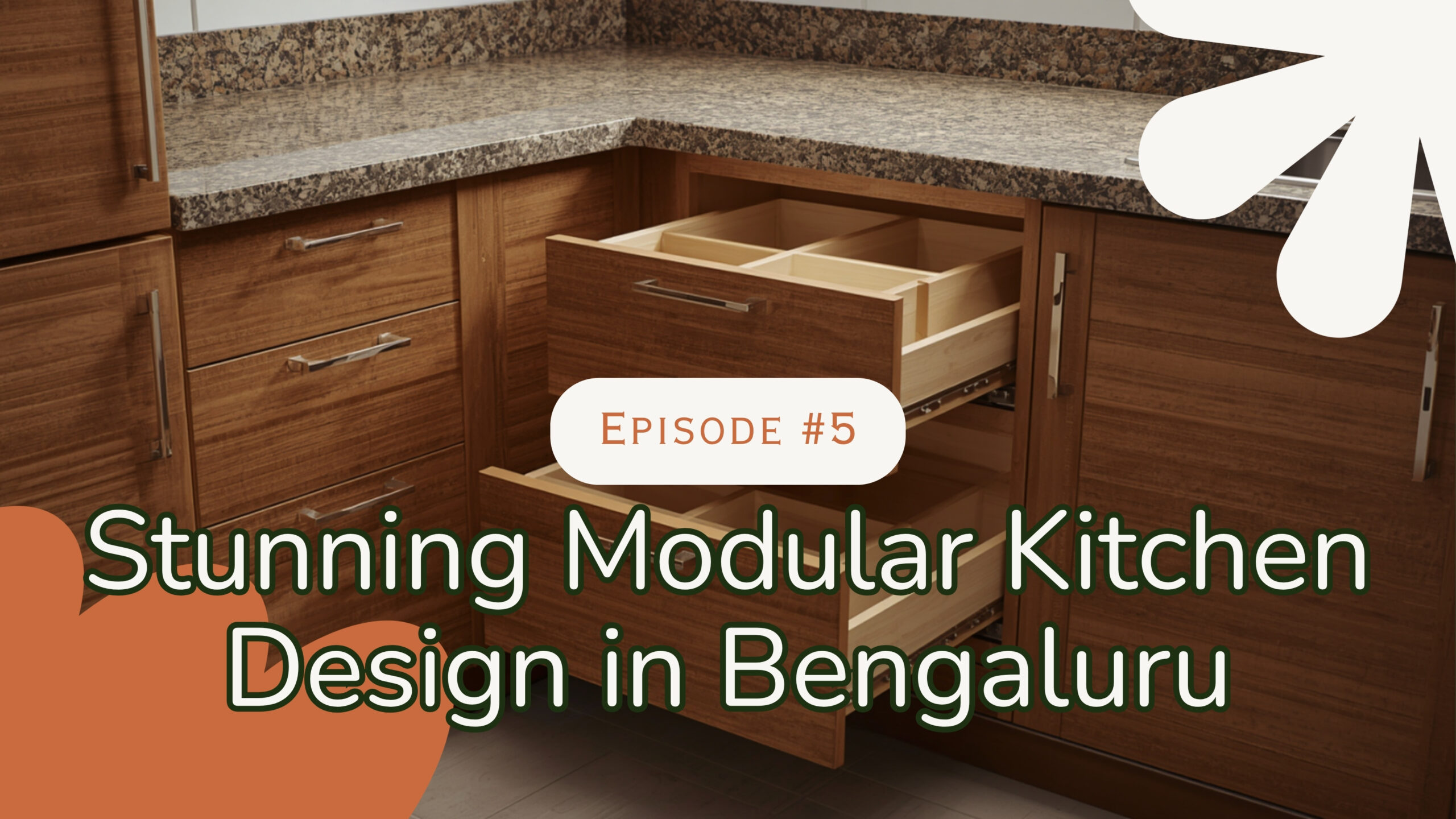
Your layout decides your running foot count, and running feet drive cost, so layout is a budget decision as much as a design one. The five common layouts in Whitefield apartments are straight, L-shape, parallel (galley), U-shape and island, and each carries a different typical price in 2026.
A straight-line kitchen is the most affordable, starting from around Rs 1,08,000, because it has the fewest running feet and the simplest plumbing and electrical runs. It suits compact 1 and 2 BHK apartments and utility kitchens. An L-shaped kitchen, the most common Whitefield apartment layout, typically costs Rs 1,20,000 to Rs 1,80,000 in a basic build, Rs 1,80,000 to Rs 3,50,000 in standard quality and Rs 3,50,000 to Rs 8,00,000 plus in premium specification, with a representative figure around Rs 1,96,000.
A parallel or galley kitchen, where two runs face each other, suits narrow apartment kitchens and prices similarly to an L-shape because the running feet are comparable. A U-shaped kitchen wraps three walls and offers the most storage, and it typically costs from around Rs 2,55,000 upward because it has the highest running foot count. An island kitchen, which adds a free-standing central unit, is a villa and penthouse choice and sits firmly in the premium and luxury bands because of the extra cabinetry, countertop and services the island demands.
The lesson for budgeting is direct: every additional run of cabinetry is real money, so resist the urge to wrap cabinets around a wall you will rarely use. In many Whitefield apartments a well-planned L-shape with intelligent tall units stores as much as a poorly planned U-shape while costing significantly less.
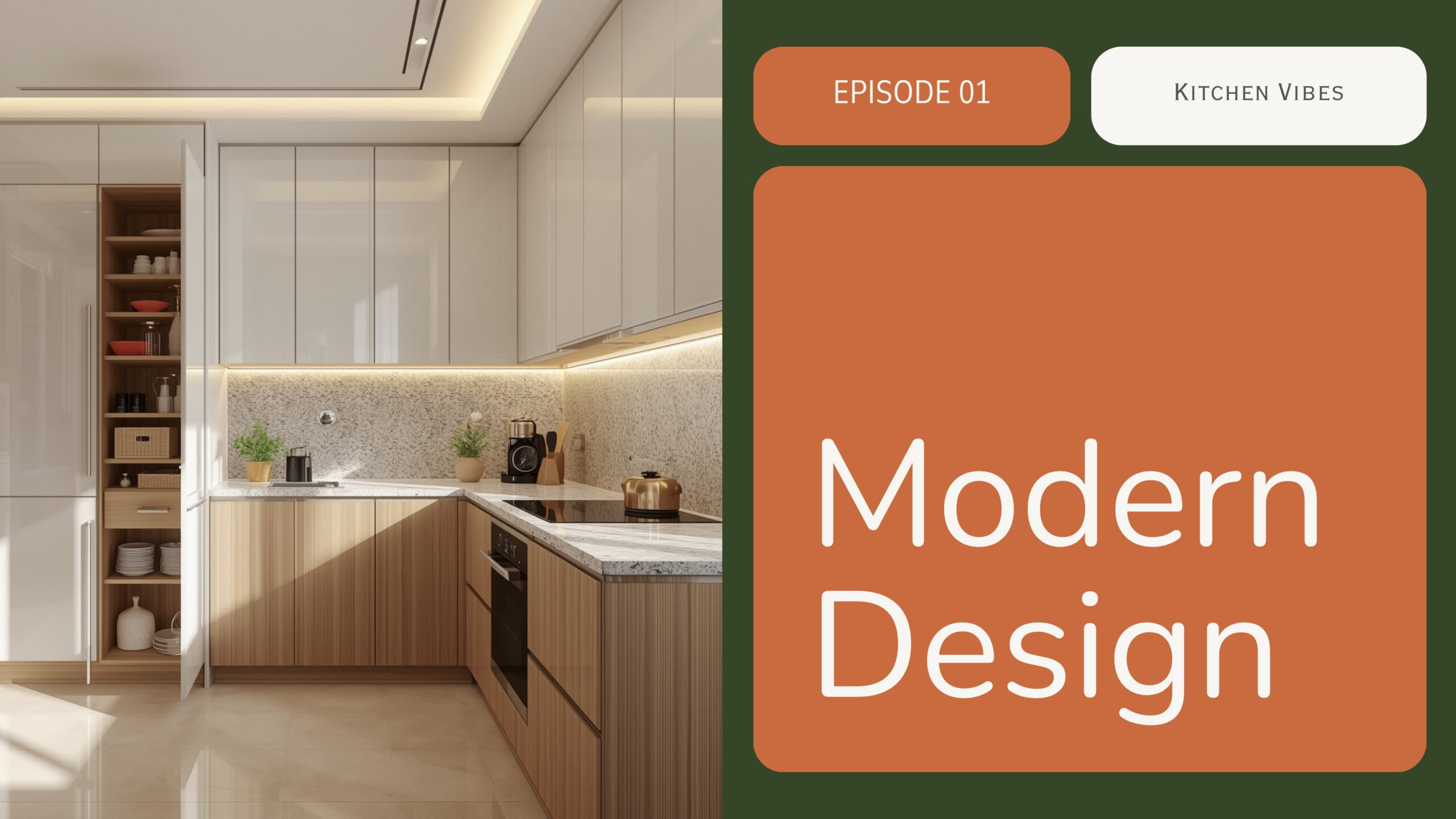
Once the carcass, finish and layout are set, the internal fittings decide how usable the kitchen feels, and they are also a meaningful slice of the budget. Here is what the common storage solutions add in 2026, so you can prioritise with eyes open.
A magic corner, which rescues the dead space in an L or U kitchen, typically adds Rs 12,000 to Rs 28,000 depending on brand and mechanism. A tall pantry pull-out unit, one of the most useful upgrades for a family, adds Rs 18,000 to Rs 45,000. A cutlery organiser in a drawer runs Rs 2,500 to Rs 8,000, a bottle pull-out runs Rs 6,000 to Rs 15,000, and a built-in waste bin unit runs Rs 4,000 to Rs 12,000. Wicker or steel baskets, plate racks and thali units each add a few thousand rupees and stack up quickly if you say yes to everything.
My guidance is to fund the two or three accessories you will genuinely use every day, usually the tall pantry, the cutlery tray and a corner solution, and to be ruthless about the rest. A kitchen does not become more functional simply because it is more expensive; it becomes functional when its storage matches how you actually cook. Disciplined accessory selection is one of the easiest ways to keep a Whitefield kitchen within budget without feeling any loss in daily use.
The carcass material is the structural heart of a modular kitchen, and in a humid, monsoon-exposed location like Whitefield it is the single most important durability decision you will make. There are four mainstream carcass grades, and understanding them protects you from both overspending and false economy.
MDF and particle board are the entry grades at Rs 1,200 to Rs 1,800 per square foot. They are smooth and affordable, but they are the most vulnerable to moisture, and in a kitchen exposed to spills and the occasional leak, they can swell and lose strength. I use them sparingly and never for base units that sit near plumbing. HDHMR, a high-density board at Rs 1,800 to Rs 2,500 per square foot, is a step up in density and screw-holding strength and is a reasonable mid choice for dry zones.
BWP plywood, or boiling water proof plywood, at Rs 2,500 to Rs 3,500 per square foot, is the grade I recommend for the great majority of Whitefield kitchens. It resists moisture genuinely well, holds hardware securely and delivers 12 to 15 years of service with normal care, which makes it the most sensible balance of cost and longevity in our climate. Marine plywood, at Rs 3,500 to Rs 5,000 plus per square foot, is the premium grade for the most demanding wet zones and luxury builds, offering the highest moisture resistance for buyers who want maximum lifespan.
On finishes and surfaces, the brands that consistently earn their price in Bengaluru are Greenlam, Merino and Century for laminates, and Asian Paints grade systems for PU. For countertops, granite remains the value-durability champion, while engineered quartz from brands such as Caesarstone offers a more uniform, premium look at a higher rate. For sinks, taps and fittings, Carysil, Franke, Kohler and Jaquar are the names I trust, and for chimneys and hobs, Faber, Elica and Hindware lead the field. Specifying known brands is not snobbery; it is how you ensure spare parts and service exist five years from now.
To make all of this concrete, here is how the money actually splits across a representative standard L-shaped Whitefield apartment kitchen of about 14 running feet, built in BWP plywood with a laminate finish and Hettich hardware. Treat these as planning figures rather than a fixed quote, because every kitchen differs.
The base and wall cabinet carcass and shutters are the largest line, typically Rs 1,40,000 to Rs 1,96,000 at the laminate per running foot rate. The countertop, in granite or entry quartz, adds Rs 25,000 to Rs 60,000 depending on stone and length. Hardware, with Hettich hinges, channels and a couple of soft-close drawers, adds Rs 30,000 to Rs 70,000. Internal accessories, kept to a sensible daily-use list, add Rs 25,000 to Rs 55,000. The sink and tap add Rs 12,000 to Rs 35,000.
Appliances such as the chimney and hob, when included, add Rs 25,000 to Rs 70,000 for reputable brands, and a built-in oven or microwave housing adds more. Installation, fitting and on-site adjustments add Rs 15,000 to Rs 30,000. Put together, this representative kitchen lands in the Rs 2,50,000 to Rs 4,00,000 range, which is exactly why I quote most standard Whitefield kitchens at Rs 2,25,000 to Rs 3,75,000 before appliances and hidden costs. Seeing the split this way lets you decide consciously where to invest and where to hold back, rather than reacting to a single intimidating number.
The quote you sign for cabinetry is rarely the total you spend, and the gap between the two is where most budget shocks live. I always walk Whitefield clients through these hidden costs before we start, because forewarned is forearmed.
Electrical work is the first. New points for the chimney, hob, oven, microwave, refrigerator, water purifier and under-cabinet lighting often need fresh wiring and switch boards, and this can add Rs 15,000 to Rs 50,000 depending on how much the builder already provided. Plumbing changes are the second. If your sink or dishwasher position moves even slightly, inlet and outlet lines must be rerouted, typically Rs 8,000 to Rs 30,000.
Civil and tile work is the third. Cutting, patching, backsplash tiling and minor masonry to fit cabinets cleanly can add Rs 10,000 to Rs 40,000, more if you change the backsplash entirely. The chimney is the fourth, and many homeowners forget that the chimney duct routing, especially in apartments with long runs to the shaft, adds material and labour beyond the appliance price. Loading, unloading and transport to higher floors in Whitefield towers is a real and often-overlooked fifth cost, usually Rs 3,000 to Rs 12,000.
Then there is GST, which at 18 percent on modular furniture is a material addition that some quotes show separately and some bury, so always confirm whether the price you are comparing is inclusive or exclusive. Finally, there is the long-term cost of maintenance and the optional annual service or AMC that keeps hinges and channels in good order. Taken together, these hidden costs commonly add 10 to 20 percent over the cabinet quote, so the disciplined way to budget a Whitefield kitchen is to take your cabinetry estimate and add a fifth on top before you decide what you can afford.
Numbers in ranges are useful, but a real itemised example makes the spend tangible. Below is a representative bill of quantities for a 3 BHK apartment kitchen in a complex like Brigade Avalon or Sobha Dream Acres, with roughly 16 running feet across an L-shape plus a small tall-unit run, built in BWP plywood with an acrylic finish on the upper line and laminate on the base, and Hettich hardware. I use this format with clients so they can see exactly where each rupee goes and can add or remove lines themselves.
The base cabinets, around 10 running feet in BWP plywood with a laminate finish, come to roughly Rs 1,10,000 to Rs 1,40,000. The wall cabinets, around 6 running feet with an acrylic finish for the visible upper line, come to roughly Rs 90,000 to Rs 1,32,000 because acrylic carries the higher per running foot rate. A tall pantry unit with pull-outs adds Rs 35,000 to Rs 55,000. So the cabinetry subtotal alone sits near Rs 2,35,000 to Rs 3,27,000 before anything else goes in.
On top of cabinetry, the granite or entry-quartz countertop for this run adds Rs 35,000 to Rs 70,000, the Hettich hardware package across all drawers and hinges adds Rs 45,000 to Rs 85,000, internal accessories kept to a daily-use list add Rs 30,000 to Rs 55,000, and a quality sink and tap from Carysil or Franke add Rs 15,000 to Rs 35,000. That brings the kitchen, still before appliances, to roughly Rs 3,60,000 to Rs 5,72,000.
Finally, appliances and services. A Faber or Elica chimney with a matching hob adds Rs 35,000 to Rs 75,000, a built-in oven or microwave housing adds Rs 20,000 to Rs 60,000 if specified, electrical and plumbing modifications add Rs 25,000 to Rs 70,000, installation adds Rs 15,000 to Rs 30,000, and 18 percent GST applies on the modular furniture portion. A fully loaded version of this 3 BHK kitchen therefore lands around Rs 4,75,000 to Rs 7,50,000, while a more restrained specification of the same kitchen comfortably sits near Rs 3,50,000. The lesson is that the same footprint can swing by two lakh or more purely on finish, hardware and appliance choices, all of which you control.
One of the most common questions I get is what a kitchen should cost for a particular flat size, so here is a practical bracket guide for Whitefield in 2026. These are sensible all-in ranges including a standard appliance and accessory package, and they assume BWP plywood with mainstream hardware.
For a compact 1 BHK or studio kitchen, usually a straight or small L-shape of 8 to 10 running feet, a sensible budget is Rs 1,50,000 to Rs 2,25,000. For a 2 BHK kitchen, typically an L-shape of 12 to 14 running feet, the realistic band is Rs 2,25,000 to Rs 3,75,000, and this is where the largest number of Whitefield families land. For a 3 BHK kitchen, often an L or U-shape of 14 to 18 running feet with a tall unit, expect Rs 3,50,000 to Rs 6,00,000 depending on finish and appliances.
For larger 3 and 4 BHK apartments and villa kitchens, where a U-shape, an island or a separate utility kitchen comes into play, the budget moves into the Rs 6,00,000 to Rs 12,00,000 plus band, especially once PU finishes, full Blum hardware and premium quartz countertops are specified. The pattern across all sizes is consistent: the running feet set the floor of the cost, and the finish, material and hardware tier set how far above that floor you go.
The countertop is a deceptively large line item and a daily-use surface, so it deserves its own cost view. In Whitefield in 2026 the mainstream choices are granite, engineered quartz, and at the higher end natural marble or sintered stone, and each carries a distinct rate and character.
Granite remains the value and durability champion at roughly Rs 180 to Rs 450 per square foot of countertop surface, which for a typical apartment kitchen run translates to Rs 25,000 to Rs 55,000 fitted. It handles heat and Indian cooking well, it is locally abundant, and it is the choice I recommend for most families who want long life at a fair price. Engineered quartz, from brands such as Caesarstone and other reputable suppliers, runs higher at roughly Rs 350 to Rs 900 per square foot, or Rs 45,000 to Rs 1,10,000 fitted, and it offers a more uniform, premium, low-maintenance surface in consistent colours.
Natural marble and sintered or porcelain slabs sit at the top, both for cost and for care, and they are villa and design-led choices rather than everyday apartment picks because marble stains and sintered stone carries a premium fabrication cost. My guidance for Whitefield apartments is straightforward: granite for value and resilience, quartz when you want a refined uniform look and will pay for it, and the exotic options only when the design genuinely calls for them and the budget is comfortable.
Appliances are quoted separately from cabinetry, and forgetting to budget for them is the most frequent reason a kitchen project overshoots. Here is what the mainstream appliances add in 2026 so you can plan the full picture.
A chimney from Faber, Elica or Hindware in a suitable suction rating for Indian cooking runs Rs 18,000 to Rs 55,000, with auto-clean and filterless models at the higher end. A built-in or cooktop hob runs Rs 12,000 to Rs 45,000 depending on burners and brand. A built-in oven adds Rs 25,000 to Rs 70,000, a built-in microwave Rs 15,000 to Rs 40,000, and a dishwasher, increasingly popular in Whitefield homes, adds Rs 35,000 to Rs 75,000 plus the cabinetry and plumbing to house it.
If you plan a built-in or tall-housing refrigerator, budget for both the appliance and the carpentry around it, which adds cost beyond a free-standing fridge. A water purifier point and a small built-in housing add a few thousand rupees more. My advice is to decide your appliance list at the design stage, not after, because every built-in appliance needs its cabinet, electrical point and sometimes plumbing planned in advance, and retrofitting them later is always more expensive and less tidy than building them in from the start.
Saving money on a kitchen is not about buying the cheapest quote; it is about cutting cost where you will not feel it and protecting it where you will. Over hundreds of Whitefield kitchens I have refined a short list of genuine savings that do not hurt durability or daily use.
First, choose laminate over acrylic or PU unless the premium look truly matters to you, because this single move can save Rs 80,000 to Rs 1,50,000 on a full kitchen while still giving a durable, attractive surface. Second, mix finishes intelligently: use a premium finish only on the most visible upper line and a laminate on the base cabinets that are largely hidden behind activity. Third, keep your accessory list disciplined and fund only the two or three you will use daily, which can save Rs 30,000 to Rs 60,000 of showroom extras.
Fourth, never economise on carcass material or hardware, because the savings there are small relative to the kitchen but the long-term cost of failure is high. A swollen base unit or a failed channel will cost you far more in repairs and frustration than the few thousand rupees you saved. Fifth, plan your layout to minimise unnecessary runs of cabinetry, since every extra running foot is real money, and a well-planned L-shape often stores as much as an over-built U-shape. Sixth, confirm GST treatment and get an itemised quote so you are comparing like with like and not paying for vague lumpsum padding.
Although this guide is mainly about cost, a kitchen that is cheap but badly planned is no bargain, so it is worth understanding the design ideas that make a modular kitchen genuinely work. The most important is the work triangle, the relationship between your sink, hob and refrigerator, which should let you move between the three core tasks of washing, cooking and storing without crossing the room repeatedly. A tight, sensible triangle is the difference between a kitchen that feels effortless and one that tires you out.
Ergonomics is the second principle: counter heights set to the primary cook, wall units placed within easy reach, and frequently used items stored between knee and shoulder height so you are not constantly bending or stretching. The third is zoning, where the kitchen is organised into clear areas for storage, preparation, cooking and cleaning, so that everything you need for a task sits where that task happens. Good zoning is what makes a modest L-shape feel as capable as a far larger kitchen.
Ventilation and lighting are the fourth and fifth principles, both especially relevant in Whitefield apartments where kitchens can be enclosed. A correctly sized chimney, task lighting under the wall units and adequate general light transform how a kitchen feels to work in. When these design principles are respected, even a value-tier kitchen performs beautifully, and when they are ignored, even an expensive kitchen disappoints. This is why at myNivasa we fix the layout and the work triangle before we ever talk finishes, because good planning is the one upgrade that costs nothing extra and pays back every single day.
I built myNivasa around a simple promise: a homeowner should understand exactly what they are paying for, line by line, before any work begins. In a market where a single per running foot number hides a dozen quality decisions, that transparency is rare, and it is the reason families in Whitefield keep referring us to their neighbours.
We start every kitchen by fixing the three decisions that matter most, your finish, your carcass grade and your hardware brand, and we show you the cost consequence of each in plain rupees. We specify BWP plywood as our default for Whitefield because our climate demands it, we recommend Hettich or Hafele hardware as the sensible balance for most homes, and we never hide GST or installation inside a vague lumpsum. When a client wants to economise, we guide them to economise on the things they will not feel and protect the things they will.
Because we work across construction and interiors, we coordinate the electrical, plumbing and civil work that other vendors leave you to chase, which is where most kitchen projects quietly run over time and budget. Our team handles the full sequence from measurement and design to manufacture, installation and handover, and we stand behind the hardware and joinery we fit. If you live in Whitefield and want a kitchen that is costed honestly and built to last 12 to 15 years, that is exactly the work we do every week.
| Material | Cost per sq ft (2026) | Moisture resistance | Typical lifespan |
|---|---|---|---|
| MDF / particle board | Rs 1,200 to Rs 1,800 | Low | 5 to 8 years |
| HDHMR | Rs 1,800 to Rs 2,500 | Medium | 8 to 12 years |
| BWP plywood | Rs 2,500 to Rs 3,500 | High | 12 to 15 years |
| Marine plywood | Rs 3,500 to Rs 5,000 plus | Highest | 15 years plus |
| Finish | Cost per running foot (2026) | Look | Note |
|---|---|---|---|
| Laminate | Rs 9,500 to Rs 14,000 | Matte or textured, many shades | Best value, durable |
| Membrane | Rs 12,000 to Rs 16,000 | Seamless moulded | Heat sensitive near hob |
| Acrylic | Rs 15,000 to Rs 22,000 | High gloss mirror | Shows fingerprints |
| PU paint | Rs 18,000 to Rs 28,000 | Smooth painted, any colour | Luxury, repair needs skill |
| Layout | Typical starting cost | Best for |
|---|---|---|
| Straight | From Rs 1,08,000 | 1 and 2 BHK, utility |
| L-shape | Rs 1,20,000 to Rs 3,50,000 plus | Most Whitefield apartments |
| Parallel / galley | Rs 1,50,000 to Rs 3,50,000 | Narrow kitchens |
| U-shape | From Rs 2,55,000 | Larger kitchens, more storage |
| Island | Rs 5,00,000 plus | Villas, penthouses |
Most Whitefield apartment kitchens in 2026 cost between Rs 2,00,000 and Rs 4,50,000, while the full market band runs from Rs 1,50,000 for a smart-budget kitchen to Rs 12,00,000 plus for a luxury island kitchen. The figure depends mainly on your finish, carcass material and hardware brand.
In 2026 the per running foot rates are Rs 9,500 to Rs 14,000 for a laminate finish, Rs 15,000 to Rs 22,000 for acrylic and Rs 18,000 to Rs 28,000 for PU. Multiply by your kitchen's running feet, usually 12 to 20 in Whitefield apartments, to estimate cabinetry cost before countertop and appliances.
BWP plywood at Rs 2,500 to Rs 3,500 per square foot is the best balance for Whitefield because it resists our humidity and lasts 12 to 15 years. Marine plywood at Rs 3,500 to Rs 5,000 plus is the premium choice, while MDF and HDHMR are cheaper but less moisture resistant.
Hardware can swing the bill by Rs 1,00,000 or more on a full kitchen. Blum is the premium benchmark with hinges around Rs 350 to Rs 600 each, Hettich and Hafele sit 20 to 30 percent below Blum, and Ozone and Ebco anchor the value tier. I recommend Hettich or Hafele for most Whitefield homes.
Budget an extra 10 to 20 percent for hidden costs: electrical points (Rs 15,000 to Rs 50,000), plumbing changes (Rs 8,000 to Rs 30,000), civil and tile work (Rs 10,000 to Rs 40,000), chimney ducting, loading to higher floors, and 18 percent GST on modular furniture. Always confirm whether a quote is GST inclusive.
An L-shaped layout is usually the most cost-effective for Whitefield apartments because it balances storage and running feet well, typically costing Rs 1,20,000 to Rs 3,50,000 plus. A straight kitchen is cheapest from around Rs 1,08,000, while a U-shape from Rs 2,55,000 stores more but costs more.
A modular kitchen is built from standardised factory modules with a controlled finish and replaceable units, which gives more consistent quality, faster installation and easier repairs than most on-site carpentry. For Whitefield apartments where time, dust and precision matter, the modular approach usually delivers better long-term value even at a similar price.
A BWP plywood kitchen with good hardware lasts 12 to 15 years in Whitefield with normal care, and marine plywood can exceed 15 years. Lifespan depends far more on carcass material and hardware quality than on the visible finish, which is why I advise spending on the box and the fittings rather than only on the look.
One of the most common cost questions I hear in Whitefield is whether a modular kitchen is worth the premium over a traditional carpenter-built kitchen made on site. The honest answer in 2026 is that the price gap has narrowed sharply, and once you account for quality and longevity, the modular route usually wins on value rather than just on looks.
A carpenter-built kitchen is quoted as a lumpsum for labour plus materials, and in Whitefield that typically lands at Rs 1,30,000 to Rs 2,80,000 for a standard L-shape, which can look cheaper than a modular quote on paper. The catch is that on-site carpentry is hand-cut, the finish quality depends entirely on the individual carpenter, hardware is often basic, and there is rarely a written specification of carcass grade, so you cannot easily compare it like for like. The cost you save up front you often pay back in inconsistent doors, weaker moisture resistance and harder repairs.
A modular kitchen at Rs 2,00,000 to Rs 3,75,000 for the same footprint gives you factory precision, a controlled finish, a documented carcass grade such as BWP plywood, branded hardware with soft-close, and individual replaceable units. When a module is damaged you swap that box rather than rebuilding a run. Over a 12 to 15 year life, the modular kitchen typically costs less per year of service even though its sticker price is higher, which is exactly why I steer most Whitefield families toward modular unless their budget is genuinely fixed at the entry level.
My rule of thumb is simple. If your budget is below Rs 1,50,000 and cannot move, a well-supervised carpenter kitchen in good plywood is a fair choice. From Rs 2,00,000 upward, a modular kitchen almost always delivers more durability and a cleaner finish for the money, and it protects you with a written specification you can hold the vendor to.
Prices do not sit still, and a few clear forces are shaping modular kitchen cost in Whitefield in 2026, so it helps to understand them before you lock a budget. Plywood and board prices have firmed up over the last two years as timber and resin input costs rose, which has nudged BWP and marine plywood rates toward the upper end of the bands quoted in this guide. This is one more reason to fix your carcass grade early, because deferring the decision rarely makes it cheaper.
Hardware pricing has been steadier because brands such as Hettich and Hafele manufacture more of their India range locally, which has cushioned import-led increases. That local manufacturing is part of why I find these brands such good value in 2026, since you get German engineering at a rupee cost that has not jumped the way fully imported Blum lines have with currency movement. Acrylic and PU finish costs have risen modestly with chemical and labour inflation, widening the gap between laminate and the premium finishes, which makes the finish decision an even bigger lever on your total cost than it was a few years ago.
Labour and installation costs in Bengaluru have climbed with demand, especially in high-rise Whitefield projects where loading to upper floors and society work-timing rules add to the effort. Finally, GST at 18 percent on modular furniture remains a fixed addition that does not shrink, so a quote that looks lower may simply be excluding it. The practical takeaway is that the smart-money decisions in 2026 are to lock your carcass grade and finish early, lean on locally made branded hardware for value, and always read whether a quote is inclusive of GST and installation before you compare it with another.
Beyond the headline price, three practical money matters decide how comfortable your kitchen project feels: how you pay, how long it takes, and what the warranty actually covers. Getting these right protects both your budget and your peace of mind.
On payment, most reputable modular vendors in Whitefield work on a staged schedule, commonly an advance to confirm the order, a larger payment at manufacturing, and a balance on installation and handover. I advise clients never to clear the full amount before installation is complete and checked, because the final payment is your leverage to get every snag fixed. A typical standard kitchen takes 4 to 6 weeks from final measurement to handover, and a premium kitchen with PU or imported hardware can take 6 to 8 weeks, so factor this timeline into your move-in plans because a rushed installation is where quality slips.
On warranty, read carefully what is covered and for how long. Good modular kitchens carry a meaningful warranty on the carcass and on branded hardware, often 5 to 10 years on the box and a separate warranty on hinges and channels from the hardware brand itself. The finish and accessories usually carry shorter cover. The cost angle here is real, because a kitchen with a proper written warranty and a vendor who will service it is worth paying a little more for than a marginally cheaper quote with no documented cover. At myNivasa we put the specification and warranty in writing precisely so that the price you pay buys accountability, not just cabinets.
Whitefield is large and varied, and the kind of property you own shifts the realistic cost band even for the same kitchen size. Builder apartments in established complexes near ITPL and Hope Farm, such as Prestige Shantiniketan and Brigade complexes, usually come with a fixed L-shape or parallel footprint and ready service points, which keeps electrical and plumbing modification costs lower and lets most families land comfortably in the Rs 2,25,000 to Rs 3,75,000 standard band.
Newer high-rise projects toward Whitefield outskirts and Hoskote Road often have larger kitchens and utility areas, which adds running feet and pushes 3 BHK kitchens into the Rs 3,50,000 to Rs 6,00,000 range, especially when a separate utility kitchen or a breakfast counter is added. Independent villas and row houses in and around Whitefield carry the widest range, because villa kitchens are larger, frequently U-shaped or island layouts, and tend to attract premium finishes, so budgets there commonly start at Rs 5,00,000 and rise into the luxury band.
Two practical cost notes specific to Whitefield are worth remembering. First, high floors in tower projects add loading and society work-permission costs and sometimes restrict working hours, which lengthens timelines and can raise installation charges. Second, many Whitefield complexes have strict society rules on civil changes and waste disposal, so confirm what is permitted before planning backsplash or plumbing changes, because a forced redesign mid-project is the most expensive surprise of all. Building these locality realities into your budget from day one is the difference between a quote that holds and one that creeps.
A lot of confusion when comparing kitchens comes simply from unfamiliar words, so it helps to understand the vocabulary your designer will use. A carcass is the structural box of each cabinet, the part you rarely see but which carries everything. A shutter is the visible door front, and its finish is what gives the kitchen its character. A module is a single standardised cabinet unit, and a run is a continuous line of modules along one wall. Running feet simply measure the total length of those runs, which is why your designer keeps returning to that number.
Inside the cabinets, the moving parts have their own names. Hinges connect shutters to the carcass and allow them to swing, while channels or slides let drawers glide in and out. Soft-close is the mechanism that stops a drawer or door from slamming, easing it shut in the last few centimetres. A tandem box or tandembox is a fully enclosed metal-sided drawer system that is sturdier and cleaner than older wooden drawers. A lift-up or aventos fitting holds a wall shutter open upward rather than swinging it sideways, which is useful above a hob or sink.
Layouts have a shared language too. A straight kitchen runs along one wall, an L-shape turns one corner, a parallel or galley kitchen places two runs facing each other, a U-shape wraps three walls, and an island adds a free-standing central block. Storage features such as a magic corner, a tall unit, a pantry pull-out and a cutlery tray each solve a specific organising problem, and knowing them by name lets you ask for exactly what you need rather than accepting a generic package.
Understanding these terms changes the conversation entirely. Instead of being shown a single number and a pretty render, you can ask what carcass grade is being used, which hardware brand the hinges and channels come from, and whether the drawers are tandem boxes with soft-close. Those questions are how a homeowner moves from hoping the kitchen is good to knowing it is, and they cost nothing to ask. A confident buyer who speaks the language always gets a better kitchen, because the vendor knows the work will be inspected with understanding rather than taken on trust.
The prices in this guide are planning ranges for Whitefield in 2026 based on current market rates and my own project experience, not fixed quotations. Actual costs vary with your exact running feet, the specific brand and model of hardware and appliances, countertop stone selection, the condition of your existing electrical and plumbing, and the floor level of your apartment. Rates also move with market conditions and GST treatment. Treat every figure here as a guide for budgeting and comparison, and ask any vendor, including us, for a measured, itemised quotation before you commit.
If you take one thing from this guide, let it be this: a Whitefield modular kitchen in 2026 will most likely cost you between Rs 2,00,000 and Rs 4,50,000, and that number is decided almost entirely by three choices you control, your finish, your carcass material and your hardware brand. A modular kitchen is simply a set of standardised, factory-built cabinet modules fitted to your layout, so once you understand those modules and the five cost factors of size, finish, material, hardware and accessories, no quotation in the city can confuse you again. Budget your cabinetry, add a fifth for hidden costs, protect your carcass and hardware quality, and economise on the finish if you must.
When you are ready to turn these ranges into a precise, itemised plan for your own home, that is exactly what we do at myNivasa. Reach out for a measured quotation and we will show you, in plain rupees, what your Whitefield kitchen will cost and why, with BWP plywood, trusted hardware and no hidden lines. Visit myNivasa, explore our Whitefield projects, read more on interior design and home construction, or contact our team to begin.