
Last Updated: 17 June 2026
- What is the modular kitchen cost in Whitefield in 2026?
- A modular kitchen is a factory-made, pre-engineered kitchen built from standard cabinet units (base, wall and tall units) that are assembled on site with a chosen carcass material, shutter finish, countertop and hardware. In Whitefield in 2026, a complete modular kitchen typically costs between Rs 1,50,000 and Rs 12,00,000, with most apartment kitchens landing between Rs 2,00,000 and Rs 4,50,000 depending on size, material grade, finish and hardware brand.
Direct answer: modular kitchen cost in Whitefield 2026
In Whitefield in 2026, expect to pay roughly Rs 1,800 to Rs 5,000 per square foot of cabinetry, or Rs 9,500 to Rs 28,000 per running foot depending on the finish you select. A standard L-shaped apartment kitchen in BWP plywood with a laminate finish and Hettich hardware usually costs Rs 2,00,000 to Rs 3,50,000 all in. The biggest single decision that moves this number is your shutter finish, because laminate, acrylic and PU sit at very different price points while delivering different looks and lifespans.
Quick takeaways: Whitefield modular kitchen pricing and choices
- Whitefield modular kitchens in 2026 mostly cost Rs 2,00,000 to Rs 4,50,000, with the full market band running Rs 1,50,000 to Rs 12,00,000.
- Per running foot rates in 2026 are Rs 9,500 to Rs 14,000 for laminate, Rs 15,000 to Rs 22,000 for acrylic and Rs 18,000 to Rs 28,000 for PU.
- Carcass material per square foot runs Rs 1,200 to Rs 1,800 for MDF, Rs 1,800 to Rs 2,500 for HDHMR, Rs 2,500 to Rs 3,500 for BWP plywood and Rs 3,500 to Rs 5,000 plus for marine plywood.
- Hardware brand changes the bill sharply: Blum is the premium benchmark, while Hettich and Hafele sit 20 to 30 percent below it and Ozone and Ebco anchor the value tier.
- A modular kitchen is built from standard base, wall and tall cabinet modules, so the design is defined by your layout (straight, L-shape, U-shape, parallel or island) and your internal storage choices.
- For Whitefield apartments, BWP plywood with a laminate or acrylic finish is the most balanced choice, giving 12 to 15 years of service in our humid climate.
- Hidden costs (electrical, plumbing shifts, chimney, civil work, loading and GST) add 10 to 20 percent over the cabinet quote, so always budget for them up front.
Voice search answer: how much does a modular kitchen cost in Whitefield?
If you ask how much a modular kitchen costs in Whitefield in 2026, the short answer is most homeowners spend between Rs 2,00,000 and Rs 4,50,000 for a complete apartment kitchen. A modular kitchen is a set of standardised, factory-built cabinet modules fitted to your wall layout, and the price is driven mainly by your finish (laminate, acrylic or PU), your carcass material (BWP plywood is the safe default in Whitefield) and your hardware brand (Hettich, Hafele, Blum or Ozone). Knowing those three choices is enough to predict your cost within a tight range.
Modular kitchen cost and style tier table for Whitefield 2026
| Tier | Typical cost (apartment kitchen) | Carcass and finish | Hardware | Best for |
|---|---|---|---|---|
| Smart / value | Rs 1,50,000 to Rs 2,25,000 | HDHMR or BWP ply with laminate | Ozone, Ebco | First home, rental upgrade, 2 BHK |
| Standard | Rs 2,25,000 to Rs 3,75,000 | BWP plywood with laminate or membrane | Hettich, Hafele | Most Whitefield 2 and 3 BHK owners |
| Premium | Rs 3,75,000 to Rs 6,50,000 | BWP or marine ply with acrylic or PU | Hettich Sensys, Hafele, select Blum | 3 BHK, larger apartments, design-led homes |
| Luxury | Rs 6,50,000 to Rs 12,00,000 plus | Marine ply with PU, glass and veneer mix | Blum full kit | Villas, penthouses, island kitchens |
In my experience across Whitefield projects, the families who are happiest a year later are not the ones who spent the most. They are the ones who matched their finish and hardware tier to how they actually cook, and then put the saved money into better carcass material and a proper chimney.
What does a modular kitchen include in Whitefield?
Before we talk numbers in detail, it helps to be clear about what you are actually buying, because the word modular gets used loosely. A modular kitchen is not simply a kitchen with some cabinets. It is a kitchen built from standardised, pre-engineered modules that are manufactured to fixed dimensions, finished in a controlled environment and then assembled on your site. Each module is an independent box, which is why a leaking unit or a damaged shutter can be replaced without tearing down the whole kitchen. That modularity is the core idea, and it is also why pricing can be broken down so cleanly into per unit and per running foot rates.
A complete modular kitchen in a Whitefield apartment usually includes base units that sit on the floor and carry your countertop, wall units mounted above the counter for everyday storage, and tall units for your pantry, oven or built-in refrigerator housing. On top of these you have the countertop itself, the backsplash, the sink and tap, internal accessories such as cutlery trays and bottle pull-outs, and the hardware that makes everything open, close and slide. The chimney and hob are usually counted as appliances and quoted separately, which is a detail that trips up many first-time buyers when they compare quotes.
It is worth understanding the layers of a single cabinet, because every one of them is a cost lever. The outer box is the carcass, and this is the structural body that decides how long your kitchen survives our humidity. The visible front is the shutter, and its finish is what gives the kitchen its look and its biggest price swing. Inside sit the accessories, and on the edges and joints sit the hinges, channels and lift-up mechanisms that we collectively call hardware. When a designer quotes you a single per running foot figure, that number is silently bundling all of these layers, which is exactly why two quotes for the same kitchen can differ by a lakh or more.
In Whitefield specifically, the kitchens I see fall into a few familiar patterns set by the builder. Apartments in complexes such as Prestige Shantiniketan, Brigade Avalon, Brigade Lakefront, Sobha Dream Acres, Godrej Woodsman Estate and Salarpuria Sattva near ITPL usually come with an L-shaped or parallel utility-style kitchen footprint. Larger units above roughly 100 square feet of kitchen area increasingly allow a U-shape with a small breakfast counter. Knowing your footprint early matters, because the layout sets the running foot count, and the running foot count is the first multiplier in your entire budget.
What affects modular kitchen cost in Whitefield?
There are five factors that decide your final number, and in order of impact they are size, finish, carcass material, hardware and accessories. I will take each one in turn, because once you understand how these interact you can read any quotation in the city with confidence and spot where a vendor has either cut a corner or padded the price.
Size is measured in running feet, which is the total length of your cabinet runs along the floor and walls. A compact apartment kitchen might have 10 to 12 running feet of base units, while a generous U-shaped kitchen can have 18 to 22 running feet once you count both base and wall lines. Because most pricing is quoted per running foot, this single measurement is the foundation of your estimate. As a rough guide, a 12 running foot kitchen in a mid laminate finish lands around Rs 1,14,000 to Rs 1,68,000 for cabinetry alone before countertop, appliances and installation.
Finish is the second and often the largest single swing. The same carcass can wear a laminate shutter, a membrane shutter, an acrylic shutter, a PU painted shutter or a veneer shutter, and each one carries a very different rate. In 2026 the per running foot bands are Rs 9,500 to Rs 14,000 for laminate, Rs 15,000 to Rs 22,000 for acrylic and Rs 18,000 to Rs 28,000 for PU. Choosing PU over laminate on an 18 running foot kitchen can add well over Rs 1,50,000 by itself, which is why I always make clients decide their finish before anything else.
Carcass material is the third factor, and this is where I urge Whitefield homeowners not to economise. The carcass per square foot runs Rs 1,200 to Rs 1,800 for MDF or particle board, Rs 1,800 to Rs 2,500 for HDHMR, Rs 2,500 to Rs 3,500 for BWP plywood and Rs 3,500 to Rs 5,000 plus for marine plywood. The difference between particle board and BWP plywood on a full kitchen might be Rs 30,000 to Rs 60,000, but it is the difference between a kitchen that swells at the first plumbing leak and one that lasts 12 to 15 years in our climate.
Hardware is the fourth factor and the one most people underestimate. Hinges, drawer channels, soft-close mechanisms, tandem boxes and lift-up fittings can add anywhere from Rs 25,000 on a value kitchen to Rs 2,00,000 plus on a fully Blum-equipped premium kitchen. Because hardware is what you touch every single day, I treat it as a feel investment rather than a hidden line item, and I will break down the brand-by-brand economics in its own section below.
Accessories are the fifth factor, and they are the easiest place to overspend. Magic corners, tall pantry pull-outs, cutlery organisers, bottle pull-outs, waste bin units and wicker baskets are wonderful, but each one adds Rs 4,000 to Rs 30,000. A disciplined accessory list keeps a kitchen practical without inflating the bill, and I usually advise clients to fund the two or three accessories they will use daily and skip the showroom extras they will admire but never open.
Material and finish variants compared: cost and durability
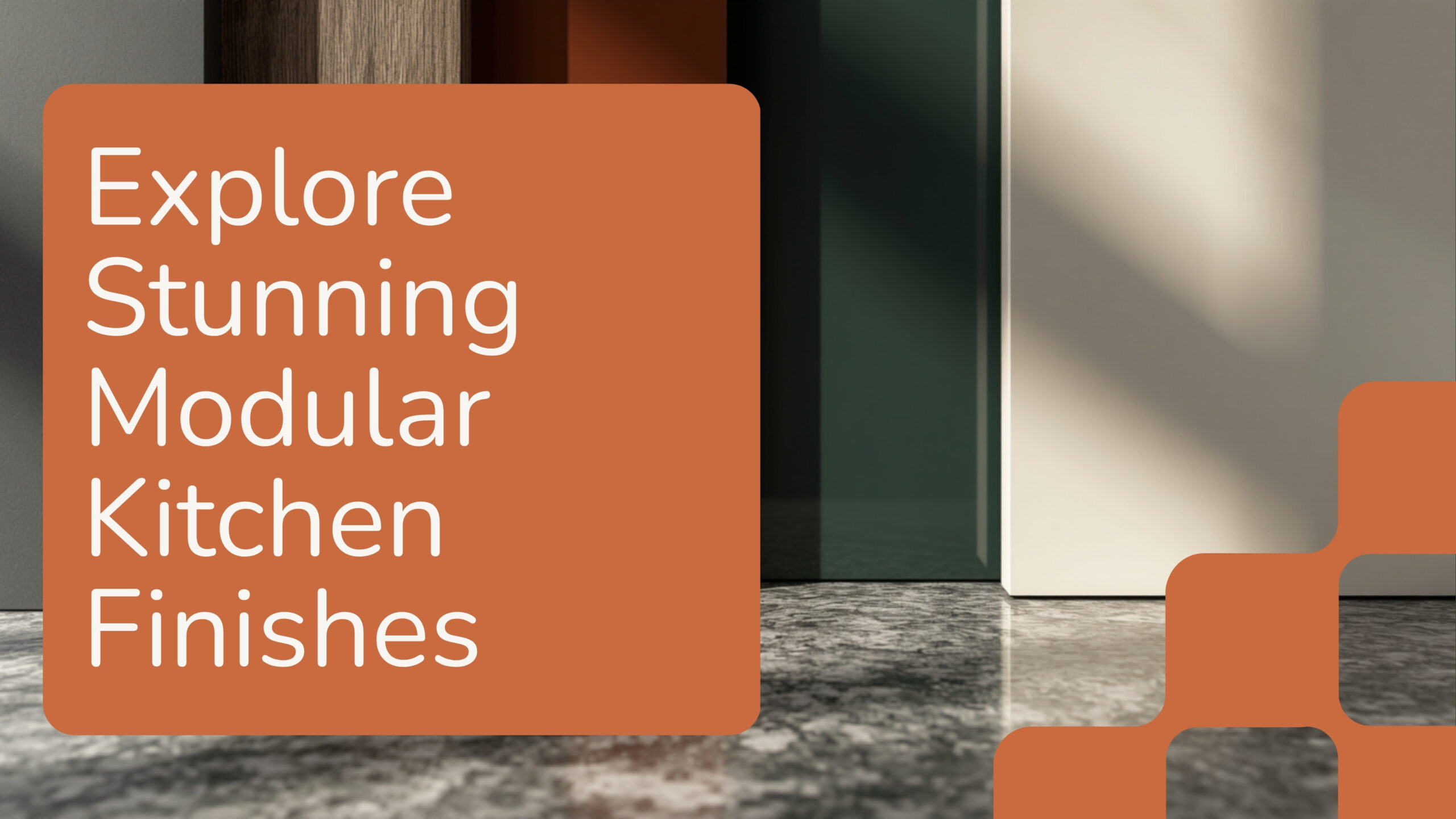
Since finish is the single biggest cost swing in a Whitefield kitchen, it deserves a careful comparison that links each option to both its look and its rupee impact. The five mainstream shutter finishes in 2026 are laminate, membrane, acrylic, PU and veneer, and each one answers a different combination of budget, durability and aesthetic.
Laminate is the workhorse of Bengaluru kitchens and for good reason. At Rs 9,500 to Rs 14,000 per running foot it is the most affordable mainstream finish, it resists scratches and heat well, and brands such as Greenlam, Merino and Century offer hundreds of shades and textures. The trade-off is that laminate has visible edge banding and a slightly less seamless look than the premium finishes. For most Whitefield families on a standard budget, a quality BWP plywood carcass with a laminate finish is the smartest rupee-for-rupee decision available.
Membrane finish, sometimes called PVC foil, sits a little above laminate. It is moulded over MDF in a single seamless skin, which gives soft routed designs without visible joints, and it suits homeowners who want a painted look without the painted price. The weakness is heat sensitivity near the hob, where membrane can peel over years, so I use it selectively rather than across an entire kitchen.
Acrylic is the high-gloss premium choice at Rs 15,000 to Rs 22,000 per running foot. It delivers a deep mirror-like shine, it is more scratch resistant than PU, and it photographs beautifully, which is why it is popular in design-led Whitefield homes. The cost premium over laminate is significant, often Rs 80,000 to Rs 1,50,000 on a full kitchen, and high-gloss surfaces show fingerprints, so this is a finish for those who value the look and will maintain it.
PU, or polyurethane paint, is the luxury finish at Rs 18,000 to Rs 28,000 per running foot. It offers a smooth, rich, matte or satin painted surface with limitless colour options, and a well-applied Asian Paints grade PU finish ages gracefully. It is the most expensive mainstream option, it is the most labour intensive, and repairs need a skilled hand, so I reserve it for clients who want a bespoke, furniture-grade kitchen and have the budget to match.
Veneer is the natural-wood premium finish, prized for warmth and grain, and it usually sits in the PU price band or above once polished. It is beautiful in island and breakfast-counter kitchens but demands maintenance and careful selection, so it tends to appear in villa kitchens rather than standard apartments. Across all five finishes my advice is the same: pick the finish first, because it sets the ceiling of your budget more than any other choice.
Hardware grade versus durability and cost: Hettich, Hafele, Blum, Ozone
Hardware is the part of a modular kitchen you interact with thousands of times a year, and it is also where quotes quietly diverge. A vendor can show you an identical-looking kitchen at a lower price simply by fitting cheaper hinges and channels, and you will not feel the difference until the soft-close fails in year two. So let me lay out the brand economics plainly.
Blum, the Austrian brand, is the global benchmark and the most expensive. Its soft-close hinges run roughly Rs 350 to Rs 600 each and its drawer channel sets run Rs 1,200 to Rs 2,800 per pair, and its Tandembox and Legrabox drawer systems are the smoothest in the market. On a full premium kitchen, going entirely Blum can add Rs 1,00,000 to Rs 2,00,000 over a value hardware package, but the motion quality and lifetime feel are genuinely in a different class.
Hettich and Hafele, both German-origin and partly manufactured in India, are the brands I specify most often for Whitefield homes because they deliver excellent engineering at roughly 20 to 30 percent below Blum. Hettich is the balanced all-rounder with its Sensys hinges and Innotech drawers, while Hafele leans slightly more premium and carries a wide catalogue of accessories, lighting and appliances under one roof. For the vast majority of standard and premium kitchens, a Hettich or Hafele package gives 90 percent of the Blum experience at a meaningfully lower cost.
Ozone and Ebco anchor the value tier. They are reliable Indian and India-focused brands that bring soft-close functionality and decent durability into smart-budget kitchens, and they are the right call when you need to keep a first-home kitchen under control without dropping to unbranded fittings. Unbranded hardware is the one economy I always warn against, because failed hinges and channels are the most common complaint I hear from homeowners who bought the cheapest quote.
My practical rule for Whitefield clients is this: never let hardware be the place you cut, because it is cheap relative to the whole kitchen and it defines daily satisfaction. If the budget is tight, I would rather move from acrylic to laminate on the finish and keep Hettich hardware than the reverse. The finish is what visitors see once; the hardware is what you feel every day.
Kitchen layout variants and their cost in Whitefield
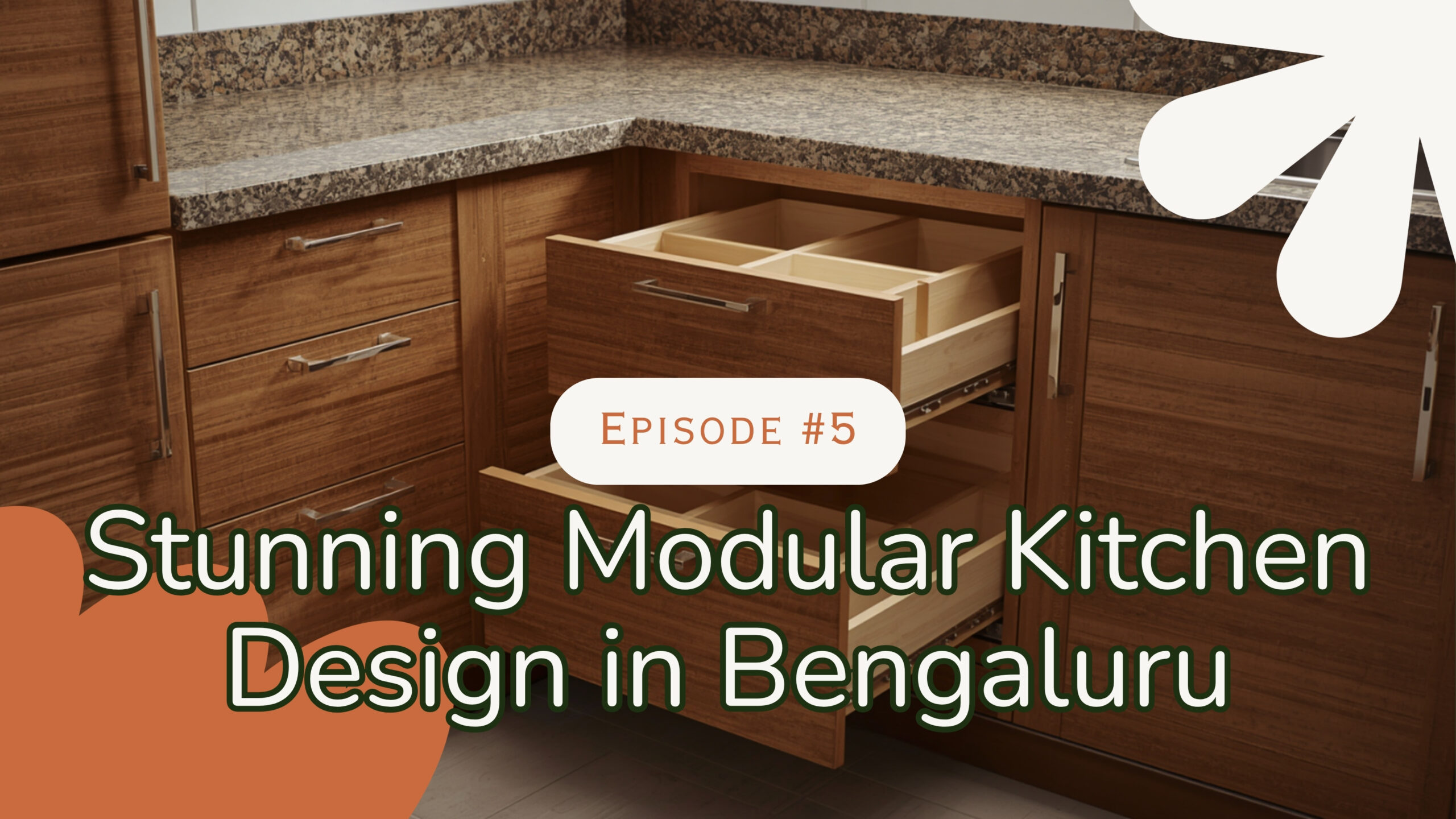
Your layout decides your running foot count, and running feet drive cost, so layout is a budget decision as much as a design one. The five common layouts in Whitefield apartments are straight, L-shape, parallel (galley), U-shape and island, and each carries a different typical price in 2026.
A straight-line kitchen is the most affordable, starting from around Rs 1,08,000, because it has the fewest running feet and the simplest plumbing and electrical runs. It suits compact 1 and 2 BHK apartments and utility kitchens. An L-shaped kitchen, the most common Whitefield apartment layout, typically costs Rs 1,20,000 to Rs 1,80,000 in a basic build, Rs 1,80,000 to Rs 3,50,000 in standard quality and Rs 3,50,000 to Rs 8,00,000 plus in premium specification, with a representative figure around Rs 1,96,000.
A parallel or galley kitchen, where two runs face each other, suits narrow apartment kitchens and prices similarly to an L-shape because the running feet are comparable. A U-shaped kitchen wraps three walls and offers the most storage, and it typically costs from around Rs 2,55,000 upward because it has the highest running foot count. An island kitchen, which adds a free-standing central unit, is a villa and penthouse choice and sits firmly in the premium and luxury bands because of the extra cabinetry, countertop and services the island demands.
The lesson for budgeting is direct: every additional run of cabinetry is real money, so resist the urge to wrap cabinets around a wall you will rarely use. In many Whitefield apartments a well-planned L-shape with intelligent tall units stores as much as a poorly planned U-shape while costing significantly less.
Internal storage solutions and their cost
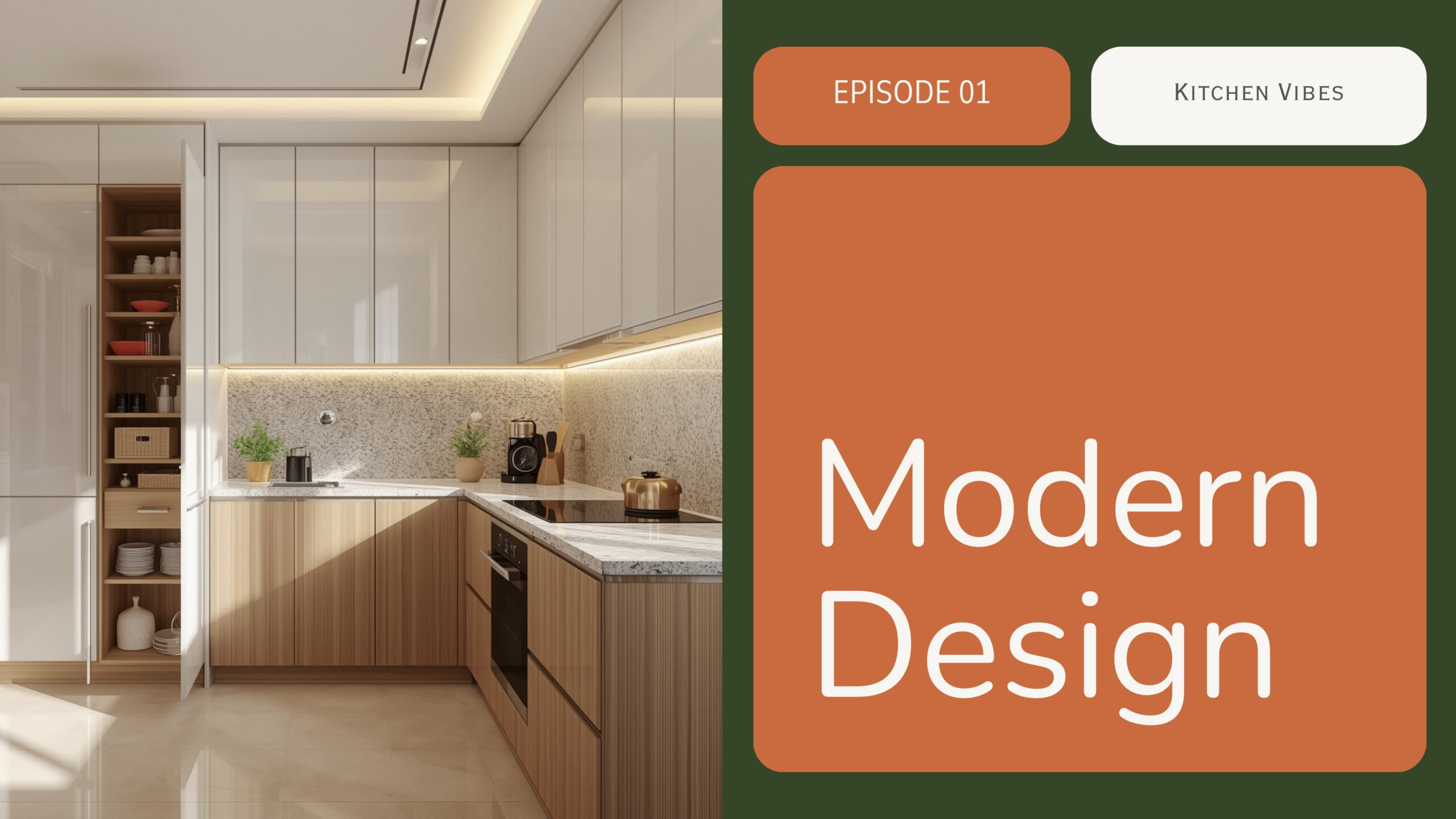
Once the carcass, finish and layout are set, the internal fittings decide how usable the kitchen feels, and they are also a meaningful slice of the budget. Here is what the common storage solutions add in 2026, so you can prioritise with eyes open.
A magic corner, which rescues the dead space in an L or U kitchen, typically adds Rs 12,000 to Rs 28,000 depending on brand and mechanism. A tall pantry pull-out unit, one of the most useful upgrades for a family, adds Rs 18,000 to Rs 45,000. A cutlery organiser in a drawer runs Rs 2,500 to Rs 8,000, a bottle pull-out runs Rs 6,000 to Rs 15,000, and a built-in waste bin unit runs Rs 4,000 to Rs 12,000. Wicker or steel baskets, plate racks and thali units each add a few thousand rupees and stack up quickly if you say yes to everything.
My guidance is to fund the two or three accessories you will genuinely use every day, usually the tall pantry, the cutlery tray and a corner solution, and to be ruthless about the rest. A kitchen does not become more functional simply because it is more expensive; it becomes functional when its storage matches how you actually cook. Disciplined accessory selection is one of the easiest ways to keep a Whitefield kitchen within budget without feeling any loss in daily use.
Material grades and brand options for Whitefield kitchens
The carcass material is the structural heart of a modular kitchen, and in a humid, monsoon-exposed location like Whitefield it is the single most important durability decision you will make. There are four mainstream carcass grades, and understanding them protects you from both overspending and false economy.
MDF and particle board are the entry grades at Rs 1,200 to Rs 1,800 per square foot. They are smooth and affordable, but they are the most vulnerable to moisture, and in a kitchen exposed to spills and the occasional leak, they can swell and lose strength. I use them sparingly and never for base units that sit near plumbing. HDHMR, a high-density board at Rs 1,800 to Rs 2,500 per square foot, is a step up in density and screw-holding strength and is a reasonable mid choice for dry zones.
BWP plywood, or boiling water proof plywood, at Rs 2,500 to Rs 3,500 per square foot, is the grade I recommend for the great majority of Whitefield kitchens. It resists moisture genuinely well, holds hardware securely and delivers 12 to 15 years of service with normal care, which makes it the most sensible balance of cost and longevity in our climate. Marine plywood, at Rs 3,500 to Rs 5,000 plus per square foot, is the premium grade for the most demanding wet zones and luxury builds, offering the highest moisture resistance for buyers who want maximum lifespan.
On finishes and surfaces, the brands that consistently earn their price in Bengaluru are Greenlam, Merino and Century for laminates, and Asian Paints grade systems for PU. For countertops, granite remains the value-durability champion, while engineered quartz from brands such as Caesarstone offers a more uniform, premium look at a higher rate. For sinks, taps and fittings, Carysil, Franke, Kohler and Jaquar are the names I trust, and for chimneys and hobs, Faber, Elica and Hindware lead the field. Specifying known brands is not snobbery; it is how you ensure spare parts and service exist five years from now.
Cost breakdown by component for a Whitefield modular kitchen
To make all of this concrete, here is how the money actually splits across a representative standard L-shaped Whitefield apartment kitchen of about 14 running feet, built in BWP plywood with a laminate finish and Hettich hardware. Treat these as planning figures rather than a fixed quote, because every kitchen differs.
The base and wall cabinet carcass and shutters are the largest line, typically Rs 1,40,000 to Rs 1,96,000 at the laminate per running foot rate. The countertop, in granite or entry quartz, adds Rs 25,000 to Rs 60,000 depending on stone and length. Hardware, with Hettich hinges, channels and a couple of soft-close drawers, adds Rs 30,000 to Rs 70,000. Internal accessories, kept to a sensible daily-use list, add Rs 25,000 to Rs 55,000. The sink and tap add Rs 12,000 to Rs 35,000.
Appliances such as the chimney and hob, when included, add Rs 25,000 to Rs 70,000 for reputable brands, and a built-in oven or microwave housing adds more. Installation, fitting and on-site adjustments add Rs 15,000 to Rs 30,000. Put together, this representative kitchen lands in the Rs 2,50,000 to Rs 4,00,000 range, which is exactly why I quote most standard Whitefield kitchens at Rs 2,25,000 to Rs 3,75,000 before appliances and hidden costs. Seeing the split this way lets you decide consciously where to invest and where to hold back, rather than reacting to a single intimidating number.
Hidden costs in a Whitefield modular kitchen
The quote you sign for cabinetry is rarely the total you spend, and the gap between the two is where most budget shocks live. I always walk Whitefield clients through these hidden costs before we start, because forewarned is forearmed.
Electrical work is the first. New points for the chimney, hob, oven, microwave, refrigerator, water purifier and under-cabinet lighting often need fresh wiring and switch boards, and this can add Rs 15,000 to Rs 50,000 depending on how much the builder already provided. Plumbing changes are the second. If your sink or dishwasher position moves even slightly, inlet and outlet lines must be rerouted, typically Rs 8,000 to Rs 30,000.
Civil and tile work is the third. Cutting, patching, backsplash tiling and minor masonry to fit cabinets cleanly can add Rs 10,000 to Rs 40,000, more if you change the backsplash entirely. The chimney is the fourth, and many homeowners forget that the chimney duct routing, especially in apartments with long runs to the shaft, adds material and labour beyond the appliance price. Loading, unloading and transport to higher floors in Whitefield towers is a real and often-overlooked fifth cost, usually Rs 3,000 to Rs 12,000.
Then there is GST, which at 18 percent on modular furniture is a material addition that some quotes show separately and some bury, so always confirm whether the price you are comparing is inclusive or exclusive. Finally, there is the long-term cost of maintenance and the optional annual service or AMC that keeps hinges and channels in good order. Taken together, these hidden costs commonly add 10 to 20 percent over the cabinet quote, so the disciplined way to budget a Whitefield kitchen is to take your cabinetry estimate and add a fifth on top before you decide what you can afford.
Worked example: a sample bill of quantities for a Whitefield 3 BHK kitchen
Numbers in ranges are useful, but a real itemised example makes the spend tangible. Below is a representative bill of quantities for a 3 BHK apartment kitchen in a complex like Brigade Avalon or Sobha Dream Acres, with roughly 16 running feet across an L-shape plus a small tall-unit run, built in BWP plywood with an acrylic finish on the upper line and laminate on the base, and Hettich hardware. I use this format with clients so they can see exactly where each rupee goes and can add or remove lines themselves.
The base cabinets, around 10 running feet in BWP plywood with a laminate finish, come to roughly Rs 1,10,000 to Rs 1,40,000. The wall cabinets, around 6 running feet with an acrylic finish for the visible upper line, come to roughly Rs 90,000 to Rs 1,32,000 because acrylic carries the higher per running foot rate. A tall pantry unit with pull-outs adds Rs 35,000 to Rs 55,000. So the cabinetry subtotal alone sits near Rs 2,35,000 to Rs 3,27,000 before anything else goes in.
On top of cabinetry, the granite or entry-quartz countertop for this run adds Rs 35,000 to Rs 70,000, the Hettich hardware package across all drawers and hinges adds Rs 45,000 to Rs 85,000, internal accessories kept to a daily-use list add Rs 30,000 to Rs 55,000, and a quality sink and tap from Carysil or Franke add Rs 15,000 to Rs 35,000. That brings the kitchen, still before appliances, to roughly Rs 3,60,000 to Rs 5,72,000.
Finally, appliances and services. A Faber or Elica chimney with a matching hob adds Rs 35,000 to Rs 75,000, a built-in oven or microwave housing adds Rs 20,000 to Rs 60,000 if specified, electrical and plumbing modifications add Rs 25,000 to Rs 70,000, installation adds Rs 15,000 to Rs 30,000, and 18 percent GST applies on the modular furniture portion. A fully loaded version of this 3 BHK kitchen therefore lands around Rs 4,75,000 to Rs 7,50,000, while a more restrained specification of the same kitchen comfortably sits near Rs 3,50,000. The lesson is that the same footprint can swing by two lakh or more purely on finish, hardware and appliance choices, all of which you control.
Modular kitchen cost by apartment size and BHK in Whitefield
One of the most common questions I get is what a kitchen should cost for a particular flat size, so here is a practical bracket guide for Whitefield in 2026. These are sensible all-in ranges including a standard appliance and accessory package, and they assume BWP plywood with mainstream hardware.
For a compact 1 BHK or studio kitchen, usually a straight or small L-shape of 8 to 10 running feet, a sensible budget is Rs 1,50,000 to Rs 2,25,000. For a 2 BHK kitchen, typically an L-shape of 12 to 14 running feet, the realistic band is Rs 2,25,000 to Rs 3,75,000, and this is where the largest number of Whitefield families land. For a 3 BHK kitchen, often an L or U-shape of 14 to 18 running feet with a tall unit, expect Rs 3,50,000 to Rs 6,00,000 depending on finish and appliances.
For larger 3 and 4 BHK apartments and villa kitchens, where a U-shape, an island or a separate utility kitchen comes into play, the budget moves into the Rs 6,00,000 to Rs 12,00,000 plus band, especially once PU finishes, full Blum hardware and premium quartz countertops are specified. The pattern across all sizes is consistent: the running feet set the floor of the cost, and the finish, material and hardware tier set how far above that floor you go.
Countertop cost deep dive for Whitefield kitchens
The countertop is a deceptively large line item and a daily-use surface, so it deserves its own cost view. In Whitefield in 2026 the mainstream choices are granite, engineered quartz, and at the higher end natural marble or sintered stone, and each carries a distinct rate and character.
Granite remains the value and durability champion at roughly Rs 180 to Rs 450 per square foot of countertop surface, which for a typical apartment kitchen run translates to Rs 25,000 to Rs 55,000 fitted. It handles heat and Indian cooking well, it is locally abundant, and it is the choice I recommend for most families who want long life at a fair price. Engineered quartz, from brands such as Caesarstone and other reputable suppliers, runs higher at roughly Rs 350 to Rs 900 per square foot, or Rs 45,000 to Rs 1,10,000 fitted, and it offers a more uniform, premium, low-maintenance surface in consistent colours.
Natural marble and sintered or porcelain slabs sit at the top, both for cost and for care, and they are villa and design-led choices rather than everyday apartment picks because marble stains and sintered stone carries a premium fabrication cost. My guidance for Whitefield apartments is straightforward: granite for value and resilience, quartz when you want a refined uniform look and will pay for it, and the exotic options only when the design genuinely calls for them and the budget is comfortable.
Appliance cost planning for your modular kitchen
Appliances are quoted separately from cabinetry, and forgetting to budget for them is the most frequent reason a kitchen project overshoots. Here is what the mainstream appliances add in 2026 so you can plan the full picture.
A chimney from Faber, Elica or Hindware in a suitable suction rating for Indian cooking runs Rs 18,000 to Rs 55,000, with auto-clean and filterless models at the higher end. A built-in or cooktop hob runs Rs 12,000 to Rs 45,000 depending on burners and brand. A built-in oven adds Rs 25,000 to Rs 70,000, a built-in microwave Rs 15,000 to Rs 40,000, and a dishwasher, increasingly popular in Whitefield homes, adds Rs 35,000 to Rs 75,000 plus the cabinetry and plumbing to house it.
If you plan a built-in or tall-housing refrigerator, budget for both the appliance and the carpentry around it, which adds cost beyond a free-standing fridge. A water purifier point and a small built-in housing add a few thousand rupees more. My advice is to decide your appliance list at the design stage, not after, because every built-in appliance needs its cabinet, electrical point and sometimes plumbing planned in advance, and retrofitting them later is always more expensive and less tidy than building them in from the start.
How to reduce your modular kitchen cost without compromising quality
Saving money on a kitchen is not about buying the cheapest quote; it is about cutting cost where you will not feel it and protecting it where you will. Over hundreds of Whitefield kitchens I have refined a short list of genuine savings that do not hurt durability or daily use.
First, choose laminate over acrylic or PU unless the premium look truly matters to you, because this single move can save Rs 80,000 to Rs 1,50,000 on a full kitchen while still giving a durable, attractive surface. Second, mix finishes intelligently: use a premium finish only on the most visible upper line and a laminate on the base cabinets that are largely hidden behind activity. Third, keep your accessory list disciplined and fund only the two or three you will use daily, which can save Rs 30,000 to Rs 60,000 of showroom extras.
Fourth, never economise on carcass material or hardware, because the savings there are small relative to the kitchen but the long-term cost of failure is high. A swollen base unit or a failed channel will cost you far more in repairs and frustration than the few thousand rupees you saved. Fifth, plan your layout to minimise unnecessary runs of cabinetry, since every extra running foot is real money, and a well-planned L-shape often stores as much as an over-built U-shape. Sixth, confirm GST treatment and get an itemised quote so you are comparing like with like and not paying for vague lumpsum padding.
Design principles behind a well-planned modular kitchen
Although this guide is mainly about cost, a kitchen that is cheap but badly planned is no bargain, so it is worth understanding the design ideas that make a modular kitchen genuinely work. The most important is the work triangle, the relationship between your sink, hob and refrigerator, which should let you move between the three core tasks of washing, cooking and storing without crossing the room repeatedly. A tight, sensible triangle is the difference between a kitchen that feels effortless and one that tires you out.
Ergonomics is the second principle: counter heights set to the primary cook, wall units placed within easy reach, and frequently used items stored between knee and shoulder height so you are not constantly bending or stretching. The third is zoning, where the kitchen is organised into clear areas for storage, preparation, cooking and cleaning, so that everything you need for a task sits where that task happens. Good zoning is what makes a modest L-shape feel as capable as a far larger kitchen.
Ventilation and lighting are the fourth and fifth principles, both especially relevant in Whitefield apartments where kitchens can be enclosed. A correctly sized chimney, task lighting under the wall units and adequate general light transform how a kitchen feels to work in. When these design principles are respected, even a value-tier kitchen performs beautifully, and when they are ignored, even an expensive kitchen disappoints. This is why at myNivasa we fix the layout and the work triangle before we ever talk finishes, because good planning is the one upgrade that costs nothing extra and pays back every single day.
Why Whitefield homeowners choose myNivasa for their modular kitchen
I built myNivasa around a simple promise: a homeowner should understand exactly what they are paying for, line by line, before any work begins. In a market where a single per running foot number hides a dozen quality decisions, that transparency is rare, and it is the reason families in Whitefield keep referring us to their neighbours.
We start every kitchen by fixing the three decisions that matter most, your finish, your carcass grade and your hardware brand, and we show you the cost consequence of each in plain rupees. We specify BWP plywood as our default for Whitefield because our climate demands it, we recommend Hettich or Hafele hardware as the sensible balance for most homes, and we never hide GST or installation inside a vague lumpsum. When a client wants to economise, we guide them to economise on the things they will not feel and protect the things they will.
Because we work across construction and interiors, we coordinate the electrical, plumbing and civil work that other vendors leave you to chase, which is where most kitchen projects quietly run over time and budget. Our team handles the full sequence from measurement and design to manufacture, installation and handover, and we stand behind the hardware and joinery we fit. If you live in Whitefield and want a kitchen that is costed honestly and built to last 12 to 15 years, that is exactly the work we do every week.
Comparison tables: material, hardware and layout costs
Table 1: Carcass material cost and durability
| Material | Cost per sq ft (2026) | Moisture resistance | Typical lifespan |
|---|---|---|---|
| MDF / particle board | Rs 1,200 to Rs 1,800 | Low | 5 to 8 years |
| HDHMR | Rs 1,800 to Rs 2,500 | Medium | 8 to 12 years |
| BWP plywood | Rs 2,500 to Rs 3,500 | High | 12 to 15 years |
| Marine plywood | Rs 3,500 to Rs 5,000 plus | Highest | 15 years plus |
Table 2: Finish cost and character
| Finish | Cost per running foot (2026) | Look | Note |
|---|---|---|---|
| Laminate | Rs 9,500 to Rs 14,000 | Matte or textured, many shades | Best value, durable |
| Membrane | Rs 12,000 to Rs 16,000 | Seamless moulded | Heat sensitive near hob |
| Acrylic | Rs 15,000 to Rs 22,000 | High gloss mirror | Shows fingerprints |
| PU paint | Rs 18,000 to Rs 28,000 | Smooth painted, any colour | Luxury, repair needs skill |
Table 3: Layout typical cost in Whitefield 2026
| Layout | Typical starting cost | Best for |
|---|---|---|
| Straight | From Rs 1,08,000 | 1 and 2 BHK, utility |
| L-shape | Rs 1,20,000 to Rs 3,50,000 plus | Most Whitefield apartments |
| Parallel / galley | Rs 1,50,000 to Rs 3,50,000 | Narrow kitchens |
| U-shape | From Rs 2,55,000 | Larger kitchens, more storage |
| Island | Rs 5,00,000 plus | Villas, penthouses |
Watch: understanding modular kitchen cost in Bangalore
Frequently asked questions: modular kitchen cost in Whitefield 2026
What is the average modular kitchen cost in Whitefield in 2026?
Most Whitefield apartment kitchens in 2026 cost between Rs 2,00,000 and Rs 4,50,000, while the full market band runs from Rs 1,50,000 for a smart-budget kitchen to Rs 12,00,000 plus for a luxury island kitchen. The figure depends mainly on your finish, carcass material and hardware brand.
What is the per running foot rate for a modular kitchen in Whitefield?
In 2026 the per running foot rates are Rs 9,500 to Rs 14,000 for a laminate finish, Rs 15,000 to Rs 22,000 for acrylic and Rs 18,000 to Rs 28,000 for PU. Multiply by your kitchen's running feet, usually 12 to 20 in Whitefield apartments, to estimate cabinetry cost before countertop and appliances.
Which carcass material is best for a Whitefield kitchen and what does it cost?
BWP plywood at Rs 2,500 to Rs 3,500 per square foot is the best balance for Whitefield because it resists our humidity and lasts 12 to 15 years. Marine plywood at Rs 3,500 to Rs 5,000 plus is the premium choice, while MDF and HDHMR are cheaper but less moisture resistant.
How much do hardware brands change the cost?
Hardware can swing the bill by Rs 1,00,000 or more on a full kitchen. Blum is the premium benchmark with hinges around Rs 350 to Rs 600 each, Hettich and Hafele sit 20 to 30 percent below Blum, and Ozone and Ebco anchor the value tier. I recommend Hettich or Hafele for most Whitefield homes.
What hidden costs should I budget for beyond the cabinet quote?
Budget an extra 10 to 20 percent for hidden costs: electrical points (Rs 15,000 to Rs 50,000), plumbing changes (Rs 8,000 to Rs 30,000), civil and tile work (Rs 10,000 to Rs 40,000), chimney ducting, loading to higher floors, and 18 percent GST on modular furniture. Always confirm whether a quote is GST inclusive.
Which kitchen layout is most cost effective in a Whitefield apartment?
An L-shaped layout is usually the most cost-effective for Whitefield apartments because it balances storage and running feet well, typically costing Rs 1,20,000 to Rs 3,50,000 plus. A straight kitchen is cheapest from around Rs 1,08,000, while a U-shape from Rs 2,55,000 stores more but costs more.
Is a modular kitchen worth it compared with a carpenter-built kitchen?
A modular kitchen is built from standardised factory modules with a controlled finish and replaceable units, which gives more consistent quality, faster installation and easier repairs than most on-site carpentry. For Whitefield apartments where time, dust and precision matter, the modular approach usually delivers better long-term value even at a similar price.
How long does a modular kitchen last in Whitefield's climate?
A BWP plywood kitchen with good hardware lasts 12 to 15 years in Whitefield with normal care, and marine plywood can exceed 15 years. Lifespan depends far more on carcass material and hardware quality than on the visible finish, which is why I advise spending on the box and the fittings rather than only on the look.
Modular kitchen cost versus a carpenter-built kitchen in Whitefield
One of the most common cost questions I hear in Whitefield is whether a modular kitchen is worth the premium over a traditional carpenter-built kitchen made on site. The honest answer in 2026 is that the price gap has narrowed sharply, and once you account for quality and longevity, the modular route usually wins on value rather than just on looks.
A carpenter-built kitchen is quoted as a lumpsum for labour plus materials, and in Whitefield that typically lands at Rs 1,30,000 to Rs 2,80,000 for a standard L-shape, which can look cheaper than a modular quote on paper. The catch is that on-site carpentry is hand-cut, the finish quality depends entirely on the individual carpenter, hardware is often basic, and there is rarely a written specification of carcass grade, so you cannot easily compare it like for like. The cost you save up front you often pay back in inconsistent doors, weaker moisture resistance and harder repairs.
A modular kitchen at Rs 2,00,000 to Rs 3,75,000 for the same footprint gives you factory precision, a controlled finish, a documented carcass grade such as BWP plywood, branded hardware with soft-close, and individual replaceable units. When a module is damaged you swap that box rather than rebuilding a run. Over a 12 to 15 year life, the modular kitchen typically costs less per year of service even though its sticker price is higher, which is exactly why I steer most Whitefield families toward modular unless their budget is genuinely fixed at the entry level.
My rule of thumb is simple. If your budget is below Rs 1,50,000 and cannot move, a well-supervised carpenter kitchen in good plywood is a fair choice. From Rs 2,00,000 upward, a modular kitchen almost always delivers more durability and a cleaner finish for the money, and it protects you with a written specification you can hold the vendor to.
What is driving modular kitchen cost changes in 2026
Prices do not sit still, and a few clear forces are shaping modular kitchen cost in Whitefield in 2026, so it helps to understand them before you lock a budget. Plywood and board prices have firmed up over the last two years as timber and resin input costs rose, which has nudged BWP and marine plywood rates toward the upper end of the bands quoted in this guide. This is one more reason to fix your carcass grade early, because deferring the decision rarely makes it cheaper.
Hardware pricing has been steadier because brands such as Hettich and Hafele manufacture more of their India range locally, which has cushioned import-led increases. That local manufacturing is part of why I find these brands such good value in 2026, since you get German engineering at a rupee cost that has not jumped the way fully imported Blum lines have with currency movement. Acrylic and PU finish costs have risen modestly with chemical and labour inflation, widening the gap between laminate and the premium finishes, which makes the finish decision an even bigger lever on your total cost than it was a few years ago.
Labour and installation costs in Bengaluru have climbed with demand, especially in high-rise Whitefield projects where loading to upper floors and society work-timing rules add to the effort. Finally, GST at 18 percent on modular furniture remains a fixed addition that does not shrink, so a quote that looks lower may simply be excluding it. The practical takeaway is that the smart-money decisions in 2026 are to lock your carcass grade and finish early, lean on locally made branded hardware for value, and always read whether a quote is inclusive of GST and installation before you compare it with another.
Payment, timeline and warranty cost considerations
Beyond the headline price, three practical money matters decide how comfortable your kitchen project feels: how you pay, how long it takes, and what the warranty actually covers. Getting these right protects both your budget and your peace of mind.
On payment, most reputable modular vendors in Whitefield work on a staged schedule, commonly an advance to confirm the order, a larger payment at manufacturing, and a balance on installation and handover. I advise clients never to clear the full amount before installation is complete and checked, because the final payment is your leverage to get every snag fixed. A typical standard kitchen takes 4 to 6 weeks from final measurement to handover, and a premium kitchen with PU or imported hardware can take 6 to 8 weeks, so factor this timeline into your move-in plans because a rushed installation is where quality slips.
On warranty, read carefully what is covered and for how long. Good modular kitchens carry a meaningful warranty on the carcass and on branded hardware, often 5 to 10 years on the box and a separate warranty on hinges and channels from the hardware brand itself. The finish and accessories usually carry shorter cover. The cost angle here is real, because a kitchen with a proper written warranty and a vendor who will service it is worth paying a little more for than a marginally cheaper quote with no documented cover. At myNivasa we put the specification and warranty in writing precisely so that the price you pay buys accountability, not just cabinets.
Cost notes for different Whitefield localities and project types
Whitefield is large and varied, and the kind of property you own shifts the realistic cost band even for the same kitchen size. Builder apartments in established complexes near ITPL and Hope Farm, such as Prestige Shantiniketan and Brigade complexes, usually come with a fixed L-shape or parallel footprint and ready service points, which keeps electrical and plumbing modification costs lower and lets most families land comfortably in the Rs 2,25,000 to Rs 3,75,000 standard band.
Newer high-rise projects toward Whitefield outskirts and Hoskote Road often have larger kitchens and utility areas, which adds running feet and pushes 3 BHK kitchens into the Rs 3,50,000 to Rs 6,00,000 range, especially when a separate utility kitchen or a breakfast counter is added. Independent villas and row houses in and around Whitefield carry the widest range, because villa kitchens are larger, frequently U-shaped or island layouts, and tend to attract premium finishes, so budgets there commonly start at Rs 5,00,000 and rise into the luxury band.
Two practical cost notes specific to Whitefield are worth remembering. First, high floors in tower projects add loading and society work-permission costs and sometimes restrict working hours, which lengthens timelines and can raise installation charges. Second, many Whitefield complexes have strict society rules on civil changes and waste disposal, so confirm what is permitted before planning backsplash or plumbing changes, because a forced redesign mid-project is the most expensive surprise of all. Building these locality realities into your budget from day one is the difference between a quote that holds and one that creeps.
Understanding modular kitchen terminology before you buy
A lot of confusion when comparing kitchens comes simply from unfamiliar words, so it helps to understand the vocabulary your designer will use. A carcass is the structural box of each cabinet, the part you rarely see but which carries everything. A shutter is the visible door front, and its finish is what gives the kitchen its character. A module is a single standardised cabinet unit, and a run is a continuous line of modules along one wall. Running feet simply measure the total length of those runs, which is why your designer keeps returning to that number.
Inside the cabinets, the moving parts have their own names. Hinges connect shutters to the carcass and allow them to swing, while channels or slides let drawers glide in and out. Soft-close is the mechanism that stops a drawer or door from slamming, easing it shut in the last few centimetres. A tandem box or tandembox is a fully enclosed metal-sided drawer system that is sturdier and cleaner than older wooden drawers. A lift-up or aventos fitting holds a wall shutter open upward rather than swinging it sideways, which is useful above a hob or sink.
Layouts have a shared language too. A straight kitchen runs along one wall, an L-shape turns one corner, a parallel or galley kitchen places two runs facing each other, a U-shape wraps three walls, and an island adds a free-standing central block. Storage features such as a magic corner, a tall unit, a pantry pull-out and a cutlery tray each solve a specific organising problem, and knowing them by name lets you ask for exactly what you need rather than accepting a generic package.
Understanding these terms changes the conversation entirely. Instead of being shown a single number and a pretty render, you can ask what carcass grade is being used, which hardware brand the hinges and channels come from, and whether the drawers are tandem boxes with soft-close. Those questions are how a homeowner moves from hoping the kitchen is good to knowing it is, and they cost nothing to ask. A confident buyer who speaks the language always gets a better kitchen, because the vendor knows the work will be inspected with understanding rather than taken on trust.
Limitations and assumptions
The prices in this guide are planning ranges for Whitefield in 2026 based on current market rates and my own project experience, not fixed quotations. Actual costs vary with your exact running feet, the specific brand and model of hardware and appliances, countertop stone selection, the condition of your existing electrical and plumbing, and the floor level of your apartment. Rates also move with market conditions and GST treatment. Treat every figure here as a guide for budgeting and comparison, and ask any vendor, including us, for a measured, itemised quotation before you commit.
Sources and references
- Hettich India, kitchen hardware and drawer systems product information, hettich.com
- Hafele India, kitchen fittings and accessories catalogue, hafeleindia.com
- Blum, drawer systems and hinge technology, blum.com
- Bureau of Indian Standards, plywood grading (IS 710 for BWP marine grade), bis.gov.in
Final word: budgeting your Whitefield modular kitchen with confidence
If you take one thing from this guide, let it be this: a Whitefield modular kitchen in 2026 will most likely cost you between Rs 2,00,000 and Rs 4,50,000, and that number is decided almost entirely by three choices you control, your finish, your carcass material and your hardware brand. A modular kitchen is simply a set of standardised, factory-built cabinet modules fitted to your layout, so once you understand those modules and the five cost factors of size, finish, material, hardware and accessories, no quotation in the city can confuse you again. Budget your cabinetry, add a fifth for hidden costs, protect your carcass and hardware quality, and economise on the finish if you must.
When you are ready to turn these ranges into a precise, itemised plan for your own home, that is exactly what we do at myNivasa. Reach out for a measured quotation and we will show you, in plain rupees, what your Whitefield kitchen will cost and why, with BWP plywood, trusted hardware and no hidden lines. Visit myNivasa, explore our Whitefield projects, read more on interior design and home construction, or contact our team to begin.