
Last Updated: 21 May 2026 | Author: Team myNivasa | Reviewed by senior project leads, Whitefield zone.
Living Room Design Ideas in Whitefield 2026: Smart Cost Guide
- Living Room Design in Whitefield
- Living room design in Whitefield refers to the planning, layout, material selection, lighting and decor of the primary social space in apartments and independent houses across the Whitefield, ITPL, Varthur and Hope Farm belts of east Bengaluru. It typically covers furniture layout, TV unit and storage, false ceiling, lighting layers, flooring, paint and accent walls, with a material plus labour budget that commonly ranges from Rs 1.6 lakh for essential plans to Rs 7.5 lakh for full premium fit-outs, depending on apartment size and finish tier.
- Whitefield living rooms typically range from 140 sqft (older 2BHK builder apartments near Hope Farm) to 320 sqft (newer 3BHK and 4BHK units in Brigade, Prestige, Sobha and Salarpuria towers along Varthur Road).
- Open living-dining layouts are now the most reported request in 2026, observed across newer Whitefield apartment clusters where the dining and living share one continuous space.
- Material plus labour budgets in Whitefield living rooms commonly range from Rs 1.6 lakh (essentials only) to Rs 7.5 lakh (full design with TV unit, false ceiling, lighting, paint, blinds, sofa and accent wall).
- Traditional vastu principles, especially seating direction and entry orientation, remain a strong preference among Whitefield homeowners; we plan around these without over-claiming benefits.
- Lighting plans now typically use 3 layers (ambient, task, accent) instead of a single ceiling light; this is the easiest visible upgrade that adds depth and a cozy evening atmosphere.
- Color choices in 2026 lean towards muted earthy palettes: warm whites, soft beiges, muted olive, terracotta, soft clay, with one feature wall in deeper accent like grape or charcoal.
- Whitefield 2BHK ಮತ್ತು 3BHK ಫ್ಲಾಟ್ಗಳ ಲಿವಿಂಗ್ ರೂಮ್ ಸಾಮಾನ್ಯವಾಗಿ 140 sqft ನಿಂದ 320 sqftವರೆಗೆ ಇರುತ್ತದೆ; ಮೊದಲು ಕೊಠಡಿಯ ಆಕಾರ ಮತ್ತು TV ಗೋಡೆ ನಿಗದಿಪಡಿಸಿ.
- ಈಗ open living-dining layout ಹೆಚ್ಚು ಜನಪ್ರಿಯ; ಊಟದ ಸ್ಥಳ ಮತ್ತು ಕುಳಿತುಕೊಳ್ಳುವ ಸ್ಥಳ ಒಂದೇ ಜಾಗದಲ್ಲಿ ಸೇರಿಸುವುದು ಸುಲಭ.
- ಸಾಮಗ್ರಿ ಮತ್ತು ಶ್ರಮ ಸೇರಿ Rs 1.6 ಲಕ್ಷದಿಂದ Rs 7.5 ಲಕ್ಷದವರೆಗೆ ವೆಚ್ಚ; ಹೆಚ್ಚಿನ ಕುಟುಂಬಗಳು Rs 3 ರಿಂದ 4 ಲಕ್ಷ ತಿರುಗಿಸುತ್ತಾರೆ.
- ವಾಸ್ತು ತತ್ವಗಳು ಪ್ರಮುಖ; ಪ್ರವೇಶದ ದಿಕ್ಕು, ಸೋಫಾ ದಿಕ್ಕು ಮತ್ತು TV ದಿಕ್ಕು ಯೋಜನೆಯ ಪ್ರಾರಂಭದಲ್ಲಿ ನಿಗದಿಪಡಿಸುತ್ತೇವೆ.
- ಬೆಳಕು 3 ಪದರಗಳಲ್ಲಿ ಪ್ಲಾನ್ ಮಾಡಿ: ambient, task, accent. ಸಾಮಾನ್ಯ ceiling light ಒಂದು ಸಾಕಾಗದು.
A Quick Voice Friendly Answer
For homeowners asking how to design a living room in Whitefield in 2026, the practical answer is: start with the room shape and the TV wall, lock the seating arrangement around the natural circulation path, plan a single accent wall behind the TV or sofa, layer the lighting in 3 zones, and only at the end pick paint, rugs and decor. Material plus labour budgets typically sit between Rs 1.6 lakh and Rs 7.5 lakh, with execution timelines of 28 to 45 working days for a Whitefield apartment living room under a turnkey contract.
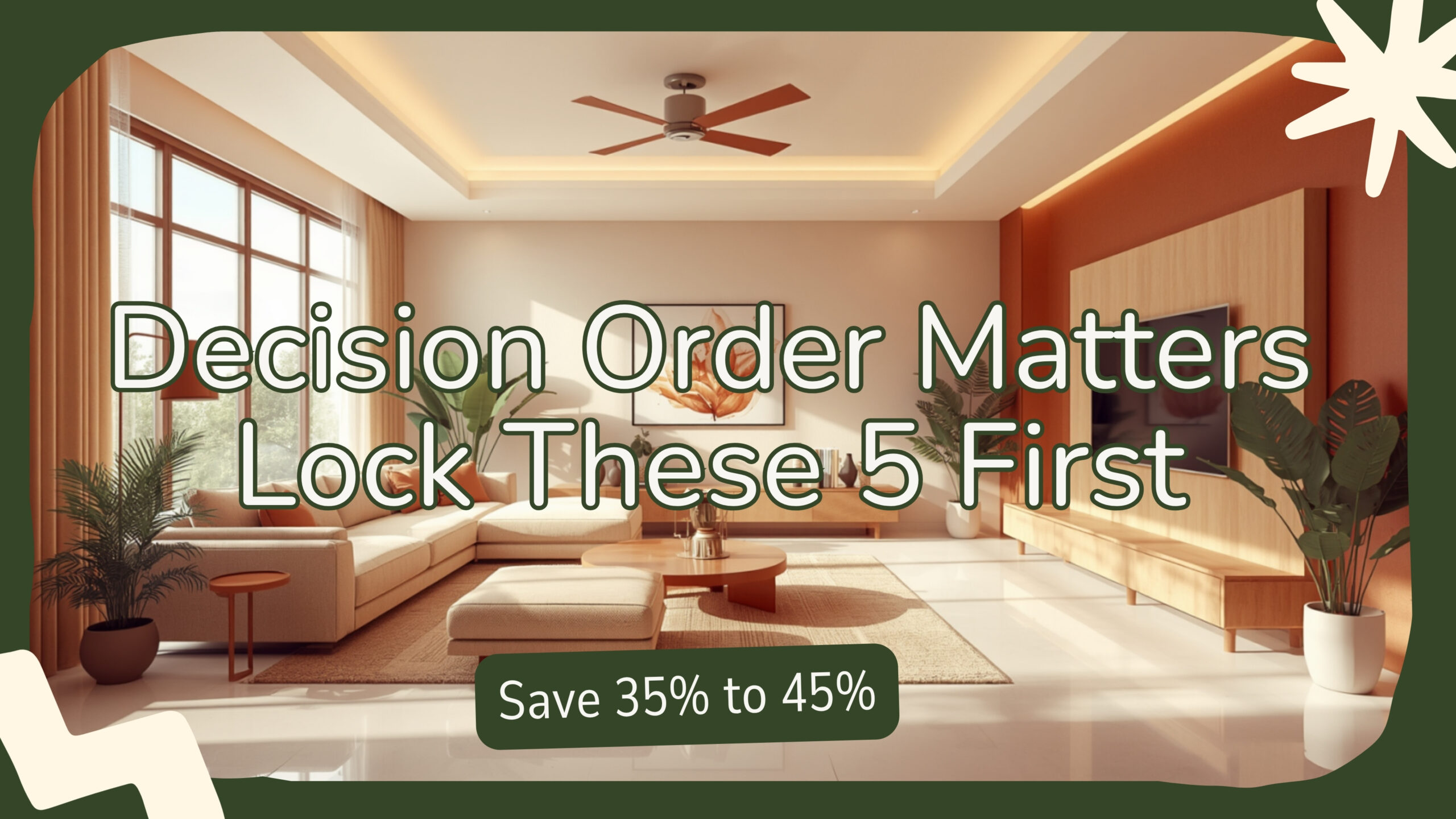
Living Room Style Tiers for Whitefield in 2026
Most Whitefield living room projects we plan in 2026 fall into one of three style tiers. The tier sets the material grade, the TV unit finish, the lighting density, and the typical budget band. The table below reflects observed costs from Whitefield, ITPL, Varthur Road, and Hope Farm apartment projects between October 2025 and April 2026. Costs are indicative and depend on actual room area, ceiling height, and the family's brand preferences.
| Style Tier | Typical Look | TV Unit Finish | Lighting Layers | Indicative Budget (Material + Labour) | myNivasa Recommendation |
|---|---|---|---|---|---|
| Essential | Clean lines, neutral paint, simple TV console, single feature wall | Laminate panel, push-to-open drawers | 2 layers (ambient + task) | Rs 1.60 to 2.80 lakh | Good fit for first home or rental-friendly upgrades; protects resale value. |
| Comfort | Layered textures, warm wood tones, accent wall, soft sheer curtains | Acrylic + laminate mix, soft-close drawers, open display niche | 3 layers (ambient + task + accent) | Rs 2.80 to 4.50 lakh | Most Whitefield families settle here; best balance of look, function and 10-year durability. |
| Signature | Veneer accents, fluted panels, statement ceiling, integrated display unit, designer sofa | Veneer + PU, integrated unit with display, full-height storage | 3 to 4 layers (cove, ambient, task, accent) | Rs 4.50 to 7.50 lakh | Suited for owners planning to stay 10+ years and wanting a premium showpiece living area. |
Costs above assume a 180 to 260 sqft living room with a standard rectangular layout, 9.5 to 10 feet ceiling, and one wall reserved for TV unit. Add Rs 35,000 to Rs 80,000 for a partition or display half-wall between living and dining. Add Rs 40,000 to Rs 90,000 if an existing false ceiling has to be dismantled. Sofa cost is separate and ranges from Rs 45,000 to Rs 1.8 lakh depending on size and fabric.
In our Whitefield projects in 2025, families who locked the seating layout and TV wall first, then finalized paint and decor at the end, reported 35 to 45 percent fewer change requests during execution. Decisions made in the right order save both money and weeks of revision time.
What does Living Room Design include in Whitefield?
A complete living room design package in Whitefield typically covers six functional zones inside the same space. Understanding each zone before signing a contract prevents most of the common surprises that families face during execution. The included items below are based on our actual scope sheets handed over to Whitefield apartment owners in 2025 and early 2026.
The first zone is the seating arrangement. This includes the main sofa (3-seater or L-shape), one or two single chairs or recliners, a center table, and optional side tables. Sofa cost is usually quoted separately from the interior scope, since fabric, frame and warranty differ widely between brands like Godrej Interio, Hometown, Urban Ladder and Ikea. We help families shortlist sofas based on room scale and daily-use frequency, but the order is placed directly with the brand.
The second zone is the TV wall and storage. This is the most visible woodwork element of the living room and covers the TV mounting panel, a lower console with drawers, optional open display niches, and sometimes a full-height side cabinet for show-pieces or storage. The finish ranges from laminate to acrylic to veneer, and the price climbs accordingly. For Whitefield apartments, this single element typically takes 25 to 35 percent of the living room budget.
The third zone is the false ceiling and lighting plan. A modern living room ceiling usually has a peripheral cove, a central drop with LED downlights, and accent spotlights aimed at the TV wall or art panels. The wiring, LED drivers, dimmer switches, and gypsum work together form one continuous scope. This is best done before painting starts. Whitefield ceiling heights mostly sit at 9.5 to 10.5 feet, which allows a 6 to 9 inch ceiling drop without making the room feel low.
The fourth zone is the accent wall. Most Whitefield living rooms in 2026 have one feature wall, either behind the TV or behind the sofa. The treatment ranges from a deeper paint color to wallpaper to fluted MDF panels to stone cladding. A good accent wall adds character without overwhelming the rest of the room. We usually limit the accent treatment to one wall to keep the visual rhythm calm.
The fifth zone is the soft furnishing and curtains. This includes drapes, sheer layers, rugs, cushions and throws. Drapery rod, blackout layer, and sheer layer together usually cost Rs 18,000 to Rs 40,000 per window in Whitefield 2026 pricing. We recommend a neutral base for drapes and one or two accent colors in cushions and rugs, so seasonal changes are easy without redoing major elements.
The sixth zone is the floor and skirting. Most newer Whitefield apartments come with vitrified tile flooring already in place, so the scope here is limited to skirting matching, occasional carpet zones, and the choice of a feature rug under the center table. In older builder apartments along Hope Farm and Varthur Road, flooring may need replacement; this is quoted as a separate civil scope and typically adds Rs 90,000 to Rs 1.8 lakh for a living room area.
What affects the look and feel of a Whitefield Living Room?
Six factors decide whether a living room ends up looking generous and inviting or cramped and busy. We walk through each factor with the family during the design presentation, because changing any one of them midway during execution is the most common reason for cost overruns. Lock these six early.
Room size and shape. A 180 sqft rectangular living room behaves very differently from a 220 sqft near-square one. Rectangular rooms suit a parallel sofa layout, where the main 3-seater faces the TV wall and a 2-seater sits perpendicular. Near-square rooms suit an L-shaped sofa or a corner arrangement. Long narrow rooms suit a bench-and-armchair layout rather than a heavy sofa.
Layout of openings. The position of the main entry door, the balcony door, and the kitchen entry decides the walking path through the room. The TV wall and the sofa cannot block the natural circulation, otherwise the room feels awkward to use daily. In newer Brigade, Prestige and Sobha apartments along Varthur Road, the balcony usually sits on the long wall, which forces the TV to the short wall.
Lighting and natural light. A south-west facing living room in Whitefield warms up considerably in the late afternoon between February and May. This influences curtain weight, sheer choice, and the depth of ambient lighting needed in the evening. North or east facing rooms stay cooler but darker, so ambient density has to compensate. We measure the actual orientation on a site visit before lighting is sized.
Material choices. The mix of laminate, acrylic, veneer and PU defines the finish-tier of the living room. Laminate dominates the essentials tier; acrylic and laminate together suit the comfort tier; veneer with PU finish defines the signature tier. Each step up in material grade roughly adds 25 to 35 percent to the woodwork cost.
Color scheme. A muted, layered color scheme makes a small living room feel calm and slightly larger, because the eye does not have to jump between contrasting tones. A bolder scheme works only when the room is above 230 sqft, has good light, and has space to absorb the visual weight. Whitefield families in 2026 lean toward earthy palettes with one feature wall.
Vastu considerations. The seating direction and the entry orientation influence the layout choices for many Whitefield homeowners. Traditional vastu suggests the main sofa face east or north when possible. We plan the layout around these preferences without over-claiming any scientific benefits; vastu remains a respected traditional framework, not a measurable one.
Traditional vs Contemporary vs Fusion: A Whitefield Comparison
Whitefield families ask this question almost every week. The honest answer is that none of the three is automatically better; the right style depends on the family composition, the time spent at home, and the resale plan. Below is the side-by-side picture we share during design discussions.
| Style | Typical Look | Best Family Type | Material Grade | Indicative Budget | Long Term Fit |
|---|---|---|---|---|---|
| Traditional | Wooden carved panels, jaali screens, brass accents, warm wood tones | Joint families, families hosting elders, traditional ritual users | Solid wood + veneer + PU | Rs 4.2 to 7.0 lakh | Ages well; needs annual polish maintenance. |
| Contemporary | Clean lines, neutral palette, minimal accessory, hidden storage | Young couples, busy professionals, frequent travelers | Laminate + acrylic mix | Rs 2.5 to 4.5 lakh | Easy to maintain; may date in 8 to 10 years. |
| Fusion | Contemporary base with one traditional accent like a brass screen or carved wall | Nuclear families wanting both styles, design-conscious owners | Acrylic + veneer mix with one statement element | Rs 3.4 to 5.6 lakh | Most popular in 2026; balances character and easy care. |
For most Whitefield apartments we deliver in 2025 and 2026, fusion is the most-chosen style, followed by contemporary, with traditional limited to independent house projects and larger 3BHK and 4BHK units. The fusion style allows one strong element, such as a brass jaali behind the TV or a carved teak side console, while keeping the rest of the room calm and easy to clean. This combination ages slowly and is easier to refresh after 5 to 7 years.
Material Choices and Durability for Whitefield Living Rooms
Most cost overruns in living room projects come from the wrong material choice in a high-touch area. The TV unit, the center table edge, the accent wall, and the floor near the main door all see daily contact. Picking a material that does not match the use pattern leads to repair costs within 3 to 4 years. The notes below come from observed wear patterns in Whitefield apartments we revisited at the 3-year mark.
Laminate. The workhorse of essential and comfort tier projects. Modern 1.0 mm laminate with BIS-marked thickness lasts 8 to 12 years in normal use without visible wear. Pick matte finish over high gloss in living rooms, since high gloss shows fingerprints and minor scratches faster. Brands like Greenlam, Merino and Century are commonly specified in Whitefield projects; we pick from BIS-compliant batches only.
Acrylic. Glossy, premium look, used mostly on TV console fronts and accent panel sections. Acrylic resists fingerprints better than high-gloss laminate but costs roughly 30 to 40 percent more per square foot. Suited for the comfort and signature tiers. Avoid on long flat panels in direct sunlight, since color depth can shift slightly over 6 to 8 years.
Veneer with PU coat. The signature-tier material for TV walls, accent panels, and feature consoles. Real wood veneer with a polyurethane top coat gives a natural grain look that ages gracefully. Cost runs 60 to 90 percent higher than premium laminate. Needs annual maintenance with a light buff and oil top-up. Most suited for owners staying 10 years or more.
MDF and engineered wood. The carcass material under the laminate or veneer. Pick BIS IS 12406 compliant boiling-water-resistant grade for any unit near a kitchen or balcony door. Cheaper boards without BIS marking swell within 18 months in Bengaluru humidity, especially near the balcony edge.
Fluted MDF panels. The most-asked accent material in Whitefield 2026 projects. These vertical-grooved panels add texture without overwhelming the wall. Choose pre-laminated panels with edge sealing, since open MDF edges absorb moisture in Bengaluru's monsoon months.
Stone cladding and wallpapers. Used in accent zones only, never on full walls. Stone cladding looks generous in larger living rooms above 240 sqft but can dwarf smaller rooms. Vinyl wallpapers from brands like Marshalls and Asian Paints Royale wallpaper line work in dry zones; avoid them behind the kitchen wall where steam reaches.
Traditional Vastu Principles for Living Rooms in Whitefield
Vastu remains an important reference framework for many Whitefield families. We treat it as a respected tradition rather than a measurable science, and we plan layouts around vastu preferences where the apartment shell allows. The principles below come from traditional Indian vastu texts and are commonly used in Karnataka households.
The most preferred living room direction is north, north-east, or east. These zones receive natural morning light and feel more open, which suits a social space. In Whitefield apartments where the living room is fixed by the builder layout, we adapt the seating direction so that the main user, usually the head of the family, faces east or north when seated. This works in both Brigade and Sobha layouts where the balcony often forces a specific TV wall.
The main sofa is best placed against the south or west wall, allowing the family to face east or north while seated. The TV unit, being a heavier electronic element, is best placed in the south-east corner where possible. Heavy showcases or display cabinets are best placed in the south-west, which is considered the earth-aligned zone in traditional vastu.
Color choices in vastu favor soft, earthy tones for the living room: cream, beige, pale yellow, and light green. For a north-facing living room, hints of green are considered auspicious. For west-facing rooms, white and metallic accents work well. For south-facing rooms, brown and orange tones are preferred. We avoid harsh reds or deep dark blues on full walls, since traditional vastu considers them too stimulating or too cold for a social space.
Lighting and ventilation directions also matter in vastu. The brightest light should fall from the north-east, and the air flow should move from east to west. Curtains and blinds should not permanently block the north-east windows. In our Whitefield projects, we plan sheer curtains for north and east windows and heavier drapes for south and west windows, balancing both vastu intent and the practical sun-heat reality.
None of these vastu choices are presented as scientific claims. They are traditional preferences observed in many Karnataka homes, and we respect them in our layout planning. Families who do not follow vastu can ignore these notes without affecting the quality of the design.
Living Room Layout Options for Whitefield Apartments
Before any TV unit or color decision, the layout of the living room must be locked. A wrong sofa position can mean an awkward walking path for the next 10 years. The four most reported Whitefield layouts are described below, with the trade-offs we have observed in actual project execution.
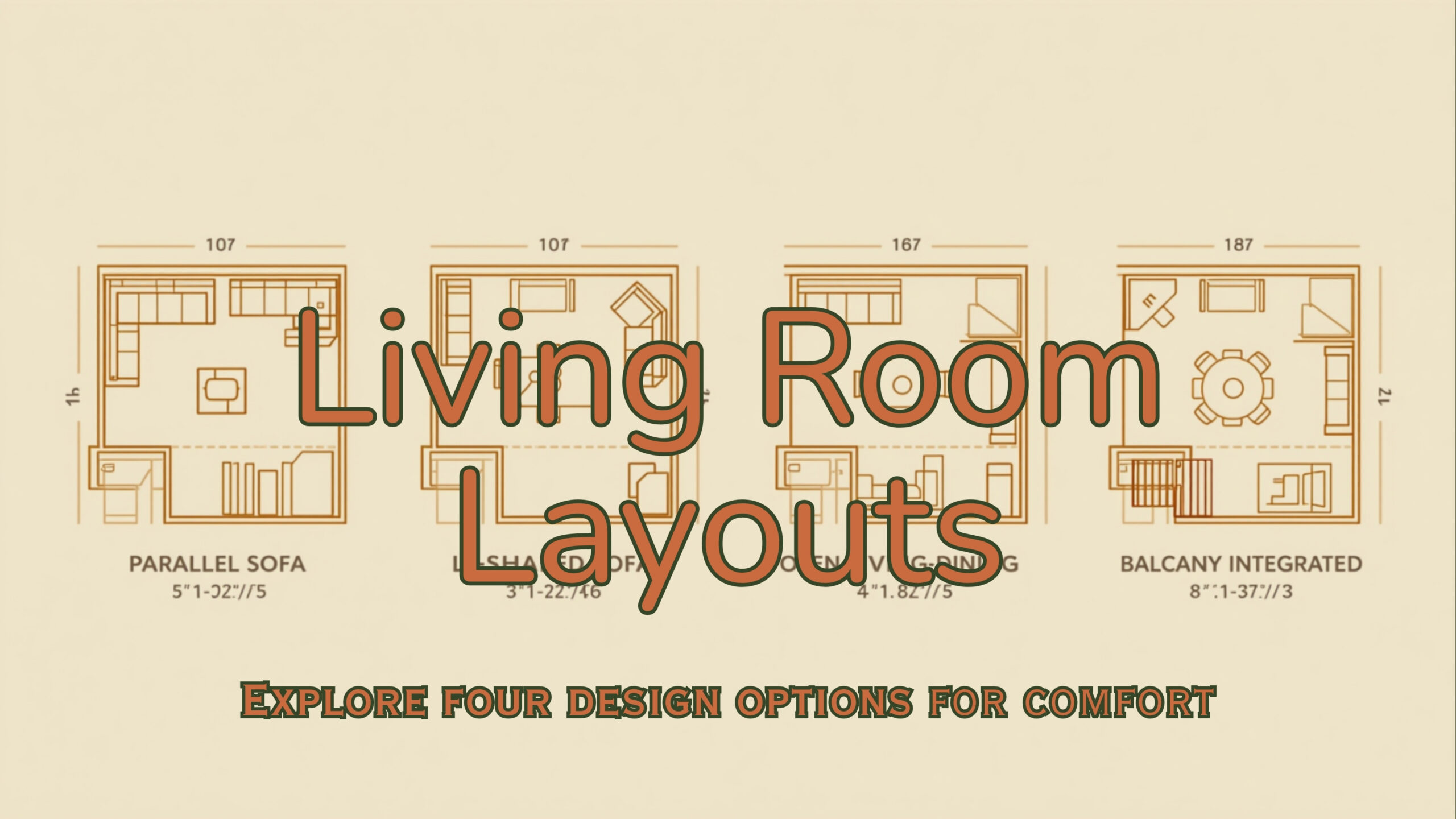
Layout 1: Parallel Sofa with TV Wall Opposite
The most common layout in Whitefield 2BHK and 3BHK apartments. A 3-seater sofa sits against the longer wall, with the TV mounted on the opposite wall. One or two single chairs or a 2-seater fill the side. The center table sits in the middle. This layout works well in rooms from 170 to 230 sqft and gives a clear seating-and-viewing alignment.
Layout 2: L-shaped Sofa in Corner
For near-square living rooms or for families who prefer a casual lounge feel, an L-shaped sofa in the corner works better than parallel seating. The TV wall is usually one of the shorter walls. This layout suits rooms from 200 to 280 sqft, common in Brigade Cosmopolis, Prestige Lakeside Habitat and Sobha Indraprastha 3BHK units.
Layout 3: Open Living-Dining Combined
The most-requested layout in 2026 across newer Whitefield apartments. The living and dining share one continuous open space, often separated only by a rug, a half-wall, a pendant light, or a difference in ceiling treatment. This layout suits rooms above 250 sqft and works especially well in newer Prestige and Sobha launches where the builder layout already opens the dining into the living.
Layout 4: Living Room with Balcony Integration
Many Whitefield apartments, especially in Brigade Petunia, Mantri Energia and Prestige Tranquility, have a wide sliding door opening to a balcony. We integrate the balcony as a small reading nook or planter zone, visible from the main living seating. The sofa is positioned so that the view through the balcony adds to the openness, even when the door is closed. This layout suits rooms from 180 to 260 sqft.
| Layout | Room Size Suited | Seating Capacity | Best Family Type | myNivasa Recommendation |
|---|---|---|---|---|
| Parallel Sofa | 170 to 230 sqft | 4 to 6 | Nuclear families, frequent TV watchers | Default choice in Whitefield 2BHK; lowest risk, best resale value. |
| L-shaped Sofa | 200 to 280 sqft | 5 to 7 | Families hosting relatives often | Useful when one wall has a window or balcony; the L absorbs the corner. |
| Open Living-Dining | 250 sqft and above | 6 to 9 | Joint families, frequent entertainers | Premium feel; budget for visual separation cues like rug and ceiling drop. |
| Balcony Integrated | 180 to 260 sqft | 4 to 6 | Plant lovers, work-from-home families | Best for upper-floor Whitefield apartments with city views. |
Storage Solutions for Whitefield Living Rooms
Living room storage is the most overlooked element in initial design discussions but the most-regretted miss at handover. Whitefield families typically need storage for books, kids' toys, board games, electronic accessories, photo albums, occasional crockery, and seasonal items like pooja decoratives. Below are the five storage patterns we plan most often.
TV unit with lower drawers. The most basic and most-used storage. Three to four soft-close drawers below the TV hold remotes, chargers, kids' toys and small electronics. Add a flap-down section for set-top boxes and routers, with cable cutouts already factored in. Cost is bundled into the TV unit scope.
Full-height side cabinet. A floor-to-ceiling cabinet on one side of the TV wall, usually with a mix of closed shutters at the bottom, open display niches in the middle, and tall closed shutters on top. This adds 18 to 28 cubic feet of storage in a Whitefield 2BHK living room without crowding the floor.
Console behind sofa. A slim 12 to 15 inch deep console table behind the main sofa, used for books, photo frames, table lamps, and a small charging zone. Works only when the sofa is floating in the room, not pushed against a wall. Most useful in open living-dining layouts.
Bench seating with storage. A 14 to 18 inch high bench along a non-circulation wall, with cushion top and storage drawers below. Doubles as casual seating for kids and additional storage for soft furnishing. Common in larger living rooms above 240 sqft.
Pooja unit or display cabinet. Many Whitefield families request a small pooja niche or a deity-display unit inside the living room when a dedicated pooja room is not available. We plan it as a compact wall-mounted unit, usually in the north-east corner per traditional preference, with a softer warm light and a marble or wooden base.
Lighting Layers in a Whitefield Living Room
The single biggest upgrade between an essential-tier and a comfort-tier living room is the lighting plan. A single ceiling light from the builder handover is rarely enough for a 200 sqft living room. Three layers of light, planned together, change the visible quality of the space far more than any color or material upgrade. The lighting layering approach below is purely a design and aesthetic choice; we do not make any biological or scientific claim about it.
Ambient layer. The base layer of overall illumination. Usually a peripheral cove light in warm white (around 3000 K) along the ceiling perimeter, plus a few flush-mounted downlights spaced evenly across the ceiling. The ambient layer is what greets you when you switch on the master switch at the entry. We size it for a warm even glow, not a flat hospital-like brightness.
Task layer. Focused light for specific zones. A pendant light over the dining area in open layouts, a reading lamp near the lounge chair, a small spot near the pooja niche. The task layer activates only when that specific zone is in use. We use dedicated switches for each task light to avoid running everything together.
Accent layer. Decorative light that picks out a feature wall, an art piece, or a display niche. Usually narrow-beam spotlights or LED strips behind a display ledge. The accent layer is what creates the cozy evening character in the room. We dim this layer separately to set different moods through the evening.
Whitefield apartments commonly have 9.5 to 10.5 feet ceiling heights, so the false ceiling can absorb a 6 to 9 inch drop without making the room feel low. We typically plan the cove at 4 inches, downlights at 5 inches, and accent strips at 1 inch depth. Drivers and dimmer modules sit in a dedicated panel near the entry, accessible for service. This aesthetic layering creates depth and a cozy atmosphere; it is not a claim about any biological or scientific effect.
Color Schemes for Whitefield Living Rooms in 2026
2026 has shifted firmly toward earthy, layered palettes for living rooms across Whitefield. The bright high-contrast schemes of 2018 to 2020 have given way to muted multi-tone schemes where the eye flows smoothly between walls, ceiling, sofa and accent. The schemes below are observed across Whitefield apartment projects we delivered in late 2025 and early 2026, and the color references draw from current Asian Paints, Berger and Dulux catalogues.
For more on this, see Living Room Design for Bangalore Apartments 2026.
Warm neutral with terracotta accent. Three walls in a warm off-white like Asian Paints L122 Almond Cream, one accent wall in terracotta like L161 Sun Glaze. Ceiling in a slightly lighter shade than the walls. Sofa in beige or oatmeal fabric. Floor rug in muted brick tone. This scheme works best in north-facing or east-facing living rooms.
Soft beige with olive accent. Three walls in a soft warm beige like Berger Sandstone WS3, one accent wall in muted olive like Sage Whisper WS4. Sofa in beige with olive-green cushions. Curtains in a darker olive drape with sheer ivory layer. This scheme suits west-facing rooms where some color depth absorbs the late afternoon glare.
Calm grey with grape feature. Three walls in a soft warm grey like Dulux Almond Stone, one feature wall in a deeper accent like Asian Paints Color of the Year 2026 Grape. Floor rug in dusty rose. Sofa in light grey fabric. This scheme suits 3BHK and 4BHK apartments with larger living rooms above 240 sqft, where the grape feature does not overpower.
Earthy clay with cream pairing. Three walls in a soft cream like Asian Paints Daisy Cream, one feature wall in deeper clay like Adobe Earth. Sofa in muted brown or rust fabric. Curtains in cream. Floor rug in earthy mosaic pattern. This scheme suits joint families or traditional households where the look needs warmth without being heavy.
Cool white with charcoal feature. Three walls in cool white like Berger Lily White, one feature wall in deep charcoal like Coal Black. Sofa in steel grey with white cushions. Brass or copper accents in lamps and frames. This scheme suits younger couples in newer high-rise Whitefield apartments where a more contemporary look is preferred.
Each scheme is purely an aesthetic recommendation. Warm tones add a cozy atmosphere; cooler tones make the room appear more spacious. These are visual outcomes only; we do not link them to any health, biological or scientific outcomes. The choice depends on the family's daily routine and the natural light pattern in the apartment.
What Makes Whitefield Different as a Locality
Whitefield sits in the east quadrant of Bengaluru, bounded by Mahadevapura to the west, Varthur to the south, Hoskote and the older village pockets to the east, and Hope Farm Junction with K R Puram to the north. The locality has transformed dramatically over the last 25 years. What was once a small Anglo-Indian settlement around the original Whitefield Memorial Church area has grown into one of Bengaluru's largest IT-residential clusters, anchored by ITPL, EPIP Zone, and the Bagmane Tech Park belt.
The Whitefield housing stock spans nearly four decades of construction. Older builder apartments around Hope Farm Junction and Channasandra were built in the late 1990s and early 2000s, with smaller 2BHK units of 900 to 1100 sqft. Mid-2000s saw the first wave of Brigade, Salarpuria and Mantri towers along Varthur Road, with cleaner rectangular 2BHK and 3BHK floor plans. The 2010s decade added large gated clusters like Brigade Cosmopolis, Brigade Petunia, Sobha Indraprastha, Sobha Magnificia, Prestige Lakeside Habitat, Mantri Espana and Salarpuria East Crest. The post-2018 period has added premium high-rises along Varthur Road and the newer Hope Farm to Marathahalli stretch.
This staggered timeline creates a layered customer base with very different living room expectations. Established families who bought a Brigade or Mantri apartment 12 to 15 years ago are now renovating their living rooms for the next decade. Young IT couples in newer Prestige or Sobha launches are planning their first living room interior. Senior parents in older Mahadevapura villas are adapting living rooms for easier daily use. The same locality therefore needs four or five different living room design approaches, not one.
Major landmarks in Whitefield shape daily routines and influence design choices. Phoenix Marketcity, the largest mall in Bengaluru by area at roughly 1 million square feet, anchors the southern edge near Mahadevapura. Forum Shantiniketan and VR Bengaluru add to the retail and dining options. The International Tech Park Bangalore (ITPL) and Bagmane Tech Park belt drive the daily commute. Schools like Vydehi School of Excellence, Greenwood High, Gopalan International School, Deens Academy and DPS East serve the family demographic. Parks like Whitefield ITPL Park, Vibgyor Park and Siddapura Park provide green pockets within the locality. Hospitals like Manipal Hospital Whitefield and Columbia Asia anchor the healthcare ecosystem.
The Namma Metro Purple Line extension to Whitefield, with stations at Hope Farm Junction, Pattandur Agrahara, Kadugodi and Whitefield, has shifted commute and lifestyle patterns since its phased opening. Families now prefer slightly smaller but better-organized living rooms in apartments closer to metro, rather than larger rooms farther away. The metro corridor has also lifted apartment values in the older Pattandur Agrahara and Channasandra pockets, which is changing the renovation-versus-relocation calculus for many older Whitefield homeowners.
Microclimate matters too. Whitefield sits at an elevation similar to the rest of Bengaluru, around 880 to 920 metres, with mild temperatures most of the year. South-west and west-facing living rooms can warm up in the late afternoons between February and May, which influences curtain weight, sheer thickness, and the depth of ambient lighting needed in the evening. North-facing and east-facing living rooms stay cooler but receive less direct light, which influences ambient lighting density and color temperature choices. We adjust the design plan based on the actual orientation of each apartment, observed on a site visit before the TV wall is fixed.
Apartment access logistics in Whitefield are usually smoother than in older central zones like Indiranagar or Koramangala. Most newer gated complexes allow material delivery during defined hours (typically 9 AM to 6 PM weekdays) and have dedicated service lifts. Older builder apartments along Hope Farm Junction sometimes need permission from the resident welfare association for material delivery; we coordinate this paperwork upfront. Building access constraints rarely add cost but can add 3 to 5 days to the project timeline if not planned for.
Senior-Friendly and Multi-Generation Considerations
A growing share of Whitefield living room projects in 2026 plan for multi-generation use, where elderly parents are part of the household full-time or part of the year. Designing for senior comfort does not mean compromising on look; it means a few quiet adjustments that make the space safer and easier to use daily. The notes below are general accessibility guidelines, drawn from common-sense usability practice; they are not medical or scientific recommendations.
Seating heights. A standard sofa seat sits at 16 to 18 inches off the floor, which can be difficult for seniors to rise from comfortably. We recommend at least one chair in the living room at 19 to 20 inches seat height, with firm cushioning and sturdy armrests. This single chair can become the daily-use seat for grandparents without changing the overall sofa look.
Lighting brightness near entries. The main entry zone and the path to the kitchen and bedrooms should have brighter ambient lighting, typically 300 to 400 lux at floor level. Dimmer lounge lighting is fine for the rest of the room, but the entry should remain easy to navigate at all hours. A motion-sensor option on the entry light is a small upgrade with daily payoff.
Floor finish and rugs. Avoid loose runner rugs that can slip. If a feature rug is used under the center table, choose one with a non-slip backing or a thin grip pad underneath. Floor finish should be slightly textured or matte; high-gloss polish floors look premium but can be slippery, especially in homes with elderly residents.
Pathway widths. The main walking path from the entry to the kitchen should be at least 36 inches clear of furniture, allowing easy two-way passage. Center tables should not block this path. In smaller Whitefield 2BHK living rooms, we sometimes recommend a round center table over a rectangular one, since the curved profile is easier to walk around.
TV viewing distance. The seating-to-TV distance should be 1.5 to 2.5 times the diagonal screen size. A 55-inch TV needs a 7 to 12 feet viewing distance for comfortable use; sitting too close strains the eyes during long viewing sessions. Most Whitefield 2BHK living rooms naturally allow this range; in smaller rooms, the TV size should be downsized rather than the seating moved closer.
Hidden Costs Most Whitefield Families Miss
Beyond the headline contract value, several real costs surface during execution that families often miss in their first budget plan. We list them here so they can be planned for upfront rather than discovered halfway through the project.
Civil patchwork. Older Whitefield apartments along Hope Farm Junction and Varthur often need plaster touch-ups, minor wall straightening, and tile patching before the woodwork can be installed. This typically adds Rs 18,000 to Rs 45,000 to a 200 sqft living room scope.
Electrical rewiring. The original wiring in 2008 to 2015 apartments rarely accounts for the lighting layers we plan today. Adding cove, downlights and accent lights usually means new conduits, additional MCBs in the main panel, and extra switch points. Budget Rs 22,000 to Rs 55,000 for this scope in Whitefield 2BHK and 3BHK apartments.
Curtain rod and tracks. Most builder handovers do not include curtain hardware. A premium ceiling-mounted curtain track for a 12 foot wide window with double layer (sheer plus blackout) costs Rs 9,000 to Rs 18,000 per window in 2026 Whitefield pricing.
Sofa and major furniture. Quoted separately from the interior scope in most contracts. A 3-seater plus 2-seater sofa set in good quality fabric and frame costs Rs 65,000 to Rs 1.6 lakh in 2026. Recliners and motorized sofas push this further by Rs 35,000 to Rs 80,000 per seat.
Carpenter waste and freight. Material waste from cutting, edge banding, and trim usually adds 4 to 7 percent to the panel cost. Freight from Peenya warehouses to Whitefield job sites typically adds Rs 4,500 to Rs 11,000 per delivery. These are normal overheads and should be factored in.
GST and rounding. Most interior contracts in Bengaluru attract 18 percent GST on the labour plus material portion, and 12 percent on bundled goods supply portions, depending on the contract structure. Clarify the GST treatment with the contractor before signing, so the final invoice aligns with the quote you approved.
Why Whitefield Families choose myNivasa
Whitefield has matured into one of the largest apartment clusters in east Bengaluru, with Brigade, Prestige, Sobha, Salarpuria, Mantri, and several mid-tier builders all delivering housing stock between 2010 and 2025. The result is a wide spread of family types, ranging from young IT professionals in their first 2BHK to multi-generation joint families in 3BHK and 4BHK units. Each family needs a slightly different living room approach, and a one-size template rarely works.
We bring 8 years of interior design experience in Bengaluru since 2018, with more than 200 delivered residential projects across the city. In Whitefield specifically, we have planned living rooms in Brigade Cosmopolis, Brigade Petunia, Sobha Indraprastha, Sobha Windsor, Prestige Lakeside Habitat, Mantri Espana, Mantri Energia, Salarpuria East Crest, Prestige Tranquility, and many smaller mid-rise complexes near Hope Farm Junction and Varthur Road. This site-level familiarity helps us anticipate apartment-specific constraints such as the exact column position in Sobha Windsor 3BHK or the standard balcony width in Brigade Cosmopolis 2BHK.
Our scope sheets are written in plain English, listing every panel, every light point, every wood thickness, every laminate code, and every paint reference. Families review and approve the scope before any work starts, which avoids the most common conflicts during execution. We also share a weekly progress photo at site, so the family always knows where the project stands without having to drive to Whitefield mid-week.
We are not a discount-first studio. We are not a luxury-only firm either. Most of our Whitefield projects sit in the comfort tier, between Rs 2.8 lakh and Rs 4.5 lakh for a 200 sqft living room. Where the family needs essentials only, we plan a clean essentials tier without inflating the scope. Where the family wants a premium signature finish, we recommend the right material grade without over-selling. The aim is a 10-year living room that the family is happy to host friends in.
Living Room Cost Comparison: Whitefield versus Other Bengaluru Zones
The same 200 sqft living room scope costs differently across Bengaluru zones because of labour rates, transport overheads, and apartment access constraints. Below is a snapshot of comparative material plus labour costs we have observed in 2025 and early 2026.
| Zone | Essential Tier | Comfort Tier | Signature Tier | Notes |
|---|---|---|---|---|
| Whitefield, ITPL, Varthur | Rs 1.6 to 2.8 lakh | Rs 2.8 to 4.5 lakh | Rs 4.5 to 7.5 lakh | Carpenter rates Rs 650 to 850 per day; balanced overall. |
| Koramangala, Indiranagar | Rs 1.9 to 3.2 lakh | Rs 3.2 to 5.0 lakh | Rs 5.0 to 8.5 lakh | Higher carpenter rates Rs 900 to 1100 per day; central premium. |
| HSR Layout, BTM Layout | Rs 1.7 to 2.9 lakh | Rs 2.9 to 4.6 lakh | Rs 4.6 to 7.8 lakh | Similar to Whitefield; slightly higher labour. |
| Electronic City, Bommanahalli | Rs 1.5 to 2.6 lakh | Rs 2.6 to 4.2 lakh | Rs 4.2 to 7.0 lakh | Lower labour rates; longer transport from Peenya warehouses. |
| Hebbal, Yelahanka | Rs 1.7 to 2.9 lakh | Rs 2.9 to 4.7 lakh | Rs 4.7 to 7.6 lakh | Mid-rate zone; growing demand in newer apartment clusters. |
Material Comparison Table for Whitefield Living Rooms
| Material | Typical Use | Cost per sqft (2026) | Durability | Maintenance |
|---|---|---|---|---|
| Premium laminate (1.0 mm) | TV unit shutters, side cabinet | Rs 110 to 180 | 8 to 12 years | Wipe clean; avoid abrasive cleaners. |
| Acrylic high gloss | TV console front, accent panel | Rs 220 to 360 | 10 to 14 years | Soft cloth only; avoid solvents. |
| Veneer with PU finish | Feature TV wall, signature unit | Rs 380 to 620 | 15 to 20 years | Annual buff; touch-up every 3 years. |
| Fluted MDF (pre-laminated) | Accent wall, partition | Rs 180 to 320 | 8 to 12 years | Light dusting; avoid wet wipe. |
| Vinyl wallpaper | Single feature wall | Rs 90 to 220 | 5 to 8 years | Replace section if damaged. |
Floor, Walls and Surface Finishes for Whitefield Living Rooms
Most newer Whitefield apartments come with vitrified tile flooring already in place from the builder handover, in sizes ranging from 600 by 600 mm to 800 by 1600 mm. The flooring is rarely changed in 2026 projects unless tiles are damaged or the family has a specific preference for marble or wooden flooring. Below are the surface choices we discuss most often during the design presentation.
Vitrified tiles. The default builder-provided flooring in 95 percent of Whitefield apartments delivered after 2015. Modern double-charged and glazed vitrified tiles last 15 to 20 years with normal use. Maintenance is simple: dry mop daily, wet mop weekly with a mild detergent. Skirting tile matching is the only scope we usually add, typically Rs 4,000 to Rs 9,000 for a 200 sqft living room.
Italian marble. The premium signature-tier flooring choice. Common varieties used in Whitefield 3BHK and 4BHK projects include Botticino, Crema Marfil, Statuario and Carrara. Costs range from Rs 320 to Rs 850 per sqft including polishing, plus civil cost for removal of existing tiles at Rs 80 to Rs 140 per sqft. Total floor upgrade for a 200 sqft living room runs Rs 1.0 to 2.4 lakh. Annual buff polish keeps marble at peak finish for 12 to 15 years.
Engineered wooden flooring. Picks up gradually in newer Whitefield apartments, used in 5 to 8 percent of comfort and signature tier projects. Pre-finished engineered wood planks lock in place over a foam underlay, costing Rs 280 to Rs 560 per sqft. Suits living rooms that the family wants to feel warmer underfoot. Avoid in apartments with damp issues from balcony slabs.
Wall paint finishes. Three main finish levels: standard emulsion (acrylic distemper or basic emulsion), washable emulsion (Asian Paints Royale Shyne or Berger Easy Clean), and premium emulsion (Royale Aspira, Berger Silk). The first is around Rs 18 to 24 per sqft for a 2-coat job, the second is Rs 28 to 38 per sqft, the third is Rs 42 to 58 per sqft. The premium grade matters more on the feature wall than on the other three walls.
Texture and special finish walls. Stucco, lime wash, dragged plaster, and metallic paint are all options for one accent wall in the comfort and signature tiers. Costs range from Rs 65 to Rs 220 per sqft of finished wall area, depending on the technique and the depth of finish. Texture finishes hide minor wall imperfections better than flat paint, which can be useful in older builder apartments with uneven plaster.
Ceiling finishes. Standard white emulsion remains the dominant ceiling choice in Whitefield projects. Occasionally a softer warm white is used to take the edge off a stark white ceiling. False ceilings get the same emulsion treatment as the main ceiling. Painting the false ceiling drop a slightly different shade than the perimeter ceiling can add subtle depth without overwhelming the room.
Curtains and Soft Furnishing Choices
Curtains and rugs together account for roughly 8 to 14 percent of a Whitefield living room budget, but they shape the room's daily character more than almost any other element. A well-chosen drape softens the room, controls light, and adds a layer of texture that no woodwork can replicate. The notes below are guidance from our Whitefield project handovers in 2025 and early 2026.
Two-layer system. The most-used drape system in Whitefield 2026 is a two-layer setup: a sheer inner layer for daytime privacy with light flow, and a heavier outer layer for evening privacy and full light blocking. Both layers run on a ceiling-mounted track or a dual-rod system above the window. Total cost per window: Rs 16,000 to Rs 38,000 for fabric, rod and stitching.
Fabric choices. Cotton-polyester blends are the most-used base. Pure linen looks excellent in larger windows but creases more and costs 50 to 80 percent more. Velvet and silk blends are reserved for signature-tier rooms; they need professional cleaning and do not suit families with young kids or pets. Polyester blackout linings, hidden behind the visible drape, are now standard in Whitefield bedroom-adjacent living rooms.
Drape length and stack-back. Floor-length drapes that just kiss the floor look more contemporary than puddled or short drapes. A stack-back allowance of 14 to 18 inches on each side of the window means the drape stacks away from the glass when open, allowing maximum daylight. We measure this on site before stitching.
Rugs and cushions. A rug under the center table anchors the seating zone. Standard living room rug sizes in Whitefield projects: 5 by 7 feet for 2BHK living rooms, 6 by 9 feet for 3BHK living rooms, 8 by 10 feet for larger open living-dining setups. Cushion mix usually combines 3 standard square cushions in solid colors with 2 rectangular accent cushions in patterned fabric. Rotate seasonally for an easy refresh.
Throws and decorative accents. A single throw blanket over one sofa arm adds informal warmth. Decorative accents like a brass urli, a ceramic vase, framed family photos, or a single statement art piece complete the room. We recommend a curated approach: 5 to 7 decorative pieces total in a 200 sqft living room, not 15 to 20. Less visual clutter leaves more room for the room to breathe.
Execution Timeline and Phased Plan
A typical 200 sqft Whitefield living room project under a turnkey scope follows the timeline below. We share this plan with the family before signing the contract, so daily expectations align with the work happening on site.
For more on this, see Pooja Room Design Ideas for Bengaluru Homes in 2026.
| Phase | Working Days | Key Activities | Family Involvement |
|---|---|---|---|
| 1. Site assessment and design | 5 to 8 days | Site visit, measurement, design presentation, material shortlist | Design review, sign-off on scope sheet |
| 2. Civil and electrical prep | 5 to 9 days | Patchwork plaster, electrical rewiring, light point shifting | Approve switch and light point layout |
| 3. False ceiling and POP work | 6 to 10 days | Gypsum ceiling, cove cutting, primer coat | Final approval of ceiling design |
| 4. Carpentry and woodwork | 15 to 22 days | TV unit, side cabinet, accent panel, all painted base coats | Approve final finish swatches at midpoint |
| 5. Final paint and accent | 4 to 6 days | Final paint coats, accent wall finish, fluted panel installation | Approve color before final coat |
| 6. Lighting and electrical fit-out | 2 to 3 days | LED installation, driver wiring, dimmer testing | Walkthrough lighting scenes |
| 7. Curtain and soft furnishing | 2 to 3 days | Rod installation, drape hanging, rug placement | Final acceptance walkthrough |
| 8. Snagging and handover | 1 to 2 days | Final touch-ups, deep clean, hand-over kit with manuals | Sign-off and warranty document collection |
The total timeline across all 8 phases works out to 40 to 63 working days for the most thorough scope. In practice, several phases overlap, so a typical Whitefield living room project completes in 28 to 45 working days end-to-end. Civil and woodwork can happen in parallel after day 8 if access and noise considerations allow.
Video Reference: 2026 Living Room Design Trends
For families who prefer a quick visual reference of 2026 living room trends across Indian homes, the following walkthrough covers earthy palettes, open layouts, and the lighting layering approach we use in Whitefield projects.
Living Room Trends to Approach Carefully in 2026
Some design moves that look good on social feeds do not always translate to a daily-use Whitefield living room. Below are five trends we routinely caution families about during the design conversation, based on what we have seen age well versus poorly in 5 to 7 year revisits.
All-white living rooms. The fully white look photographs beautifully but is hard to maintain in a home with kids, pets, or frequent guests. White sofas show fabric wear within 18 months. White walls show smudges near the entry door and the sofa armrest. We suggest a warm off-white base with at least one mid-tone accent, which keeps the airy look while hiding daily wear.
Open shelves with no doors. Open display shelves require disciplined styling and weekly dusting. In Whitefield's dust-prone monsoon-and-summer cycle, fully open shelves accumulate visible dust within 3 to 4 days. We recommend a mix of closed shutters at the bottom, glass-fronted display in the middle, and selective open niches only for accent pieces.
Statement chandelier in low-ceiling apartments. A heavy multi-tier chandelier needs a ceiling height of at least 11 feet to look proportional. In Whitefield apartments with 9.5 to 10 feet ceilings, an oversized chandelier visually compresses the room. We recommend a flush or semi-flush pendant in this height band, with a slim profile and warm-tone light.
Marble TV walls across the full wall. Full-wall marble cladding behind the TV looks luxurious but ages tricky. Marble joints can develop hairline gaps over 3 to 4 years, and replacement of one tile means matching the entire wall. We prefer marble in selective accent zones, with veneer or fluted panel covering the rest, so future maintenance is easier.
Heavy dark wood furniture in small living rooms. Solid wood traditional sofas and consoles look majestic in independent houses but visually shrink small apartment living rooms below 200 sqft. We recommend lighter wood tones or hybrid contemporary frames for smaller apartments, reserving heavy wood for larger 3BHK living rooms above 250 sqft.
Recent Whitefield Living Room Project Snapshots
Three short case snapshots from Whitefield projects we delivered between November 2025 and April 2026. Names withheld for privacy; building names mentioned with family permission.
Snapshot 1: Brigade Cosmopolis 3BHK, fusion style, 230 sqft living room. Young couple with one school-going child. Comfort-tier scope. TV unit in acrylic-laminate mix with brass jaali accent above the console. False ceiling with cove and 6 downlights. Accent wall behind sofa in deep terracotta (Asian Paints L161 Sun Glaze). L-shaped sofa in beige fabric with terracotta accent cushions. Total material plus labour: Rs 3.4 lakh. Sofa separate: Rs 88,000. Timeline: 32 working days. Delivered November 2025.
Snapshot 2: Sobha Indraprastha 3BHK, contemporary style, 260 sqft open living-dining. Family of four, both working professionals. Signature-tier scope. Veneer with PU finish on TV wall, fluted MDF panel partition between living and dining, statement pendant lights over the dining area, three-layer lighting throughout. Color scheme: warm beige with charcoal accent. Total material plus labour: Rs 5.8 lakh. Sofa and dining table separate: Rs 1.6 lakh. Timeline: 42 working days. Delivered February 2026.
Snapshot 3: Older builder apartment near Hope Farm Junction, 180 sqft living room. Recently retired couple, joint family with grandchildren visiting on weekends. Essential-tier upgrade with civil patchwork. New laminate TV unit with low console and side cabinet. Full electrical rewiring for 3-layer lighting. Soft beige paint scheme with single muted olive accent wall. Curtains in cream with sheer ivory layer. Total material plus labour including civil: Rs 2.2 lakh. Sofa retained from previous setup. Timeline: 24 working days. Delivered April 2026.
How to Engage myNivasa for a Whitefield Living Room Project
Our typical engagement runs in 5 clear steps, from first contact to project handover. We share this flow with every family upfront so expectations align from day one.
Step 1: Initial conversation. A 30-minute call or video meeting where we understand the family composition, the apartment details, the budget band, and the design preference (traditional, contemporary, or fusion). No commitment at this stage; we share a brief written summary of what we heard, so the family has time to review before next steps.
Step 2: Site visit and scope sheet. A senior project lead visits the Whitefield apartment for a detailed measurement, light pattern observation, and electrical-civil assessment. Within 72 hours, we share a written scope sheet listing every element planned, the material grade for each, and the indicative cost band.
Step 3: Design presentation. We present 2 to 3 design directions in 3D visualization, along with material swatches, paint references, and lighting plans. The family picks one direction, with up to 2 rounds of revisions. The final design is locked in writing before signing the execution contract.
Step 4: Execution. Site work begins on the agreed date. The family receives a weekly progress photo update and a written checklist of completed milestones. A WhatsApp group with the project lead and the senior coordinator stays active throughout, for any quick clarifications.
Step 5: Handover and warranty. Final walkthrough with the family, signed off on a snagging list, deep clean of the entire scope, handover of all manuals and warranty documents. We offer a 5-year warranty on woodwork and a 2-year warranty on paint and finishes, with annual maintenance visits available on request.
Frequently Asked Questions about Living Room Design in Whitefield
1. What is the typical cost of designing a 200 sqft living room in Whitefield in 2026?
For a 200 sqft living room in a Whitefield apartment, the material plus labour cost in 2026 typically ranges from Rs 1.6 lakh in the essentials tier to Rs 7.5 lakh in the signature tier. Most families settle into the comfort tier at Rs 2.8 to 4.5 lakh, which covers a TV unit, false ceiling with 3-layer lighting, accent wall, paint, blinds and basic decor. Sofa and major furniture are usually quoted separately and add Rs 65,000 to Rs 1.6 lakh on top.
2. How long does a living room interior project take in Whitefield?
A standard 200 sqft Whitefield living room takes 28 to 45 working days from contract signing to handover under a turnkey scope. Civil work, if any, is the first 5 to 8 days. Carpentry work runs from day 10 to day 30. Paint, lighting, and curtain installation finish in the last week. Delays usually come from material availability or building access permissions, both of which we plan for upfront.
3. Is open living-dining better than a separate dining room in Whitefield apartments?
For newer Whitefield apartments built after 2018, an open living-dining layout works well because the builder layout already supports it and the combined space feels generous. For older apartments with separately walled-off dining areas, keeping them separate is often easier than breaking the wall. We assess the structural feasibility on site before recommending an open-plan option.
4. What style is most popular in Whitefield living rooms in 2026?
Fusion style is the most-chosen approach in Whitefield 2026 projects, combining a contemporary base with one or two traditional accents like a brass jaali screen or a carved teak side console. Pure contemporary is the second most popular, especially with young IT couples in newer 2BHK apartments. Pure traditional remains common in 3BHK and 4BHK units and in independent houses where the family hosts elders regularly.
5. Which vastu direction is best for a living room in Whitefield?
Traditional vastu suggests north, north-east, or east as preferred living room directions. In Whitefield apartments where the living room is fixed by the builder layout, we adapt the seating direction so the main user faces east or north when seated. The TV is best placed in the south-east corner, and heavy display units in the south-west. These are traditional vastu preferences; we respect them in layout planning without making any scientific claims.
6. Can I do a partial living room renovation instead of a full design?
Yes. Many Whitefield families upgrade in phases. The most common partial scope is the TV wall and lighting alone, costing Rs 80,000 to Rs 1.8 lakh. The second phase usually covers the accent wall and curtains. The final phase covers sofa replacement and decor. Partial renovations are slightly less cost-efficient per unit than a one-shot full design, but they spread the spend over 18 to 24 months.
7. How do I choose between laminate, acrylic and veneer for the TV unit?
Pick laminate if the budget is essential-tier and the unit will see heavy daily use from kids or pets; modern matte laminate hides minor wear well. Pick acrylic for the comfort tier where the family wants a glossy premium look without veneer pricing. Pick veneer with PU finish for the signature tier when the family plans to stay 10 years or more and wants a real wood character. Each step up in material adds 25 to 35 percent to the unit cost.
8. What is the cost difference between Whitefield and Koramangala for the same living room scope?
For the same 200 sqft living room comfort tier scope, Koramangala typically costs 12 to 18 percent higher than Whitefield because of higher carpenter day rates (Rs 900 to 1100 versus Rs 650 to 850), tighter building access, and higher overheads. Material costs are roughly identical, since both zones source from the same Peenya, Yeshwantpur and Bommanahalli warehouses.
Limitations and Assumptions
The cost ranges and timelines in this guide are observed averages from Whitefield apartment projects we delivered between October 2025 and April 2026. Individual project quotes can fall outside these ranges depending on the actual room size, ceiling height, balcony access, building permissions, and family-specific brand preferences. Material rates fluctuate with manufacturer pricing and BIS-grade availability. We recommend confirming the latest quote on a site visit before locking the family budget.
Vastu references in this guide come from traditional Indian sources commonly used in Karnataka households. They are presented as cultural preferences, not as scientific claims. Families who do not follow vastu can ignore these notes without any impact on design quality.
This guide focuses on apartment living rooms in Whitefield. For independent houses with larger living rooms above 350 sqft, additional considerations like double-height ceilings, mezzanine zones, and multi-cluster seating come into play; these are covered separately in our independent house guide.
Sources and References
The recommendations in this guide draw from the following authoritative sources and our observed project data.
- Bureau of Indian Standards (BIS) IS 12406: Specification for medium density fibreboard for general purposes, used for selecting MDF and engineered wood carcasses in Whitefield projects. https://www.bis.gov.in/
- Karnataka Real Estate Regulatory Authority (RERA): project registration and disclosure rules for Whitefield apartment complexes; relevant for understanding builder handover scope before planning interiors. https://rera.karnataka.gov.in/
- NoBroker Design Guides: 2026 Bangalore interior cost guide with locality-specific price observations. https://www.nobroker.in/interiors/design-guides/interior-design-cost-in-bangalore/
- Traditional Indian vastu references: Maharishi Sthapatya Veda principles and regional Karnataka vastu practices, used as cultural framework for layout planning. Reference compilation at https://www.vaastu-shastra.com/
Related Whitefield and Living Room Guides
- 2BHK Interior Design Cost in Whitefield 2026 - same locality, full apartment scope
- Bathroom Renovation Cost in Whitefield 2026 - same locality, complementary scope
- Master Bedroom Design Ideas in JP Nagar 2026 - different locality, related design topic
- Pooja Room Design Ideas in Koramangala 2026 - different locality, related design topic
- Modular Kitchen Cost in HSR Layout 2026 - different locality, complementary scope
Final Word
A well-designed living room in Whitefield does not need to be expensive to be welcoming. The order of decisions matters more than the size of the budget. Lock the layout first, then the TV wall and storage, then lighting in 3 layers, then the accent wall, and finally paint and decor. Pick BIS-compliant materials in the carcass and a finish-tier that matches the family's daily use and planned stay duration. Respect traditional vastu preferences where the apartment layout allows. The result, in our experience across 100+ Bengaluru projects, is a living room that the family is happy to host friends in, for 10 years and beyond.

Talk to our senior project leads. We will share a site assessment, a transparent scope sheet, and a 2026-current price quote within 48 hours.
Related reading: Interior Designer Fees and Turnkey Cost in Whitefield