
Last Updated: 11 June 2026
- What does "interior designer near me" mean for a Bengaluru homeowner?
- An interior designer near me is a locally based professional who plans your home layout, selects styles and materials, and supervises execution within your neighbourhood, whether that is Whitefield, Koramangala, HSR Layout or Hebbal. In Bengaluru in 2026, full home interior projects with a local designer typically run between Rs 1,200 and Rs 5,000 per sqft, with design fees ranging from a flat consultation of Rs 2,000 to 8 to 15 percent of project value.
To choose the right interior designer near you in Bengaluru, shortlist 3 local firms with completed projects in your area, inspect at least 1 finished home in person, check style range across traditional, contemporary and fusion work, and confirm a written scope with revision policy. On cost, compare line item BOQs rather than lump sums, and expect Rs 1,200 to Rs 1,800 per sqft for essential work, Rs 1,800 to Rs 3,000 for mid range, and Rs 3,000 plus for premium finishes, all before 18 percent GST.
Quick Takeaways
- A designer who has completed projects within 5 km of your home understands your apartment complex rules, dust conditions and material delivery logistics better than a remote firm.
- Inspect 1 live site and 1 handed over home before signing. Photos hide joinery gaps, edge banding quality and finish ripples that a site visit reveals in 10 minutes.
- Bengaluru 2026 cost reality: 2BHK full interiors run Rs 4 to Rs 14 lakhs, 3BHK runs Rs 6 to Rs 22 lakhs depending on tier and locality.
- Designer fees follow 3 models: per sqft design fee of Rs 100 to Rs 300, lump sum, or 8 to 15 percent of project value. Ask which model applies before the first drawing.
- Style fit matters as much as price. A portfolio where every home looks identical signals a template factory, not a designer who will read your family's lifestyle.
- Always ask whether the quote includes 18 percent GST. A Rs 7 lakh quote becomes Rs 8.26 lakhs after tax.
- Budget a 10 to 15 percent contingency for civil work, electrical additions and deep cleaning that most quotes exclude.
- Vastu preferences, lighting layers and colour schemes should be discussed in the first meeting, not after carcass production starts.
The best way to find an interior designer near you in Bengaluru is to shortlist firms with handed over projects in your own locality, visit 1 completed home, verify a line item BOQ, and confirm the fee model in writing. Expect complete 2BHK interiors to cost Rs 4 to Rs 14 lakhs and 3BHK interiors Rs 6 to Rs 22 lakhs in 2026, plus 18 percent GST.
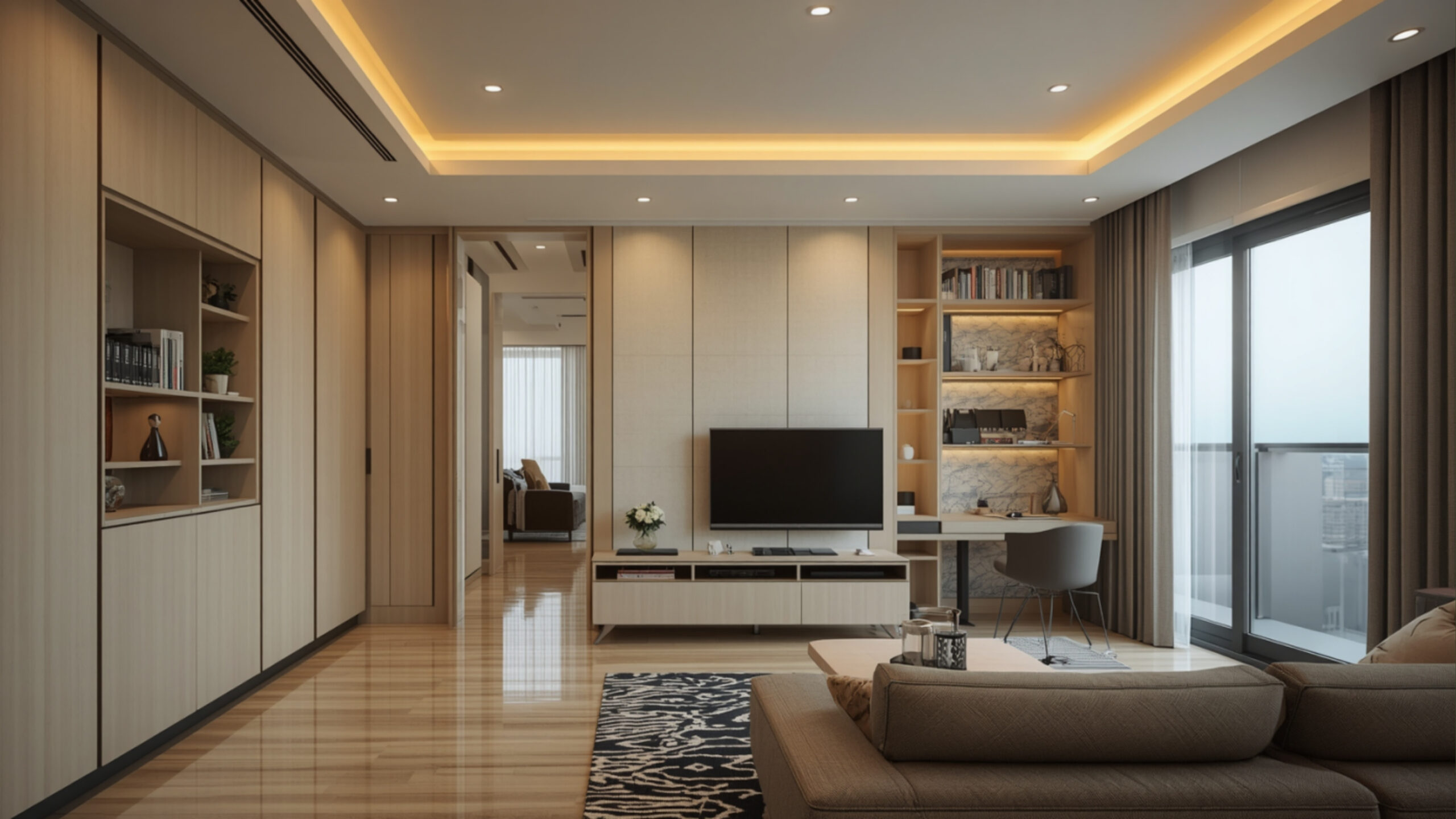
Bengaluru Interior Design Tiers at a Glance in 2026
| Tier | Per Sqft Rate | 2BHK (900 to 1,100 sqft) | 3BHK (1,300 to 1,700 sqft) | What you get |
|---|---|---|---|---|
| Essential | Rs 1,200 to Rs 1,800 | Rs 4 to Rs 7 lakhs | Rs 6 to Rs 10 lakhs | Commercial ply or MDF mix, laminate finishes, standard hardware, basic false ceiling |
| Comfort | Rs 1,800 to Rs 3,000 | Rs 7 to Rs 11 lakhs | Rs 10 to Rs 16 lakhs | BWR plywood, Hettich or Hafele hardware, acrylic or membrane shutters, layered lighting |
| Signature | Rs 3,000 to Rs 5,000 plus | Rs 11 to Rs 14 lakhs plus | Rs 16 to Rs 22 lakhs plus | BWP marine ply, veneer or PU finishes, designer lighting, stone and fluted panel work |
All figures exclude 18 percent GST and loose furniture. Rates compiled from my 2025 to 2026 project closures across Whitefield, HSR Layout, Sarjapur Road and Hebbal.
myNivasa observation: In our last 20 Bengaluru handovers, families who shortlisted designers by locality first and portfolio second finished 3 weeks faster on average. The designer already knew the apartment association rules, the freight elevator timings and the nearest material markets, so zero days were lost to logistics surprises.
What does hiring an interior designer near me include in Bengaluru?
When you type interior designer near me into a search bar from a Bengaluru pin code, you are really asking 3 questions at once. Who designs homes in my area, what exactly will they do for me, and what will it cost. I will answer the first 2 here and keep returning to the third throughout this guide, because in my experience the families who separate design scope from cost scope end up disappointed by both.
Every interior designer near me result handles your project in 4 stages. First comes the discovery and brief stage, where the designer measures your home, studies the builder floor plan, and interviews your family about routines, storage needs and style preferences. A good discovery meeting in a Whitefield or Koramangala apartment takes 90 minutes minimum. If a designer finishes this conversation in 20 minutes and jumps to showing you a catalogue, treat that as your first warning sign.
Second is the design development stage. This covers layout drawings, furniture placement, false ceiling plans, electrical drawings, 3D views and the material palette. In 2026 most established Bengaluru studios present 2 to 3 concept directions, for example a warm traditional scheme, a clean contemporary scheme and a fusion of the 2. You should receive a revision policy in writing at this stage. The industry standard near me is 2 to 3 free revision rounds on concepts and 1 on final drawings.
Third is procurement and production. Modular components like kitchen cabinets and wardrobes are produced in a factory, while site work like false ceiling, painting and electrical runs in parallel inside your home. This is the stage where a nearby designer earns their keep. Apartment complexes like Prestige Lakeside Habitat or Sobha Dream Acres have strict material movement windows, and a designer who has worked in your complex before will schedule deliveries around them without losing days.
Fourth is installation and handover. Carcasses arrive, shutters go on, hardware gets adjusted, lighting is commissioned, deep cleaning happens, and you receive a snag list walk through. Ask every designer you interview to describe their snag resolution timeline. The honest ones quote 7 to 15 days post installation. The evasive ones say there will be no snags, which has never once been true in my 8 years of practice.
Not every professional who appears in your near me search offers all 4 stages. Some are design only consultants who hand you drawings and leave execution to your contractor, typically charging Rs 100 to Rs 300 per sqft for the design package. Some are turnkey firms like mine that carry the project from brief to handover. And some are decorators who style finished homes with loose furniture, soft furnishings and art. None of these models is wrong, but hiring a decorator when you need civil work moved, or paying turnkey margins when you already have a trusted contractor, wastes money in both directions.
Decide which model you need before you compare prices, because comparing a design only fee against a turnkey quote tells you nothing.
What affects the look and feel and the cost of your project?
When you compare each interior designer near me result, 6 variables decide both how your home will feel and what your bank account will feel. I walk every myNivasa client through these in the first meeting, because each one carries a style consequence and a cost consequence at the same time.
Size and built up area. The obvious driver, but with a twist. Smaller homes do not scale down proportionally. A 650 sqft 1BHK in Indiranagar still needs 1 kitchen, 1 set of wardrobes and 1 TV unit, so its per sqft rate often lands higher than a 1,400 sqft 3BHK where fixed costs spread across more area. In 2026, 1BHK full interiors in Bengaluru run Rs 2.5 to Rs 8 lakhs, which on a per sqft basis can exceed what a larger home pays.
Layout and circulation. An open kitchen flowing into the living room reads spacious and lets a single material palette carry across the home, which simplifies production. A closed kitchen with a separate utility demands its own ventilation plan, its own lighting and often its own flooring transition. Builder layouts in newer Sarjapur Road towers tend toward open plans, while older Jayanagar and Malleshwaram homes have compartmented rooms that need wall modifications. Every non structural wall change adds Rs 20,000 to Rs 60,000 of civil work to the budget.
Lighting. Layered lighting, meaning a mix of ceiling ambient light, focused task light and accent light on shelves or art, adds depth and makes even compact rooms appear larger and warmer. A single tier of downlights in a 2BHK costs around Rs 40,000 to Rs 70,000 installed. A full 3 layer scheme with profile lights, wall washers and decorative pendants runs Rs 1 to Rs 2.5 lakhs. The visual difference is dramatic, which is why I rarely advise cutting this line item first.
Material grade. The jump from laminate to acrylic to veneer to PU paint changes both the light reflecting character of your surfaces and the invoice. I cover this fully in the material section below, but as a preview, the same wardrobe design can cost Rs 1,200 per sqft of shutter area in laminate and Rs 2,500 in premium finishes.
Colour direction. Colour itself costs little, since a deep teal wall and a white wall use the same litre count of Asian Paints or Dulux. What costs money is colour carried through materials, for example coloured fluted panels, tinted glass shutters or stone with strong veining. If your budget is tight, get colour from paint and fabrics, not from exotic materials.
Vastu requirements. If your family follows vastu, say so in the first meeting. Relocating a kitchen to the southeast or reorienting a pooja unit after drawings are approved triggers redesign fees and sometimes plumbing and electrical rework worth Rs 30,000 to Rs 1 lakh. Declared upfront, vastu alignment usually costs nothing extra, because the designer simply plans around it from day 1.
Traditional vs Contemporary vs Fusion: which designer style fits your home?
Bengaluru sits at a style crossroads, and so does every interior designer near me search result. The city builds glass towers in Whitefield while Basavanagudi keeps its courtyard houses, and the families I serve carry both worlds in their heads. When you shortlist an interior designer near you, study their portfolio for range across these 3 directions, because a studio fluent in only 1 will quietly steer your brief toward what they already know.
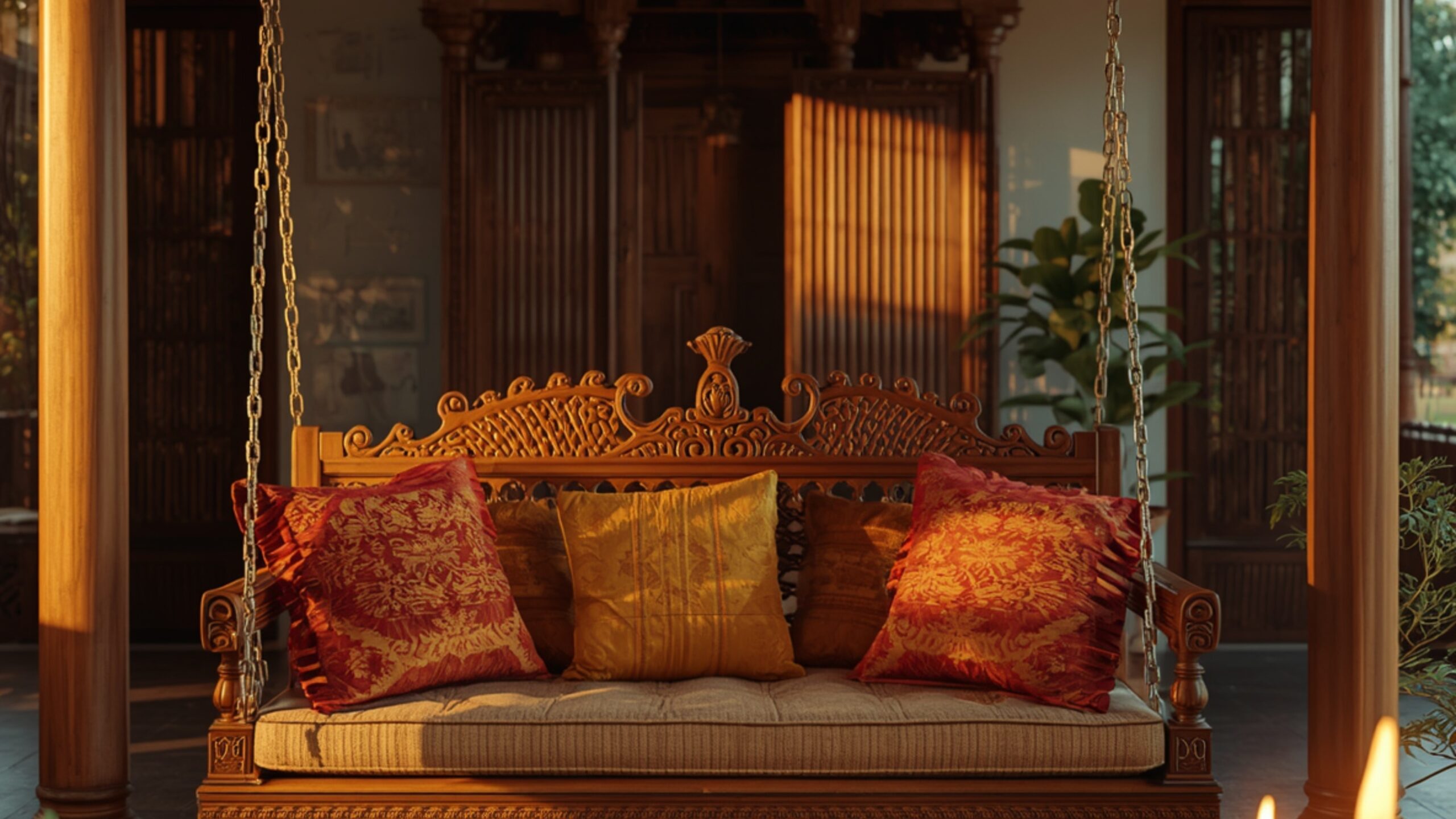
Traditional South Indian. Teak tones, carved or fluted wood detailing, brass accents, kemp red and turmeric yellow touches, a defined pooja space, and floor seating possibilities. Traditional work rewards craftsmanship, so check the designer's carpentry bench strength. Hand finished detailing raises woodwork rates by 15 to 25 percent over plain modular work, and authentic accessories like Channapatna lacquerware or Mysuru silk cushions are sourced, not manufactured. A traditional leaning 3BHK in Jayanagar typically lands in the Comfort tier, Rs 10 to Rs 16 lakhs, with carving and brass work pushing toward Signature.
Contemporary. Handle free shutters, matte and muted palettes, slim profile lighting, engineered surfaces, and visual quiet. Contemporary work rewards precision, so inspect a finished site for shutter alignment and edge banding. Machine made modular components keep the Essential and Comfort tiers honest here. A contemporary 2BHK in an Electronic City or Hebbal tower fits comfortably in Rs 7 to Rs 11 lakhs at Comfort tier specifications.
Fusion. The direction most of my 2026 clients actually choose. A contemporary shell with traditional anchors, for example a clean lined living room with 1 carved console and brass lamps, or a modular kitchen beside a stone clad pooja niche. Fusion demands editorial judgement from the designer. Done well, it feels collected and personal. Done badly, it feels like 2 showrooms collided. Ask to see at least 2 completed fusion homes before trusting a studio with this direction. Cost wise, fusion lets you spend selectively, keeping 80 percent of the home at Comfort tier rates and concentrating Signature tier money on 2 or 3 hero moments.
| Aspect | Traditional | Contemporary | Fusion |
|---|---|---|---|
| Visual character | Warm wood, brass, crafted detail | Matte, minimal, handle free | Clean shell with crafted anchors |
| Woodwork premium | 15 to 25 percent above modular | Baseline modular rates | Premium only on hero pieces |
| Best suited homes | Independent homes, larger 3BHK | Compact apartments, rentals, bachelor pads | Family apartments, 2BHK and 3BHK |
| Typical 3BHK budget 2026 | Rs 12 to Rs 20 lakhs | Rs 9 to Rs 16 lakhs | Rs 10 to Rs 18 lakhs |
| Designer skill to verify | Carpentry craft, sourcing network | Factory precision, installation finish | Editorial restraint, styling sense |
Material choices, durability and what they cost in 2026
Materials are where every interior designer near me conversation gets real, where look, lifespan and money meet, and where an honest interior designer near you proves their honesty. When I review quotes that families bring me for second opinions, 7 out of 10 disputes trace back to vague material descriptions. The word plywood on a quote means nothing. The words BWR grade IS 303 plywood, Century or Greenply brand, 18 mm, mean everything.
Core materials. The carcass of your kitchen and wardrobes can be MDF, HDHMR, commercial plywood, BWR plywood or BWP marine plywood. For Bengaluru's moderate but humid monsoon months, I specify BWR for wardrobes and BWP for kitchen base units near water lines.
MDF carcasses save 20 to 30 percent upfront but swell on water contact and rarely survive a decade of Bengaluru kitchens. BWR plywood from BIS certified brands costs roughly Rs 90 to Rs 140 per sqft of board, while BWP runs Rs 120 to Rs 180. Look for the IS 303 and IS 710 marks, since Bureau of Indian Standards certification is the only neutral quality signal in a market full of private labels.
Surface finishes. Laminate remains the durability champion at Rs 1,200 to Rs 1,500 per sqft of finished shutter. Acrylic and membrane finishes bring gloss and softness at Rs 1,500 to Rs 2,000. Veneer brings real wood character at Rs 1,800 to Rs 2,400 but demands polishing care. PU paint gives a seamless tactile finish at Rs 2,200 to Rs 2,800 and shows scratches the most. A practical fusion approach puts laminate inside lofts and utility zones, acrylic on kitchen shutters and veneer or PU only on the pieces guests actually touch and see.
Hardware. Hinges and channels decide how your home feels in year 5. Hettich and Hafele soft close hardware adds roughly Rs 25,000 to Rs 60,000 over generic hardware on a full 3BHK, and it is the single upgrade I refuse to let clients cut. A wardrobe that slams in year 2 makes every other rupee feel wasted.
Loose furniture. Sofas, dining sets and beds from Godrej Interio, Hometown, Urban Ladder or Ikea sit outside most interior quotes. Budget Rs 1.5 to Rs 4 lakhs separately for a 2BHK and Rs 2.5 to Rs 6 lakhs for a 3BHK, depending on whether you mix Ikea practicality with 1 or 2 statement pieces.
| Finish | Rate per sqft of shutter | Durability character | Where I specify it |
|---|---|---|---|
| Laminate | Rs 1,200 to Rs 1,500 | Scratch resistant, 10 plus years | Lofts, utility, kids room storage |
| Membrane | Rs 1,400 to Rs 1,800 | Good, edges need care | Bedroom wardrobes |
| Acrylic | Rs 1,500 to Rs 2,000 | High gloss holds well | Kitchen shutters |
| Veneer | Rs 1,800 to Rs 2,400 | Ages well with polishing | Living room units, pooja unit |
| PU paint | Rs 2,200 to Rs 2,800 | Premium feel, shows scratches | Hero pieces, handle free kitchens |
Vastu and design principles worth discussing with your designer
Around half of my Bengaluru clients want vastu respected in their interiors, and I treat it as a design brief input like any other. These are traditional principles passed through generations of South Indian home making, and a designer near you should be able to work with them fluently rather than dismissing them or overselling them.
For more on this, see Find the Perfect Interior Designer Near You.
The conversations that matter most happen at layout stage. Kitchen placement in the southeast corner where the original builder plan allows it. Master bedroom in the southwest. Pooja room or pooja unit facing east or northeast, never under a staircase or against a bathroom wall. Mirrors positioned away from the bed line. Heavy storage on southern and western walls, keeping the northeast light and open. None of these moves costs extra when planned from day 1.
Where vastu meets budget is in corrections. If the builder placed the kitchen in the northeast and your family wants it moved, that is a plumbing, gas line, electrical and tiling exercise worth Rs 1.5 to Rs 4 lakhs in a typical apartment.
In such cases I present the family both paths, full relocation with its cost, and symbolic corrections like placement adjustments within the existing kitchen that many vastu practitioners accept. The decision stays with the family. A designer who hides the cost of vastu corrections until execution, or who invents corrections to inflate scope, fails you in opposite ways. Ask directly in the first meeting: what will my vastu preferences add to the budget? A clear answer signals an honest practice.
Layout variants a near me designer should propose
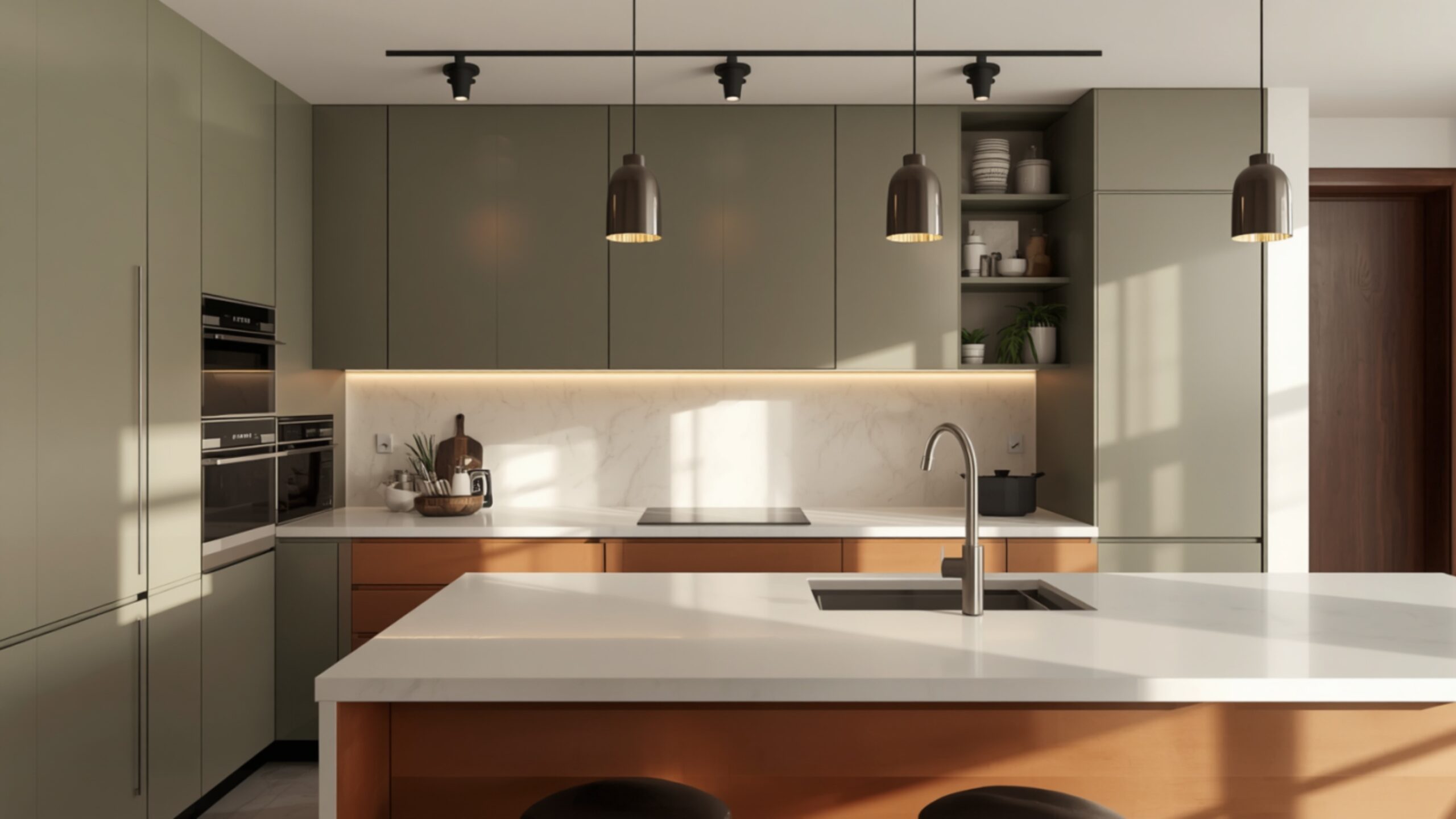
One reason to prefer a designer with projects in your own locality is layout literacy. Bengaluru's housing stock falls into recognisable families, and each rewards different planning moves.
Compact 2BHK in tech corridor towers. Whitefield, Sarjapur Road, Electronic City. Around 900 to 1,100 sqft with open kitchens. The winning moves are full height wardrobes to the ceiling, a TV unit that doubles as a display and storage wall, and a study nook carved from the bedroom or balcony for work from home weeks. Avoid bulky false ceiling drops, since these towers already have lower slab heights.
Spacious 3BHK in established neighbourhoods. Koramangala, Indiranagar, Jayanagar. Here the home can afford a defined foyer, a separate pooja unit, a full dining wall with crockery storage and a guest room that converts to a parents room. Circulation is generous, so furniture can float away from walls and the lighting plan can zone the living and dining separately.
Independent homes and villas. Hebbal, Bannerghatta Road outskirts, North Bengaluru plots. Staircase storage, double height living treatments and terrace lounges enter the conversation. Budget behaviour changes too, since villas bill significant amounts in railing, cladding and outdoor work that apartments never see.
Older homes under renovation. Malleshwaram, Basavanagudi, Rajajinagar. The designer must read structural walls correctly, plan around existing plumbing stacks and often preserve original flooring like red oxide or athangudi tiles that give these homes their character. Renovation experience is a separate skill from new apartment fit outs. Ask specifically for renovation references if this is your situation.
Storage solutions that separate good designers from order takers
Storage is where I judge any interior designer near me candidate fastest, because storage planning cannot be faked with styling. When you visit a shortlisted designer's completed site, open the wardrobes and kitchen units. The interiors tell the truth.
A thoughtful Bengaluru home in 2026 plans storage in layers. Daily access storage sits between knee and shoulder height: kitchen drawers with cutlery organisers, wardrobe shelves at eye level, an entry drop zone for keys and masks and helmets. Weekly access storage takes the higher shelves and under bed boxes. Deep storage, meaning luggage, festival decorations, winter bedding and the pressure cooker that appears twice a year, belongs in lofts above wardrobes and above kitchen units.
Specific solutions worth asking your designer about: tall units and pantry pull outs in the kitchen rather than dead corner cabinets, magic corner or carousel fittings where corners are unavoidable, hydraulic lift up storage inside box beds, window seat storage in kids rooms, and a dedicated pooja samagri drawer below or beside the pooja unit. Each of these has a cost. A pantry pull out adds Rs 12,000 to Rs 25,000 depending on brand, a hydraulic box bed adds Rs 8,000 to Rs 15,000 over a plain bed. Good designers present these as priced options, not assumptions.
The order taker designs 4 identical wardrobes and calls storage done. The designer interviews you about ironing habits, how many suitcases your family owns, and where wet umbrellas land in July, then plans for those answers. That interview is worth more than any 3D render.
Lighting layers that change how your home feels
Lighting is the least understood line in any interior designer near me quote and the one with the most visible payoff. I plan lighting in 3 layers for every myNivasa home.
Ambient layer. The general illumination, usually recessed COB downlights or panel lights in the false ceiling. Warm white at 2700K to 3000K keeps living spaces and bedrooms feeling cozy, while 4000K neutral white serves kitchens and study corners where tasks need clarity. Pure cool white at 6500K, the default tube light tone of older Indian homes, flattens interiors and is the first thing I remove in renovations.
Task layer. Under cabinet strips over kitchen counters, a pendant over the dining table, reading lights beside beds, a focused lamp at the study desk. Task lighting prevents the common Bengaluru apartment problem of a beautifully lit ceiling and a shadowed countertop.
Accent layer. Profile LED strips in ceiling coves, shelf lighting inside display units, a picture light over art, a warm wash on a fluted pooja unit panel. Accent light creates depth and ambience, making rooms appear larger and more finished after sunset. This is also the layer where brass and black metal fixtures can echo your style direction, traditional, contemporary or fusion.
Practical guidance: insist on a lighting layout drawing with switch groupings before electrical work starts. Rewiring a poorly grouped circuit after painting costs 3 times what planning it would have. Dimmers on the living room ambient circuit cost Rs 1,500 to Rs 3,500 each and give you 5 moods from 1 room.
Colour schemes Bengaluru homes are choosing in 2026
Colour is personal, but 2026 Bengaluru has clear currents, and a designer near you should speak about them fluently while still reading your family's taste.
The dominant direction in my recent projects is warm neutrals, ivory, sand, greige and clay, carried across walls in Asian Paints and Dulux emulsions, with 1 grounded accent per room. Terracotta and rust hold strong in living rooms, deep teal and forest green in bedrooms, and ochre or mustard as cushion and art accents. Berger's textured finishes are appearing on single feature walls behind TV units and bed headboards, at Rs 80 to Rs 180 per sqft against Rs 22 to Rs 38 for plain emulsion.
Two practical rules serve every budget. First, keep ceilings and 70 percent of wall area light, since Bengaluru apartments rarely have oversized windows and lighter surfaces stretch the available daylight, making rooms appear airy and open. Second, repeat each accent colour at least twice across a sightline, a teal wall echoed by teal in a rug or artwork reads intentional, while a lone colour event reads accidental.
For traditional and fusion homes, the kemp palette of deep red, turmeric and ivory pairs naturally with teak and brass. For contemporary homes, warm grey plus wood plus 1 muted accent stays calm and timeless. Ask your designer for a colour board with actual painted swatches, not screen renders, because every pigment shifts under your home's specific daylight.
Designer fees and project cost reality by tier in Bengaluru 2026
Now the section most interior designer near me searches really want. I will break the money conversation into the 2 parts every family must separate: what you pay the designer, and what the project itself costs.
Part 1, designer fees. Three models dominate Bengaluru in 2026. Design only consultants charge Rs 100 to Rs 300 per sqft for the complete drawing and specification package, so a 1,200 sqft 3BHK design package runs Rs 1.2 to Rs 3.6 lakhs.
Percentage based designers charge 8 to 15 percent of the executed project value, common on larger and luxury projects, and you must ask whether vendor discounts pass to you or stay with the designer. Turnkey firms blend the design fee into the project quote, which feels convenient but demands a line item BOQ so you can see what design supervision actually costs. Hourly consultation, Rs 2,000 to Rs 10,000 per session, suits families who only need direction and will execute themselves.
Part 2, project costs by tier. The table at the top of this guide summarised the 3 tiers I use across myNivasa projects. Here is what they mean in practice for a 1,200 sqft 3BHK in 2026.
Essential tier, Rs 6 to Rs 10 lakhs. Commercial ply and MDF mix carcasses, laminate finishes, standard Indian hardware, basic single level false ceiling in living areas, full home painting in plain emulsion, and modular kitchen plus 3 wardrobes. This tier serves rental homes and first homes well. It does not survive corner cutting, so spend within it on the kitchen carcass and hardware first.
Comfort tier, Rs 10 to Rs 16 lakhs. BWR plywood throughout, acrylic or membrane kitchen shutters, Hettich or Hafele soft close hardware, layered false ceiling with cove lighting, feature wall treatments, and loose furniture coordination. Around 60 percent of my 2025 to 2026 projects closed in this band. The middle of this tier, around Rs 12 to Rs 13 lakhs, is the most efficient money in Bengaluru interiors today.
Signature tier, Rs 16 to Rs 22 lakhs plus. BWP marine ply, veneer and PU finishes, stone and fluted panelling, designer lighting fixtures, automation provisions, and site built specials like bar units or library walls. Above Rs 22 lakhs, you are purchasing exclusivity rather than durability, and I tell clients so plainly.
Locality adjusts these numbers. South and Central Bengaluru, Koramangala, Jayanagar, Indiranagar, price 20 to 35 percent above the eastern corridor, driven by carpenter day rates of Rs 900 to Rs 1,200 against Rs 650 to Rs 850 in the east, tighter site logistics and older buildings needing more preparation work. The same Comfort tier 3BHK that closes at Rs 12 lakhs in Whitefield can close at Rs 15 lakhs in Jayanagar.
Payment structure. The clean industry standard is 10 percent at booking, 40 percent at design freeze and production start, 40 percent at material delivery and installation start, and 10 percent at handover after snag closure. Any designer demanding 70 percent or more before production starts is financing their previous project with your money. Walk away.
Sample line item BOQ: Comfort tier 2BHK in 2026
Families ask me what a line item BOQ actually looks like, so here is a representative one for a 1,000 sqft 2BHK at Comfort tier specifications, drawn from my 2025 to 2026 Whitefield and Sarjapur Road closures. Your numbers will differ with sizes and choices, but the structure is what you should demand from any interior designer near you.
For more on this, see Interior Designer in Whitefield: myNivasa Architect Designs.
| Item | Specification | Quantity basis | 2026 cost band |
|---|---|---|---|
| Modular kitchen, L shape | BWP ply carcass, acrylic shutters, Hettich soft close | Around 80 sqft shutter area | Rs 1.8 to Rs 2.6 lakhs |
| Kitchen tall unit and lofts | BWR ply, laminate finish | Around 40 sqft | Rs 50,000 to Rs 80,000 |
| Wardrobe, master bedroom | BWR ply, membrane shutters, internal drawers | 7 ft x 8 ft | Rs 90,000 to Rs 1.4 lakhs |
| Wardrobe, second bedroom | BWR ply, laminate shutters | 6 ft x 7 ft | Rs 70,000 to Rs 1 lakh |
| Lofts above wardrobes | BWR ply, laminate | Both bedrooms | Rs 35,000 to Rs 55,000 |
| TV unit and display wall | BWR ply, veneer accents, profile lighting | 10 ft wall | Rs 60,000 to Rs 1 lakh |
| Crockery and dining storage | BWR ply, glass shutters | 5 ft unit | Rs 45,000 to Rs 70,000 |
| Pooja unit | Veneer with fluted panel and warm accent light | 3 ft niche | Rs 30,000 to Rs 60,000 |
| False ceiling, living and dining | Gypsum, 2 levels with cove | Around 350 sqft | Rs 55,000 to Rs 85,000 |
| Bedroom ceilings | Gypsum border with cove | 2 rooms | Rs 35,000 to Rs 55,000 |
| Electrical and lighting | Wiring changes, COB downlights, profile strips, dimmers | Full home | Rs 70,000 to Rs 1.2 lakhs |
| Painting, full home | Asian Paints or Dulux emulsion plus 1 textured feature wall | Around 2,800 sqft wall area | Rs 70,000 to Rs 1.1 lakhs |
| Foyer and shoe unit | BWR ply, laminate, seat top | 4 ft unit | Rs 25,000 to Rs 45,000 |
| Site works and handover | Protection, transport, deep cleaning, snag closure | Lump line, itemised | Rs 30,000 to Rs 55,000 |
The bands above sum to roughly Rs 7.7 to Rs 12 lakhs, which is exactly the Comfort tier 2BHK range quoted at the top of this guide. Three reading lessons from this table. First, the kitchen and 2 wardrobes consume close to half the budget, so specification debates should start there, not on the pooja unit. Second, every line carries a material specification and a quantity basis, which is what makes 2 quotes comparable. Third, the final line exists. Designers who never write site works and handover as a line simply bill it as a surprise later.
Add 18 percent GST on the contracted value, loose furniture of Rs 1.5 to Rs 4 lakhs if you are furnishing from scratch, and the 10 to 15 percent contingency I recommend throughout this guide. A complete, honestly planned Comfort tier 2BHK in 2026 therefore lands between Rs 11 and Rs 17 lakhs all inclusive, and a family that walks in with that number avoids both sticker shock and false bargains.
Hidden costs that surprise Bengaluru homeowners
Every year families show me quotes that looked Rs 2 lakhs cheaper than mine and ended Rs 1 lakh costlier. The gap always lives in the exclusions. Here is the 2026 hidden cost map, with realistic ranges.
GST. The big one. Interior works contracts attract 18 percent GST, and most quotes exclude it. A Rs 7 lakh quote becomes Rs 8.26 lakhs at billing. Always ask: is this figure inclusive of GST? Get the answer in writing on the quote itself.
Civil and electrical surprises. Wall removal or new partition work runs Rs 20,000 to Rs 60,000. Extra electrical points, and every family adds them once they see the furniture plan, run Rs 15,000 to Rs 40,000. Plumbing changes for a relocated sink or washing machine line run Rs 10,000 to Rs 30,000.
Painting scope gaps. Many quotes cover only feature walls, leaving the full home repaint, Rs 15 to Rs 38 per sqft depending on emulsion grade, as a discovery at handover time.
Logistics. Material transport and gated community entry handling adds Rs 8,000 to Rs 20,000 in large complexes. Some Whitefield and Sarjapur Road associations also collect refundable interior work deposits of Rs 10,000 to Rs 50,000 and charge for freight elevator slots.
The finishing tail. Appliance installation Rs 5,000 to Rs 15,000, post completion deep cleaning Rs 3,000 to Rs 8,000, and the miscellaneous tail of door stoppers, bathroom hardware and curtain rods that quietly absorbs Rs 10,000 to Rs 25,000.
Sum the typical case and hidden items add Rs 50,000 to Rs 1.5 lakhs to a 2BHK or 3BHK project. My standing advice: hold a 10 to 15 percent contingency outside the quoted figure, and insist on a line by line BOQ listing every item with material specification, dimensions, hardware brand and rate. A designer who resists itemising is telling you where the surprises will come from.
Planning for every generation: kids rooms and senior friendly choices
A near me designer worth hiring asks who lives in the home before asking what style you like, because Bengaluru households frequently span 3 generations, and design choices that delight a 7 year old can trouble a 70 year old knee.
For kids rooms, plan for change rather than for the current age. A study desk at adjustable height, wardrobes whose internal shelves reconfigure as toys give way to books, washable paint grades on the lower half of walls, rounded edges on all furniture below shoulder height, and window seat storage that doubles as a reading perch. Theme decor dates within 2 years, so keep themes in bedding and removable decals rather than in built furniture. Cost note: a well planned kids room adds little over a standard bedroom, typically Rs 10,000 to Rs 30,000 for adjustable fittings and washable paint upgrades.
For parents and grandparents, the considerations are quieter and more important. Bedside switches that control the main light, so nobody crosses a dark room at night. A clear 3 ft circulation path around the bed. Anti skid tiles or matte finishes in their bathroom, grab bars planned into the wall at construction stage rather than drilled into tile later, wardrobe handles at reachable height rather than flush handle free profiles that need a push, and a chair in the bedroom for dressing. Seat height matters too: sofas and beds at 18 inches rise far more kindly than fashionable low slung pieces at 14.
When you interview designers, raise these needs and watch the response. A designer who immediately sketches a bedside switch circuit and asks about your parents' bathroom routine is planning a home. One who redirects you to the moodboard is decorating a photograph. The first kind is the one your near me search was looking for.
Why Bengaluru families choose myNivasa as their nearby designer
I will keep this section short and factual, since the rest of the guide should already demonstrate how we think. myNivasa is a Bengaluru based turnkey interior design and home construction practice. We work across Whitefield, HSR Layout, Koramangala, Sarjapur Road, Hebbal, Jayanagar, Indiranagar, Electronic City, Bannerghatta Road, Yelahanka and Malleshwaram, which means whichever pin code you searched from, we have probably handed over a home near you.
Our process mirrors this guide because this guide is our process. Discovery interview, 2 to 3 concept directions across traditional, contemporary and fusion, a line item BOQ with brands and dimensions before any advance beyond booking, BIS marked core materials, Hettich or Hafele hardware as standard from Comfort tier, written timelines with stage wise payments, and a 7 to 15 day snag closure window after installation. Families who want to verify any of this can visit a live myNivasa site in their own locality before signing anything. That offer, more than any portfolio image, is what we believe a near me search should earn you.
10 questions to ask in the first meeting
The first meeting with any interior designer near me shortlist is an interview, and you are the employer. I have sat on both sides of this table for 8 years, and these are the questions that expose the most truth in the least time.
1. How many projects have you handed over in my locality in the last 2 years? Locality experience is the entire promise of a near me search. Listen for specific building names, not vague claims.
2. Can I walk through 1 live site and 1 handed over home this week? The answer should be yes without hesitation. Live sites show process discipline, handed over homes show how the work ages.
3. What exactly is included in your scope, and what is excluded? Get the exclusions list in writing. Painting scope, civil work, loose furniture and appliance installation are the usual gaps.
4. Which fee model do you follow, and do vendor discounts pass to me? A designer earning undisclosed margins on materials has an incentive that works against your budget.
5. What happens if I do not like the first concepts? You want a stated revision policy, typically 2 to 3 concept rounds, not a verbal assurance that you will love it.
6. Who manages my site day to day, and how often will I receive updates? Ask to meet the project manager, not just the design lead. Weekly photo updates with a written progress note is the 2026 standard.
7. Which brands of plywood, hardware and finishes do you specify by default? You now know the names to listen for: BIS marked Century or Greenply boards, Hettich or Hafele hardware, Asian Paints, Berger or Dulux finishes.
8. What is your realistic timeline, stage by stage? Insist on phases with dates: design weeks, production weeks, installation weeks. A single end date with no stages is not a plan.
9. How do you handle vastu requirements? You want fluency without upselling, planning around preferences at no cost rather than inventing corrections.
10. What does your warranty cover, and for how long? Modular work warranties of 5 to 10 years on manufacturing defects are common. Ask what voids them and who services them.
Notice that only 1 of these 10 questions asks about price directly. That is deliberate. The answers to the other 9 tell you whether the eventual price will mean anything.
Red flags that should end the conversation
Some signals are not negotiation points. They are exits. I share these because families often sense something wrong and talk themselves past it, usually because the quote was attractive.
The designer agrees with everything. If you propose 6 ideas and receive 6 enthusiastic yeses, you are not hiring a designer, you are hiring an order taker with a markup. Professionals push back, offer alternatives and explain trade offs. You are paying for judgement, not validation.
The portfolio looks like 1 home photographed 30 times. Template factories produce fast and cheap, and if a template is what you want, that is a legitimate choice. But if every living room shows the same TV panel and the same grey sofa, do not expect your brief to change the pattern.
Vague timelines or impossible ones. Both directions fail. We will finish soon is not a date, and a full 3BHK in 25 days is not a process. Quick promises usually surface later as installation shortcuts or unfinished snag lists.
Lump sum quotes that resist itemisation. Every legitimate cost can be written on a line with a specification and a rate. Resistance to a BOQ is a statement about where the margins hide.
Heavy advance demands. The clean standard is 10 percent at booking and stage wise payments after. A demand for 50 to 70 percent upfront means your money is funding someone else's delayed project.
Ignored details from your brief. You said no orange, the moodboard shows terracotta everywhere. You stated a strict budget, the first concept consumes half of it on 1 kitchen. A designer careless with small instructions now will be careless with big ones during execution.
No written contract. A proper agreement covers scope, exclusions, payment stages, timeline with phases, revision policy, warranty terms and exit clauses for both sides. Working on trust sounds warm and ends in disputes. For larger projects involving builders, you can verify the firm's registered projects on RERA Karnataka as an additional check.
Step by step: from search to signed contract in 21 days
Families often ask me how long choosing an interior designer near me should take. My answer is 3 focused weeks. Longer than that and decision fatigue sets in, shorter and you skip verification. Here is the sequence I recommend.
Days 1 to 3, build the longlist. Search interior designer near me, note the firms appearing for your locality, add 2 or 3 names from your apartment association group and from neighbours whose homes you admire. Aim for 6 to 8 names. Check each firm's completed project photos for your home type, apartment or villa or renovation.
Days 4 to 7, cut to 3. Call each firm with 3 filter questions: projects completed in your locality, your project type experience, and rough tier band for your size of home. Drop anyone vague on all 3. Book first meetings with the best 3.
Days 8 to 14, hold the 3 first meetings. Use the 10 questions from the section above. Share the same brief and the same budget band with all 3, since identical inputs make outputs comparable. Request a scope document and indicative quote from each.
Days 15 to 18, verify. Walk 1 handed over home per shortlisted firm, or at minimum 1 live site. Call 1 reference per firm. Compare the 3 quotes line by line using the method in the next section.
Days 19 to 21, negotiate and sign. Pick your firm, negotiate scope rather than rate, since rate cuts come back as material cuts, and sign a written contract with stage wise payments. Pay the booking advance, typically 10 percent, and schedule the measurement visit.
Three weeks, roughly 6 hours of meetings and 4 hours of visits. Against a Rs 10 lakh decision that you will live inside for a decade, it is the highest value time you will spend on the entire project.
How to compare 3 quotes like a professional
Three interior designer near me quotes for the same 3BHK can read Rs 9 lakhs, Rs 12 lakhs and Rs 14.5 lakhs and still describe 3 different projects. Comparing the bottom line numbers is the most expensive mistake in this entire journey. Compare these 5 layers instead.
You may also find Sliding vs Hinged Wardrobe: Cost Guide Bengaluru 2026 useful.
Layer 1, scope coverage. List every room and item across all 3 quotes in a spreadsheet. Mark what each quote includes. The Rs 9 lakh quote frequently excludes painting beyond feature walls, loft work, and the utility area that the Rs 14.5 lakh quote includes. Normalise scope before comparing anything else.
Layer 2, material specification. For each major item, compare core material, finish, and hardware brand. A kitchen quoted with MDF carcass and generic channels against one with BWP ply and Hettich is a Rs 60,000 to Rs 1 lakh real difference hiding behind similar headline rates.
Layer 3, measurement basis. Confirm whether wardrobes and kitchens are billed by sqft of shutter area, carcass area or wall area, since the same physical wardrobe measures differently under each convention. Ask all 3 firms to restate their biggest items in the same convention. Differences of 15 to 20 percent often dissolve at this step.
Layer 4, tax and escalation treatment. Confirm GST inclusion, confirm whether quoted rates hold for the project duration, and confirm what triggers escalation. One honest sentence in writing here is worth Rs 1 lakh of surprise immunity.
Layer 5, locality adjusted sanity check. Place the normalised per sqft figure against the city bands: Rs 1,200 to Rs 1,800 Essential, Rs 1,800 to Rs 3,000 Comfort, Rs 3,000 plus Signature, with a 20 to 35 percent premium for South and Central localities. A quote far below the band for its claimed specification is not a bargain, it is a specification that will quietly degrade during execution.
| Corridor | Example localities | Comfort tier 3BHK band | Carpenter day rate | Premium vs East |
|---|---|---|---|---|
| East | Whitefield, Sarjapur Road, Marathahalli | Rs 10 to Rs 13 lakhs | Rs 650 to Rs 850 | Baseline |
| South Central | Koramangala, Jayanagar, JP Nagar | Rs 12 to Rs 16 lakhs | Rs 900 to Rs 1,200 | 20 to 35 percent |
| Central | Indiranagar, Malleshwaram | Rs 12 to Rs 16 lakhs | Rs 900 to Rs 1,200 | 20 to 30 percent |
| North | Hebbal, Yelahanka | Rs 10 to Rs 14 lakhs | Rs 700 to Rs 950 | 5 to 15 percent |
One spreadsheet evening with these 5 layers converts 3 incomparable documents into 1 clear decision, and it usually saves between Rs 50,000 and Rs 2 lakhs, not by choosing the cheapest quote but by catching what the cheapest quote left out.
Watch: choosing an interior designer in Bengaluru
If you found this guide useful, these myNivasa guides go deeper into specific rooms and budgets: my detailed interior design cost in Bangalore 2026 price guide, our living room design ideas guide for Whitefield, the master bedroom design ideas guide for JP Nagar, and our apartment renovation process and cost guide for Whitefield.
Frequently Asked Questions
How do I verify an interior designer's quality before signing?
Visit 1 live site and 1 handed over home. Check shutter alignment, edge banding, finish consistency under natural light and the insides of wardrobes. Ask for 2 client references from your own locality and ask those clients whether timelines and budgets held. A designer confident in their execution will arrange these visits within a week.
Should I choose a freelance designer, a local studio or a large platform?
Freelancers offer personal attention and lower fees but limited execution muscle. Large platforms offer process and warranties but rotate project managers. Local studios sit between, with neighbourhood knowledge and direct founder accountability. Match the model to your project complexity: design only advice suits freelancers, full 3BHK turnkey work rewards a studio or platform with its own production.
How long does a full home interior project take in Bengaluru?
A realistic 2026 timeline is 45 to 60 days for a 2BHK and 60 to 90 days for a 3BHK, counted from design freeze, not from booking. Design development adds 3 to 5 weeks before that. Promises of full homes in 30 days usually mean either a template design or quality shortcuts during installation.
Can a designer work with my vastu requirements?
Yes, and the time to raise vastu is the first meeting. Kitchen orientation, master bedroom placement, pooja unit direction and mirror positions can all be planned at no extra cost at layout stage. Corrections after drawings freeze, like relocating a kitchen, become civil and plumbing exercises with real costs, so declare preferences early.
What should a complete design package include?
Layout plan, furniture plan, false ceiling and lighting drawings with switch groupings, electrical point drawings, material and colour palette with physical samples, 3D views of key rooms, and a line item BOQ with brands, dimensions and rates. If any of these is missing, the package is a sketch, not a design.
How much does an interior designer cost in Bengaluru in 2026?
Design only fees run Rs 100 to Rs 300 per sqft, so a 1,200 sqft 3BHK design package costs Rs 1.2 to Rs 3.6 lakhs. Percentage based designers charge 8 to 15 percent of project value. Hourly consultations run Rs 2,000 to Rs 10,000. Turnkey firms include design within project quotes of Rs 1,200 to Rs 5,000 per sqft.
Is GST included in interior design quotes?
Usually not. Interior works contracts attract 18 percent GST, and most Bengaluru quotes exclude it. A Rs 7 lakh quote becomes Rs 8.26 lakhs after tax. Ask for the GST treatment in writing on the quote, and confirm whether material price escalations during the project are absorbed or passed on.
What budget should I keep for a 2BHK versus a 3BHK in 2026?
For full interiors, keep Rs 4 to Rs 7 lakhs for an Essential tier 2BHK, Rs 7 to Rs 11 lakhs for Comfort tier, and Rs 11 lakhs plus for Signature. For a 3BHK, the bands are Rs 6 to Rs 10 lakhs, Rs 10 to Rs 16 lakhs and Rs 16 to Rs 22 lakhs plus. Add 18 percent GST, Rs 1.5 to Rs 6 lakhs for loose furniture, and a 10 to 15 percent contingency.
Limitations and Assumptions
All rates in this guide reflect Bengaluru market conditions as of June 2026 and my own project closures from 2025 to 2026. Material prices move with plywood, hardware and labour markets, so treat ranges as planning bands, not quotes. Per sqft figures refer to built up area for project tiers and shutter area for finish rates, a distinction that causes most cost comparison confusion. Vastu guidance reflects traditional practice as my clients request it, and families should consult their own practitioners for specific rulings. Locality premiums are averages and individual buildings vary.
Sources and References
- NoBroker Interiors: Interior Design Cost in Bangalore
- Livspace Magazine: How Much Does an Interior Designer Charge
- Bureau of Indian Standards: IS 303 and IS 710 plywood certification
- RERA Karnataka: project and builder verification
Final Word
A near me search gives you a list. This guide gives you a method. Shortlist 3 designers with handed over homes in your locality, walk 1 finished site each, test their range across traditional, contemporary and fusion directions, and listen for whether they interview your family or just present their catalogue. The design conversation should cover layout, storage, lighting layers, colour and vastu before it ever reaches a showroom visit.
Then anchor the money conversation in numbers you now know: Rs 1,200 to Rs 1,800 per sqft Essential, Rs 1,800 to Rs 3,000 Comfort, Rs 3,000 plus Signature, designer fees of Rs 100 to Rs 300 per sqft or 8 to 15 percent of project value, 18 percent GST on top, and a 10 to 15 percent contingency for the hidden items every project meets. A 2BHK done well in 2026 is a Rs 7 to Rs 11 lakh decision and a 3BHK a Rs 10 to Rs 16 lakh decision for most families.
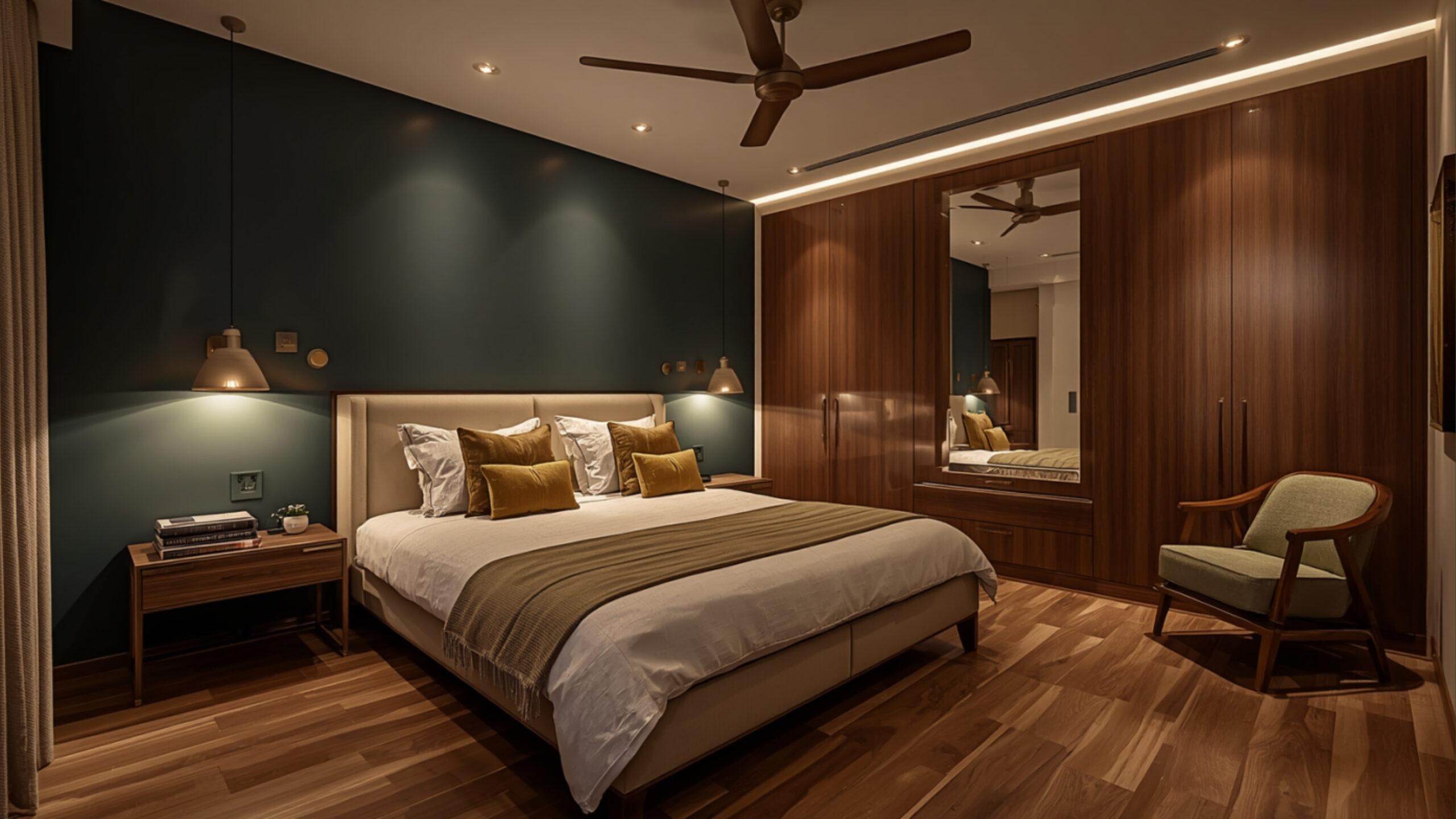
If you are starting this journey anywhere in Bengaluru, myNivasa offers a discovery consultation where we review your floor plan, discuss style directions and give you a tier wise budget band for your specific home. Book it through mynivasa.com, and bring your questions. The right designer near you is the one who answers all of them in writing.